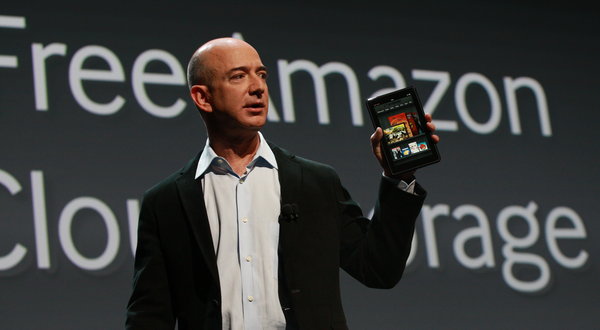
Introducing the Amazon Kindle Fire
While the name is a little awkward, Amazon has announced a legitimate competitor to the iPad in a lower price point, using the theory that with their newly designed browser, the web can be faster, even on a less expensive device. The Kindle is no longer just for reading books, although it still performs that function.
Because price is often cited as a top reason for not purchasing a tablet, this is an opportunity for business professionals to get their first tablet at a reasonable, less risky price than the $499+ iPad 2.
Advantages no one is talking about
Because the Kindle Fire is an Android tablet, users can access the Android Market and Amazon App Store as opposed to iTunes store with one major advantage being that as of May, only 37% of apps in iTunes are free as opposed to Android’s Market which is closer to 60%. Additionally, the Kindle Fire is a tad smaller than the iPad, so it weighs under a pound which is great news for anyone carrying multiple devices (a more common occurrence in 2011). The battery life is about 30 minutes longer than an iPad 2 and should last around eight hours, according to Amazon. The major advantage is that the Kindle Fire is running the Amazon Silk Browser, an amazingly reconstructed version of a browser that speeds up browsing by leaning on the Amazon cloud.
While the iPad 2 and Kindle Fire have similar processors, the same Bluetooth and wifi connections, the Kindle Fire has the disadvantage of having no camera, no GPS, and only 8GB internal storage, which is likely why it is at the lower price point, making it a good introductory device, but one that iPad users might find lacking, not in speed, but in features. It is a first version, and Amazon’s leaning on the cloud could make this one of the first mainstream cloud-reliant tablet, and more functionality could be added in the future.