OCC’s mission – protect the dollar’s value
It has been a tumultuous few months at the Office of the Comptroller of Currency (OCC) headed by John Walsh who took office in late 2010 after several years with the agency.
The OCC was originally created nearly 150 years ago to protect the value of the dollar and some critics have said that over the last few years, the agency has been lead by individuals seeking their own agenda outside of currency and economic protections.
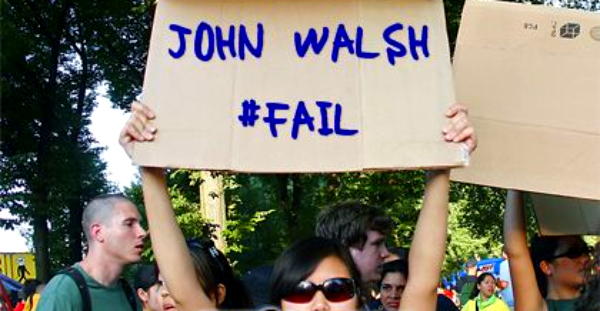
Calling for Walsh to resign
This week, Yves Smith of NakedCapitalism.com and Richard Eskow of the Huffington Post both criticized Walsh and called for his resignation, not for being among the American leaders who failed to listen to warnings of impending economic doom but because of his role in the recent investigations and negotiations with banks that illegally foreclosed on homeowners.
We’ve covered in depth the recent role of the OCC in splitting from the fifty attorneys general and dozens of federal agencies that were seeking to investigate and punish banks for illegal foreclosures, but when the OCC split and settled with eight banks rather than finalizing a joint agreement with all agencies involved, critics claim the OCC jumped the gun so to speak and settled with the banks for far less than they would have in a joint investigation. Because of the OCC, homeowners will not be able to file for class action status in suing banks for falsely foreclosing and the settlement of $20 billion split between the big banks is criticized by most entities but the OCC as being far to low and even insulting to the situation.
Walsh’s feet are held to the fire by Smith and Eskow who take issue with Walsh’s politically correct terms like “improper” foreclosures instead of “illegal,” and others write critically of Walsh’s use of the term “bank deficiencies.”
Walsh’s “slippery language”
Eskow writes, “He [Walsh] used slippery language to persuade some senators that only a “small number” of foreclosures were improper, was forced to concede it was a misleading statement, and then used the same language again. He either did that despite the fact that it misled people once before, or because it misled people once before. Whatever his reasons, it’s time for John Walsh to resign.”
Eskow calls Walsh the Patty Hearst of the industry and notes that “people talk of “regulatory capture,” that process where an agency becomes a servant of the industry it regulates.”
Details of “misdirection”
Smith breaks down a recent presentation by Walsh:
“You can see the signs of Walsh’s misdirection and/or complicitness:
The claim that robosigning came to light in September of last year. False, it had been coming up repeatedly in court filings for at least two years before that; the bank regulators chose to ignore it until it erupted into a national scandal.
Characterizing forged documents and false affidavits as “mishandling”. The spin on this gets more and more disconnected from reality. These were systematized, industry-wide practices, not occasional innocent screw ups per the persistent bank Big Lie.
Staunchly supporting the fiction that all foreclosures are warranted, and worse, positive. This is a misrepresentation on two levels. Walsh effectively admits what we’ve long been pretty certain was true: that the touted “Foreclosure Task Force” review of servicer practices last fall was garbage in, garbage out exercise. How did they determine whether the foreclosures were warranted? By looking at ONLY the banks’ records. These same records have produced obvious screw ups like people being foreclosed upon who had no mortgage, plus the more pernicious and from what we can tell, not at all uncommon practice of impermissible application of fees, using suspense accounts to increase fees, holding payments to make them late, using force placed insurance, padding or double dipping (charing the same fee to both investors and the borrower), and applying fees so as to produce fee pyramiding. There are numerous cases where these fees have led to charges that have been larger than the mortgage past due amounts. They can easily escalate to thousands of dollars of unwarranted and illegal charges in a six to eight month time frame.
The second canard here is that borrowers that are behind on their mortgage should lose their house. In every other type of creditor relationship, when the borrower gets in trouble, the first question the lender asks is whether they are worth more to him dead than alive. This isn’t charity, it’s a cold blooded financial assessment. A lender will always restructure a loan if he thinks the borrower can realistically stay current on the new, lower payment amount and it looks more profitable than liquidating the loan.
The reason, as we’ve stressed again and again that banks aren’t modifying mortgages (and remember, the servicers only do the work of restructuring, they don’t eat the cost of the writedown) is the they have terrible incentives. They make money foreclosing and they’ve automated it so it’s profitable to them; they need the proceeds from foreclosures to reimburse themselves for money they’ve advanced to investors; they aren’t set up to do mods, and have no interest in setting up new infrastructure; and if they did enough mods, they’d have to write down second mortgages they own, which they have no intention of doing. So despite the OCC’s claims to the contrary, the parties that have skin in the game, the homeowners and the investors, would benefit from well screened mods, as would the broader housing market. But Walsh is operating from a bogus Mellonite “liquidate the borrowers” logic. The first three years of the Depression tell you how well that idea worked.”
Are homeowners the real victims?
Eskow said, “the U.S. housing market has lost ten trillion dollars in value — and homeowners have been left holding the bag. Homeowners didn’t choose the appraisers, write the loan contracts, or hire PR firms to convince the public that homes were a fail-safe investment. Yet homeowners, not banks, are paying the price.
Some people will point the finger of financial collapse at Obama or Bush, others at Ben Bernanke, others at Barney Frank or David Lereah, but maybe America should take a second look at OCC leadership?
Read RJ Eskow’s Huffington Post column and Yves Smith’s Naked Capitalism column, they’re definitely worth the time and will give you more perspective on the role of the OCC and why they feel Walsh should resign.