
Five years of real estate search changes
In five short years, a lot about real estate search has changed, and Realtors are better educated now about the functionality and aesthetics of web design, and expect more from companies that seek to dip into their pockets. Rules have changed, new programming languages have been developed, and five years in the tech world is an eternity – we would say that five years in tech time is 20 years in non-tech time, as innovation is constantly happening all around us.
In these last five years, how have the largest real estate search sites progressed? Some, like Zillow, have innovated by becoming responsive, others have made updates by leaning toward minimalist design, others have updated their colors, and some remain somewhat outdated, we’ll let you decide which is which.
Some companies are publicly traded, others are not, some are funded by Silicon Valley, others are not, some are legacy brands with policies that restricts employees’ social media use under their brand name, while others are pushing the envelope in the name of transparency.
What is most fascinating is that while there is a great deal of disruption to the real estate industry as a whole, particularly the role of an agent, there is little disruption when it comes to major real estate search sites – several niche sites and rental sites have launched in the past five years, but no one has come out to compete with the big three (Zillow, Trulia, Realtor.com) in years.
Below, we step into the time machine and take a look at how five years has changed real estate search sites:
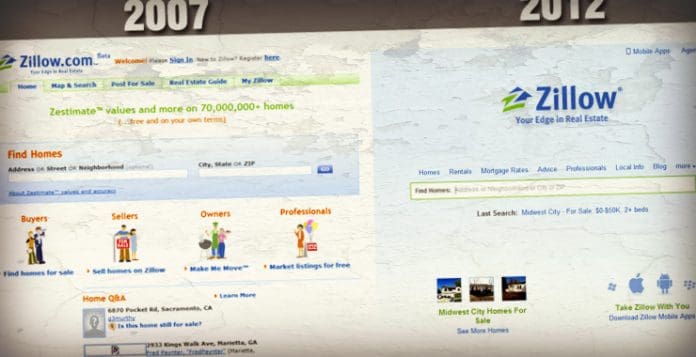
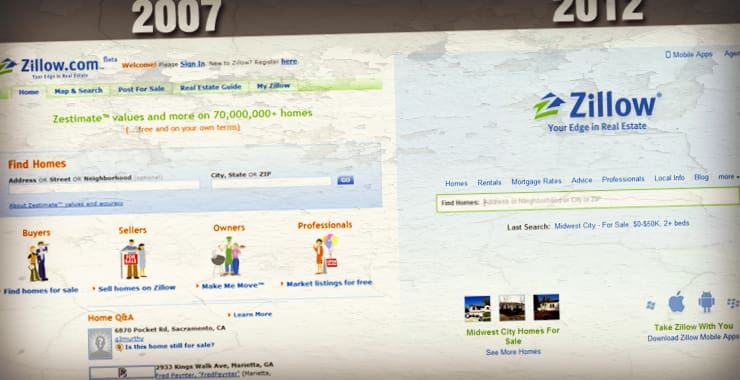
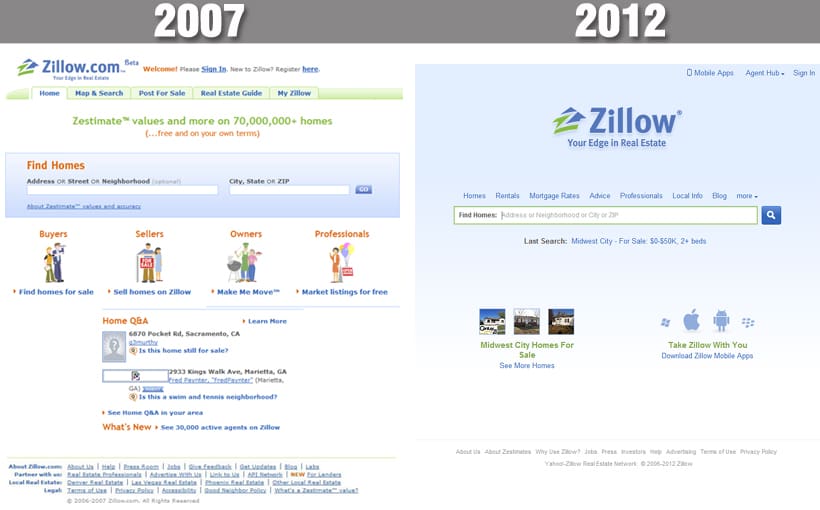
1. Zillow.com
Zillow in 2007 and Zillow today.

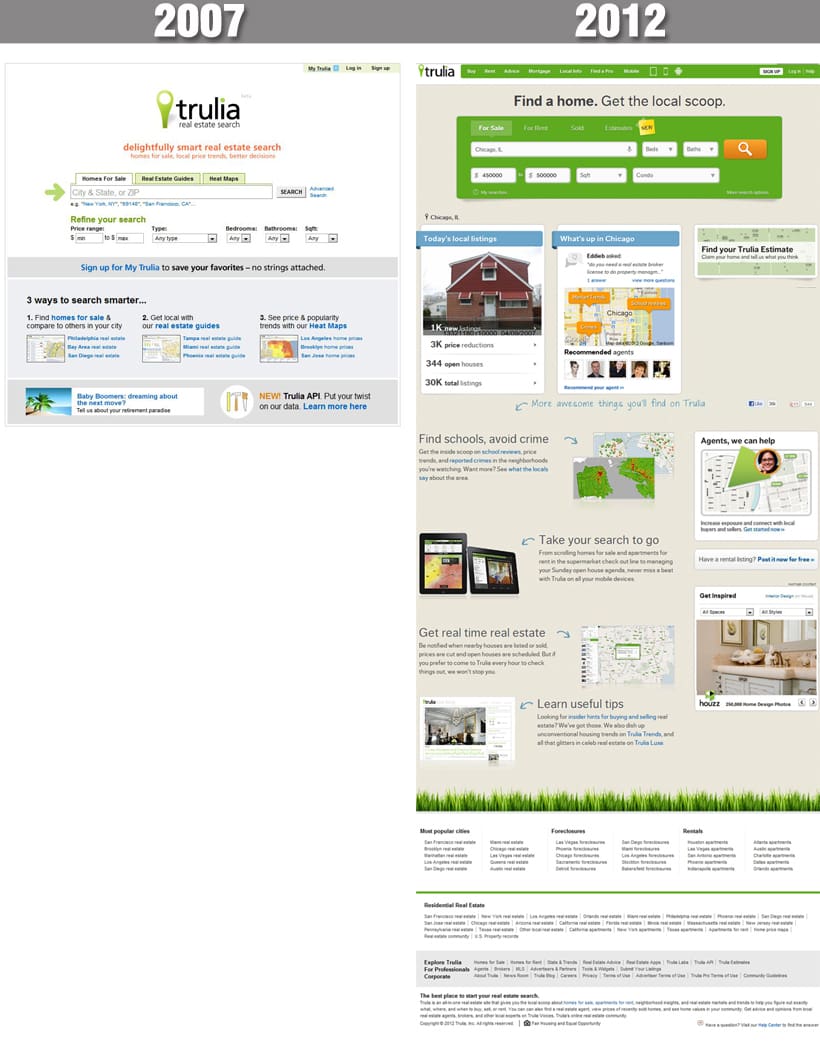
2. Trulia.com
Trulia in 2007 and Trulia today.

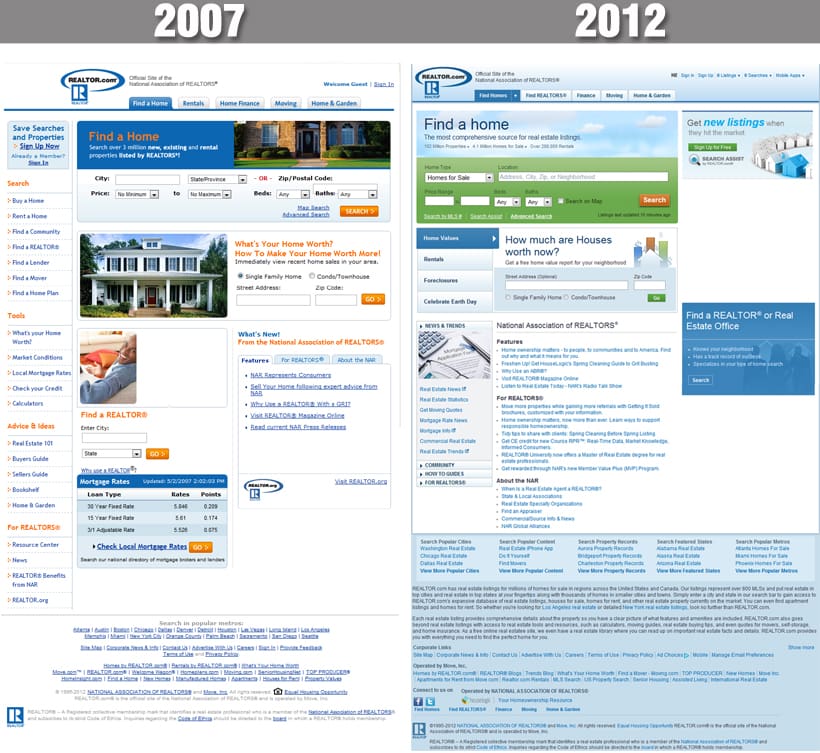
3. Realtor.com
Realtor.com in 2007 and Realtor.com today.

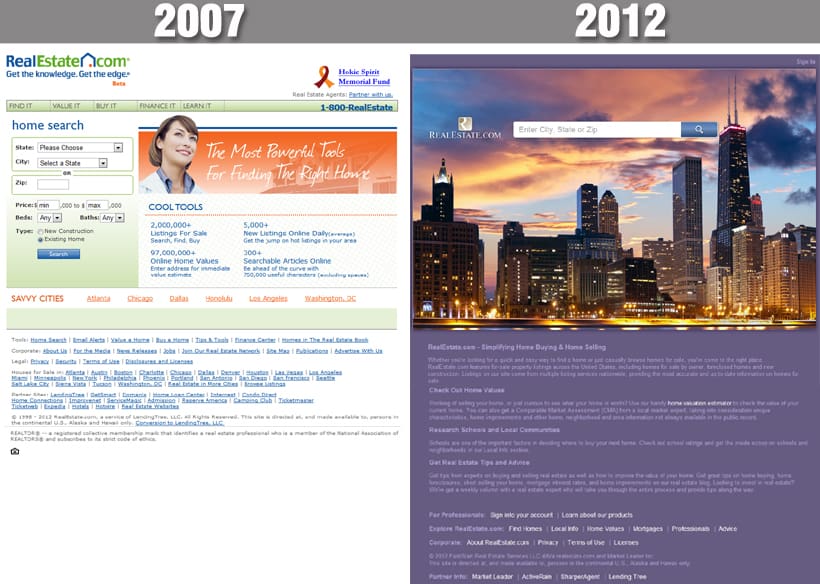
4. RealEstate.com
RealEstate.com in 2007 and RealEstate.com today.

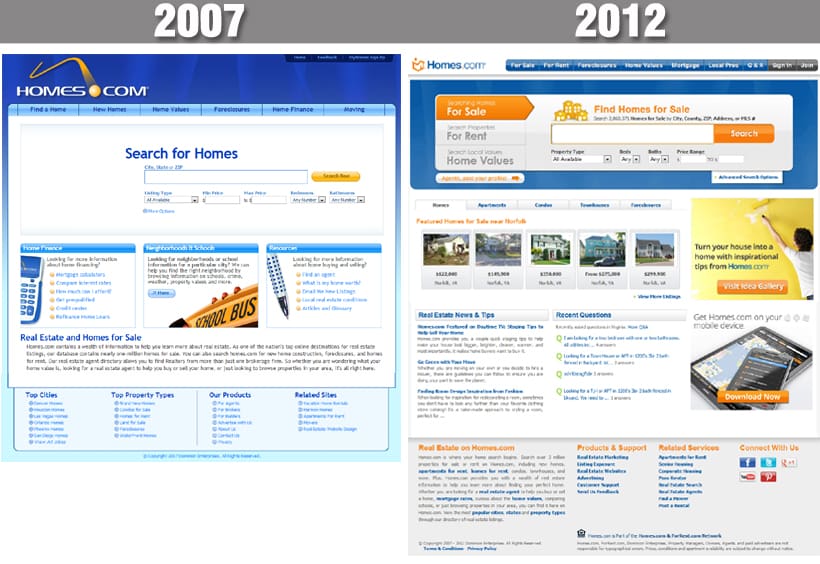
5. Homes.com
Homes.com in 2007 and Homes.com today.