Go deeper - join us!
30 years of sales growth, now this?
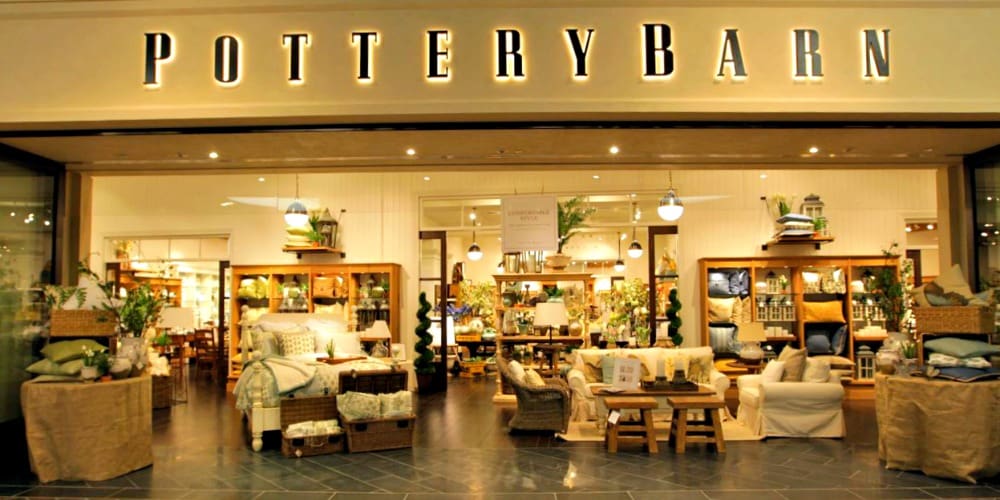
With brick and mortar retailers closing shop left and right, it’s hard to be surprised that Pottery Barn – your suburban mom’s favorite décor store – has hit a bump in an otherwise smooth road. Excluding the Great Recession, the home furnishings chain has had over thirty years of solid sales growth, ever since it was acquired in 1985 by Williams-Sonoma.

But recently, Williams-Sonoma reported that the Pottery Barn brand has seen a 1.4 percent downturn in comparable sales (online and at stores that have been open for over a year) over the past three months.

This marks the fourth consecutive quarter of decreasing sales for the furniture emporium.
On the other side of the retail success coin, there’s sister brand West Elm, which is absolutely killing it with the upper-middle-class millennial crowd, and boasts quarter after quarter of insane growth.
What’s going wrong with Pottery Barn?
Well, size matters. If you’re an urbanite with a tiny apartment or condo, a lot of Pottery Barn’s rustic-traditional offerings literally won’t fit in your space (or up your stairs, or through your doorway). And even if you can manage to fit that giant furniture into your small space, you likely want it to be more than just furniture – it should offer the storage space that tiny apartments often sorely lack. Bed frame? Cool, where are the drawers? Coffee table – without a shelf, what’s the point?
“We know that the opportunity is often size, because as people move to smaller living arrangements and the urbanization happens, the large-scale furniture is difficult,” said Laura Alber, Chief Executive of Williams-Sonoma.
Pottery Barn on the tiny track
In February, Pottery Barn set out to address the scale issue by introducing more pieces designed with small spaces in mind, and on Wednesday executives said those pieces earned “strong demand” in the last quarter. So if Pottery Barn keeps on that tiny track, will they be fine?
Maybe not. No matter how space-efficient that dining table is, if it’s perceived to be overpriced, no one is going to want it. Thorough customer research last year found that non-loyal Pottery Barn customers saw the brand as “expensive, too predictable, and not for them,” said Alber.
Luring millennials without alienating boomers and Gen-Xers will be tricky, as will remaining “aspirational” while hitting some lower price points.
It seems like there are plenty of competitors at both the high and low end of Pottery Barn’s reach, and maybe that middle ground is just destined to dissolve. Is another type of retail downfall on the horizon that can be blamed on our shifting space preferences?