Go deeper - join us!
Depending on where you grew up, you were likely taught in grade school that in a list of three or more items, a comma is placed before the coordinating conjunction (“and,” “or,” and sometimes “nor”) in the list. Some were taught that this is mandatory, while others were told it is an irrelevant rule, and these conflicting teaching methods have led to a confused nation.
That comma is called the Oxford comma, and while some call it a serial comma, others still prefer the hoity toity title of Harvard comma. How the Oxford comma works is as follows:
- With the Oxford comma: “I have lived in Nashville, Toronto, and Mexico City.”
- Without the Oxford comma: “I have lived in Nashville, Toronto and Mexico City.”
You may read those examples and think that there is literally no difference. The Oxford comma was originally eliminated by publishers where each manually loaded character was questioned as real estate on a page was at a premium. Publishers looked at sentences like the two above and agreed that there was no difference. Therefore, the AP Stylebook, which is still followed by traditional journalists today (but rejected by AGBeat).
The Oxford comma is common in many non-English languages of Latin descent, like Spanish, Italian, Greek, and French, to name a few. So why do some so vehemently disagree with this tiny comma’s use? Some say it introduces ambiguity, it is redundant in situations where coordinating conjunctions already point out the logical separation between items, and it adds unnecessary characters to text (important in the original publication days, and now relevant again with Twitter users).
No one here is an expert in grammar. Several of us have English and journalism degrees, and we write thousands of pages per month, but we make just as many mistakes as the next person. Collectively, we have a select few pet peeves, such as ignoring the poor Oxford comma.
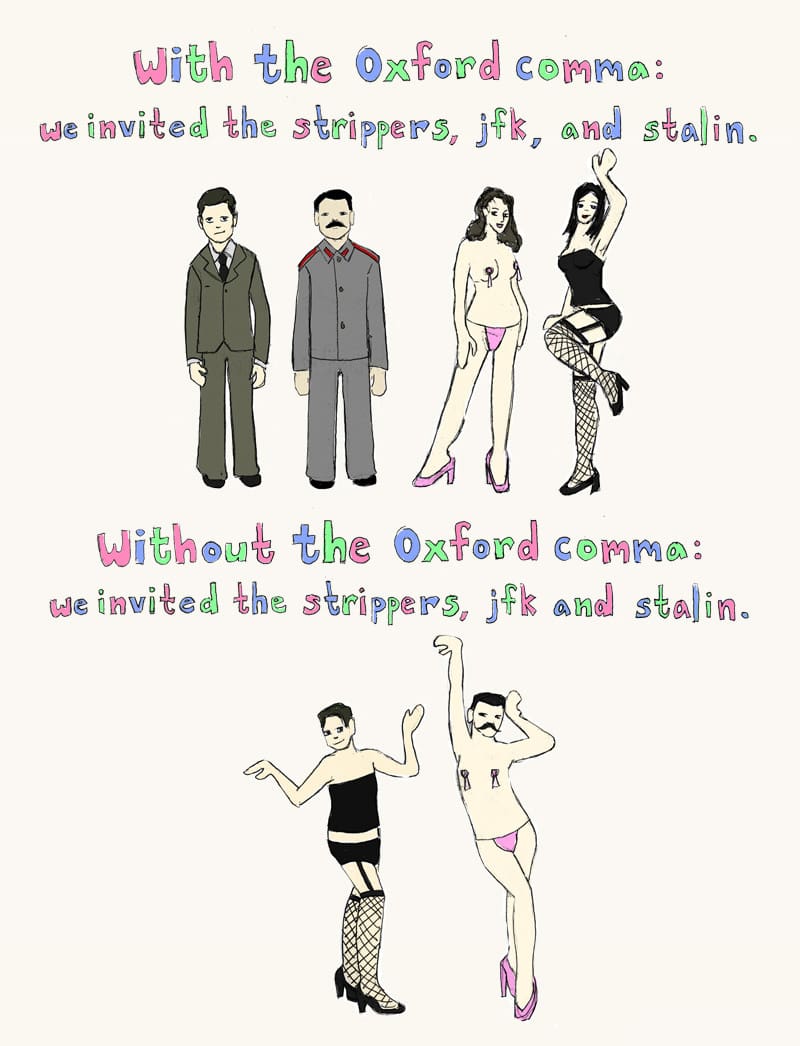
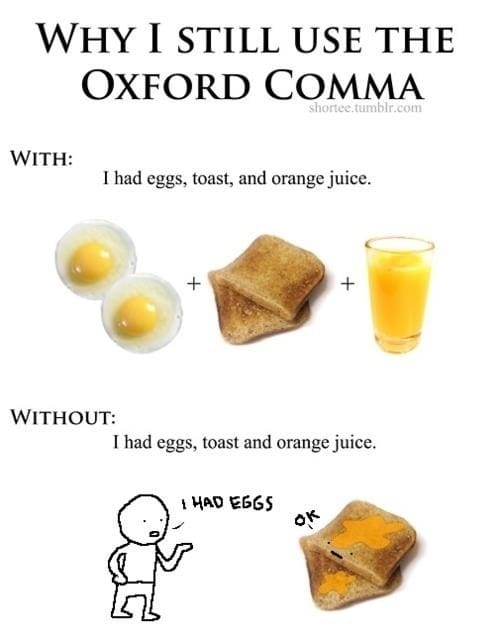
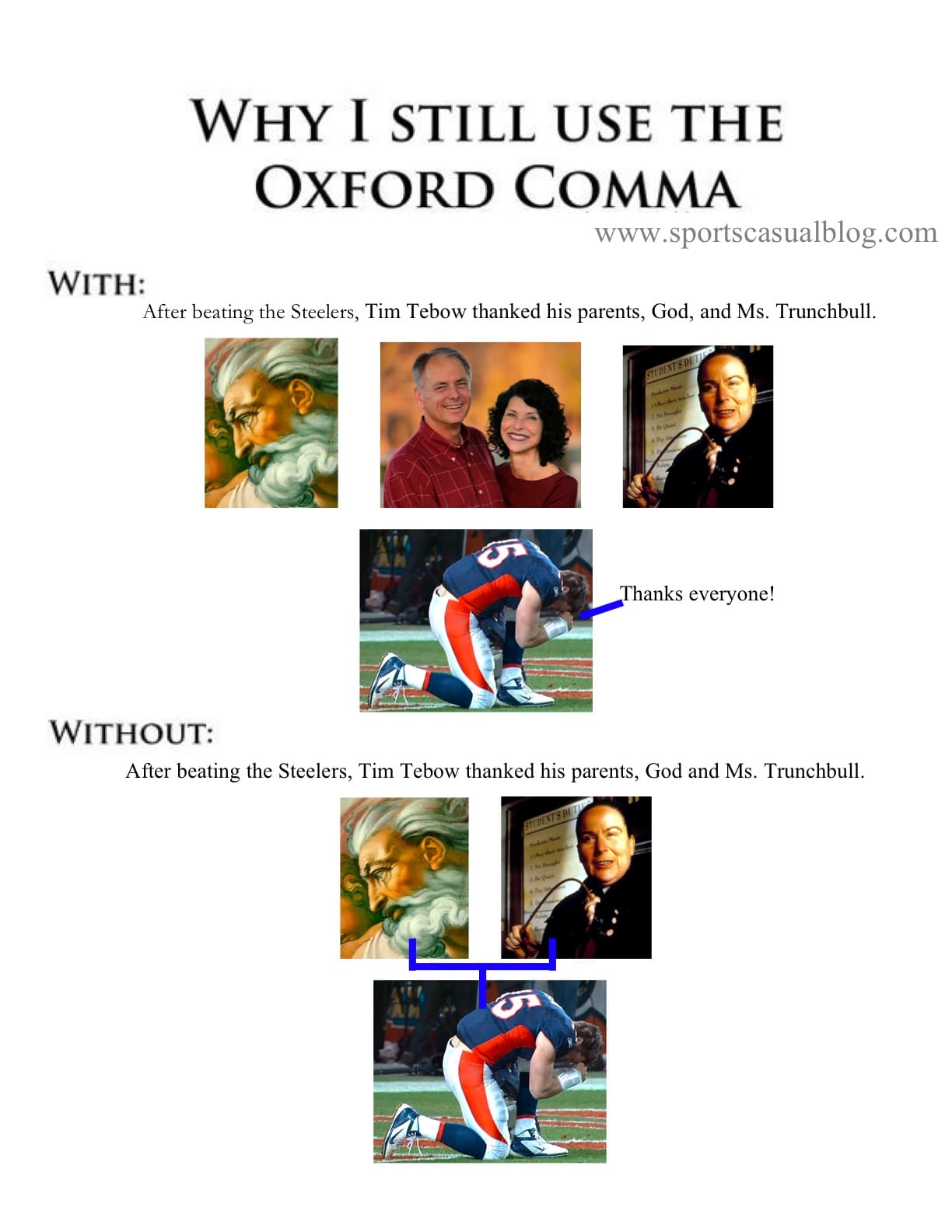
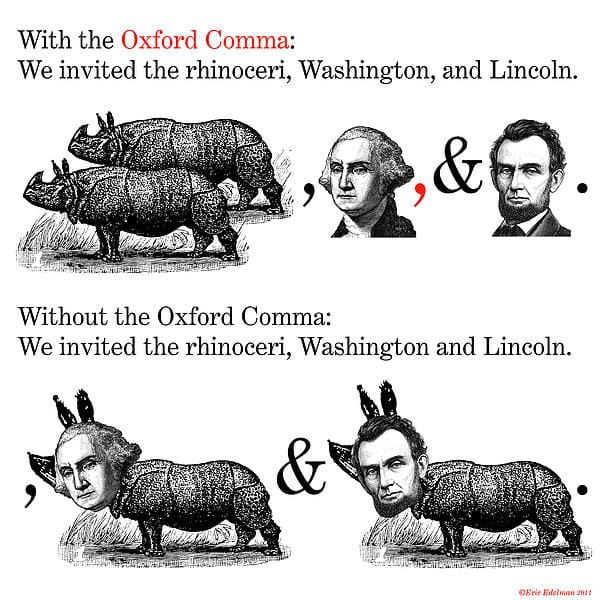
Take a look at the pictures below and tell us in the comments whether or not you agree that the Oxford comma is vital to the language:



This editorial was first published here in 2012, and we stand by it today!