
Amazon Dash buttons coming to a freezer or dryer near you
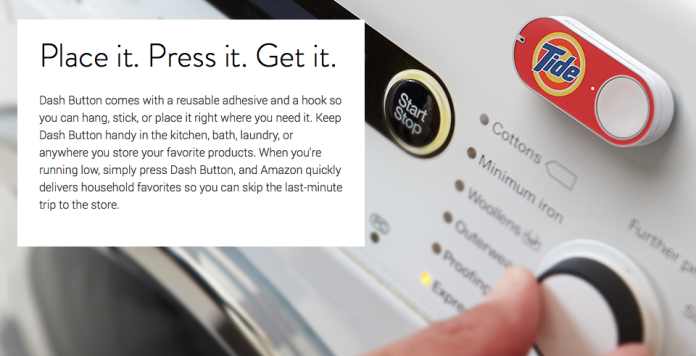
In case you missed it, Amazon has introduced a new product to Prime members: the Amazon Dash button. This magic little button is intended to prevent those last minute trips to the store by allowing you to press a button when you’re running low on a product.
When you press the button, Amazon receives a signal to send you what you need, before you run out completely. While this Jetsons-esque technology is certainly cool, it speaks on a deeper level to our “instant gratification” culture.

Certainly pressing a button and getting your favorite products is awesome, but what happened waiting and actually making a trip to the store? It works by connecting the button to your home Wi-Fi network through your Amazon phone app, then allow you to select the product you want to reorder with the Dash Button.

Once connected, a single press automatically places your order. Amazon sends an order alert to your phone, so you can cancel if you change your mind. This certainly ups the e-commerce gain for other companies.
Some things to consider
Some things to consider if you’re thinking of upping your e-commerce game:
First, consider there’s not price point displayed when you re-order. Sure, you get an alert on your phone afterwards, but when you initially press the button, you do not know what you’re paying. The couponer in me shivers, but doesn’t this say something in and of itself about instant gratification: “no matter the cost, I want it now.”
Also, the novelty of the button encourages people to reorder and reorder frequently. The button is branded with a single company, meaning user of the button will become loyal to one particular business whether they like it or not. This could also pave the way for new brands to join the Dash family.
Other “buttons” could become available
With the introduction of the Dash Replenishment Service, it opens the possibility for other smart devices to become “buttons” through the available API.
This means that any smart device could instantly have an “order more” functionality. And if more devices gain this capability other companies may implement the same type of reorder abilities giving more consumers the “instant gratification” they do obviously desire.
Could novelty become mainstream reality?
While the Amazon Dash Button emerged as a novelty, it has the potential to open the doors for even greater developments. As our culture shift towards delighting in instant gratification, it becomes even more important for companies to adapt and move towards “smart” appliances having the ability to do anything, like knowing when to buy more detergent, without human involvement.