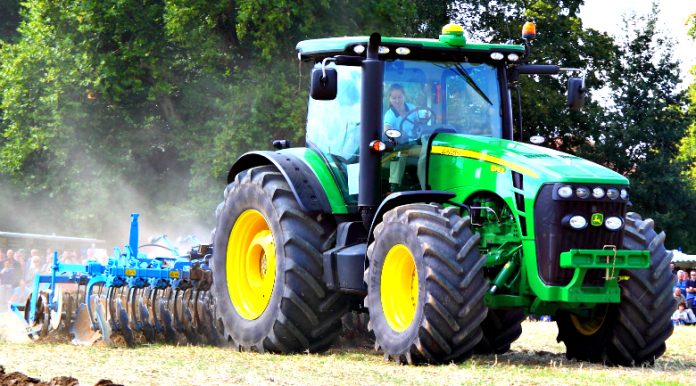
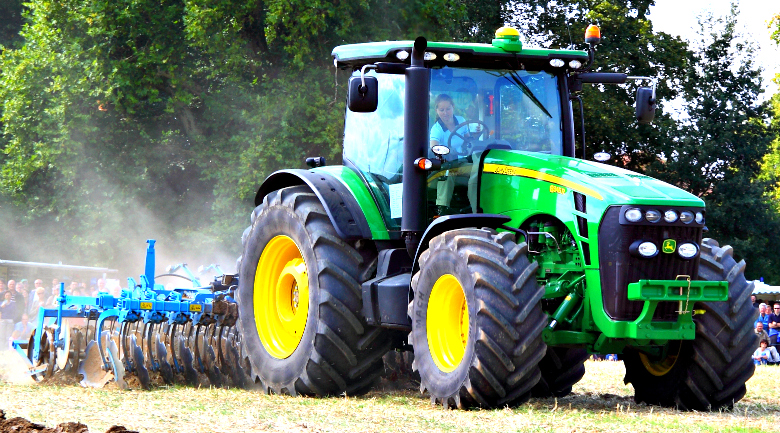
John Deere tractor owners are so very restricted
I live in Oklahoma. Farm country. I took this assignment because it infuriated me. I do not farm, but I have friends and family that make their living farming. John Deere has been synonymous with farming for as long as I can remember and for good reason: they make a good product. Their latest statements have me worried and you should be worried too, even if you don’t farm.
John Deere recently submitted a letter to the U.S. Copyright Office asking to forbid their customers from modifying the software that operates its machines. What on Earth do copyright laws have to do with tractors?
Wait, copyright laws are at the root of this mess!?
It comes down to digital rights management (DRM), or the Digital Millennium Copyright Act (DMCA): these two acts made it illegal to circumvent a copy-protection system. In essence, they state the consumer doesn’t own the software of the product, only the product. John Deere is fundamentally stating that if you tinker with your tractor software to get it running the way you need it to, you are a pirate, and therefore, in violation of the law.
I call shenanigans, as do many others. In fact, Wired magazine ran an article about this very thing, which then prompted a response from John Deere to their dealers stating (among other things) that, “similar to a car or computer, ownership of equipment does not include the right to copy, modify, or distribute software that is embedded in that equipment. A purchaser may own a book, but he/she does not have a right to copy the book, to modify the book, or to distribute unauthorized copies to others.”
As Supreme Court attorney Mark Wilson points out, this was not the best example. He said, “when I buy a book, I own the physical book and I can do whatever I want to it, short of republishing the content. I can give the book away, set it on fire, make notes in the margins, or I can turn it into a lamp.” If this is true for books, why not software (so long as you’re not redistributing it, as Wilson stated)?
Why does this matter if you’re not a farmer?
Simple. Old-fashion ingenuity used to be a thing here. If you found a way to make a product work better for you, more power to you. There were no government regulations preventing you from ramping up the horsepower in your car, or transferring your music between computers by burning your own CDs; you did it because it’s more economical, and frankly, more rewarding.
Think about this in the larger scheme of technology as a whole: our daily lives, for the most part, have become techno-centric, and placing restriction on this technology could become quite cumbersome. If my computer crashes, you better believe I’m going to try to fix it myself first, but, government regulations could prevent this if the DRM way of thinking isn’t stopped.
If my computer was subjected to these restrictions, I would have to take my computer in to an authorized repair center and who knows how far away this would be, be without my device for who knows how long, and then presumably pay for the repair and/or shipping. This has gone beyond ridiculous. The original premise of the DMCA was a good one. It was meant to protect industry as we went into the digital age, but as technology advances so should our laws.