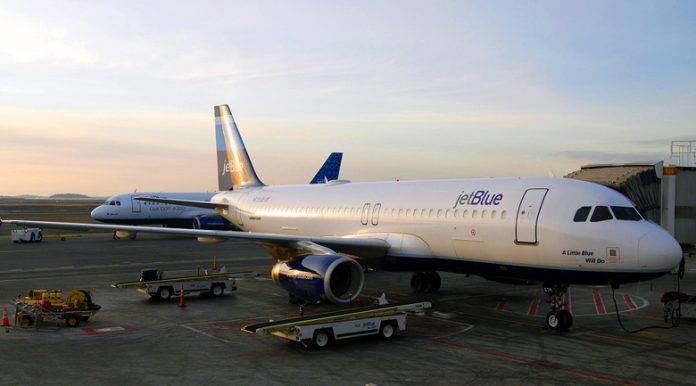

When JetBlue and an upset autistic child collide
When Emily Galindo and her husband asked if they could be seated together with their thirteen year old autistic daughter as they boarded a JetBlue flight, the crew tried to accommodate them. They, however, were only able to seat mother and daughter, Mia, together. Mia’s father was about ten rows ahead of this wife and child, and therefore not within his daughter’s sight.
Mia is autistic. Being rational and reasonable are skills that have to be taught, and even if an autistic child has memorized certain situations for the purpose of social rules, some situations, like this one are brought on too suddenly for an autistic child or individual to utilize his/her memorized skills. To Mia, her dad was gone. In the stress of the situation, she could only accept that if she couldn’t see him, he wasn’t there.
Stress, worry, and the unexpected caused Mia to have an outburst. She used only sign language and an I-pad for communication. To get the message across that she was angry, she refused to put on her seatbelt to prepare for taxiing. She actually had a good rationale. She wanted her dad on the plane; the plane won’t leave the terminal without all seatbelts buckled; she didn’t buckle her seatbelt. She wasn’t rebelling. She was communicating the best way she knew how.
Accommodating autism is tricky
Ultimately, the family was asked to leave the plane citing the enraged child was a possible danger to other passengers, and in the aftermath the family, the crew, and the passengers were left wondering how the situation could have been handled more successfully.
In the defense of JetBlue, they did initially try to accommodate the family, but autism is tricky to accommodate. They can’t just serve a special meal or call a skycap upon arrival. As the well known saying goes, “If you’ve seen one autistic child, you’ve seen one autistic child.” Autism isn’t a visible disability, especially on the higher functioning end of the spectrum. It is silent until it isn’t. It looks normal until it doesn’t.
To the blind eye, it looks like bad parenting, although for Emily to have gotten Mia through a family vacation and onto a plane took days, weeks, even months of the most patient, loving, and skilled kind of parenting there is. Emily, in retrospect, may have some different decisions, but she was tired. Tired like no parent of neurologically typical children can fathom.
It was a difficult call for the airline to escort the family off the flight. Mia did need to get off the plane in order to calm down and refocus. Just like a person having a panic attack or a PTSD sufferer would need a change of scenery to find calm.
Companies should gain a better understanding of autism
We understand panic and PTSD better now, but there was a time when we didn’t—a time when PTSD war veterans were excommunicated for their efforts, ignored, and labeled alcoholics or just plain messed up. Now any one of the general population would be appalled at the unfair treatment of a PTSD sufferer. That time hasn’t come yet for autism.
Until then, companies, brands, businesses, and schools need continuous education. We all have professional education, in-services, and lectures on equal rights. How many of us, depending on our industry, are still being made to check a yearly box that says we have been trained in bloodborne pathogens, STDS, affirmative action, and practice drills? Hearing these things repeatedly seems asinine. And, here’s hoping that in the coming years, we are all so well learned on the fair treatment of those with silent disabilities that we roll our eyes at the mention of the annual training.
Because we are all uneducated until we aren’t.