Keepin’ it (relatively) analog
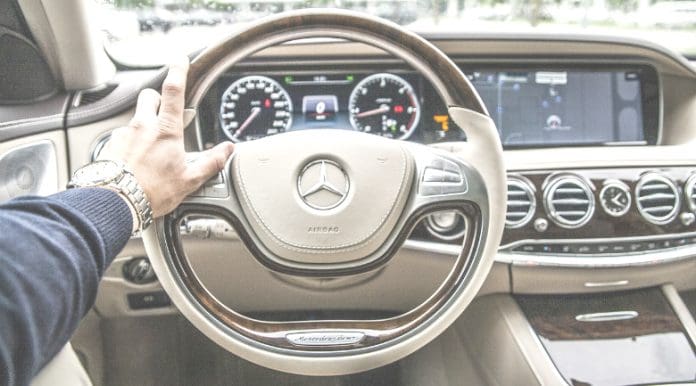
While most car companies today utilize robots in the manufacturing and production of their vehicles, Mercedes-Benz bucks this trend. The auto-maker offers consumers a wide-array of features such as carbon-fiber trim, heated and cooled cupholders, along with four types of caps for the tire valves, which the robots just can’t keep up with.

The name of the game is adaptability
At the heart of Mercedes’ decision, and spurring on the shift, is versatility. Within the auto-industry, demand is shifting to offer a broader array of models, each with more and more features. As customization becomes key, humans are reclaiming the Mercedes assembly lines. This runs counter to the long-held tradition of using robots in car manufacturing. However, when it comes down to it, robots are great at repeated tasks at a consistent and fast rate, but they’re not good at adapting. In this case, humans are more cost-efficient for Mercedes, because they can shift manufacturing to a few skilled workers in a weekend versus the weeks needed to reprogram the robots.
Too many variables
Markus Schaefer, Mercedes’s head of production, said at its factory in Sindelfingen, “Robots can’t deal with the degree of individualization and the many variants that we have today. They can’t work with all the different options and keep pace with changes. We’re saving money and safeguarding our future by employing more people.”
Churning out more than 400,000 vehicles a year, their 101-year-old Sindelfingen plant thrives on efficient, streamlined production. However, manufacturing methods are being forced to adapt to the new age of individualization.
Robot farming for the future
While it may seem like the auto-maker is bucking robots, robots won’t be completely disappearing from the manufacturing process. Instead, robots will become increasingly smaller, more flexible, and operate in conjunction with human workers. For Mercedes, this new method of equipping workers with an array of little machines is known as “robot farming.”
And they’re not the only car manufacturing looking into this method.
Both BMW and Audi are testing their own versions of “robot farming” using lightweight, sensor-equipped robots safe enough to work alongside people. As the pace for change within the auto-industry quickens, auto-makers are seeking any edge to be better and faster than rivals.