Fight Club and real estate
For those of you that saw the movie ‘Fight Club’ you’ll remember that Rule #1 is “You do not talk about fight club,” followed closely by Rule #2, “You DO NOT talk about fight club.” Which, believe it or not, brings me to today’s topic: The Real Estate Code of Ethics and Arbitration. Article 17 obligates Realtors to resolve fights disputes with another Realtor through arbitration (not litigation). Arbitration is conducted at the local board level, and I am not aware of a local board that doesn’t require arbitration to be confidential.
I respect that public internecine warfare amongst Realtors isn’t in the interest of our industry, and doesn’t belong in the public spotlight. I’m not here to advocate the collective airing of our dirty laundry. That said, I wonder if our collective agreement to keep our concerns confidential can inadvertently harm the consumer and ultimately makes all of us look a little shoddier?
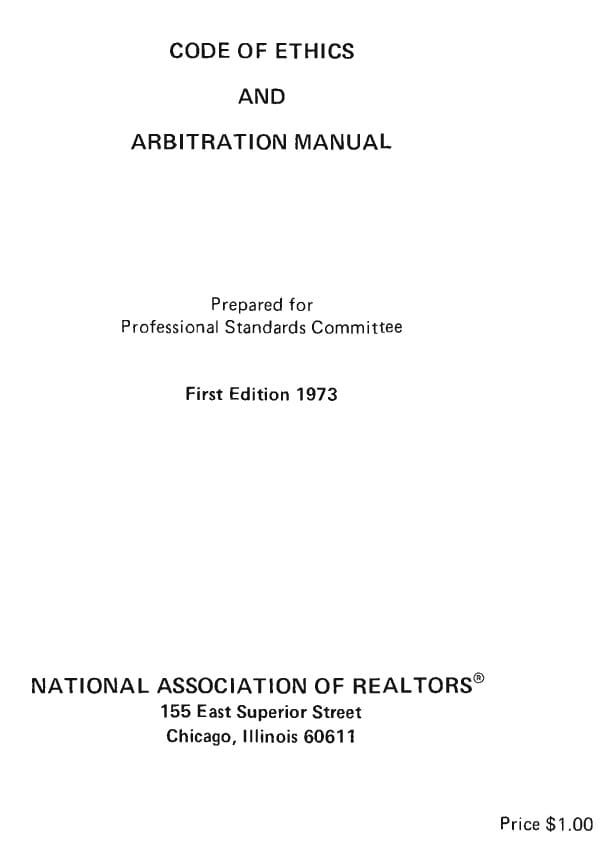
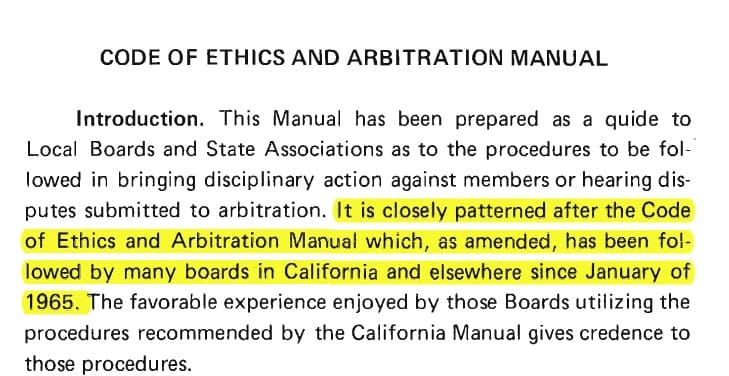
To find the first arbitration guidelines created by NAR and distributed as a set of suggested rules for boards to follow, we have to travel all the way back in time to 1929. NAR’s first Code of Ethics & Arbitration Manual wasn’t created until 1973, and it credited a 1965 California Association of Realtors version as its model.
Appalling conduct
I can think of two instances in the past year where I was so appalled by the conduct of a fellow Realtor that I went to the trouble to inquire about how to lodge a Code of Ethics complaint with my local board. After weighing the time required to make a competent complaint and comparing it with the best case outcome (a closed-to-the-public hearing in which they were found to have violated the code of ethics), I decided not to pursue a complaint in both cases. My association’s bylaws (and probably yours) give it the power to discipline any member based on the results of a Code of Ethics hearing, “provided that the discipline imposed is consistent with the discipline authorized by the Professional Standards Committee of the National Association of REALTORS® as set forth in the Code of Ethics and Arbitration Manual of the National Association.”
“Sanctioning Guidelines” – (Appendix VII of Part 4 of the 2011 manual for the very curious), guides member boards to impose disciplinary consequences that are progressive and fair, taking all considerations into account. Sample first-time disciplinary actions include suggestions of a letter of warning, a fine (amounts range from $200 to $5,000 depending on the severity of the violation), and attendance at relevant education sessions. Not to sound defeatist, but a confidential letter of warning and a fine of around $200 doesn’t seem like an outcome worth investing much of my time in.
Practicing in the internet era
Given that we live and work in the internet era, and review sites like Yelp abound, it seems a bit odd to me that a local board might know of an agent with problem behavior that is documented yet choose to make that information unavailable to consumers. My understanding is that the results of a code of ethics hearing are confidential with disclosure authorized in a few situations, none of which deal with informing the public.
Many of my fellow colleagues feel that the best response to a bad agent is to be patient and give them enough time to work themselves out of business. I can respect and understand their hands-off approach. But what about the damage that individual does to our industry as a whole? While we whisper, warn in confidence and know amongst ourselves how awful they are, the public doesn’t get the benefit of our perspective. Deprived of it, they turn to consumer review sites like Yelp.
How do you think we, as an industry, can help consumers in their quest to find a trustworthy agent?