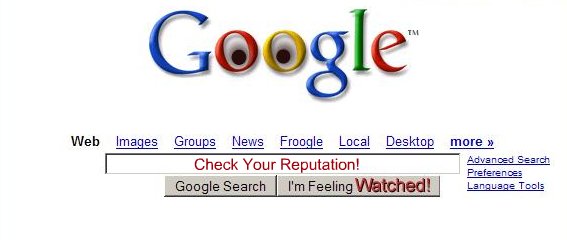
 You may be and not even know it!
A few times a year I will get an email from my dad asking a random question, such as: “Why were you quoted in an article on the latest ocular surgery practices in Alaska?”
What the …. ???
As much as the world has its hands full with one, yes, there is at least one other Brandie Young who apparently is an expert in the ocular surgery field (sorry to disappoint dad, I’m not a doctor). My dad likes to Google my name every now and again.
Reputation management
Have you Googled yourself lately? Your clients or potential clients most likely have, and if you don’t know what comes up on the first page when you Google your name, you might be in for an unpleasant surprise.
More than your name alone …
Don’t just Google your name, Google phrases. For example, When I Google ‘GE Spokesperson Brandie Young’ I get an entirely different set of results than if I Google my name alone. (ugh, bad memories from the result of that search …)

If potential clients Google you, they are probably entering Your Name, realtor, city name, your company, your previous company, etc. Try a number of combinations, including misspelling your name, make note of each search and any unfavorable results.
:: Pause :: Search yourself now
Did you do a search with more than just your name? Or did you add other key words, such as agent, complaints, real estate, etc.
Please share your results in the comment box, particularly any surprises!
Your reputation – guard it with your life!
To quote a book I love called The 48 Laws of Power:
“Through reputation alone you can intimidate and win: once it slips, however, you are vulnerable, and will be attacked on all sides. Make your reputation unassailable.”
While it may take some work, it is probably worth it to correct, comment on (or, if possible, have deleted) any instances where you are mentioned in an inaccurately unflattering light. (Emphasis on inaccurately)
Vigilance is vital
Most important is any negative comments from previous clients or peers. If you find them, the best course of action is to work to resolve the issue in person or over the phone, then see about updating negative online commentary.
Keep in mind, however, this doesn’t include anyone that takes you to task or disagrees with your point of view on your blog, or a comment you left on someone else’s blog. That makes you a real, substantive person with an opinion.
According to Nielsen’s “Trust in Advertising” Report from October 2007, 78% of people trust the recommendations of other consumers over ads (I’m sure that stat has increased since the study). And, with more and more trust placed on the opinion of bloggers it’s vital to be vigilant.
Monitor
Once you have all your phrases, set up a Google alert for each of the phrases as well as your name (include variations, i.e. Bob and Rob in addition to Robert). You will get an email anytime one of those phrases appears online, saving you the time of searching yourself on a regular basis.