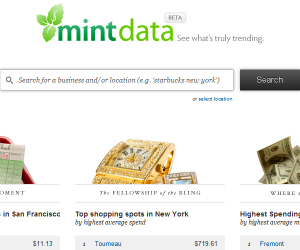
 Personal finance tracking site, Mint.com has launched their beta site, Mint Data where all spending data from their 4 million users is searchable by area or business. This isn’t to say that you can see individual user data, rather you can see trends of cities or businesses.
We can see Mint Data as being useful to anyone (like real estate professionals, for example) that are looking to take a pulse on a city or business trends. We took a look at Austin where AG is headquartered and found that not surprisingly, monthly expenses are considerably higher than cities like Tulsa, yet considerably lower than cities like San Francisco. More important than comparing arbitrary cities is looking into your own city’s trends- is retail on the rise or decline? Are restaurants suffering or thriving? These are all basic economic indicators used in forecasting.
Now, this data is only based on those people using Mint.com, so it is arguable that this only represents 4 million tech savvy people willing to enter their banking and credit card data into a third party tracker, but it is worth noting as a basic litmus test for economic health in your area. The Mint Data landing page is easy on the eyes and the search is pretty accurate.
This September, Mint and Zillow partnered so that users can see Zestimates in their private tracking back end, so perhaps Mint has shown their interest in eventually tracking real estate spends as well? That would be an interesting move.
Screenshot tour of findings:
Below is a basic search we performed on Austin outlining the overall city, monthly trends and even top retailers down to one specific retailer (which for a tech city is not surprising… you’ll see…):
AG is not affiliated with Mint or Zillow.