Real estate and sharing
The Internet has made it easy for everyone to share. Which seems to be a problem when it comes to real estate. California and Texas rarely agree on anything, but from coast to coast brokerages are raising questions about how the industry should – or even if the industry should – share.
Is it about dual agency? Is it about greedy brokerages wanting to represent both the buyer and seller in a transaction to increase the dollars in their pocket, regardless of consumers wants and wishes?
Is it about having hard work recognized and credited to the creator? Are all of the debates going on right now about having a listing agent’s superior marketing (higher quality photographs, better copy-writing) appear on the websites of other agents in the business that might not be familiar with spellcheck?
Is it about branding and control? Are the discussions about being able to choose where on the Internet your listing shows up? For example, the ability to have a luxury listing appear only on high-end websites (whatever that might be) instead of Doug-n-Doug’s discount brokerage website that was last optimized for Internet Explorer 6?
Is it about business models? Is this about “traditional” brokerages protecting their turf by withholding listings from sites like Zillow or Trulia that rely upon syndicated data feeds?
The bigger picture is cooperation
While those are all interesting discussions, the bigger picture is about cooperation. There is an inherent tension in real estate: Realtors spend their days competing for listings and competing for buyer clients, only to turn around and cooperate with each other to turn those new listings into a new buyer’s home. We’re one big outwardly happy family of frenemies.
The Internet has highlighted and magnified a massive crack in that facade of smiling frenemies. While we used to be able to carefully stage-manage (arbitration and confidentiality, anyone?) our public image so that we always appeared to be smiling while slapping each other on the back in a show of good sportsmanship, the fact that the Internet is really and truly about sharing has exposed just how bad we actually are at it.
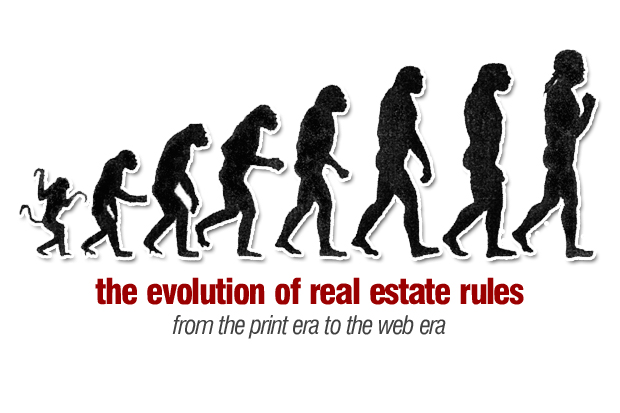
Rules developed for the print era
MLS rules and industry policies were created for the print era. An era when listing data could really only be shared by costing an agent a significant investment of either their time (a personal appointment in an office or viewing listings together) or their money (postcard, glossy newspaper ad, property flyer). And regardless of if an agent focused on investing their time touring with buyers or their money advertising a listing, the amount they could spend was finite. Needless to say, the Internet blows the doors off of all of those constraints. Which is why everyone seems to have suddenly lawyered up while screaming about how unfair the world is.
I wish I had an easy solution. I don’t. But I do have a few thoughts and suggestions. Let’s start by agreeing to keep consumer benefits at the forefront of every discussion. Instead of arguing about whether or not a rule or policy benefits us as industry professionals, let’s focus on shaping rules that benefit consumers, regardless of the business model or service level that they choose. If we can’t point to a specific and clear consumer benefit for a MLS rule or industry policy (I’m looking at you, Code of Ethics) in the age of the Internet, then let’s ask if we need that rule or how we can rewrite it.
The Internet is not our enemy
Let’s also stop letting fear rule our discussions and decisions. The Internet is not our enemy. New and innovate ways of doing business are not the enemy. Agents that can’t spellcheck might be terrifying, but their only enemy is the English language. Take a deep breath and breathe out. Regardless of how you choose to do your business, if you do it professionally and with your client’s best interests at heart, they will tell their friends (probably on the Internet) and there will continue to be plenty of consumers willing to pay for your professional services.