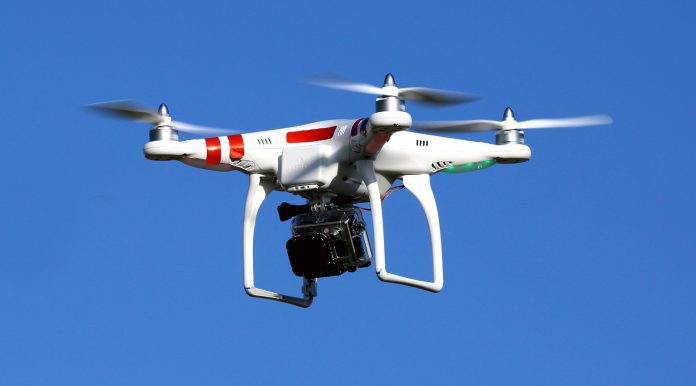
Drone laws are not finalized, and they’re changing
If you’ve been following recent developments in the drone movement, you’re probably aware of just how awesome the currently available models are. High-definition recording, extended battery life, autonomous movement, unprecedented range, and Go-Pro compatibility are only a few of the appealing aspects of your average competing specimen.

As cool (and useful) as this technology is, however, it’s important to be aware of the rules and regulations regarding UAV use—rules and regulations that, for the first time since modern-day drones’ inception, are drastically changing.
Note: none of this should be considered as legal advice, and because the rules are changing, we recommend chatting with your lawyer before putting a drone in the air.
Personal drone use is rapidly becoming commonplace, as some models are approaching an insanely low price of $300. Projected figures show that, by 2019, as many as 8,000 civilian drones may be up and running.
Keep in mind how high you fly
As it sits, current laws reflect the lack of need for regulation until now: as long as you keep your drone below 400 feet, stay away from airports and other obvious security risks, and generally mind your own business, you’re good to go.
Due to recent infractions, however – the most notable of which involve near-collisions with police helicopters or flying too close to the White House – the FAA has proposed some new guidelines that, purportedly, should come into play between now and 2017.
Although said guidelines are largely based in common sense, it won’t hurt to have everyone on the same page.
How heavy is your drone?
Starting soon, all UAVs will have to weigh in at less than 55 pounds to comply with FAA standards. An unencumbered Lily drone weighs a little under three pounds, and since other popular models follow suit for the most part, this shouldn’t be an issue.
More importantly, the FAA will also mandate that the drone must stay in your line of sight at all times; furthermore, barring corrective lenses, you won’t be able to utilize cameras, optics, or any fancy gadgets to meet this requirement.
There’s a speed limit in the skies
A maximum airspeed of 100 miles per hour will be required as well, though the maximum altitude will see an increase to 500 feet.
Operating over people not involved in your usage, other aircraft—manned or unmanned—or restricted sites will be strictly prohibited. This is a huge step for general privacy, but may strongly limit your recreational use.
A right-of-way for other aircraft will be implemented; again, even though this may not become an official rule until 2017, if you’d like to avoid a felony, please use common sense when choosing a flight location.
Don’t fly your drone at night
Finally, the FAA will require you to operate only during daytime, with a minimum of three miles’ visibility.
As an operator, you will have some federally mandated responsibilities as well. Flying a drone while in an unstable mental state (i.e., tired, inebriated, medicated), flying two or more drones at once, and running “careless or reckless operations” will land you in serious legal trouble.
States and feds are settling on final laws
In 2014 alone, nine U.S. states passed drone legislature, while 43 states have proposed over 150 bills regarding drone use. It’s easy to see how one might be confused with all the variants of laws floating around; this FAA ruling should clear up most of that disorientation.
There are too many specific state regulations to list here, but this graphic should give you a basic idea of what to look for in your home town.
Some notable examples include a ban on weaponizing your drone, which came as a huge shock (Connecticut, Wisconsin), using a drone to aid in hunting (Colorado), taking a picture in a way that invades one’s reasonable privacy (California), and general surveillance of non-consenting individuals or their property (Texas, Indiana, Louisiana, North Carolina, Montana).
Drones are, from a utilitarian point of view, incredibly useful—and, from a recreational point of view, super cool. It’s great that the civilian market is expanding to accommodate enthusiasts from all sides of the budget. That being said, pay attention to UAV laws—present and future—because they are bound to change quickly and drastically, and the penalty for violation won’t be a simple slap on the wrist.