Go deeper - join us!
AI assistant wars
In the grim darkness of the AI Assistant Wars (I would totally read that YA fiction series) Amazon has built up a sizable lead. As noted in our December roundup, Amazon’s Alexa was the most fully developed and integrated among the big three of Amazon, Apple and Google. As yet, that hasn’t changed.

But if last week’s Google I/O event was anything to go by, that may stop being the case, and soon.
Google stepping in
In the early days of the Magic Robot Helper race, Amazon had a massive advantage: it sells all the things. It may even be starting to sell its competitors’ things.
They’ve got supply chain-to-retail wired like nobody else.
That got Alexa on the market, in people’s houses, and most importantly in the hands of developers who could actually make Alexa, you know, do useful things, faster than Apple and Google could dream.
The question, and it’s a big question, is whether that’s enough.
At Google I/O, the House of Pichal made a powerful pitch grounded in the many reasons it might not be.
The pitch
The vital fact is none of these AI assistants have really integrated into a user experience yet. Amazon’s early lead only means a bunch of stuff is being sold that has Alexa functionality built into it. Whether the stuff works or people want it, which is kind of what matters when we’re talking market share, is an open question.
There hasn’t been a marketwide push to adopt the tech.
At I/O, Google made a serious case for resolving that issue. Fundamentally, Amazon is a retail company. Google is a tech company, above all an information retrieval and management company. That, it says, is the core of the AI assistant user experience.
It’s meant to be the ultimate interface, the way to get the Internet to answer your questions by just asking them out loud.
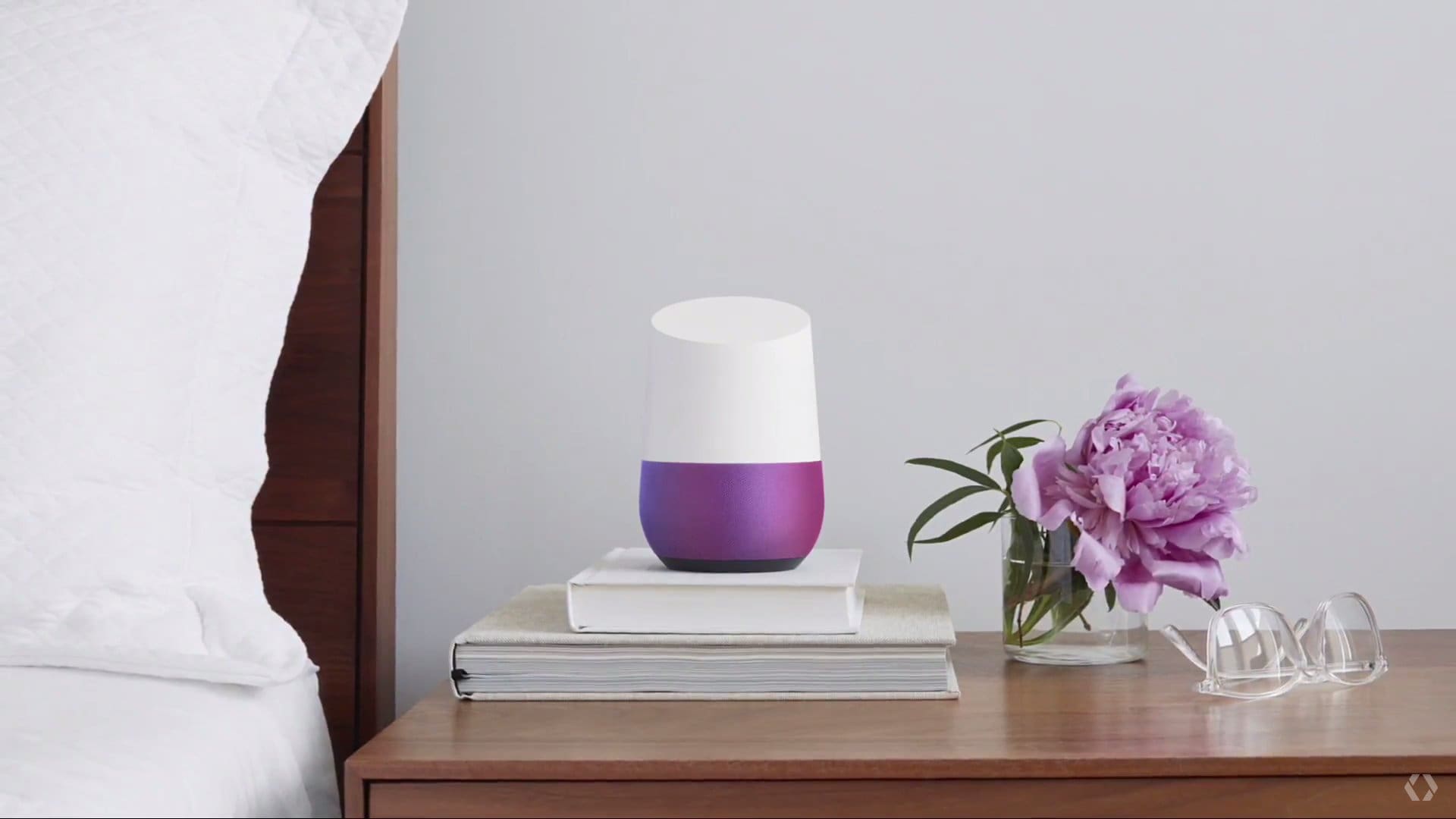
Google is the unquestioned leader in the tech that makes that possible: voice recognition, search algorithms, language parsing and so on. More importantly, Google has a relationship with the developer community that none of its competitors can match, which it showed at the I/O conference by giving 7,000 developers a free Google Home speaker and $700 of cloud computing credits.
Bark and bite
When it comes to AI, Google has quite literally put its money where its mouth is. Will that be enough to outstrip Amazon’s early lead and Apple’s hard core (see what I did there? Apple core? Never mind) of loyalists? We’ll keep you posted.