Home Blog Page 355

5 things you can do with Google Drive right now

19

Moving to the cloud

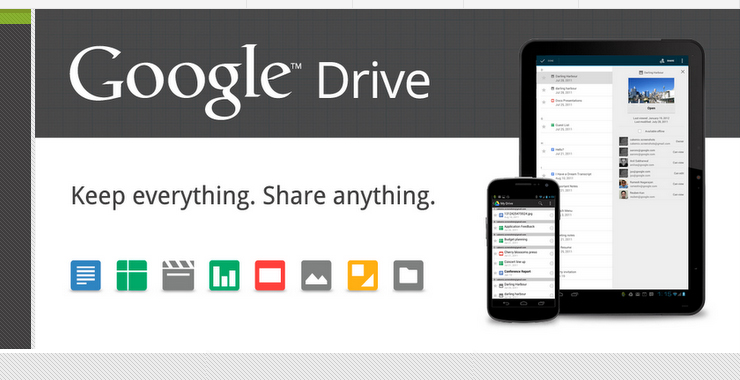
For years, you have heard about “the cloud” and companies have extolled the virtues of storing all of your life on the web, but it has recently gained more attention with the launch last week of Google Drive, Google’s new cloud storage product that offers 5GB for free.

Sundar Pichai, SVP, Chrome & Apps at Google describes Google drive as “a place where you can create, share, collaborate, and keep all of your stuff. Whether you’re working with a friend on a joint research project, planning a wedding with your fiancé or tracking a budget with roommates, you can do it in Drive. You can upload and access all of your files, including videos, photos, Google Docs, PDFs and beyond.”

1. Get Google Drive on your desktop

For PC and Mac users, the first step is downloading Google Drive to your desktop so you can drag and drop files or save them directly to GDrive so files sync between all of your devices. We’ll link your other devices in a moment, but this is a good starting point:

2. Get Google Drive on your smartphone or tablet

Google says iPhones and iPads will soon have access to Google Drive, and there is no word on Blackberry or Windows Phones, but for now, Android users can get Google Drive on their smartphone or tablet so files saved on those devices show up on the Google Drive file just installed on your PC or Mac and vice versa:

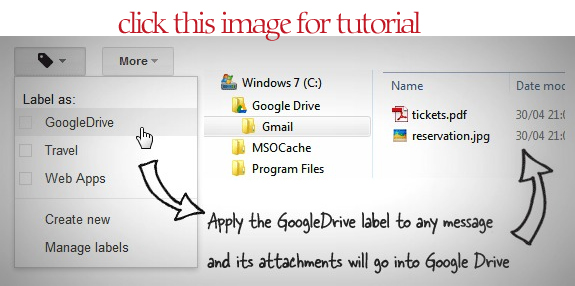
3. Send Gmail attachments to Google Drive

This step is a bit tricky, and we assume that ifttt.com will eventually offer a way to link Gmail (or any digital service) to Google Drive, but for now, there is a hack for getting all Gmail attachments to go directly to your Google Drive. Don’t be scared by the phrases “source code” or anything, you can do this:

4. Digitally sign and/or fax any Google Drive document

Google has teamed up with HelloFax to make all documents from your GDrive easy to sign and fax from the cloud – no fax machine or paper is required. This can be done from any device at any time. Genius! Click the image to learn how:

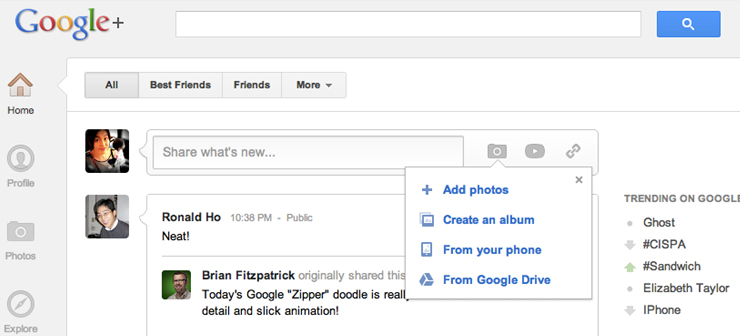
5. Bring photos from Google Drive to Google+

Now, you can bring photos from Google Drive directly to Google+, simply add photos from your Drive to Google+ by clicking the camera icon and selecting “From Google Drive”. Click the image for more info:

One millionth task created through ifttt

One million tasks created using ifttt

One of the most useful internet tricks is tying digital tasks together through the “if this, then that” tool, ifttt.com, which today announced1 that they have hit the one millionth task creation mark, and just as a company that specializes in simplifying life would, the company announced by simply saying thank you on their blog. Really, that was the text of the blog post, “One million tasks created! Thank you! The ifttt Team.”

When a commenter on the blog asked what the lucky one millionth task creator wins, ifttt’s Linden Tibbets playfully wrote, “Haha, an all inclusive trip to… Will have to wait for 10 million before we starting thinking about prizes :)”

What is ifttt?

Using the “if this, then that” conditional logic we all learned in middle school, ifttt.com refers to itself as the “duct tape” that holds together social networks in a completely custom way. AGBeat introduced you to ifttt last fall, offering insight as to how the simple tool works and how genius it is in connecting all of the separate social networks together automatically. Then, in November, ifttt partnered with Buffer, allowing for updates and tasks to be scheduled into the future, solving yet another problem in the digital marketplace.

Our favorite analogy of how the site works is on the ifttt blog – duct tape and lightsabers… “ifttt isn’t a programming language or app building tool, but rather a much simpler solution. Digital duct tape if you will, allowing you to connect any two services together. You can leave the hard work of creating the individual tools to the engineers and designers. Much like in the physical world when a 12 year old wants a lightsaber, cuts the handle off an old broom and shoves a bike grip on the other end, you can take two things in the digital world and combine them in ways the original creators never imagined.”

We have shared many of the hacks available through ifttt, from sending all starred Gmail messages to Evernote automatically to having Twitter update your bio if you update your Facebook bio. Genius!

1 ifttt announcement

Are infographic resumes really welcomed by employers?

4

The rise of infographics

Graphically depicting information is not just a trend on tech blogs, it is also a rising trend with job seekers looking to stand out by visually representing a massive amount of data in a more tangible, memorable way (read: 7 reasons visual storytelling is one of 2012’s breakout trends). There are many who have been generous to share their visual resumes online publicly, so there is a wealth of examples available, but the real question is – do these infographic resumes work? Are they actually welcomed by employers and recruiters?

Michael Harding, co-founder of re.vu, a company that creates resume infographics said, “As a hiring manager, anything that can give me a sense of the whole person quickly is welcome. For the most part, I look at traditional resumes as a chronological list of lies. That’s much harder to pull off when using a dynamic, hyperlinked infographic resume that incorporates evidence of achievements and a history of interactions.”

Harding continued, “Part of the research we did when designing the [re.vu] product was with HR practioners – Recruiters, business partners, and hiring managers. A large majority preferred well crafted infographic resumes though most still wanted the familiarity and security of a traditional resume as well. I tend to believe that the infographic resume alone will be sufficient as people discover the benefits of the infographic approach.”

CareerTipster.com Founder, Robert Starks, Jr. said, “Although infographic resumes are a trend, I am confident there is still a preference for traditional resumes in non-creative industries. I believe the preference is due to familiarity with the traditional print collateral of resumes or Curriculum Vitaes but is also likely due to how resumes are received and analyzed by many companies that have Applicant Tracking Systems.”

Starks added, “However, preference doesn’t necessarily mean they would not be welcomed. Just as any job seeker should incorporate multiple file versions of their resume and many self-marketing strategies into their repertoire, an infographic resume would be another piece of marketing collateral a job seeker could use to effectively communicate their value proposition to an employer. Thus, I believe it would transcend into any career. As I indicated, I believe most employers prefer a traditional resume now but would likely see an infographic resume offered as part of an entire portfolio as an added bonus. Given that most candidates don’t even send thank you letters after an interview, a full portfolio with letters of recommendation, samples of work, and perhaps even an infographic resume, would be impressive. It definitely won’t hurt a job seeker.”

Making a critical note, Starks said, “I do not think it should replace one’s traditional resume, particularly when you are applying via electronic submission because you don’t know how companies screen resumes. It could go directly to a human being or could be filtered by an electronic Applicant Tracking System. Moreover, since traditional resumes are preferred (in my opinion and only as of now), to send an infographic initially may not be the best choice. It would be a great supplement to a traditional resume at this point.”

Case study: which are the most appealing?

Although it does not appear to be a replacement for a traditional resume, Starks and Harding both imply that infographic resumes are, in fact, welcomed by employers. So which visualizations are the most appealing?

We asked Hollyann Wood, Human Resources at big data infrastructure startup, InfoChimps to look at 40 infographic resumes1 (mostly for graphic designers) to tell us which, if any appealed to her, and if she would contact any of the 40 for an interview.

Wood’s top three graphic resumes are shown below, with her most favored at the top.
(Click any image below to see the full resume)


Wood said of the above resume, “I liked the infographics, the bold colors, the straight lines, that it was easy to understand what he was getting at, and the tiny bit of humor injected.”


“Again, there was a little humor,” Wood said of the above resume. “The lay out was really simple, neat, clean, and easy to understand.”


“Simplicity and making it easy to understand what you’re presenting is key. There’s personality, but it’s not overwhelming,” said Wood.

Wood said, “We love data and data visualizations here, and his are simple and easy to understand. They were actually designed to be representative of his skill level/commitment level. Not only that, but all of his [the first choice resume] contact information was clear and easy to find and read.”

1 40 visually designed resumes

Breaking: Trulia to launch mobile ad platform for Realtors

Mobile ad platform on its way

At AGBeat, it has long been observed that mobile is the future of real estate and the race has been heated, as each of the major real estate search companies releases new apps, new features, and new functions. Consumers searching for real estate while physically in their car or hunting on the ground are traditionally more serious or further along in their search than a desktop user who could be months away from even getting in the car. Thus, the race to have the best mobile product.

According to the IAB Internet Advertising Revenue Report1, internet ad revenue grew 22 percent in 2011 to $31 billion, with mobile as the fastest growing of all categories, up 149 percent to $1.6 billion in 2011 compared to $0.6 billion in 2010.

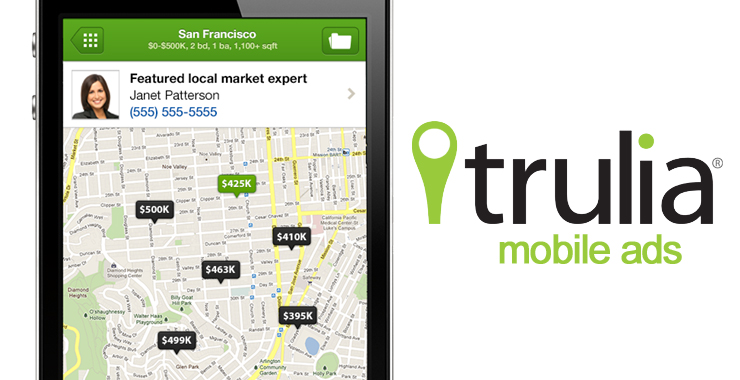
Combining the rise of mobile ad spending with the need for a hot mobile product, Trulia will soon announce their mobile ad platform in an effort to connect real estate professionals with transaction-ready buyers as they search for homes on their mobile devices. Realtors will be able to purchase the most exclusive ad spot on Trulia, with only five ad spots per ZIP code – advertisers can purchase ads in 20 percent blocks, and even purchase exclusivity in an entire zip code.

The banner appears as seen in the image above – a small drop down on the map search results screen, is non-intrusive, minimizes after five seconds in an effort to not annoy consumers, and is completely branded with the advertiser’s photo, name and phone number. Consumers can call the featured agent directly from the banner, or hit a “call now” button on the full-screen ad.

Trulia recently reported that their mobile traffic growth has risen 250 percent in the last year and that 60 percent of mobile users are more likely to contact an agent. The platform will likely be launched simultaneously in the iTunes store, Android Market (Google Play) and the Windows Marketplace, and Trulia Pro users will likely get first shot at buying up zip codes on the new mobile ad platform.

1 IAB Internet Advertising Revenue Report

Debunking the top 3 myths about Pinterest

Myth one: Pinterest is slowing down

There are some rumors out there that people are already losing interest in the visual bookmarking site, Pinterest.com, but it is not so black and white – it is part truth and part untruth. What is true is that the rate of growth is not what it was back in January, but the number of unique visitors to Pinterest in January 2012 was 2 million, which hit 4 million in March 20121. Pinterest is still growing, don’t listen to the hype that it is not. It has already lost the interest of the super early adoptive group that has to only use the latest, shiniest toy, but the rest of the world has flocked to Pinterest.

Myth two: Pinterest is for women

We have long written in frustration that men have been pushed away from Pinterest for several reasons. First, the site has a pink tint to it, and oozes appeal to women. Second, the first users who took to the site were women in the Midwest, so the content posted is often attractive to them, so at first glance, men open the site, see hair and nails and run without seeking out anyone with similar interests – just like Twitter began at the South by Southwest with only the geekiest of the geeky using the service, it did not remain a geek chic network, it went mainstream.

Third, and most importantly, bloggers continue to promote the stigma that Pinterest is for women – there are hundreds of posts on the topic, and infographics like this one that seeks to inspire men, but ropes them all into, “if all else fails, post hot chicks” category. Nice.

While it is true that in January, only 20 percent of all users were men, by March, that ratio increased to 28 percent1 – a rapid increase that cannot be ignored. The male population also depends on what country is focused on – in the UK, 56 percent of users are male, and the most popular topic is venture capital. So, the stigma is not permanent, and Pinterest is most certainly not just for women, regardless of the UI and what bloggers continue to perpetrate.

Myth three: Pinterest users are poor housewives

Although we’ve already addressed the gender issue, let’s address the income issue. It is a fact that Pinterest users have above average incomes, with 21 percent earning over $75k annually, and 29 percent bringing home between $50-75k1. Additionally, buyers referred from Pinterest are 10 percent more likely to buy something than visitors that arrived from other social networks1, which is a tremendous metric that simply cannot be overstated – that is a substantial amount of money.

The takeaway

The truth is that Pinterest, like any social network, is not fitted for every brand, it requires creativity and time, and it just doesn’t click for every person who gives it a try. Pinterest is still explosive in its growth, and users have money and are willing to spend it, be they the growing male population or the already enthusiastic female population.

Bonus: Pinterest humor

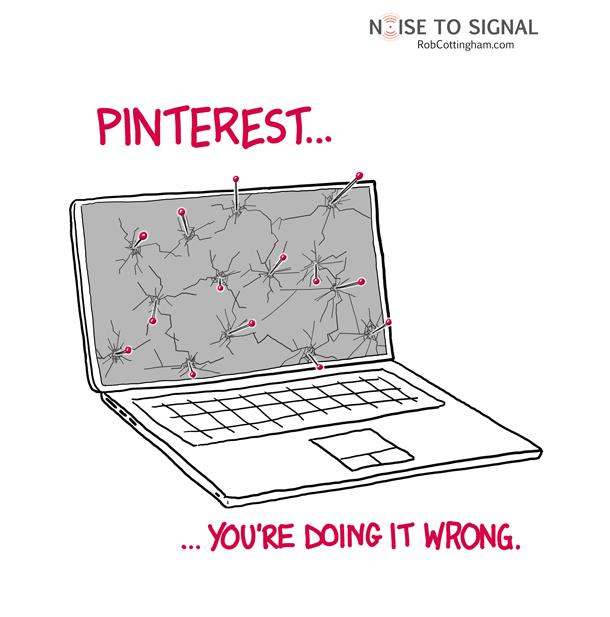
Also, because we like a good laugh as much as the next guy, here is one of our favorite Pinterest parodies:

Lastly, we welcome you to join us on Pinterest:

1 Tamba statistcs infographic

AnyFu: hire tech experts for affordable screen-share sessions

6

Challenge: find a real expert

Since the dawn of time, when a business needs help, they seek out experts, and since the dawn of time, snake oil salesmen have been prevalent. Looking for a social media expert? Just Google “social media expert” and see the 1.16 million results. Or “social media guru” which reveals 2.26 million results, and “social media maven” with over 600k results.

After step one of Googling any combination of these words, you read a few and likely contact the first ones that showed up (they are first in Google for a reason, right?). They tell you about their 3,000 Twitter followers and 2,000 Facebook friends, and you are sold. You don’t know that you need to ask them for a list of brands they have consulted with, or if their expertise is in setting brands up, building a strategy, or fixing failed strategies. You don’t know that their Klout score is irrelevant to their expertise, but they tell you it is, and you don’t know better than to not be impressed.

It isn’t just social media experts, it’s any type of expert, and in some cases, it can be a costly mistake to choose the wrong expert. One such case is when you need help with your website, particularly coding and copy.

That’s where AnyFu comes in. AnyFu is an on-demand technical expertise platform that allows startups, small businesses, and growing companies to find the exact help they need from a curated and concise list of experts that focus on Ruby on Rails, Java, Conversion Rate Optimization, Copywriting, Flash and even Mathematical Modeling. The list goes on and it is likely that the company will continuing adding experts.

The goal of AnyFu is to save businesses time and money with pain free, one-on-one screen-share work sessions, so that rather than back and forth proofs and the like, direct access to an expert can save everyone time, thus money, plus this type of collaboration reduces miscommunication on both ends as to what you are looking for. Additionally, sometimes a brand’s needs vary from simple to extremely complex, which AnyFu is equipped for – most consultants only take on work that is a long term commitment or a large project.

How do you know you’re getting an expert?

Bottom line: AnyFu looks to be extremely picky and experts are vetted by the company’s co-founders Jason Roberts, who also founded Preezo, and Justin Vincent who founded and developed Pluggio and TweetBoard. AnyFu also manages the signing of NDAs and document exchanges, scheduling (and time zone resolution), collecting and forwarding required tax information (1099s and W-9s), invoicing and payment remittance. In other words, they manage the process for you so that you don’t have to become an expert in hiring an expert!

Finding inspiration to keep you in business for the long haul

A 25 year career that still excites

Dr. Suzan Murray is chief veterinarian of the National Zoo in Washington, D.C. where she has worked for 25 years and helped develop a program that shifted away from anesthetizing animals, which is dangerous, to an interactive program where trainers have taught seals to be still for eye drops and gorillas to place their backs against the fence so they can access their health monitors.

Dr. Murray tells Chris Wallace that she started off as a student at the National Zoo 25 years ago. “On my very first day, we anesthetized a cheetah, and I remember thinking ‘I’ve done it,’ you know? I’m a veterinary student and I’ve touched a cheetah, and I can go home now.”

But Dr. Murray didn’t go home, she pushed ahead and has now been the chief veterinarian for over a decade. In everything Dr. Murray says during the interview, her love for the animals, and her passion is so obvious, and it is clear she is one of the lucky people that wakes up in the morning and is enthusiastic about going to work and innovating.

How does one find that inspiration?

Sometimes it takes looking back to your childhood to discover your passion, or even something you enjoyed in school, or picked up along the way. In this recession, we have heard so many stories of people changing careers or starting their own company – it is more common than you may think. When you talk about your career, do you have that glimmer of excitement in your eyes like Dr. Murray, a 25 year vet does?

Tony Robbins says, “Passion is the genesis of genius.” We tend to agree. Finding that inspiration is in tapping into what you are passionate about, taking that risk, that leap of faith that doing what you are really passionate will fulfill your life and put you somewhere you want to be in 25 years. If you already have that enthusiasm, keep pushing, and keep tapping into your genius, and don’t let it fade – these are the keys to longevity in any career.

Generalists succeed by rising to the occasion

Learning to juggle

How many things are you juggling right now? Have you been generating ideas about your start up or small business? Are you burning the midnight oil to solidify your plan for the hiring process and what next steps to take? Do you have a networking group that you have to organize on a weekly basis? All the while, are you working at a full time job, writing your blog, and still managing your daily life? Let me guess, were you a Liberal Arts major? If not, don’t you worry, just take some notes:

Being the Generalist can still make you the Specialist.

I will never forget the day that my favorite professor, whose wife was the Dean of the LBJ School of Public Affairs at the University of Texas, told us about how his wife was currently organizing the arrival of Vicente Fox, on top of everything else that she did with her position at the University. This was prior to Fox’s election to office as President of Mexico. I won’t forget this day because it was the day of his final exam, and Dr. Peter Ward, the coolest man ever, wearing mismatched brown tweed with a striped button-down shirt and a blue bow tie, hardly ever “got personal” about anything!

In his British accent that always sounded so superior, he said to our small group of upperclassmen right before the scariest exam ever about the society of modern Mexico, “You can handle this, you know why? You are Liberal Artists. You are generalists and the masters of all you strive for in your craft.”

He didn’t even look down at us while he handed out the exam. He just licked his fingers and thumbed through the exam papers and handed them down to us in our auditorium chairs. I was thinking at the time. Nice pep-talk, Ward. A generalist… that sounds sort of crappy. Thanks, but you know what? I’ll take it from the man who notoriously hands out big red “F” papers… Eeek. I aced the hell out of that exam, because I listened to every word that dripped from his bow-tie wearin’ face.

Make it work… for you.

We’ve spoken of mantras before and it may not come from a mentor, because we know it is supposed to come from within… say it to yourself again: I can juggle everything. I can handle it. I can take on the request to write another article; I will start another start up; I will be the leader of this networking group; I will be a full-time worker and keep on learning, because I am a generalist.

It doesn’t sound all that glamorous, but when you think about it- when there are people out there who dole out excuses as to why they can’t, and don’t and won’t do something… you have to think about why they are still stuck where they are and why you keep rising to the occasion. Were they a specialist? Probably. They know about one special thing and you have pushed yourself beyond just one thing.

7 Prinstagram products to rock your Instagram world

Instagram as an art

Instagram is a mobile app for editing and sharing photos in a social and artistic way, and having been bought by Facebook for $1 billion, the service continues to grow, even after surpassing the user count for Foursquare, and ancillary services are growing right along with it. Want to sell your Instagram prints as art? There’s a site for that. Want to turn your Instagram prints into postcards? There’s a site for that too.

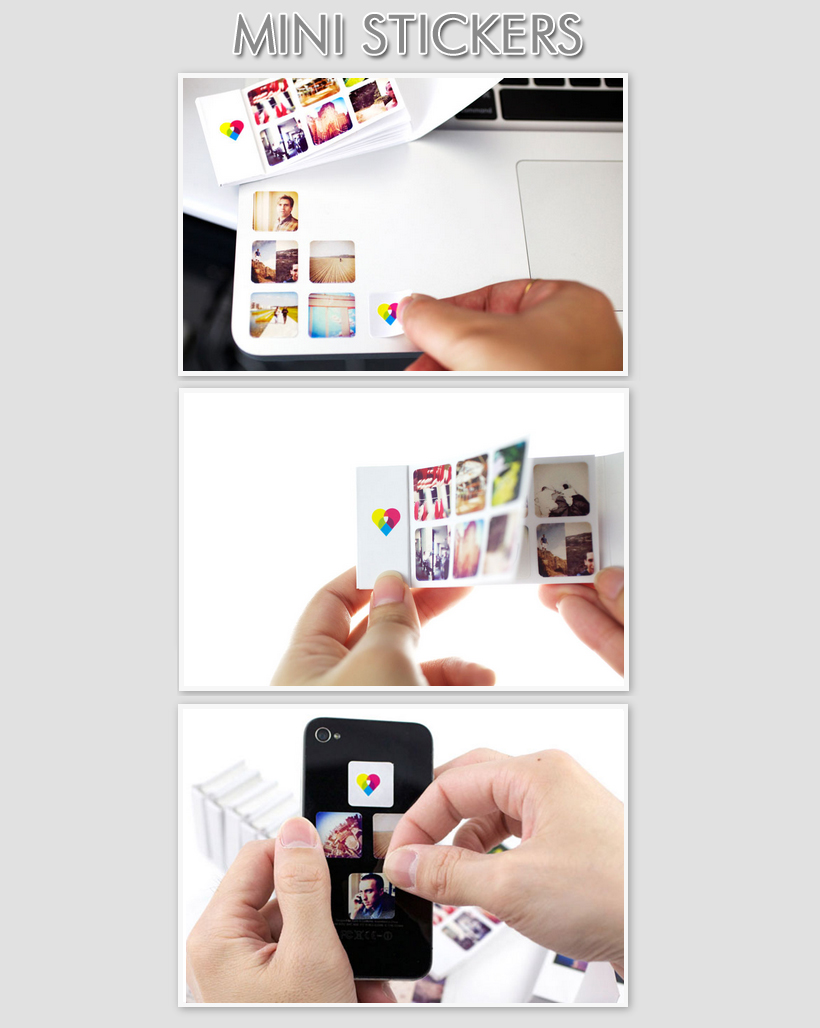
But what if you want to get more creative with your Instagram prints, or you want to use them in your offline marketing campaigns or at conferences? Enter Prinstagram, a service that turns your favorite Instagram photos into mini stickers, a mini book, posters, t-shirts, or even a memorybox. The prices are reasonable, for example, the mini stickers come in books of 126 stickers each and for two books, you pay only $10.

It is a great way to take your Instagram photos to the next level, be it at your office, in your marketing, or even your home. Because Facebook has purchased Instagram, many users are having all of their photos printed out in the event that they become degraded or worse, deleted. It is unlikely, but some are preparing just in case.

7 Prinstagram products

Below are 7 Prinstagram products, click on any to learn more, get pricing, or order:

Bonus:

Although not made by Prinstagram, CanvasPop has introduced a way to print your Instagram photos on canvas in various sizes. We introduced you to CanvasPop way back in 2010, and the printing ideas are still relevant today. Click below to check out the Instagram option for CanvasPop:

HelloFax integrates with Google Drive, makes it a fax machine

2

Faxing from the cloud, no more killing trees

With the launch of Google Drive cloud storage (which syncs all of your chosen files across your devices including your desktop, tablet and smartphone), the company teamed up with HelloFax to make all documents from your GDrive easy to sign and fax from the cloud – no fax machine or paper is required.

In a two step process, visiting HelloFax.com/GoogleDrive will take you to a sign in which requires verification of your Google account, then walks you through easily installing the HelloFax App in the Google Drive Store for free. The HelloFax App sends faxes directly from Google Drive, allows you to receive faxes directly in Google Drive, and even sign documents directly from Google Drive. The cherry on top is that all of your faxes (incoming and outgoing) are stored in your Google Drive, and can be searched for later.

“Never print, sign and scan documents ever again,” HelloFax said in a statement. “With this integration, you can fill out and sign documents, all in your browser.”

HelloFax is doing a giveaway for people that integrate, but what caught our eye is that when you integrate, you get 50 outgoing fax pages per month until the end of the year and unlimited online signatures for all of 2012. “We’re talking business grade online signatures,” the company said. “Some services charge $15-$25 / month for this. We just made it completely free.”

After launching last year, the Y-Combinator backed company set out to challenge traditional faxing, and make it much more like emailing, plus cost effective. Last fall, HelloFax added digital signatures to their offering so that faxes can actually be executed digitally, requiring no printout.

The company was named in the “60 Genius Brands to Watch in 2012” list and we predicted this would be the year that HelloFax goes mainstream. As Google Drive’s faxing option, that looks like a reality that will be sooner than later.

Report: open houses may not help sell homes

The science behind open houses

As over 31,000 homes open their doors this weekend for the “Nationwide Open House Weekend,” one brokerage asserts through their new report that the effectiveness of an open house is not consistent from city to city. Looking at a quarter of a million listings in nine cities across the nation, Redfin donned their “we’re scientists” hat from 2007, and revealed that not all cities are created equal.

First, the brokerage noted that some cities rank highly for volume of open houses, while others barely use them at all:

  1. San Francisco – 83 percent of listings hold an open house
  2. Boston – 63 percent
  3. Seattle – 53 percent
  4. DC – 44 percent
  5. Queens – 41 percent
  6. Portland – 32 percent
  7. Los Angeles – 29 percent
  8. Chicago – 22 percent
  9. Austin – 21 percent
  10. Phoenix – 5 percent
  11. Las Vegas – 3 percent

Product Manager for Statistics and Trends at Redfin, Tim Ellis wrote, “Apparently every weekend is open-house weekend in San Francisco. In fact, holding an open house is so expected there that homes that don’t hold an open house are a full seven percentage points less likely to sell than those that do. In Las Vegas and Phoenix, where open houses are rare, the exact opposite is true. Homes that don’t hold an open house are 17 percentage points more likely to sell than those that do.”

Ellis added, “Everywhere else, the picture gets a little more fuzzy. In the other eight markets we examined, there was virtually no difference in the percentage of homes that sold, whether they had an open house or not.”

Additionally, the national brokerage dug deeper to find that homes that held an open house within the first week of listing rather than later performed far differently:

Should Realtors hold open houses?

“So should you hold an open house?” Ellis asks. “If you’re in San Francisco, absolutely. If you’re in Phoenix or Las Vegas, probably not. Everywhere else, it most likely doesn’t really matter whether or not you hold an open house, but if you’ve got a good agent, he or she will probably hold one anyway.”

6 ways to make a good first impression offline

Making a lasting impression

First impressions can make or break any professional relationship. Although it may seem trivial and superficial to base defining judgments solely from a first meeting, it’s how we all work as humans. The first impressions that we get from people shape how we view them in the future. And it takes a lot of positive, consistent interaction to counteract a bad first impression. When it comes to your business, you can’t take that chance. In order to reach optimum success, every first impression must be a good one. Here are the top ways to make a good first in-person impression with your clients, partners, or competitors.

Show Up On Time – One of the most important things you can for making a positive first impression is to be on time. Actually, if you can, be a little early. Nothing is more unprofessional than tardiness. However, if you know you’re going to be late, let that person know as soon as possible. If you can do that, being late usually isn’t a big deal. After all, you can’t account for every unexpected delay, but you can keep them updated.

Look Presentable – Looking your best is an obvious need when you have a business meeting. However, it goes beyond that. You need to look presentable any time you’re out in public. That means while you’re walking your dog, going to a movie, or meeting up with a friend. The truth is, you never know who you’ll meet. And chances are if you’re not presentable, you’ll run into someone that you could do business with.

Be Prepared – If you’ve planned a business meeting, be prepared. Check and double-check that you have several copies of the contract, proposal, or presentation. Because you could run into a potential business partner or client anywhere, be prepared also means carrying business cards with you and maybe even a pamphlet or two, depending on the nature of your business.

Find Your Confidence – Part of being prepared is finding and showcasing your confidence in yourself and in your business. The trick, however, is to not be too over-confident that it’s off-putting. You don’t want to scare a client away and you don’t want them to think you have an unjustified—or even justified—ego. Sometimes humility and modesty can work wonders, too. You’ll just have to feel out the situation before you know either way.

Be Interested – Show interest in them—meaning, don’t just talk about yourself and your company. Find out their professional needs, what they’re looking for, and their timeframe. Showing interest in them will not only enable you to make a better argument for your product or service, but they will see that it’s more than just closing another deal. Prove that you want to solve their problem through the services you offer.

Find the Balance Between Professional and Personable – This can be a difficult balance to find. You want to portray your professionalism, but you also want to show your unique personality so they’re comfortable with you. You may not get this balance right the first time, but you can with practice.

Making a good first impression is a vital skill to develop as a small business owner and professional. Doing so can take you to the next step in your career and can lift your business to a higher level. A positive first impression means that you’re prepared, confident, and know how to solve a problem through your company’s offerings. But, it’s also about finding the right balance in how you approach someone and how you portray yourself and your brand.

Bold patterned roller blinds are back: interior design trend

Roller blinds are back

Roller blinds are back and we don’t mean the kind that were in your day care center a trillion years ago that came in creme and had that circle thingy at the bottom that snapped eyeballs out when the roller was pulled up or down too quickly. No, roller blinds have come a long way, and not only are they aesthetically pleasing with modern patterns and colors, they function much more differently now and come with a lot of features.

Roller blinds of today are flame retardant, and you can get them in blackout, dimout or diffused, and can even order reflective roller blinds to help keep your home or office cool and the electric bills down, as this summer looks like it will be a pretty harsh one. Some are stain proof and easy wipe, and some are even moisture proof which is great for those condensation-filled mornings. Additionally, some roller blinds are even made with hypoallergenic materials.

We are seeing these being used as a high impact focal point for rooms, especially with minimalist, modern, or transitional interiors. Solids and textures are available, but what is hot right now is the big, bold patterns, be they floral, striped, or chevron.

Click any image below to visit the store each roller blind set comes from, or talk to your local interior designer or drapery consultant.


If you’re here from Pinterest, we invite you to connect with us:

Costco rolls out new mortgage lending program

Costco and mortgage lending

After a year of testing, Costco has announced they will roll out a full service mortgage lending program on its website through their partnership with eleven lenders who have already issued over 10,000 mortgages under the program, according to CNN Money. Although the mortgages are not wholesale, they do claim to offer discounted closing costs and low rates for new mortgage applicants and refinance applicants.

The company already offers financial products like auto insurance and health insurance and stock brokerage services, and will soon offer auto and student loans. “We’ve always known that our members wanted more financial services,” a Costco spokesperson told CNN.

The Costco online mortgage program looks a lot like LendingTree, gathering quotes from a variety of lenders, but in the case of the Costco program, the borrower’s identity is private until they officially select a lender, so it is less of a lead generation portal than a servicing site.

Costco’s policies for all eleven lenders include accuracy in all terms including the rate, and rapid follow up on requests or questions, which will be monitored by their primary partner, New Jersey based First Choice Bank and Costco corporate. The company says they make no profit from the lending, rather is paid to market the services, so no surprise costs pop up at closing.

Mortgage lending has yet to move completely online across the board, as most people still need some level of hand-holding not only from a real estate professional but their lender, as they make the largest purchase of their lives. While Costco is not offering mortgages, rather offering a search portal online, the company appears confident in the quality of the services offered and is one of many locations consumers will go to in checking rates, so it is important for industry insiders and consumers to be aware of, especially if they’re also in need of a tub of 10,000 pretzels or 80 rolls of toilet paper.

MetLife leaving the reverse mortgage business

MetLife continues mortgage exit

MetLife Inc. has announced that it is leaving the reverse mortgage business and selling their servicing portfolio to Nationstar Mortgage LLC, according to National Mortgage Professional magazine. The transaction is subject to regulatory approvals and standard closing conditions, but as of the announcement, MetLife Bank will no longer accept any new reverse mortgage loan applications and registrations.

This move is part of a series of strategic changes that put the company’s focus squarely on their core as a global insurance and employee benefits company, as the company decided in 2011 that a bank holding company structure was no longer appropriate. Since that decision, MetLife has reached agreements to sell their bank’s deposit business to GE Capital and sell the bank’s warehouse finance business to EverBank.

The company points to a board decision as to the restructure, but last summer, we reported that the bank was facing scrutiny from the Federal Reserve Board and regulations like the Dodd-Frank act, and made the decision to sell their bank assets totaling $15.6 billion with $9.3 million in deposits.

After last summer’s announcement that the bank was closing, and now the reverse mortgage business selling, it is clear that MetLife is true to their word of scaling back all banking activity, regardless of the inspiration, and focusing on insurance and benefits.

Other companies that branched out in the past are following suit, not by closing down, but by selling off their portfolios to focus on their non-banking competencies, as banking is not exactly an attractive industry to be in, with the billions of dollars in lawsuits, the federal scrutiny, the state agency investigations, and the bad press. It is unclear which companies are next in the line of sell-offs, but MetLife has definitely stood by their statement that they would focus on what they do best.

Amazon Kindle Fire accounts for over half of all Android tablets

9

Amazon Kindle Fire on fire

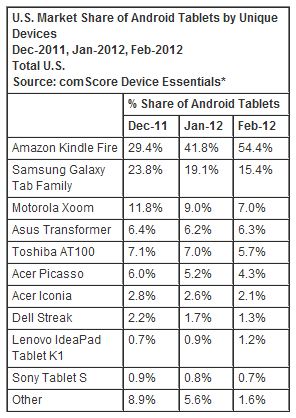
According to new comScore data1, the Amazon Kindle Fire has doubled its share in the tablet market in the past two months from 29.4 percent share in December 2011 (just a month after its debut) to 54.4 percent share in February 2012. ComScore asserts that the Kindle Fire is already establishing itself as the leading Android tablet by a wide margin.

The second most popular Android tablet is the Samsung Galaxy Tab with a market share of 15.4 percent in February, followed by the Motorola Xoom with 7.0 percent share, and the Asus Transformer (which is currently under fire for poor quality) and Toshiba AT100 rounding out the top five with 6.3 percent and 5.7 percent market share, respectively:

Size matters

Tablet adoption in America continues to rise, which comScore notes is in part due to price and feature preferences introduced to the market, with screen size as the most obvious differentiator between tablet devices. The Apple iPad is 10″ while the Sony S1 is 9″ and the Amazon Kindle Fire is 7″ with the newly discontinued2 5″ Dell Streak.

According to comScore, “Analysis of page view consumption by screen size found a strong positive association between screen size and content consumption. Specifically, 10″ tablets have a 39-percent higher consumption rate than 7″ tablets and a 58-percent higher rate than 5″ tablets.”

Advantages of tablets

Tablet purchases in general are rising rapidly, boosted by strong sales during the Christmas holiday season. From grade schools to universities, educational institutions are also beginning to use tablets in instruction and with students. Meanwhile, laptop and smartphone owners are frequently adding a tablet to their repertoire, owning multiple devices, particularly for mobile use. Tablets are booming, there is no question.

But the technology is not without flaws. Although the Amazon Kindle Fire now owns just over half of the market, there are several problems3 ranging from poor sound quality to the problem of “fat fingers” in that items can be difficult to navigate unless touched in the smallest of areas, just a few pixels wide. The Kindle Fire screen is also said to be much more prone to breakage than a reader like the Nook.

Regardless of problems with any technology, the adoption rates are extremely high and rising, and regarding Android tablets, the Kindle Fire is by far the most popular of them all.

Why 11 out of every 12 startups fail

The challenge of scaling properly

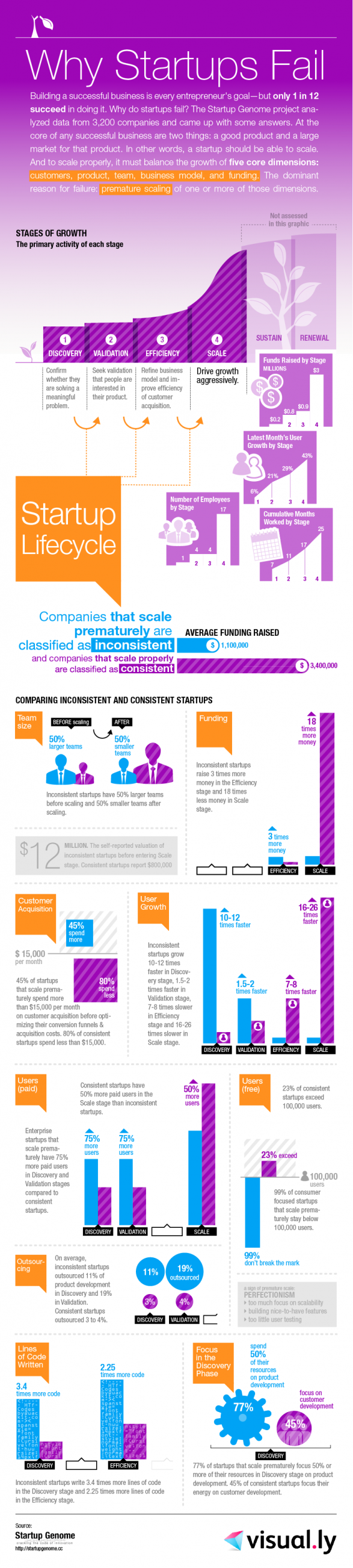
Consumer-focused startups abound in today’s business world. Many of the business owners are serial entrepreneurs because their previous business ventures were not as successful as they had originally hoped, or that they’ve have another great business idea. However, one problem with the modern startup is that only one in twelve startups actually succeeds, according to The Startup Genome Project, which are obviously challenging odds. The main problem has been pinpointed to the rate of premature acceleration, or scaling.

Many comparisons can be made between the successful and unsuccessful startup. One of the most interesting, and perhaps telling comparisons is the success rates of startups who offer free products and those who offer paid products. To start off, The Startup Genome Project defined two key terms needed to understand their findings—the “consistent” and “inconsistent” startup.

The Inconsistent Startup

This type of startup means that the company has moved to expand and aggressively market their business prematurely. Doing so usually means the startup skipped the crucial step of refining the business model based on validation and feedback from interested parties. Instead of perfecting the business model, a company decides to move forward without fixing all of the glitches.

The Consistent Startup

On the other side of the spectrum is the consistent startup. This simply means that the startup scaled their marketing and output efforts effectively and at a steady rate. The consistent startup takes a more reserved and systematic approach to the growth of their business, because they want to make sure they have a stable foundation on which to build and grow the business.

Comparing the two:

The Startup Genome Project published the following percentages:

  • consistent startups have 50% more users who paid for products than the inconsistent startup.
  • 23% of consistent startups who offered free products have over 100k users or customers.
  • 99% of inconsistent startups with free products never break the 100k mark.

The takeaway lesson for startups

So, how does this apply to your startup? Perhaps the most important lesson learned is that consistency is key. Building and improving your startup consistently will help you to retain the interest you already have in your business and then you can add to it at a healthy, steady rate. While you may have expected the startups that offered free products to succeed over those that offer paid products, it simply isn’t the case.

Startup success has more to do with providing a great, useful product while slowly building steam and marketing efforts. This way, you’ll have a steady, stable following that will be there to celebrate with you once you’ve ironed out all the problems in your business model.

Nationwide Open House Weekend offers over 31,000 listings

Open House Weekend

In an effort to celebrate the spring home shopping season, Realtor.com, the National Association of Realtors and regional MLSs are kicking off the Nationwide Open House on April 28-29, offering tools for agents to improve open house conversions, and encouraging consumers to search the site for all available open houses in their area.

Because the National Association of Realtors (NAR) says that 45 percent of all buyers use open houses during their searches, and only 58 percent of agents hold open houses for their listings, a consolidated effort is helpful for a housing market that continues to struggle.

According to a NAR survey of buyers and sellers, 7.0 percent of home buyers found their agent through an open house, and NAR also reports that 65 percent of buyers go with the first agent they interview. So although the numbers for open houses being the source of a consumer finding a buyer’s agent, they often hire the first agent they interview. For listing agents, open houses are often part of an overall marketing strategy offered to listing clients to get more foot traffic in the door.

“Open Houses are back”

Orange County Realtor, Linsey Planeta said, “Just a few short years ago, it was about signage and feet on the street to promote the Open House. Those things are still valuable, but online promotion has vastly changed the Open House strategy.”

Planeta noted that “During my last two Open Houses, when I asked visitors how they found my Open House, at least 80% replied they had found it, ‘…through the Internet’. Not only has the traffic increased, but the client is targeting homes that fit their needs, their price range, and their geography. That’s a much higher quality visitor than the one that may have just stumbled upon it following signs. I think Open Houses are back as a viable way to attract buyer prospects, and more importantly for our sellers, attract buyers for their home.”

“It is a win/win for everyone.”

New Jersey Realtor, Bob Kelly at RE/MAX Main Street Realty said, “Open house weekends are essentially the same as going to a buffet. There are all kinds of homes to suit all types of tastes offered at the same time. Open houses are an opportunity for buyers to view a home without being committed to the process.”

Kelly added, “They also have the opportunity to meet many agents and have conversations which essentially are interviews. They can see which agents give them a comfort level and with whom they would consider working. Agents on the other hand also have the opportunity to gain exposure for their listing as well as themselves. Neighbors may come in and take notice of what their competition is as well as how it is presented by the realtor. It is a win/win for everyone.”

Open House Weekend stats:

NAR: housing has turned the corner, 2012 a year of recovery

Pending home sales improve

According to the National Association of Realtors’ (NAR) Pending Home Sales Index (PHSI), contract signings rose in March by 4.1 percent from the month prior and is 12.8 percent higher than March 2011, marking a considerable improvement. Like last month, pending home sales (contract signings) are at their highest level since April 2010.

Although most NAR reports express cautious optimism, this is one of the first times since the housing crash that the organization’s leaders have seemed confident in the impending housing market recovery.

Dr. Lawrence Yun, NAR chief economist, said that 2012 is expected to be a year of recovery for housing. “First quarter sales closings were the highest first quarter sales in five years. The latest contract signing activity suggests the second quarter will be equally good,” he said.

The PHSI in the Northeast fell 0.8 percent in March, but has risen 21.1 percent from March 2011. In the Midwest, closings fell 0.9 percent, but are up 16.9 percent from a year ago. In the South, the PHSI jumped 5.9 percent for the month and 10.6 percent for the year, while the West saw a 8.7 percent increase for the month and a 9.0 increase for the year.

“The housing market has clearly turned the corner,” Dr. Yun added. Rising sales are bringing down inventory and creating much more balanced conditions around the county, which means home prices will be rising in more areas as the year progresses.”

NAR is not alone

Zillow chief economist Dr. Stan Humphries says home values will bottom out in 2012, which is not the exact recovery NAR is now portraying (after months of what appears to us to be hesitancy to do so), but the two organizations that collect and analyze data are at least seeing a break in the clouds for this year.

“For people who have been waiting to time their home purchase close to market bottom, it’s time to start shopping,” said Zillow Chief Economist Dr. Stan Humphries. “When the bottom will hit will vary by market, and it’s nearly impossible to time a purchase exactly right. But home prices are not the only part of the equation. Buyers also should take into account the possibility that rising mortgage rates could offset any further home value declines that may occur.”

Dr. Humphries added, “From an economic perspective, the latter part of the first quarter is full of positive news as the spring selling season gets underway. While it is unlikely that national home values continue to rise at this rate through the rest of the spring and summer, it is undeniable that we are seeing sparks of life in the housing market.”

Why Millennials will not buy these 8 products in the future

The mysterious Generation Y

Generation Y, also known as Millennials were born between 1980 and 1995, and already outnumber Baby Boomers and out power their parents in spending power, so marketers are salivating over how to reach this generation who values the opinions of strangers online equally to the opinions of their friends and family1.

24/7 Wall St. created a list of products that the “Facebook Generation” (aka GenY, aka Millennials) would not be buying in the future, but do Millennials agree?

Millennials will not use email in the future

Although Google and Microsoft are likely to disagree, Facebook founder, Mark Zuckerberg called email “too formal,” which is the basis of 24/7’s argument that Millennials will not use email for much longer, pointing to email use falling for the 12-17 demographic and rising for people over 55.

The idea that email is disappearing is ludicrous, in fact, email use is on the rise across the board as spam filters are finally working 20 years later, and we all get as much spam on social networks as we do in our email inbox. Zuckerberg has never lived in a cubicle, so his word is not final on this matter, and considering 12 to 17 year olds as the benchmark for email use is misguided, as they are not yet in the professional world. What is accurate, however, is that for personal use, it is not likely any Millennial will pay for email, so we can meet 24/7 half way on this one.

Generation Y won’t buy beer

According to 24/7, there is a shift in beer consumption, and after traditional beer brewers like Budweiser having relied on men in their 20s are watching their core demographic slip away to lite brands. Budweiser research reveals that 40 percent of young people today have never tried regular beer, which was 10 percent in 1988.

This is a really complicated product for a number of reasons, but is worth looking at for other industries to learn about the Millennial generation. 24/7 is right in that the traditional beers are being ditched for light beers, but moreover, the generation is more open to wine and mixed drinks, as the generation has much fuzzier gender boundaries than former generations – it’s not butch for a girl to drink a beer, and it’s not feminine for a guy to order a mixed drink.

We’ve come a long way since the Mad Men era of scotch and masochism, and most marketers are highly ignoring the changing gender roles. It’s okay for a man to be the stay at home parent in the Millennial generation, it’s okay for a woman to be a CEO, and sexuality is blurred as well. These all play a role in purchase decisions as men and women are less concerned with what a product choice says about their gender or sexuality.

Newspapers are on the way out

People under 30 don’t read newspapers now, and media companies are scrambling to figure out their next move – 24/7 is right on with this projection. Millennials are mobile, and they are multi-taskers. Reading a newspaper requires one to sit still and look at the same thing for an extended period, which is not a common behavior for Millennials when it comes to media consumption.

Books are still in use for this generation, but the next will not likely even touch print. The web opens so many doors and allows information to flow freely, so although newspapers in print will not reach Millennials, digital news does, and boy, does this generation consume a lot of that, whether it is niche news or celebrity news.

No more cars?

This one surprised us a bit, as 24/7 says less than half of all Americans 19 and under had a license in 2008, and car sales have struggled to reach the younger demographics.

Why is this? In my opinion, there are four reasons. First, after high school, most Millennials do not see see cars as a status symbol as previous generations did. Secondly, laws have changed dramatically for this generation, many of whom were not legally allowed to get a license at 16, so that “sweet 16” mentality is shifting, so the importance placed on that car is different now. Third, although frequently accused of being “slacktivists,” Millennials volunteer more hours and give more money to environmental causes than any generation in history, grew up around recycling, were told by age 10 that global warming was real and it was our fault. Lastly, cars are becoming less relevant because Millennials are flocking to the city and emphasizing buying homes and condos that have high walkability – it is almost cool with this generation to boast that they “got rid of” their car.

Adios, landlines

24/7 argues that most 25-29 year olds live in a household with only wireless phones. There is no arguing here – I’ve had a cell phone since I was too young to get one without an adult co-signer, and although I grew up with a phone in my house, by the time I was in college, no one talked on the phone, we all texted or emailed or instant messaged. Dorms and student apartment housing being built now in some cities does not have the wiring for landlines, as developers are discovering that it is a feature most do not use, thus a corner that can be cut.

What is still up for debate is VOIP phones, as most Millennial entrepreneurs that I know have this as their setup so they can have a professional voicemail system or route it to other staff including an assistant. This avoids professional contacts calling their cell phone and getting the “wazzuuuuppppp!!?????” voicemail greeting.

I would add that many Millennials, having grown up with social networks (in my case AOL, ICQ, etc., and in my final year of college, Facebook) divide their personal life from their professional life in a very guarded way, not friending anyone on Facebook that they haven’t met in person and know socially. Keeping a separate phone is something I can see increasing in coming years, but not so that there is a landline, but due to the division of personal and professional as the generation becomes acutely aware of how each impacts the other.

Suck it, cigarettes

Smoking rates among young people have historically exceeded those of the general population. Now that group is dropping the habit quicker than anyone (down 17.6 percent from 2005 to 2010) while it Americans over 65 have increased their smoking by 10.5 percent in the same period.

What businesses need to glean from this particular factoid is that Millennials may eat junk food, but anything that is obviously a health risk is often avoided, even binge drinking which is decreasing as well. I find my generation to be very conscious of being healthy; not necessarily for vanity, but for reasons of health. Think of it this way – a first date in 1980 might entail a 24 year old discussing what car they drive (going back to the car prediction), what high profile job they have, what texture is on their business cards (I kid), while a 24 year old today will chat about what local foods they like, or where they go running in the morning, or how they worry that their shirt took a trillion gallons of pollutants to make. These two cases are obviously an exaggeration, but my point remains.

Dude, you’re not getting a Dell

24/7 notes that Millennials are the only demographic to own more laptops than desktops, and most buy laptops as their first computers. I would add that the rising popularity of tablets will also have an impact on the fact that Millennials are not typically tied to desktops for personal use, but of course, all are bound by what their employer requires of them.

Technology manufacturers will adjust, and already know that mobile is where it’s at. Smartphones did not replace computers as once suspected, as websites and technology did not catch up fast enough, and Millennials are bi-techtual, meaning they usually own more than one device. It is common to own a laptop, a tablet, and a smartphone, not necessarily by the same manufacturer – not all Mac fans are die-hard, many will own a Macbook Pro and an Android smartphone, so brand loyalty is also in flux.

Television is absolutely on the way out

Although television sets are not at all going away, the viewing habits are rapidly changing, with Millenials between 18 and 24 watch less traditional television than any other demographic and Netflix and Hulu are taking over viewing for this generation. Many do not even have cable, which is an adjustment that carriers will be impacted by, but will likely make up the difference by increasing internet rates, claiming there is no more bandwidth because of the video streaming, so the costs will even out in the long run.

The takeaway

Millennials are not a complex generation, we just grew up with technology, which doesn’t make us more special, smarter or faster than any generation, just different in how we consume products. We care less about status symbols and more about convenience. We care less about being called gay for ordering the wrong drink or wearing the wrong shirt, and we genuinely care about our health after watching the previous generation force airplane seats to widen by however many inches over the decades.

Marketers frequently miss the mark in reaching Millennials, tying to much of their assessments to technology and the impact it has had on the generation, but it is much more sociological than many believe. It has less to do with a stupid iPad and more to do with how we see ourselves and those around us, having had a different type of access to the world via the web. It is important for brands of all size that plan on growing in coming years to understand the relatively dramatic shifts going on right now in consumer behavior, as Millennials are now very powerful buyers in the market.

1 Millennials now outnumber Boomers
2 Study: Millennials value strangers’ opinions as equally as friends and family

Zillow: expect home values to bottom out in 2012

Home values on the rise, will bottom out this year

According to the Zillow Home Value Index (ZHVI), home values rose 0.5 percent from February to March, the largest monthly increase since May 2006, before home values peaked then popped. Although values rose in March, the ZHVI fell 3.1 percent from March 2011 to $146,200. As opposed to economic indicators that measure home prices, this index is compiled based on average Zestimates (automated home valuations through Zillow’s algorithm), which gives a broader picture to include homes not for sale.

Of the 30 markets monitored by the ZHVI, the company says that 19 will reach their bottom in 2012, some of which already have. Zillow predicts home values will remain relatively flat for the next year, reaching a bottom in late 2012.

Zillow forecasts significant home value increases in the next 12 months, including the Phoenix (6.5 percent), Miami-Ft. Lauderdale (5.6 percent) and Tampa (2.5 percent) metros, according to the forecast. Atlanta, on the other hand, is expected to continue sliding, as Zillow forecasts values will fall another 4.1 percent in the next 12 months, and Chicago will fall 3.8 percent.

“For people who have been waiting to time their home purchase close to market bottom, it’s time to start shopping,” said Zillow Chief Economist Dr. Stan Humphries. “When the bottom will hit will vary by market, and it’s nearly impossible to time a purchase exactly right. But home prices are not the only part of the equation. Buyers also should take into account the possibility that rising mortgage rates could offset any further home value declines that may occur.”

Dr. Humphries added, “From an economic perspective, the latter part of the first quarter is full of positive news as the spring selling season gets underway. While it is unlikely that national home values continue to rise at this rate through the rest of the spring and summer, it is undeniable that we are seeing sparks of life in the housing market.”

March foreclosure rates

In the first quarter, foreclosure rates fell to 2009 levels with 7.4 out of every 10,000 homes foreclosed, down from the 8.3 out of every 10,000 homes foreclosed in February. Despite the improvement, foreclosure resales hit a new high, with 20.5 percent of all sales for the month being foreclosure resales.

“March’s lower foreclosure rate does not show signs of the expected increase after the multi-state attorneys general settlement in February,” Dr. Humphries said. “But we should take this news with a grain of salt, as there still exists the possibility for foreclosures to increase again.”

Home values via chart:

To see the ZHVI for your state or market, visit Zillow. For national ZHVI data, click any image below to enlarge:

Four ways to spot if a blogger is burned out

4 ways to spot that a blogger is burned out (lack of updates, declining quality, etc.) and 4 ways to spot that YOU are burnt out on your blog (can’t find inspiration, etc.)

The right web content can bolster and strengthen your online reputation and connect you with your target market. One of the easiest and most rewarding ways to share this valuable content is through a blog. Blogs enable you to share up-to-date information with your readers and provide a forum for discussion and comments, in turn creating interest in your brand. However, simply having a blog isn’t enough. It’s also about having the right blogger. But blogging can become tedious and monotonous, and when that happens, it shows.

Spotting burn out in other bloggers

If you’re worried that the person blogging for your company (or even for a site you depend on for information) is burned out from the daily tasks of compiling data, writing content, and finding relevant images, here are four red flags to look out for:

1. Declining Quality – You may find that your blogger doesn’t catch as many grammatical or spelling errors as usual. This may mean that your blogger isn’t completing an additional read-through before submission because she just wants to be done with it. When a blogger is burned out, the quality is usually the first thing to go.

2. Lack of Updates – The second red flag to look out for is a lack of consistent updates or a mass quantity of submitted blogs right before a deadline. A blogger who is not burned out usually will remain consistent with postings, whether that is one a day or a few times a week. If your blogger has been silent for a while, you may want to identify and rectify the problem before moving forward.

3. Only Does the Minimum – You’ve probably set a minimum word count for your blogger. A burned-out blogger will only do the minimum, just enough to scrape by and call it done. You may even notice that the blogs seem to stop in mid-thought or doesn’t include a wrap-up paragraph because that would’ve pushed the blog to be more than the minimum word count required.

4. Repetitive Content – After a while, many bloggers resort to writing about the same old topics over and over again or even repackaging content they’ve already written. This could be because they’re comfortable with the topic or it’s easy to whip out 400 words on a topic they’ve already researched. All they have to do is word it a little bit differently.

Fatigue surrounding your own blogging efforts

But it’s not just bloggers that you should keep an eye on for burnout; you’re also susceptible. When considering your own blogging efforts, here are four ways to identify if you’re burned out, too.

1. Can’t Find Inspiration – Finding blog inspiration can be one of the hardest parts of being a regular, consistent blogger. If you struggle to find inspiration for new blog posts, you may be burned out. Even when you’re looking for blog inspiration, every topic or idea may seem too wearisome or difficult to capture with words. When you don’t even try to capture those brief moments of inspiration, you know there’s a problem.

2. Everything Else Becomes More Important – We all have a lot of items on our daily to-do lists. However, when everything else on that list suddenly becomes more important—especially if those include checking personal social networking sites, de-linting the dryer, or organizing your pens or notepads—this may mean that the idea of blogging that day causes stress and anxiety. And that’s when you know you’ve reached burn-out.

3. Anxiety over the Reception – Sometimes being too wrapped up in the reception of a blog post can cause burn-out. Let’s be honest; dealing with both positive and negative comments, constantly worrying about stats and numbers, and trying to get the information across while maintaining political correctness is exhausting. Instead, focus on the heart of the writing, the purpose and point of each particular blog. Leave the comments and the numbers for another day.

4. You No Longer Love What You Do – Now, this is a big red flag to watch out for. If you don’t love what you do or what you blog about, it will be a pain for as long as you do it. The trick is to find subjects and topics that interest you, excite you, and make you think. Otherwise, what’s the point?

Burning out from blogging is common because it is a constant demand. No matter how ahead-of-the-game you get today, you’ll still have to do it all over again tomorrow, and then again the next day. And that can become tedious very quickly. Once you’ve identifying blogger burnout, whether it’s one of your employees or yourself, it’s time to find ways to remedy the situation, including taking a few-days break, assigning new and unique topics, and getting back to why you started blogging in the first place. Then you can beat the burnout and continue with your work.

7 reasons visual storytelling is one of 2012’s breakout trends

The rise of visualizations

You’ve seen infographics on websites, embedded SlideShare presentations, illustrated videos, and more, that give consumers a way to consume data more concisely and in a more memorable way. Visual storytelling is compelling and the art and technology supporting the trend are improving, as are the standards and expectations of consumers.

Jason Amunwa at SlideDeck 2 tells AGBeat that “though it’s early in 2012, the importance – and necessity of visual storytelling is already one of the year’s breakout trends.”

According to Amunwa, below are the seven reasons that visualization is a breakout trend:

  1. A Better Experience for Users is Essential. A bad experience can leave a sour taste in a user’s mouth, but a good experience will keep them coming back for more. More and more brands are picking up on this: i.e.: Spotify, Instagram, etc.
  2. Social Media Is Becoming More Visual. From Facebook Timeline, to the sale of Instagram, to the immense growth of Pinterest, people are more interested in using photos to show their stories rather than tell them using 140-characters or less.
  3. Apps Have Changed Our Expectations. App design has spoiled us because now we’re expecting that seamlessly beautiful experience from everything we interact with. As a result, “app design” is forcing web-based designers to be more innovative and creative.
  4. Multi-Resolution Viewing Is Becoming Standard. In the early Internet, everyone was using the same type of browser and getting the same web experience. Nowadays, everyone has a smart phone or a laptop or a tablet. There are multitudes of different devices an individual could be using to view a webpage – and it’s up to the designers to account for that.
  5. Minimalist Designs Are Getting More Done With Less. Whether it’s a business site like Simple.com or a blogging platform like Tumblr, using visuals to create minimalist designs that convey only the essential information is making the web more responsive for users. Sites that are clean and simple to use allow users to do what they need to do in a fast, responsive, and intuitive way, thus producing higher satisfaction and loyalty.
  6. Special Effects Adding “Wow” Factor. Advances in web technologies have given designers the freedom to break away from archaic, newspaper-like navigation and explore new realms of possibility. As we mentioned earlier, apps have changed people’s expectations. As they’ve gotten used to slick app interfaces they also expect the same from their web experiences.
  7. Visuals are Universal. The Internet is a place that is constantly changing, as is the language used to talk about it. However, visuals are a universal language that can withstand the tests of time. Visuals are capable of evoking emotional connections in a broader audience of people while words can limit the scope of where a message can go and who can understand it.

There are many methods being used to visualize content, like Amunwa’s team at SlideDeck 2. Social networks like Facebook, Pinterest and Instagram are forcing brands to think and act more visually. With that in mind, digital-telepathy, the company behind the original SlideDeck and the Hello Bar, designed SlideDeck 2: a simple way for websites to showcase social and web content in a visually stunning way through an easy-to-use premium WordPress plugin. SlideDeck 2 is a dynamic content slider that brings a new aesthetic to website design.

Instead of forcing website managers to create content from scratch or reformat what they’ve already shared via social media, SlideDeck 2 automatically pulls in content to show on WordPress-powered sites. It integrates with Instagram, Flickr, Vimeo, Google+, Dribbble, YouTube, Twitter, Dailymotion, Picassa and RSS feeds. As a design company, digital-telepathy is focused on the beautification of the web. By adding a new layer of design to content sharing, SlideDeck 2 is a major step forward in helping brands easily make their content visually appealing.

YouEye analyzes videos of real people using any website

12

Getting useful feedback on your website

Are you in love with your website but seem to be the only one? Are you testing different versions of new website features or investing in an entirely new website? Are you in disagreement with your designer over how consumers will react to your site? Maybe you are just unsure of why your site is not converting.

Enter YouEye.com which offers user experience testing that is much more affordable than commissioning focus groups and expert analysis (which are both valid and useful, but not usually within reach of a small business). YouEye allows you to create a user test in seconds or choose from a library of existing tests, recruit verified testers, or hire specific demographics to view your site.

Validating your site, using the free trial

You can then watch videos of people completing the test of tasks you’ve asked them to, and can see their screen, hear what they have to say, and gain insights into their likes, dislikes, and points of confusion. You can even invite people directly to take the test by sharing a link with your existing audience.

The turnaround time is extremely fast, so you can validate new features, design elements, marketing copy or even your competitors – you aren’t limited to getting feedback on just your site.

Because the service has a free trial with a real live person viewing your site, it is worth a shot to at least take a quick pulse on consumer reaction to your site. Even if you have already done user testing, trends change every quarter, as do consumers expectations, and these expectations can be higher or lower depending on your industry.

Video demonstration

The future: scientific emotional tracking

Pricing has been reduced, and there are two options – free, which includes one video test, or $19 to hire a tester, then three free videos per month. The second option is “Pro” which has been reduced from $99 per month to $49 per month and includes 25 videos per month and costs only $9 to hire a video tester. Doing a user group in person with feedback can cost thousands, so for small businesses that just want to keep their site performing well based on consumer feedback, this is an extremely inexpensive way to do just that.

YouEye has announced they will soon be rolling out emotion tracking through webcams so feedback is more scientific and less subjective, a major innovation in user experience testing. Users can request early access through their website.

Mortgage application volume down 3.8 percent

Mortgage application volume slides

Two weeks ago, mortgage application volume fell, ending weeks of increases, then last week, volume rose again, overcoming the temporary setback. According to the Mortgage Banker’s Association (MBA), the week ending April 20, 2012 saw a 3.8 percent decrease from the week prior, marking a bumpy road toward improvement.

The refinance share of mortgage activity decreased to 73.4 percent of total applications from 75.2 percent the previous week and the adjustable-rate mortgage (ARM) share of activity increased to 5.6 percent from 5.3 percent of total applications from the week prior. Within refinance applications taken in March 2012, 58.8 percent were for fixed-rate 30-year loans, 23.1 percent for 15-year fixed loans and 5.2 percent for ARMs.

Mortgage interest rate trends

According to the MBA:

  • The average contract interest rate for 30-year fixed-rate mortgages with conforming loan balances ($417,500 or less) decreased to 4.04 percent from 4.05 percent, with points decreasing to 0.40 from 0.45 (including the origination fee) for 80 percent loan-to-value ratio (LTV) loans. This is the lowest 30-year fixed interest rate recorded in the history of the survey. The effective rate decreased from last week.
  • The average contract interest rate for 30-year fixed-rate mortgages with jumbo loan balances (greater than $417,500) decreased to 4.27 percent from 4.36 percent, with points increasing to 0.44 from 0.36 (including the origination fee) for 80 percent LTV loans. This is the lowest 30-year jumbo interest rate recorded since MBA started tracking the series in January 2011. The effective rate decreased from last week.
  • The average contract interest rate for 30-year fixed-rate mortgages backed by the FHA decreased to 3.81 percent from 3.83 percent, with points decreasing to 0.52 from 0.61 (including the origination fee) for 80 percent LTV loans. This is the lowest FHA interest rate recorded in the history of the survey. The effective rate decreased from last week.
  • The average contract interest rate for 15-year fixed-rate mortgages decreased to 3.32 percent from 3.33 percent, while points remained unchanged at 0.41 (including the origination fee) for 80 percent LTV loans. This is the lowest 15-year fixed interest rate recorded in the history of the survey. The effective rate decreased from last week.
  • The average contract interest rate for 5/1 ARMs decreased to 2.81 percent from 2.83 percent, with points increasing to 0.37 from 0.35 (including the origination fee) for 80 percent LTV loans. This is the lowest 5/1 ARM interest rate since March 2, 2012. The effective rate decreased from last week.