Home Blog Page 360

SendOutCards: earn referrals by staying top of mind

Maintaining relationships with clients

As a small business professional, reaching out and maintaining relationships with current and previous clients can take a lot of time, work, and dedication. That task alone can be a full-time job. And chances are, you don’t have that kind of time. Even so, you probably know how important those relationships are to your professional success and future recommendations and referrals, not to mention it’s just good business sense.

Through just an easy internet search, you’ll come across pages of results for companies who specialize in sending professional gifts and cards for you, right to your clients and users. However, these can come with a steep pricing list. Or, you could choose to do it all yourself—the purchasing of the gifts or cards, addressing them, buying postage, and dropping them off at the local post office.

While this will save you some money, it will use up your precious time, time that can be productively used on other business-related tasks. Don’t get frustrated just yet. There is a solution that fits right in the middle of those two polar opposites – SendOutCards.com.

Solution for small business owners

SendOutCards offers a unique service for small business owners. All you have to do is create an account and log in to their system. From there, you can design, develop, and create personalized and professional cards to send to your own clients. You also have the option to include a gift card or even choose a gift to go along with it. While this may not seem unique to other similar companies and services, there is more.

After an order, many similar companies will then send you the large box of cards, and you get the pleasure to address, stuff, and send them at your convenience, which isn’t convenient at all. SendOutCards will actually do all of that for you. So, all you have to do is upload your clients’ mailing addresses and choose a gift and card. And the best part of it all? This service usually averages about one dollar per card, making it an affordable and convenient option for any sized business.

Reminding your customers that you’re aware of them and appreciative of their business and loyalty through a card and gift can earn you better reviews, more loyal customers, and happily-shared recommendations. SendOutCards enables you to stay in contact with your clients and stay on top of and focused on your day-to-day work tasks. Staying productive, within budget, and connected is not only possible, but easy.

Homeownership now less expensive than renting

As the pendulum swings

According to the North County Times (NCT), home ownership is now cheaper than renting in the San Diego area1, and while county-supplied and Realtor data is what the media outlet uses to analyze renting versus owning in one city’s surrounding areas, the story of San Diego is being repeated in many major metropolitan areas across the nation.

The most recent CoreLogic data2 and various other economic indicators point to month after month of falling home prices which is bad news for already underwater homeowners, but good news for home buyers that are actually able to get qualified in the era of extremely tightened lending conditions. Many of these buyers are ready to snatch up foreclosures in a strange game of house swapping where one homeowner loses their home and in turn buys the home another is losing.

Add to falling home prices the historically low interest rates3, hovering around 4.0 percent, the NCT reports that “the combination of factors has created a house market in North San Diego and Southwest Riverside county in which homeowners are getting a better deal than renters, at least after they’ve paid their down payment.”

“I don’t think this has ever happened before,” G.U. Krueger, a principal economist for HousingEcon.com told NCT. “It’s a function of the huge housing price collapse which has left a lot of people in the lurch.”

“This is crazy.”

Carlsbad real estate agent Tyson Lund said, “This is crazy.” NCT notes “a host of caveats not included in the calculation,” like inclusion of maintenance costs to keep a home in good condition, and the analysis does not amortize the down payment on the house.

CalculatedRiskBlog.com said4, “These comparisons aren’t perfect, however the price-to-rent ratio (that doesn’t include interest rates) is back to normal too, so stories like this aren’t a surprise.”

Nathan Moeder, Principal at the London Group told NCT, “If rates were back to 5.5 percent or 6 percent, then the mortgages become more expensive than rents. I would not call 4 percent a normalized housing market. Today, people are able to afford more home because of the interest rates.”

While this tale is specifically about San Diego, it is not unique, and while the stigma of renting is shed in a shattered economy and an entire Millennial generation cares less about the white picket fence, the pendulum swing between renting and owning is favoring homeownership in many parts of America, despite rental vacancy rates decreasing nationwide.

1 North County Times analysis
2 U.S. home price data
3 Current mortgage rates
4 Calculated Risk Blog

Hubvine: behind the scenes of an Austin tech startup

Solving the event promotions conundrum

Anyone that has ever planned an event, be it for a small group or an entire convention, knows that updating endless websites and social networks with event information is a tremendous hassle, and many have stepped up to bat trying to solve the problem, but Hubvine founder, Matthew Parente saw a gap in services and began building a product to answer consumers’ needs.

The company says that what once would have taken you hours now takes only minutes. Instead of having to write up an event description and complete a new web form for every event calendar and website you want to submit your event to, Hubvine gives you one web form to fill out and can automatically update your own website, your blog, your Facebook page, and more, all from one event entry.

How Hubvine was born: avoiding a “soul sucking” job

Parente tells AGBeat that the inspiration behind Hubvine was actually his own experience having to promote events throughout his marketing career. “One of the worst tasks I had to perform while promoting these events was getting the events on various calendars. I’d have to write a new event description for every calendar, go through a new submission process every time, and jump through seemingly random and arbitrary hoops just to get my event on someone’s calendar.”

“Promoting events online is one of those tasks that I would make up excuses or find other things to do so I wouldn’t have to do it,” Parente added. “And then I found out I wasn’t alone. After talking about it with some marketing and PR friends, I found out that this task was one of the all-time worst tasks, and as one person described it, a ‘soul-sucking’ job.”

How was the team formed? A classic “girl next door” tale

Parente calls the formation of their team a “girl next door” tale, but in Hubvine’s case, the girl is male. Co-founder Geneva Sampson oversees the company’s operations and along with a handful of advisors, at conception, the team set out to determine what Hubvine needed to be. “Geneva and I worked together at a previous company, so we had mutual respect for each other’s abilities and what we brought to the table. I bring a strong marketing background to the team, having served as the director of marketing for a couple of software companies in town, as well as serving as a product manager. Geneva is fantastic at keeping us on task and making sure we keep our eye on the ball.”

The company first determined that they needed a technical co-founder, and like many startups, Parente admits that they did not have a real understanding of their technical needs or even how to evaluate someone for the role, so they brought in Robert Gonzalez who the two had also worked with at a previous company. Gonzalez was not available as a co-founder as he was “super busy as a highly sought-after back-end developer at many of the Austin interactive agencies.”

Nonetheless, Gonzalez helped the company understand the capabilities of the various candidates and how they would fight in with what Hubvine had planned, and through the process, Gonzalez became deeply involved in helping focus the company, and it quickly became evident that he was the best fit for the role. “And that’s how we got together with the technical co-founder next door.”

What keeps a co-founder up at night

Every small business owner or startup founder has their fair share of worries. Parente told us that what keeps him up at night is Hubvine’s development cycle, which he says is an involved process for the company.

“Plancast has a well-documented case about the problems companies like us have with being a service provider around events. A lot of what was brought out in that open letter is true – and more. What we’ve learned is that virtually everyone has a different opinion of what a calendar should be and how it should work. It’s incredibly challenging.”

Parente continued, “So we work hard at trying to find solutions for specific groups and then move on from there, which is loaded with its own issues – we don’t want to be bloated with features that some might find frivolous or – at worst – useless. We spend a lot of time listening to our customers, but we also are careful not to fall into the trap of what Henry Ford famously stated, ‘If we listened to our customers, we’d have made faster horses.’ And because there’s so much ambiguity around what calendars and event promotion should be doing, this is an incredibly easy trap to fall into.”

A wholesome company philosophy

In that spirit, the company says they are continuing to work on features to help communities promote their events and is launching an initiative to equip select non-profits with their technology.

Parente outlines the company’s philosophy, noting that “So many communities are ‘best kept secrets’ or there are training events or resources available to the community put on by various organizations that are ‘hidden gems.’ We see that as a back-handed compliment. We really want these incredible resources and events to widely recognized for what they bring.”

HUD Secretary Donovan: Fannie, Freddie should forgive mortgage debts

Controversy over principal reductions continue

Some lawmakers and economists advocate for the limping real estate market to find its own bottom naturally so that a recovery is not dependent upon the government’s intervention, while supporters of principal reductions for mortgage borrowers say it is not a measure to falsely prop up the market, rather is a means of stopping the hemorrhaging.

This contentious issue has been accelerated by the $25 billion mortgage settlement between 49 attorneys general, the federal government and the five largest mortgage servicers, Bank of America struck a separate deal, offering principal reductions averaging over $100,000. Other servicers and agencies are experimenting with the same.

Despite the Federal Housing Finance Agency (FHFA) which regulates Fannie Mae and Freddie Mac asserting in a statement that pincipal reductions at Fannie and Freddie would cost taxpayers another $100 billion, the Obama administration also announced recently that it would offer incentives to Fannie and Freddie to reduce principal on loans which previously was only offered to private entities and banks.

It was reported that Fannie and Freddie proclaim not only is principal reductions the savior to homeowners, but to the very existence of Fannie and Freddie. The claim is that loan forgiveness would theoretically keep hundreds of thousands of homeowners in their homes and would save Fannie and Freddie money, thus saving taxpayers over $150 billion, as the FHFA is the federal conservator to the two mortgage giants and Americans are therefore responsible for future losses until Fannie and Freddie are privatized, which the government has said is the ultimate plan of the agency.

The beating drum on the topic

On C-SPAN today, Shaun Donovan, the United States Secretary of Housing and Urban Development, which operates under the FHFA was asked about principal reductions. When asked why Fannie and Freddie should be forced to do write-downs, Donovan said, “This isn’t about force. This is about making the right decision for homeowners and for the taxpayer.”

Donovan points to a growing consensus that for homeowners that are “deeply underwater” where there is “really no light at the end of the tunnel,” homeowners realize that even after years of paying their mortgage, they can never regain the equity they lost in their home, and “families will give up at some point. We think the data shows that.”

The core argument for Donovan is that what is good for homeowners is good for the taxpayer and asserts that the changes made in recent months make a “compelling” argument for principal reductions.

During the interview, Donovan was asked if the 75 percent of deeply underwater borrowers with Fannie and Freddie backed loans are actually paying will continue doing so if delinquent borrowers are offered debt reductions, to which Donovan responded, “The vast majority of homeowners don’t operate that way. They know that their home is where they’re going to raise their kids. They’re part of a community there.”

“The home is much more than an investment,” Donovan added. “And so we really know this from studies we’ve done, that the vast majority of folks, these families, aren’t going to just put all of that at risk to default on purpose on their homes.”

“We shouldn’t punish the vast majority of folks”

Donovan notes that what we are “really talking about” is what he calls a “small group of folks,”maybe demographically single folks who aren’t giving up those same things, who see that there may be from defaulting that you know they could move across the street or other things. So there is a small group.”

“But we shouldn’t punish the vast majority of folks where strategic default isn’t really a risk, just to fix what may be really a risk with a small percentage,” Donovan said.

Architecting a solution

Donovan says this is not a difficult problem to design around. ” Take the mortgage-servicing settlement that we recently reached. In that case what we’re doing is putting in place protections so that we avoid some of the risks of strategic default. For example, in that case many of the servicers are simply going to set a date at which you’re eligible based on delinquency and what that means is there’s nothing you can do. You can’t make yourself eligible. You can’t start to default on your mortgage and all of a sudden start to get a windfall from that by getting a principal reduction.”

Noting that he believes the vast majority of homeowners are not at risk for strategic default, the agency can and will design around those risks.

Donovan and DeMarco

Edward DeMarco, the acting director of the FHFA, recently said that the agency is evaluating the Treasury Department’s proposal to HAMP regarding principal forgiveness and says he “expect[s] a decision this month.”

Earlier this year, DeMarco noted that there are additional costs of a principle reduction program and would require the agency to borrow even more money to train servicers for the program and pay for the required technology to run the program, reiterating that forbearance is a less expensive option.

While HUD (Donovan) and the FHFA (DeMarco) do not have a consensus, Donovan said of DeMarco, “whatever his personal feelings are, he is dedicated to making sure that he follows the law and what the conservator is required to do. And we believe based on the analysis that we’ve done that the evidence is that principal write-downs should happen in cases where it’s not only good for the homeowner but also good for the taxpayer.”

MapQuest makes maps pinnable on Pinterest

Sharing maps on Pinterest

As the popularity of visual bookmarking site Pinterest grows, more ways of sharing are dreamed up every day to meet users’ needs for “pinning” information, ideas, and images. Consumer and business users alike are finding ways to pin information specific to their needs, even if that information is not readily available (or “pinnable” as it is known by the community).

One such information point that users are now able to share on Pinterest is maps through MapQuest.com. In a statement, the company expressed pinning travel information as their reason for making all maps pinnable directly from their site, but we see a deeper context for a variety of industries.

Think of sharing maps in terms of sharing local information. Pinners can share maps of residential and commercial real estate listings, directions to their office, a list of local businesses that should be supported, a visual indicator of all of the locations a company has done work in (think construction, home repairs), or a way to show service area or sales territories on Pinterest.

How does it work?

“It’s super easy,” says MapQuest, “simply create your map on MapQuest and then click the Pinterest Button at the top right of the MapQuest page. This will create a map image and link that you can then upload to Pinterst and add to your ‘pin board’.” Below, we visually show you how the process works, and it is as “easy” as they promise (click any image to enlarge).

Step one: create your map on MapQuest, click the red “Pin it” button at the top right when you’re ready to share what is on your screen:

Step two: create a pin by selecting a category, caption and click “pin it,” just as you would any other pin:

Step three: behold, your beautiful pin that is a map:

Step four: once pinned, anyone can click on the map and it goes to the original map you created, just like the one below:

This is extremely helpful for any industry wishing to visually represent one or many addresses. When the Pinterest bookmarklet is used on Google Maps, it selects only the pinnable images which are typically satellite images of the area, but no pins, and the maps are not actually capable of being shared directly to Pinterest, so MapQuest definitely won this race. We would like to be able to interact with the maps once pinned on Pinterest, and while that is not up to MapQuest, it is a feature that Pinterest should add in the future.

Standing out in the crowd during a busy season

The spring selling season

It is the busy time of the year right now, in the spring selling season. Doesn’t it seem like every time you pick up the phone, and ask “how have you been?” the answer is “crazy-buzy; but that’s a good thing…”  That’s the way it has been around here, which is fantastic for the Northern Virginia real estate market, that’s for sure.

It is when you realize that it is 4:30pm and that you should probably eat some lunch- you know- in between discussing the way things are going on specific contracts with clients and then turning around and following up with title and lenders (or whatever details you tend to in your profession)- yeah… lunch. We can get really busy in the Spring time, that is for darn sure, and you want to make sure that your brand does not slip through the cracks.

Yes, you may have not had time to grab lunch, but you sure should have time to make sure that every piece of the puzzle is taken care of from A-Z, because that is how we create those bragging rights of being the best at what we do. What is it that the fantastic Jennifer Allan Hagedorn does? Create those “Raving Fans…” You should make sure that you are able to do the same thing! There is never time to let a client feel like anything but the top of your mind, so they can in turn know that you are totally on top of their transaction.

Getting on top of your game

Here are some simple ways to get on top of your game so you can stand out among your peers, who may be letting some things slip through the cracks:

  1. Have an email reminder sent out about any meetings or appointments that you have scheduled with your clients. Sometimes things don’t get written down and with all of these emails we filter through, things get passed over.
  2. Send regular updates. Let you client know what you have done behind the scenes, especially on your listings.
  3. Do you have a stationary habit? Send hand written notes when you know a client has had a congratulations moment. They will appreciate it, sincerely!
  4. Don’t just email. Find out how your clients communicate the best and stay on top of their communication style. This will not go unnoticed.
  5. Do what you say you are going to do. ‘Nuf said.

You probably have a system in place, but if you don’t, start thinking about getting a program to keep yourself organized. That is like rule numero uno, folks. Even though we are all super busy right now, it doesn’t have to seem like we have so much going on and having systems in place and knowing what you have going on is ever so important in the high season! Each of our clients should feel like our only client and they will appreciate and spread the word about our amazing abilities when we act as the professionals that we are, organized, timely and responsive.

Chase CEO opines on the mortgage crisis and the future of housing

A CEO’s personal position

Jamie Dimon, CEO of JP Morgan Chase, the largest bank in America, has sent a 38 page letter1 to shareholders explaining his personal take on earnings, the mortgage crisis and his opinion on the real estate economy. In full detail, Dimon explains why mortgages stalled their profits and dives into how deep the mortgage crisis truly has been, wrapping up with notes on signs of improvement in housing – we offer highlights of the letter below.

A shortfall in profits

Dimon writes, “The main reason for the difference between what we are earning and what we should be earning continues to be high costs and losses in mortgage and mortgage-related issues. While these losses are increasingly less severe, they will still persist at elevated levels for a while longer.”

The extent of the crisis

The mortgage crisis has hit several sectors, particularly banking. Dimon opines, “Many of the financial crises of the past hundred years around the world were related to real estate. Real estate was not the only culprit in the recent crisis, but it certainly was at the eye of the storm. I suspect that the mortgage crisis will be the worst financial catastrophe of our lifetime. What the world experienced was almost a collective brain freeze…We need to write a letter to the next generation that says, ‘Never forget: 80% loan to value and verify appropriate income.’”

Dimon writes that “clearly, it was not our finest hour,” but adds that Chase was “one of the better actors in this situation – but not good enough; we made too many mistakes. We generally were a better underwriter. We did not originate option-ARMs. Many of our problems were inherited from Bear Stearns and WaMu. Even our subprime mortgages outperformed most other subprime mortgages. Early in the crisis, we also stopped dealing with mortgage brokers, some of whom underwrote the worst of the mortgages and probably missold mortgages more than most.”

“But we did participate in this disaster by originating mortgages that wouldn’t have been given a decade earlier (and won’t be given a decade later),” said Dimon. “And when delinquencies and foreclosures grew dramatically, we were ill-prepared operationally to deal with the extraordinary volume of troubled mortgages and upset borrowers. Our servicing operations left a lot to be desired: There were too many paperwork errors, including affidavits that were improperly signed because the signers did not have personal knowledge about what was in the affidavits but, instead, relied on the company’s processes.”

The $25 billion mortgage settlement

The historic $25 billion mortgage settlement2 between the government (state and federal) and the five largest mortgage servicers, which according to Dimon has led to Chase agreeing to pay $1.1 billion in cash payments to 50 states, some of which will go to borrowers, $500 million to refinance underwater borrower, and $3.7 billion additional relief (principal reductions, short sale assistance, etc.). The banks have agreed to a set of enchanced standards for servicing, including contact requirements, staff training, and document execution.

Dimon notes, “The global settlement releases JPMorgan Chase from further claims related to servicing activities, including foreclosures and loss mitigation activities, certain origination activities and certain bankruptcy activities.”

Necessary reforms

Although Chase is often in the spotlight for wrongful foreclosures and misteps, Dimon advocates for “strong reform” in his letter. “JPMorgan Chase has consistently supported higher capital standards, more liquidity in the system, a Resolution Authority to better manage and unwind large financial firms, better regulation of the mortgage business, the clearing of standardized derivatives through wellstructured clearinghouses and even stronger consumer protection (however, we thought this should have been a strengthened department inside the bank regulator).”

Within Chase, Dimon says the company is doing the following to try to “properly and fairly deal with delinquencies, modifications and foreclosures:”

  • If we treated a homeowner improperly, we should make it right.
  • If a homeowner can afford to pay the mortgage – whether or not the home is underwater – the mortgage should be paid. If a homeowner cannot afford the mortgage but can afford a reduced payment, we try to modify the loan. If a homeowner cannot afford the home, even with the modification, we still try to avoid foreclosure.
  • Foreclosure. While foreclosure is a terrible option, it sometimes is the only option. While it is awful for the homeowner, it does allow an individual to get a fresh start and more affordable housing – and relief from a crushing debt burden. Foreclosure is the worst option for the bank, too, because the house usually is left in poor condition and sold for substantially less than the outstanding balance on the loan, resulting in a loss.
  • Home equity loans generally are modified if we modify the mortgage loan and almost always are written off if there is a short sale or foreclosure.

Dimon writes, “This is a miserable situation all around, but we want our shareholders to know that we are trying to treat every borrower fairly and properly based on the individual’s situation and circumstances.”

Housing is improving

Although Dimon is harsh in his assessment of the mortgage crisis, it isn’t all doom and gloom. He writes, “Housing is getting better – there, I said it. However, if one looks at the leading indicators, all signs are flashing green – the turn is coming if it is not here already. We don’t want to be blindly optimistic, but the facts are the facts… More jobs, more households, more Americans, good value – it’s just a matter of time.”

“The mortgage business is important,” asserts Dimon, “that’s why we are going to stay in it.”

1Dimon’s 38-page letter to shareholders
2Details of the $25B mortgage settlement

Federal judge approves $25 billion mortgage settlement

Historic mortgage settlement

After a year of stalling and difficult negotiations between all involved, the historic $25 billion mortgage settlement was finalized in February between 49 states’ attorneys general, the federal government and America’s largest mortgage servicers Bank of America, JPMorgan Chase, Wells Fargo, Cigitroup and Ally Financial for illegal foreclosure practices.

Settlement funds will go toward helping underwater borrowers and victims of illegal foreclosures. Relief measures and details on how foreclosures were made public in March (visual breakdown here) and has been awaiting final judicial approval.

As expected, U.S. District Judge Rosemary Collyer approved the settlements on Wednesday which was not immediately revealed to the public.

Now that the five banks have agreed to pay billions to federal and state governments while helping current homeowners to reduce their owed debt and modify existing loans in trouble of foreclosure, payments will soon begin being made. The estimated average payout to homeowners that were wrongfully foreclosed is $2,000.

The settlement is still not without controversy, however, as Oklahoma was the only state to stand alone with the state Attorney General pulling out of negotiations last minute because the terms were not favorable enough for local homeowners. Investors and some lawmakers argue that reducing mortgage principal will hurt housing and will harm mortgage-backed securities and endanger the recovery of housing, thus the recovery of the economy.

Homeowners have already begun calling banks to discover their eligibility and no entity has filed suit regarding the settlement deals, but it is suspected that some investors may choose to do so.

Flickr adds Aviary, signals Picnik’s universal replacement

12

Picnik closes, Aviary steps up

In January, it was announced that after acquiring online photo editor, Picnik.com, Google will shut down the company as a separate entity, effective April 19th, and Picnik staff will remain. All premium users have been refunded their annual premium fee, and features of the product are said to be rolled into Google+ as a native photo editor.

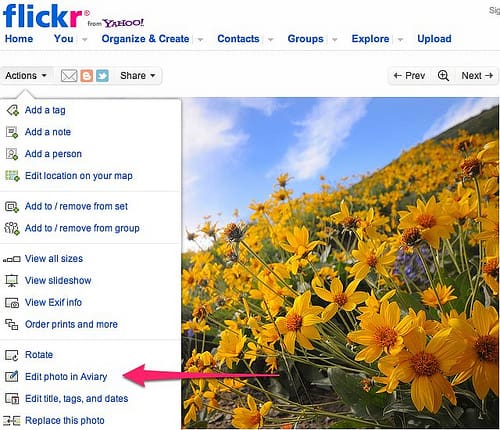
Yahoo-owned photo sharing site, Flickr.com was previously partnered with Picnik, so with the vacancy in their photo editing offering, they had to determine which photo editing company would take their place. Today, they announced a new partnership with Aviary as their photo editor on the Flickr site.

Promising better speed and simplicity over Picnik, Aviary offers the standard features such as cropping, rotating, contrast controls, saturation controls, sharpening and red-eye reduction, but also comes with “stickers” and text options as Picnik did and various filters that give any photo a special effect like black and white or a hipster vibe.

Aviary is written in HTML5, so it works on any device, including an iPhone or an iPad without having to go download yet another app which could be one of the top reasons Aviary is likely to be the next reigning king (or queen) of free online photo editing. Flickr says it will take a few days to roll out the features across the board, but is beginning today.

Signaling Picnik’s universal replacement

Flickr’s announcement today answers many peoples’ question – who will step up to replace Picnik given the number of options? Flickr’s choice signals that Aviary could be Picnik’s universal replacement, and is already available as a browser extension, a Facebook app, is mobile ready without having to download an app, and their suite of filters is comparable to the type of filters in the very popular Instagram app.

Brokerage allegedly clones Estately’s multi-million dollar website

Estately’s intellectual property

Seattle based real estate search company, Estately.com intended to quietly handle what they allege to be Sutton WestCoast Realty’s intellectual property theft, having copied the code from Estately and using it for the design of their own website. Local tech writer, John Cook at GeekWire.com heard about the allegations and the issue was no longer a quiet problem held closely to the vest.

Galen Ward, CEO and Co-Founder of Estately told AGBeat that Estately has sent Sutton a cease and desist letter but has not heard back from the company, while GeekWire reports Sutton declines to comment but notes the issue is being handled by the company’s lawyers.

Ward said, “They copied the code that was live on Estately 3-4 months ago. They have changed a few words and they de-minified our javascript and CSS. That’s the extent of what has changed.”

Comparing the two sites

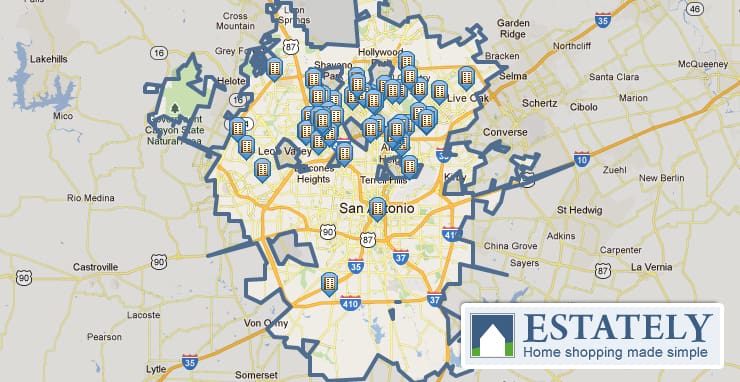
Below is a screenshot taken of Estately.com, followed by a screenshot of Sutton WestCoast Realty as captured by GeekWire.com, click either to enlarge.


Spotting the differences

Ward said, “We’ve spent millions of dollars developing Estately. Having a clone that is using our copyrighted works in Vancouver (that could grow elsewhere) will materially impact the valuation of the company and our ability to raise money, and would make opening Estately in Vancouver – a market that would be worth hundreds of thousands of dollars a year in revenues – a non-starter.”

Estately has received funding and even participated in the 500 Startups incubator program in 2010 and says that while they have had competitors copy individual features and design concepts, they have never before had a “wholesale copying of our functionality and codebase.”

Although Estately indicates they hope to resolve this outside of the court system, Ward said, “We will do whatever it takes to defend our copyright – including suing if necessary,” adding, “We are vigorously defending our [intellectual property] IP.”

As of publication, the search function on the Sutton WestCoast Realty website appears as follows for all attempts at searching the site:

Top 20 improving housing markets

More states added to the list

According to the National Association of Home Builders/First American Improving Markets Index (IMI) released today, the number of housing markets “showing measurable improvement” reached 101 this month with 35 states now represented by at least one market on this still young list (up from 99 markets in 33 states last month).

The index identifies metropolitan areas that have shown improvement from their respective troughs in housing permits, employment and house prices for at least six consecutive months. The 101 markets on the April IMI represent a net gain of three from March.

The IMI tracks housing markets throughout the country that are showing signs of improving economic health based on three sets of independent monthly data – employment growth from the Bureau of Labor Statistics, house price appreciation from Freddie Mac, and single-family housing permit growth from the U.S. Census Bureau. A metropolitan area must see improvement in all three areas for at least six months following their respective troughs before being included on the improving markets list.

“After five consecutive months of gains, the IMI recently began to plateau, with many markets holding steady and a few experiencing the ups-and-downs that are typical in a choppy recovery,” observed NAHB Chief Economist, Dr. David Crowe. “The IMI is designed to highlight markets that are showing consistent improvement, and those markets that have registered the smallest gains are more susceptible to dropping off the list due to a minor setback in prices, permits or employment,” he explained. At the same time, “as stronger markets approach stability, it will get harder for them to keep charting improvement, which will also limit the expansion of the IMI.”

“The fact that the number and geographic distribution of improving housing markets continued to expand beyond the 100 mark in April bodes well for the start of the spring home buying season, and should be an encouraging sign for those who are considering a home purchase,” added Kurt Pfotenhauer, vice chairman of First American Title Insurance Company.

Top 20 improving markets

Based on the NAHB/First American report, the following 20 markets were the most improved this month, with Little Rock taking the top spot, with Colorado and Florida accounting for the majority of the top 20 list:

  1. Little Rock, AR
  2. Fresno, CA
  3. Merced, CA
  4. Boulder, CO
  5. Denver, CO
  6. Fort Collins, CO
  7. Greeley, CO
  8. New Haven, CT
  9. Washington, DC
  10. Cape Coral, FL
  11. Crestview, FL
  12. Deltona, FL
  13. Jacksonville, FL
  14. North Port, FL
  15. Orlando, FL
  16. Panama City, FL
  17. Punta Gorda, FL
  18. Tampa, FL
  19. Rome, GA
  20. Ames, IA

Down4Lunch: online network dedicated to meeting offline

Dedicated social networks

The internet is home to many successful and prominent professional networking sites. There are those sites that have a great mixture of personal and professional interaction, and then there are some that are solely dedicated to professional expansion, development, and networking. One of the most well-known professional networking sites is LinkedIn, which gives users the ability to virtually connect with other like-minded or complementary professionals. However, LinkedIn is limited in the fact that professional interaction doesn’t go beyond the computer screen.

Part of growing any professional network and influence is meeting face-to-face with these other professionals. A web-based program now combines networking online and in person, so all your professional bases are covered.Down4Lunch provides a way to network with other professionals when it’s most convenient for you, during lunch. Down4Lunch actually allows you to schedule lunch meetings with your virtual contacts and connections, all in three easy steps.

Three simple steps:

Step 1 – Create Your Online Profile.
When creating your online professional profile, you’ll be asked to share your chosen industry or field, how much experience you currently have under your belt, and your physical location. We recommend being as specific as possible.

Step 2 – Select Your Professional Preferences.
This step requires you to specify the type of professional with whom you want to connect. You can also choose which times during the day you’re available to meet up and have lunch or a coffee. Be realistic about when you are available and how much time you are willing to spend out.

Step 3 – Set Up a Lunch or Accept an Invitation.
You have two basic options with this step. You can browse the profiles of the other professionals and invite one to meet up for a lunch business meeting or you can wait until an invitation comes your way.

Plans for mobile

While Down4Lunch is only web-based right now, they plan to release an app version in the near future. It’s also completely free to use. Meeting another professional face-to-face during the lulls in your workday or while you’re on a business trip can be a great way to extend your professional reach and make great connections that can benefit you and your business in the future. It’s true – sometimes it’s who you know that can propel and power your professional success. Down4Lunch gives you that opportunity.

The 5 essentials of effective contact management

Effective contact management

Do you know what contact management really entails? Think you’re doing it correctly? In this article I’ll discuss the five essential components of effective contact management. Effective contact management will help you to convert more leads into clients and maximize the amount of referrals and repeat business you get year over year.

Having a consolidated database

I speak with real estate sales professionals daily who have client and prospect contact information scattered in many different areas: Outlook, their iPhone, their website, pieces of paper, etc. Without a consolidated database, these REALTORS® waste far too much time hunting for the information they need to manage their business – often hours a day.

A solid, well-managed database can be worth more than a million dollars in real estate commissions over as little as 10 years. In fact, the only real tangible asset Realtors have is their database. Upon retirement, a well-managed database that produces a six-figure income in referral and repeat business year after year can be sold for tens or hundreds of thousands of dollars!

Having a consolidated database is extremely important. It’s actually the foundation of effective contact management and the starting point to building a truly successful business based largely from referrals and repeat clients. Without a consolidated database, it’s hard to stay organized and manage time effectively. Lacking a consolidated database, it’s almost impossible to master the four other “essentials of effective contact management” I’m going to discuss below.

Categorizing and segmenting contacts

Once you’ve consolidated all your contacts into one database, the next step is to categorize them appropriately. At the most basic level, this might entail categorizing people as either Clients, Prospects, Personal, or Business-to-Business. Another popular approach is to apply the 80/20 Rule by segmenting your contacts as either “A List” or “B List.” More advanced segmentation can include creation of community groups such as former work colleagues, church group contacts, people in your baseball league, etc.

The big benefit of segmenting and categorizing your contacts is that it allows you to communicate with specific groups of people in a way that is more personalized, relevant and timely than the dreaded “batch and blast” approach. When your mass communications are relevant to the people receiving them, they are far more likely to be opened and appreciated, and hence far more effective from a marketing perspective.

Keeping in touch with past clients

You may have heard the idiom that it takes seven times the amount of time, money, and energy to acquire a new client then it does to keep an existing one. The saying is very true. It’s your responsibility to stay “top of mind” with past clients and make sure that they don’t forget you. Your clients are likely meeting real estate agents through friends and family members, hearing others recommend Joe Smith’s Realty Services down the road, seeing billboards and posters of Realtors boasting that they’re number one. So, don’t automatically assume that a client who you’ve helped to buy a home five years ago will remember you and call you up again next time they need a real estate agent.

It’s in your best interest to ensure that you have the right technology, such as a contact management system, and a plan in place, so you can keep in touch with past clients effectively.

So, how should you keep in touch? Schedule quarterly keep in touch calls (better yet, try to call one past client each day), send out a monthly e-Newsletter, send direct marketing pieces to your best past clients, plan client appreciation events and various educational seminars, use social media, the possibilities are endless. A good contact management system (my specialty) will make organizing and executing all of this as easy as possible. I recommend that you make contact with your past clients at least 17 times per year.

Make sure that when you reach out to past clients, whether through a phone call, email, or any other method, that it’s all about them, not about you. You don’t want to keep in touch with them by always promoting your services and how great you are. Send out an e-Newsletter with helpful and interesting articles on home decorating, for example. Make a call to ask if they need any recommendations on a business professional such as a Plumber or Landscaper.

Assigning leads to marketing plans

As soon as you get a new lead, enter them in your CRM immediately and then assign them to an “automated lead nurture marketing plan” (also known as a marketing Activity Plan).

A lead nurture marketing plan consists of a number of emails and phone calls at regular intervals over time. The emails are sent automatically (also called “drip email), which means that you don’t have to worry about remembering to keep in touch with all your new leads. The system will remind you when to make a call, and will send relevant email communications to your prospects in between. By nurturing your new leads in this way, your conversion rate of new leads to clients will improve dramatically.

You can use your contact management system (your CRM) to create your own lead nurture marketing Activity Plan. Alternatively, good CRMs have pre-designed marketing plans created for you, so you don’t have to do a thing.

Tracking sources of business, including referrals

You need to know where your business is coming from. Knowing this information will provide you with insight into where you should be investing time and money. Use your contact management system to run various reports, such as an “Original Source of Contact” report and a “Referral History” report. Don’t waste your time and hard earned dollars guessing about where your business is coming from or about what you could be doing more and less to fully maximize your time.

Geithner says housing financial reform is unfinished business

Housing finance is “unfinished business”

Before the Chicago Economic Club today, U.S. Treasury Secretary Timothy Geithner spoke1 on the topic of the economy, opining that the nation has a long way to go to reform and recover the housing finance system, where the government controlled Fannie Mae and Freddie Mac hold the majority of American home loans.

“The biggest source of unfinished business in the financial reform effort is in the housing finance area,” Geithner said. Much of his prepared speech focused on the major economic challenges, particularly noting that “President Obama inherited very large fiscal deficits, swollen to levels well beyond any experienced since World War II.”

Geithner added, “As we face the great political and economic choices ahead, remember how terrible the crisis was. Remember that Americans are still living with the damage that is the legacy of that crisis.”

The battle continues

Government infighting continues, however, regardless of any President’s legacy, as both sides of the aisle are tussling over how to wind down the government’s role in housing, particularly Fannie and Freddie whose conservator is the Federal Housing Finance Agency (FHFA). Geithner said Fannie Freddie are not “a source of systemic risk now,” as taxpayers’ funds have propped up the mortgage giants.

“We are much further behind in laying out the future path of reform in the housing finance system and what should replace those institutions,” Geithner said, echoing the growing sentiment that there are signs of a bipartisan consensus for reforming the housing finance market.

“We have successfully navigated the most dangerous phase of the worst economic crisis in generations. We need to bring the same creativity and force and sense of national purpose to the challenges ahead. And that will require better choices from our political system. No economy can be stronger over time than the ability of its political leaders to come together to make tough decisions.”

1Transcript of Geithner’s speech

Usher improves Facebook event management via mobile

Facebook event planning tool

Facebook is a great tool to use when it comes to planning and managing an event, both personal and professional. You have easy access to all your contacts, you can update all invitees of changes of date, time, or venue at the same time, and you can keep track of RSVPs. However, let’s be honest. Facebook is a basic tool with basic capabilities.

It’s perfect for a small get-together with close friends or associates, but what if you need a more organized, in-depth, sophisticated method of event management? For that, Facebook falls short on its own. That’s why it’s important to couple the convenience of creating a Facebook event with the innovation of the Usher app.

Simpler, more sophisticated event management

Usher takes event management to a whole new level, and it’s free. The Usher app links to your Facebook events and gives you complete control in setting up the event and managing it to fruition. Instead of inviting each of your Facebook contacts one by one, you will save time by creating customized invite lists through Usher that you can use over and over again. Usher allows you to check RSVPs in real-time, create VIP lists, and send invites right up to the start of the event. One cool feature of using the Usher app for your event management needs is that you can print off a guest list. Facebook definitely doesn’t offer that.

If you’ve orchestrated a corporate event or something a little more formal than a casual gathering, you can send out mobile tickets for those who’ve sent their RSVPs and to those you want to make sure they know they’re invited and welcome. However, this only works if you and your guests have smartphones. If a guest doesn’t have a smartphone, they can still access the virtual ticket online and print it out later.

The next step to using Usher’s event management capabilities is that you can check-in your guests as they arrive, so you’ll know exactly how many have walked through those doors and exactly who has arrived, which can be great for the awarding of prizes or other honors. If your event is a little more high-profile, this feature is great if you want to make sure your event is secure and safe from uninvited attendees.

A better way

“Usher is simply a better way to manage your Facebook Events,” said Michael J. Saylor, chairman and CEO of MicroStrategy Incorporated. “With Usher, you can manage your professional and personal events conveniently and securely from your smartphone. You can send and receive invitations, be fast to RSVP, and benefit from privileged ticketing and check-in.” For “mobile tickets as cool as your event,” Usher offers many fantastic, unique features to get your party, conference, or meet-and-mingle up and running without a hitch.


Google to put augmented reality apps in your glasses

27

A massive, groundbreaking project

There has been a lot of buzz surrounding Google’s newest smart glasses project called “Project Glass” which integrates technology into anyone’s daily life. The glasses are the next step in augmented reality, which smartphones have done well to implement, but have fallen short as users must upload an app for each separate function they wish to use, and remember to use that app in the field.

Facebook launched frictionless sharing and it appears that Google seeks to launch frictionless everything. AGBeat introduced you to Project Glass earlier this year, which at the time was stealthily being referred to as “heads up display (HUD) glasses” and it implements a front-facing camera to gather information, take photos, and create the possibility for in-glasses augmented reality apps, and the glasses are controlled with subtle head tilts to scroll and click and the user’s voice so it is all hands-free.

9to5Google.com projected that, “I/O on the glasses will also include voice input and output, and we are told the CPU/RAM/storage hardware is near the equivalent of a generation-old Android smartphone. As a guess, we would speculate something like 1GHz ARM A8, 256MB RAM and 8GB of storage? In any case, it will also function as a smartphone.”

Fascinatingly, but not surprisingly, Google+ is at the center of the social functions of the glasses, so it will be interesting to see how adoption rates shift as the glasses are produced for the public.

Some analysts say that the technology doesn’t exist yet to truly manufacture these glasses in bulk, so this could be Google playing or simply preparing for the future. Others say the glasses could hit the market as early as this year, so there is no telling the future of this rumored technology, but it is fascinating to say the least.

Click below to visit Project Glass on G+

HyperSocial Connections: how buyers are connected to agents

SocialBios features made live on Realtor.com

In 2011, Realtor.com operator, Move, Inc. acquired social platform SocialBios, then announced in January that the acquisition had come to full fruition in the form of two mobile-enabled “HyperSocial™” tools in beta – Agent Profile Pages and Agent Recommendations integrated into the Find a Realtor directory.

The HyperSocial™ agent search tools will initially span Facebook, LinkedIn, Twitter, Google and FourSquare, and the company says that “through social graphing technology, the HyperSocial™ Agent Profiles surface mutual connections, extended relationships, and shared interests by layering the social networks of agents and consumers.” Profiles feature recommendations and have a branded URL.

Pumping up Realtor profiles

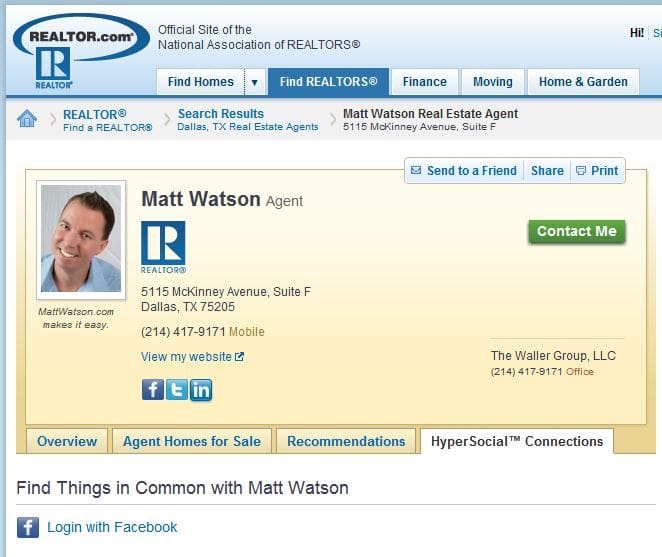
Now, when users look up a Realtor on Realtor.com, their full profile appears as below:

As you can see, when you click “HyperSocial Connections,” the system allows users to log in with Facebook to see what connections they have in common with that Realtor and even what hobbies and interests are shared, with Realtor.com’s theory being that this works not only as an ice breaker but as a means of social verification of an agent.

From a consumer perspective, however, “HyperSocial Connections” is not an obvious term for “click here to see who you have in common on Facebook,” and could be overlooked – the positioning is lacking, despite the company’s attempt at brand consistency. Additionally, there is no explanation to the consumer as to why they would want to grant permission for Realtor.com to access their Facebook over a manual Facebook search of the agent’s name. In fact, there is not even a “what is this?” button anywhere on the tab, so in the era of heightened privacy concerns, this could curb adoption as there are no assurances, explanations, or even clarity as to what the tab means.

The takeaway

The world of social verification is very real, and we have waited nine months for Realtor.com to build out their products in conjunction with SocialBios and while the tab itself could use some clarification, the product itself is solid and because it is free, is a major value added for Realtor.com users.

Realtors can get started here.

Mortgage application volume up for first time in six weeks

Mortgage activity rose this week

After six consecutive weeks of declines, the Mortgage Bankers Association (MBA) is reporting that mortgage loan application volume is up 4.8 percent from the week prior and the refinance index is up 4.0 percent during the same period.

“Applications to buy a home picked up last week, and are running more than two percent above the level reported at this time last year. Home purchase applications for conventional loans are now about 10 percent above last year’s level,” said Michael Fratantoni, MBA’s Vice President of Research and Economics. “Applications for government loans increased by more than 10 percent over the week, for both purchase and refinance, likely spurred by borrowers seeking to apply before scheduled increases in FHA mortgage insurance premiums at the beginning of April.”

The seasonally adjusted Purchase Index increased 7.2 percent from one week earlier to its highest level since December 2, 2011. The unadjusted Purchase Index increased 7.6 percent compared with the previous week and was 2.4 percent higher than the same week one year ago.

The refinance share of mortgage activity fell to 71.2 percent of total applications, marking the lowest refinance share since July of 2011. Meanwhile, the adjustable-rate mortgage (ARM) share of activity rose slightly from 5.4 percent last week to 5.5 percent of all mortgage applications.

In February 2012, among home purchase applications, 85.8 percent were for fixed-rate 30-year loans, 6.6 percent for 15-year fixed loans and 5.9 percent for ARMs. The share of purchase applications for “other” fixed-rate mortgages with amortization schedules other than 15 and 30-year terms was only 1.7 percent of all purchase applications.

Other stats from the MBA:

  • The average contract interest rate for 30-year fixed-rate mortgages with conforming loan balances ($417,500 or less) decreased to 4.16 percent from 4.23 percent, with points decreasing to 0.43 from 0.45 (including the origination fee) for 80 percent loan-to-value ratio (LTV) loans. The effective rate decreased from last week.
  • The average contract interest rate for 30-year fixed-rate mortgages with jumbo loan balances (greater than $417,500) decreased to 4.46 percent from 4.54 percent, with points increasing to 0.49 from 0.46 (including the origination fee) for 80 percent LTV loans. The effective rate decreased from last week.
  • The average contract interest rate for 30-year fixed-rate mortgages backed by the FHA decreased to 3.89 percent from 3.96 percent, with points increasing to 0.58 from 0.52 (including the origination fee) for 80 percent LTV loans. The effective rate decreased from last week.
  • The average contract interest rate for 15-year fixed-rate mortgages decreased to 3.40 percent from 3.50 percent, with points decreasing to 0.41 from 0.42 (including the origination fee) for 80 percent LTV loans. The effective rate decreased from last week.
  • The average contract interest rate for 5/1 ARMs decreased to 2.93 percent from 3.00 percent, with points decreasing to 0.35 from 0.42 (including the origination fee) for 80 percent LTV loans. The effective rate decreased from last week.

New iPhone apps for real estate buyers and renters

New iPhone apps

Taking advantage of the latest augmented reality trends as well as the rise of rentals, three new real estate apps have hit the market to serve consumers. Trulia, Findwell and Sawbuck have all launched new iPhone apps with unique features for home buyers and renters that are mobile.

Sawbuck’s HomeSnap iPhone app


Sawbuck’s HomeSnap iPhone app was designed to tell you about any home you snap, from price to sale history to size and school district. The company says they have over 90 million homes available to snap, seamlessly integrating live data from the multiple listing service (MLS). Any home snapped that is for sale offers complete listing details and photos and encourages users to schedule a showing, and for homes that have sold, the final sale price and listing history is offered.

All homes snapped can be shared via social networks, and it seems that the first step for consumers will likely be to see what their own home is worth and when the novelty of that helps them understand the app, we can see how the fun of the app would catch on.

Trulia Rentals iPhone app


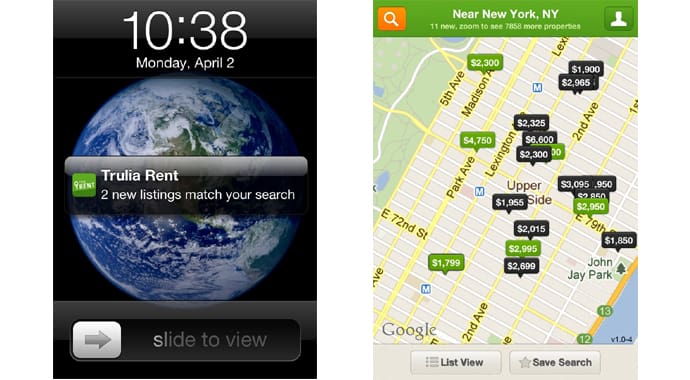
After launching their Android app for rentals last fall, Trulia is announcing today the release of their iPhone app dedicated to rentals. The app’s flagship feature is push notifications of new listings within their parameters to keep renters immediately up to date.

Other features include color-coded listings, organized in order of how long they have been on the market, with green markers indicating a listing under 24 hours hold, grey indicating a listing that has already been viewed, and black for unviewed listings added over 24 hours ago. The app also features neighborhood information like restaurants and schools, and offers saved searches which fuel the push notifications. Agent contact information is on all listings as the company promotes renters connecting with brokers or lanadlords through the app.

“The needs of a renter are very different than the needs of a consumer looking to buy. The cycle and timeframe is much shorter, so delivering push notifications to our users may mean the difference between landing your dream rental or missing out on the best place on the market,” said Lee Clancy, VP of Consumer Products. “As a company, Trulia is committed to delivering unique experiences through product innovation. As the number of renters continues to grow, we’ll provide them with accurate and timely information they require right on their iPhone or iPod touch.”

Home prices fall for seventh month, but at a reduced rate

Home prices falling but at a reduced rate

According to the CoreLogic Home Price Index (HPI) released today, national home prices fell 2.0 percent in February compared to February 2011, and dropped 0.8 percent for the month, marking the seventh consecutive monthly decline. CoreLogic points out that when distressed sales are excluded, home prices actually rose 0.7 percent in February from January.

“House prices, based on data through February, continue to decline, but at a decreasing rate. The deceleration in the pace of decline is a first step toward ultimately growing again,” said Dr. Mark Fleming, chief economist for CoreLogic. “Excluding distressed sales, we already see modest price appreciation month over month in January and February.”

West Virginia, South Dakota appreciating the best

In February, the states with the highest appreciation were West Virginia (+8.6 percent), Michigan (+5.8 percent), Florida (+4.7 percent), Arizona (+4.5 percent) and South Dakota (+4.1 percent). The states experiencing the greatest depreciation were Delaware (-11.2 percent), Connecticut (-7.9 percent), Rhode Island (-7.8 percent), Illinois (-7.1 percent) and Georgia (-6.6 percent).

Excluding distressed sales, the states with the highest appreciation were South Dakota (+5.9 percent), West Virginia (+5.6 percent), Maine (+4.5 percent), Utah (+3.7 percent) and Montana (+3.6 percent). Also excluding distressed sales, these states experienced the greatest depreciation: Delaware (-8.7 percent), Connecticut (-4.9 percent), Nevada (-4.6 percent), Vermont (-4.0 percent) and Minnesota (-3.3 percent).

Of the top 100 Core Based Statistical Areas (CBSAs) measured by population, 67 are showing year-over-year declines in February, nine fewer than in January, notes CoreLogic.

Signs of stabilization

“The continued strength of sales activity and tightening inventories in many markets are early and hopeful signs that prices will continue to stabilize and improve in the coming months. In fact, non-distressed home sale prices, which represent two-thirds of all sales, have appreciated by just over 1.0 percent since the beginning of the year,” said Anand Nallathambi, President and CEO of CoreLogic.

5 basic phrases to improve sales conversions on your site

The importance of asking for the sale

Any successful business professional knows the importance of asking for the sale. Too many companies and individuals have a difficult time finding the balance between being too pushy and being too feeble. While asking for the sale is a verbal art, it takes a little more oomph and delicate, yet enticing, wording to ask for the sale online and reach success. After all, you’re not there to chat or verbally convince every person that lands on your website, Facebook or Twitter page, or your company blog.

That’s why it’s important to create online copy and a call-to-action that invites the user and then commands the sale. And here are five action phrases that will get you started on doing just that:

“Get Your Free Trial/Product Now”

Everyone loves free stuff. Advertising a free trial or product is a great way to get potential users or customers interested in what you offer. Users also like the ability to test something out without having to commit to it. And if your product or service is as good as you advertise, this action phrase will get you customers and turn them into loyal clientele.

“Chat with One of Our Experts”

Potential customers or clients will usually need some additional reinforcement and encouragement before making any type of commitment, even if it’s purchasing a pair of pants online. They want to speak or chat with someone who can answer all their questions and put their concerns to rest. Chatting with an expert or sales associate online is less intimidating than speaking in person and it helps the customer feel in control of the selling/purchasing situation. Once the customer feels comfortable and informed, the sale is yours.

“Download Now”

This simple call-to-action can pack a powerful punch. Whether you’ve created a whitepaper, an e-book, or you’re offering a free program, a prominent download button on your site or blog can boost the activity on your site and ultimately increase your profits.

“Offer Expires Soon!”

If a customer knows that an offer is expiring soon, they’re more likely to act immediately. Your future customers or clients won’t want to miss out on a great opportunity at a fantastic price. This may be one of the most effective call-to-action phrases.

“Call Us for Details!”

Some people prefer to speak to a representative to have all their questions answered rather than searching through pages of a site. If you mention an offer, product, or service, adding this little call-to-action somewhere on your page can give you one more opportunity to make that sale on your site or over the phone.

These five power phrases can increase your website traffic, profits, and your outreach. Making a sale doesn’t mean you have to use a physical storefront. You can do just as much, if not more, by choosing the right call-to-action to put on your website or social media accounts. Your business is no longer limited to in-person interaction to make a killer sale.

Polygraph mines Facebook Pages for stats on you and competitors

Solving two major social media problems

There are two dramatic problems with digital marketing as it stands today. First, monitoring metrics work well for sites you own, but for social networks like Facebook and Twitter, metrics are nowhere near as useful as they could be and the available tools are enterprise level that cost an arm and a leg. Second, much of today’s interactions on social networks is somewhat insincere.

In an exclusive first look, AGBeat got to take a peek behind the scenes of Polygraph, which seeks to solve both problems presented above by mining public Facebook pages for every social interaction that has occurred, and presents analysis to users in an easy to understand and actionable report. Polygraph was designed “to turn social media measurement into a left-brained, actionable activity.”

Polygraph CEO, Chris Tredaway told us that what passes for expertise today is laughable and that one of the startup’s goals is to “cut through the empty platitudes of social networking.” Immediately upon using the platform, we were stunned at the depth of information that was suddenly available to us at an unprecedented level of detail. Not only could it be useful for our own brand, but for getting detailed insight into competitive brands’ efforts on Facebook at a granular level.

Brief Polygraph overview

The Polygraph story

Polygraph was built by CEO Chris Treadaway, who was a Microsoft Group Product Manager, Web and Social Media Strategy from 2005 to 2008 and in 2010, co-authored Facebook Marketing: An Hour A Day and CTO, Robert Starek, three time startup founder, Windows Azure cloud services expert and architect, and owner of 11 patents in big data and data security.

For six months, the team meticulously built Polygraph and it is important to note that the product is a data mining platform – they are not using the Facebook API which is traditionally used to regurgitate publicly available information to unsuspecting buyers. The Polygraph product is extremely sophisticated and built entirely on Microsoft’s cloud services – Windows Azure. They soft launched the product in November 2011 and will be launching to the public later this month.

Treadaway told us that Polygraph is currently being used by a “number of top tier agencies, who are blown away by it.” He added that the product works as well for small companies and properties as it does large.

Exclusive sneak peek:

Already becoming known in some circles as the Compete.com for Facebook, users can analyze their own pages, competitor pages, or get a comparison report. For as little as $99, anyone can get a report on their competitor, which we suspect will be the company’s strongest suit – private reconnaissance.

Below are dozens of data visualizations that will be available when Polygraph launches, and the company says they will continue to improve and add to future versions of the product (and some of these may be altered prior to the public release):

  • Overview
    • Fans
    • Admin posts
    • User posts
    • Post likes
    • Comment likes
    • Unique contributors
    • Engagement per fan
    • Comments per admin post
    • Likes per admin post
    • Active fan%
    • Best day to post
    • Worst day to post
    • Fans over time
    • Fans added per day
  • Performance
    • Likes per post
    • Comments per post
    • Active fan %
    • Engagement per fan
  • Actions
    • Admin posts over time
    • Admin posts weekdays
    • Admin posts hourly
  • Outcomes (broken down by user posts and user comments)
    • Daily post effectiveness
    • Engagement by day of week
    • Engagement by hour
    • Weekly engagement levels
    • Monthly engagement levels
    • Daily engagement levels
    • Daily by content type
  • Top Content (broken down by likes, comments and comment likes)
  • Top Fans (broken down by likes, posts, comments and comment likes)
  • Tag Cloud

To give you a taste of the Polygraph visualizations, below are basic overview results for (a) our Facebook Page and (b) comparing Keller Williams, RE/MAX and Century 21’s corporate Facebook Pages (click to enlarge):


Making an ash of yourself in real estate: MLS bloopers


This was a week for great bloopers, folks.  The market is firing up, so we are seeing a lot more “ashes.” Thanks to Bruce Walter of West Lafayette, Indiana for his hilarious farmer contribution. Check out these MLS and real estate advertising funnies:

How To Make An Ash of Yourself

“Will sell soot” (Proudly offered by Bert, The Chimney Sweep and his partner, Mary Poppins.)

“Farmers makeit every Tuesday”  (Hence the term, “bump-her crop.”.)

“Make this your nest cattle” (If there were a cattle nest in my tree, I wouldn’t venture outside without a really big hat.)

“Sophistication and crass” ( Sandra Bullock when she was with Jesse James?)

“Nice scaly rooms” (The heartbreak of Psoriasis.)

Lights Out, No One’s Home

“Lush lit” (Like when you stumbled into the room with your underwear over your trousers?)

“Braught in Europe” (How ’bout a little schnitzel with that, Hans?)

“Brick with beautiful clanging vines” (Ask not for whom the bell tolls, it tolls for your career…)

“Offers will be sordid based on qualifications” (Rep. Anthony Weiner’s message that accompanied his nudie Twitter photos.)

“This will be your last stop” (Said the LAPD to Uncle Paddy after he kissed the bartender and then peed in his shoe.)

“Best Reality tools in the biz” (Electroshock paddles?)

“High-end pain” (…said Rick Santoro while setting fire to Mitt Romney’s drivers license.)

Best Auto-fill Funnies of the Week:

“In escargot” (…said the snail to his mother after crawling in after curfew smelling of butter, garlic and wine.)

“Craps are on surface only” ( Too drunk to hit the toilet bowl?)

“Your buyers will yank you” (Um, isn’t that a little personal?)

Goodsie: e-commerce site builder launches new features

Goodsie: the e-commerce site builder that could

TGP6UBF86SDQ
Launched last year by the makers of Flavors.me, e-commerce site builder Goodsie makes setting up shop online super easy, requiring little to no tech knowledge whatsoever – if you can send an email, you can set up a retail shop online that is more beautiful than most websites out there.

Today, Goodsie announced the launch of email marketing, mobile optimization, sales analytics and premium accounts to “help retailers improve business decision-making and increase customer engagement, supporting the growth of small retailers with big business needs.”

How Goodsie’s email marketing option is different

Email continues to be an effective marketing method, so Goodsie has integrated email marketing features into their offering with drag and drop simplicity, allowing for fully custom email campaigns for any retailer’s contact list, with the goal of reducing costs and improving ROI. What differs between this email feature and others is the ability to send targeted campaigns to customers based on their purchase amounts, order history and even geography.

“List management is handled automatically and emails are delivered reliably by Campaign Monitor,” the company said in a statement.


Goodsie mobile site optimization

With the rise of mobile, most retail sites are lacking and force consumers to zoom in and out, pinch, flip, scroll, and try to click tiny buttons not meant for mobile. Goodsie sites now works natively on all mobile browsers and devices so that consumers are not limited and can purchase directly from whichever device they choose without the hassle of downloading an app. Mobile site optimization is available for all users.

Sales analytics added

The same way traditional retailers measure foot traffic, sales, and conversions, Goodsie sites now offer traffic analytics such as unique visitors, bounce rate, time on site, and offers live “granular data and clean graphs for tracking revenue and order volume by product, geography, referring source and sales channel (e.g. direct, Facebook Store).” It’s not just web analytics like all sites offer, but real data on how sales are performing.

Through analytics, sellers do less guessing and more converting by understanding metrics on their click-through rates on a product level, coupon offer effectiveness, repeat versus new purchases, etc.

“Analyzing sales data is often a tedious and challenging process for sellers. While traditionally used by large retailers, sales analytics tools are equally important to the small business owner, though many in the market today are unaffordable for smaller retailers. The new Goodsie sales analytics tool gives retailers a powerful way to understand business data in real-time — without the cost of investing in an enterprise-level platform.”

Email marketing and sales analytics are available with the new “Premium account” level for $40 per month, and the standard accounts are $15 per month, both offering a 30 day free trial.

6 Goodsie sites to check out

To give you an idea of who is using Goodsie, check out these independent sellers:

Federal Reserve probes Morgan Stanley for illegal foreclosures

Consent Order against Morgan Stanley

The Federal Reserve Board today announced a Consent Order1 against Morgan Stanley and is seeking financial damages for what the agency is calling a “pattern of misconduct and negligence in residential mortgage loan servicing and foreclosure processing at its subsidiary, Saxon Mortgage Services, Inc.” which until yesterday was the 34th largest mortgage servicer in America.

On April 2, 2012, Morgan Stanley sold a large portion of the assets of Saxon to Ocwen Financial Corporation for $59.3 million, and has taken other various actions to end their residential mortgage servicing.

The Fed’s Consent Order forces Morgan Stanley to retain an independent consultant dedicated to reviewing foreclosures initiated by Saxon between 2009 and 2010. In a statement2, the Fed said that the review “is intended to provide remediation to borrowers who suffered financial injury as a result of wrongful foreclosures or other deficiencies identified in a review of the foreclosure process.”

The review will be similar to those that the large mortgage servicers are currently undergoing that consented to enforcement actions brought in 2011 which resulted in the historic $25 billion mortgage settlement3.

Probing an understaffed servicer

The probe will be seeking any mishandled documents to determine which (if any) borrowers wrongfully lost their home due to improper documentation. The Fed notes that Saxon lacked the resources and staff to handle increased foreclosure volume and foreclosures were completed “without always confirming that documentation of ownership was in order at the appropriate time.”

Financial penalties are deemed “appropriate” by the Fed, but the amount has yet to be disclosed, and will accompany corrective actions, which Morgan Stanley has acknowledged they are responsible for.

According to the Fed, “If Morgan Stanley re-enters the mortgage servicing business while the Consent Order is in effect, it will be required to implement enhanced corporate governance, risk-management, compliance, borrower communication, servicing, and foreclosure practices comparable to what the mortgage servicers subject to the 2011 enforcement actions were required to implement.”

1Consent order definition
2Federal Reserve statement
3Mortgage settlement breakdown