Home Blog Page 346

Grubwithus: network offline, improve your referrals

Social networking over food

Who doesn’t love furthering relationships and establishing new ones over great food? Grubwithus provides you with the technology to connect you with potential friends and business associates and connect you with fantastic local restaurants that you may have never known existed.

Because delicious food has a way of bringing people together, the first step to using Grubwithus is to pick the meal you want to eat. You can choose one off of a list or you can even create your own preferred meal. Or, if you want to live on the more adventurous side of life, you can just pick a date for your meal and Grubwithus will do the rest, meaning picking the menu, that that will be eating with you, and the fixed price for your meal.

Digital media has impacted offline relationships

With the surge of online interaction, in-person relationships have suffered. And even though online communication is important and has a place in enhancing personal and professional relationships, face-to-face contact can bring a whole new dimension to any relationship. Think of it this way – the more people you meet, the more business referrals you can give and receive, providing you the opportunity to expand your business naturally.

Using Grubwithus to meet new people and potential business referrals is a great, passive way to talk to others about your business and yourself. It’s important not to use Grubwithus solely as a means to aggressively market yourself and your brand. That’s not really what it’s all about. It’s about connecting with people in your area while you share great food and even greater conversation. Naturally, most conversations will gravitate toward employment, passions, and interests. You will have the opportunity to discuss what you do. And when that chance occurs, be ready with a few business cards.

Be patient, keep growing

If the conversation doesn’t go to employment immediately, just enjoy the group you’re eating with. Chances are you’ll want to reconnect with them and continue building a relationship, whether it’s professional or personal. And conversations in the future will undoubtedly lead toward you introducing what you do and your professional goals and perspectives.

Grubwithus is a conveniently passive way to gather referrals and add to your client list. But it’s also about unplugging for a few hours and reconnecting with your local community while supporting local restaurants. Relationships are created through active conversation and they’re expanded over casually meeting over fantastic food. Get out of your comfort zone this week and meet some new friends; it will increase both your personal and professional fulfillment.

Web video viewers average 22 hours watching monthly

YouTube reigns supreme

According to comScore1 data released Monday, Google Sites, driven primarily by video viewing at YouTube (owned by Google), ranked as the top online video content property in May with 151.7 million unique viewers in May out of 180 million unique visitors to all web video content except for ad videos, representing an 84 percent stronghold on all web video views.

Google was followed by Yahoo! Sites with 57.8 million, VEVO with 48.3 million, Microsoft Sites with 44.4 million and Facebook.com with 44.3 million. Nearly 36.6 billion video content views occurred during the month, with Google Sites generating the highest number at 17.6 billion, followed by Hulu with 888 million and Yahoo! Sites with 845 million.

Time spent viewing videos is staggering

The average viewer watched 21.9 hours of online video content, with Google Sites (7.7 hours) and Hulu (4.2 hours) earning the highest average engagement among the top ten properties.

It is staggering to think that the average viewer spends this much time online, and while it is across all age demographics, a recent study revealed that only 26 percent of Millennials watch over 20 hours of television per week, while half of all Non-Millenials do. Meanwhile, 42 percent of Millennials watch tv online, and only 18 percent of Non-Millennials do, representing a major disparity growing between generations. It is even predicted that in the near future, Millennials will not be buying televisions, rather stream on their devices.

Web video use is rising not just because of ease of use, but because the number of videos is increasing and making it more reasonable to stream online. The challenge going forward will be the bandwidth issues and internet providers get everyone used to having high speed and continue to increase rates, with some likening the behavior to a drug dealer getting someone hooked on free or cheap product, then pushing the expensive option as the cheap option dies. Will web video popularity continue with this in play? Absolutely, just ask Millennials – they don’t even need a television, so adios, cable.

1 comScore data

Are social networks making us awkward offline?

The offline impact of online behaviors

As professionals jump online to join social networks, the race to increase friend and fan counts is on, and there is much ado about the sizes of each user’s network as a means to improve word of mouth marketing. Social media is no longer new, or even shiny, it is just a tool in a marketing toolbox that is available to all businesses with a low entrance barrier.

Once users are online, the obsession does not end at increasing the size of a network, it begins focusing on being connected constantly as smartphones ping billions of times every minute with updates from Facebook, Twitter, Google+, Quora, LinkedIn, Flickr, Instagram, and dozens of others.

As the international symbol of social media becomes a person in public hunched over their mobile device with their thumbs flying, is online socializing having an impact on our offline lives? And is the impact felt in America most, or across the globe equally? These questions were asked by Schools.com who asks “Are we so busy making new friends and spending time with them online that we are failing to nurture real-world friendships the old fashioned way? Is how we socialize online eroding our real-life relationships? Or maybe just changing them?”

Missing offline events due to online behavior

One in four people surveyed say they have missed important moments in person because they were too busy trying to share those moments on social networks. Watch any footage of the President greeting a crowd, and see that most people are not looking at the President, rather see him through their smartphones as they film his approach – most people are now one step removed from reality as the world shifts to sharing moments rather than experiencing them.

While Americans spend half of the amount of time on Facebook every day as Singapore, most say their main goal is to stay in touch with far away friends as a means of fostering offline connections. Two in five surveyed say they spend more time being social online than offline, and one in five now prefer texting to web communication or talking in person.

One in three are more likely to speak to someone new online than they would offline. The web is no longer anonymous as it once was, so people are clear about who they are talking to and meeting, but keeping one step removed from reality is helping people to make connections, but the legitimacy of those connections are as questionable as the legitimacy of a crowd “seeing” the President.

Big banks suddenly making big bucks through HARP

Home Affordable Refinance Program’s benefits

For underwater borrowers, Uncle Sam’s Home Affordable Refinance Program (HARP) appeared to be a saving grace after the housing market crashed, but when homeowners applied, most were either not eligible, or discouraged by servicers from applying as the process was complex and some say that incentives were too low for servicers to put homeowners in lower interest mortgages.

HARP has undergone a makeover recently, courtesy of the Obama Administration, and now, big banks have their ears perked up as the rules change. According to the Wall Street Journal (WSJ)1, banks are suddenly on the HARP bandwagon after years of dragging their feet.

The rule change makes it easier for borrowers to refinance with their current lender, a major reason banks are getting in on HARP. Nearly three in every four HARP participant goes to their existing lender for the reduced interest refinance packages, and banks are using this as a means to put them into mid-interest loans that are lower than their current rates, but significantly higher than the low interest rates being given to new mortgage borrowers.

“There’s essentially a monopoly on refinancing,” Housing and Urban Development Secretary Shaun Donovan recently told lawmakers. “Whoever holds their current loan, whoever is the servicer, they can charge them — and we’re seeing this — very high fees.” The five largest mortgage servicers are responsible for 58% of the mortgage refinance market.

Refinancing above market rate

WSJ reports that it is estimated that HARP borrowers are refinancing into loans up to one half of a percentage point higher than the market rate for refinances. Wells Fargo holds nearly one third of all refinanced mortgages. The company tells WSJ that their rates are “competitive with our traditional refinancing loan options.”

Banks and HARP loans are getting along well now because refinanced loans are less of a risk when they are securitized and sold, as HARP homeowners have been shown to be less likely to default than they were before, and a low risk of paying off the loan early, reports the WSJ.

Lenders could see upwards of $12 billion in revenue this year tied to HARP refinances, while HARP borrowers are expected to save between $2.5 to 5 billion this year, representing a lucrative opportunity for big banks.

1 WSJ Report

eBook revenues outpace print in Q1

eBooks outsold hardcover books for the first time

According to the Association of American Publishers’ (AAP’s) net sales revenue report, adult eBook sales were $282.3 million, while adult hardcover sales counted $229.6 million during the first quarter of 2012. During the same period last year, hardcover sales accounted for $223.5 million in sales while eBooks logged $220.4 million.

“In Q1 2012, net sales revenue for eBooks was higher than that for Hardcover; this represents a switch of positions in the category vs Q1 2011. In both quarters, however, Trade Paperback remained a clear #1 in net sales revenue despite some erosion. While eBooks continue to show growth, downloaded audiobooks also keep accelerating vs last year – as some experts have said, tied to ongoing popularity and acquisition of smartphones and mobile devices.”

A glimmer of hope for bibliophiles is in the Young Adult and Children’s category which saw growth in revenue for hardcovers, up nearly 67 percent to $187.7 million. This category saw a 233 percent increase for eBooks to $64.3 million, but remains far behind print sales.

Personal story about my bibliophilia

Hi, my name is Lani, and I am a bibliophile. Whew, that feels good to get off of my chest. It may surprise some of you that know me well, because I report on technology and operate a digital publication, but despite the changing technology, I can’t shake my affinity for physical books.

When I was young, we lived in the Texas country with not much to do nearby. Before Kindergarten, I would hide in my grandmother’s classroom as she taught dyslexic children to read through the Phonics program. Like magic, I picked it up, and out of curiosity and boredom, I began reading the Nancy Drew series, which was the only thing that looked interesting in my grandparents’ giant wall of books. Before I started school at age four, I had finished the entire series which made school quite boring as children recited the alphabet and I smuggled novels into the classroom to read while they struggled.

By age six, I was writing poetry and had been published, and my book collection was massive. I was always the kid in the class who read the highest volume of literature, and I won a contest in sixth grade for my reading so much, which I seriously thought would be the pinnacle of my entire life. All of this led to my enthusiastic trip to Dallas that year to a shell of a second story retail location my aunt and uncle had just leased, as they were opening an independent children’s bookstore. The green grass carpet had just been laid, a stage was built, the walls were covered in chalk board material (before chalk board paint existed), a castle had been built in a corner, and there were boxes and empty shelves everywhere. I distinctly remember the smell of fresh hardback books in a box that no shopper had ever touched, and the softness of every single page. There was a glowing pride that swelled up inside of me with every book I had the honor of neatly putting on a shelf.

I worked at the bookstore every summer in high school and the first few years of college, and was able to meet many famous authors, and perform dozens of story times in costume. I loved it. There was this inherent understanding that it was an honor to be around books, because each word was poured out from someone’s soul and shared with the world.

In college, I studied English Literature as well as Spanish Literature, and I was again honored to be educated by novelists and students of the written word. I kept all of my textbooks and novels from college, and every so often visit them when I have time.

To me, physical books are more than just an author’s word that can be translated across any medium. I read eBooks, and I purchase print books, but I still have a different physical reaction when turning pages than I do reading digitally, and I am able to retain more from the pages that smell like a new bookstore. While not everyone has the same affinity for booksas I do, and not everyone could possibly care as much, I still choose print over digital, even as a digital publisher myself. The next generation may feel differently, but for me, nothing beats being honored with a writer’s soul that spilled onto a page that I smuggled into a classroom when I was four.

HUD adds $2.5 million to help 380 homeless veterans

Additional funding for homeless vets

U.S. Housing and Urban Development (HUD) Secretary Shaun Donovan and U.S. Department of Veterans Affairs Secretary Eric K. Shinseki announced today that HUD will provide an additional $2.5 million to public housing agencies to supply housing and case management for 380 homeless veterans. The government department says this funding “is part of a total $75 million the Obama Administration is investing this year to house 10,450 homeless veterans who might otherwise be living on the streets.”

The permanent supportive housing assistance announced is provided through HUD’sVeterans Affairs Supportive Housing Program (HUD-VASH), a program administered by HUD, VA, and local housing agencies to provide permanent housing with case management and other supportive services for homeless veterans across the country.

HUD says homelessness is falling

“Our latest count shows that homelessness among veterans has fallen by 12 percent,” said Donovan. “Thanks to HUD, VA and local public housing authorities working collaboratively with VA medical centers, we’re offering homes, along with critically needed supportive services, to veterans who sacrificed themselves for all Americans.”

“Through HUD-VASH we will accomplish our goal – to prevent and eliminate veteran homelessness by 2015 and improve quality of life for veterans” said VA Secretary Shinseki. “No one, especially veterans who have faithfully served our country, should become homeless. VA is committed to providing veterans and their families with access to affordable housing and medical services that will help them get back on their feet.”

New funding announced earlier this year

Earlier this year, HUD and VA announced $72.6 million in HUD-VASH funding to public housing agencies in all 50 states and the District of Columbia to house more than 10,000 homeless veterans.  VA Medical Centers (VAMC) provide supportive services and case management to eligible homeless veterans.

HUD says, “VAMCs work closely with homeless veterans then refer them to public housing agencies for these vouchers, based upon a variety of factors, most importantly the duration of the homelessness and the need for longer term more intensive support to obtain and maintain permanent housing. The HUD-VASH program includes both the rental assistance the voucher provides and the comprehensive case management that VAMC staff provides.”

Veterans participating in the HUD-VASH program rent privately owned housing and generally contribute no more than 30 percent of their income toward rent. VA offers eligible homeless veterans clinical and supportive services through its medical centers across the U.S., Guam and Puerto Rico.

>Take a look at the Homeless American Veterans Flickr group to see the faces of those afflicted that the Obama administration has pledged to help.

Should you use Facebook or Google+?

Google+ came out and confusion hit

Ever since Google+ entered the social media sphere several months ago, there has been a running debate and argument amongst industry experts all over the country. Facebook or Google? Which one is better? While similar in purpose, the reality is that both have something different to offer today’s small business.

Instead of arguing over which one is better and superior to the other, it would really be wiser to think about how you can use the two sites together to grow your brand’s exposure. All it takes is a little strategizing.

The benefits of both sides

For all-intensive purposes, I should first explain the benefits of both sites. Facebook, being the powerhouse that it is, serves the “social” function much better than any other site of its kind right now. The most people are on it, and the fact is that it gets used more often and frequently than any other social networking site. For that reason, you need to be active on Facebook and use it as an interactive tool. This is the site you will want to go to for the actual engagement involved in your marketing. This is the site that will allow you to build relationships with those who are interacting with your brand and hopefully convert them into clients.

Google+, on the other hand, is beneficial for building your SEO and showing up higher on the search engine rankings. The profiles and business pages on Google+ allow you to hyperlink to other elements of your online presence within your description and about me sections as well as provide a great sidebar outlining links to all other aspects of your brand online.

The more time you spend making your Google+ profile as optimized as possible, the more that information will be indexed into Google’s engine and the more likely it is that you will move up the search engine rankings. This is the benefit of using a Google-based platform. One more thing: if other Google+ users connect with your page on the site, then the next time one of their contacts searches for people in your industry on Google, your business will come up with their friend’s pictures underneath it. It’s the smart way to build your brand’s exposure.

Now, here is how to use them together

So there you have it. Facebook is best for interacting and engaging. Google+ is best for SEO and exposure. Both provide different benefits. Now it’s time to figure out how to use them together:

Post more frequently on Facebook, but keep Google+ populated too. You’re going to want more interaction on your Facebook page, so it makes sense that you’d post there every day and keep the content eye-catching and engaging. With that being said, you don’t want to create an optimized Google+ profile and business page and leave it sitting there. You want to focus your Google+ pages on promoting your brand, driving traffic to other elements of your online presence and posting engaging content a few times per week.

Make sure your Facebook fans are also giving your Google+ profiles the “+1”. The more people who connect with you on Google+, the more likely it is that your business will show up on page 1 of the search engine result pages. Remember, Google is starting to incorporate the “social factor” into their search results, so people will see the websites of those who their friends “recommend” via the Google+ platform.

Once you start utilizing both of these platforms for their strong attributes, you will find that social media can boost both your SEO and your engagement, which leads to more online traffic and business. Instead of partaking over which social media site is superior, use both for what they can do to take your online marketing efforts for the next level.

RentScoper adds Yelp reviews of surrounding locations

RentScoper’s newest feature

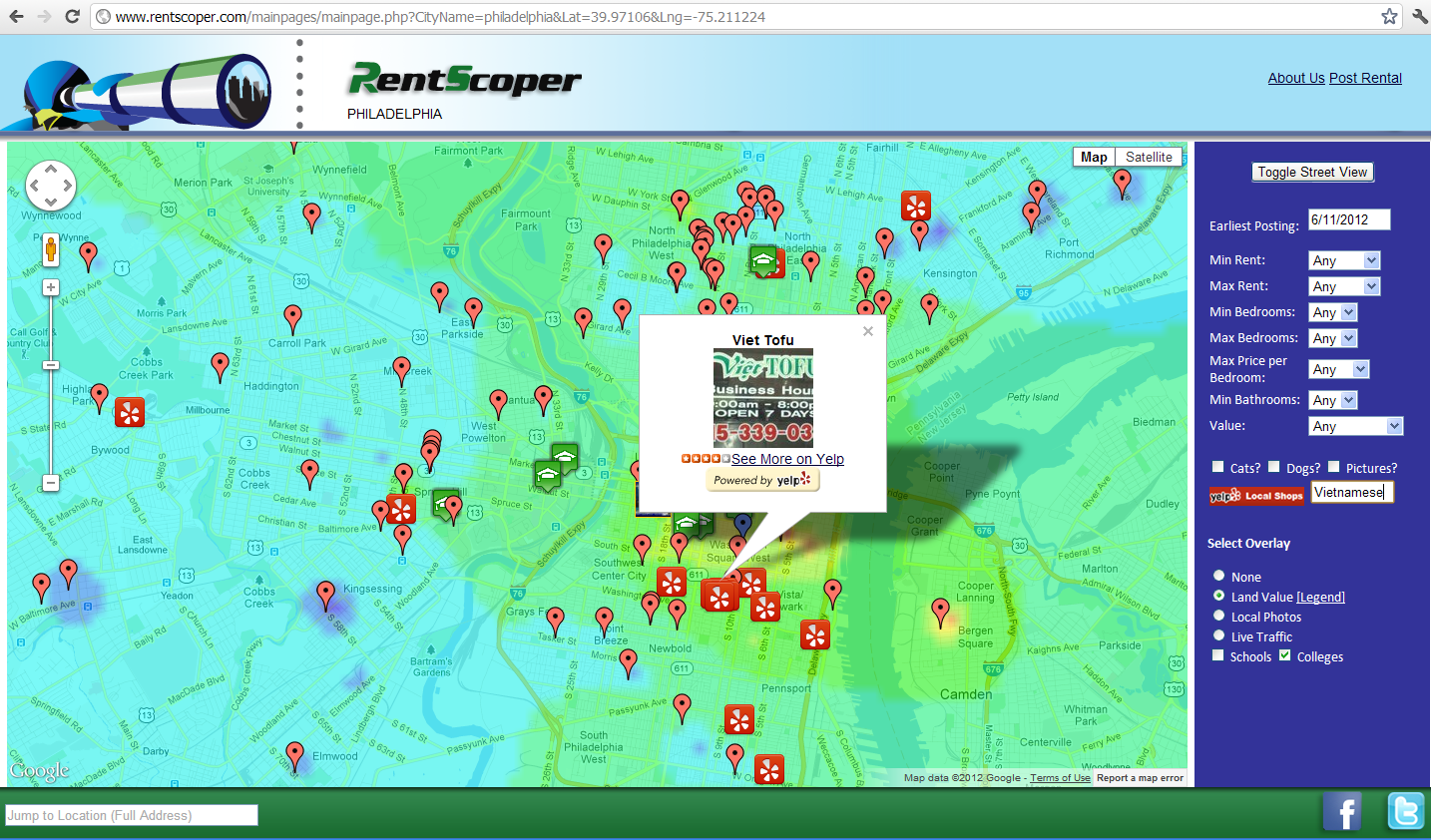
Nearly a year ago, AG introduced you to RentScoper, a real estate search site originally aimed at improving decision making for real estate investors, featuring unique heat mapping that measures the effect of a location on a property’s value. The site has now been adopted by more than just investors and is becoming a search tool for regular shoppers with added layers that competitors do not have.

Given the company’s emphasis on surroundings, it is no surprise that RentScoper has added Yelp reviews of surrounding locations from restaurants and retailers to service providers and more, so that anyone searching the site from any location can get a feel for the local vibe.

“Rentscoper is primarily for people moving to unfamiliar towns (college students, people changing jobs, etc),” RentScoper Founder, Jeremy Elser told AG. “You actually need all this background data to make an informed decision, to get a crash course in becoming a native. The trick is to synthesize that information into a form that you can absorb quickly (like the heatmaps).”

Elser adds, “The importance is that it furthers our goal of providing as much context as possible when you are shopping. Where you live is only half about the apartment itself, the other half is the neighborhood.”

Yelp as a natural extension of RentScoper

Why Yelp instead of Google reviews? Elser notes that Yelp has “more brand recognition, a more established track record, and their product is more mature and stabilized, so we expect fewer glitches.”

Additionally, Elser says that Yelp was a “natural extension” of their current offering. “We had information on location values (the heatmaps, which show general pricing regions), college icons, K12 school icons, local photos, traffic, but the last piece was the relationship to the businesses and institutions around your potential home.”

Builder confidence levels at highest since May 2007

Home builders’ confidence edges up slightly

According to the National Association of Home Builders (NAHB)’ Housing Market Index (HMI) report, builder confidence rose one point to 29 in the month of June, the highest level since May of 2007, well before the housing market took a nosedive. The NAHB notes that only when the index rises above 50 points to more builders view sales conditions as good than as poor.

“This month’s modest uptick in builder confidence comes on the heels of a four-point gain in May and is reflective of the continued, gradual improvement we are seeing in many individual housing markets as more buyers decide to take advantage of today’s low prices and interest rates,” said Barry Rutenberg, chairman of the National Association of Home Builders (NAHB) and a home builder from Gainesville, Fla.

“While the June HMI is in keeping with our forecast for gradually improving single-family home sales this year, recent economic reports that have shown some weakening in the pace of recovery likely factored into the marginal gain,” said NAHB Chief Economist David Crowe. “In addition, builders across the country continue to report that overly tight lending conditions and inaccurate appraisals are major obstacles to completing sales at this time.”

Confidence measurements varied

Confidence regarding current sales conditions rose two points in June to 32, their highest level since April of 2007, while confidence in sales expectations for the next six months and traffic of prospective buyers held unchanged at 34 and 23, respectively.

Regionally, the HMI results were mixed in June, with two areas of the country posting gains and two posting declines. The Midwest registered a five-point gain to 31 and the West registered a four-point gain to 33, while the Northeast and South each posted two-point declines, to 29 and 26, respectively.

App to analyze noise levels, will Trulia beat them to the punch?

New app to analyze noise

Scientists at the University of Granada in southern Spain are creating a new application1 to analyze noise pollution, and combines data like street type, road conditions, and average vehicle speed to predict the noise level on any given street at any given time. It is said the technology is 95 percent accurate.

The app is seen as immediately useful to people who are looking to rent or purchase a home, taking noise levels into consideration as they select their location. Researchers are currently trying to reduce the number of variables required to produce an accurate forecast of the noise levels in a given area.

To develop this new system, the researchers analyzed a set of noise data collected in Granada in 2007, although they are collecting further data in other cities “to validate the model.” The noise forecasting models employed to date have been based on traditional mathematical methods that predict noise levels using a specific set of data. “This is the first system to apply Soft Computing methods in urban noise assessment,” adds one of the researchers, “and there is scarce literature available on this method”.

According to GOOD Magazine2, “Noise pollution can contribute to some serious health problems—including stress-related illnesses, high blood pressure, hearing loss, and heart attacks. It’s also lousy for ecosystems, threatening coral reefs and killing whales. If this application helps us study, and mitigate, those effects, it could be useful for much more than just home shopping.”

A different method, a different company

While researchers at the Spanish university devote time and money to this complicated algorithm, the private sector has already hinted that American real estate may someday have noise measurements included in listing data.

In late 2010, Trulia acquired Movity.com, an insanely innovative real estate search company that used animated heat maps to explain things, including noise levels, particularly in San Francisco by using physical monitors of areas throughout the day and night.

Click the image below to watch the animation of a single neighborhood:

Imagine a visualization like this in every city in America. Because Trulia acquired Movity and who knows how many patents, along with their ridiculously intelligent talent, Trulia is the only real estate search company that could beat the University of Granada to the punch, without having to develop billions of dollars worth of algorithms.

What would be even more dramatic and innovative is if Trulia (or any real estate search company) worked with the University of Granada to adopt their algorithm, then implement the Movity-style heat maps. That would be genius.

1 University of Granada Report
2 GOOD Magazine

Challenging the culture guides taught in business schools

Collective Culture vs. the Individual

In business schools around the world, students are studying Geert Hofstede’s six (as of 2010) cultural dimensions. I was one of those enthralled students, gushing over the depth and conviction of his theses. I smiled and whispered to myself, Yes! Someone gets it… culture is all-important in business. But recently, after chatting with a former B-school professor, I brazenly mentioned it’s time for a “cultural studies re-vamp” in business education. You could have heard crickets chirping, as if I’d just committed the largest case of blasphemy this side of the Holy Land.

In case you aren’t familiar, here’s a brief introduction to Human and Organizational Development 101: Hofstede conducted a worldwide survey of IBM employees in the 1960s and 1970s. He discovered that cultural values could be analyzed on six (originally only four) cultural dimensions: Power Distance Index (PDI), Individualism (IDV), Uncertainty Avoidance Index (UAI), Masculinity (MAS), Long Term Orientation (LTO) and finally Indulgence vs. Self-Restraint. The scores are relative, society to society, and merely serve as constructs. While the dimensions scores do not predict future behavior, they serve to explain an the undergirding effect culture has on members of a society.

While his research was groundbreaking, is this really the universal “truth” we should be following as THE culture guide?

What is culture?

For starters, many agree that culture, in the general sense, is the set of behaviors, beliefs and attributes distinctive of a group. I believe culture is so much more than this. It’s a collection of arts, language, knowledge, mannerisms, prejudices, experiences, tastes, morals, and desires. But is what makes up culture black and white? Is culture dynamic or static? Is it something that one is only born with?

The idea of subculture mitigates this definition conundrum, but raises a whole new set of questions. Is subculture as important as national culture, corporate culture or even family culture? These are all questions that must be answered on some level to conduct business on a global scale. While there may be different answers for each of these questions, it’s far more important to realize that culture is adaptive and is constantly in flux.

Is the sum greater than its parts?

We know what culture is and how it relates to groups, but how does it relate to individuals? In all of the aforementioned definitions, culture is the relationship of an individual to the group. In business, we often stage negotiations and initial meetings based on national cultures and, sadly enough, preconceived notions. But, is the individual culture more important that the group culture? Ultimately it comes down to what our goal is in business. I recently heard a fabulous saleswoman speak on the evolution of the marketplace. No longer are we selling B-2-B, now it’s P-2-P, people-to-people. As such, we must change our frame of reference and focus on the individual before us.

Or is the world in fact getting smaller? We hear, and see, time and time again how the world is shrinking. From Guiness in Africa to Starbucks in Europe to Outback Steakhouse in China, globalization is ever-present. This international brand presence would seem to indicate on some level an emerging “world culture” that we should be aware of. Some characteristics would include international efficiency, use of technology, and a shared common language (revenue!). In this case, how valid are the national cultures of societies? Wouldn’t the collective cultures paint a more accurate picture?

Key Takeaways

While Hofstede made valuable contributions to culture studies in global business, some improvements can be made.
[ba-list style=”thumbs”]

  • In this millennium, we can’t over look what many have dubbed “The Melting Pot effect” and multiculturalism – the blending and mixing of multiple cultures.
  • In business, we should factor in corporate culture as it pertains to the individual.
  • While P2P is great in long-term business relationships, use Hofstede’s generic national cultural definitions sparingly and only as a starting point for understanding.

[/ba-list]

Tenant Resource Network awards $5 million in grants

New federal grant program

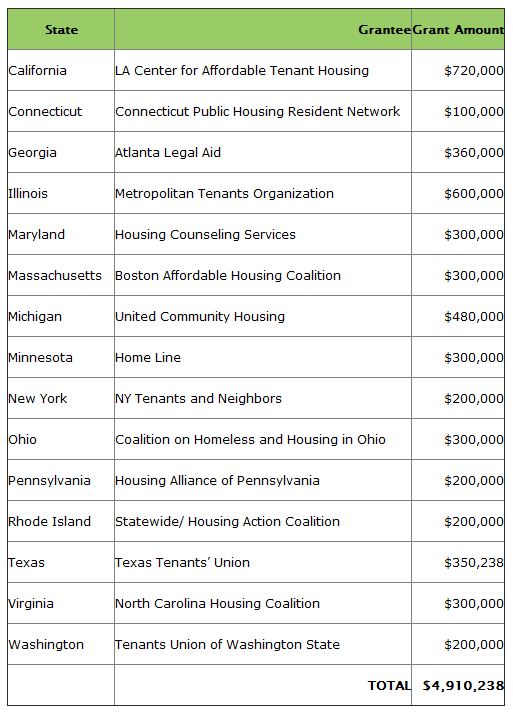
The U.S. Department of Housing and Urban Development (HUD) has recently unveiled the new Tenant Resource Network (TRN) which offers grants to empower tenants and preserve multi-family assisted housing. Through the new network, HUD has awarded nearly $5 million to 15 nonprofit organizations “in an effort to help low-income tenants receiving Section 8 project-based rental assistance and to preserve affordable housing.”

The purpose of the TRN is to make grants to qualified nonprofit organizations to assist, inform, educate and engage tenants living in certain Section 8-assisted properties at risk of losing affordability protections or project-based rental assistance.

“The Tenant Resource Network is designed to help working families who are at greatest risk of being priced out of their rental market,” said Carol Galante, HUD’s Acting Assistant Secretary for Housing. “The whole purpose of this program is to empower families living in HUD-assisted housing, giving them the information and options they need to stay in their homes.”

HUD is awarding grants to the following nonprofit tenant assistance organizations:

HUD says that one goal of the TRN program is to assist tenants living in project-based Section 8 housing regarding their rights, responsibilities and options when a property owner ‘opts-out’ the program, pre-pays their mortgage, or repeatedly fails to meet HUD’s housing standards.

The second purpose of the program is preservation of HUD-assisted affordable housing by engaging tenants in efforts to preserve eligible properties as affordable housing.

TRN is a new program developed under the authority of Section 514 of the Multifamily Assisted Housing Reform and Affordability Act of 1997 (MAHRA). The TRN Program targeted certain Metropolitan Statistical Areas (MSAs) which include a high proportion of TRN-eligible housing units.

Summary of grants

The grants given to each organization varied not only in amount, but in what the ultimate use of funds will be, as outlined in the document below:
[ba-pdfviewer pdfurl=”https://theamericangenius.com/wp-content/uploads/2012/06/HUD-GRANTS.pdf” width=”100%” height=”800px”]

Study: same sex male couples spend the most on housing

Gay pride month in America

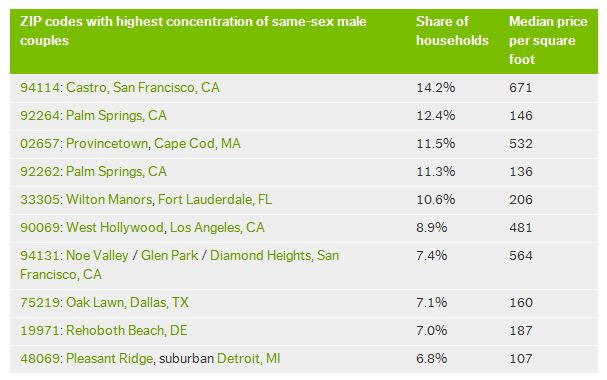
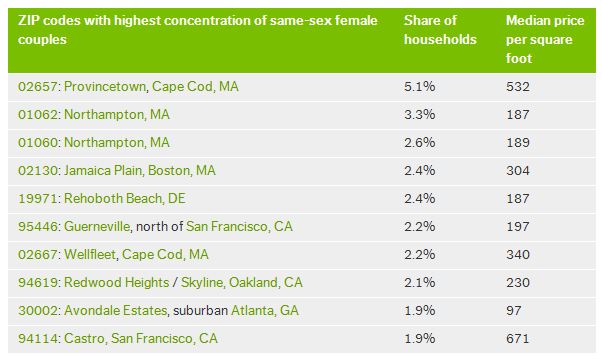
In celebration of Gay Pride Month, real estate search site, Trulia.com calculated the share of households in each ZIP code that are same-sex male couples and same-sex female couples, based on the 2010 Census, combining that data with median price per foot of listed homes in each ZIP code on Trulia over the past year. “Even in the big, expensive cities, it’s possible to find a gay community without spending a fortune. And the picture looks different for gay men and women, who often cluster in very different neighborhoods even in the same metro,” said Trulia.

The top neighborhoods for same-sex couples include well known areas like the Castro and Provincetown, along with several lesser-known communities, from suburban Atlanta to suburbs of Detroit.

The company notes that “While the gayest neighborhoods in big cities are pricey (West Hollywood, Chelsea), there are also affordable neighborhoods – even in expensive cities — with significant gay populations.”

Same sex couples cluster

The study found that gay men and gay women tend to cluster in different parts of major cities, with Manthattan, Los Angeles, and San Francisco more gay male couple dominated, while gay women couples clustered in Brooklyn, Long Beach, and Oakland.


Trulia notes that the Census reports roughly 646,000 same-sex households, 51 percent of which are female couples, 49 percent are male. Same-sex households represent just 0.6 percent of the nation’s 117 million households, meanwhile some neighborhoods have a concentration of same-sex couples more than 10 times the national average.

Provincetown, Rehoboth Beach, and the Castro are the only three neighborhoods that appear on both the men’s and women’s top lists. Trulia notes that “one of the biggest differences is that the top men’s neighborhoods are much gayer than the top women’s neighborhoods: just one women’s neighborhood breaks the 5% barrier, while five men’s neighborhoods have more than 10% same-sex male couples.”

“Remember,” the company continued, “there are roughly the same number of male and female couples in the U.S. So, that means that male couples are much more clustered in particular neighborhoods than female couples are: female couples are more likely to be the only ones on their block.”

Male couples spend dramatically more on housing

Trulia reports that the typical same-sex male couple lives in a ZIP code with a median price per square foot of $208 while typical same-sex female couples live in a ZIP code with a median $139 per square foot, while $127 is the average American price per square foot for all households.

Why the price difference? “A big reason is that same-sex couples are less likely to have kids: 10% of same-sex male couples and 24% of same-sex female couples have kids in the house, compared with 41% of all married and unmarried couples. Couples without kids need less space and therefore are better able to afford desirable, expensive urban neighborhoods.”

“At the same time, gay men contribute to the gentrification of many urban neighborhoods: another academic paper showed that home prices rise faster in neighborhoods with higher concentrations of gay couples. But even the most expensive big cities have relatively affordable neighborhoods for gay couples,” the company reports.

1 Trulia study

NJ Court: HOAs must allow political signs in yards

political yard signs vs. HOAs

Vote for my candidate

Every election cycle, stories emerge of homeowners placing signs in their windows and yards, supporting their candidates, and homeowners associations (HOAs) will be removing, fining, and fighting residents along the way. While many states support HOA rights and allow them to make rules against political signs, or any other yard signs, the New Jersey Supreme Court has just ruled that residents may place campaign messages on their property regardless of HOA rules.

According to nj.com, Wasim Khan of Parsippany was ordered by the Mazdabrook Commons Homeowners’ Association to remove campaign signs from the window and door of his townhouse when he was running for council in Parsippany in 2005. The HOA’s rules were that only “For Sale” signs are allowed.

State Supreme Court rules against HOA

In a 5-1 ruling against the HOA, the state Supreme Court ruled that the association violated his free speech rights and said that he could post signs in his own home. The Supreme Court went above and beyond simply ruling that he could place a sign, they ruled that barring political signs “has barred virtually all expressional activity.”

The Court weighed the homeowners rights to free expression versus the HOA’s private property interest, concluding that “the sign policy in question violates the free speech clause of the State Constitution,” according to court documents.

A victory for free speech

“It’s a great victory for free speech,” Khan told nj.com. “I’m so proud of our Supreme Court and our state. It’s incredible.” The ruling however, does not open the door for all signs, rather permits political signs, as political free speech is protected, but other signs may not be protected, such as “support our troops” or “Jesus is King” signs.

“Ideas cannot be fleshed out unless people have fearlessness that what they do will not have any repercussion,” said Khan, 56, a physician who works in cancer research as a consultant to pharmaceutical companies.

Rypple: feedback, accomplishment, and goal tracking

Giving feedback for any sized company

Working together as a team and receiving timely feedback are two essentials to any healthy, productive, lucrative company. However, many companies opt for the traditional method of providing a performance review once a year. While these annual reviews can be very helpful, wouldn’t it be more helpful for your employees to know where they stand at all times? Rypple provides you a way to provide that essential feedback, while keeping track of accomplishments, goals, progress made on any given project, and even important work-related conversations between employees. Rypple creates a completely collaborative work environment that can take your small business to the next level.

One of the best ways to keep a small company alive is through fervent interaction with all those employed. While it’s important to have employees that can work with minimal supervision, it’s also important to have employees that can work together professionally. Because many employees have the same goal when it comes to a larger project, there needs to be an easy way to communicate and collaborate while still maintaining productivity and focus. Rypple allows you to assign goals and projects to your employees and prioritize their assignments so everyone knows what they need to be working on at any given time. Once a goal is achieved, that goal can then be checked off and either shared publicly with everyone else in the company or it can be set to private, which means only the employee and you can see it.

Adios, annual performance reviews

Annual performance reviews are no more, thanks to Rypple. “Feedback works best when people get it right away. Rypple helps managers and their teams get continuous feedback—while the feedback is still relevant.” Instead of merely improving once a year, your employees now have the opportunity to improve constantly and consistently, providing your company with even more internal growth and improvement.

Going along with that, everyone appreciates being acknowledged for their hard work. Feeling valued will ultimately improve employee morale, which will create more loyal, hardworking employees for your brand expansion. When a team achieves their goal or has surpassed expectations, it’s important to give them the kudos they deserve. With Rypple, you can make this public for the entire company to see and post it on the employee’s profile. If the employee prefers to keep these accomplishments private, that’s possible, too.

Rypple also allows employees to chat through their platform and save important conversations for later reference. These conversations can be set to private so that only those who participated in the conversation can view it. If it could be a helpful reference for other workers, you also have the option to make it public. You hold the power and control over every entry’s visibility. Rypple was “designed to build a transparent, results-driven work culture,” so you and your employees can get the job done, achieve important goals, improve professional skills, and enjoy the process along the way– no matter how tiny your business is.

[ba-youtubeflex videoid=”Fpw97AIYQ-Q”]

Four ways even infrequent travelers can cut costs

Like finding a $100 bill in your couch

Business professionals from all industries should always be looking at ways to save money, but an often overlooked savings is rewards systems offered through many credit cards. Whether you travel once per year, or every week, and whether it is for business, conferences, pleasure, or both, there are ways to make your current spending habits work for you and save you some cash.

NextAdvisor.com President and Founder Erik Larson shared with AGBeat his top four tips to make those credit cards work for you:

1. Choose the Best Overall Card

If you’re a conference goer who’d prefer to keep your options open on where to stay and which airline to fly, the Capital One® VentureSM Rewards Card is the best choice to be your preferred travel credit card.  In a recent travel rewards card analysis by NextAdvisor.com, this card was found to offer a very lucrative $2.00 flight and hotel redemption value for every $100 spent, combining high value with very flexible miles usage. You can book any type of travel however you want with your  miles – from any travel site, agent or airline.  
With this type of flexibility you can book the hotel and airline you prefer without worry and without being bound to a particular hotel chain or airline brand. You also get 10,000 bonus miles when you spend $1,000 in the first 3 months of being a cardholder. Another excellent choice for an all-around travel rewards credit card from NextAdvisor.com’s credit card reviews is the Escape by Discover® Card. It also features a very high $2.00 flight and hotel redemption value per $100 spent.  Just like the Capital One Venture Rewards card, you can use your rewards to book flights and hotel stays anywhere and anyhow you want. In addition users can earn 1,000 bonus points each month they make a purchase for the first 25 months—up to 25,000 extra points!


2. Match Your Credit Card with your Hotel of Choice

A branded hotel credit card is a good choice for road warriors who prefer to stay at the same hotel chain each time they travel to an event. Not only do these card typically offer perks at the hotel chain like free room upgrades, but combining the points you earn from the card with those you earn at your stays can help you get to new reward tiers much more quickly. 

The Starwood Preferred Guest® Card from American Express® provides the largest bang for your buck with every $100 spent on this card earning you $2.50 in hotel redemption rewards, according to the NextAdvisor.com study.  It also offers numerous perks including earning a free night a luxurious Category 4 hotel after the first purchase, and getting the third night free at Sheraton hotels.   

Other hotel credit card options include the Citi® Hilton HHonorsSM Visa Signature card and the Marriott Rewards® Credit Card from Chase.

3. Match Your Credit Card with your Airline of Choice

For travelers who remain faithful to a specific airline, a branded airline card might make the most sense.  As with branded hotel cards, many airline cards offer perks such as free checked bags and priority checkin, plus combining your miles earned from the credit card with those you earn flying can help you get to the next reward level much faster.  TheUnited MileagePlus® Explorer Card fared well in NextAdvisor.com’s study, offering $1.94 in flight redemption rewards per $100 spent. Additional perks include 25,000 bonus miles after your first purchase,  priority boarding privileges, the ability to check your first bag for free on United and Continental flights and 2 annual complimentary passes to the United Club.  

For those who frequently fly Southwest Airlines, the Southwest Airlines Rapid Rewards® Plus Card from Chase is another great choice, earning users $1.92 in flight redemption value on Southwest flights for every $100 spent.  You’ll also earn a free Southwest flight with your first purchase – a very nice perk indeed. Other choices include the Platinum Delta Skymiles® from American Express® ($1.26 flight redemption value) and the Citi® Platinum Select®/AAdvantage® World Mastercard® ($1.04 flight redemption value).

4. Watch Out For Extra Fees

Most of the travel credit cards that offer the best rewards come with an annual fee.  If you use your card a lot, the fee will be well worth it.  There can be other fees to watch out for as well, though.  If your conferences are often located in a foreign country, you’ll want a card that does not charge foreign transaction fees. For example, the Capital One Venture Rewards Card and the Escape by Discover card don’t charge any foreign transaction fees, but the Starwood Preferred Guest Card charges 2.7% of each foreign transaction, which will add up in a hurry. 

Also, if you’re planning on carrying a balance on your credit card, the travel rewards cards tend to offer higher APRs than cards designed specifically aslow APR credit cards – usually around 2 or 3 percentage points higher.  The difference in APRs can outweigh any rewards you might earn if you’re going to carry a high balance.

The takeaway

With these four tips, even the infrequently flyer can find amazing deals and make traveling a more feasible option for those who are holding back. Conference junkies that travel from town to town can save loads of cash, but even the annual or quarterly traveler can cash in on the rewards available to all.

How to execute humor in video ads properly

Humor in web videos

Humor in video ads

Humor has long been used in advertising, as the world shifts from information-based advertising where the back of the comic book shows a full page ad filled with text for muscle juice you need to keep bullies away on the beach, to entertainment-based advertising of today, where a television or web ad is more like a quick, silly video that passively markets by entertaining, a la Matthew’s Day Off, the Honda commercial during the Super Bowl that emulates Ferris Bueller’s Day Off.

The problem with executing humor is that most people are bad at it. You know a funny video when you see one, but is the silly chicken suit you’re wearing in your web video ad really funny and/or effective? Probably not, it’s cheesy, and everyone knows it.

Below are two videos about Google’s offering that shows how real time collaboration works, but rather than spell everything out for you in text or word, they demonstrate it with a little bit of humor:
[ba-youtubeflex videoid=”D0hHaQgdypI”]

[ba-youtubeflex videoid=”UH8-elhdgy0″]

How to execute humor properly

Let’s say you’re a Realtor and you want to do a 30 second spot for the web on a budget. If you get in front of a camera, or heck, your webcam, and you read text about how you’re number one, you love your clients, and you are never too busy for referrals, you’ve lost your audience after two seconds flat. Easily.

Think of ways you can demonstrate your value through humor. Show before and after shots (video or even just picture) of what happens when people use your services versus when they don’t. The before and after can be houses that sold in days versus becoming abandoned and sitting on the market for a year, or it can be mad clients versus happy clients, all done through humorous, not boring shots. Happy clients will be something silly like a couple in front of a large house, jumping up and down, sped up, and mad clients will be sluggishly unpacking their stuff into a cramped, loud condo. Get creative. If you run out of ideas, parodies can be particularly memorable and hilarious if done well.

If you’re doing it alone without professional help, at least spell out your video through storyboarding, show it to others and get their input – your version of funny might not actually be funny. And if you run out of inspiration, just search YouTube for “funny commercial,” and spend endless hours watching the work of others.

Proof that social media drives purchases

Facebook Like Button

New data shows social media’s influence on consumers

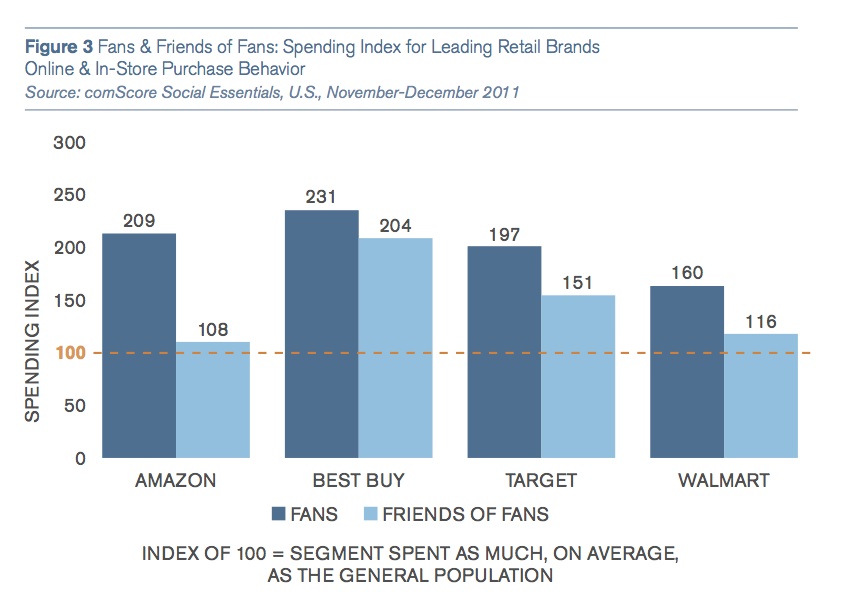
According to a new study1 by ComScore, amplification is one of the most important aspects of social media marketing as a means to drive purchases. The study analyses the value of a brand’s Facebook fans, noting that fans are only one component of purchases, noting that brands must factor in the potential amplification to friends of fans. As fans interact with a piece of content on a Facebook Page, they make their friends aware of it as it is posted on their timeline.

ComScore has teamed up with Facebook to produce the report, which has some questioning the validity and objectivity. Despite that, even if partially true, brands can tap into a very advantageous position by using Facebook well. The study says that brands could theoretically amplify their message 81 times via friends of fans, highlighting the importance of properly hitting the target – if a brand has useless content on their Facebook Page that fans do not care about, the advantageous position is lost.

A share is more valuable than a like

The study echoes what many have already asserted – a share is a much more relevant metric than a like, as there are 1.7 billion likes in a year, but far fewer shares. The study finds that if you target fans well, fans and friends of fans will spend significantly more money than regular consumers, proving that social media can, in fact, drive purchases.

Four American retailers were analyzed by the study, revealing that just before Christmas, retailers’ use of sneak previews and Black Friday deal promotions on Facebook yielded great results – Best Buy alone saw fans and friends of fans spending double what the average consumer spent, and Target saw success as well. With all retailers, actual fans spent the most between fans, friends of fans, and regular consumers that are neither.

The takeaway is that quality content and promotions on a Facebook fan page can drive higher spends, and amplification (reaching friends of fans) is a more important metric than likes or shares.

1 ComScore Whitepaper

Mortgage application volume surges 18% in one week

Mortgage application volume up this week

For the week ending June 8th, the Mortgage Bankers Association’s (MBA) Weekly Mortgage Applications Survey reveals that application volume increased 18 percent on a seasonally adjusted basis, and 30 percent on an unadjusted basis.

The Refinance Index increased over 19 percent from the previous week to the highest index level since April 2009. The seasonally adjusted Purchase Index increased around 13 percent from one week earlier. The unadjusted Purchase Index increased over 23 percent compared with the previous week and was 4 percent higher than the same week one year ago.

The refinance share of mortgage activity increased to 79 percent of total applications from 78 percent the previous week. The adjustable-rate mortgage (ARM) share of activity remains around 5 percent of total applications from the previous week.

“Mortgage application volume increased sharply last week. The increase was accentuated due to the comparison to the week including Memorial Day, but the level of refinance and total market activity is the highest since the spring of 2009,” said Michael Fratantoni, MBA’s Vice President of Research and Economics. Last week’s survey included an adjustment for the Memorial Day holiday.

Fratantoni added, “Refinance volume increased as borrowers were able to lock in at mortgage rates below 4 percent, and purchase application volume was its highest level in over six months.  HARP volume has been steady in recent weeks at about 28 percent of refinance applications.”

Mortgage rates, loan sizes

According to the MBA:

  • The average loan size of all loans for home purchase in the US was $243,733 in May 2012, up from $238,135 in April 2012. The average loan size for a refinance was $226,576, up from $219,664 in April.  The largest purchase loans were made in the Pacific region at $357,978 while the largest refinance loans were also made in the Pacific region at $313,826.
  • The average contract interest rate for 30-year fixed-rate mortgages with conforming loan balances ($417,500 or less) increased to 3.88 percent from 3.87 percent, with points decreasing to 0.43 from  0.46 (including the origination fee) for 80 percent loan-to-value ratio (LTV) loans.  The effective rate increased from last week.
  • The average contract interest rate for 30-year fixed-rate mortgages with jumbo loan balances (greater than $417,500) decreased to 4.12 percent from 4.13 percent, with points increasing to 0.41 from 0.35 (including the origination fee) for 80 percent LTV loans.  The effective rate increased from last week.
  • The average contract interest rate for 30-year fixed-rate mortgages backed by the FHA increased to 3.71 percent from 3.70 percent, with points decreasing to 0.59 from 0.60 (including the origination fee) for 80 percent LTV loans.  The effective rate increased from last week.
  • The average contract interest rate for 15-year fixed-rate mortgages increased to 3.23 percent from 3.20 percent, with points increasing to 0.48 from 0.46 (including the origination fee) for 80 percent LTV loans. The effective rate increased from last week.
  • The average contract interest rate for 5/1 ARMs remained unchanged at 2.78 percent, with points increasing to 0.49 from 0.40 (including the origination fee) for 80 percent LTV loans.  The effective rate increased from last week.

Shadow inventory levels hit three year low

Shadow inventory levels down

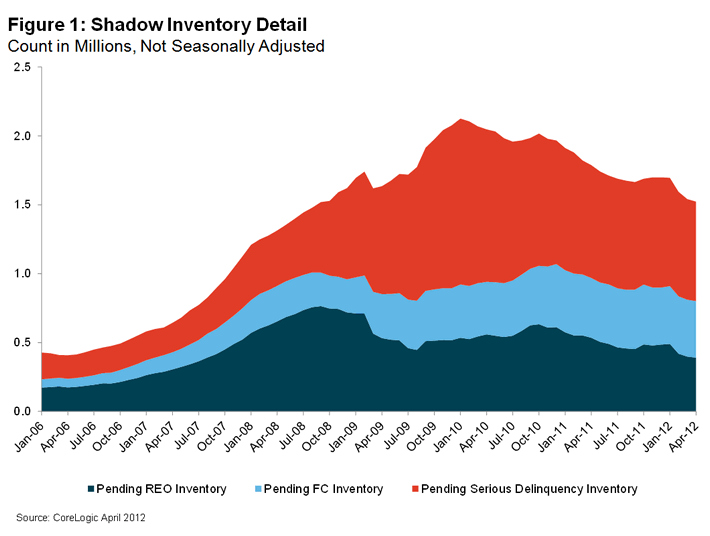
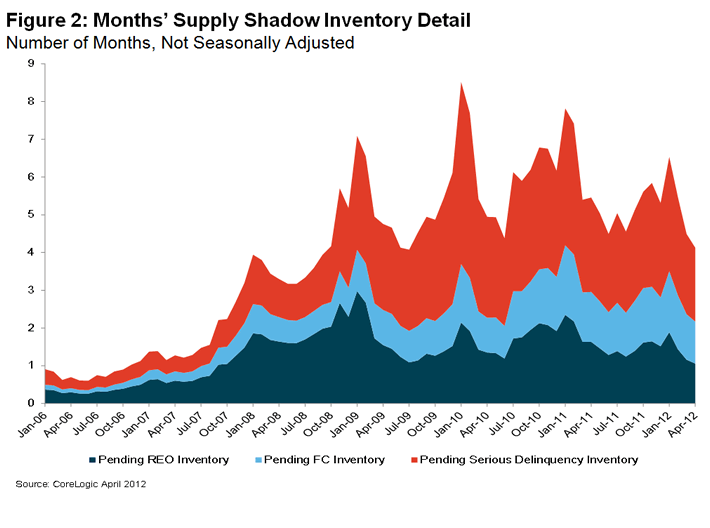
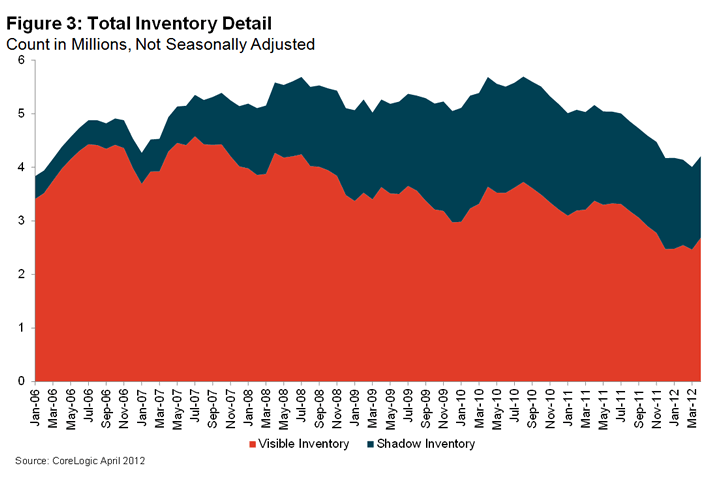
According to CoreLogic, the residential shadow inventory fell 14.8 percent between April 2011 and April 2012, hitting 1.5 million units, representing a four month supply, down from last year’s 1.8 million units, or a six months’ supply, approximately the same level as October 2008. The 1.5 million units represents just over half of the 2.8 million properties currently seriously delinquent, in foreclosure or REO. The four-month supply of shadow inventory is at its lowest level in nearly three years

Currently, the flow of new seriously delinquent (90 days or more) loans into the shadow inventory has been approximately offset by the equal volume of distressed (short and real estate owned) sales.

“Since peaking at 2.1 million units in January 2010, the shadow inventory has fallen by 28 percent. The decline in the shadow inventory is a positive development because it removes some of the downward pressure on house prices,” said Dr. Mark Fleming, chief economist for CoreLogic. “This is one of the reasons why some markets that were formerly identified as deeply distressed, like Arizona, California and Nevada, are now experiencing price increases.”

Delinquencies fall dramatically in Arizona, California

Additionally, the unsold months’ supply of non-distressed active listings that hit a more than five year low in April, falling to a 6.5-months’ from a 9.1-months’ supply just a year ago.

Of the 1.5 million properties currently in the shadow inventory, 720,000 units are seriously delinquent (two months’ supply), 410,000 are in some stage of foreclosure (1.1-months’ supply) and 390,000 are already in REO (1.1-months’ supply).

The dollar volume of shadow inventory was $246 billion as of April 2012, down from $270 billion a year ago, and serious delinquencies declined the most in Arizona (-37.0 percent), California (-28.0 percent), Nevada (-27.4 percent), Michigan (-23.7 percent) and Minnesota (-18.1 percent).


CoreLogic estimates the current stock of properties in the shadow inventory, by calculating the number of distressed properties that are seriously delinquent, in foreclosure and held as real estate owned (REO) by mortgage servicers but not currently listed on multiple listing services (MLSs). Transition rates of “delinquency to foreclosure” and “foreclosure to REO” are used to identify the currently distressed non-listed properties most likely to become REO properties. Properties that are not yet delinquent but may become delinquent in the future are not included in the estimate of the current shadow inventory. Shadow inventory is typically not included in the official metrics of unsold inventory.

Chick en with us: running afoul on the MLS


Something is afoul on the MLS and in real estate advertising, folks. You’ll love the hilarious bloopers my colleagues and I discovered this past week. Thanks to Terri Gerger and Jane Peters of Los Angeles and Bruce Walter of West Lafayette, IN  for their fabulous finds.  Here are this week’s picks from the Big Blooper Scooper:

This Is a Deal?

“Chandelier in front, upstairs bedroom is not included in sale of the house.”  (Well somebody’s pissed with his lender!)

“Horse farm with open floor, covered front porch” (I doubt if it’s covered in anything I care to step in.)

“New Construction simulated on nice lot” (The “Virtual Lot” – For most of us sorryass Los Angelenos who can’t afford the land to go with our homes.)

“Two new models crouton soon” (So they’ll be toasted – kind of like your career?)

“Chick en with us after Sunday’s Open” (Family dinner at Pluck You Chicken?)

This Has Appeal?

“7 daze a week” (Your  high school report card score perhaps?)

“Beg opportunity” (Let me guess – divorce court?)

“Gurd gate” (Perhaps you mean regurgitate…which is what I did upon reading your listing remarks.)

“Snacks and drunks served” (Oh yay – another dinner with the family at Uncle Paddy’s place!)

“House has gas issues”  (So do I, but I don’t consider that a selling point…)

This Is a Steal!

“Comes with gym member” (That explains the buff guy lathering up in my shower…)

“Major tree remodel soon” (Is this the home of Swiss Family Robinson, or is that you, God…sir?)

“Two bulgings” (So I guess you’ve seen me naked…)

“Bring a fiend” (Too late – I divorced him.)

Kiss This One Good-bye

“Near restaurants and cubs” (Either you live in Chicago, or you’re about to have your a__ handed to you by a Grizzly.)

That’s it for this week, friends.  Remember: Spell Well and Sell. 


Tips on working for a younger boss

An increasingly common factor in business

The modern workplace can be a brutal environment, no matter how seasoned and experienced you are. One increasingly common factor is working for someone significantly younger than you. It can be brutal to work for someone the age of your child or even grandchild. However, because your workplace is undoubtedly one of professionalism – at least it should be – here are some tips to help you work with your younger boss without a problem.

Tip one – understand the reason

The truth is, your boss was made your boss for a reason. Even if he or she is young, there must be something there that caught the eye of someone higher up. That could be education, his or her modern professional outlook, or knowledge of new methods.

Whatever the reason, understanding that reason can help you feel more at ease and trust your much-younger boss. Perhaps your boss was brought in from the outside or maybe moved up the ranks quickly. Either way, remember there is something upper management saw in your boss, something valuable. If your young boss is the entrepreneur, then the reason is more clear, and respect should be given for someone willing to build a business at such a young age.

Tip two – learn what you can

Because your boss was given that position for a reason, chances are there is a lot you can learn from him or her. Perhaps it’s a new marketing method or how to talk to employees with respect and encouragement. Finding things you can learn from your boss will lead to greater appreciation and respect for that person. And professionalism should be about mutual respect.

Tip three – accentuate your own skills

If you feel uncomfortable or upset by having a younger boss, remember that you have valuable skills, too. Even if you’re not up on modern tactics, you undoubtedly have ample experience and knowledge that could be helpful in your work environment. So, work together with your younger boss to merge skillsets, education, and experience to make one killer professional team.

Tip four – continue toward your goals

Sometimes having a young boss can make you feel as though you’re behind in life, behind in reaching your goals. But that probably isn’t true. So, continue toward your goals, and don’t compare yourself to your boss. That will only be hurtful. If you feel you must, use it as inspiration rather than self-deprecation.

Working for a younger-than-you boss can become a hurdle in your way to professional fulfillment, but it doesn’t have to be. It may take a conscious effort to feel comfortable in your work environment, but it’s important that you feel your importance among your peers, no matter their ages. Remember that you’re an integral part of your professional team. Focus on your strengths and the strengths of those around you, including your young boss. If you can do that, you’ll find fulfillment and joy in your work.

Copywriter’s wild Truth or Dare experiment in NYC

Experiment: paper, tape and dares in NYC

Copywriter, comedienne, creative, Chelsea Davison printed 300 cards and taped them around Washington Square Park in New York City, with the cover shown above, simply prompting strangers to pick truth or dare. As a part of encouraging her fellow New Yorkers to be friendly and social, she organized this massive public game of truth or dare wherin a “truth” can be tweeted to @TruthOrDareNYC or perform a “dare” in public such as telling someone you’re Batman, or quacking loudly.

The Twitter account began seeing “truth” responses, and several dares were filmed by Davison:

[ba-youtubeflex videoid=”q-8N16O3APY”]

The wild results

Just a few days in, the project has been wild and fun. Davison said, “The response was awesome–people started talking, laughing, and having silly, unanticipated fun. Some people even collected the cards as souvenirs.”

She closes by saying, “New York, I’m so glad we got to know each other.”


Bing integrates Qwiki, search gets sexy

1

Bing ups its game overnight

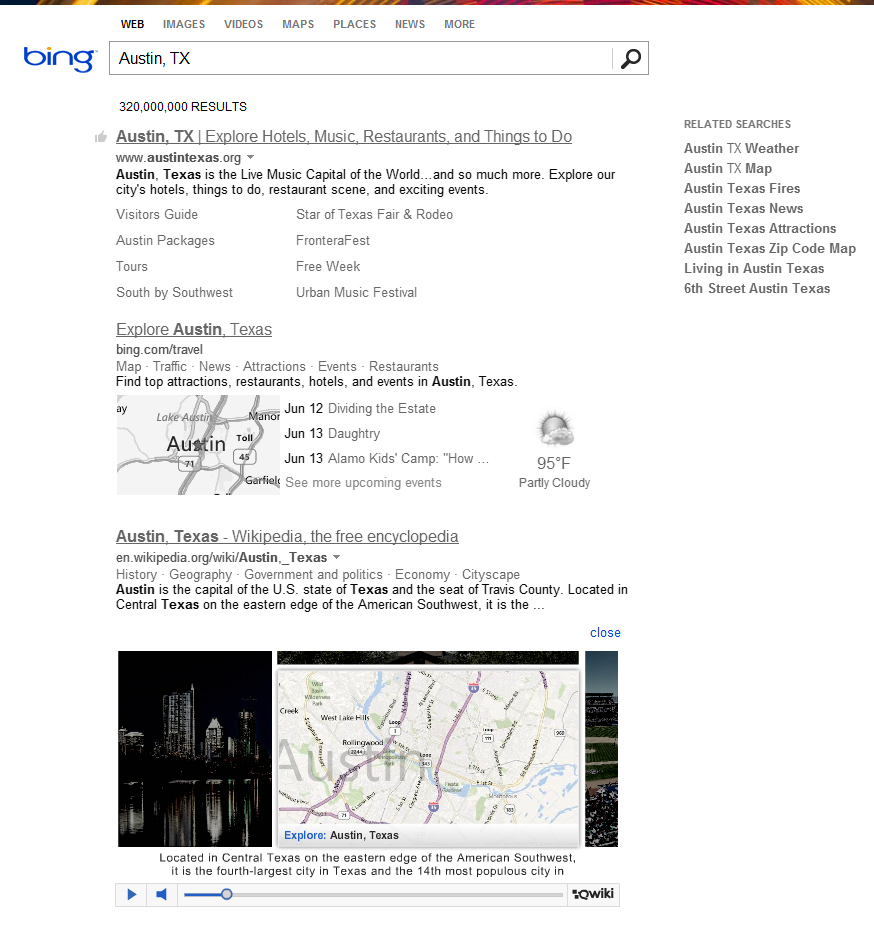
Today, Microsoft’s search engine, Bing announced1 that Qwikis will be integrated directly into search results. AG introduced you to Qwiki in 2011, noting that “Qwiki simplifies information, adding sound and visuals to traditionally text-only search results.”

Bing describes Qwikis as “interactive presentations combining images, videos, maps and spoken narration. In other words, Qwikis are a gateway for further exploration that offer a unique, visual experience to help you quickly get information and do more.”

Qwikis enrich the Bing search experience

Users simply click “play” on any available Qwiki that shows up in search results, but we would like to actually see the Qwiki more obvious, and less of a link you have to search for on the page – it is a visible element, so why not actually make a wide thumbnail that implies there is more to see?

Nonetheless, Bing says, “With Qwikis and other visual elements in Bing, we’re helping people decide what they want to do by creatively exposing them to information that might otherwise take them awhile to find.” Qwikis will initially appear next to Wikipedia results, but will expand to other types or results in the future, the company said.

Earlier this month, Bing added a social layer to search results, relying on the rising trend of peer to peer consumer ratings and reviews as a large part web search. The company is clearly seeking to do more than just remain competitive with Google, they are showing that they are serious about competing.

Like all search engines, the experience is still marred with ads (removed from the screenshot above), and more visuals would be extremely helpful, but adding Qwikies and going social in the same month shows that Bing isn’t playing around, and they want to be the search engine of choice.

1 Bing announcement

International home buyers spend 35% more per transaction

Report on international buyers

According to the National Association of Realtors (NAR), home buyers from outside of the United States spend an median price of $252,000 per transaction, while the median price tag of those inside of the borders is $165,000, a difference of $87,000, or 35 percent. For Realtors, that represents an average of $2,610 more per transaction when working with an international buyer at 3.0 percent commission.

The average price of a home purchased in 2012 by an international buyer is $400,000, and the average price of a home purchased by an American in 2012 is $212,000. So while the median price is about 35 percent different, the average spend is nearly double for international buyers.

More than what it means for a Realtor’s bottom line, it is important to note that the real implication of this new data is that international sales are “becoming a key part of the real estate business and will only get more important,” notes the NAR. Not only is the price of homes selected by international buyers higher, but the volume of international buyers entering the market is up, as housing prices have decreased in the States.

International buyers are an attractive market for real estate professionals, as just last year, NAR reports that almost two-thirds of international buyers bought using cash, up from about a third in 2007 – and cash closes much easier than a potentially lengthy financing process.

An emerging trend is that the international sales is not just in Florida, Arizona, and California, where the bulk of buyers is, but the trend lines are moving up for other states. It’s “not just sun and sand,” says the NAR.

Where do the buyers come from?

For many years, Canada has been a major source of investment in American properties, accounting for 23 percent of all of 2011’s $82 billion in international sales. As mentioned, $82 billion was spent in 2011 by international buyers, up from $66 billion in 2010, representing a 24 percent increase in just one year.

Although continuing to be in the top five origins of international buyers, investment from the UK and Mexico are on the decline, meanwhile, China is increasingly spending more on home purchases in the United States.

What do the buyers want?

NAR says Canadian buyers still focus on sun and sand states, seeking warmer weather, while California continues to attract investment from Asia and the East Coast attracts European buyers.

International buyers come to Realtors primarily through referrals (55 percent), followed by online marketing, which accounts for 21 percent of business. We have long encouraged Realtors to blog about housing in other languages they are fluent in besides English, to appeal to the growing international market.

Over one in four Realtors handled at least one international deal last year, and that figure will likely increase in coming years, not just because of the attractive cash deals at higher prices, but because investors from other nations see how low pricing has fallen in the U.S., and we have very long road to recovery ahead of us, making international buyers and our housing situation a perfect match.