Home Blog Page 347

5 awesome short sale tips

2

Short Sale Summer Reading List

Back when I was in junior high and high school, we used to receive a summer reading list. Everyone complained when the teacher passed out the summer reading list. As I recall, there was a list of three books (boring beyond belief) that we would be required to read before the first day of school.

The best teachers would test us on the reading during the first or second week of school. So, you were doomed to begin the year with bad marks if you didn’t do the reading.

I’m not giving any tests this summer. But, if you are working short sales (or if you want to work short sales), then I’d recommend checking out these five AG posts written earlier this year. Hope you enjoy these posts and that they provide you with value! I also hope you enjoy your summer—with or without the reading list.

  • Juicy Short Sale Incentives Causing Confusion – This article reviews some of the common confusion surrounding all of the big relocation incentive programs currently being offered to certain short sale sellers.
  • When to Escalate Your Short Sale – It’s not necessary to escalate your short sale because your seller has a hangnail. This article describes when to take it up a notch with difficult short sale lenders.
  • How to Write a Killer Email to the Short Sale Lender – This is a better recipe for success than you grandmother’s chocolate chip cookie recipe. Follow the directions in this article and you will see much success with your short sale escalation emails.
  • Short Sale Hardships – Is your short sale seller’s hardship legitimate? It may have to be in order to get the short sale approved. Read more about how to assess the hardship of your client.
  • Latest Changes to the Bank of America Short Sale Process – If you are processing short sales for clients with loans at Bank of America, you should check out this article. Bank of America has some new paperwork that needs to be signed in order for them to work your short sale.

Build better relationships through homeowner check-ups

The truly low hanging fruit

Ongoing relationship-building with your sphere of influence (SOI) is vital in real estate sales. It’s how you build that coveted referral and repeat business. It’s how you get clients coming to you and seeking out your services.

Now, there are many ways to build relationships. At the very least, you have to keep in touch.

But many REALTORS® simply don’t do a great job at this.

If your clients are happy with the services you’ve provided to them and you fail to keep in touch, you’re missing out on thousands of dollars worth of potential repeat business and referrals (the truly low-hanging fruit).

Don’t assume a happy client will remember you, refer you, and use you again years later. You need to keep in touch and continue to build the relationship.

How often should you check up on clients?

It’s advisable to personally visit your best clients once a year. And one great way to add value to client relationships is through a Homeowner’s Check-Up.

A Homeowner’s Check-Up is when you meet with a client to provide services and information to them about their home. This may involve a local housing market update, a simple inspection of the house, a review of their current mortgage, discussion of their home goals, and more.

When you contact your clients to arrange for a Homeowner’s Check-Up, position it as a service that you provide to all your clients. Mention that it’s one way you go above and beyond for your clients and something that you enjoy doing. No strings attached!

There will be some clients who will be hesitant about agreeing to a Homeowner’s Check-Up because they’ll feel it may be a ploy to “try to sell you something.” Why? Because few agents actually offer this kind of value-added service.

Simple tips for pitching your service

If you encounter any resistance, here’s a script you can use:
“Jim, I want to do all I can to make sure that my clients fully enjoy their new home. And I feel it’s my job to do so. The Homeowner’s Check-Up is one way I’m able to do that.”

“You take your car into the garage for scheduled maintenance, right? Think of my Homeowner’s Check-Up in the same way, with one difference – it’s free!”

“It’ll just take an half an hour. Will Wednesday at seven work?”

Most clients will really like the fact that you’ve taken the initiative to meet with them and provide this value-added service. It’ll be clear that you really want to help your clients maximize the enjoyment of their homes and they will appreciate that.

A Homeowner’s Check-Up is a fantastic relationship-building tool and one way to keep in touch with past clients. Give it a try!

Woman lives rent-free in Brooklyn loft for six years

A rent free loft grows in Brooklyn

According to New York City’s 1982 Loft Law, buildings that used to be commercial spaces could become residential rental units if all safety issues were met, but violations of this law has led to a lengthy legal battle in the city, according to CBS New York1. Margarget Maugenest, age 60, moved into a Brooklyn loft in 1984 that was formerly a manufacturing building, but has not paid rent for the last six years, alleging that her landlord has failed to adhere to the Loft Laws, and that not even basic maintenance needs were met.

For the last 18 months, the woman has had no gas for cooking, nor hot water, because of a gas leak that the landlord still refuses to fix, and she lists a variety of safety concerns like rotting wooden pillars in the basement she reported over six years ago.

Paying less than $600 per month, the woman began withholding rent six and a half years ago based on the poor maintenance, and the landlord attempted to evict her. The court ordered her to pay two and a half years of rent, but CBS New York reports that the state’s highest court has ruled that because the landlord failed to meet deadlines for building improvement, the landlord cannot evict her, and he may not collect any back rent.

She told CBS that half of the $35,000 she has been setting aside for back rent will go to pay her lawyer.

The landlord’s lawyer, David Berger, counsel for Chazon LLC, citing an overburdened Loft Board, said, “The result is that the tenant may live rent free in a very large apartment, that she obviously feels safe in, under the guise that she is just trying to get the Landlord to make her apartment safe, with no end or limit.”


1 CBS New York’s report

Brokerage to honor offer to rebate half of all commissions

A bet that was lost. Or won?

Last week, Fred Glick, Principal of U S Spaces, Inc. Real Estate announced to his personal Facebook followers, “OK, here’s the deal. If any former Flyer scores the goal that wins the cup, my LA real estate office will give 50% of our commission back to any buyer or seller until the end of August!”

Within hours, Glick expanded the offer to the company’s Philadelphia office as well, effectively doubling down his figurative bet. When asked about what made him offer such a large amount to rebate, Glick told AGBeat, “As a long suffering Philadelphia Flyers fan, I watched as the Los Angeles Kings (who are full of former Flyers, players and management), I finally was swayed after the Kings trounced the Devils for a 3-0 lead.”

Kings win the Stanley Cup

Tonight, the L.A. Kings beat the New Jersey Devils, 6 to 1, winning the Stanley Cup. The final, winning shot was by none other than ex-Flyer, Jeff Carter in the second period.

Glick told AG that his goal was to “give back to both the long-time hurting Kings and Flyers fans (Note, the Kings have NEVER won the Cup and the Flyers have not won since 1976)? Why not honor the Flyers in Kings uniforms by givings something back to the community if an ex-Flyer wins the Cup for the Kings (aka- Flyers West)!”

Not one to back down, Glick has enthusiastically told AG that “it is on!” Glick added, “Congrats to the Kings and the hockey followers in LA both new and old! A win by a sports team adds pride to the people in the area. Employees are more productive which translate to more economic prosperity. Will this translate into more real estate buyers? I hope so!!”

He plans to rebate half of all commissions out of the Los Angeles and Philadelphia US Spaces offices through the end of August, which will likely make them quite popular in those two metropolitan areas this summer, so while the money is lost, it is easily a win for the company, all because of one single goal in one single game.

VideoFX: easy, free video editing app for iOS

0

Whip out your phone, make a movie. Boom!

When you see cool, fun videos online either made for fun or to highlight the human side of a business, but you can tell they weren’t shot and edited with a film crew, but it’s just so much better than a webcam video, you’re probably looking at a video done with a simple app downloaded to a smartphone.

One free app that can help you put creative effects on your videos is VideoFX Live, which works on the iPhone or iPad and requires no set up, just download, press record, and go. The app offers hundreds of effects that you can select before or during recording, and you can shoot multiple scenes, just stop to change locations, then resume recording – this reduces the need to edit.

After filming, you can immediately click the share button to send it directly to YouTube and Facebook or privately over email. The app has recently been updated to include timed recordings so if you’re alone, you can film yourself and not have to rush to hit a stop button and make for an awkward ending as you grab the device. Editing features also include the ability to adjust the starting and ending points of the most recently recorded clip.

Also, the company has added a “<3 page" so you can watch other videos created by Video Star users, offering news and tutorials, but remember that the videos you make are viewable by others, so keep it on target and clean.

Bonus: karaoke video effects

Let’s say your company is rolling out a new storefront and you just want to spend five minutes making a fun video for your Facebook Page – download the sister app, Video Star, select a song from the song library, and start shooting. Let’s say you pick a song like “I’m Too Sexy” and your team prances around the new storefront (if that song is available, of course), and no matter how many scenes you shoot, the music stays in perfect sync.

Share on your Facebook Page as a passive, silly way of showing off what you’re up to, and you’ve got a fun way to interact with your consumers or clients!

Are great leaders born or made?

An age-old question

One age-old question in any given professional industry is whether great leaders are simply born that way or if they’re made to become that way. No matter your personal opinion, you can find definitive answers supporting both concepts. But perhaps the answer to whether leaders are born or made isn’t as simple as a true/false statement. Truly great leaders are both born that way and made that way. However, it isn’t always an equal division between the two essential parts, and it’s unique to each leader or potential leader.

[ba-pullquote align=”right”]”In order for a leader to be born that way, there must be something in his or her very essence or personality that propels them toward action and encourages them toward a positive, productive change.”[/ba-pullquote]In order for a leader to be born that way, there must be something in his or her very essence or personality that propels them toward action and encourages them toward a positive, productive change. As a person grows and matures, the natural instincts of a leader—gathering people in support of a cause or idea, personal confidence, knowing when to speak his mind versus when to bite his tongue—begins to make an appearance.

For some, the majority of leadership skills are developed through a natural progression based on personality, interests, and natural skills. It doesn’t matter how small that natural leadership kernel is in a person. As long as it’s in there, that person has the potential to become a great leader. But that’s not all it takes.

[ba-pullquote align=”right”]”For some, it may come down to trial and error. For others, it’s more trial and less error.”[/ba-pullquote]In order to best complement someone’s natural propensity to be a great leader, one needs to be made a great leader. This can be accomplished through education and experience. For some, it may come down to trial and error. For others, it’s more trial and less error. Either way, both experiences make each person a greater leader than they could’ve been without those experiences. For those will a smaller natural instinct for leadership, this portion is the most important. It can take years to build up the knowledge and experience-base to become a great leader, but that’s the way it should be—it takes patience, practice, and perseverance.

Leaders born and made

The good news about great leaders being both born and made is that nearly everyone has that potential. Even just the desire to be a great leader is enough, as that is a part of your internal desires, placing you in the category of being born a leader or the potential to be a great leader, at least. With the simple desire or yearning, you can then devote yourself to bettering yourself and your leadership skills through workshops, positions at varying levels with any given company, and then trying your own hand at leadership. Only through practice and a willingness to acknowledge your weaknesses and improve upon them will make you a great leader.

A great leader is both born and made. Both parts are essential to a true leader. You may be numbered among those who find leadership easy, natural, and comfortable without much effort. Even if you do, you cannot progress to your full leadership potential without pushing yourself, your knowledge, and your professional limits. Most people have the ability to become great leaders. Few, however, have the discipline, dedication, and self-honesty to make it happen at its highest level.

[ba-pullquote align=”right”]”Once you do that, you can make a positive difference in your life, the lives of those around you, your professional industry, and in your company.”[/ba-pullquote]You may not feel like a great leader today, but take a step forward and become a greater leader than you were the day before. Only then can you combine your natural instinct and desire for leadership with your hard work and determination. Once you do that, you can make a positive difference in your life, the lives of those around you, your professional industry, and in your company.

Recession has nearly cut Americans’ net worth in half

Net worth slipping away

According to the long awaited Federal Reserve Survey of Consumer Finance, the recession has, in fact, hurt American families. The median family net worth plummeted 40 percent from $126,400 in 2007 to only $77,300 in 2010, the last year of the study. The report, released every three years also reveals that the median family income dropped 7.7 percent from $49,600 in 2007 to $45,800 in 2010. Brutal.

Families considered to be middle class were hit the hardest, with those in the 60th to 80th percentile seeing a 40.4 percent drop in net worth – from $215,700 all the way down to $128,600, and families in the 20th to 40th percentile saw a 35.4 percent drop in net worth from $39,600 to a staggering $25,600.

As of 2010, single people over the age of 55 had their net worth drop to nearly 2001 levels, while couples with children were the hardest hit family type, seeing a 41.2 percent drop in median net worth over the three years.

The survey results were expected to be bad, but the final results were staggering, with most Americans’ net worths falling as their property values plummeted during “The Great Recession” as the Fed is calling the economic crisis that some argue is not yet over.

[ba-quote]The survey says, “Families’ finances are affected by both their own decisions and the state of the broader economy. Over the 2007–10 period, the U.S. economy experienced its most substantial downturn since the Great Depression. Real gross domestic product (GDP) fell nearly 5.1 percent between the third quarter of 2007 and the second quarter of 2009, the official period of recession as determined by the National Bureau of Economic Research. During the same period, the unemployment rate rose from 5.0 percent to 9.5 percent, the highest level since 1983. Recovery from the so-called Great Recession has also been particularly slow; real GDP did not return to pre-recession levels until the third quarter of 2011. The unemployment rate continued to rise through the third quarter of 2009 and remained over 9.4 percent during 2010. The rate of inflation, as measured by the consumer price index for all urban consumers (CPI-U-RS), decreased somewhat over the period from an annual average of 2.8 percent in 2007 to 1.6 percent in 2010.[/ba-quote]

Net worth is down, yet spending is up?

Some have already interpreted the report as Americans’ belts loosening and a willingness to spend coming back, but the Federal Reserve survey says, “The share of families with any type of debt decreased 2.1 percentage points to 74.9 percent over the 2007–10 period, reversing an increase that had taken place since 2001.”

Outstanding credit card balances fell 0.6 percent over the three year period, and the survey does reveal spending, but more so to pay down debt than going out on shopping sprees and letting cash flow freely. Also noted in the report is the type of debts carried having shifted. Families with credit card debt declined by 6.7 percent to 39.4 percent, and the median balance of credit card debt fell to $2,600, representing a 16.1 percent decline during the survey period.

The number of credit cards carried by American families fell, with 32 percent saying in 2010 that they now had no credit cards, up five percent in the three years studied.

The middle class has most clearly been at the brunt of The Great Recession’s brutal blow, with all fingers pointing back to the housing market and the homeowners’ plight of continually falling home values. During this election year, it is not expected that any meaningful legislation on housing will pass, but in 2013, it will be interesting to see how statistics like the Fed’s new report play out on the national stage.

Android to hit 1 million activations per day in 2012

1

Google’s growth trajectory

In February, Google reported that device activations had risen 250 percent year over year and the total number of app downloads from the Android Market surpassed 11 billion.

Google Senior Vice President, Andy Rubin stated that 3.7 million Android devices were activated on December 24th and 25th alone, making the device as highly sought after as iPhones during the same period. Rubin said roughly 700,000 devices were activated on a daily basis in the non-holiday peak, up from his assertion that 500,000 devices were activated every day as of June 2011.

Six months later, Rubin is now reporting that “there are over 900,000 android devices activated each day.”

The pace of Android adoption has tempered, but the company is still on pace to hit the one million mark before year’s end.

Google taking on Apple

When Google makes any claim, the first natural reflex is to look to Apple for some sort of response. No longer do we question what BlackBerry is up to or how Nokia is doing, we think of the new and already classic battle between Google and Apple. The two companies continue to remain close in their activation numbers, but as we all know, Apple has had more cash on hand than the U.S. government for over a year, so naming a “winner” is complex.

With Apple’s Worldwide Developer’s Conference around the corner, the tech world is on the verge of being flooded with enthusiasm about impending Apple news, with people already poking around Apple sites to see color changes as signs of things to come.

Despite the future onslaught of Apple news, Google is publicly asserting that device activations are performing well and we suspect they will soon surpass the one million activation per day mark, which is an accomplishment for a company whose devices have been out a fraction of the time of the iPhone.

Rising housing demand despite some buyer pools drying up

Construction activity up, inventory levels down

According to the CoreLogic MarketPulse report1, the April Home Price Index (HPI) including distressed sales posted their second consecutive month of year over year increases, the first such increase since the summer of 2012, “when the housing market was benefitting from tax credits,” CoreLogic points out.

During the month, single family construction activity rose 2.3 percent, up 25 percent over the last six month, and inventory levels fell to just over six months, hitting the lowest level seen in over five years. As the flow of REOs has slowed over the past 18 months, the report notes that negative equity has become a positive force in real estate markets by restricting supply in the face of increasing demand.

[ba-quote]CoreLogic President and CEO, Anand Nallathambi said, “Nationally, inventory levels have trended down to a 6.5 month supply – a reasonably healthy level. Unfortunately, there are also significantly fewer buyers. Historically, current homeowners trading up represent the biggest segment of the purchase market. But with more than 20 percent of homeowners underwater, another 25 percent of all homeowners possessing less than 20 percent equity in their homes, and tightened underwriting requirement, this potential pool of buyers has effectively been eliminated.”[/ba-quote]

Nallathambi adds, “On the bright side, in some markets, like Phoenix, San Diego, and even Las Vegas, there is more demand than inventory, which of course is pushing prices up.”

A transitioning market

CoreLogic reports that the housing market has transitioned from pricing dynamics driven by economic weakness and high shares of distressed sales to one of restricted supply, which will likely exist for some time to come – a reason for optimism in many hard hit markets. The company notes that collateral credit standards are now more liberal than at any time in the past two decades when measured by the average combined loan to value ratio (CLTV) over time for purchase mortgage loans including first and junior liens.

Negative equity is likely contributing to the decline in inventory, the public’s perception about pricing is likely a largely contributing factor, as those who are in the market that can actually qualify see prices as a bargain these days.

1 CoreLogic MarketPulse report

Commencement speeches to motivate you

2012 commencement speech season

Do you remember your college graduation commencement speaker? Do you remember that moment of finally achieving what you had worked diligently (or not so diligently in some cases) to walk across that stage? Do you remember being so inspired by your commencement speaker or by that moment that you were about to burst?

My commencement speaker was Kinky Friedman when I graduated from the University of Texas, and for those of you that don’t know Kinky, he is an eccentric Texan who has penned several books, is a humorist, the loud founder of a no-kill animal rescue shelter, musician (who is well known for his “They Don’t Make Jews Like Jesus Anymore” song), and yes, has political aspirations, having run for Governor of Texas. His slogans included “My Governor is a Jewish Cowboy” and “He ain’t Kinky, he’s my Governor,” and these silly slogans were put up all across the state.

The ultra conservative and proper side of my family was appalled, and I could feel their panic from nearly 300 rows down from them, while my ultra hippie side of the family was as pleased as punch. I remember he stressed that as a UT graduate, he knew the pressures we were under and we all needed to calm the hell down and take life a little less seriously now that we were free, and that maybe weed would help some of us. Maybe it wasn’t an Oprah moment, but it was very Kinky Friedman, and as a high strung person, the “relax” advice was not lost on me (although the weed part was, honestly).

Commencement speeches are not meant to be memorized by the world, but often have nuggets of wisdom that can motivate and inspire anyone, be it a tip to relax, or as seen below, to be great, and to surround yourself with people who refuse to cheerlead you for the sake of cheerleading.

Take three minutes to watch, and tell us which speaker’s point was not lost on you:

Contxts: pros and cons of SMS business cards

Ditching the traditional business card

“Business cards are so 2007,” says Contxts, a company that uses SMS (text messaging) to exchange business cards. There are no extra apps to download, no shaking of phones or hitting other phones with yours like a lightsaber, no, the tool uses existing text messaging systems built in to all mobile phones built in the last decade.

[ba-pullquote align=”right”]More than a professional social network, they are the way to make meaningful connections while out and about.[/ba-pullquote]The company says they are more than a professional social network, they are the way to make meaningful connections while out and about, and “with the environment in shambles do you really want to be that guy who is handing out chopped up pieces of bleached trees?”

Through text messages, you can exchange all of your professional information, sending your credentials to someone over text immediately, and it keeps your professional contacts organized.

The upside and downside

The upside of using SMS business cards is tremendous – cost savings of no longer printing business cards, you get to wow people when you meet them that all they have to do is text you and they’ll immediately get all of your credentials. Additionally, it is environmentally sensitive, and helps you stay organized, as you get their basic information in return.

[ba-pullquote align=”right”]Later on in the day, the exchange came up, and several people were extremely angry.[/ba-pullquote]The downside is that there is more to explain to a recipient than simply handing them a business card which is not at all threatening. Recently, at a networking event, we came across a young man who was using the Contxts service, and everyone was extremely impressed and enthusiastic to try it out, so after a group of ten texted in the simple code he told us to, we were pleased that we got his information immediately via text. What he failed to explain to everyone, however, is that their phones were sending him information (phone number and whatever name is on caller ID) as well. Later on in the day, the exchange came up, and several people were extremely angry, as there was no explanation that it was an exchange, rather “hey, text me, and it will send you my contact info,” and no way to unsubscribe or opt out of anything, leaving them feeling vulnerable.

That said, if users can properly explain to people that if they text a code, they will be exchanging basic information so that no trees are killed and everyone’s contact info is immediately in each others’ phones. Brilliant if done correctly.

CapLinked’s secure network for private investing

The traditional challenge of paper piles

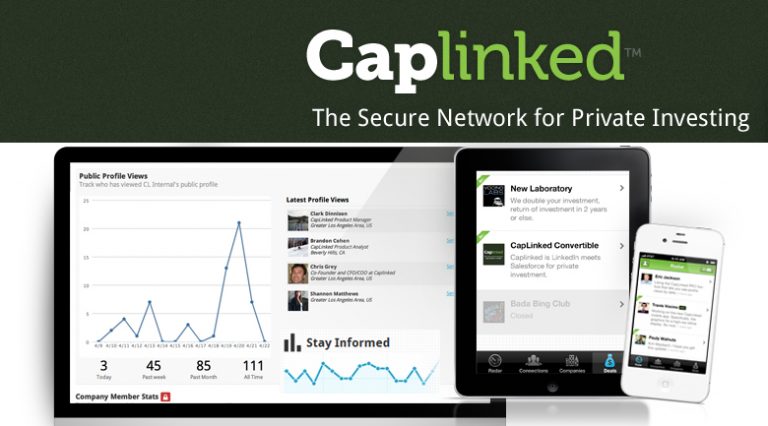
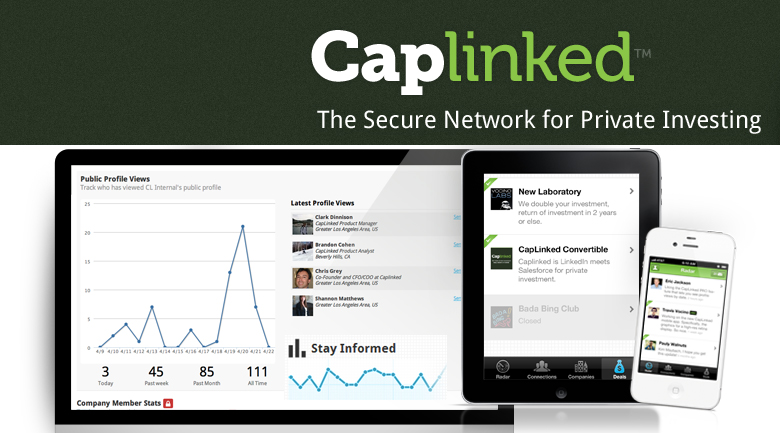
One of the major challenges of traditional private investment is that all parties end up with piles of paper all over their desks and are slowed down in the process, which can be cumbersome and easy to disorganize. To solve this problem, the entire process can now be hosted online, streamlining the process and reducing the barrier of entry so that business owners and even busy veteran investors can dramatically cut down the time it takes to get business done.

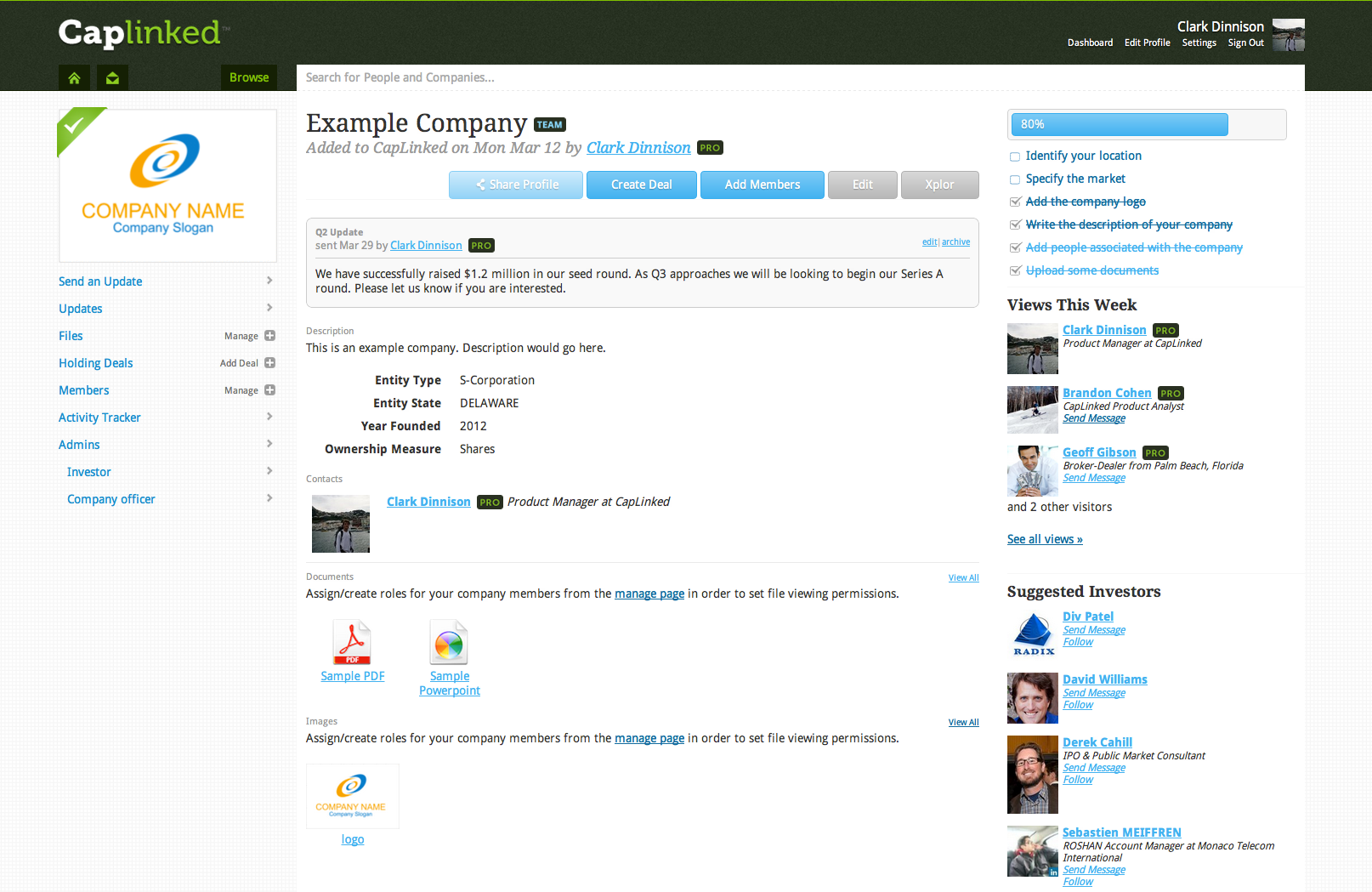
CapLinked is an online platform for private companies, investors, and their advisors to network, manage a capital raise or asset sale, and exchange updates. CapLinked makes private investment easy, secure, and social.

The company itself raised a $350,000 Seed Round in 2010, a $900,000 Angel Round in 2011 from well known investors like Peter Thiel, the PayPal Mafia, 500 Startups, Joe Lonsdale, and Aman Verjee. In 2012, the company received their Venture Round of $500,000 from Chris Yeh, Jason Portnoy, Stephan Paternot, Lok Lee, and Clark Landry. Although the company is funded, operations are likely lean on $1.5 million, but they are already making waves in the investment world by making the process simpler (read: more accessible to all).

In an economy where money is not exactly flowing unless your employer is Mark Zuckerberg, every means to make the investment process better and encourage that flow is seen as a positive. Organization is important for all companies as it saves time and money and helps deals get done based on better decisions.

Better due diligence and connecting with others in the investment pool, be they businesses or advisers, are both major advantages to CapLinked which asserts it is a secure environment in which to do business, giving a great deal of control to those uploading, monitoring, and tracking documents and progress levels.

[ba-vimeoflex videoid=”31821591″]

Uber: when technology threatens tradition

How do you Get around these days

Uber sexy, Uber fast, Uber trendy, Uber safe, Uber… the list goes on. What doesn’t make the list is uber detrimental to the rest of the cabbies and car services out there who are behind the times in the ways of technology. This morning, I had purely planned on having a break out of some of the trends in commuting and what it means for urban realtors and their craft if they do or do not have a car. Do they Metro? Do they hoof it? Do they use a cab everywhere? Zip car? Carey Car? The lux-brand Uber?

Well, this quickly turned to me hanging out on the Uber site and reading their blogs and loving their sass; so I went into another direction you see… Then, that rolled into me checking out the DC based Uber site, since that is my current home base.

Get with the Program

After identifying the system that these cool cats have put together into a global market high-end car service at Uber, I of course wanted to read the latest articles posted as pros and cons about the business and stumbled upon some rather interesting information. DC’s taxi-cab commission was going after Uber back in January of this year as being non-compliant with their rules and regulations for being – uhm- for lack of a better word descriptor, better. Seriously.

[ba-pullquote align=”right”]”The issue the the Cab Commission has pointed at the new brand seems to be that “this isn’t fair.” Why does Uber have this fantastic technology that none of the other cab companies are utilizing to their advantage?”[/ba-pullquote]When I read and re-read the issue at hand, it looks like because the owners of the company have devised a system that is rooted in cloud based technology that incorporates android and iphones and their ability to map and mark exactly where the client is requesting pick up service. The client has also already pre-paid for the service via their credit card on file and will be picked up in a luxury vehicle for up to 4 people. 24 hrs a day, 7 days a week. This is a lovely system that when functioning all-systems-go… sounds heaps and bounds better than most cab services and some other luxury car carriers.

The Uber blog and main site is very transparent. They don’t hide that their prices may be higher than taking a cab. They give helpful hints as to how to use the program. They give coupon codes and plot out maps of the cities where their provide phenomenal service. Allowing for questions and commentary and answering back to those who pose prying questions. Probing seems to be invited and not shucked away. This team does not seem to hide behind a facade, they take matters on head on.

The issue at Hand

The issue the the Cab Commission has pointed at the new brand seems to be that “this isn’t fair.” Why does Uber have this fantastic technology that none of the other cab companies are utilizing to their advantage? Hmmm… Raise your hand if you don’t see this as unfair. Maybe smarter? More advanced? Worthy of a slight price differential and the name Uber?

No one wants their start up to have this many issues with the governing body when they first land in a new city, but Uber is still out and making thousands of luxury seeking clients happy in the DC metro area and around the globe even. If the founder, Travis Kalanick, who started the company in 2009 back in San Fransisco has much to say about it, Uber will keep on truckin’ in DC with the better technology that they have created as a system to streamline their business of satisfying their clients.

Smart meters: can they be hacked for personal info?

Smart Meters on homes and offices

Smart meters – amazing new tools

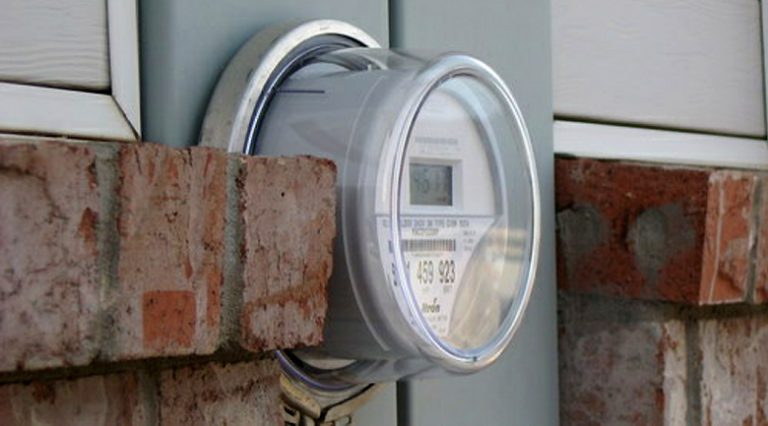
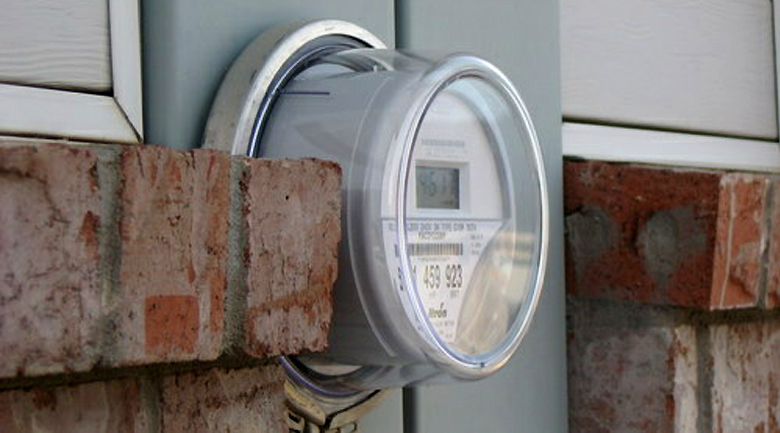
Smart meters are being installed on homes across America by utility companies, replacing the old fashioned spinning dials with a digital monitor. The goal is to better monitor electric usage and help in many ways to reduce energy use, costs, and a home’s carbon footprint. Additionally, smart meters are said to improve customer service, as problems can be solved faster, and utility companies can better report use, as well as faster notification to consumers of power outages.

Smart meters can even identify each home or office’s use, and advise when it is cheapest to use certain appliances, as the digital smart meter reads a different electric signal from each appliance and knows when and for how long each is in use. Consumers can typically view their use in real time online through the utility company or an app, so it can be monitored remotely from any device.

They are hailed by environmentalists across the world, but not everyone is enthusiastic about the new meters, particularly those who claim it leads to inaccurate billing and pose a security risk.

Controversies surrounding smart meters

Billing is controversial, as the smart meters have set up many states to begin offering “time of use” billing in which use is billed differently based on the season or whether it is on-peak or off-peak. This has led to a rejection of the systems by some, even staging protests against the new systems which as of September 2011 are being considered in 38 states. Some companies allow users to opt in or opt out of the smart meters, but not all offer an option.

The concerns over security are that the meters record all device usage, so it collects and paints a picture of a resident’s daily patterns, which if intercepted by any third party, could allow for a burglary plan to be executed during the hours when recorded data show a resident is never using any electricity, therefore is likely not at home or asleep, or perhaps the regular pattern of watching tv before bed can show reliably when the house is at rest.

Additional concerns include judges subpoenaing the information as evidence in cases like divorce, custody, worker’s compensation and the like. Some believe this possibility to be a tremendous violation of privacy and point to companies already using smart meters to hunt down marijuana growers. That argument is weak, given that traditional meters can typically spot spikes in use associated with growers, but the idea is simple – some believe the smart meters make residents vulnerable.

Workaholism: the good, the bad, the warning signs

Workaholics - positive or negative?

Defining workaholism

The term “workaholic” gets thrown around all the time. If you work late, someone calls you a workaholic. If you decide to get a little ahead in the evening while at home, someone accuses you of being a workaholic. Even if you say no to a lunch invite because you want to finish a project, you get labeled. And in most cases, being labeled a workaholic is seen as an insult. However, its negative connotation isn’t necessarily accurate, at least it shouldn’t always be.

What a “workaholic” IS NOT

The first step to defining it is to identify what its not. Just because you’re motivated, persistent, dedicated, productive, or have a strong work ethic doesn’t mean you’re a workaholic. And when coworkers, friends, or even family members make snide comments, comments that are designed to guilt you into stopping your work so they can have your immediate attention, it’s rarely helpful and can actually put a strain on both professional and personal relationships. It can even cause you to have feelings of guilt any time you have to work late on a project or if you want to check your work email over the weekend. And let’s be honest; that’s not a healthy, productive professional mindset to foster if you’re looking to advance in your career or chosen industry.

What a “workaholic” IS

Now that we’ve established that working hard at your job and being good at it doesn’t make you a workaholic, it’s time to figure out what it really means. The basic dictionary definition states that a workaholic is “a person who works compulsively at the expense of other pursuits.”

George Watson, however, may sum it up best when he said, “In the past, people overworked, but commonly because they were forced by poverty or impelled by a sense of duty. Now work can be a neurotic addiction. ‘Workaholic’ is a 20th-century word, one suspects, because it is a 20th-century type.” These two definitions seem to agree that a workaholic can be compulsive, neurotic, and have an addictive personality. And as with everything else in life, any extreme can be dangerous, even how much you work.

Distinguishing hard work from workaholism

It’s important to make the distinction between a hard, dedicated worker and a workaholic. A workaholic never “clocks out.” They are emotionally, mentally, and physically invested twenty-four hours a day, seven days a week. Even if they aren’t at an office, workaholics minds and thoughts revolve around work issues and responsibilities. In the mind of a workaholic, nothing will be as satisfying as working–not relationships, hobbies, or even personal relaxation time. Work is the number one priority without exception. Sometimes the motivation is having and maintaining control, even if the workaholic isn’t aware of that obsessive internal need.

A study published by three Wayne State University students explored the personality of workaholics. This study found that narcissism is closely related to workaholism, as is perfectionism and compulsion (Clark, Lelchook, and Taylor, 2010). Dr. Timothy Pychyl explored this study on the Psychology Today blog. He said, “These ‘workaholics’ are people who work to the exclusion of other life activities, are consumed with thoughts and feelings about work and often do more than is expected at work. Certainly, their lives are not models of ‘balance.’” Again, extremes in any situation have the potential to become a habitual, harmful behavior.

When workaholism is good

Being a workaholic isn’t necessarily always bad. You can use your workaholic tendencies to pull all-nighters to finish big projects on time or even before the deadline. Being known as a workaholic can actually increase your clientele and improve your professional reputation. When clients and customers know you work hard and you’re willing to work around-the-clock for them, they know you’re worth your fees.

When your business is still new and your brand development is still in its infancy, being a workaholic may be necessary and will usually be incredibly beneficial because you’ll be able to build your clientele quickly, efficiently, and consistently. And if you see money problems in your future, money problems that would halt the growth of your company, getting many clients upfront can provide you with the necessary means for professional expansion.

Having your mind always pondering work-related solutions or better ways to streamline your daily responsibilities and tasks can help you get right to work once you get to the office in the morning. You won’t have to spend valuable time within regular and accepted business hours contemplating and fixing an issue, planning your work day, and prioritizing your daily tasks. A truly dedicated workaholic can ultimately become more productive once their strong, uninterrupted focus. The truth is, you, as a workaholic, have the potential to get more done during the workday than many other business professionals, but it also can come with a steep price to pay and it can’t last forever.

When it poses a problem

While, as a workaholic, your professional life will soar, you may find your personal life in shambles. When you choose work over forming and maintaining close, important relationships—including your significant other, children, friends, and family members—these relationships can slowly crumble. Your loved ones may begin to feel bitter toward you and your profession because you show what’s most important with each dinner invitation you turn down or how many dance recitals or soccer games you miss because you’re working. Your loved ones will notice your priorities. And if they’re not one of them, those relationships will deteriorate. Even though you’re working to provide them with more life opportunities, your absence can still be hurtful.

Being a workaholic means that you leave no time for yourself to relax, rejuvenate, and recuperate. When this happens, you’ll run yourself ragged and you will eventually reach burnout. And when that happens, your productivity will crash along with it. Everyone needs some time away from the office and away from professional duties, even if it’s just for a day or two. Your health is important. Working excessively will create extreme stress in your life and that can showcase itself in many ways, including sickness, anxiety, and mental and emotional breakdowns.

Warning signs of workaholism

  • If you’re unsure if you have unhealthy work habits, take a look at the following list and see if you can relate to any of them.
  • Refusal or resistance to delegating your responsibilities; you’d rather do everything yourself without help from anyone else.
  • Inability to separate work from personal life. An example: trying a new hobby, but having an insatiable urge to start a new business while involving your new hobby.
  • Feelings of self-worth directly related to professional accomplishments.
  • The constant need to do work-related tasks and the feeling of guilt if you miss work opportunities away from the office.
  • Always looking for new ways to gain control or power.

How to find the middle ground

If you’re a workaholic, it’s important to find the middle ground. Finding the middle ground can give you the sense of professional accomplishment you desire and the personal non-work life that brings happiness and joy. First, take some time to honestly evaluate yourself and your work habits. Write out your personal and professional goals and compare them side by side. This visualization can help you remember to search for balance, as a balanced life is a happy life.

Also, set aside a few hours each day, preferably when you’re at home with your family or out with friends that you won’t do anything work-related. While you may not be able to stop your mind from working right away, changing your physical surroundings and having a goal in mind is a great place to begin finding that balance. When you go home in the evening, leave work at work. Dedicate that time to your family, yourself, and your hobbies. It will take a little time to train yourself, but you can learn how to separate those two important sides of your life.

The next thing you can do is start delegating the smaller of your responsibilities to a trusted employee. Start small and then you can give more responsibilities to others. This will help you have more time to spend with your loved ones and time for you to rest and relax every once in a while. It can also help lessen your stress levels. If you feel a dip in your self-esteem and self-worth as you try to make this major adjustment, consider visiting with a counselor. The counselor will be able to give you a new insight into your situation. With a new perspective, it can become easier to move forward and find the right equilibrium for your life.

Reference: Clark, M.A., Lelchook, A.M., & Taylor, M.L. (2010). Beyond the Big Five: How narcissism, perfectionism, and dispositional affect relate to workaholism. Personality and Individual Differences, 48, 786-791.

Top 10 online reputation mistakes you may be making

Minding the store

What is the number one challenge of any professional today? Being everywhere at all times. Answering the phone, tending the store or clients, rushing to pick up this or that, getting email at all hours, checking in to Twitter, remembering Facebook, and the like. It can be daunting to keep up today. This presents a challenge as consumers are researching companies’ reputations online, so the question is – as you mind the store, are consumers finding you online in a light you’d like to be presented?

Cliff Stein of Reputation Changer tells AGBeat, “If you’re a small business owner, your online reputation is the most important asset you’ve got. It’s more than just your business card—it’s the very source of your credibility, the thing that makes people willing to do business with you in the first place. All it takes is a single bad review or negative Google listing to destroy that reputation; the most costly online reputation errors, however, are likely the ones you’re making yourself!”

Reputation Changer is a reputation management company that combats bad reviews and outranks the negatives with positive for its clientele of small businesses, celebrities, universities, politicians and average Joes, so they see a lot of mistakes made online every day that could be circumvented simply by people knowing what mistakes to avoid.

Top 10 reputation management mistakes

Stein outlines below the top 10 reputation management mistakes that small business owners make – probably without even realizing it.

  1. Failing to control the message about your brand. When it comes to your company, or even your industry, you never want to be in a position where other people are writing the narrative. That’s why this is Job #1. If there’s a major happening at your company—whether good or bad—you want to be right there on the forefront, delivering press releases and putting your own spin on things.
  2. Responding in anger to negative reviews. In fact, responding to reviews, on sites like Yelp.com in particular, is something you might just avoid altogether. A response only lends validity, and draws attention, to the negative review; what you really want to do is suppress it with all that positive content we mentioned before.
  3. Forgetting to monitor your online reputation properly. Reputation defense always comes back to monitoring—because if you don’t know what people are saying about you on the Web, how can you even begin to defend yourself properly? Setting up Google alerts, and periodically combing the social networks, should be high on your reputation management to-do list.
  4. Letting other people snatch up the prime online real estate. If a rival company or disgruntled employee wants to attack your online reputation—and if they’re really smart and cunning about it—they’re going to snatch up exact-match domain names for your small business. (If your company is called Nashville Emporium, those domains would include nashvilleemporium.com, org, and .net, for instance.) Don’t let them do it. Buy those domain names yourself, even if you don’t plan to use them right away.
  5. Staying out of social media. If you’re looking to shore up goodwill and positive press for your small business, regular activity on Facebook and Twitter is utterly essential.
  6. Letting just anyone manage your social media. Having said #3… it’s also important that small business owners be careful about exactly who is using their social media accounts. Once something is out there on the Internet, there’s no way to fully reel it back in or undo the damage—so either impose strict policies about what can and cannot be said on Facebook and Twitter, or just do it yourself. Social media updating should not be a job for the summer intern.
  7. Letting just anyone ghostwrite your business blog. Having a blog is a great way to showcase a more personal side of your company. The passion you have for your industry isn’t going to shine through if you’ve got a ghostwriter handling it, though. Make sure this is something you do yourself!
  8. Neglecting to publish content about your small business. The best way to ward off online attacks or negative reviews is to build a wall of positive press—a wall built out of strong, compelling content, published to your website as well as social media accounts.
  9. Failing to pump up your business with positive reviews. Having phony reviews written on your behalf is something that will likely come back to bite you, but there’s nothing wrong with asking your best clients to pen a quick five-star rave of your products and services.
  10. Getting into controversy. This may almost go without saying, but… if you’re a small business owner, then your own persona is a big part of your brand’s online reputation. Using your Facebook page or Twitter account to sound off about politics or religion is probably a poor idea!

As you assess the web as part of your marketing strategy, make sure these 10 mistakes are solved, because you don’t want you to be the reason you have a bad reputation online!

Overnight, DocuSign helps customers ensure document security

What was viewable online yesterday is not today

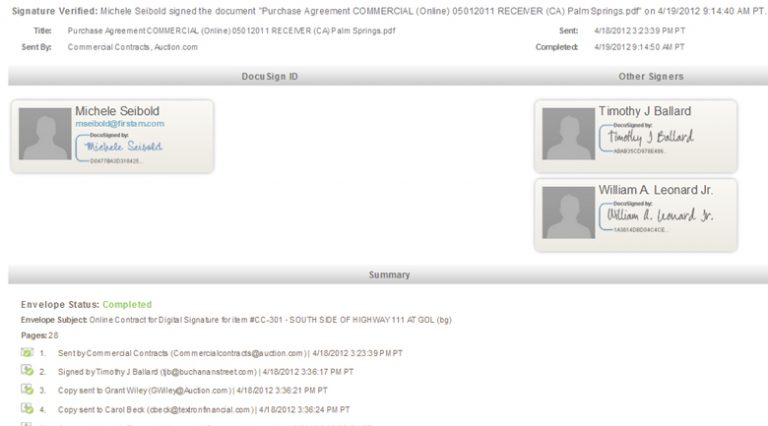
Yesterday, AG uncovered that some names, emails, locations, and document names of customers were publicly visible online, discovered through a simple Google search.

Realtor Frank Llosa tells the story of how this information was visible to everyone, noting that he was emailing with a user of his website who said they had a house to list and sell. As part of his “who is this person” background, he did a Google search on the prospect’s email and found that they had signed a listing agreement with a broker a couple of days prior.

Overnight, DocuSign took action

“Rest assured that DocuSign follows national and international security standards, including strict security policies and practices that set the standard for world-class information security,” said Chief Security Officer, Joan Ross in a statement last night.

The company tells AGBeat that “While DocuSign always encourages customers to save their DocuSigned documents on the secure DocuSign Global Network, it’s come to our attention that a small number of customers have saved personal copies of their documents on publicly accessible websites that are being indexed by search engines.”

DocuSign says they are taking the following actions to help their customers:

  • “DocuSign is contacting the few customers we’ve found who have personal copies of DocuSigned documents on publicly accessible websites to either confirm that is their intent (which in some cases it is), or if not to suggest ways to secure them.
  • To make information on signature validation even less accessible, DocuSign has added a second step that requires any party searching for information on a DocuSigned document to provide additional transaction details.
  • To make personal copies of documents that DocuSign customers have saved on the public Internet less discoverable, DocuSign is working with search engines to block indexing of links to DocuSign within public documents.
  • DocuSign will also proactively provide on-going education to customers and the market around best practices for securing personal copies of documents and data. Content will be made available through the DocuSign Trust Site and the DocuSign blog at https://www.docusign.com/blog/.”

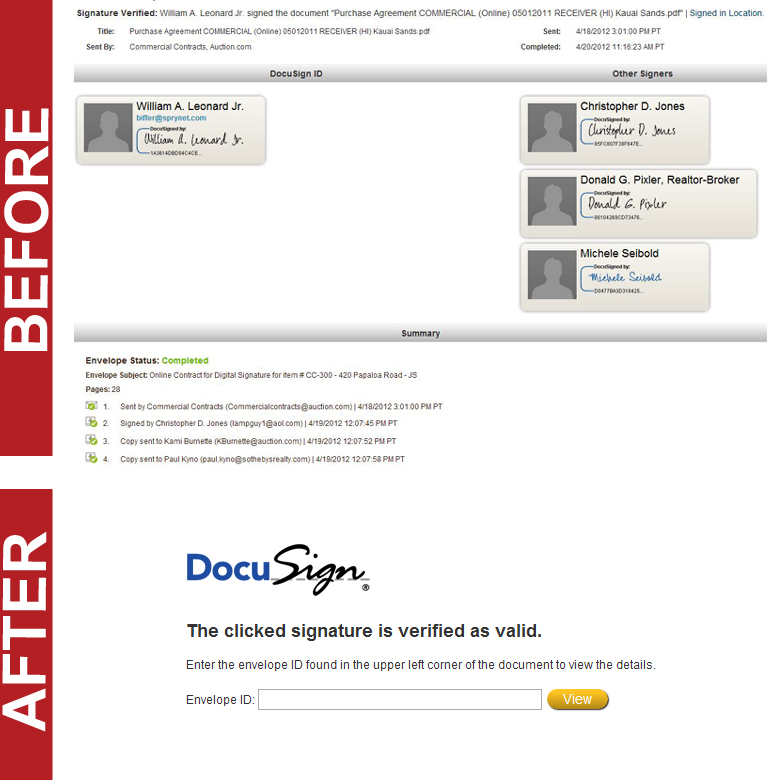
All URLs that AGBeat was able to click and view yesterday now require a user to know the Envelope ID, in other words, the link is no longer indexed, and put behind a wall to everyone except those with the specific identification number given to the document.

Although AG uncovered additional documents and email addresses visible to the public, out of concern for DocuSign user privacy, we are not publishing any of that information, rather have turned it over to DocuSign to make necessary changes out of a shared concern, which the additional layer of requiring the Envelope ID number before viewing any details appears to have resolved.

The company tells AGBeat that “A benefit of DocuSign that customers value is that signatures on documents are verifiable through a hyperlink to a customer-created DocuSign ID card. This helps parties to a transaction validate who has actually signed a document and displays a legally binding audit trail. Search engines cannot and do not index documents saved on the secure DocuSign Global Network. Search engines do index hyperlinks from publicly accessible websites. Leaving personal copies of documents on public sites where they can be indexed rather than within the secure DocuSign Global Network is like leaving copies of documents from a locked filing cabinet out on a public table for others to see.”

DocuSign recommends that customers store documents in the secure DocuSign Global Network and limit saving personal copies only to secure locations that meet the security requirements of all signing parties. AG would add that some third party locations may seem secure, particularly document hosting and sharing sites, but it doesn’t take much for those hyperlinks to be shared and indexed by any search engine.

Top 8 ways to choose a password online

Password protection tips

Protecting your information

This week has been a tricky week for the web, with three major web services having been hacked, making public the user passwords of many LinkedIn, eHarmony, and Last.fm passwords, which lends to a great learning experience for web users.

Prior to this week’s password leaks, we began chatting with SplashData CEO, Morgan Slain, a leading developer of security applications. The company told AGBeat weeks ago that “We all know protecting information can be tricky, especially considering the number of passwords each individual has to keep track of. For many people, post-it notes are the destination to store personal info that should be kept more secure. From your credit card information to your Amazon login, all personal information should be store in a safe place.”

Slain recently published a list of the 25 worst web passwords, which has helped many to understand vulnerabilities.

Top 8 ways to choose a password online

Sure, many of us use the same password on all web logins, and many have had the same password since 1997, but it is time to make sure that your personal data is as secure as possible and that we aren’t restricting our own privacy by choosing poor passwords. Below, Slain has provided tips on choosing a proper password:

  • Go long: When it comes to passwords, longer is better.  Each extra character you add to a password doesn’t just add to your security, it multiplies it many times.  So aim for eight characters or more.
  • Throw out the dictionary: Never use a word you can find in the dictionary as a password, no matter how long or obscure the word is.  Hackers have tools that quickly check every single word in the dictionary.
  • Be creative: Most people choose passwords that are easy to remember. That makes their passwords common and easy to guess. So don’t be predictable and base your password on a person’s name, a pet’s name, a team name, a nickname, a pattern on the keyboard, or a string of numbers in sequence.
  • Mix it up: The strongest passwords contain a combination of letters, numbers, and other characters on the keyboard.
  • Phrase it: A great way to create secure passwords that are easy to remember is to use pass phrases by connecting short words with spaces or other characters.  For example, “box it up” or “back-and-4th” or “jack+my+car!”
  • Be different: One of the biggest mistakes people make with passwords is to use the same username/password combination  over and over again for different websites. This is dangerous because hackers are increasingly targeting sites with weak security and then using the username/password combinations they find on many other websites.
  • Double down: create your most secure passwords for email accounts (like Gmail and Yahoo Mail) and financial accounts (especially PayPal, online banking, and credit cards).  These are the most valuable accounts you have, so they deserve the most protection.  The email account is important because it can be used to reset passwords on many sites (with the ubiquitous “forgot password” feature).  So even if you feel like you don’t have the time or energy to make your passwords better for general websites, be sure your passwords for your email and financial accounts are strong and different than the ones you use for general interest sites.
  • Stay organized: How do you remember all of your different long, strong passwords? Try using a password manager like SplashID Safe. This kind of application creates a digital safe for you on your computer or phone. You just remember one single secure master password, and then you can access all of your other passwords organized by type and category. The application can then even log you in to websites so you don’t have to type usernames and passwords over and over again. Choose a well reviewed password program from a company with a long and reliable history.

BlackBerry’s vision of customer service’s future is bright

BlackBerry forges ahead

We all know that Research In Motion (RIM), the creators or BlackBerry devices, are struggling – stocks are falling, they are no longer the media darlings, devices hitting the market right now are criticized for being less than visionary. Despite their challenges, BlackBerry envisions an amazing future filled with their devices in a way that automates life but doesn’t eliminate the need for human interaction.

[ba-youtubeflex videoid=”6TQtrXyeIhY”]

A jazzed up version of today’s technologies

Some have criticized this video for being unrealistic, but there are already existing technologies that do everything in the video, but with a more disjointed interface and functioning through various devices and apps rather than just a single device that handles all of the functions, and they all look the same.

In the video, RIM imagines [ba-highlight bg=”#DDDDDD” color=”#333333″]device integration[/ba-highlight], which is similar to how internet-connected Blu-ray players already behave. Point a device at a television and control it. You can even plug your iPhone or Android in to your HDTV, and even more amazing, there is already an app that turns any tv into a browser. Having all of your devices communicate already exists, although it remains disjointed.

Also in the video, we see [ba-highlight bg=”#DDDDDD” color=”#333333″]mobile and social[/ba-highlight], which of course already exists. Most retail sites allow you to share content directly from the site, but the advantage RIM is pointing out in their device is that it could be tied to your device’s contacts rather than just your Facebook, or just your Twitter. Even companies like Bing are mixing in mobile and social, for example, as they have made search social, and even though that is only one aspect of a device’s use, the groundwork has been laid.

[ba-highlight bg=”#DDDDDD” color=”#333333″]Immediate customer response[/ba-highlight] is envisioned in the video, which exists today through a variety of web apps, website plug-ins, and e-commerce features, and at its most crude form is available through web chat on a standard website. [ba-highlight bg=”#DDDDDD” color=”#333333″]Retail management apps[/ba-highlight] and [ba-highlight bg=”#DDDDDD” color=”#333333″]supply chain management[/ba-highlight] tools already exist and have amazing analytics that are improving constantly, but RIM’s vision of how the user sees and interacts with the app is definitely above and beyond sexy. The goal here appears to be reducing many tasks down to a single click, which would definitely a plus.

In the cab, the woman is given her total electronically, pays by holding up her app, collaborates through chat and browser sharing, and her device knows she is on the way to the station and offers to sell her a ticket with one click. These are all current technologies, using GPS, geo-fencing, and mobile payment systems, some of which you can already use without pulling out a credit card, like TabbedOut, and collaboration tools as simple as Skype.

[ba-highlight bg=”#DDDDDD” color=”#333333″]Augmented reality[/ba-highlight] (AR) has existed for years, allowing people to hold up their phone and see messages and pop ups through their camera, typically showing where a business is or what its offers are. This technology is, however, getting a boost from companies like Google with their augmented reality glasses which is not the same vision RIM has of AR, but close.

[ba-highlight bg=”#DDDDDD” color=”#333333″]Point of sale[/ba-highlight] specials, and custom tailored offers are already done through loyalty program apps through phones, and the [ba-highlight bg=”#DDDDDD” color=”#333333″]connected home[/ba-highlight] is already here in many forms. Now, the one part of Minority Report that has not become a mainstream reality is walking into a store that recognizes your device, and begins communicating with you through a hologram. It’s coming though. We applaud RIM’s vision still including humans, rather than the idea that everything will be run by robots by 2020.

Texas cops say they can’t remove staging family from home

Hiring a staging family

An increasingly popular trend in a tough seller’s market is to hire a staging family when a home is to be vacated, typically when homeowners are relocating. The idea behind paying someone to live in a house while vacant is to lend it the lived-in feel and allow buyers to have a vision of what life would be like for them in the home.

So when Realtor Robin Everly suggested that her client, Aji Philip hire a staging family so she could relocated to Boston to be with her ill mother while the house sold, Philip said “it actually sounded like a fantastic idea.”

[ba-pullquote align=”right”]The family has placed a crude paper plate on the mantle that says the home is occupied and no one shall touch anything in the house.[/ba-pullquote]Philp tells CBS Dallas that not only did the staging family bring a pit bull with them, violating their agreement, not to mention a truck parked in the grass leaking oil, a red sign in the yard, and multiple crucifixes, namely a ten foot tall cross that violates the HOA rules. The family has placed a crude paper plate on the mantle that says the home is occupied and no one shall touch anything in the house.

The failing eviction process

The homeowner contacted the company that had placed the staging family, who began the process of evicting the tenants, but while the two brothers have complied and moved out, their father who they “invited” to stay with them claims he has rights to remain and refuses to leave until all appeals have been exhausted.

[ba-pullquote align=”right”]”There’s nothing I can do to that property to really reclaim it or save it from these people who have really taken it hostage.”[/ba-pullquote]CBS Dallas reports that according to police and Texas state law, the man is allowed to stay on the property until the courts say he can’t. As a result, the homeowner cannot go onto her own property, and despite paying all mortgage and insurance on the home, “There’s nothing I can do to that property to really reclaim it or save it from these people who have really taken it hostage.”

The Realtor went with a police escort to remove the sale sign and take the lockbox until the man is evicted as it is unsafe for other agents to enter a property that someone tells visitors is his and claims occupancy.

“With regard to whether we put the wrong people into the house, the people who are on the lease I don’t think are bad people,” a company rep told CBS 11, adding that they pre-screen all tenants. “I think people outside of the tenants we put in that property are the ones causing the problems.”

Any.DO makes task management sexy

Any.DO – born and raised by a procrastinator

Founded in 2010, Any.DO has become a popular free app that is centered on increasing your productivity so you have more time to have fun and enjoy life. The motivation and inspiration for this app was the one of the founder’s own problems with procrastination.

But Any.DO isn’t just about increasing your productivity. It’s also about simplifying tasks so you can check more items off your to-do list quickly and efficiently. In its most basic form, Any.DO is a great, simple way to organize the everyday things you accomplish or you want to accomplish.

While Any.DO may seem like an ordinary, dime-a-dozen productivity or to-do list app, it has some fantastically unique features. “Any.DO puts the power in your hands – Drag & drop to plan your agenda, swipe off a task to mark it as complete & shake your iPhone to clear your completed tasks. It just feels right.” If you want to take it one step further, you can even add notes and reminders into your Any.DO lists.

Any.DO can be used on your iPhone, Android, or through Chrome, and the great thing is that it syncs across all of your devices, so you never have to worry about lost data or a non-updated task list.

Top features boost productivity

Another great feature of the Any.DO app is that you can save yourself some time and energy by using the microphone to record your tasks. It will automatically convert everything you say into readable text. Or, if you prefer to type rather than speak your commands or entries, Any.Do can also predict what you want to add as you type. Again, these simple-to-use features can ultimately save you valuable time out of your busy day.

Any.DO also allows users to share to-do lists with anyone, from coworkers to family members. If you’re working with some coworkers, for instance, you can create a shared list for a project. Once someone completes a task, everyone on the team will be able to see it and move onto the next task. No longer will you start on a project that someone else has already completed. In the work environment, Any.DO has created that much-needed efficiency to keep an office running smoothly.

While the modern version of Any.DO is relatively new, it is steadily gaining steam. In 2011, it was listed as one of the top ten Android apps by the NY Times and in PC Magazine, it was listed as the “must have Android app.” While that’s impressive, they’re sure to continue to be in the news in the future. Any.DO builds the bridges between collaboration, efficiency, and productivity and gives you the power to control your work day.

DocuSign users’ info viewable, company says no security breach

DocuSign user information found through Google search

As the world’s largest electronic signature platform, DocuSign says that they have over 6 million unique signers processing millions of transactions per year and that they are “trusted by more people, more companies, more times than any other electronic signature provider in the world.”

In just one search query in particular, we uncovered 4,450 URLs filled with DocuSign customer names, emails, document names, and GPS coordinates of where documents were signed. These details are found on websites with URL structures appearing like the one below (which is not a functional link that takes you to a signed document, just an example):

[ba-quote]https://www.docusign.net/Member/DocuSignTrust.aspx[/ba-quote]

DocuSign tells AGBeat that while the documents appear to be hosted on their secure https servers, “They are not. Anything that is found via Google search is not from DocuSign’s secure site, but rather the publicly accessible and searchable locations where customers have saved their personal copies of signed documents. In order to access documents, data, or transactions on the DocuSign Global Network, you must have the login credentials and password.”

We do not yet know the full scope of the number of transaction details that can be seen via Google, but we can see that they go as far back as at least January in our preliminary investigation. We have not made public how to discover these documents due to security risks, but suffice it to say that we can see the private emails, signatures, times, dates, locations, and document names (hypothetically speaking, we can see “Listing on 201 Main Street” or “Employment Contract – $58k/yr” as document names).

On the heels of a hacker leaking LinkedIn and eHarmony passwords, the leaking of personal information and potential details of legal documents that are meant to be private, is a major problem for several industries and feeds the hysteria behind cloud based storage and digital data sharing.

The company tells AG that “While DocuSign encourages customers to save their signed documents on the secure DocuSign Global Network, we are also required by law to offer customers the ability to download and retain their own personal copies,” adding that “it appears that a very small number of DocuSign users have saved their own personal copies of their signed documents to publicly accessible and searchable locations outside of the secure DocuSign Global Network. In the event that customers need to save signed documents in a location outside of DocuSign, we encourage that they ensure the location meets the security requirements of all signing parties.”

DocuSign asserts their “commitment to security” as outlined on their website. DocuSign is the official and exclusive provider of electronic signature for the National Association of Realtors’ nearly one million members, under the REALTOR Benefits Program, and is used by many industries, including users like American Airlines, LinkedIn, Sony, and Yamaha.

After publication, all links formerly discovered through a Google search appear to no longer be clickable, but can still be viewed through the Google cache, as seen in the before and after below.

On{X} automates Androids and is awesome

If “If This Then That” ran your Android

If “If This Then That” (ifttt) ran your Android and automated any number of complex and creative tasks, you’d have On{X}, a new open project from none other than Microsoft, which surprised us as much as it may have surprised you.

By setting up what are called “rules,” or using existing “recipes,” which are combinations of rules that users have already set up, you can automate your Android to do an amazing number of tasks that you probably didn’t know you couldn’t live without. The program can tell when a person is walking, running, or in a moving vehicle, so it can automatically perform tasks related to a change in any of these, so without doing anything besides setting up a recipe, all of your runs can be tracked and recorded without having to remember to launch an app, or it can tell you where you parked just because your vehicle stopped and you began walking.

The toolbox includes geo-fencing which allows your Android to perform tasks based on where you are. Want to text your significant other when you’re on your way home without having to touch your phone? Set up the recipe on your phone, and let it do its thing!

Recipes you can use today

There are a number recipes already set up, and if there is something specific you want it to do, you or your tech support, or someone in the on{X} forum could help.

[ba-list style=”check”]

[/ba-list]

On{X} has set up some recipes, and more will be added by community members as time goes on, and the recipe book will grow.

[ba-youtubeflex videoid=”qfLMTsIJsoo”]

Multifamily builder and developer sentiment hits seven year high

Developers and builders are more optimistic

The the National Association of Home Builders (NAHB) Multifamily Production Index (MPI) reached a seven year high, recording its highest reading since the third quarter of 2005 with an index of 51, measuring developer and builder sentiment about current conditions in the multifamily market on a scale of 100. The MPI rose 2.0 percent from the fourth quarter to the first, marking the seventh consecutive quarter of increases.

[ba-pullquote align=”right”]The MPI rose 2.0 percent from the fourth quarter to the first, marking the seventh consecutive quarter of increases.[/ba-pullquote]The MPI provides a composite measure of three key elements of the multifamily housing market: construction of low-rent units, market-rate rental units and “for-sale” units, or condominiums. The index and all of its components are scaled so that any number over 50 indicates that more respondents report conditions are improving than report conditions are getting worse.

In the first quarter of 2012, the MPI component tracking builder and developer perceptions of market-rate rental properties recorded an all-time high of 69, while low-rent units dipped slightly to 53. For-sale units increased to 37, which is the highest reading for this component since the fourth quarter of 2005.

Construction continues despite difficulties

[ba-pullquote align=”right”]”In spite of continuing difficulties in the capital markets, it appears that new construction is underway.” -W. Dean Henry[/ba-pullquote]”In spite of continuing difficulties in the capital markets, it appears that new construction is underway,” said W. Dean Henry, president of Legacy Partners Residential in Foster City, Calif., and chairman of NAHB’s Multifamily Leadership Board. “This is certain to help satisfy some of the pent up demand that has occurred over the past several years.”

The Multifamily Vacancy Index (MVI), which measures the multifamily housing industry’s perception of vacancies, dropped to a level of 31, the lowest recording since the inception of the index in 2003. With the MVI, lower numbers indicate fewer vacancies. The MVI has decreased considerably in the last three years, after peaking at 70 in the second quarter of 2009.

“Multifamily construction continues to be a bright spot in the overall housing market,” said NAHB Chief Economist David Crowe. “However, as indicated by the MVI, demand for apartments is now quite high, and production is still very low in a historic context and in the context of what we project is necessary to meet long-term demand.”

Historically, the MPI and MVI have performed well as leading indicators of U.S. Census figures for multifamily starts and vacancy rates, providing information on likely movement in the Census figures one to three quarters in advance.

Twitter’s new bird comes with strict copyright rules

Twitter overhauls the Twitter bird

Today, Twitter unveiled1 their new logo, an updated bird that is less whimsical than the playful bird with a tuft of feathers on its head, and with the new icon, the company shows a more upwardly facing bird. Since its launch six years ago, their blue bird logo has been synonymous with the social media giant, and the company says “From now on, this bird will be the universally recognizable symbol of Twitter,” adding that ” There’s no longer a need for text, bubbled typefaces, or a lowercase “t” to represent Twitter.”

The new logo was inspired by the company’s “love for ornithology, design within creative constraints, and simple geometry,” and is created by using three sets of overlapping circles, “similar to how your networks, interests and ideas connect and intersect with peers and friends.”

[ba-youtubeflex videoid=”Fh20pdCrCAU”]

Guidelines for using the new bird

While most will simply look at the bird and move on, it is important for businesses with websites to note that any Twitter bird or icon featured on the website has instantly been rendered outdated.

The company offers guidelines for using the new logo (read: how to use their copyrighted logo, which is not negotiable despite what liberties designers take):

[ba-list style=”thumbs”]

  • DO Use our official, unmodified Twitter bird to represent our brand.
  • DO Make sure the bird faces right.
  • DO Allow for at least 150% buffer space around the bird.

[/ba-list]
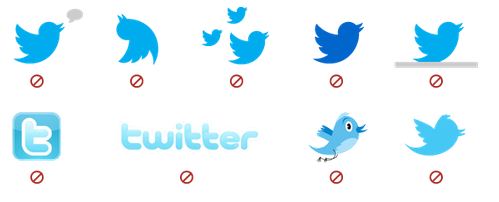
[ba-list style=”remove”]

  • DON’T Use speech bubbles or words around the bird.
  • DON’T Rotate or change the direction of the bird.
  • DON’T Animate the bird.
  • DON’T Duplicate the bird.
  • DON’T Change the color of the bird.
  • DON’T Use any other marks or logos to represent our brand.

[/ba-list]

Click below to download one of the new icons for your website: