Home Blog Page 282

Pregnant women being discriminated against sneakily

discriminate

Workplace discrimination

For every kind of bias and discrimination that we fight against and conquer, another arises. The young, the old, married, the single, the pregnant. Wait, what? In a time that is supposed to be blissful, women are being treated unfairly in many workplaces across the nation.

A report from the National Women’s Law Center and A Better Balance indicates that discrimination against pregnant women, particularly a disproportionate number of lower paid women or in professions dominated by men. The report outlines several examples of the sneaky ways in which employers are discriminating:

  • A pregnant package delivery driver’s doctor said she couldn’t lift heavy objects, but they would not put her on light duty, despite coworkers with back injuries being put on light duty.
  • A pregnant postal employee requested to be put on indoor duty on hotter days, and despite coworkers with temporary disabilities being accommodated, her request was denied.
  • A pregnant cashier asked for a stool so she could rest while at the register, but her boss claimed that due to equality, she would get no stool. “You can’t get special treatment since a man can’t get pregnant,” the report states the employer said.
  • A pregnant restaurant line worker not only had her water bottle taken away that she had always carried, but although having taken time off for doctor visits in the past, because they were related to her pregnancy, she was no longer given time off.

To whoever is discriminating, demeaning, or bullying an expectant mother, you must remember that you are here because someone was once pregnant with you! Now that you know my opinion on the issue, the question is, how can business decision makers help to make sure that this discrimination isn’t taking place?

How can businesses ensure this doesn’t happen?

1. Nearly every company has some kind of professional development. We are well informed of sexual harassment laws, company policy, safety, and emergency procedure. Make sure to include the fair treatment of others when you are planning for professional development presentations. Alas, someone will discriminate against the wrong expectant mother, and those safety and emergency procedure skills will be showcased.

2. Keep open lines of communication with your employees. Often expectant mothers feel as if they need to keep their news secret until it is obvious they are expecting. Encourage women to confide in you early on. It doesn’t have to be announced to the entire staff. Some of the discrimination issues could stem from the sensitivity of going public with a pregnancy. Often mothers want to keep the news to themselves until into the second trimester, and while all employees should be respectful to others at all times, it is difficult to diffuse a situation when you cannot disclose pertinent information.

3. Keep employees abreast of the law. The Pregnancy Discrimination Act of 1978 is an amendment to the Civil Rights Act of 1964. It states that “for reasons of sex /gender” including but not limited to pregnancy, childbirth, and complications or issues related to pregnancy and child birth, no one shall be discriminated against.

The interesting fact is that this seems so obvious to most of us. It has been twenty-five years since the amendment was put into place. Just like discriminating against someone on the basis of skin or religion seems ludicrous, discriminating on the basis on issues related to pregnancy seems totally asinine. It leads me to wonder what other kinds of discrimination we will look back on in disbelief.


Private pre-MLS Facebook forum embraced by agents

pre-mls

Days old Pre-MLS group growing rapidly

FranklyRealty.com, known for being a rebel inside of the real estate industry, has launched a private Facebook group for agents only, a “Coming Soon” network of sorts that allows agents to share listings before they go on the MLS. With several local groups already established, the Northern Virginia (NOVA) group is already the largest, boasting nearly 900 members. The group has already resulted in a 100% pre-market sale, and has generated “tons of premarket showings.”

FranklyRealty.com says their goal is to get 10 to 20 percent of all MLS homes listed in a local group prior to its being featured in the MLS, noting that it is not a public group because if a listing was ready for public consumption, it would simply be added to the MLS.

The broker says the primary requirement for group members is that members give and take, asking members to post as many pre-MLS listings as possible rather than just use the forum for buyers. Additionally, the forum forbids rentals, want ads, open houses, and homes already in the MLS.

Don’t call it a pocket listing

The group owner, Frank LLosa asserts that the group is not a pocket listing, which is a frequently misinterpreted type of listing. Pocket listings are not always pre-MLS, they are often private listings of celebrities or high profile individuals seeking to keep their home out of the headlines, or offered during a lengthy marketing preparation process, typically for luxury listings.

LLosa said that the term pocket listings “has 10 definitions depending on who you talk to, also called Private or Exclusive Listings,” adding that while many have critiqued pocket listings, this new service does not fall under the category of any of the negative assessments of pocket listings, rather it is an agent community for sharing and finding pre-MLS listings, not for public consumption and completely independent of who gets what commission.

“This new coming soon forum is a virtual version of the office stand up and announce system, but across 50 brokerage firms and 1,000 agents,” said LLosa.

Coming Soon signs already exist…

“Some agents do already post coming soons on Craigslist or with a “Coming Soon” sign in the yard,” LLosa states, opining that the agent may be doing so to squeeze out a double commission. “Bottom line is, if the agent and seller wanted it public, they would, but they usually aren’t, so in this forum they feel comfortable sharing the heads up to other agents, so it is thriving.”

What’s next for the groups?

Llosa tells AGBeat that he has already been approached by an investor, but is truly seeking to build something cool before he ever considers that path, which as the industry rebel, it is no surprise that the concept was built to service clients, not a single broker.

We foresee that this could and should become a standalone website, mobile app, or at least a Facebook app so the functions can be streamlined as the private groups grow, and as the current size and pace of growth prove, they will grow, possibly accomplishing the 10 to 20 percent goal already defined.

It will be interesting to see how real estate media companies will adapt as the agent community so openly embraces the concept. Stay tuned.

Construction spending hits four year high, led by housing

home depot

Construction spending making great strides

According to the U.S. Census Bureau and U.S. Department of Commerce, after a 0.1 percent dip in April, residential construction spending rose 1.2 percent in May, reaching its highest level since October 2008. In a positive sign for the overall economy, public and private construction spending combined hit a four year high, highly fueled by public construction projects. The housing and economic recovery are underway, but remain below pre-recession levels, indicating a long road ahead.

The Commerce Department reports that construction spending improved 0.5 percent overall to $874.9 billion after a revised 0.1 percent gain in April. The weak spot remains commercial real estate, as growth in spending on non-housing structures actually declined in the first quarter which has not happened in nearly two years. Spending on private non-residential buildings dipped 1.4 percent in May, following three months of gains.

Spending on public construction projects jumped 1.8 percent, the largest increase in almost a year, a much needed increase in light of spending on these types of projects falling in April and March.

The report indicates that outlays on federal government projects improved 0.6 percent, and while not a substantial change, it is the second consecutive month of improvement, after a shaky first quarter. State and local projects improved 1.9 percent, representing a six month high.

New home construction sector in trouble? Nope.

Because the housing bubble was missed by most, the nation remains in the grips of The-Sky-Is-Falling-itis, flinching at any economic index that could threaten a hearty recovery. In that vein, many are already pointing to rising interest rates as a potential threat to the housing recovery, but just last week, as interest rates increased, so did applications for new mortgages.

Combined with the continued tight inventory levels and Realtors in many parts of the nation begging homeowners to sell to give their buyers something to buy, interest rates are not what will cause the sky to fall, and construction spending and builder optimism, like most housing indices, will continue to slowly improve, even amidst hiccups.

iHomeButler app: document possessions for insurance

ihomebutler

iHomeButler takes the sweat out of documenting possessions

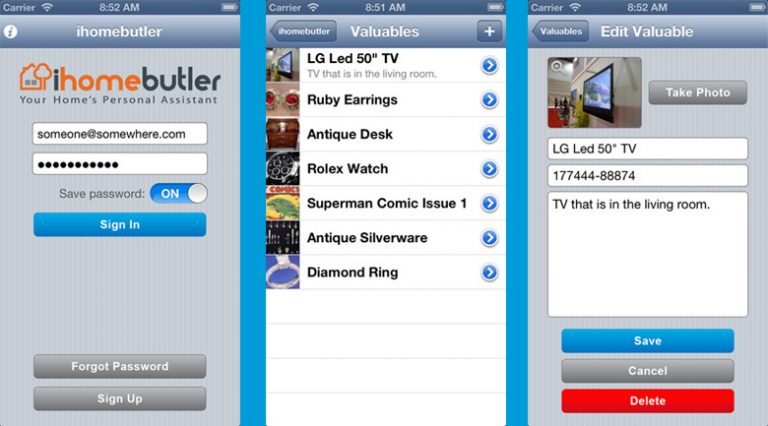
iHomeButler is a home maintenance notification service that interactively assists homeowners with managing the upkeep for their property, keeping track of valuables, and finding appliance manuals.

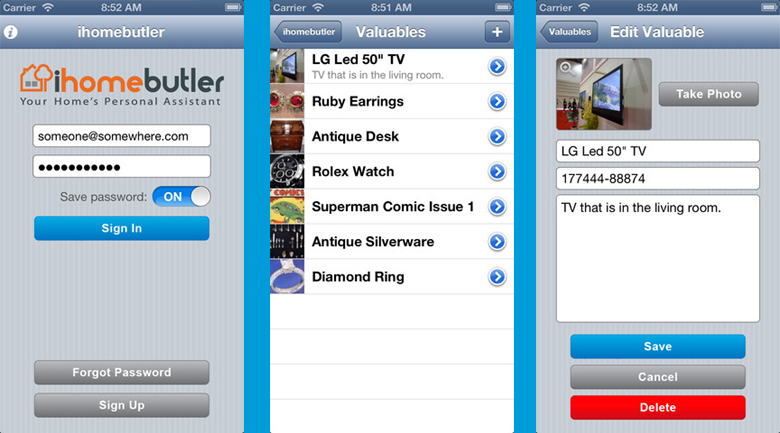
iHomeButler is a useful app that allows you to keep a record of valuable for insurance purposes, wherein users can take photos of all household items, upload, and store them securely in your iHomeButler account in case it is needed for insurance or inventory purposes.

This is a great option for both homeowners and renters as it logs serial numbers, descriptions and photos of your items, streamlining what is typically a complex and time consuming process. Bruce Ives, CEO of iHomeButler writes, “another high cost home problem that can be prevented is not documenting valuables, in case of an emergency. The new features, available in the app, are another way iHomeButler is working with homeowners to alleviate these common issues.”

More than just record keeping

The app does more than just keep a record of your valuables though, it also give you access to appliance manuals, and allows you to receive customized home maintenance reminders on a quarterly basis. For example, it lets you know when it is time to replace batteries in smoke detectors, clean the gutters, inspect for termites, and check the fireplace, to name a few. Also, when these reminders pop up, you can choose to tap “Get a Bid” and the app will send you bids from local businesses as to how much this service would cost.

The ability to take photos, videos, and notes of valuable assets, as well as, maintaining a record for insurance purposes, is available only through the mobile app. And currently, iHomeButler mobile app is only available for iOS devices (iOS 5.0 or later, optimized for iPhone 5), in the iTunes App Store ($1.99). But anyone can access the web site, currently it is free, but it does offer three different levels, so it appears it will cost according to what level of service you use, and there is also a section on the web site for real estate professionals to tailor it to their specific needs.

Although designed for homeowners, there is no reason a business couldn’t use the app to document office possessions for insurance and get the same maintenance alerts for items not covered by building maintenance.

China: home of a growing Muslim faith

Muslim China

The state of the Muslim faith in China

Ask a Westerner about religion in China, and you’re bound to be met with “It doesn’t exist”, or “It’s illegal” or better yet, a confused stare. What many fail to realize is that while the Communist party does not endorse any one religion, it does allow religious institutions to set up shop.

Christianity and Judaism aren’t the only world religions with a firm presence in China; Islam has existed in China for quite some time. Among China’s 53 recognized ethnic minorities, there are two (the Hui and the Uygurs) known for their Islam followers. As anyone wanting to do business in China, it’s important to stay abreast of the growing Muslim faith which is being privately practiced by people outside of these minority groups. Here are a few things to keep in mind as you experience this cultural shift.

The Good news:

Conditions are better – As opposed to the Cultural Revolution era where all religion was banned, China has been opening more and more since 1978 to global influence. With this opening came the acceptance of religious differences.

Female-only mosques – Many Westerners are surprised to see synagogues, churches, and mosques out in the open in China. They exist with government approval. China is ahead of the curve with female-only mosques.

More progress to be made:

The ethnic determinant – As of now, religious affiliations are determined by ethnicity, not beliefs. Today, only Hui and Uygurs are considered Muslim. This presents problems with free expression of beliefs. In addition, some laws ban Muslim burials based on ethnic background.

Restricted to people over the age of 18 – Legally, only adults over the age of 18 are permitted to be in mosques and to be true Muslims. The common thought is that the Chinese government says this is to encourage individuals to follow their own religious path and determine for themselves what they believe in adulthood.

Location, location, location – Another limitation to the religious freedom extends to location. Muslims are only allowed to pray in mosques without questions or interference. Many Muslims can only practice their faith in their homes and in mosques.

Bing introduces ad-free search for schools

bing

Bing in the classroom

I’ve taught high school. It’s a hazard zone. Anything that can be done to remove even the tiniest temptation or negative influence should be done, and Bing has now introduced an advertisement free search product geared to schools. Most are focused on the technology offered, but there are greater implications here.

No one is naïve enough to think that eliminating advertisements from searches is going to conquer the teenager at his game; he can still hack a computer, bypass security measures, and be watching YouTube videos by the time the tardy bell rings, but that doesn’t mean that because this is a small change that it isn’t a needed one.

Throughout the years, schools have booted out advertising in many ways. When I was younger, there was a movement to alter the school dress code to ban t-shirts with advertising. Corona had a line of t-shirts in the early nineties that caused quite a fuss at my school. The t-shirts were banned from being worn at any school function. The problem was that apparel boasting the name Corona was expensive, and parents were mad that they’d dropped crazy cash on a t-shirt that kids were no longer allowed to wear.

The rip it out campaign

Then there was the campaign that encouraged kids and adults alike to rip out tobacco advertisements from magazines. It encouraged us to not only rip out ads from our own periodicals, but it also suggested that we rip up magazines in doctor’s offices, hair salons, airplanes, etc. At first glance, the campaign was about calling attention to the dangers of tobacco, but the real motivation was literacy. Kids should be able to read magazine without being tempted by sly marketing.

Bing’s latest project is just the modern day version of the rip it out idea. We aren’t just exposed to the internet as a research tool anymore. It is the foundation of teaching in that every classroom everyday relies on it in some way. Some may say that if kids aren’t exposed to advertisement at school, they will come across it someplace else, but the idea is, much like the magazine idea, it’s essence is being able to offer a learning experience that isn’t tainted with advertisements that could lead kids away from time on task.

Bing it on. Any push for safer education is a push for a greater tomorrow.

CallSnap: respond to an incoming call with a photo

callsnap

CallSnap for Android users expands phone capabilities

With the CallSnap app, available exclusively to Android mobile users, you get a cool new way to tell your friends you are busy and cannot answer the phone right now. CallSnap replaces your incoming call screen with its own interface, giving you the option to select and send a picture to someone instead of answering.

This is a great way to let people know what you are doing and why you cannot answer, without the hassle of switching over to your text messages and typing out a long response, or letting voicemail pick it up and return the call later, explaining where you were and why you could not answer.

How CallSnap works

After you install the app, the best thing to do is take a look at the demo. It will show you where the gallery is, how the app works, and how you can share your pictures. You can also customize the CallSnap icon that will appear on your call screen, as well as your own image. When you have it customized the way you want, you are ready to go. When someone calls you, you simply slide the icon you selected to the camera logo and take a picture.

If you are worried that simply sending a photo will come off a bit unfriendly, CallSnap has you covered. For example, if you are out to dinner with family and a friend calls, it might be rude to just send a picture of the food you are eating. With the app you can type in a short message to say, “wish you were here,” and send it off. The message will be sent to the caller via a MMS message.

Using CallSnap to quickly say, “I’m busy, here’s why” can save you time and energy while keeping you connected with friends, family members and co-workers. You can show them what you are doing, keeping them in the loop, without having to be distracted from your present activities for more than a few seconds.

CallSnap is free in the Play Store and it gives you full access to all the features. The web site does say this is a limited time offer, so they may charge for downloads in the future, and a promotional video says it is free to try and $0.99 to buy, so available pricing is inconsistent but inexpensive nonetheless.

IKEA Paper Shop: stationary, journals, gift wrap to launch

ikea paper shop

IKEA Paper Shop line launches abroad

IKEA has branched out into the world of paper products with their new Paper Shop. The line includes gift bags, wrapping paper, paper clips, boxes, notebooks, cards, etc. In partnership with another Swedish company, Kollo, IKEA is staying true to its simple contemporary style, focusing primarily on bright patterns and colors in this particular product line.

The shop recently launched in select stores in Europe, and if the trial runs fare well, all stores will see the addition. Thus far, stores in Britain and Sweden have received positive feedback from its customers.

Enthusiasm surrounds the launch

As someone who loves to write… and highlight, wrap, pack, organize, clip, and file… I absolutely CANNOT wait for this to hit the United States. The pictures show products that are unbelievably clean, fresh, and bright. Hopefully, the paper products will be like all of their other stuff… stylish and cheap (just the way I like it), the main reasons I am not able to pull myself away. Good thing there isn’t one in my city. But, ahem, there should be.

Seeing as how they’re broadening their product line, this is an opportunity to see if IKEA’s marketing strategy holds up. The company pays careful attention to their unique style, while still keeping the cost down. This has been due to slim packaging, and assemble-it-yourself products.

Since the company boasts itself on its lack of environmental impact, it’s a wonder how they plan to manufacture the paper goods. According to The Economist, “IKEA presents itself as a green company with a social mission. Mikael Ohlsson, Chief Executive of IKEA, boasts of its charitable work and its aim to use only renewable energy.”

Either way, the successful company has struck a cord with its audience and has legions of dedicated followers. The new Paper Shop gives people something to put on that desk they purchased, and self-assembled, from IKEA.

ikea-paper-shop-23

ikea-paper-shop-22

ikea-paper-shop-21

ikea-paper-shop-20

ikea-paper-shop-19

ikea-paper-shop-18

ikea-paper-shop-17

ikea-paper-shop-16

ikea-paper-shop-15

ikea-paper-shop-14

ikea-paper-shop-13

ikea-paper-shop-12

ikea-paper-shop-11

ikea-paper-shop-10

ikea-paper-shop-9

ikea-paper-shop-8

ikea-paper-shop-7

ikea-paper-shop-6

ikea-paper-shop-5

ikea-paper-shop-4

ikea-paper-shop-3

ikea-paper-shop-2

ikea-paper-shop-1

Are LinkedIn’s updates ultra useful or overly creepy?

LinkedIn logo

LinkedIn launches personalized home page

LinkedIn has added two new features to their site: “Who’s Viewed Your Updates” and “You Recently Visited.” Both of these new features can be found on the right-hand side of the home page and are intended to be a valuable asset for job seekers and those looking to see where their skills are needed or most highly sought after, however, with the simplified snapshot, things get a bit creepy.

In “Who’s Viewed Your Updates,” you will see a snapshot of what you have shared over the past fourteen days (time can be expanded for premium users), who has seen it, and how it has been received (if it was liked or shared). In addition to the information from your 1st degree connections, the snapshot will also show you how many of those members in your 2nd and 3rd degree networks are reading and engaging with what you shared.

Now you have feedback from three different levels, which can be useful, but tracking this information for a full two weeks is a bit creepy, in my opinion.

Not just profiles you’ve visited

The “You Recently Visited” feature includes searches you have done, group discussions you have looked at, and recent profiles you may have viewed. This is supposed to make it easier to find a connection you forgot to add, follow-up with a conversation, or find that old friend you came across; however, one cannot help but wonder, is this just LinkedIn’s way of keeping up with how effective their own connections are?

These two new features are the latest in a series of updates. LinkedIn has also added a new streamlined navigation, making it easier to locate features, as well as, the ability to share media. And you can also mention a first degree connection in your updates, keeping you even more connected (and even more trackable).

With any networking site there is the possibility for the features to become a bit too involved, but, you simply need to weigh the benefits against the worries of being tracked and deeply “connected.”

Potluck: social networking for the introverts

potluck

Potluck: the newest social network on the block

Potluck has created a social networking environment that takes the pressure off of individual people and places the focus on shared interests. In the default view, the “Friend Activity Feed,” you will not see the name of whomever posts a link, nor will you see an avatar. This allows users to post whatever they like without the fear of being judged.

If you want to post a link to the latest Star Trek convention, you will be able to connect with people who are interested in the same thing, without your other friends judging what you are posting because the only people that will know you posted the link, are the people who are interested in seeing it.

They have also simplified the way in which information is shared. All you need to do is paste a link. This allows users to share political beliefs, hobbies, humor, and music with other like-minded people. There are no filters to learn to use, no hash tags, and no privacy settings to monitor; you just paste a link and publish it.

Like a giant house party minus the creep factor

Potluck wanted to create a platform that would allow users to meet friends of friends, much like a giant house party, without feeling creepy. It’s hard to talk to a friend-of-a-friend without a sense of awkwardness. With Potluck, you can share links and connect based on your shared interests without the need to ask your friend if you would have anything in common.

Also, in the default newsfeed, you can see what your friends are discussing with other friends. This can lead to talking to people you do not really know, forging new connections, and sharing new favorite things.

Potluck allows you to be a social butterfly without the awkward hassle of learning how to tag or hide friends you are afraid you might offend with your posts. It allows the introvert to be social, the person who censors their posts to speak freely, and the rest of us to network with new people through posting anything we find interesting.

Starbucks increasing drink prices across the board

starbucks

Starbucks prices going up

Starting this past Tuesday, Starbucks has raised the prices of nearly one-third of its drinks by an average of one percent nationwide. The determination for which drinks received a price hike were based off of a variety of factors, including what the most popular drink choices were in particular regions.

Although the price of coffee beans is actually falling and consumers would think that would result in lower drink prices, Starbucks CEO Howard Schultz says Starbucks is in an early period of growth, and the rise in prices will help drive continue that positive trend.

So what does this increase really all shake out to?

In some cities, a tall coffee will increase by 10 cents, but the price of a large Frappuccino may stay the same. Conversely, in New York, lattes and Americanos will cost 10 cents more, but the price of a tall coffee may remain unchanged. The price increases to select items will essentially come down to the market you live in and what the Starbucks go-to drink of choice is for that region.

Mad Money television host Jim Cramer says Starbucks should be able to grow its shares “at a 20 percent annual clip over the next five years.” The company is also working to improve the efficiency of its stores, and will renovate 1,700 of its stores in order to increase customer foot traffic.

Therefore, even though coffee bean prices are on the decline, Starbucks has other facets of the business that it plans to invest in and can use those profits to fund growth initiatives, as well as healthcare costs for employees, labor and marketing.

Profit margins set to improve

Mark Kalinowski, an analyst at Janney Montgomery Scott, says that this year, Starbucks will spend approximately half of what it did on coffee in 2012, equaling out to approximately $1.4 billion spent in 2012, and an estimated $700 million in 2013. That means company profit margins could improve by more than $700 million this year, which will be attractive to investors.

Depending on how much of a Starbucks fan you are, you might balk at the price increase in comparison to falling coffee prices or you may think nothing of it – but Starbucks hopes that the profitability will, in part, improve the customer experience.

Mortgage broker fined $7.5M for violating Do Not Call laws

do not call list

Do Not Call rules are not for breaking

The Federal Trade Commission (FTC) has fined the Mortgage Investors Corporation a whopping $7.5 million for violating Do Not Call laws, the largest fines levied against any company for violating these laws as they pursued business with U.S. servicemembers. In the ten years of the Do Not Call registry’s existence, the FTC has been very harsh in monitoring and penalizing any individual or company who violates the Do Not Call provisions Telemarketing Sales Rule.

The FTC refers to the Mortgage Investors Corporation as one of America’s leading refinancers of home loans for veterans, and is accusing the company of calling individuals listed on the Do Not Call registry and refusing to remove individuals from their company call list upon demand, and to top it all off, the terms of available loan products were allegedly misstated by the company’s telemarketers.

“Since the advent of Do Not Call, the FTC has been aggressive in cracking down on violators and preventing annoying, illegal calls to consumers,” said FTC Chairwoman Edith Ramirez. “Today’s settlements leave no doubt that DNC enforcement remains a top priority.”

Not just violating the Do Not Call list

Not only is this the largest fine resulting from Do Not Call absuses, the case is also the first action the FTC has brought under the Mortgage Acts and Practices advertising rule, under which the FTC may collect civil penalties for deceptive mortgage ads.

There are currently 221 million Americans on the Do Not Call list and businesses must take this list into account when developing their marketing strategy, particularly cold calls, but even calls made to existing clients. All business individuals and owners should review the full list of Do Not Call rules and how any phone number can be registered and added to the Do Not Call list.

Clever campaign gives out free beer, but only to Canadians

molson

Free beer for everyone. Except non-Canadians.

In an effort to expand their brand in Europe, Molson Canadian hired the Rethink Canada ad agency to spread Canadian pride and a love of Molson across the continent by standing up beer fridges filled with free beer in dozens of European hot spots.

The trick, however, is that the red beer fridges could only be opened by a Canadian passport via a quick scan, so people in the area had to interact with the chillers by shouting into crowds, seeking anyone from Canada. As shown in the video below, all involved had a grand time and will have a lasting impression of Molson Canadian:

[pl_video type=”youtube” id=”8gper3YkzMg”]

Incorporating cleverness into your brand

When you hear that an ad is clever, you usually think of humor, but it can often be so much more than humor, it can be interactive, memorable, fun, but most of all, it leaves the consumer with an “aha” or “ah” moment, which is far more memorable than a list of product specs, because invoking emotions is far stronger than regurgitating facts at a viewer.

Cleverness does not have to be expensive like Molson’s free beer campaign, rather as simple as a blog post on your website wherein you measure the metrics of effectiveness (number of views, time spent reading the post, etc.).

Creating memorable ads has been a global desire for hundreds of years, and with the advent of social media, the race has gotten even hotter, so consider what your consumers want most and cater to that, but mostly, give people a reason to talk about you. Molson didn’t just get people in a city square to chat about the beer, the enthusiasm spilled over on to Twitter, Facebook and the like, and the word was spread beyond the local plaza.

Why Kabbage, alternative lenders will remain prevalent

kabbage

Something

When AGBeat first introduced you to Kabbage, the company that offers capital advances to entrepreneurs, the concept was still fairly new, but it has blossomed since their launch and they now have some fascinating insight to report regarding their users, loans, and the business climate in general.

Kabbage reiterates that lending conditions remain extremely tight, yet online entrepreneurship is on the rise, so Kabbage offers credit based not on a traditional credit score, but transaction history, user feedback ratings, and even social media participation with a brand. At launch, they began by offering capital to eBay merchants, and over 90 percent of funding was being used to buy inventory.

Alternative lending in 2014 and 2018

Kabbage Chief Marketing Officer, Victoria Treyger said that the biggest challenge to Kabbage customers is “how to source the best inventory deals to get ready for the busy holiday selling season ahead.”

Fully 56 percent of all Kabbage customers sell clothes and accessories, 51 percent sell electronics, 39 percent are in the books, CD, and video game industry, 35 percent are antique dealers, 27 percent deal in toys and games, while 24 percent offer consulting and professional services.

Treyger told AGBeat that Kabbage is quickly adding new underwriting sources to be able to provide working capital to all small businesses. “That means that a year from now and five years from now, we will see a higher mix of customers from services and manufacturing industries with an even broader use of Kabbage funds with an increasing percentage of businesses using Kabbage funding for buying business equipment, expanding office presence, expanding online presence, and investing in marketing.”

Kabbage’s growth is indicative of an improving economy, but they and other alternative lending sources are becoming more mainstream as traditional lending remains unreasonably restrictive, forcing businesses to think outside of the box to keep their businesses growing. It does not appear this will change anytime soon, so we anticipate Kabbage and similar offerings will become entrepreneurs’ first stop instead of their last.

22% of Americans have less than $100 in savings

savings

Shallow savings accounts

Consumers’ rainy day funds couldn’t withstand a torrential downpour for long, as a CashNet USA survey of 1,000 Americans shows that 22 percent of Americans have less than $100 in savings. While the survey is limited to those approached by CashNet, this statistic suggests that perhaps more people are underfunding their savings account and wouldn’t be able to meet unexpected emergency expenses should they arise.

Fully 46 percent of survey respondents reported having less than $800 in an emergency savings fund, and 56 percent of Americans with children under the age of 18 reported having less than $800 set aside for an emergency. Although economic hardship is a struggle with or without kids, having to take care of a household with the additional financial responsibilities that come along with having a child can further diminish how far an $800 fund will go.

Willingness to ask family for help is diminishing

The survey also found that women are five percent more likely than men to approach a family member for financial help (33 percent versus 28 percent, respectively), however the overall willingness of Americans to ask a family member for help have diminished since 2012. Last year, 54 percent of Americans ages 18-30 said they would reach out to a family member for assistance versus only 37 percent in 2013. The results also show that people ages 30-39 are the age group most likely to seek financial help from a family member.

Savings practices are also better in some parts of the U.S. than others with the South and Northeast holding stable in their savings allocations and other regions varying from year to year. The North Central U.S. had a seven percent increase in the number of people who had more than $100 in their savings accounts, showing that more residents of that region are doing a better job of socking away money for a rainy day (numbers were 69 percent in 2012 and 76 percent in 2013).

The West had a 7 percent decrease, with only 75 percent of residents having more than $100 in their savings versus 82 percent in 2012. Although the study can’t be generalized to the entire U.S. population, it does prompt people to look at their spending and savings habits and determine how they would fare in an emergency financial situation.

Pending home sales at highest level in 7 years

house home

Pending home sales are looking good

According to the National Association of Realtors, pending home sales rose 6.7 percent in May, up 12.1 percent for the year, representing its the highest level since late 2006. Mortgage interest rates are increasing, as are home prices and applications for new mortgage loans, pointing to the housing recovery being fully under way. While not completely out of hot water, the housing industry is experiencing gains, a welcome sign for homeowners and industry professionals alike.

Improvement in the the Pending Home Sales Index (contracts signed, not closed) points to a brighter future with improved sales and closings. The NAR reports that contract activity is at its strongest pace since December 2006 and that pending home sales have been over year-ago levels for the past 25 months.

Affordability conditions

Dr. Lawrence Yun, NAR chief economist, said there may be a fence-jumping effect. “Even with limited choices, it appears some of the rise in contract signings could be from buyers wanting to take advantage of current affordability conditions before mortgage interest rates move higher.”

Dr. Yun added, “This implies a continuation of double-digit price increases from a year earlier, with a strong push from pent-up demand.”

Upgrading the 2013 forecast

Yun upgraded the price forecast for 2013, with the national median existing-home price expected to rise more than 10 percent to nearly $195,000. This would be the strongest increase since 2005 when the median increased 12.4 percent.

Existing-home sales are projected to increase 8.5 to 9.0 percent, reaching about 5.07 million in 2013, the highest in seven years; it would be slightly above the 5.03 million total recorded in 2007.

Regional performance varied

The PHSI in the Northeast was unchanged at 92.3 in May but is 14.3 percent above a year ago.

In the Midwest the index jumped 10.2 percent to 115.5 in May and is 22.2 percent higher than May 2012.

Pending home sales in the South rose 2.8 percent to an index of 121.8 in May and are 12.3 percent above a year ago.

The index in the West jumped 16.0 percent in May to 109.7, but with limited inventory is only 1.1 percent above May 2012.

Square Market launches, takes on Amazon and Etsy

square market

Square Market could change online retail

Square just announced its latest venture, “Square Market,” a digital marketplace where local businesses can offer their wares to a worldwide audience. Creating a storefront is free and sellers can do everything strictly online. The company is focused primarily on local businesses allowing them to sell online for a fee of 2.75% per sale, without having to create a separate website.

Rick Oglesby, an analyst at Aite Group, says, “While millions of businesses already Square Reader and the Register app on their mobile devices to process payments, Square Market offers a free online presence for the store – and a potential threat to Amazon.com, Ebay, and Etsy.”

Customers will be able to search for individual merchants, or a specific item. Business can promote their items via various social networks, including sending out an automatic tweet each time a new product is listed in their particular store.

From neighborhood to national

“People are already using Square on their smartphones and tablets to sell things offline,” says Jack Dorsey, co-founder of Square and Twitter. “With Square Market, they have an online marketplace that enables… local businesses to go from neighborhood to national in an affordable way.”

For local businesses that are already using Square’s card reader, this could be a seamless transition into an expansive audience not bound by geographic distance. Currently, 70 percent of consumer purchases take place within a 5-mile radius of their homes. Using Square Market, a customer will make a purchase, and the local business will ship the item using the method of their choice.

With only six percent of overall retail revenue being from e-commerce, there is definitely room for Square Market to take hold and become a huge player in this arena. US online retail sales are expected to reach $278.9 billion in 2015, which is up from the $176.2 billion in 2010, according to Forrester Research.

This new e-commerce store front could pay off, if played well. The company has to do just what it enables its customers to do… stay in contact, be available, and offer outstanding service.

Top 15 international relocation destinations

travel productivity

Top 15 international relocation destinations

Companies are moving employees all around the globe, with U.S. employees being transferred more frequently to China and the UK than anywhere else. Global relocation management company, Cartus reports that many employees are not fully prepared for their new assignment, but with awareness of standards and traditions, any relocation can go more smoothly.

“Every location presents unique challenges in the areas of decision making, relationship building, and preferred communication styles,” said Jenny Castelino, Director of Intercultural and Language Solutions for Cartus. “Our research found that a full 75 percent of companies believe cross-cultural training is important not only for the transferee, but also for the transferee’s family.”

To help companies understand the cultural challenges their transferees often face, Cartus’ Intercultural Training Solutions group compiled a list of important career survival tips for each of the top 15 countries, shown in rank order according to 2012 international relocation volume from Cartus clients:

Top 15 relocation destinations

From Cartus’ report:

1. United States – American business managers often deliver bad news in a sandwich; first the good news (“You’re doing a great job!”) and then the not-so-good: (“but I really need you to…”) followed by a final dollop of good (“So keep up the good work!”). Many non-American workers hear only the first assessment and leave the encounter without taking away the “meatier” interior message.

2. United Kingdom – Refrain from asking personal questions of someone you’ve only recently met – especially in the workplace. Individualism is a prized value of British culture, and a person’s privacy is highly respected.

3. China – It’s never a good idea to begin meetings by immediately framing challenges/issues and asking for opinions on how best to address them. In a Chinese business setting, a direct and confrontational interaction is not the norm and is likely to result in a loss of “face.” Spend time upfront making small talk and focus on developing relationships before diving into the business at hand.

4. Germany – Expect to communicate formally in German workplaces and try, to the extent possible, to speak in complete sentences. In German, the most important word in the sentence is the verb, which usually comes at the end. As a result, Germans will generally listen very intently for the end of a sentence.

5. Switzerland – Don’t assume you will automatically be as successful doing business in Geneva by behaving as you did in Zurich, 170 miles away. That’s because Switzerland is quite unique in that it has four main linguistic and cultural regions: German, French, Italian, and Romansh.

6. Singapore – Don’t assume that all Singaporeans you meet professionally are very Westernized just because English is used for business practices and many social interactions. Singapore is perceived to be mainly Western in outlook, but it is also Eastern in mindset, and hierarchy and not “losing face” are key drivers in business success.

7. Canada – Steer clear of statements that indicate Canadians are just like Americans. Canadians consider themselves quite different from their neighbor to the South, and assumptions to the contrary may cause a strong reaction.

8. India – If recruiting staff in India, be prepared to gear your message not just to the candidate, but to their entire family, as well. Parental control is strong in India, and status-conscious families expect to be equally as impressed and wooed by the choice of company as the recruits themselves.

9. France – Don’t be offended if your French counterpart refuses your comprehensive contract for a much shorter, simpler version that they have created. One of the reasons for this is France’s civil law system (versus a common-law system). As a result, business agreements tend to be much shorter than many others because they are able to refer to the French legal code.

10. Hong Kong – Never run out of business cards. Because your business card is your identity and your “face” to the professional community here, keep an ample supply on hand. If you don’t have business cards when you are in a meeting, people won’t know your title or your role and will feel uncomfortable; lack of a business card can even convey a lack of interest in furthering the relationship.

11. Netherlands – Promises, promises! Never make a commitment you don’t plan to keep. Dutch nationals communicate directly and mean what they say. They are also task-focused, pragmatic people who value the ability to act swiftly. These values mean a promise can be taken literally.

12. United Arab Emirates – Don’t be distant or detached when interacting with Emiratis. Body language and personal space in the UAE are areas where boundaries are small, and physical contact (between males) is common. Emirati colleagues tend to sit close to each other in meetings and may hold another male’s hand while talking.

13. Japan – Just because no one says “no” in a business meeting, it doesn’t mean all are in agreement. It’s important to pay attention to non-verbal body language and indirect signals. Generally speaking, many Japanese find it difficult to say “no” directly. This is particularly true in a hierarchical setting where most attendees will express their “public mind,” which means they will agree with the most senior individual in the room.

14. Australia – Work-life balance is highly valued here, so generally speaking, it’s not a great idea to ask Australian staff to work on time-sensitive projects late in the afternoon, when they might carry over past traditional work hours. This is particularly true on Fridays.

15. Italy – Don’t turn down the opportunity to go out for a quick coffee with a colleague. Working relationships in Italy revolve around trust, and the idea that an Italian knows you on a personal level is a building block for working relationships.

“It’s incredibly important for employees on global assignments to be immediately productive in their new locations,” said Castelino. “Understanding the host country’s business and cultural norms and preparing for them, in advance, is imperative for a successful assignment.”

Dangerous flash mobs: protecting your mobile devices

iphone

Dangerous flash mobs

Do you remember in 2010 when flash mobs were entertaining the masses, breaking out in spontaneous dance or song? Flash mobs are still around, but they’re less fun and more malicious, as they’re in the form of smaller groups organizing themselves through social media to commit crimes, typically theft against gas stations or tourists.

Anyone can be targeted by these flash mobs who are often after more than money – they want your devices. Stephen Ebbett, President of Protect Your Bubble, simplified device insurance cites legislation signed into law by Illinois Governor Pat Quinn’s which will lengthen prison terms for individuals convicted of using social media tools to organize flash mob crimes. It’s serious business.

Ebbett notes that electronic device theft – in the context of flash mobs or traditional robberies – is growing problem, with the FCC reporting that up to 40 percent of robberies in several major U.S. cities involve the theft of mobile phones.

Three ways to protect your valuables

In his own words, Ebbett shares with AGBeat the following three tips for protecting your valuables:

1. Avoid displaying your mobile device in public: Most of us wouldn’t take out a wallet containing $700 and count the money in public. A top-of-the-line smartphone or tablet device can cost $700 or more, and yet people think nothing of displaying their electronics in public. Keeping smartphones and tablets out of sight is a good idea that may help deter theft.

2. Make sure you install a tracking app: Virtually all smartphones, including iPhones and Androids, offer free tracking apps that can be installed to track the device’s whereabouts if it goes missing. This can be a vital tool in the aftermath of a robbery, allowing the police to locate the device in real time and increasing your chances of recovering it – and nabbing the thieves.

3. Create a strong password: These days, many people use smartphones and tablets for banking, online shopping and other activities that involve sensitive account and personal information. If the device is stolen in a flash mob attack, traditional robbery – or simply misplaced – that confidential information can fall into the wrong hands. A strong password can help protect vital data.

Stay safe out there

“Robbery via a violent flash mob – or any other type of robbery – is a frightening, traumatic experience, and physical safety must always be the first priority,” Ebbett notes. “But taking a few simple precautions can help you reduce the chance that your device will targeted by thieves, improve your odds of recovering it if it is stolen and protect sensitive information the device may contain.”

Could Lego School produce smarter citizens?

lego-school

International School of Billund

Because of the growing population in and around Billund, the Lego Group’s home, Lego is supporting the establishment of the International School of Billund whose curriculum is concurrent with Danish education law and based on learning through play. The school began with a kindergarten and will continue to incorporate programs and learning opportunities for children through age sixteen—the counterpart to the American senior in high school. It has plans for a baccalaureate program as well.

The Lego Group already contributes learning studios to current Billund schools, but together with Billund municipality, the company has a vision to make Billund the Capital of Children. But what do a bunch of blocks, often the nemesis of a parent’s nighttime prowl to the bathroom, have to do with education?

Learning through play

Lego is a combination of Danish words “leg” and “godt” meaning “to play,” and the foundation’s products, all the way back to the original Lego block, are based on just that—learning through play. This theory is certainly synonymous with American kindergarten and early childhood education, but as soon as a child hits upper elementary, American’s take a vicious turn toward “growing up.”

Our education system turns to pencil, paper, lecture, and testing in an attempt to produce real world ready children. But is this really what the real world is about?

There is a monster in American schools presently called Common Core. Gasp! Hiss! Booo! Formerly, educators were to test and measure based on Pass Objectives, but a movement from corporate America has made these old standards old news.

Corporate America, the recipient of the product of the American Education system, hasn’t been happy with what it’s getting. Entry level workers, college educated or not, are quite adequate at regurgitating pencil to paper knowledge but authentically applying skills has long been an issue.

Authentic learning creates better employees

In the late nineties, the term authentic learning was the buzz, and continued research emerged with the now implemented Common Core Curriculum. Common Core is about applying knowledge. It involves more writing, less memorizing. More authentic application to real world, less regurgitating theories and equations.

Essentially, this is the Lego Group’s M.O. We learn most effectively through doing. We call what children do “play;” we call what adults do “work.”

The International School of Billund is only seeking to authentically educate children in a way that helps them grow to love their work, and once Americans take to Common Core, which is currently being rabidly fought by most educators, we will essentially be on the same track.

The only difference, a politically huge difference and a hurdle Americans aren’t ready to think about much less embrace, is that Danish education is free and encouraged to all children and adults at all levels for all reasons. Sigh. Another discussion. Another day.

Microsoft releases preview of Windows 8.1

windows 8.1

Windows 8.1 released in beta

In typical Microsoft fashion, Windows 8.1 has been pre-released to allow users to beta test and provide feedback. Featuring a long list of improvements, Microsoft is working to provide a more customizable user experience, faster browsing capabilities, and easier search options.

Windows 8.1 seeks to provide easier touch and mobility based interfaces for users on multiple platforms, whether it’s on a PC, a tablet, or a mobile phone. A big change for the update is a heavy focus on apps, including an update to the look of the Windows store. Updated apps include the Mail app, Outlook, Skype, People among many others.

Creating seamless transitions for users

Most notable in this update is the ability to use the power of Bing’s search engine to do more than just search the web. Now, it’s also being utilized to find files whether they’re on a local drive or in a user’s Skydrive account.

This update also features a more robust cloud management tool in Skydrive, making your files available from literally almost anywhere, even providing iOS and Android capabilities. This cloud access allows you to save from one device and complete on another, providing a seamless transition from one platform to another.

[pl_video type=”youtube” id=”7BN0W7CONpw”]

Windows 8.1 updates for businesses

For businesses, Windows 8.1 is focused on providing improved mobility options. Improved connectivity and security as well as VPN options is a cornerstone for this update. Users now have better options and security to turn a device into a Wi-Fi hotspot and allow other devices to connect, for improved mobile collaboration.

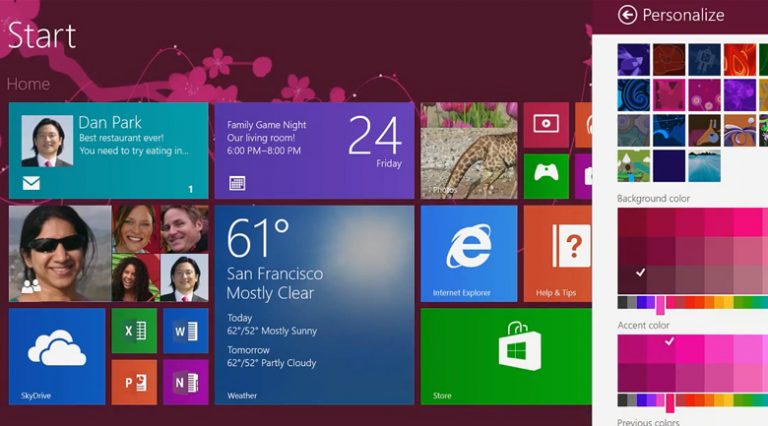
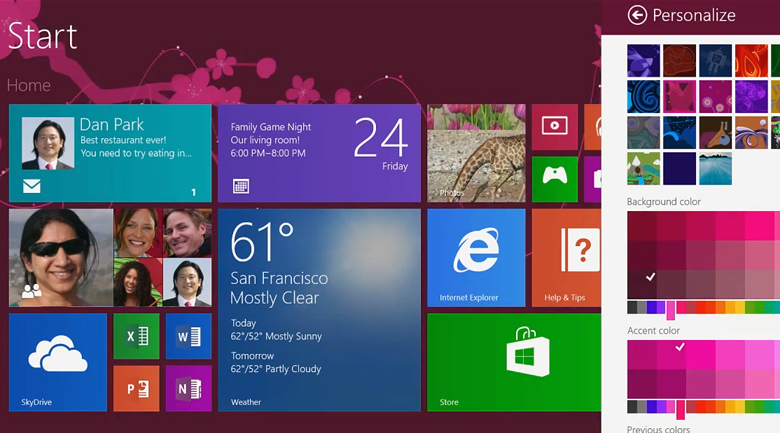
For both markets, personalization is a focus. From customizing button sizes, to arranging home screens with your favorite photos, Windows seeks to provide a unique experience for each user that’s seamless regardless of device.

Experienced users can be first to test

With this latest update, Microsoft is intent on bridging the gap between the business world and the personal life for Windows users by providing a seamless integration on multiple devices. Previously, Microsoft largely focused on businesses as its target market but with the competition from Apple in the consumer market (having already developed this kind of integration with its products for consumers), Microsoft is obviously attempting to rally consumers to its products as well.

Because this is a pre-release of software, Microsoft strongly recommends only experienced users download the update and only if comfortable with troubleshooting PC problems yourself as “you might encounter errors you wouldn’t encounter with a release version of Windows” and if the installation fails on your PC, “you may need to contact your PC manufacturer”.

Mortgage interest rates rise, application volume dips

mortgage

Mortgage application volume falls as interest rates rise

According to the Mortgage Bankers Association’s (MBA) Weekly Mortgage Applications Survey for the week ending June 21, 2013, mortgage application volume fell 3.0 percent for the week. Refinance applications fell 5.0 percent, marking their lowest level since November 2011, now accounting for 67 percent of all applications after hovering around 80 percent for most of 2012. Meanwhile, purchase applications actually rose 2.0 percent for the month and 16.0 percent for the year.

“Interest rates moved up sharply following the Federal Reserve press conference last Wednesday where it was indicated that the Fed could begin tapering their asset purchases later this year,” said Mike Fratantoni, MBA’s Vice President of Research and Economics. “Mortgage rates increased by the most in a single week since 2011, and refinance application volume dropped to its lowest level in almost two years.”

Fratantoni added, “However, applications for conventional purchase loans picked up by more than 3 percent over the week, and total purchase applications were 16 percent higher than one year ago, indicating that homebuyers are not yet dissuaded by the increase in mortgage rates. Government purchase applications dropped again, likely a function of the recent increase in FHA mortgage insurance premiums.”

Average contract interest rates

According to the MBA:

  • The average contract interest rate for 30-year fixed-rate mortgages with conforming loan balances ($417,500 or less) increased to 4.46 percent, the highest rate since August 2011, from 4.17 percent, with points decreasing to 0.35 from 0.41 (including the origination fee) for 80 percent loan-to-value ratio (LTV) loans. The effective rate increased from last week.
  • The average contract interest rate for 30-year fixed-rate mortgages with jumbo loan balances (greater than $417,500) increased to 4.52 percent, the highest rate since March 2012, from 4.23 percent, with points decreasing to 0.28 from 0.34 (including the origination fee) for 80 percent LTV loans. The effective rate increased from last week.
  • The average contract interest rate for 30-year fixed-rate mortgages backed by the FHA increased to 4.20 percent, the highest rate since August 2011, from 3.85 percent, with points increasing to 0.40 from 0.22 (including the origination fee) for 80 percent LTV loans. The effective rate increased from last week.
  • The average contract interest rate for 15-year fixed-rate mortgages increased to 3.55 percent, the highest rate since November 2011, from 3.30 percent, with points increasing to 0.43 from 0.39 (including the origination fee) for 80 percent LTV loans. The effective rate increased from last week.
  • The average contract interest rate for 5/1 ARMs increased to 3.06 percent, the highest rate since October 2011, from 2.81 percent, with points increasing to 0.39 from 0.35 (including the origination fee) for 80 percent LTV loans. The effective rate increased from last week.

World Bank’s “Doing Business” Report under fire

world report

Panel Suggests Reform of ‘Doing Business’ Report

For the past 10 years, the World Bank and the International Finance Corporation, which is the private sector division of the organization, have published the “Doing Business” report in order to inform global public policy. The report takes economic data points from countries all over the world and ranks them in various indexes. This week, an outside review panel urged the organization to do away with these rankings as they could lead to unfair representation and encourage countries to weaken industry regulation.

‘Ease of Doing Business’ Varies from Country to Country

One of the report’s most watched indexes is a country’s ‘Ease of Doing Business.’ This number is derived from a set of 10 separate factors that impact a particular country’s business environment, and also scores the level of difficulty that investors and business decision makers could face if attempting to do business there, including government tax rates, trade regulations, contract and investor laws, and ease of obtaining credit electricity.

These are all areas that businesses would be interested in and take into consideration when making a decision on where to conduct business, and a poor index score could dissuade them from moving forward with a particular country, which the panel argues, is problematic.

Hong Kong, Singapore rank well

World Bank researchers surveyed 185 countries for its 2013 survey – Hong Kong and Singapore received the highest ‘Ease of Doing Business’ index score and Chad and the Central African Republic scored the lowest. The panel says that taking so many different factors and crunching them down into one number listed in a report does not provide the full context of economic conditions and can misrepresent variations in some countries.

But critics in opposition of the panel say the point of research is to compile massive amounts of global economic data, derive insights from it and provide that information in the form of data points that businesses can then use to make decisions with.

Businesses Use the World Report as a Resource

“I think these rankings really do have fundamental value, as without the rankings the Doing Business report is just one more research exercise among many the World Bank does,” Scott Morris, a visiting policy fellow at the Center for Global Development, a Washington think tank, told IPS.

“It is because of the ranking that this report has unique value to those countries that have a long way to go on economic reform. Think of a small sub-Saharan African country with a reformist government in place, how does it get international leverage for reform or gain global attention for what it has accomplished? The rankings exercise, with its very high profile, is tremendously valuable in this regard.”

China has also criticized the report citing that it is more favorable to countries with capitalist systems. The panel hopes to encourage the World Bank to reform its research and reporting methods and provide a more objective, unbiased view of global economic trends to the business community. In this way, countries are less likely to lower taxes and wages in order to achieve stronger rankings in comparison to other countries.

Marketing bloopers: do we blame Siri or Dr. Freud?

marketing typo

Marketing bloopers guaranteed to crack you up

Hi Friends – welcome to this week’s MLS blooper reel. I know we all depend on technology to expedite business transactions and marketing, but I wonder what is being lost in the process.

Spelling? Proofreading? Common sense? Be sure to spell check AND proofread before hitting “submit,” or you could end up in the Blooper Hall of Fame like these pimps. Uh, I mean perps:

Hello Siri, Good-bye Sanity

“The sun will curse your blues” ( …And the seller will curse your spelling.)

“No more cramps closets” (Apparently the closets are in menopause.)

“Buy ow!” (Yes, there’s a lot of pain that comes with a mortgage.)

“Feeling the space squeeze? (Only in my pantyhose.)

Droid or Freud?

“Don’t mess these” (…Said Grandma to Gramps as she handed him another pair of boxers.)

“Call for pre-constriction rates” (Hmmm…a special on bypass surgeries, I presume.)

“Catle by the sea” (Cow paddy in the surf.)

“Seller just hydroflushed” (I hope he burned a match afterward.)

Is There a Doctor in the House?

“Follow the sighs” (I’m sure they are coming from your hapless seller.)

“Good pices” (Sounds fishy to me…)

“Sandbasted glass” (It’s glass, dude – not a turkey!)

“On a clean day, you can see forever” (If you’re waiting for the L.A. smog to clear, fuggedaboutit.)

Calling Dr Freud

“Root stuck in drain” (That’s why it’s always a good idea to keep your trousers zipped.)

“Sex unit income property” (Welcome to the Hollywood Hooker Hotel.)

“Just bring your tootbush” (Bush… honking… nope – can’t go there.)

That’s it for this week, folks. Remember: spell well and sell!

Short sales: getting around frustrating gatekeepers

stress

Anger Never Helps in Short Sales

Do you ever lose it? I mean do you ever just start ranting at someone that you don’t even know… like an employee at a store or a customer service representative on the telephone? Sometimes it’s hard to keep cool. Just last week I was on the same call for nearly two hours and I’m sure that if there was a cartoon made of the call, the cartoonist would have drawn steam rising out of my head. However, despite my growing impatience, I was still respectful in dealing with the individuals who were trying to help me.

On the other had, I was also recently the victim of a bank employee that wanted to use me as his whipping boy. Here’s what happened:

Our office submitted a short sale package to one of the major servicing companies, and the offer was very low because of significant damage to the property. So, the bank employee assigned to the file calls the office and reads me the riot act because the offer is not anywhere near the property value on the bank’s computer screen. The employee continues to rant and rave about how he has all the power to close any file that does not align accordingly with the bank’s values. No time is given for us to have a conversation. He will not care a lick when I explain to him about the cracked slab, the fire damage, or anything else that might take the structure’s value down over $100k.

It’s sad to say but there’s an employee like this working in just about every loss mitigation department. At one time or another in your short sale career, any short sale listing agent or negotiator worth his salt is going to have to deal with someone like employee I described above.

Three Ways to Pass Gatekeepers

Here are three ways to deal with the tough employee working your short sale file:

  1. Figure out a way to get beyond the gatekeeper. This ranting and raving employee is a gatekeeper. It is in the best interest of your client to get beyond him (or her). So, you’ve got to figure out how. You can call the bank’s toll-free number and ask for a supervisor; you can contact the bank’s media relations department; or you can take your concerns to social media (if you are brave enough to do so).
  2. Make sure to have your ammunition ready. When I talk about ammunition, I mean your argument with all of its supporting documents. For properties with value issues, this could include bids from contractors, photos, and even information from the seller’s insurance company. A comprehensive package in the right hands speaks louder than words.
  3. Listen, question, and be polite. In listening to a bank employee, you may be able to gain valuable information. If it’s possible, I ask questions. For example, “I agree with you that the value is low. Can you explain to me what I should do because they tell me that the property has fire damage?” Note that I am using a tone that would not intimidate the decision maker. (If that doesn’t work, return to step one.)

In addition to all of the things that short sale listing agents and negotiators already do for their clients, you can see that verbal abuse is sometimes included in the list. If anything like this happens to you, just shake it off and follow the three steps above and you will definitely achieve short sale success.