Home Blog Page 283

The dual edged sword of your business offering gift cards

gift cards

The era of gift cards

Gift cards have become a universally utilized and popular option for gift givers around the world. These credit-card sized pieces of plastic or their digital counterparts provide both a form of captured currency, allowing the user to purchase the items of their desire from a favorite store or restaurant, and a marketing opportunity for businesses. But with an estimated $2 billion in unused gift cards in 2012, they can be a double-edged sword for consumers and businesses alike.

Judge rules in Border’s case

In May 2013, U.S. District Judge Andrew Carter, presiding over the ongoing bankruptcy of Borders declared it would be “unfair to other creditors” to allow the holders of $210.5 million in gift cards to have a claim in the bankruptcy proceedings as a creditor and that the bankruptcy was “substantially” completed.

It’s unlikely to be an accident that the bankruptcy was filed in February 2011, two months after the hectic Christmas season. For consumers who purchased gift cards from the popular book retailer in 2010, this is a bitter pill to swallow.

Circuit City serves as another example

Circuit City gift card holders faced a similar conundrum in the 2008 holiday season after Circuit City filed for Chapter 11 bankruptcy protection in November of that year.

For retailers, the double edged sword comes from both unclaimed gift cards, which some state governments will claim under an escheatment law (similar to that used to claim money from abandoned checking accounts) and the lost potential for more purchases. About 1/3 of consumers are more likely to purchase at least 20 percent over the gift card value and about 55 percent are likely to purchase up to 60 percent over the card value, which can provide additional revenues to businesses after the peak giving seasons.

Using gift cards to improve loyalty

Savvy retailers should use gift cards in a way that increases customer loyalty and experience by adding value to the shopping experience. Making gift cards easier to use, instead of harder, can reap big benefits in terms of wooing customers away from competitors.

For example, during the 2012 Christmas season, Target stores rewarded customers with a free gift card with a minimum purchase which they could then choose to apply to that shopping trip or the next one. That made it easier for Target to compete with Wal-Mart in terms of pricing and enabled Target to attract more of the holiday spending from shoppers along with grocery sales.

Dispute resolution in the workplace on a tight budget

dispute resolution shaking hands

Dispute resolution when a business can’t afford full time help

One challenge to small businesses is the absence of specialized personnel that larger companies can afford to keep on staff. In addition to all of their other responsibilities, human resources managers often serve as de facto mediators; helping resolve disagreements and other problems in the company. How are you supposed to handle conflict if you don’t have someone dedicated to personnel issues in the company who is trained to help resolve conflicts?

Most small companies deal with problems by either firing one or more of the employees involved in a conflict that is hindering the successful completion of work, or by limping along with unnecessary dysfunction.

A recent survey by a professor at the University of Houston indicates that a very small proportion of small businesses use conflict resolution processes like mediation and arbitration which have been well established as effective tools for getting beyond conflict in the workplace.

For the same reason that a company may not have a person on staff who is trained in helping resolve conflict, many companies may not view alternatives such as mediation as within their budgetary constraints. Compared with the cost of replacing an experienced employee and the loss of productivity that conflicts can cause, however, the average cost of professional mediation is not terribly prohibitive.

Various options for implementing conflict resolution programs

Companies have several options for implementing conflict resolution programs. For a relatively small investment, a company can designate an employee as the person within the business who helps handle disputes and have that person complete a professional mediation class. If a company is small enough or conflict is not common enough to warrant a designated person on staff to handle such matters, a professional mediator can be hired to conduct mediation between the employees and/or management involved. Most cities have a fairly competitive marketplace for mediators, so while this can sometimes get expensive in complex conflicts; it is often a reasonable cost.

Additionally, many communities have Dispute Resolution Centers which provide low cost mediation handled by volunteer mediators. Because they are so low cost, it can be a challenge to get a mediation scheduled, but they are a great resource if you have one near you (for example, a list of dispute resolution centers in Texas can be found here).

Small companies face many of the same problems larger businesses face, but usually without the resources available to bigger budgets and larger operations. When it comes to conflict in the workplace, though, small businesses have options that can minimize the cost and stress of conflict. If you face such a situation, consider using a form of mediation to help move your company forward.

Home prices see positive annual gains for fourth month

house home

Home prices at pre-recession levels

According to the S&P/Case-Shiller Home Price Index released today, home prices jumped 12.1 percent between April 2012 and April 2013, for many cities representing the largest annual gains in history. The Index measures the 10 largest metro areas and the 20 largest, both of which improved roughly 2.5 percent compared to March, marking the fourth consecutive month of positive annual returns.

Atlanta, Dallas, Detroit, and Minneapolis posted their highest annual gains since the index began, and for the month, all cities improved, with Detroit as the only exception.

case-shiller

Broad based housing recovery

Dr. David Blitzer, Chairman of the Index Committee at S&P Dow Jones Indices said in a statement, “The recovery is definitely broad based. The two Composites showed the largest year-over-year gains in seven years.”

“Last week’s comments from the Fed and the resulting sharp increase in Treasury yields sparked fears that rising mortgage rates will damage the housing rebound,” Dr. Blitzer added. “Home buyers have survived rising mortgage rates in the past, often by shifting from fixed rate to adjustable rate loans. In the housing boom, bust and recovery, banks’ credit quality standards were more important than the level of mortgage rates. The most recent Fed Senior Loan Officer Opinion Survey shows that some banks are easing credit restrictions. Given this, the recovery should continue.”

Case-Shiller and runaway appreciation

“Recent economic data on home sales and inventories confirm the housing recovery’s strength,” Dr. Blitzer noted.

Zillow Chief Economist Dr. Stan Humphries observed, “Today’s Case-Shiller numbers may reflect where the housing market has been in some of the frothier metros, but they are not indicative of where it’s headed. The housing market worm has turned over the past few weeks – inventory levels are beginning to show signs of easing, and mortgage interest rates are creeping up. Going forward, both of these factors will help mitigate extreme price spikes caused by very strong housing demand and very low housing supply.”

Dr. Humphries added, “Runaway appreciation in many of the large, coastal metros that form the backbone of the Case-Shiller indices will begin to moderate. Home value appreciation in some of these areas will have to slow down, or potentially fall, as higher bottom-line prices are no longer masked by rock-bottom mortgage rates. In general, the national housing recovery is strong and sustainable, but pockets of volatility will emerge as local fundamentals shift. Buyers expecting home values to continue rising at this pace indefinitely may be in for a shock.”

Keeeb: more than just a bookmarking site

keeeb

Keeeb is more than just bookmarking

Keeeb is an online web clipping tool that allows users to save snippets from any web site using a bookmarklet. It is as simply as selecting text, images, video, or anything else and it will save it to your Keeeb profile. You can also select a personalized domain (www.keeeb.com/username), so that if you want to use it to share information about your business, such as press reviews, videos, or memos, you can share it all in one place, with one link.

If you are ready to try Keeeb out, simply register with your name, email, and a password, or you can sign up via Facebook, Google, or Twitter. After registration is complete, you will drag the bookmarklet to your preferred browser’s tool bar (where you place your bookmarks) and you should then be able to see the Keeeb toolbar.

Then you can highlight any item you like and click “save” and it will automatically be saved to your Keeeb profile. You can take it one step further and set up folders to organize your content and when you click “save” you will be able to specific which folder you want the information to go to.

Add a dash of social to really mix it up

Keeeb also functions as a social network of sorts. You can see other users and their content and share anything you like via Facebook, Twitter and Google. You can also choose to keep things private. This is a bit like Pinterest meets Twitter. Once you have found and saved content that you like, you can add a note. This allows you to add thoughts, links, or explanations to your content.

If you are rolling out a new product and you want to share the image, you can do so with a note detailing when it will be released and a few of the particulars to get people exciting and sharing your information. Using Keeeb in this manner could almost be viewed as an alternative form of blogging. You “blog” through whatever you Keeeb, making the possibilities endless and as more and more users look for something to replace Clipboard* (which is terminating service June 30, 2013) Keeeb could become increasingly more popular.

*Note: If you were a Clipboard user, Keeeb offers an import tool so you can import everything you had on Clipboard and continue saving items on Keeeb.

eBossWatch for rating bosses: helpful or harmful?

ebosswatch

eBossWatch and the rise of social media

Before the rise of social media, on-line review and rating sites were the only fast way to research a service provider. Doctors, schools, plumbers, therapists, just about anyone who provides a service can be searched on rate and review websites, and the newest form of rate and review is for bosses at ebosswatch.com.

In most cases, websites that offer these kinds of services serve mostly as outlets for the disgruntled. We all tend to complain about our bad experiences more than we rave about our good ones, and typical experiences don’t get any attention at all. A site like this could save a person or two from accepting a job from a bad boss, but for the most part it serves as a bashing ground.

The best way to learn about a potential boss

I gave the site a trial run, however. I searched every boss I’ve ever had as well as bosses’ names I’ve heard in a few gossip circles, and not one result turned up for anyone. Perhaps if I searched the names of some big company CEOs I would be able to see some results. The odds are, however, that even if I could get a hit with a boss’ name actually in the database, the only review would likely be from an angry former employee. And, just like we have all learned from the Better Business Bureau, no information isn’t necessarily good information.

There is just no true way to monitor data from these types of sites. No way to know the source of the review; a good review could have been solicited, and a vicious review is likely a heat of the moment rant. The best approach to finding out information on a possible future boss is to do what the mature population does. Implore information on unsuspecting people via social network post. A thousand of your closest friends won’t steer you wrong.

Why the cost of borrowing is about to skyrocket

debt

Fed dialing back on securities spending

The Fed’s announcement last week that it plans to dial back on securities spending if positive economic trends continue may have sparked a selling spree in the investor marketplace. Treasury yields were at some of the highest points seen in recent years, but substantially dropped this month following Ben Bernanke’s announcement that the Fed could severely cut its bond purchases by mid-2014. Both MSCI All-Country World Index and Treasuries have dropped 5.4 and 1.9 percent respectively.

The Fed has regularly purchased $85 billion in government debt and mortgage-backed securities over past months in order to improve the rate of unemployment in the US and make it cheaper to borrow money. That number is expected to drop to $65 billion by mid-September, according to a near majority of economists who were surveyed after Bernanke’s press conference last week.

Investors rushed to offload

At the onset of the Fed’s announcement and large drops in the market, investors rushed to offload and quickly sell some of their bonds and securities.

“The exit door is not that big and everyone’s going at the same time,” said Justin Lederer, strategist at Cantor Fitzgerald in New York. “This is not just about a Treasury backup, this is a global, everyone-getting-out-of-everything.” The drops in the Treasury yields and stocks will also likely affect the ease with which consumers and businesses borrow money. After enjoying a period of borrowing “cheap money,” the costs of borrowing will likely rise again and cause business decision makers to be more stringent in their investment purchases going forward.

The uncertainty that investors are feeling has certainly played out in stocks and bonds performance, and they will keep a close eye on employment metrics activities as that is one of the key data points that the Fed is using to factor into what level of securities purchasing it will carry out. Thirty year bonds were able to gain back some of the initial losses that took place on Monday, but if Fed predictions hold true, even steeper drops could occur prompting more investors to sell.

New IBM ads say it’s time for smarter cities

IBM

IBM campaign for smarter cities

IBM, not satisfied with the state of the world’s cities, has created a new mission: smarter cities. Whether it is infrastructure, environmental, emergency response, beautification, energy, public safety, transportation, or government, IBM is working to help improve cities around the globe.

Utilizing the power of the internet and social media, IBM created a webpage called People for Smarter Cities as a central hub for all “doers, thinkers, problem solvers, creators and dreamers” to share their ideas and strategies for making cities smarter. Having worked with over 2,000 cities in this way, they’ve become experts on how to achieve these goals in new and innovative ways.

Every city is different

Mark Cleverly, IBM’s Director of Strategy and IBM Global Government Industry, says, “Every city is different. Every city has its own unique conjunction of circumstances, demographics, of capabilities, and of problems.”

John Gordon, Director of the IBM Smarter Cities initiative states, “IBM has a pretty unique role to play… One of the things we’ve found over these 2,000 engagements is that the patterns underlying how cities can become smarter are very, very similar.”

Launching at a tourist destination

One of the cities IBM focused on recently was Rio de Janeiro, a top tourist destination struggling with natural disasters, aging infrastructure, and high crime rates. The city is preparing for two major sports events – the World Cup in 2014, and the Olympics in 2016. With IBM’s help, Rio has combined 30 different agencies into one centralized hub for information and resource sharing to help improve and streamline processes. The result? A 30% increase in emergency responsiveness.

Another example of the smarter cities concept implemented by IBM is a new sculpture in Rio de Janeiro, made completely out of used plastic bottles and lit from within at night.

Literally interactive advertising campaign

In June 2013, IBM released a new marketing strategy using advertisements with purpose. The ads, each featuring a colorful design along with a little curve, are used in a multi-purpose method to provide advertising as well as a bench, a shelter from the weather or a ramp over stairs in high traffic areas.

The dual purpose ads have received both praise and criticism but it’s obvious from IBM’s video (below) that the functional ads are of better benefit to cities and residents than graffiti-laden brick walls or people sitting on the ground. IBM is a global technology solution provider and earned $105 billion in revenue in 2012.

[pl_video type=”vimeo” id=”67570047″]

Hellacious landlord duo gets over four years in prison

landlords

Landlord story from hell

Many landlords are “accidental landlords,” meaning they couldn’t sell their home so they rented it out and relocated, while others are investors hoping to buy a property and flip or repurpose it for a fat profit. In most cases, these landlords play by the rules no matter what, but when Kip and Nicole Macy bought an apartment building (744-746 Clementia Street) in San Francisco, they got impatient and engaged in bizarre, dangerous, and illegal activities to get the tenants to move out so they could find their fat profit.

After hiding in Italy for two years, the couple pleaded guilty to residential burglary, attempted grand theft, and stalking for their years of essentially torturing their inherited residences.

Under the plea agreement, the duo will be sentenced in August to four years and four months of prison time each, according to court documents. For now, they will remain in the County Jail on $2 million bail each.

Setting fires, death threats

The Macys bought an apartment building in 2006 and some residents report the couple wanted to renovate the building and flip it, while others said they wanted to increase rents. To accomplish this, they wanted the tenants out, but when they didn’t voluntarily jump ship, they began terrorizing their tenants for two years, stealing from them, changing their locks, setting small fires by soaking their belongings in ammonia, cutting holes in the floorboards and playing loud music at all hours.

When none of this worked, Nicole Macy impersonated one of her tenants and fired the tenant’s lawyer over email, threatening to kidnap and dismember the attorney’s children. They couple directing workers to board over windows while tenants remained inside. When one tenant who had refused to leave reported the two for construction on his neighboring unit without a permit, they were notified by the City and ultimately obtained their work permit. They shoved a copy of the permit under the tenant’s door with the note, “Scott get lost! Get a job!” mocking his being disabled.

Stealing, stalking, cutting support beams

The couple also cut water and power to the apartments on a regular basis to make life miserable, they stomped on vacant units’ floors at all hours, regularly locked the main gate entrance so no one could enter, and threw rocks at windows to scare tenants. The property manager who lived on site was caught by the couple helping the residents and going against the landlords so many times that the husband not only threatened the manager’s life but kicked his door down and threw away many of his belongings when he was away.

After all of that, some tenants remained, so the landlords began cutting holes in floors and slicing support beams in hopes the building would be declared uninhabitable and tenants would be forced to remove. Then, they could get it back up to code and flip it.

Finally facing the music

In 2008, the landlords were charged and released on $250,000 bail each, and in 2009, they were offered a plea deal of one year in the County Jail with five years of probation, but rather than take the District Attorney up on his offer, they ran away together to Italy. Two years later, they were extradited to face trial. Their new plea deal was less generous, so the two have pleaded guilty and will spend over four years in jail each.

Top 10 tips for booking cheap flights: insider tells all

cheap flights

Top 10 tips for booking cheap flights

CheapAir.com CEO, Jeff Klee has shared with AGBeat his top 10 tips for booking cheap flights, and guess what? There are some money pits many people fall for, bad times to book flights, and ways to mix and match airlines to get the best deal. Whether traveling for business or getting away from business, keep cash in your pocket with Klee’s ten tips:

1. Check Fares Early & Often

Do you know that, on average, the fare difference between the best day to buy your airline ticket and the worst is $236! And that doesn’t even include people who purchase within 7 days (who pay even more!). Airlines change fares constantly, often multiple times a week. So when it comes to buying an airline ticket, timing is everything. We recommend that you start checking fares as soon as you know you’ll be flying.

Then, check continuously, at least once a week to get a sense of what’s a good deal. And when you find a fare you like, be ready to pull the trigger since the same fare may not be around for very long. We know it sounds crazy but the airlines use very sophisticated computer systems to adjust fares literally in real-time. Buying an airline ticket really can be like playing the stock market! (Learn about why airfares fluctuate.)

2. Buy at the Right Time

Knowing when to buy your flights can be the best tip for saving some serious cash on your next trip. We did a study last year and found that for domestic flights 49 days (about 7 weeks in advance) was, on average, the optimal time to buy plane tickets. But that number can vary quite a bit depending on where and when you’re going. The most important takeaway from our study: you’ll likely pay a big premium for booking too late (within 14 days), or for booking too early (more than 5 months in advance).

Somewhere between 3 weeks and 4 months in advance is usually the sweet spot for flights within the U.S., although all bets are off if you’re traveling for a holiday or other peak time (see #4 below).

3. Some Days are Cheaper than Others

The day of the week you fly on can make a big difference in your airfare. Tuesdays and Wednesdays are generally the least expensive days for domestic flights and Friday and Sunday are the most expensive. (Monday, Thursday, and Saturday are in the middle). The difference between a Tuesday flight and a Sunday flight is $29 each way on average, or $58 round trip. If you’re traveling for the weekend, consider Saturday to Monday or Tuesday instead of Thursday or Friday to Sunday. And if you’re traveling for a full week, Tuesday to Tuesday or Wednesday to Wednesday is often your best bet.

More generally, if you’re willing to be flexible, check a bunch of alternate dates around the same time period because you never know when there might be one combination of dates that has a fare a lot lower than the dates around it.

4. Be Mindful of Seasonality & Holidays

Knowing when to go can matter just as much as when to buy. Because the most important factor that influences the price of a particular flight is how full that flight is, it makes sense that travel during Spring Break, Thanksgiving, or Christmas time would be more expensive than normal. Similarly, some destinations, especially international ones, are very seasonal in nature so research the low and peak seasons for the places you’re interested in visiting.

If you’re going to Europe, for example, you can find some amazing deals during the February and March low season, but if you want to go during the summer, you’ll pay up to double the price. If you do need to travel to popular places at popular times, you usually want to book earlier than you otherwise would since discount seats are likely to sell out quickly.

5. Mix and Match Airlines to get the Cheapest Flights

CheapAir.com features a “Mix & Match” category that essentially lets you combine two one way fares that may or may not be on the same airline, to form a round trip. “Mix & Match” options come in handy when either (1) the best possible fare for an itinerary requires travel on one airline going out and another airline coming back; or (2) the airline with the most convenient outbound flight doesn’t have a convenient return flight or vice versa.

6. Sign Up for Airfare Alerts and Track Routes

To help keep an eye on fare trends, sign up for CheapAir FareTracker [or other tracking] alerts. You’ll get notified more quickly when a sale starts and get a head start when only a limited number of seats are available. Acting quickly when a fare sale starts can save you a lot of money.

7. Prepare for Extra Bag Fees

Different airlines have different policies on baggage. Most charge for checked bags and some even charge for carry-on. You should factor that into your purchase decision. CheapAir makes that easy: when you see a list of flight options on our site, just hover over any of them with your mouse and you will see, among other things, the amount that airline charges for bags.

With some airlines it’s also important that, once you buy your ticket, you pay for your bags ahead of time by going to the airline website because they may charge a premium if you wait until you get to the airport. Read more about airline baggage fees and what to know before you fly.

8. Check Alternate Airports

If there is more than one airport near your origin or destination city, check them both. The more options you have in terms of airports and travel dates, the more likely you will find what may be one of the last discount seats to where you are going. CheapAir automatically checks some nearby airports for you (San Francisco and Oakland; Miami and Ft. Lauderdale; New York and Newark; Washington, DC and Baltimore), but if you are willing to use other alternates, you should check those, too, by doing separate searches.

9. Break up Families or Groups into Separate Purchases

This one sounds counter-intuitive – the more people that go, the better the rate should be, right? That’s rarely true with the airlines; “group discounts” are few and far between. Because airlines will typically limit the number of seats per flight they sell at their lowest rate, sometimes you can actually price yourself right out of a good deal simply by having too many passengers.

If, for instance, Airline X has two seats remaining on a flight at $100 and a bunch of other seats available for $150, if you do a search for a group of 4, the price that will come back will be $150. But if you search for two seats at a time you can buy two for $100 and only have to pay the extra $50 for the second two. How do you know when to do this? Always search first for your whole group at once to make sure that the flight has enough seats to accommodate everyone.

Then try the same search for a smaller group. If the price comes out lower for the smaller group, buy the seats for the smaller group, and then do a subsequent search for the rest of your party. It can be a lot of work but, hey, if it saves money…

10. Buy on a Site that Offers Price Drop Payback

OK, this is a somewhat shameless plug, but we think it’s justified. CheapAir’s unique Price Drop Payback program is as simple as this: if the price for the same itinerary goes down any time before your trip, we’ll pay you back the difference in the form of a travel voucher for up to $100 per ticket! We are proud to be the only U.S. travel site that offers this buyer protection and we hope this program will arm you with buying confidence.

Track any device with RFID tags: phones, bags, tablets

What is all of this RFID talk about?

A RFID (Radio Frequency Identifier) is a small device used for tracking or identification. A typical tag consists of a chip, memory and antenna. Most new RFID tags utilize Bluetooth technology.

Why do you need RFID?

How many times have you misplaced something? Something like your keys, phone, tablet, wallet, or remote; if you are anything like me, at least a few times. If you place an RFID tag on these items, you can track them. There are several companies that offer tags that work along with smartphone apps to track your things. This is especially useful for business professionals always on the go.

You can tag your phone, briefcase, laptop, and even your luggage and your smartphone will alert you when the item is out of a set range (say 100 feet) and when it returns. RFID devices are even used with pet doors. If you place a device on your pets’ collar, the pet door reads the chip and allows them to enter, but only your pets. This will keep out those pesky raccoons that try to come in and help themselves to your refrigerator.

Four RFID options:

There are several companies that offer RFID devices; the following four can get you started as you find the option best for you:

StickNFind is one company offering these devices. The device is about the size of a quarter. It costs $25. And you can track anything you tag with a device via your smartphone. You can have up to twenty active stickers (devices) at a time. The smartphone application also allows users to trigger an alert if a sticker moves out of a specified range. This is called the “Virtual Leash” feature; users can set a distance range for each sticker. So, if you want to keep your pets or children within a certain range while they are outside, you can place a sticker on them and the phone will alert you if they go outside that range.

Bikn (“Beacon”) is another company offering a “lost and found” system. For $59.99 you get an iPhone case and tag. The tag can attach to your keys, your pet, your backpack, anything you want, really. And the best part is that your iPhone will find your tagged item, but the tagged item can also find your iPhone, even if it is dead or turned off. Currently Bikn only works for iPhone and you will have to remove any other cases you have (Otterbox, Armor, etc.) so the Bikn case can be in contact with your phone. But, if you are prone to losing things, this could be worth it.

ItemTrackr can track any Bluetooth device such as cars, headsets, low energy tags (like SticknFind) and much more. You can ring your lost Bluetooth device from the app. It will also record the GPS map and time you lost your item. This is especially helpful when you need to remember where you parked your car or left your keys. There is also something called, “separation alert”: if you are about to walk off without your Bluetooth device, the app will play a reminder so that you do not forget it.

InRange by Phillips is another Bluetooth enabled leash system. For $49.95 you get a similar system to Bikn’s. You will receive the Bluetooth device, a pouch for the tag, batteries and a pin to release the battery door. Items are tracked via the iPhone/iPad app and can be paired with up to three InRange devices. This device also allows you to still make calls via Bluetooth without any interference.

There are many other options available to suit your needs. All of them serve the same basic function: to track your possessions and help you insure they do not get lost. This seems like something worth investing in if you have a hard time keeping up with your belongings, or travel extensively.

Walmart, others hiring temps and part-timers only

sales

Walmart, others making a shift in hiring

Data from a recent Reuters survey shows that out of all retail companies that are hiring, the majority are only hiring temporary workers. The remaining companies that were interviewed responded saying that they are hiring a mix of temps, part-time and full-time workers, but none are hiring full-time workers only.

The shift towards hiring more temporary and part-time workers is pretty significant. Prior to 2013, only 1-2 percent of Walmart’s employees were temps, but now the number of temporary workers that Walmart hires is closer to 10 percent of its employee base. However, the retailer is not alone in its practices – many other companies are now turning to temp agencies to fill vacant positions, and critics think that the shift has to do with Obamacare and the increased insurance costs that come along with it.

Out of the 52 stores that responded to the Reuters survey, 27 answered that they were hiring temporary workers only.

Walmart CEO responds

Businesses that are cutting employee full-time hours argue that this method helps them scale back appropriately to meet business needs, and that it is not always necessary to have numerous full-time workers if business does not demand it. “Their hours flex by the needs of the business from time to time,” said Bill Simmons, CEO of Walmart Stores. If hours are busier on the weekends or during the evenings, businesses can call in part-time workers on an as needed basis, and then cut hours when things slow down.

Company spokesman David Tovar says that there is no discrepancy between the pay rates of temp and non-temp employees, and that Walmart’s temporary workers are paid the same starting pay as other workers. The shift to more part-time and temporary workers allows businesses to cut labor costs, but this makes it more difficult for employees to take care of their expenses with less paid hours.

This trend away from full-time hiring, coupled with the fact that employees will likely have to cover their healthcare costs out of pocket, with no assistance from their employer unless they are working more than 30 hours per week, just adds to that financial struggle.

Jackery Air adds five days of battery life to any device

jackery

Jackery Air hits Kickstarter funding goal

Jackery already offers charging tools for mobile devices, but with their $30K Kickstarter campaign reaching its funding goal, production of the new Jackery Air has been secured, making possible what they call the most thin rechargeable battery for mobile devices ever.

The company says they needed the funds to begin the “expensive production processes” which includes a super-thin design, high-capacity custom battery cells, and an aluminum case, all of which combine to offer up to five days of extra operational time. FIVE… DAYS.

The Jackery Air can offer this much time because of Jackery’s existing power lock technology which the company says enables the charger to retain its charging capabilities for up to six months when not in use. SIX… MONTHS.

A multi-platform capable charger, the Jackery Air can charge iOS, Android and Windows phone devices as well as tablets, multiple gaming devices and MP3 players. Two versions of the product will be produced including a 2800mAh version and a 5000mAh version. Both measure 4.9 x 4.0 inches in size, are only .3 inches in thickness and weigh 5.5 ounces or less.

[pl_video type=”youtube” id=”lfdseZysmAc”]

Reaching Kickstarter goals

“We reached our $30,000 goal quickly because Jackery Air is simply a great product that is ideal for today’s mobile users,” said Julie Wang, Chief Operating Officer of Jackery.

“Without these initial funds from Kickstarter backers, we wouldn’t be able to cover the customized manufacturing which is essential to the Jackery Air’s small footprint and leading performance,” Wang added. “This product is a real game changer for the industry because it offers users an extremely portable charging option that matches or exceeds the design aesthetics of their own devices.”

The device will likely be most popular with business travelers, but because of its small size, it could become the default back up power source for all types of people.

Inspiration from Howard Schultz, Starbucks CEO

Howard Schultz, inspiring other business leaders

Business leaders do and should take note of Howard Schultz, the CEO of Starbucks – you know, that little Fortune 500 company you might have heard of. Schultz helped to make Starbucks the first American company to provide the highest quality healthcare to all full-time and part-time workers (for workers working as little as twenty hours a week), and he says the inspiration for this business model came from “seeing [his] father broken from the thirty terrible blue-collar jobs he had over his life, where an uneducated person just did not have a shot.”

And “that event is directly linked to the culture and the values of Starbucks. I wanted to build the kind of company my father never had a chance to work for, where you would be valued and respected, no matter where you came from, the color of your skin, or your level of education. Offering health care was a transforming event in the equity of the Starbucks brand that created unbelievable trust with our people. We wanted to build a company that linked shareholder value to the cultural values we create with our people.”

The model of valuing employees

If for no other reason than this philosophy alone, business leaders should take notice. You should cherish your employees. Treat them the best way you can and your business will thrive because happy employees stay with you. But, there’s more to Schultz than his past, he is an innovator when it comes to franchises. Here are some of his thoughts about how he runs his business and what makes Starbucks so popular:

  1. “While we are a coffee company at heart, Starbucks provides much more than the best cup of coffee—we offer a community gathering place where people come together to connect and discover new things. We are always looking for innovative ways to surprise and delight our customers.”
  2. “Providing our customers with innovative and unique ways to discover and acquire all genres of great music is another way we are enhancing the Starbucks Experience.”
  3. “Over the past year we viewed countless films and spoke with numerous studios in pursuit of finding the perfect film. Just as we have demonstrated with music we believe that Starbucks can ultimately change the rules of the game for film marketing and distribution.”
  4. “Europe has always represented a major strategic opportunity to achieve our goal of creating and building an enduring global brand.”
  5. “We have just begun to realize how large the global growth prospects are, and we anticipate many years of significant development in existing and new markets, … Ultimately we believe we can surpass 20,000 stores worldwide.”
  6. “Giving back to the community has always been a huge focus for Starbucks and each year we strive to create new ways to become more involved in the neighborhoods where we do business. With the launch of the California Giving Program, Starbucks has the opportunity to partner with some of the most amazing non-profit organizations in all of California that work to build stronger communities by nurturing kids and inspiring grownups.”
  7. “Grow with discipline. Balance intuition with rigor. Innovate around the core. Don’t embrace the status quo. Find new ways to see. Never expect a silver bullet. Get your hands dirty. Listen with empathy and overcommunicate with transparency. Tell your story, refusing to let others define you. Use authentic experiences to inspire. Stick to your values, they are your foundation. Hold people accountable, but give them the tools to succeed. Make the tough choices; it’s how you execute that counts. Be decisive in times of crisis. Be nimble. Find truth in trials and lessons in mistakes. Be responsible for what you see, hear, and do. Believe.”
  8. “Mass advertising can help build brands, but authenticity is what makes them last. If people believe they share values with a company, they will stay loyal to the brand.”
  9. “One of the fundamental aspects of leadership, I realized more and more, is the ability to instill confidence in others when you yourself are feeling insecure.”
  10. “For more than three decades, coffee has captured my imagination because it is a beverage about individuals as well as community. A Rwandan farmer. Eighty roast masters at six Starbucks plants on two continents. Thousands of baristas in 54 countries. Like a symphony, coffee’s power rests in the hands of a few individuals who orchestrate its appeal. So much can go wrong during the journey from soil to cup that when everything goes right, it is nothing short of brilliant! After all, coffee doesn’t lie. It can’t. Every sip is proof of the artistry — technical as well as human — that went into its creation.”

Schultz has faced some controversy while leading Starbucks, but he has always faced it with grace, humility, and honesty; all admirable qualities in a leader. If you are looking to take something away from Schultz’s business model, it should be that philanthropy, caring, and commitment to making things right is a good place to start, and that you should not be afraid to take risks – even when other people think it is impossible, you can make it possible. Schultz has done this numerous times, with great success.

Or, as he says himself, “dream more than others think practical. Expect more than others think possible. Care more than others think wise.”

Pay card payroll catching on, often hurting employees

credit cards

Pay card payroll gaining traction: good or bad?

When a new employee of a McDonald’s received her first paycheck in the form of a debit card, she was discouraged, more likely enraged, to discover that the card came with fees attached. For every kind of transaction, there was a charge. Minimum wage employee or not, no one should have to hand over any part of earnings.

There was no other option from this particular employer. No direct deposit. No traditional paycheck. The only way to get paid was to pay, essentially.

The employee, a single mother, upon learning this, promptly quit her job and sought a lawyer. This form of pay, however, is catching on with employers. A payroll budget is basically eliminated. No printer. No printing. No ink. It’s an easier and less time consuming payroll solution for employers, but the downsides for employees are many.

Employers: save money without shorting employees

In this specific case, a fee was attached for every transaction made on the debit card, and while it may be a convenient way to get paid for those who don’t use checking accounts, those transactions add up quickly especially for those earning the minimum wage.

In this day and age, we all want to eliminate as much paper from our lives as possible, but there are cost effective options for streamlining the payroll process. Businesses like Pay.com specialize in electronic payroll, and anyone can sign up for a PayPal account into which funds can be deposited. These and dozens of other combinations of tools eliminate costs.

It may be the economy’s impact on insane budgeting techniques, the fascination with having the newest technology, laziness, or lack of staff that is causing employers to take shortcuts, but the bottom line is payroll is not the place to make cuts. If an employee is having issues with being paid fairly and efficiently, it isn’t a tough decision to make. Many will quit jobs because of pay such pay issues, and most will quit them abruptly. The costs associated with such an employee turnover negate the efforts made to save money by cutting corners in payroll.

If a pay card payroll system is going to be implemented, employers should shop around. It has become a competitive industry, and there is sure to be a pay roll card that work for business as well as for employees.

Realtors can build better client relationships on Houzz

houzz

Houzz: flirting with the pretty faces on the web

At first, it was that flirting glance. It was the longing stares and fluttering of the eyelashes that you give to things that you are lusting after… Maybe you thought it was just a fling, when it was really much much more than that. This is actually a relationship. They pulled you in with fancy photos and the savior fare … things some people just wouldn’t understand, and you thought that you were done at that… but you weren’t. Now they want more. They are ready to offer you more. They want a commitment. They want more more. More. Are you ready for what they are rolling out? This is Houzz.com’s realtor portfolio program. And get excited, because it’s free!

According to Houzz.com Director of Business Development, Katherine Nannizzi, based on a survey of over one hundred thousand Houzz.com users, “[they] learned that about 10% of Houzz home owners, and 50% of Houzz renters are planning to buy in the next two years, and another 10% are planning to build a custom home. Therefore, agents expose themselves to a new potential client base in addition to engaging with their current client base.”

This new program that Houzz.com has just released caught my attention because it is not only free to Realtors but it is also a wonderful way to collaborate with these clients who are looking to become home buyers or build that custom home in the next couple of years. You may recall when it was just becoming an idea to utilize Houzz.com as a tool along with programs and apps such as Pinterest, and that it was just being realized that there was an easier way to collaborate with clients and Realtors.

This way was to create a full system for realtors to be able to maximize collaboration with their clients through their own portfolio program which was not the same thing as the Pro+ monetized program that was released just over a month ago through Houzz. What’s even more exciting about this is if someone has been utilizing Houzz as a private individual and not as a realtor or other type of contractor, they can actually very simply switch their profile over to being a Realtor professional just by editing their profile to become a professional setting. Easy.

Make Your Online Profile Smokin’ Hot

Only a month after rolling out their program for Pro+, Houzz.com realized that Realtors could utilize the system and a whole other way. Only 816 Realtors have signed up for the program in the last three weeks since this program was initialized. Being a tech savvy agent is fantastic and having apps such as Houzz that will allow for collaboration between the Realtor, the client, and the contractors is fabulous beyond words.

Creating the profile has never been more simple. All you have to do is change the status to update the professional page, and invite your clients to look at your portfolio page. The next step to utilizing this amazing tool is to utilize the review system. Similar to the Zillow.com review system, the Trulia.com review system or even House.com’s review system, Houzz will allow for professionals to request a review from current and past clients, but also colleagues, and even other contractors. Building up reviews from will solidify rankings within the Houzz.com Realtor Professional’s search in each hyper-local market.

They know how to talk a good game

With over 20 articles professionally written daily to give service to the clients as a wonderful cool Houzz is able to create a virtual concierge service to luxury client very easily for the Realtor who is utilizing this free tool. Clearly, there was a need for architects and builders to have an avenue to outreach to the consumer and Houzz has very easily transitioned into their approach to work directly with the Realtor through their beautiful aesthetic and ease of use; it was only a natural transition that ultimately they would have this Realtor program available.

The beauty of their program isn’t just maintained through the nearly two million luxury builder and architect photos uploaded, but because the brand has chosen to have the Houzz experience remain beautiful with endemic advertising with is handpicked by their team. Not just anyone can advertise on Houzz.com and not every agent in the free world is using the system either. Just the savvy ones so far who know their market.

Oh, please, take me with you…

The concept is incredibly tote-able. Think about it this way: your client can actually use their mobile device to examine properties in their portfolio through Houzz.com’s virtual library and immediately connect with you, their realtor. This is so powerful. When you used to have to possibly funnel information out of someone, now it is wireless. It is everywhere and it is an amazing way to help the creativity keep on flowing, especially if you are dealing with a client who maybe is lacking in the creativity department.

The whole idea of Houzz was actually started by husband and wife team who was in the process of remodeling their home. They found the process of keeping all of their information consolidated that they wanted to create a more efficient and effective way to convey their details to all of their contractors. They have obviously been able to do that… and then some. Through their second annual survey of over 100,000 people, Houzz was able to find out what homeowners actually want and renovation and design; this means that now you as the realtor can take those things and run with it for your client, the consumer. This ability to create community online and off-line is much more then the aesthetic collection of luxury images, it’s the actual luxury of the concierge service in digital form for the realtor and so many different facets of collaboration.

Imagine what we can do together

This new free tool through Houzz allows you to do many things: create idea books just for you; create idea books that are private to share with your client; be a part of the community and answer questions; be a part of your listing and be a luxury concierge to everyone in the community; understand what the client wants and where the drive is within your market.

Nannizzi shared her thoughts on how this program is going to help Realtors in the branding of their business. “Here are some ways that agents can now use Houzz to build their brands and relationships with clients and prospective clients:

  • to understand a client’s desired home style for a search — photos are more effective than words
  • to communicate a home’s potential — using Houzz to provide examples of what similar home look like post-renovation
  • to showcase their expertise – using personal ideabooks as mini-blogs where they share ideas for smart investments when buying or selling, and really localizing the content
  • to continue the relationship post-purchase – i.e. sending over ideabooks they create for specific clients with nursery ideas, or home office ideas
  • to engage with their Facebook and Twitter followers by sharing relevant Houzz editorial ideabooks on topics from staging to increasing curb appeal
  • to share their network of renovation and design professionals with clients
  • to link their Houzz profiles to their websites, blogs, facebook and twitter accounts, and vice versa (you can find buttons/badges to put on your website here)”

The relationship has evolved. Are you going to engage yourself with Houzz’s real estate professional’s free program to win hour clients more opportunities for creativity and connection? I sure have… We are in fact, getting intimate.

Instagram adds 15-second videos with filters

instagram-video

Instagram adds 15-second videos

It has long been suspected as the next major Facebook announcement, and here it is – the $1B photo sharing social network they have purchased (Instagram) will now offer a video feature, dubbed “Video on Instagram,” allowing users to create 15-second videos and choose from 13 filters, with all of the same sharing capacities.

Instagram Video is available on Android and iOS devices now and is clearly a swipe at Twitter-owned six-second video creator, Vine. Not to be outdone, Vine execs said this morning that new features are on the way, including the ability to create multiple versions of a Vine and preview each prior to posting.

[pl_video type=”vimeo” id=”68765934″]

How to use Instagram Video

When opening Instagram, you’ll now see a movie camera icon where you would click to take a picture, and simply click it to enter video mode and film 15 seconds of video, add a filter, then share. All filters have been built specifically for video, and users can select a favorite scene as the cover image so prior to playing, followers don’t see an arbitrary image, they see a carefully selected still shot.

Instagram CEO, Kevin Systrom said in a statement, “So what does this mean for your content? Nothing’s different from photos. We’re still committed to making sure you have control over all of your content. Only the people who you let see your photos will be able to see your videos. And as with photos, you own your videos.”

What does the announcement mean?

NPR’s Elise Hu ponders whether video will harm Instagram’s minimalistic appeal, citing fears from video cluttering the service to the new feature failing in light of already bad bandwidth.

While Instagram Video could have a potential impact on existing users, could it pull users away from Vine or push their own users into the arms of Twitter’s video service? It is most likely that it is just another feature users will either love or complain about, but there won’t likely be a mass exodus from either in light of the Instagram’s announcement.

HUD confirms: LGBT couples face housing discrimination

lbgt couple

LGBT couples being discriminated against when renting

Instinctually, we’ve long known that LGBT couples face housing discrimination, but in the first national study by the Department of Housing and Urban Development (HUD), we now have data to back up the suspicions. The study reports that when requesting rental information from properties advertised on a variety of websites, same-sex couples are treated less favorably, receiving responses to e-mail inquiries less often than straight couples did. Additionally, HUD reports that male couples experienced slightly more discrimination than female couples.

HUD Secretary Shaun Donovan noted that the report proves a need “to continue our efforts to ensure that everyone is treated the same when it comes to finding a home to call their own, regardless of their sexual orientation.”

The study was comprised of roughly 7,000 email tests in over 50 major metropolitan areas in 2011. In each test, two emails were sent to a landlord requesting information on a property advertised online, one email from a heterosexual couple, another from a same-sex couple. Straight couples were responded to 11.6 percent more often than male couples and 11.2 percent more often than female couples.

The most shocking study result

The most shocking part of the study is that states with more protective discrimination laws actually saw more adverse treatment of same-sex couples than states with fewer protections.

Currently, the Federal Fair Housing Act of 1968 does not include protections based on sexual orientation or gender identity, but nearly half of all states have passed laws that make it illegal to discriminate against anyone identifying themselves as LGBT, and the National Association of Realtors already amended the Code of Ethics so that any Realtor member found discriminating against any LGBT individual could lose their license and essentially the ability to practice real estate.

The Fair Housing Act

The Federal Fair Housing Act, established in 1968, protects civil rights in housing and prohibits housing providers, including condominium associations, from denying housing to anyone based on \a person’s national origin, sex, race, religion, or color.

In 1988, disability (codified by the ADA in 1990) and familial status were both included, many states and local communities also have also included members of the military as a protected class, and now, the National Association of Realtors has amended the Code of Ethics to include protections for all sexual orientations. HUD, along with all HUD insured housing likewise announced that they will not discriminate against actual or perceived sexually identity, or orientation.

In HUD’s words, “The Fair Housing Act makes it unlawful for a housing provider to refuse to make a reasonable accommodation in its rules, policies, practices, or services when needed to provide persons with disabilities an equal opportunity to use or enjoy a dwelling.”

FOMC predicts unemployment under 6.4% by 2015

bernanke

FOMC statement offers good and bad news

Bonds are selling off after Ben Bernanke’s Federal Open Market Committee June statement yesterday. Following the announcement, the 10-year Treasury note had a yield of 2.31 percent, which is 10 basis points higher than it was just prior to the statement release. Bernanke also stated that unemployment rates have moderately improved, and that the Fed’s purchase of securities could begin to taper off as soon as the end of 2013 and by mid-2014 if improvement continues.

In its June statement, the Fed did lower its estimate for economic for GDP growth in 2013, but increased its projection for 2014. Officials also project that unemployment rates will drop at rates faster than previously estimated for 2013-2015, and should hover at a rate of 5.7 to 6.4 percent by 2015. Ideally, Bernanke would like to see the unemployment rate below 6.5 percent before the Fed dials back on its purchase of bonds and securities.

Fed to continue securities spending

Inflation rates are currently running below the Fed’s estimation of two percent, and these rates are expected to continue to run at or below this estimation ‘over the medium term.’ In order to ensure that inflation rates remain stable and to encourage greater economic growth, the FOMC will continue purchasing $40 billion mortgage-backed securities and $45 billion Treasury securities per month. These purchasing decisions should lead to lower long-term interest rates and better support mortgage markets. The FOMC notes that the housing sector “has strengthened further, but fiscal policy is restraining economic growth.”

While the Fed will continue its securities spending, the FOMC’s statement that securities spending could be tapered off as soon as the end of this year if positive trends continue is key. If the economy improves, interest rates will gradually rise, which will impact investors, homebuyers, businesses and many others. The June statement provides an estimated target date for when these changes could start to happen, and if improvements continue, those changes will begin within the next 6-12 months.

BoA sued for lying, denying applications for bogus reasons

bank-of-america

Bank of America under fire

A stunning 29 lawsuits against Bank of America could potentially roll into a large class action suit on behalf of homeowners who participated in the government’s Home Affordable Modification Program (HAMP) and filed loan modification applications with the bank in order to avoid foreclosure. Statements were collected from former Bank of America employees last week stating that they were often encouraged and rewarded if they lied to homeowners about the status of their loan modification applications, performed mass application denials when backlog volumes were too heavy, and placed accounts into foreclosure.

Bank of America was one of the largest financial institutions participating in HAMP when it was launched in 2009, and received large volumes of loan modification applications from homeowners to be considered for permanent modifications. In his statement, William Wilson Jr., a former underwriter and manager for Bank of America from 2010 to 2012, said that underwriters regularly had a backlog of 400 applications awaiting review.

When backlogs reached a certain point, BoA employees would perform a blitz during which they would decline 600 to 1,500 applications that had documentation of 60 days or older, according to Wilson. And according to employee statements, when homeowners would call in to check on the status of their application, BoA staff were instructed to create false reasons for their applications being denied, citing that proper loan paperwork had not been received or other fictitious reasons.

Former staffers coming forward

“We were told to lie to customers and claim that Bank of America had not received documents it had requested,” said Simone Gordon, who worked as a senior collector from 2007 to 2012.

Gordon said that if the bank admitted to receiving loan documents, it could come under fire since the bank was required to underwrite applications within 30 days of receiving the documents, but did not have adequate staff to meet underwriting deadlines for so high a volume of applications. She also stated that employees who placed ten or more accounts into foreclosure in a month received a $500 bonus, and other rewards included gift cards.

A Bank of America spokesperson says the company will continue to provide assistance to “customers who are at risk of foreclosure” and that employee statements are inaccurate. The statement also notes that the bank plans to respond more fully in court next month.

CoreLogic: is a housing bubble imminent?

housing bubble

Watching out for the next housing bubble

Today’s CoreLogic June MarketPulse report unveiled that the home price adjustment process is moving much more quickly in the current cycle than in other historical housing cycles, and that the rebound in home prices, while rapid in some markets, is likely to be short lived.

Like many economists, CoreLogic is pondering whether or not we’re approaching the next housing bubble and while they are not the first to have used the “bubble” word, they are one of the largest to do so.

CoreLogic Chief Economist, Dr. Mark Fleming said, “The continued momentum in home price growth gives us renewed optimism that the housing recovery is becoming more durable. But double-digit gains also prompt caution, particularly among those who recall the unsustainable home price increases before the last housing downturn. Are we witnessing a new housing bubble? While our recent projected CoreLogic HPI indicates continued home price gains, bolstered by still-tight supply and strong demand, we expect recent double-digit gains to moderate as markets normalize.”

So why mention a bubble if markets are projected to normalize? The ugly truth is that the housing crash was a surprise to many, even key economists, so the industry is still a dog with its tail between its legs, set on being good, so addressing the possible hiccups keeps surprises at bay. This time.

This time is different

CoreLogic also asserts that this time is different, not because the industry was kicked in the gut in 2008, but because price recovery today is much higher than in previous cycles.

Deputy Chief Economist Sam Khater explains that the most recent cycle is different from this past cycle in magnitude and speed of the adjustment process. Real home prices increased 62 percent in the three years leading to the peak and then declined 47 percent in the three years following the peak, or by about three-quarters, which is much larger than historical declines even after adjusting for differences in the pre-peak rise in prices.

“Prior cycles had more downside stickiness and slower price appreciation over a longer period of time,” Khater reports. “After the economy and the real estate market recovered, prices remained elevated above what fundamentals otherwise dictated. Prices remained stuck above what was fundamentally supported until, over time, the fundamental price rose to meet the market price. In the current cycle, the combination of a faster adjustment process and very low rates caused a rapidd upturn in national prices in late 2011 and early 2012.”

Texas adopts strongest email privacy laws in America

1

texas

Texas Governor signs tough email privacy law

Governor Rick Perry signed into law Texas bill HB 2268 this week, making Texas home to the strictest email privacy protections in America. After passing unanimously, HB 2268 requires state law enforcement agencies to secure search warrants before accessing emails – formerly, the state adopted federal rules which gave law enforcement access to emails over 180 days old without a warrant.

Critics note that federal investigators still have access to emails under federal law, but supporters note that state leadership is expected to legislate what is in their power to legislate. The signing of the bill could get the ball rolling for other states and even apply pressure to Congress to finally reform the Electronic Communications Privacy Act (ECPA) which passed the same year as the Iran-Contra affair, so it goes without saying that communications have dramatically changed since then, and both parties are pushing for reform.

In light of the recent NSA scandal, the ECPA has other rules that have come under fire such as the ability for federal law enforcement agencies only having to get a warrant to access recent emails prior to their being opened by a recipient, but once opened, it is fair game.

Most agree on one thing: privacy

A recent Star-Telegram editorial noted, “Despite the many differences between Tea Party Republicans like Stickland and the most liberal weenies you might find in Austin, there also tend to be some similarities. One of them is that whatever government does, it should do in the open. There can be arguments over exactly what government transparency is, but both liberals and Tea Partiers tend to be for it.”

Further, Attorney General Eric Holder stated at a Congressional hearing this spring, “there is no principled basis to treat e-mail less than 180 days old differently than e-mail more than 180 days old.”

Texas’ privacy bill takes effect on September 1st of this year and protects Texas residents from any state entity reading their emails without a warrant. Authored by 29 year old freshman Representative, John Strickland, the bill will likely be used as a template for other states and possibly the federal government, moving the agenda for transparency forward, particularly in light of the Department of Justice stating earlier this year that they would support updates to the ECPA.

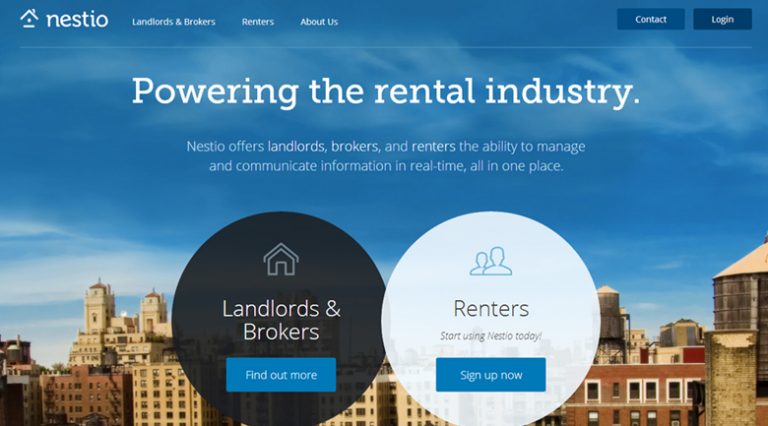
Nestio Listings says it’s the first real-time rental platform

nestio

Nestio Listings: solving inaccuracies in rental listings

Real estate listing accuracy has long been a sticking point for both consumers and real estate practitioners, especially rental listings, a monumental problem that Nestio has set out to tackle. The bookmarking site not only captures listing information but compares listings from various sites side by side, so rather than competing with search portals, they enhance the experience by having made it collaborative and intuitive since 2011.

Although they set out to simply streamline rental search, they continued to hear listing data inaccuracy as the top complaint from consumers, so they studied how rental listings were managed prior to ever being seen by consumers.

Nestio Founder, Caren Maio tells AGBeat, “We spent thousands of hours talking to landlords and brokers, and we learned that the real issue the rental industry faces is a lack of back-end technology to manage and communicate listings information. We spoke to many landlords, and they were reliant on whiteboards, spreadsheets, word documents, and fax machines! They were being forced to update a variety of touch points (company website, brokers, leasing team, etc.) and all of the repetitive data entry involved resulted in wasted time and money.”

Maio added, “We spoke to many brokers and learned that they were struggling to receive information. They received broker blasts periodically, but without a centralized database of information for rentals, found themselves in the dark on what was truly available. As a result, by the time rental listings are posted on separate/3rd party listing sites – they’re often outdated. We took a look at the outdated, silo-ed systems being used to manage and communicate information, and saw an opportunity to expand out capabilities.”

The first real-time platform

Nine months later, they have not only revamped their website, but have launched what they call the first real-time platform for the rental industry where landlords, brokers, and renters can communicate rental listings, subsequently replacing those whiteboards, spreadsheets, and fax machines which Maio says will give consumers more confidence and please landlords with fewer days on market. The agent platform is now live and functionality for brokers is forthcoming.

“We’ve been signing up landlords for almost six months,” said Maio, “and already have 15% of the NYC landlord market using it with great success. Additionally, our emails to brokers reach almost 50% of all brokers in NYC – with an open rate of 76%.”

User feedback, what’s next

Craig Charie at Charie Properties said, “Nestio tracks all units I own, manage and rent. Nestio has been a welcome change from spreadsheets and white boards, and has increased our productivity remotely. Clearly, it is the future of the industry.”

Cristina Capitummino of MPI/Mall Properties said “Nestio Listings consolidates all our available apartments into an easily accessible *database* so every broker has our available listings, updated in realtime, right on hand.”

In conjunction with developing the product based on user feedback and insight, they hired a top gun business development talent with over a decade of leasing experience, and next up, they’re assembling an advisory board of industry insiders/experts, starting with Sean Black who was part of the founding team at Trulia.

Subject to odor bid: something stinks in the MLS

mls bloopers

Attention all agents: are you experiencing summer daze? Ah, yes, my friends… it seems the MLS and other advertising outlets never run out of hilarious bloopers. Thanks to Matt Stigliano of San Antonio, Texas, for his great contributions this week.

Sniff Sniff

“Probate subject to odor bid” (Apparently the fragrant corpse is still on the premises.)

“Good GRM and Cop rate” (It seems Dunkin’ Donuts is up for sale.)

“Bye while rats are good” (The only good rat is on a taxidermist’s shelf.)

“High patched ceilings” (Low tide in living room.)

Yeeew!

“Sprinkler on tim” (Perhaps someone should show Tim to a rest room.)

“Closet with custom shelling” (Proudly offered by the NRA.)

“Hear the buds singing” (See the bud being smoked in a VW bus…)

“Master is Luxxx” (I guess that explains the cameras and the disco ball.)

Someone Light a Match!

“Closet big enough for Liberace” (Uh, I thought he came out of the closet!

“For buyers who want perfectiom” (Somehow I doubt they come to you…)

“Wide life everywhere” (Welcome Walmart shoppers.)

“Seller will cover leeks” (Does he intend to throw his body over the soup?)

 Did That Come Out Of You?

“Do not disturb tennis” (Yeah, no one wants to trip over someone’s balls.)

“Outstnding clit service” (Nope, not goin’ there!)

That’s it for this week, folks. Remember: Spell well and sell!

Spot a Facebook spammer before letting them in a Group

Spotting a Facebook spammer with little effort

So you have a Facebook Group and you’re building your inner circle. You may have 100 people in the group or 10,000, but as a Group administrator, you’re responsible for keeping the group free of spammers not only because all Group updates go to each member’s notification bar (which can get noisy), but because a spammer may infiltrate your group and post a link to Nikes for sale, but uh oh, those aren’t Nikes, that’s a phishing scam and your Group members’ computers/smartphones are now infected. Yikes.

It’s not always that dramatic, sometimes it’s just noise, but without having to do tons of research or getting a B.A. in Spam Spotting, here are some tips for spotting the bad guys in a crowd.

12 tips for spotting a spammer

Remember that these are simply tips, and some of these are true for legitimate accounts, so use your best judgment before not allowing people in or kicking them out:

1. If someone is underage or super hot and their profile picture or cover photo is of a celebrity, they’re probably spam.

2. If you go to their page and they have five followers but have joined 500 groups, they’re probably spam.

3. If their profile and all visible updates are in a language you don’t understand, but they’re trying to join your Neurological Professionals’ Association group, they’re probably spam.

4. If their job title doesn’t match their photo, and they’re a 18 year old stating they’re the CEO of a Fortune 500 company, they’re probably spam.

5. If they don’t have any friends in common with you and it doesn’t say they have any friends in the group, that sends up a red flag. That’s not a guarantee of spam, of course, but requires paying closer attention.

6. If someone’s cover photo is about weight loss pills or something you wouldn’t want sold in your group, to you, they’re probably spam.

7. If it is a woman whose profile is visible enough to see that she prefers both men and women, but there’s no professional information listed, they’re probably spam.

8. If they say they went to “the Universty of Arkansaw,” they’re either stupid or spam. Mispelled school names are often a tip-off that they’re probably spam.

9. If someone is too hot to be alive and/or is wearing a bikini, they’re probably spam. Not always, but probably.

10. If they’re brand new to Facebook, but they’ve managed to find your obscure group or Page, they’re probably spam.

11. If you can see their status updates and they’re all links to fake Oakleys or “real” Louis Vuitahn bags, they’re probably spam.

12. If their name is ridiculous like Jiant Johnson, they might be spam.

Dig deep? Ain’t nobody got time fo dat

Some will tell you to dig deep, but if your group is gaining in popularity, you may not have hours a day to research (I mean really, who has time to search Google Images for a profile picture to see if it is a commonly stolen image of a stock photo or foreign model? Nobody).

If someone posts a link that is obviously spam, we recommend a heavy handed approach – on the upper right of their post is a tiny grey arrow, so click it and remove the post while banning the user. Add to the “About” page what your policies are so there is no confusion or complaining.

Commit these 11 tips to memory and learn from years of our learning the hard way what may or may not be spam. With that you’ll keep members of your group in tact and they won’t jump ship because you allowed spam in the group.

Banning kids improves Sushi restaurant sales

banning kids

Banning kids from a restaurant improves sales. What?

When deciding to go out to eat, atmosphere can play a big role in the decision making process. “The Sushi Place” in Alexandria, Virginia caters to a laid-back adult meal by not allowing patrons under the age of 18 to dine in their establishment.

According to WUSA9, a week after their initial opening, the owners say that the policy has been quite successful. Bill Blackburn, co-owner of the restaurant, said, “We, by no means, hate children or think they don’t belong in restaurants. They just don’t belong in this particular one.”

The start of this policy is based on the idea of wanting to give adults a dining establishment free of the stresses that come along with being around children. The restaurant has been full every night of the week since the opening, proving that customers appreciate the policy.

Endorsing the concept

Although many on the web have demonized the establishment for their policy, as a mother of two children, I wholeheartedly endorse this idea. There is nothing worse than getting a sitter and going to a nice restaurant, only to be interrupted by other people’s children. I love children, don’t get me wrong, but any parent knows that we need adult time-outs. And if it takes a sign on the door to get that, so be it.

I can see how customers may be offended, citing age discrimination, but honestly, it doesn’t matter. The proof is in the pudding, and they’re reporting a full house every night of the week. Parents know what they need, and a restaurant with that is banning kids just may be the excuse they can use to get away.

This is smart marketing, for sure. To announce a controversial policy weeks before the grand opening really gets the fire going about the new endeavor. Ingenious. This allows the shock and awe factor to really speak for itself while exposing just what it is (behind the policy) that the restaurant has to offer. It’s a risk, but what new business venture isn’t?