Home Blog Page 284

AppSwitch makes finding a similar app easy

appswitch

What is AppSwitch?

AppSwitch is the answer for anyone switching from an iPhone, Android, or Blackberry device to a Windows phone (or Windows 8 system). AppSwitch helps users find comparable matches for the apps they loved on their previous device. This will hopefully eliminate some of the frustration of not being able to find your favorite app and wanting your old phone back.

Why should I use it?

Most people’s reluctance to switch to a Windows phone from an iPhone, or similar device, comes from trepidation: “does it have my favorite app?” This makes it hard to convince people to give Windows phones a chance, especially since if you want to find a similar app you would have to search through the marketplace and browse through list after list of application. But AppSwitch eliminates the need for all that browsing and time-wasting.

The comparable app matches are generated using a fancy-schmancy algorithm designed to cruise and organize apps from the Windows marketplace, Apple iOS, and Android. This is definitely a good starting point, but some of the most effective matches come from other users and app developers looking to expand in to the Windows market. Developers can submit comparable matches through AppSwitch and then users can leave feedback as to how effective the match actually was at meeting their needs. Each app includes descriptions, screenshots and reviews (just like the familiar iOS format).

Other great uses

If you use Windows 8, you can get live tile updates when new apps become available, as well as, share apps and matches with friends. You can also mark an app that was completely not useful and AppSwitch reviews these apps and ones that are consistently rated as “bad” are booted out of the system.

I read several reviews from AppSwitch and most of them were positive (currently four out of five stars). The most common complaint was the need for more apps and more reviews. As more people switch to Windows 8 and become aware of AppSwitch, there should be more reviews and apps available. In the meantime, take a look around and see what you think.

Microsoft, your time is now: don’t disappoint us

microsoft

Microsoft, it’s time

I’ve had both Apple and PC products since the dawn of time. In fact, the first computer in our home was in 1985 and as a graduation present, I was given a 1999 blueberry iMac. I have an iPad mini and a kid with an iPod (and previously had an iPhone). Now, I have an Android phone, a Microsoft Surface RT, and all office computers here are HP, as is my laptop. I rely on both technologies, but between PC, Android, and Apple, which product do you think I’m expected to keep in my bag and which am I supposed to have glued to my hand like a rite of passage at SXSWi? You guessed it.

Why is it that Apple has the cool factor? Because Apple has long relied on the Hipster Trickle Down Theory of Technological Purchases (you’ve probably never heard of it; also, I just made it up), appealing first to the geek fanboys in cat shirts willing to wait in line for a slightly modified “new” product, but as it becomes clear that Apple truly is mainstream, the hipsters will eventually flock elsewhere, to the underdog. And who will be there to catch them and their dollars? Microsoft.

While it isn’t fair that somehow Microsoft is responsible as the mouthpiece for anything not made by Apple, it is just how the chips have fallen. So how is Microsoft going to ensure that they’ll be the next beneficiaries of the Hipster Trickle Down? Simple: go for the jugular.

They’ve already started doing so by pitting themselves against Apple:

[pl_video type=”youtube” id=”86JMcy5OqZA”]

But haven’t they tried this before?

Yes. Microsoft isn’t exactly shy about taking on its competitors. Remember the Scroogled ad campaign that took Google’s tactics to task in an effort to enlighten people that Google, albeit free, is a tracking mechanism in and of itself. Now, the timing of their campaign is unfortunate, because if they had a crystal ball and knew that the nation would later be incensed about the NSA, their message would have hit home. Instead, it came across as kind of nanny-nanny-boo-boo and smelled a bit desperate.

This time around, they’ve got it right. What are the big complaints about Apple products? Price, multi-tasking, and general usefulness. Why do you think no one writes about Windows apps? Because the Surface and Windows phones work right out of the box. I opened my iPad mini for the first time and went “okay, now what?” but with the Surface, it was loaded with most everything I needed. Microsoft’s commercials are finally picking up on that and they are making their benefits more clear.

Going head to head doesn’t mean it’s Microsoft’s time or that the Hipsters (which I’m using as a loose metaphor for the “coolness factor”) will flock. This one commercial is simply what I hope to be the start of similar ads that help people understand that they do not have to keep their Microsoft products hidden in their bags at conferences, that they too can have “cool” stuff.

It’s Microsoft’s responsibility to be in peoples’ faces, because the PC half of me wants to scream, “but LOOK at what my tablet does! I can actually work like a grown up AND have a shiny sexy interface!” and the Apple half of me wants to erase the Microsoft ad from existence because it’s embarrassing.

Do you hear that, Microsoft? Embarrassing. Keep up the embarrassment, because that’s what Apple has done to you and to Google for years – made you uncool. I don’t need to be cool, but it is your responsibility to make it acceptable to carry your products in public. Now is your time, don’t disappoint us.

Five business leaders share their career pivot stories

career pivot

Have you ever experienced a career pivot?

Sometimes we graduate college with a Geology degree, but we end up practicing real estate. We launch a tech startup but end up at an ad agency. Life is funny that way in that every day we are faced with choices, some of which are not only career changing, but put us on a completely different path. It can be because of life changes or choice, but not all business leaders were born in the role they are presently in.

We asked six respected business leaders if they have ever experienced a career pivot, and all six had gone through the transformation. Here are their tales:

Saying adios to a cushy corporate job

Scott Lerner, Founder of Solixir said, “If you call leaving a comfortable job in corporate America to the start-up world pivoting I would say yes. Before 2008 I was working for large CPG firms like ConAgra, Kimberly-Clark, and Pepsi. I decided to leave that all behind and launch Solixir by myself in Sept. of 2008. It was a scary yet exciting time for me and I haven’t looked back.”

I realized I was in the wrong place

Sanjay Sathe, Founder and CEO of RiseSmart said, “I have pivoted across several industries, from information management to telecom, from banking to travel, and now HR. At the beginning of my career I was on the accounting side, and within a few months I realized I was in the wrong place. I quickly switched to sales, where I established my early career. I then moved into marketing.”

Sathe succinctly calls it “more of a career lattice than ladder,” adding that it “seems to be the name of the game in the corporate world today.”

Life after startup success

Donna Horton Novitsky is the CEO of Yiftee and is proof of a unique path in her career pivots. “Sure – from big company to start-up. From start-up to Venture Capital. From Venture Capital back to start-up. From all that to professor of marketing and entrepreneurship at Stanford.”

From volunteer to CEO

Nancy A. Aossey, President & CEO of International Medical Corps offers a very inspiring tale. After graduating from college, she worked as a sales executive at AT&T and dreamed of running her own business some day, but knew she wanted it to be meaningful. She moved to L.A. and learned about International Medical corps, a humanitarian relief organization that had gotten its start training Afghan medical professionals during the Soviet invasion of Afghanistan in the 1980s.

“I met International Medical Corps’ volunteers and its founder, hoping I might volunteer in some way,” Aossey said. “They told me they were looking for a C.E.O. I was only in my mid-20’s at the time, but I loved the organization’s mission and never doubted that I could do the job. I told them that I would be committed to the organization, work hard and do whatever it took to get the job done. So they hired me as their CEO in 1986, two years after its founding. I later asked them why they hired me for the role, given that I had no experience in humanitarian relief, and they told me that they were looking for a deep commitment to the mission of the organization and for qualities that could not be found in a C.V.”

“When I started, International Medical Corps was comprised of a handful of volunteer doctors and nurses,” Aossey added. “I had to be very hands-on in war-torn countries like Angola, Somalia, Bosnia, Rwanda and more to reach those most in need with lifesaving medical care. But as we’ve grown—International Medical Corps now has 4,500 global staff and a network of thousands of volunteers—my role has shifted and I now focus on bringing in the right people to lead those programs, and continuing to foster our entrepreneurial culture.”

Ditching corporate life

Paul Aitken, CEO of borro spent eight years working for large corporations, but in 2004, he and a friend decided to start their own company. Aitken said, “Movota provided interactive mobile solutions to Europe’s leading TV and Radio broadcasters. It was financed by private investors, and the company was sold to Bertelsmann in 2005. After this, I founded borro in 2008.”

Married real estate couple faces fraud, conspiracy charges

fraud

Couple charged with fraud and conspiracy

The Financial Fraud Enforcement Task Force at the U.S. Department of Justice has charged a Nevada couple with conspiracy and fraud for making false statements to Wells Fargo Bank in order to get it to approve a short sale on their home.

At the time of the alleged crime, Cynthia Hosbrook at Realty ONE Group had been an actively licensed real estate agent since 2000, but her status is now listed as inactive, and her husband Robert Hosbrook, who was licensed in 2009 is now listed as “closed” due to having expired in October 2010. The two are accused of using a relative as a straw buyer to purchase their residence in March 2010, when they were both actively licensed and therefore aware of general real estate laws.

Court documents claim the Hosbrooks falsified documents, reporting to Wells Fargo that their home would be sold in a short sale at arm’s length between two unrelated party and that no party was familial or business associates, and there was no agreement that the seller would remain in the property as a renter. But what allegedly took place was a relative falsely signed a fraudulent title company form in July 2010 stating that the relative would reside in the house, which the Feds say the Hosbrooks knew was false.

The couple faces fines up to $1 million on each count and could be penalized with up to 30 years in prison. They will appear in court this week to answer to charges.

The United States Attorney’s Office in the District of Nevada said in a statement that this is “part of efforts underway by President Obama’s Financial Fraud Enforcement Task Force (FFETF) which was created in November 2009 to wage an aggressive, coordinated and proactive effort to investigate and prosecute financial crimes.”

Further, they note that the task force is comprised of 94 U.S. Attorneys’ offices, 20 federal agencies, as well as state and local partners. The FFETF has filed over 10,000 financial fraud cases in the past three years and “Since its formation, the task force has made great strides in facilitating increased investigation and prosecution of financial crimes; enhancing coordination and cooperation among federal, state and local authorities; addressing discrimination in the lending and financial markets and conducting outreach to the public, victims, financial institutions and other organizations.”

Housing starts, building permits improve slightly

housing starts

Housing starts improve, albeit slightly

Although housing starts rose very slightly for the month, as did building permits and completed housing units, according to the U.S. Census Bureau and the Department of Housing and Urban Development’s joint residential construction report for May 2013.

Reflecting this week’s report that home builder sentiment regarding new home sales was back to pre-recession levels, housing starts of privately-owned properties rose 6.8 percent in May compared to April, marking a dramatic 28.6 percent increase from May 2012. That said, single-family housing starts only rose 0.3 percent for the month.

Also barely moving were housing completions, as privately-owned housing units rose less that one percent, meanwhile single-family completions rose 4.2 percent for the month, marking a bright spot in the report.

Authorizations of building permits for single-family homes rose 1.3 percent in May, marking the third indicator in the report that fell short of expectations.

What’s next for new home construction?

Inventory levels remain tight in the residential sector as home values and foreclosure levels improve while housing is steadily improving, but if inventory levels loosen up as Redfin says they already are, new home construction may suffer.

“Lots of homeowners want to sell,” Redfin CEO Glenn Kelman explains. “And lots of people want to buy. The problem has just been agreeing on a price. Over the last 12 months, Redfin agents have talked to plenty of homeowners seeking to test the market at a very aggressive price, just so a sale would yield enough money to pay off the mortgage. Those consultations often ended with a decision to wait. What has changed in the last 60 days is that these owners are now listing, selling — and even appraising — at the price they’ve needed to get all along. People who bought near the peak in 2006 and 2007 — only to get buried in the downturn under a mountain of debt — can now, for the first time in years, see daylight. And they’re running for it.”

XMarks the spot for easy bookmark management

xmarks

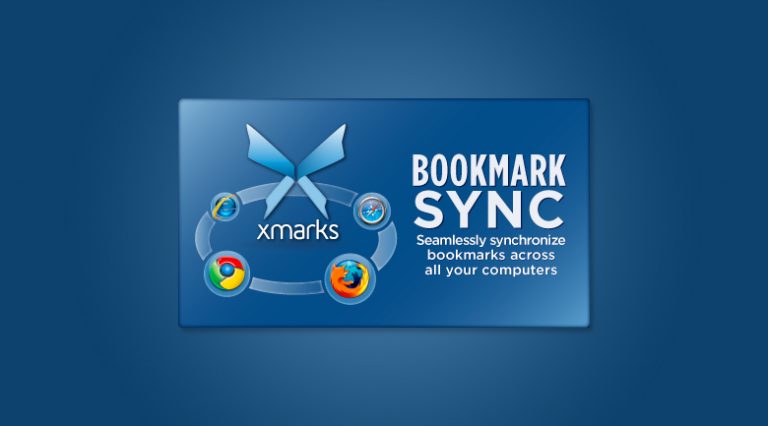
XMarks makes bookmark management simple

Have you ever gotten home from work and realized you left everything you needed to finish your project bookmarked on the computer at work? Wouldn’t it be nice if you could access your office bookmarks from home? Well, now you can with Xmarks.

Most of us use more than one browser, to be honest, more than one computer, tablet, mobile device, or laptop during the day. And each of these devices can be running different operating systems, as well as, different browsers. With all of these choices, it makes it difficult to integrate them seamlessly because quite often operating systems do not like to talk to each other. But, with Xmarks (formally Foxmarks), you can sync all over your bookmarks collectively or selectively in the cloud.

Setup is very easy. The software installs directly in your chosen browser and in about five minutes, you will be up and running. During setup you will have the option to configure any additional services you want to activate, such as, history synchronization, open tab restoration, rating systems, and enhanced site information. Or, you can leave it “bare bones” and just use it to back up and restore bookmarks. You will need to install Xmarks on each device you wish to sync and if you are running multiple browsers, you will need to install the software on each browser as well.

Once you are finished, and this could take anywhere from a few seconds to a few minutes, depending upon whether you have bookmarks you want to keep in multiple places and how many bookmarks you have, your bookmarks will be synced across all of your devices and the software will continue to sync them automatically.

Throw in password management

Xmarks also offers users the option to sync passwords. This is a great way to keep your passwords backed up across all of your browsers and allows you to browse from whichever browser you choose without having to remember multiple passwords.

The basic bookmark sync and online access features are free, but if you want to access your bookmarks from your iPhone, Android, BlackBerry or other mobile device, you will have to pay for the premium features. The cost for premium features is $12 per year.

Currently Xmarks works with Firefox, Internet Explorer, Mac OS X, and Chrome. It also supports Windows (XP, Vista, 7, 8), Linux, Mac OS X operating systems.

10 tips for improving the odds of entrepreneurial success

entrepreneurial success

Reaching entrepreneurial success takes dedication

Anyone who has ever launched a tech startup, a retail store, or even a published book knows that entrepreneurial success is a rewarding path but one that does not come without challenge. Each tale is different, as is the destination, but of the few companies that ever make it past idea stage and even fewer that succeed, there are some methods common to all that helped pave that path.

To that end, we asked Hotels.com Co-Founder Bob Diener what you should know about the path to entrepreneurial success because Diener not only co-founded one of the top online booking sites, he then went on to found Getaroom.com, his second venture, where he’s continued his record of success. With thousands of hotel partners joining in just the first three months of 2013 and 70% growth since 2012, Getaroom.com is a testament to Diener’s entrepreneurial fortitude.

“Many entrepreneurs dive into starting their business prepared with not much more than an idea,” Diener said. “The idea itself might be fantastic, but they think that alone will drive in customers, revenue, and eventual long-term success. It takes careful planning, an understanding of market forces, and a heavy dose of realism to get a company from concept to a viable business.”

10 tips for improving the odds of entrepreneurial success

Diener says there are proven ways to improve the odds of success when starting and managing a business:

  1. Establish a real value proposition. Conduct research to be sure your core offering is valuable and not readily available for free. The goal of your business is to earn money.
  2. Focus on uniqueness. You need to stand out in some regard, especially from any company that offers your product/service for free. It doesn’t matter if it’s your delivery method, actual product or service attributes, or price-to-value is your unique attribute, as long as it’s real and easily promoted.
  3. Utilize the experience of others. Seek out mentors and other individuals who can guide you on the merits of your business. They can help you determine if the benefits of your company are easily explainable.
  4. Set realistic goals. Carefully consider the type of business you have and its industry. Look at other successes in your space and try to gauge where you fit in. Don’t assume your product or service will become an overnight hit.
  5. Gauge the competition. Are you competing directly against entrenched firms or is there a niche play where you can capture dollars?
  6. Look at the market size. Lodging is a nearly $500 billion dollar business. If you can grab just one hundredth of one percent of that total, you have a $50 million market potential. Stay away from businesses that operate in tiny markets with thin margins.
  7. Don’t overestimate the benefit of advertising. Most traditional advertising fails to bring in enough business to justify the costs. Word of mouth referrals and non-traditional channels will likely generate results.
  8. Develop a business model. This is the nuts and bolts of the company that answers the big “how” questions. How will you grow while keeping costs in check? How can you handle spikes in demand? You need to manage the bottom line and keep in check all top line expenses. Some companies fail because of poor business planning, even if the product offering is great.
  9. Attract customers cost-effectively. A fundamental error is to use $10 in marketing funds to acquire customers that on average spend $5. Use promotions, social media, and other channels to get quality leads at the minimal price. You need to have profit motives from the start.
  10. Encourage others to talk about your brand. Give incentives for customers to review or profile your brand. Establish relationships with popular bloggers in order to build third-party endorsements.

Diener notes that the devils in the details and that “entrepreneurs that put in the work on the front-end are most likely the ones who will create profitable and well managed companies.”

Why short sale agents don’t need to be sold on how to adapt

business-woman

Today’s hot market: do we need to learn about it?

Just like lots of other companies that appeal to real estate professionals, Market Leader does a nice job getting their message out to the masses. In fact, I’ve noticed their ads on almost every real estate related site that I have visited over the last few days. That’s probably why (according to statistics on their home page), they “serve over 125,000 real estate professionals.”

The other day when I was minding my own business, clicking on a link in order to check out some real estate news, an ad for Market Leader showed up as a pop-up that I had to close before I could see the news article. The ad’s headline read, “Real estate is back, but adapting won’t be easy. Learn how to sell in today’s hot market.”

Personally, I don’t consider myself to be a big reader of advertisements. I zone out during television commercials, and never seem to be able to focus on the famous ones that appear during the Super Bowl. However, this particular ad made me chuckle.

Here’s why: If you are an agent that was able to succeed between 2008 and 2012, if you didn’t have to take a second job, then you have already learned to adapt. You do not need to “learn how to sell in today’s hot market.” If you could sell properties during a national recession, then you probably already know what to do. Certainly, in Market Leader’s defense, whatever they are peddling will probably help to address challenges faced by agents now (such as low inventory). Nevertheless, the wording of the ad seemed funny to me.

If you are a distressed property or short sale specialist or have worked on a fair share of short sales in the last several years, then you already know quite a bit about how to survive and adapt.

Successful Short Sale Agents Already Know What to Do

Here are three things that any successful short sale agent has learned and can apply to changes in the real estate market:

  1. Details Matter. You’ve probably heard the phrase, “The devil is in the details.” When sending a short sale package to a lender, you want to send it right the first time to avoid delays. If you want your offer to be selected in a situation where sellers are receiving multiple offers, the same level of detail is likely required in the presentation of your offer.
  2. Patience. Short sales require so much patience: patience with the customer service folks at the bank, patience with Fannie Mae or the investor reviewing the package, and patience with the process in general. This new market also requires patience in order to succeed. Lots of agents have to write multiple offers for a single buyer in order to get one accepted, and that requires a great deal of patience.
  3. Outside-the-box thinking. Anyone who can achieve success as a short sale listing agent or negotiator knows that you often have to be strategic in your actions and calculating in order to get your message heard. The same goes for the current market. In order to obtain listings or get offers approved, you may need to use some outside-the-box thinking or creative strategies in order to be successful

If you have achieved success as a short sale listing agent, don’t let anyone tell you that you need to learn to adapt to changes to the market. You have already learned to adapt and are likely a master of your market.

IFTTT supports Gmail attachments: 5 recipes to use now

ifttt new look

IFTTT adds support for Gmail attachments

If This Then That (IFTTT) automates just about anything on the web, acting as the proverbial duct tape connecting the actions of internet services from Gmail, Twitter and Craigslist to Dropbox, Facebook, SMS ans more. The company has now announced that Gmail users can send their attachments around the web automatically with a few clicks.

The primary use for automating Gmail attachments is for backup, so there are several recipes already available to make all of your Gmail attachments go to your favorite backup destination:

  1. Automatically send all Gmail attachments to Dropbox
  2. Automatically send all Gmail attachments to Google Drive
  3. Automatically send all Gmail attachments to Box
  4. Automatically send all Gmail attachments to SkyDrive
  5. Automatically send all Gmail attachments to backup Gmail account

Before automating, you should consider the volume of your attachments – if you receive many every day, you’ll want to find out how much cloud storage you actually have and consider making it a monthly task to clean out overflow. IFTTT notes that if an email has multiple attachments, each one is separated, so they will each be a unique “note” in your cloud storage solution rather than bundled, which makes organization difficult, but not impossible.

Technically, there is a lot more you could do with email attachments, but automating private data is a bad idea, so most recipes that combine functions will remain focused on backing up email attachments, but in theory, every time you get an attachment, you could set it up to automatically tweet it out or send it to your Campfire account or Facebook Page.

There are some imaginable scenarios for this, say you set up a specific email just for photo contest submissions and as they are received, they are automatically tweeted or blogged on Tumblr, but automation relies on the notion that humans still oversee the process, watching for abuses, which we all know isn’t likely.

So for now, use IFTTT to back up all attachments sent to your Gmail account, without really lifting a finger.

6 resources for doing business in China

doing business in China

Doing business in China: bridging the East and West

Every so often, great resources come along that cause leaders to stop and take notice. The lyric “I get by with a little helps from my friends” couldn’t be truer when it comes to stepping into entrepreneurship and global business.

Learning from colleagues and sharing war stories will make you not only more knowledgeable, but more resilient. Here are a few ready-made “friends” to help you navigate the waters of doing business in China.

  • HSBC sponsored Business without Borders is a website dedicated to bridging gaps and making global business connections. The site is chock full of international information and you can be the recipient of some free marketing by having your business profiled.
  • The China Business Network is tantamount to a LinkedIn for professionals and companies doing business in China. Joining can be free if you opt for the basic, albeit garnering limited visibility, membership. This network also can serve as a way to be recognized as a subject matter expert through interviews and publications.
  • Another great resource to have at your fingertips is The US-China Business Council. This non-profit organization can keep you abreast of a myriad of topics through articles, advisory boards and the Chinese Business Forum. Keep in mind the Chinese Business Forum is a direct link to US-China Legal Cooperation Fund which offers grant money to cooperating US and Chinese non-profit organizations.
  • If you are ready to do business in China, you’ll need 2 things: a great tax accountant and an incredible lawyer. While you search for them, The China Business Law Journal is a way to stay familiar with the changes in Chinese law and some important merger & acquisition and corporate finance updates.

As with any resource, it’s only as powerful as you make it. So go forth, hob-knob with other international business hopefuls and discover what works best for your company.

I-Bankers Direct: crowdfunding for “serious” investors

ibankersdirect

I-Bankers Direct’s spin on crowdfunding

One of the beauties of living in the digital age is that businesses and consumers have the ability to outsource things that they aren’t necessarily the best at. For instance, when it comes to investing, investors want to be presented with the best of the best opportunities, select a few, and then make a handsome return; but they don’t necessarily want to spend all of their time sourcing those opportunities – many are more so interested in the action rather than the research.

For those investors who could benefit by using a middleman, I-Bankers Direct fulfills that need. Once investors register on the site, they are taken to a portal with information on companies that are actively seeking capital. This investment opportunity pool aggregates numerous high growth opportunities for investors to browse through, taking some of the work out of compiling this information all on their own.

Offering an investment coordinator

Once investors have whittled down their search to the opportunities that they are most interested in, they can access company presentations and offering documents that contain key details on the company background and plans for obtained capital. Rather than spending time emailing back and forth to request additional information, these essential resources are housed in I-Bankers’ portal and investors can easily pull these items in order to help move forward on making a final decision.

Once decisions have been made, I-Bankers supplies an investment coordinator to help investors complete necessary documents and deposit money into escrow. The company essentially manages the entire investment process, from sourcing to closing, and supplies investors with relevant information that they will need in order to finalize an investment decision. While research and vetting will always be a key part of this process, it can be difficult to enlist an all-out vetting procedure for all of the companies that you are interested in. By working with a crowdfunding company, some of that grunt work is taken care of for you and frees up time.

[pl_video type=”youtube” id=”9wy-p9WQ-3s”]

Letter to my daughter: change the world from the outside

change the world

Dear daughter,

Like many young dreamers, you have visions of graduating high school and going to a college that will arm you with knowledge and a diploma that will usher you into a position of power that will allow you to go change the world.

The truth that no one wants to tell you at just barely 16 years old is that most people don’t change the world. Either they can’t or they won’t, but typically because that college degree simply helps you get a less boring job than you would have if you didn’t spend a few years leaking money at a university. None of us want to crush your dreams because this world needs dreamers – without dreamers like you, we wouldn’t have cardiologists that saved your father’s life, we wouldn’t have the cars or planes that help us to see each other, we wouldn’t have modern medicine, or heck, we wouldn’t have air conditioning, tv, or your smartphone you keep by your side at all times.

But you’re different. Yes, I know every parent thinks that, but I know it. You’re different because you’re open minded about how you can change the world. Right now you’re considering being a psychologist because you want to help people sort out their minds. You’re on track to go to college for nearly a decade to make that happen, but what if I told you that you could go to business school and change the world from the outside?

Let’s define what changing the world means

Before you start college, you have to make a decision for yourself that most people don’t discover until they’re nearing death – you have to define what your bar is for changing the world. If you reach one teen in crisis and save her from killing herself, have you not changed the world? If you use a business degree to establish a charity that pairs teen parents with free counseling, have you not changed the world? If you become an entrepreneur with a business degree, perhaps it will be you that connects youth that can’t afford medication with those pills that help them not feel unstable, aren’t you changing the world?

If you really want to change the world, you have to start with deciding what that means to you personally. Then, you have to choose a path to get there.

If you really want to change the world, you may have to do it from the outside. Many people march off after college, enthusiastic about their new careers, and they realize they have to fetch coffee for their first year and before they know it, they’ve been in their career for twenty years and got so distracted by climbing the ladder to be able to change the world that they forgot to actually change the world.

But you’re different. What if you took a different approach and changed the world from the outside, be it from the position of working at or starting a charity, or helping to streamline some portion of the mental health field, or spent your years as a photojournalist documenting prisoners with mental health issues to enlighten the world on the topic? Depending on what you believe changing the world is, sometimes innovation is faster and more likely when it comes from the outside.

No matter your path, don’t forget to change the world – it is waiting for you.

Eliminating asking prices on homes: make it so [editorial]

6

eliminating asking prices

Who sets the price of a home?

Okay real estate insiders, I have a question for you. Who sets the price of a home? The seller? Nope. It’s the buyer that says, “I want to pay X dollars for Y house.” Yes, a seller sets a price, but in the end, there has to be someone ready, willing, and able to purchase the home.

Because of that, why are we letting sellers dictate a sale price? Why do we continue to allow some agents take listings at ridiculous prices in order to buy the listing (which is a NAR violation)?

It’s the buyer that sets the price

So, to that end, I propose the elimination of an asking price. Then, a good real estate agent can do their job by researching what someone should pay for a home, the overpricing listing agents and their sellers will not be able to make up unrealistic numbers anymore, and the mortgage lenders will realize that value is what someone is willing to pay at that date in time. Impossible? No. Improbable? Probably. But, let’s take a shot at it.

How this would work

Say your client wants a three bedroom, two bath colonial in the Repel School District with at least a one-car garage and swimming pool.

You, as the agent, then research the sold listings and then the MLS for the type of house, not the price.

You can also hire a certified, quality appraiser to help you go deeper if you need their help!

Then, your buyers will put in an offer based on reality and the seller will get an offer, again, based on reality.

Yes, I know, there are tons of details, but I am an idea guy. You can help me by coming up with the ideas and see if we can make this move forward.

Make it so

It makes everyone’s life easier, it makes the good agents stand out, it eliminates the bad listing agents that constantly overprice, it puts sellers and buyers into reality pricing, and it helps mortgage companies know values.

As Captain Picard would say, “Make it so.”

make it so

Restaurants ditch tips for fair pay: new trend?

tipping fair pay

Restaurants ditching tips, but why?

Famed New York sushi joint, Sushi Yasuda has grabbed headlines for eliminating tips and paying salaries to all workers, which the owners say is a Japanese tradition. While the reasoning is different (to honor the Japanese model), it is not the first restaurant to eliminate tips in America, as Black Star Co-op in Austin builds tips into the pricing automatically.

Sushi Yasuda has taken it an additional step further and explained to their customers on every receipt and menu why there is not even a space left for a tip amount. “Following the custom in Japan, Sushi Yasuda’s service staff are fully compensated by their salary. Therefore gratuities are not accepted. Thank you.”

Several restaurants like the Linker in San Diego are eliminating tips, but are building in a compulsory 18 to 20 percent tip on top of the bill, calling it gratuity or a service charge.

The risk for these experiments is that prices may seem unreasonable to the average patron who doesn’t read further into the offering to see that tips are essentially included, so it is a brave move on the part of any establishment seeking to improve how they pay employees and make for a more cohesive and fair experience for employees and customers.

The pay model for restaurants is not likely to shift dramatically in the near future, so we wouldn’t exactly call it a trend, but restaurant goers will likely see experimentation of this nature on their receipts in coming years as restaurant owners seek to maximize profits but do a better job of retaining employees. Paying far below minimum wage has always been a baffling offering, as wait staff may make a few hundred dollars on one night, but barely $20 on another. The costs a restaurant could save by having salaried employees with far lower turnover could even everything out and create a more fair pay model for the industry and likely a better customer service experience.

Could credit unions lose tax exempt status in tax reform?

donttaxmycu

A long standing tradition of tax exempt credit unions

With continuing talks on Capitol Hill regarding tax reform, the topic of taking away credit unions’ tax exempt status comes up at nearly every attempt to reform the tax code. Senate Finance Committee Chairman Max Baucus (D-Mont.) said in May, “Credit unions’ tax exempt status is not going away, not on my watch. Over the years, folks in D.C. have tried to cut your [credit unions’] tax exempt status, and I’ve gone to the mat to fight back.” But even with Baucus’ vote of confidence, the credit union is standing up publicly.

The Credit Union National Association (CUNA) has released a “Don’t Tax My Credit Union” advocacy campaign, offering materials for individual credit unions to send to members which prompt people to not only watch the following video, but to send a form letter on DontTaxMyCreditUnion.org to ensure Congress doesn’t raise taxes on 96 million credit union members which would mean higher loan rates, higher fees, and less support in the community:

[pl_video type=”youtube” id=”bFlOP8O0AEw”]

CUNA pushes for tax exempt preservation

In response to the Credit Union Tax being included for Senate consideration in June, long after Baucus’ comments, CUNA President and CEO, Bill Cheney said, “As CUNA has been saying for some time, our tax exemption, and its preservation for the long-term, is actively in the mix of discussion on Capitol Hill, as this options paper clearly shows.”

Cheney also noted that as not-for-profit cooperatives, credit unions return billions of dollars in benefits to consumers each year that far exceed any potential tax revenue.

National Association of Federal Credit Unions’ (NAFCU) Vice President of Legislative Affairs Brad Thaler said the trade is close to tax reform discussions on Capitol Hill, and continues to hear that lawmakers are averse to tinkering with the credit union tax exemption.

Getting the community involved

Credit unions are now emailing members, urging them to reach out to lawmakers and to tweet using the #DontTaxMyCU hashtag. As of publication, every tweet we read was in support of the movement, with nothing being tweeted under the hashtag that is critical of the campaign or concept of preserving Credit Unions’ tax exempt status:

Home builder confidence levels reach important milestone

home builder confidence

Home builder confidence jumped in June

According to the National Association of Home Builders (NAHB)/Wells Fargo Housing Market Index (HMI), builder confidence rose eight points to 52 in June, the first time the HMI has been above 50 since April 2006 and was the biggest single-month gain in nearly 11 years. Any reading above 50 indicates that more builders view sales conditions positively than negatively. Gains have been made for many months in a row, but exceeding 50 is a milestone the NAHB is lauding.

“This is the first time the HMI has been above 50 since April 2006, and surpassing this important benchmark reflects the fact that builders are seeing better market conditions as demand for new homes increases,” said NAHB Chairman Rick Judson

“Builders are experiencing some relief in the headwinds that are holding back a more robust recovery,” said NAHB Chief Economist, Dr. David Crowe. “Today’s report is consistent with our forecast for a 29 percent increase in total housing starts this year, which would mark the first time since 2007 that starts have topped the 1 million mark.”

NAHB survey details

The HMI survey gauges builder perceptions of current single-family home sales, sales expectations for the next six months, and traffic of prospective buyers, all of which improved in June. Confidence in current sales conditions rose 8.0 points to 56, future sales expectations jumped 9.0 percent to 61, and sentiment on traffic rose 7.0 points to 40.

The HMI three-month moving average was up in three of the four regions, with the Northeast and Midwest posting a one-point and three-point gain to 37 and 47, respectively. The South registered a four point gain to 46 while the West fell one point to 48.

Does this spell a comeback?

Some are implying this reading indicates a housing recovery is under way and in full swing, but is that really accurate? Imagine you put 100 builders in a room and ask them how they feel about the market and only 52 raise their hand to state they feel positively while the other 48 say they feel negatively, that’s hardly a comeback.

That said, reading confidence levels and seeing them above the 50 point mark is a sign that the recovery has begun, but the road to recovery is a long one and will continue to remain a challenge, particularly if lending remains unreasonably tight and uncertainty surrounding taxes and tax reform remain. This reading is good news, but should not be blown out of proportion as nearly half of all builders surveyed still feel negatively toward housing.

Gmail vs. Mailstrom: the battle to reach Inbox Zero

achieving inbox zero, email productivity

Comparing the new Gmail and Mailstrom

A quiet but increasingly epic battle is being waged online. Email users around the world are struggling to balance their inbox communication needs against an increasing stream of information. Newsletters, blogs, news sites, social media, coupon programs, work correspondence, family news, useless (but funny) jokes, spam and many more email topics fill inboxes daily, leaving users scratching their heads about how to properly filter through this information overload.

Two services, the massively popular web based e-mail provider Gmail and new web app Mailstrom, are struggling to be the leaders in helping users reach the fabled “inbox zero.”

What is Inbox Zero?

Many email users, fed up with information overload, have struggled in recent years to reach inbox zero, and reclaim their email. Merlin mailstrom-report became famous doing speeches and presentations about reaching inbox zero amidst inundation.

Numerous others have offered information and suggestions for reaching inbox zero, while critics have stated inbox zero is an unrealistic and unattainable holy grail.

Gmail’s Advantages

Gmail is a favorite web-based email product for over 425 million users around the globe. When the web-based service burst onto the scene in 2004, skeptics raged against its simple interface. Concerns about privacy, advertising and more plagued the service in the beginning but Google steadily began to integrate additional products and services, providing an enormous suite of services.

Now, with its May 2013 release, Gmail has created a way to better organize emails automatically into categories utilizing tabs. Ironically, this was within a few weeks of Mailstrom opening its beta service to users. Currently Gmail is limited to preset categories with no option for additional customization, which is where its main limitation exists.

Mailstrom’s Advantages

Mailstrom, a web based app currently in beta, provides Gmail users with an efficient way to sort emails into 7 different main categories including by sender, by subject, by time, social, shopping or size. It also provides a regularly updated progress bar with details about received emails, how many were removed and how close your inbox is to inbox zero.

The service makes it very simple, with just a few clicks to archive, move, or delete emails easily. For lists, there’s even an unsubscribe option to mass unsubscribe.

How They Compare

I’ve personally been testing these services against each other for the last several weeks so this is only based on my own experiences. Initially, I was very excited about Gmail’s release. I’ve been a loyal Google follower and fan for over 10 years now after making the switch away from Yahoo in 2004 (and never once regretted it – sorry Yahoo). I use many of their products daily including Google+, Google Drive, Analytics and more.

It’s my central hub for everything related to the internet including searches, email, analytics, keyword research and more. To say I’ve “drunk the Kool-Aid” would be an understatement – Google is a part of my daily personal and professional life.

I was thrilled with Gmail’s new tab functions and considered switching to it completely. But after a few days, I found myself missing the simplicity of Mailstrom. I couldn’t sort by timeframe, which was a critical key to me being sure I don’t miss responding to the latest emails. So often I would find emails I’d forgotten I received, thanks to Mailstrom. Being a mobile user of Gmail, emails that have been opened are automatically marked as read unless I change it (which I forget to do frequently). The ability to sort based on emails received that day, the previous day or in the last week, is a critical component to Mailstrom’s value for me.

In addition, I love the psychological boost Mailstrom regularly gives me by tracking my progress. I find myself tweeting regularly about my success and being excited about the number of emails I’ve taken care of. Just this morning, I received a nice little email from Mailstrom, saying, “You removed 111 emails yesterday, more than 93% of other Mailstrom users!” Is it a little ridiculous to be proud of that? Probably. Does it still give me a little thrill? You bet.

mailstrom

The verdict:

So while I love Gmail’s inbox, and you can somewhat do the same things with filters, it’s time consuming to set up the filters. Gmail is still behind in terms of innovation for this area. What would be best to see is for Gmail or Mailstrom to truly innovate in this area and provide users the ability to create their own categories and sorting.
Of course, knowing Google, they’ll probably buy Mailstrom at some point and just integrate the process into Gmail. For my sake, I hope so.

I love Gmail and I’m by no means switching. For now I’ll just continue to use both, by using Mailstrom for cleaning and maintenance and Gmail for my actual email activities. That’s the best of both worlds for me.
What have your experiences been? Are you loving or hating Gmail’s new features?

Pepsi rewards Facebook Likes with sodas

pepsi like machine

Pepsi rewards Facebook fans with tangible rewards

Want a free soda? I’m a sucker for a free sample… as it turns out, many people feel the same. Pepsi is trying a new way of giving samples of their famous cola, which is still no-cost financially to samplers, but could potentially reap massive amounts of revenue by sending specific information about each person back to the company.

Together, PepsiCo and marketing agency TBWA Belgium created the Pepsi Like Machine… which operates only via Facebook “likes.” In exchange for your “like,” you receive an ice cold soda. You have the drink, they have your information. According to TBWA’s website, interacting with the machine is a simple process, “Just use your smartphone, go to likepepsi.com, connect with your Facebook account, like the Pepsi Facebook page and get a free Pepsi.”

Pepsi ensues that only people near the machine were offered the free sample, via the smartphone’s location settings. Also, those without a smartphone can also receive their drink using a 42-inch built-in touchscreen to log-in to Facebook to issue their “like.” Also, a built-in timer automatically logged out each sampler from their account, once they received their product.

Pinpointing a targeted audience

This is an ingenious way of not only sharing their product (but seriously, who hasn’t tried Pepsi?), but also this allows PepsiCo to pinpoint exactly their target audience. In one video that showcased the machine recently at one of Beyoncé’s concerts in Belgium, they said, “And thanks to this new way of sampling, we know exactly who liked, tried and enjoyed an ice-cold Pepsi.”

CNET blogger Amanda Kooser states, “The touchscreen and free sodas are certainly a draw, but the Pepsi Like Machine is all about collecting data. The samples no longer just disappear into the night, they’re connected with personal information. It’s an advertiser’s dream.”

[pl_video type=”youtube” id=”O4YrQpupEO8″]

10 apps for distraction-free, productive writing

productive writing

Using technology for more productive writing sessions

If you are a writer or even just responsible for blogging on your company website, chances are that you use your computer. The downside to using a computer? Constant distractions. From blinking icons, to Facebook notifications, and everything in between, it can be hard to focus on the task at hand. Luckily, there are several distraction-free writing programs that can prove to be useful tools for the writing process.

Some of the most useful tools the programs provide are the ability to keep track of how much you are writing. This enables you to weigh how much time you are spending writing against how much you are actually getting done and in turn, increase your productivity. It can also help you achieve your writing goals.

If you set a goal to get a certain amount of pages done in a week, the tools in these programs will help you get there by alerting you to how many pages you have done and how many you have left to go. This should give you the motivation to continue writing towards your goals. Here are ten of the most effective (in this writer’s opinion) distraction-free programs for writers:

1. WriteApp

WriteApp boasts both a mobile app and a web app. The mobile app is currently available for iOS and Android. They offer both free and premium versions. You can write in fullscreen, distraction-free mode with theming, Markdown and live previews. You have the option to keep things completely private or share. You can even send a text message to the app and they will save it for you. Not bad for a free service.

2. FocusWriter

FocusWriter is a free tool for Windows, Mac, and Linux, that offers a writer a full-screen, distraction-free writing environment. The tools are hidden at the top of the screen, so that if you need them, you can easily access them, but if you prefer to just write without any fancy add-ons you can do that as well.

FocusWriter supports customization in the form of background images, fonts, and other tools. There is also a daily goal tracker which will keep track of the amount of time you spend writing as fell as spell-checking and how much you write. This is especially helpful if you are freelancing and want to keep track of how much writing you are producing in one day, without the distraction of actually stopping to count each piece.

3. WriteMonkey

WriteMonkey is a free program for Windows users that is so distraction-free you can write an entire document without ever using your mouse. Every function and command, should you need them, can be accessed with a keyboard command. This program also supports Markup language for easy formatting. It also has a great feature for editing called “Segment Focus,” which allows you to focus on just the portion you are working with; enabling quick and easy edits, tweaks, and writing.

4. Ommwriter

Ommwriter started out as a Mac-only program, but is now available on iPad and Windows. It is free, but there is a premium version available (the only visible difference being that the premium version has more background and audio options). It is the pinnacle of what I think of as a zen-like environment. It has the option to use many different minimalist backgrounds and soothing music while you write. You can customize the size of your writing area, as well as, font and color.

Also, with Ommwriter, you can save your file as a .txt or .pdf. All of these options are tiny bubbles near the top of the page. I do not find them to be distracting, because they disappear when you are not hovering on them, but some people may prefer an absolute minimalist environment.

5. Yarny

Yarny is my personal favorite and another free service. There is a place to put ideas; things that you have not yet fully developed in to a story. Things like people, places, things, dreams, random thoughts, whatever you want; you can store them in a separate place so they are readily accessible when you begin writing.

You can tag your own writing and use the search bar on the side to filter what you have saved. In snippet view, you can reorder, group, or arrange your writing to fit your needs. And when you are ready to go distraction-free, there is a fullscreen option to allow you to focus on your writing. Yarny works with Linux, Mac (Snow Leopard, Mountain Lion, and Lion), Windows (XP, Vista, 7, and 8).

6. WriteRoom

WriteRoom is just for Mac/iPad/iPhone users. It was created as an alternative to Microsoft Word. The reviews for this are really good, but I do not like the black ground with green print, but this is my personal preference and other people love it. And since the app is $4.99, you will definitely want to check out the screenshots and reviews to make sure it is something you think you will like before you purchase. However, it does have a lot of nice features.

It is a fullscreen writing environment so that you can get the distractions out of the way and just write. WriteRoom does not have all the functionality of Word, but it does offer a quick and easy way to get your writing on the page. It offers a word count feature and auto-save. You can also sync it with Dropbox, which is nice if you write on-the-go from your iPad and want to continue on your Mac when you get home.

7. WordPress.com

WordPress yes, you read that right. You can write distraction-free from WordPress. To enable this, click on the “Toggle Fullscreen” button in the toolbar (that’s the second button from the right, in the first row, or you can use the keyboard shortcut Alt+Shift+G). When you turn this feature on, you will see a minimalist version of the toolbar, your title and the post’s content. You can still use your features, but without the distractions. Once you start writing though, the toolbar and everything else will fade away, leaving nothing but your words. You can easily get your toolbar back to check word count by simply moving the mouse around. Very cool and very free.

8. PenZen

PenZen is about as simplistic as they come. Once you click the link, you are taken to a blank web page. You simply click in the web page and begin typing. To fully enjoy the distraction-free feeling though, you will have to maximize your web page and minimize anything else (like toolbars). When you are done typing you can save to a .pdf file or download your writing. The only down side of this is that there are no features, but in a pinch, you can get your thoughts down and save them.

9. QuietWrite

QuietWrite is another app for windows that is simplistic, but effective. It is full screen, but minimalistic. It has an auto-save feature and word count, but there are not many options for customization. You just have to take it as it is.

10. Q10

Q10 is the Windows likeness of OmmWriter (before Omm adapted for Windows). You can enjoy the fullscreen and a multitude of features (just like OmmWriter) along with timed writing sessions and built-in spellcheck. When you open Q10, all you see is a black screen with a goldish-yellow type of text. But you can customize the view according to your personal liking. And there is a writing timer as well.

Nothing beats the easy of having a distraction-free environment readily available when the urge to write strikes and now you have ten great options to choose from and enjoy.

Why you should know about the Federal Reserve Beige Book

federal reserve beige book

What is the Federal Reserve Beige Book?

The Federal Reserve Beige Book serves as a snapshot of economic conditions across the twelve U.S. districts and is released eight times each year. Each Federal Reserve Bank compiles “anecdotal information on current economic conditions in each respective district,” and the compilation is then made available to the public.

This distillation of market conditions can be extremely valuable for business decision makers as rarely does this information all exist in one place. Having the ability to both drill down in to conditions in specific regions, as well as expand to a high level view and look at the national landscape overall, is a huge benefit for business owners. This makes it easier to compare industry performance across regions and help decision makers decide if their numbers are sufficient or lacking.

Hiccups in reporting

Since the previous report released in April, the Federal Reserve notes that “overall economic activity increased at a moderate to modest pace.” The sequester has caused a few delays in Richmond’s manufacturing industry and there is a reported high demand for home builders. A few regions also noted concerns on increasing hiring as costs related to health care reform have gone up.

This decision also stems from the fact that some industries, including engineering and manufacturing, reported a lack of skilled workers to fill staffing needs. In 2012, the monthly average of jobs created was 173,000, which dropped to a 158,000 jobs created this past May. With the unemployment rate still holding steady at 7.5 percent, and more people deciding to no longer actively seek employment, the Beige Book June report doesn’t show a substantially improved outlook.

Although the outlook may not be as optimistic as hoped, it is still a great resource for business decision makers that need a comprehensive look at the numbers across the board. The Beige Book provides a periodic status check that businesses can use to monitor their own performance and that of competitors in similar regions.

The Beige Book can be found on the Federal Reserve website.

Startwire accelerates, streamlines recruiting, job hunting

startwire

Startwire is hoping to revolutionize the industry

Startwire has set out to revolutionize the job application process by providing a suite of communication and organization options for job hunters and employers. Offerings include a streamlined job posting service which collects millions of daily postings from around the web and provides them to job seekers in one place. Popular services included are Monster, CareerBuilder and Indeed.

The benefits for employers are numerous and easy to see. A faster, streamlined and targeted service, job postings are matched against an individual’s skill set, ensuring a closer match between prospective employee and employer. While job seekers have an option to search manually, the jobs matches are so accurate, there’s not much reason to. Doing a brief search for PR related positions within 50 miles of zip code 76039 returned over 100 results.

Startwire seeks primarily to serve employers by ensuring jobs are only seen by highly qualified candidates, helping to prevent mass overload of resumes in response to a job posting. By providing a combination of features for both job seekers and employers, Startwire is offering the best of both worlds in the job marketplace.

Key advantage: job status alerts

Perhaps Startwire’s most beneficial feature is related to communication about a job’s status. By partnering with companies who sign up, Startwire allows job seekers to keep track of their application status through job alerts and text messages as well as provide feedback to prospective employers regarding the candidate’s experience. No more silence in response to a resume, the system automatically feeds the status back to applicants. This is beneficial from a public relations standpoint for employers as it helps applicants to still feel valued even if they aren’t hired.

Recognizing and validating the applicant’s time commitment to the hiring process, is a win-win for both and increases the likelihood that a qualified candidate will continue to look at future positions with the company. Depending on the volume of resumes received for a position, not responding can negatively impact thousands of potential candidates and customers daily. In addition, the service for employers called Application Connect, is free. This new tool is both an excellent recruiting tool for employers and job search tool for job hunters.

[pl_video type=”vimeo” id=”58716186″]

Kicksend: send boatloads of photos anyone can print

kicksend

Kicksend bridges digital and tangible

Kicksend is a web and mobile service that allows you to share your digital photos with anyone worldwide. The application enables you to organize, share, or print your photos. If you choose to print them, you choose which ones without having to leave your house, submit, and they will be ready for pick up in an hour. You can also send photos to friends or family from the app, for them to pick up pictures at their local one-hour photo.

Even better still, you can have Kicksend mail you the photos or to a far away loved one, with free shipping if you send ten or more photos. With this service, there is also the option to share the pictures without printing them. This is good, because we all know Grandma can’t handle another Facebook tutorial. Kicksend will just send her an email, she can then comment, or print them if she’d like.

Using Kicksend for business

This service can also be of benefit in your business as well. Consider these few ideas:

  • Use Kicksend to mail printed advertisements directly to your established customers’ doorsteps. For the select customers’ business that you most strongly want to retain, the quality of advertisements may separate you from the rest.
  • Share photos of your store, shop, or company. Let the recipients have an inside look into your business. Charm them with artistic angles and witty comments, while showing them the inner workings. Introduce them to you and your staff. This is an opportunity to make an artistic and unique first impression.
  • Share pictures of latest products you have to offer, while also showing that you’re keeping up with the latest trends in your industry.
  • Mail coupons that will enable customers to return for redemption.
  • Share pictures of company executives, with their professional bios in the comment section of each photo. This gives the customer a chance to see who’s behind their favorite product (you!), using a new approach.

How to negotiate your way into a big fat raise

taxes money

How to ask for the raise you really want

Pay raises. Everybody wants one. Who knows how to get one? A recent Forbes article describes a theory that seems to hold water: stay away from round numbers.

What does that mean? Ask any car salesman. Or, ask me; I just bought a car. After many searches turned up empty, we spotted Wilson, so named because once the payments start rolling in, we are likely to be stranded—just us and the car.

I said I could spend umpteen dollars (a nice round number), and the dealer agreed to meet that “range.” That “range” was umpteen nine hundred fifty-four dollars. All I focused on was the “umpteen” part, and I was well into signing away my life before my brain was able to notice anything but the number in the thousands place. Bamboozled! And way too tired by that time to split hairs.

Yes, car salesmen have been using the “not round” number to their advantage since the dawn of the hoopty. It’s just nineteen nine ninety-nine ninety-nine! All those nines conjure up, well, nines, and the brain sticks with nineteen instead of the actual cost, twenty.

The theory is that salary negotiation will work the same. If you offer a round anchor number, say $3000, the minds of everyone, including yourself, automatically go with round number negotiations (i.e. I can offer $2000), but if you start with a more specific $3200, the counter will likely be a smaller jump, perhaps to $2500. It’s all about how the mind works.

A better way to ensure a bigger raise

It is a good theory, when you are dealing with numbers, but you are really negotiating yourself, your time, and your value to the company. A better way in ensure a loftier promotion is to lead with no number.

Instead, prepare a discussion detailing the extra work you have already taken on and your vision for further contributions. Saying “I am producing XYZ results. Can we discuss compensation?” is a much more negotiable approach than “Hey, Boss, give me an $8,343 raise, and I’ll think about amping up my game,’ which is essentially what you are suggesting when you lead with a number.

Further, depending on your boss’ style, negotiating a raise based on percentages can go much further, but remember to focus on your results and what you bring to the table to demonstrate your worth – not just marching in to their office and demanding an extra round number.

Ad campaign succeeds in illustrating Alzheimer’s

alzheimer-ad-campaign

New ad campaign illustrating Alzheimer’s Disease

Generally, when we look back on our family photos, we are able to remember the moment the picture was taken or at least recall the time frame in which it was taken and most always can identify who is in the picture with us. Unless you simply don’t know.

And that is exactly what art director Domencio Liberti hopes to convey with his work for the new Alzheimer’s Research campaign.

Alzheimer’s is a progressive disease that destroys memory and other important mental functions. It is the most common cause of brain disorder that results in a loss of intellectual and social skills, otherwise known as Dementia. With these faceless family photos, Liberti shows us exactly what it is like to be a person suffering from Alzheimer’s disease.

alzheimer-1

Reaching a deeper level

To see the faces are removed instantly hits us personally on a deep level. In addition to that, the fact that there are no words to explain the photo, other than “Alzheimer,” is simply a brilliant ad concept. This particular type of silent advertising can be affective in any arena. When thumbing through a magazine, driving by a billboard, or surfing the web… and well placed picture, with no words, can really speak more vividly than any number of words.

Since there is no cure for Alzheimer’s disease, ads like this make the stark reminder that seeking help as early as possible may help postpone the decline of mental function. Medication can temporarily improve symptoms and can sometimes aid in maintaining mental function and independence. Getting the word out about what Alzheimer’s is and the gravity of the disease is imperative to garnering attention and requesting donations.

This moving ad campaign respectfully offers public education about the disease while maintaining the integrity of the people suffering from it. In an age where it seems as though the older generations may have lost the respect of the younger ones, research ads like this really speak over perceived, “senior citizen absent mindedness.”

alzheimer-2

Gramblr: magical Instagram uploader for your computer

gramblr

Gramblr takes Instagram to a whole ‘nother level

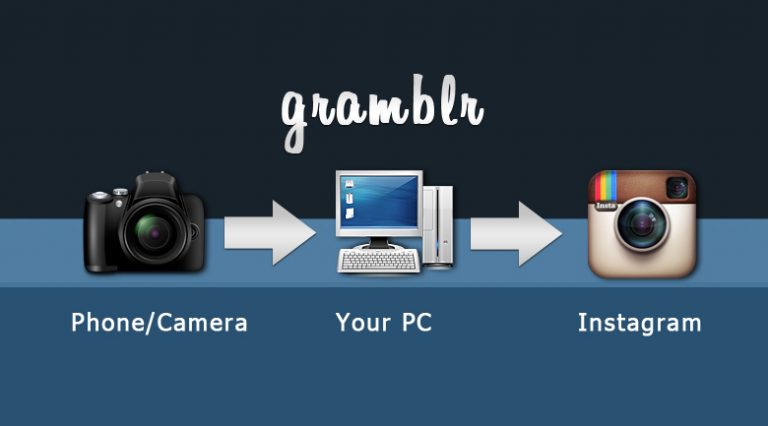
Most smartphone users have Instagram, a free service that lets you load your photos to a digital album and share them via social networks. Instagram is currently available for Android and iOS users, but there was no way to upload pictures from your computer without running an add-on or third party plug-in. Now, with Gramblr, there is a way. And it is very simple to use.

Gramblr can upload your pictures in two simple steps. First you need to download the program, enter your Instagram log in information (or sign up for a new Instagram account if you are not already using the service). Afterwards, all you need to do is select an image from your computer, add a caption (if you want), and hit the “upload” button. It really is that simple.

Currently Gramblr supports Windows XP, Vista, and 7. And the site says it is “currently having difficulties with our OS X version. It should be available again soon,” so it looks like Mac users will have to wait to try the new service out. But for Windows users, this is a great way to upload all of those photos you have stored on your hard drive, quickly and effectively.

It also protects your pictures in case of fire or water damage. They will be stored safely, digitally with Instagram. Not to mention, the added bonus of being able to share them via Facebook and Twitter with friends and family. Once they are uploaded to Instagram, you can share them with your Instagram followers as well.

This is especially helpful for after a vacation or business conference, when your camera card is full of photos you cannot wait to upload. Instead of waiting for your phone to upload to Instagram, use Gramblr and cut the upload time in half. Now, all that is left to do is learn all the fun hashtags people use with Instagram.