Home Blog Page 285

Business owner optimism up, uncertainty remains

small business optimism

Small business owner optimism is improving

Business owner optimism is on the rise for its second consecutive month according to The National Federation of Independent Business’ June report (NFIB), but owners aren’t completely sold enough to return to the levels of job creation exhibited pre-recession. This will be the second highest reading of business owner confidence since the onslaught of the recession in 2007, which showed an increase of 2.3 points to 94.4 on the NFIB Small Business Optimism Index.

The report measures optimism based off of 10 separate categories, including plans to increase inventory, plans to increase employment, earnings trends and expected economy improvement. While eight of the ten categories did receive positive increases from last month, business owners’ optimism regarding their plans to increase employment and plans to make capital outlays either decreased or remained unchanged.

The NFIB reports that job creation has actually stalled after five months of growth, and with the economy not as robust as in years past, this weighs heavily on business owners’ decision to hire.

The Truth Behind the Numbers

The report shows that 47 percent of business owners surveyed hired, or attempted to hire, within the last three months, but 38 percent “reported few or no qualified applicants.” Thirteen percent of respondents resorted to using temporary workers for the positions that they ultimately were not able to fill.

These numbers indicate that a large concentration of businesses are either choosing not to hire, or see no immediate needs for more staff, and the majority of those that are looking to hire are being more selective in moving candidates through the interview process and making a final offer.

The uncertainty of the economy is playing a huge role in these decisions, and why business owners are generally optimistic, they still need some convincing before they make huge investments in job creation.

NFIB chief economist Bill Dunkelberg perfectly expresses the reality behind the numbers: “Small business confidence rising is always a good thing, but it’s tough to be excited by meager growth in an otherwise tepid economy.

The unemployment rate remains in the mid-7s and it is departures from the labor force —- not job creation — that is contributing to its decline when it does fall. Two good months don’t make a trend, but we can’t have a trend without them, so it’s a start.”

How digital asset management can help productivity

1

digital asset management

What is digital asset management?

It’s more than just managing your digital files, digital asset management (DAM) involves hardware or software that not only stores, but catalogues, annotates, retrieves, and distributes digital assets like videos, photos, animations, documents, and more.

Widen Enterprises CEO Matthew Gonnering tells us that digital asset management can actually improve a company’s productivity. Gonnering said, “No doubt, the nature of Digital Asset Management is dynamic. Rather than a static system that gets set up once and runs, DAM is constantly evolving along with newer and better ideas that spring up all along the digital asset life cycle.”

Further, Gonnering explains, “There are always new media types being originated and created, new strategies made for their storage and management, new devices and solutions evolved to consume digital assets, and new preferred vehicles developed to market utilizing those assets for consumption.”

Three ways to stay ahead, stay productive

How do brands stay ahead of the changes and keep their chosen DAM solution current, efficient and able to scale for what the future brings? Gonnering offers the following three key points as guidelines:

  1. Use a SaaS DAM model. A SaaS-based DAM solution will serve you well into the future for a number of reasons. It holds up to lightening-fast technical advances, and can even be adjusted according to these advances before you realize you need them. It can ensure, for example, you are delivered the fastest, richest user experience that’s responsive to the variety of ways your assets will be used. It can even scale itself automatically to the file load you are currently working with. The install model can’t come close to delivering those types of advantages, and will continue to lag further behind in terms of adjusting to what comes next.
  2. Integration is essential. If you’re smart and use DAM as the central storage and management platform for all of your assets, you need to make sure your solution integrates easily with all of the other applications you utilize to manage subtasks. This leaves you free to take advantage of the ever-evolving best-in-class subtask management tools that are available, while maintaining assurance that DAM, as your primary solution, can and will continue to speak to and interact seamlessly with all of them.
  3. Customer service is king. Although reliable self-education with easily-accessible, timely and reliable content for using your DAM system is essential to the consistent efficacy of its use, nothing comes close to exemplary customer service when the circumstances require you to work with a person in real time. Look for a DAM solution with a support portal that makes it extremely easy for you to get answers, or to start a chat with a customer service representative. Only organizations built on a legacy of fantastic — and consistent — customer service are trustworthy enough to take the immeasurable value of your digital assets into their hands.

10 must have apps for Microsoft Surface RT

4

microsoft surface rt

Apps for Microsoft Surface RT

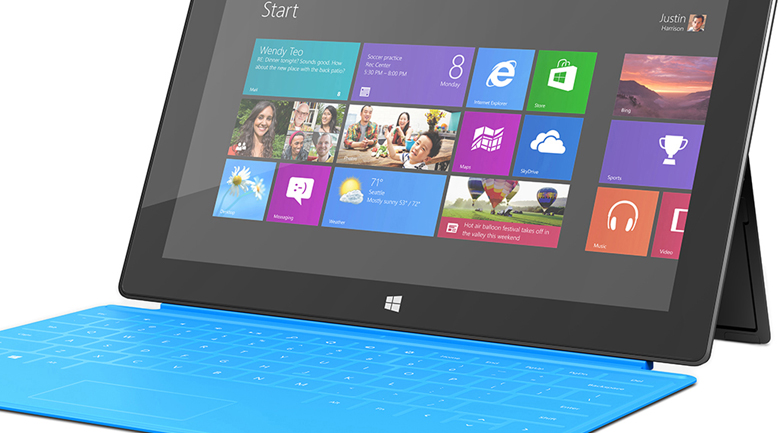
Although the Microsoft Surface RT is often compared to the iPad, it appears to be more of a Google Chromebook competitor to us, which could be the reason that Google won’t play along nicely and has refused to allow its app in the Windows app stores for phones and tablets. Also, it feels strange to think of Microsoft as an underdog, given their history, but in the burgeoning tablet world, it most certainly is. Because of that status, it is likely that more developers will flock to the Microsoft tablet to improve the availability of apps, but for now, the following 25 apps are worth checking out and can all be found in the Windows Store on your device.

While the tablet already comes with full functionality and is easier to set up than its tablet competitors, we’ve become accustomed to app hunting, so here we go:

1. Metro Commander

File management is particularly important for those using their Surface in a professional setting, and while it comes with a file manager, the Metro Commander app makes the experience much more conducive to use without a stylus.

metro commander

2. MyTime

This free app is a timer. Seriously, it’s that simple. A full screen countdown timer.

mytime

3. Qool

Qool is like a pinboard for all of your digital content – notes, pictures, videos, documents. It offers easy drag and drop features in “structure-free and rich canvases” that sync between all Windows 8 devices.

qool

4. Eyelan Tasks

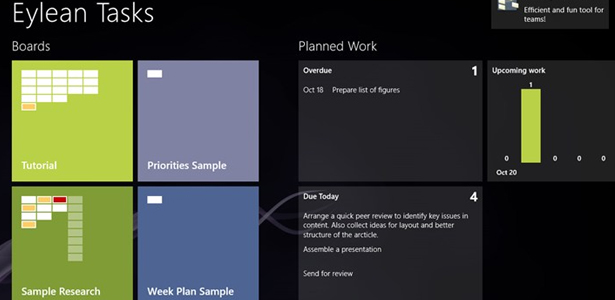
This is like task management with a double dose of vitamins aimed at boosting your productivity and saving time. Everything stays in context, you can search all tasks by text, arrange them on boards, and change their status instantly.

eyelan-tasks

5. To Do

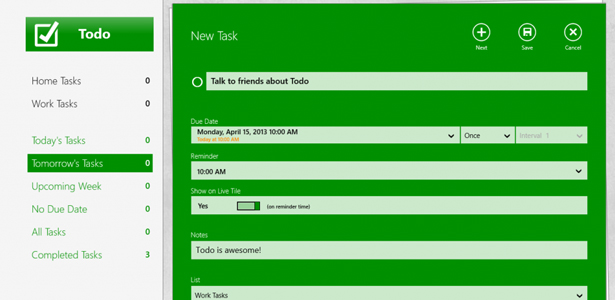
Task management for lazy people. No, really, it’s void of the trillions of options Eyelan offers which is good for super busy people or those too easily distracted by options. It’s the equivalent to the ol’ pad and paper for your to do list.

todo

6. Last Pass

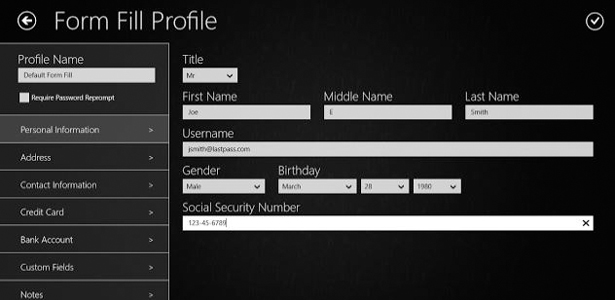
This password manager remembers your passwords, adds security to your online activities, allows you to log in to all sites with one click, and synchronizes all of your data across platforms and devices. Genius.

lastpass

7. PDF Touch

Read PDFs, and make notes like you’re writing with pen on paper, then share them. Easy peasy.

pdf

8. Pulse (RSS reader)

Pulse is a very popular and quite sexy RSS tool, offering a tile design that lets you scroll and swipe to your heart’s content, but it is limited to 20 feeds, so it’s really only for your favorite subscriptions (like AGBeat, of course).

pulse

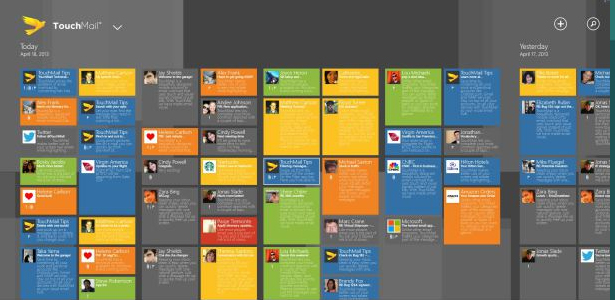
9. TouchMail

Coming soon, this app will be functional, giving you an alternative mail app that allows sorting, categorization and easy swipe options along with standard compose and reply features.

touchmail

10. Fotor

Most people agree that Fotor is the best photo editing app available for the Surface RT and it has high quality editing options, a RAW converter, and even a tilt-shift effect.

fotor

Stay tuned, we’ll be sharing more apps for Microsoft Surface RT soon.

Four smart lock brands that will blow your mind

smart locks

Smart locks: the next big thing in technology

Smart locks are door locks that grant or revoke access instantly via virtual “keys.” You no longer have to keep track of keys or codes; you can manage access from your smartphone or computer. They work independent from your wireless or phone networks, so if you lose power you do not have to worry (they have their own standard battery power).

Reliable Bluetooth technology syncs your phone directly with your smart lock giving you features like walking up to the door, having it sense your presence and automatically unlocking. All of these smart locks offer the user a log of activity, so you can easily see who has accessed your home/office and when. And in the case of the Goji, you can also view a picture of who has been at the door (this could be especially helpful for higher security areas, or classified information access).

The most common uses are shared work spaces; think conference rooms, break rooms and even server rooms. But, they are also being used at home.

Currently, there are four primary smart locks being offered: Lockitron, August, Goji, and UniKey.

1. Lockitron

Lockitron can instantly grant or revoke access wirelessly, thus making the use of keys obsolete, if you so desire. But, you can still use a key with this device. Lockitron actually fits OVER the existing deadbolt, and you do not have to remove any of the hardware, like you do with August. All you have to do is loosen the deadbolt screws and slide the back plate on, retighten the screws, twist on Lockitron and you are ready to go.

It will work with any phone. Smartphones can use the website/app, and older phone can use through text message commands. Lockitron also has built-in WiFi and iPhone 4S and 5 users can enable Bluetooth “Sense” so that when you walk up to the door, it will unlock for you. Batteries in Lockitron last for a year and the device will send you a notification when they are running low, so you never have to worry about being without power. It is also customizable through API endpoints. You can preorder one now for $179, and receive in the “summer of 2013.

2. August

August smart locks are compatible with iPhone, Andriod (with Blackberry) and coming soon, Windows 8. To use August, you must download the mobile app, so older phones will not be able to use these locks. Their web site states, “the August smart lock is designed to be compatible with over 90% of deadbolts,” but they suggest you send them a picture of both sides of the lock to be sure.

It also looks like you cannot use physical keys with this lock or manage it from the computer; it is a mobile managed only lock. You can preorder this lock for $199.

3. UniKey

UniKey is unique in that it offers a touch-to-open technology. When it detects via your phone or key fob, that you are near, all you do it touch the lock and it automatically opens. However, it is perhaps the most limited, phone wise. It only supports iPhone 4s and 5, but it is makes up for this by offering a key fob.

Included with the purchase of the smart lock is a Kevo Fob, which offers the same touch-to-open technology. If the fob is in your pocket or purse, simply touch the lock and it will unlock. You can also purchase additional fobs for children or just as an extra in case one is lost. The UniKey is available for preorder through the sign-up link, but no price is stated, as of yet.

4. Goji

Goji is perhaps the most innovative of the group, mostly because they have incorporated a camera in to their smart lock. When someone approaches the door, the Goji snaps a picture and sends it to your phone (and activity log) for added security. For restricted areas, this could be invaluable. For example, if someone came in to possession of a key or phone, they should not have, you could use the camera as another layer of security to make sure certain individuals stay restricted. Currently it works with iPhone and Android, but “new versions will be released to cover the widest spectrum of phones possible.”

Goji also comes with two programmable key fobs in case you do not have a smartphone. You also get two mechanical keys to you as backups, in case you lock yourself out. The Goji is also unique in its design. It is still DIY for the install, but, it greets you with a custom message on the outside of the door. It displays the time and “Hello Your Name Here.” It also displays “Goodbye” when you leave. You can order now from Indigogo for $278 (which includes 24/7 customer service) and it will ship December 2013.

All of these locks serve the same basic function: creating an easier way for you to access your door. And with technology constantly changing and improving, it will be interesting to see what updates the smart lock will incorporate in the future.

eBay shoppbable windows: e-commerce gets physical

ebay shoppable windows

eBay shoppable windows blurs online and offline shopping

Ebay has released a new version of their virtual store that they hope will help retailers generate more sales, as customers will be able to order items through a nine-by-two foot touchscreen placed on the front windows of stores, dubbed “shoppable windows.”

Steve Yankovich, vice president of innovation and new ventures at eBay says, “This is the first element to kind of having this ecommerce-like experience but in a physical space. The goal is to blur the line between shopping in your pajamas and in-store.”

Displaying the windows is a way businesses can showcase items that they may not have room to keep in stock. Customers also can browse inside the store, and then come shop the online inventory if they haven’t found what they wanted in person. Juicy Couture, for example, will offer about 200 different shoes for purchase.

Scheduling for rapid delivery

The shoppable windows will be “open” 24-hours a day, and people can schedule a one-hour delivery to any location in that particular city. The delivery service is, “less about getting it in an hour and more about getting it when (consumers) want it,” says CEO John Donahoe.

Ebay also plans to offer their online and mobile payment platform, PayPal, to make the checkout process even more streamlined. In late 2011, the company placed window displays to browse products, but weren’t able to actually purchase them on the spot, as they are with this newest technology.

Siliconbeat reports, “Donahoe has a mission where brick and mortar, online and mobile merge to create a retail world where consumers can shop, pay and receive their purchases through any combination of online, mobile and in-store interactions.”

The windows are being tested in New York, San Francisco, and San Jose for about a month, while Chicago and Dallas will see the shoppable windows later this summer. Ebay is also looking to work with large retailers who want to reach more online and mobile shoppers, such as Target and Macy’s.

7 situations you’re better off ignoring in the work place

work place

What to ignore in the work place

Your attitude toward your job can make or break your sanity. Unfortunately, many of the things that tick us off at work aren’t about work at all. So many non-PC and just plain annoying things happen on the job, and, though you’d like to see justice or at the very least reconciliation, sometimes, you just have to look the other way, lest you make a situation more uncomfortable.

I asked a group of career driven people about such circumstances, and the responses came rolling in. With the exception of my brother-in-law who said his biggest work place (and life) issue is that most people are beneath him, everyone I asked has been frustrated with some sort of work situation that they just had to learn to live with. Here are seven things that may happen at work that you are better off ignoring.

  1. The tenured and lazy. That guy isn’t going anywhere. He probably makes more money than you. And, if your complaints prompt your boss to transfer him, it’ll probably be right into a step promotion.
  2. An immediate supervisor whose work style is different than your own. If you are very type A and detail oriented and your boss gives vague, random instructions, neither of you is going to change. You just have to adjust. Along the same lines is dealing with a boss who thinks you’re a mind reader. In most cases, you can’t say “Dude, I can’t read your mind.” You just have to work with him long enough that you eventually will.
  3. The opposite. A micromanaging boss. “Stay outta my business, bro” is what you want to say, but “yes, sir” and “no sir” to every… tiny… detailed… instruction is what you’ll have to say, instead.
  4. An office extra-marital affair. They happen. Everywhere. Unless you want to find yourself in the middle of a “he said/she said” fiasco and as well as the target of the estranged spouse’s blame, you have to let it unfold without intervening. You were hired to do a job, and unless that job was “marriage counselor,” you’re going to have look past it. Just do your job. Maybe you should do it exceptionally well at this point; you do have two colleagues whose positions may be available soon.
  5. A co-worker who is the boss’s BFF. Sigh. You can’t befriend her. She’ll think you are trying to schmooze. You can’t give her any criticism. She’ll misquote you in a petty rage to the boss. Here’s another situation where you are better off just putting your nose into your job description.
  6. The office with the wife (or niece, or mistress, or college drop-out-daughter) as manager. See number 5.
  7. My brother-in-law.

Mortgage application volume improves 5.0% for the week

mortgage application volume

Mortgage application volume rises

Including an adjustment for the Memorial Day holiday, mortgage applications increased 5.0 percent from one week earlier, according to data from the Mortgage Bankers Association’s (MBA) Weekly Mortgage Applications Survey for the week ending June 7, 2013. On an unadjusted basis, the volume actually rose 16.0 percent compared to the previous week.

The Refinance Index rose 5.0 percent from one week earlier, but remains the sore spot in this indicator, remaining 11.0 percent lower than the two weeks prior and 36 percent lower than last month’s peak. The seasonally adjusted Purchase index rose 5.0 percent, while improving 14.0 percent on an unadjusted basis.

The refinance share of mortgage activity increased to 69 percent of total applications from 68 percent the previous week after remaining around 80 percent for most of 2012. The adjustable-rate mortgage (ARM) share of activity increased to 7 percent of total applications and the HARP share of refinance applications fell from 32 percent the prior week to 29 percent.

Average contract interest rates

According to the MBA:

  • The average contract interest rate for 30-year fixed-rate mortgages with conforming loan balances ($417,500 or less) increased to 4.15 percent, the highest rate since March 2012, from 4.07 percent, with points increasing to 0.48 from 0.35 (including the origination fee) for 80 percent loan-to-value ratio (LTV) loans. The effective rate increased from last week.
  • The average contract interest rate for 30-year fixed-rate mortgages with jumbo loan balances (greater than $417,500) increased to 4.25 percent, the highest rate since May 2012, from 4.20 percent, with points increasing to 0.32 from 0.28 (including the origination fee) for 80 percent LTV loans. The effective rate increased from last week.
  • The average contract interest rate for 30-year fixed-rate mortgages backed by the FHA increased to 3.81 percent, the highest rate since April 2012, from 3.76 percent, with points decreasing to 0.26 from 0.32 (including the origination fee) for 80 percent LTV loans. The effective rate increased from last week.
  • The average contract interest rate for 15-year fixed-rate mortgages increased to 3.32 percent, the highest rate since April 2012, from 3.23 percent, with points remaining unchanged at 0.38 (including the origination fee) for 80 percent LTV loans. The effective rate increased from last week.
  • The average contract interest rate for 5/1 ARMs increased to 2.78 percent, the highest rate since June 2012, from 2.76 percent, with points decreasing to 0.30 from 0.41 (including the origination fee) for 80 percent LTV loans. The effective rate decreased from last week.

Flood insurance subsidies being phased out

flood insurance subsidies

Flood insurance subsidies phasing out

Residents of pre-flood insurance rate map (pre-FIRM) properties will see flood insurance subsidies phase out under a long term reauthorization enacted by Congress last year. The change will affect only a small subset of property owners, but result in higher insurance costs for those who benefited from the lower rates. The decision to phase out the subsidies comes after years of on-again-off-again switches by the government when flood insurance programs were only renewed for short periods of time.

Government officials say getting rid of the subsidies will decrease the uncertainty that was pervasive in the marketplace. Since 2005, there have been more than 17 flood insurance stoppages and last minute program reauthorizations, causing a huge hassle for property owners seeking coverage to meet mortgage and other financial lending requirements.

Old plan vs. new plan

Some of the subsidies were created in order to benefit property owners of sites with outdated flood maps – instead of going through the process of updating all of the maps, some areas were just grandfathered in. Under the new plan, officials will work to improve the accuracy of floodplain maps for these older properties, and standardize the data across properties in these areas.

Various groups of pre-FIRM property owners will be affected by the phase outs, including owners of business properties, non-primary residences and owners of sites that have experienced repetitive loss. Owners of pre-firm primary residences will keep their subsidies unless the property experiences repetitive loss, is sold to a new owner or its policy expires.

The subsidy phase outs will directly affect business owner’s bottom lines as their actuarial insurance costs increase. Owners who are affected by the switch are encouraged to obtain an elevation certificate in order to confirm or negate the need for flood insurance. If it is determined that flood insurance is needed, prices increase.

Duck upon entree: fowl and foul on the MLS

duck mls

Whoa, there sure were a lot of bloopers on the MLS and in real estate advertising this week, friends! As the market picks up, the spelling and proofreading seems to go down. Get a load of these “quackers”:

Quack Quack

“Use your infatuation” (The last time I did that, I woke up at Elvis Chapel in Las Vegas.)

“Sellers can’t eliminate till Aug” (Yeesh – I suggest a coffee enema and a firecracker.)

“Wall at end of gavel” (Explained Judge Judy when asked why a wooden handle was projecting from a surly bailiff’s throat.)

“Move in before dependence day” (Let me guess: What you said to Grandma on the drive to the nursing home?)

Plucky One, Aren’t You?

“Call re fundling details” (My high school boyfriend used that as a pick-up line.)

“Blast house on the street” (Offered by Beano and the Pooper Shooters.)

“A very private place to love” (Gushed Monica as she tucked in her G-string and departed the White House.)

“Duck upon entree” (So that pile of feathers once had webbed feet?)

“Seller will caddy back” (You just hit a perfect hole-in-one-head.)

When Do I Get The Bill?

“Open house with food and swig bags” (Great – a satchel to carry my Jim Beam!)

“We guarantee a fat close” (Said Chris Christie’s surgeon when asked about the nail gun on the surgical tray.)

“Landlord pays with gas” (I do, too, every time I eat a Reuben.)

“Walt in back needs repair” (If Walt’s front looks good, give him my number.)

Daffy All The Way

“Enjoy the planes landing” (Well at least that explains the airline attendant clinging to your roof.)

“Celing shags in living rm” (Agent must have shagged the seller to get this listing.)

That’s all for this week, folks. Remember: spell well and sell!

Sign painting: invisible art in a digital world

sign painting

Following the revitalized sign painting movement

Digital signage has led to uniformity in city landscapes throughout the U.S. but two filmmakers are trying to help change all that through their video documentary “Sign Painters.” What some would call an outdated method when compared with mass produced and cheaper alternatives for signs, others stand firm in their belief of this custom art form.

“I had never really given any thought to the fact that this is someone’s job, and the fact that individuals across America were painting signs regionally that defined the way the United States looked,” film maker Sam Macon said in an interview with NPR’s Neal Conan.

Featuring a mixture of personal stories and experiences from skilled sign painters throughout the country, the film attempts to provide a human face to this relatively unknown industry. The film, released in May 2013 took nearly 4 years to complete.

[pl_video type=”vimeo” id=”61006621″]

Sign painting: making invisible art

The paperback book version was released in 2012 has already garnered rave reviews from reviewers, including the New York Times stating “A lovely paean to a vanishing art… Ms. Levine and Mr. Macon have hopscotched the country, interviewing many of the best remaining old-school sign painters and printing their best work… This book, with an introduction by the artist Ed Ruscha, is a funky and necessary work of preservation.”

“It’s an invisible art, an invisible industry; people just take it for granted.”

As one sign painter stated in the documentary trailer, “Every artist is a character” and this certainly applies to both filmmakers. Faythe Levine is best known for her do-it-yourself spirit and autodidact (meaning: self-taught) artistry. An experienced public speaker and published author, she and Macon will be visiting U.S. cities on a book signing tour throughout 2013.

Sam Macon is a seasoned filmmaker, having created films, commercials, music videos, stop motion films, and photography for major brands like McDonalds, Honda and Doritos.

sign-painting-1

sign-painting-2

sign-painting-3

sign-painting-4

sign-painting-5

sign-painting-6

sign-painting-7

Americans’ tweets analyzed, Gulf residents the saddest

sad tweets

Americans’ tweets analyzed and the Gulf is pretty sad

Why so blue? Researchers from the Vermont Complex Systems Center analyzed over 80 million words from more than ten million geotagged tweets written throughout 2011, and determined happiness levels of tweeting Americans across the nation.

The report showed that the saddest tweeters lived along the Gulf Coast and in the central/southeast regions; whereas the happiest lived out west in the Napa Valley and up in the north eastern tip of the country.

Ranking what people tweet

Christopher Danforth, co-author of the study, and his team created a computer algorithm and analyzed the words contained in the tracked tweets. Each word was ranked by paid workers on a happiness scale from 1 to 9. Words such as “laughter,” “love,” rainbow,” and “smile” were ranked higher, and “terrorist,” “ugly,” “cancer,” “die,” and “fatal” and the like obviously scored much lower on the scale.

From there, the researchers recorded how frequently the words were used, and were able to compile their findings. The study’s lead author, Lewis Mitchell, states, “The differences in the words people used told us a lot about the cities themselves. Essentially, we were able to create geography of happiness.”

Maine and Hawaii are pretty happy

The “happier” places; Napa, Maine, and Hawaii are popular vacation destinations, so understandably people would be happier while on vacation. However, plenty of “normal” regions scored high on the happiness scale as well.

On that same note, cities that scored low in the study showed that profanity is more frequently found in the tweets. They also tend to score lower on other studies that measure health and quality of life. Danforth states that, “The people at the bottom of our list live in states that are more socioeconomically depressed and where more natural disasters occur. There are higher rates of poverty, and the median incomes are lower.”

Overall, tweets are getting sadder

Regardless of how a particular region scored on this scale, trends show that, in general, tweets across the country are getting sadder. “There’s a strong downward trend,” says Mitchell. “We don’t know why this is.”

Either way, it may be a good idea to think before you tweet… happiness can be contagious.

How to overcome frustration with mortgage lenders

stress

Common Irritations with Big Banks

It doesn’t matter whether you are a real estate agent, a home buyer, a home seller, or a mortgagee, almost everyone has had or read some sort of negative story about a nightmare experienced at the hands of one of the major lending institutions. 

Most experiences aren’t nearly as bad as the experience of a borrower who, making mortgage payments in a timely manner, woke up as a victim of foreclosure. The majority of complaints seem to be about long hold times, inefficiency, poor processing, unqualified employees, and inability to obtain accurate information.

You may be thinking that the easiest and most obvious solution to this problem is to deposit your money or obtain your mortgage from a small local lender. But, even if you do that, who is to say that they won’t transfer the servicing or sell your mortgage to a large lending institution? So, chances are that no matter what you do (unless your money is in your mattress), you will be forced to deal with one of the major lending institutions at some point in your life.

4 Ways to Overcome Frustration with the Big Banks

  1. Be cognizant of gatekeepers. While it is possible that you are calling about something simple (such as a fax number, a mailing address, or a loan balance), often times the first tier of customer service—the individuals that answer the telephone—do not have the knowledge necessary to address your concern, yet they answer your question anyway (often incorrectly). Consider whether your question or concern should be answered by a gatekeeper or escalated to a particular department head or manager and make the appropriate request to be allowed through the gate.
  2. Never call on Mondays. If you are frustrated by long hold times, my best advice to you is to avoid calling lending institutions on Mondays. Everyone that received mail over the weekend and has concerns makes those calls on Mondays. The phone lines are usually extra busy on Mondays.
  3. Take names and contact information. Always take note of the name of the person that assisted you and his or her contact information. Note the date and time that you spoke and the information that you gathered. In this way, if you have a concern that needs to be escalated to management, you can provide the information from your log. (Also, when a person knows that you have taken his or her name, s/he knows that this means accountability. Just asking for this information may compel the employee to do a slightly more diligent job in assisting you.)
  4. Follow up. If you are told that you will receive an email in two days or a letter in four days, and you do not, then you need to follow up. Don’t just wait patiently and expect that things will happen because they may not. Follow up the very day that you were supposed to receive the material, and (by all means), try not to follow up with the gatekeeper.

In order to overcome some of the frustrations experienced in dealing with lenders, you need to adhere to a “take no prisoners” philosophy. Literally, “take no prisoners” means killing the opposition, and I am not advocating that. What I mean is this: In order to deal with large institutions and their countless employees, you need to be persistent (almost ruthless) in your ability to obtain the answers that you desire.

Office pet policies: the good, bad, and ugly

office pet policies

Office pet policies

Everyone has encountered a dog at an office, and be honest.. how many were appalled at the sight of the wet-nosed, waggedy-tailed greeter? Probably none.

Pets, or at least nicely trained ones, lower stress levels and blood pressure, and there is a big argument that they raise morale in business settings. Is implementing a pets allowed policy right for your business? Here is a rundown of the good, the bad, and the ugly.

In a front office type of situation, a pet greeter, of the dog or cat persuasion, may be good for morale and for business as well. Many customers will instinctively pet, chat, and bond with the animals while simultaneously lingering. Just like peaceful music and calming colors are used as subliminal cues to hang around longer, a pet could be a sale boosting technique. The office mascot can encourage bonding among employees as well.

Employees bringing in pets

It is when the focus shifts to allowing employees to bring their own pets in for the work day that the lines get a bit, ahem, fuzzy. While it can be a great morale boosting policy, some rules need to be outlined so everyone stays happy. Everyone, both pet owners and non-owners, may be on board with the idea in the beginning, but the claws (I can’t resist) will come out once a Chihuahua named Bruiser piddles on someone’s Jimmy Choos.

As the pet owner and supporter of a pet policy, you must be willing to pay for damages that accrue, or you must make it clear that each owner is monetarily responsible for pet damage. Perhaps, in the spirit of home renting, a pet deposit can be paid by those who choose to bring their four legged friends to work, though the relationship between the shoe owner and the poo owner may never be the same, and could come across negatively. Endangering co-worker relationships is a side effect you’ll have to consider.

If you are a pet lover yourself who feels strongly about what pets could contribute to your business, a safer option could be an office community pet. Do your research, however. Fish die. Turtles live forever. You’ll need a compromise. As the boss, you will also need to prepare for perpetual weekend duty rather than taking turns with custody. My fifth grade daughter is still living down the shame of a weekend gone wrong with her first grade class’s mascot, and it was a stuffed teddy bear.

How to get the new Gmail inbox without waiting

new gmail inbox

The new Gmail inbox

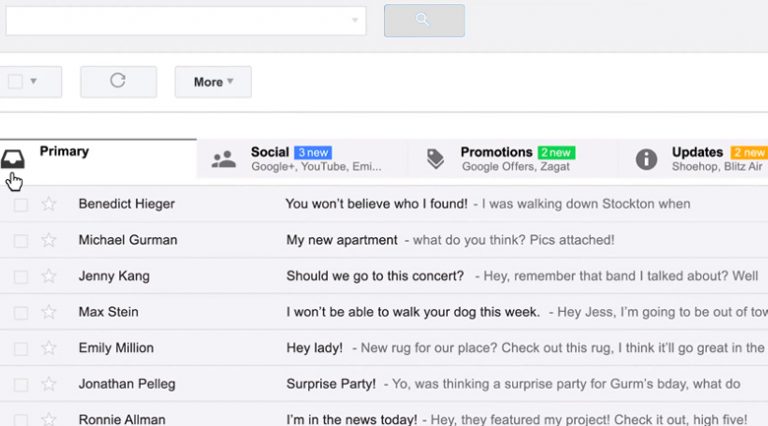
Google understands that while all email goes to one box, not all email is created equal, so in that spirit, they are rolling out a new tabbed inbox to all users, albeit slowly. The Gmail team said in a statement, ” All of these emails can compete for our attention and make it harder to focus on the things we need to get done. Sometimes it feels like our inboxes are controlling us, rather than the other way around. But it doesn’t have to be that way. Today, Gmail is getting a brand new inbox on desktop and mobile that puts you back in control using simple, easy organization.”

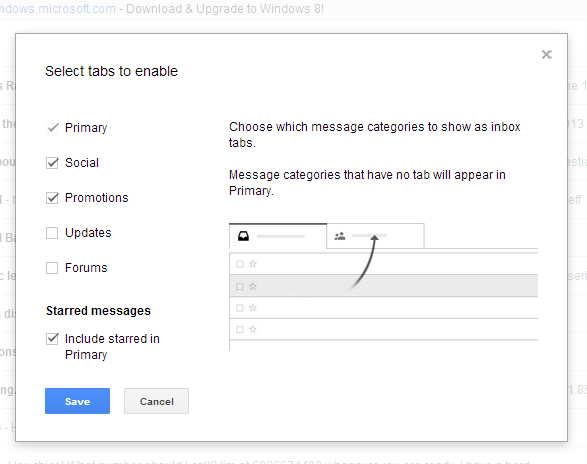
Continuing their quest to automatically prioritize mail, Gmail will offer new inbox groups after a user chooses which categories they want, allowing users to drag and drop to move messages between tabs and set certain senders to always appear in a specific tab while automatically starring that sender’s message so they appear in the Primary tab.

In the Gmail on Android 4.0+ as well as on iPhone and iPad, users see the Primary mail tab automatically, but “If the new inbox isn’t quite your style, you can simply switch off all optional tabs to go back to classic view, or switch to any of your other favorite inbox types.”

[pl_video type=”youtube” id=”CFf7dlewJus”]

How to get the new Gmail inbox without waiting

We have been waiting like many of you, frustrated that the email robots aren’t doing their magic in our inboxes yet, but wait no more – most users (not all) can turn the new features on themselves.

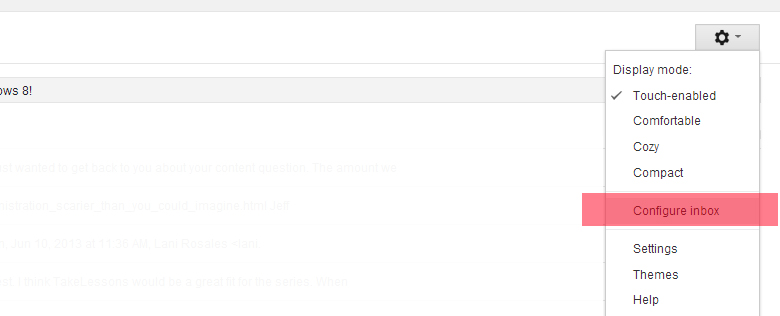
If you want to try it out, click on the grey gear in the top right of your inbox and if you see “configure inbox,” click it and get yourself set up. Easy as pie:

new gmail inbox

new gmail

What can Google Now do? Comprehensive commands list

0

google now

Google Now can be a personal assistant

Google Now is an intelligent personal assistant app available from within the Google Search app in mobile devices, both Apple (iPad and iPhone) and Android (4.1 or higher), designed with the goal of helping you with information you need throughout your day, before you even ask for it.

The app has been lauded for knowing so much about you, for example, when you’re signed in to Google on your desktop and search for a local Thai restaurant, when you pick up your Android or iOS with Google Now, it assumes that’s where you’re going and maps it without you asking and tells you how long it will take to get there in traffic. Throw in some voice control and you’ve got a wicked personal assistant.

Google Now commands list

Learn these, save them to Google Keep, or Evernote to reference while you’re on the go.

General commands:
Go to (URL)
Note to self (say note)
Call (contact or number)
Text (contact or number) (message)
Send email to (name, subject and message)

Scheduling commands:
Remind me to (task) at (time)
Remind me to (task) at (place)
Set alarm (time)
Set a timer for (time)
Wake me up at (time)
Schedule (event) on (date)
Set an appointment to (event) on (date)
What are the hours for (business)
When is (holiday)
What time is it in (location)
When is daylight savings

Navigation commands:
Navigate/directions to (place)
How far is (place) from my location
Where is (place/business)
Nearest (place/business)
I’m hungry
Map of (place)
Navigate me home (goes to place you set as your home location)
Take me home

Entertainment:
Play (song name) or (artist name)
How long is (movie name)
Show times for (movie)

Social media, other:
YouTube (your query)
Google this picture
Scan this (for QR or barcodes)
Post to Google plus (text)

Weather:
What is the weather (today/tomorrow or future date)
Do I need an umbrella (today/tomorrow or future date)
Will it (weather)
When is (sunrise) or (sundown)

Sports:
When is the next (team) game
How are (team) doing
When do (team) play next
Did (team) win their last game
(Sport) schedule

Calculations, conversions:
What’s (number) in (number)
Convert (currency, length, etc.) to (currency, length, etc.)
Percent of (number)
+ Nearly any type of calculation or conversion

Flights:
Flight number
Has (flight number) landed
When will (flight number) land
When will (flight number) depart

Business:
Stock for (company)
Who is the CEO of (company)
Pictures of (subject)
Define (word)
What is the currency of (country)
Calculator (pulls up calculator)
Translate to (language) (phrase)

Easter Eggs:
Do a barrel roll
Bacon number (actor)
Sudo, make me a sandwich
What’s the loneliest number
What’s your favorite color
What phase is the moon
Tell me a joke
Instead of talking, let it listen to a song to identify it
Tilt

Google Glass rules tighten: no porn or facial recognition

google glass

Google Glass culture unfolding as rules tighten

Google Glass will hit the market soon, but before the project becomes a mainstream reality, Google is taking a careful approach at what they allow and what they do not allow to be featured in their app store, and they’re surprising many by tightening the rules. Why is it a surprise? Apple positioned themselves as the wholesome, family friendly app store, mocking Google Android for having porn apps (which they still do), so many assumed Glass would be an unrestricted environment, much like Android is.

Not so. You’ve heard of no Glass by the pool (and no running, no diving, and so on), but have you heard of no Glass at the casinos? No porn on Glass? No gambling on Glass? No facial recognition on glass? No voice printing on Glass? The Glass Platform Developer Policies are strict because the technology has a strong likelihood of being invasive.

No facial recognition, no voice printing on Google Glass

The Google Glass team posted on G+, “We’ve been listening closely to you, and many have expressed both interest and concern around the possibilities of facial recognition in Glass. As Google has said for several years, we won’t add facial recognition features to our products without having strong privacy protections in place. With that in mind, we won’t be approving any facial recognition Glassware at this time.”

It is a quandary, however, as there is no mention of people being able to opt in (as in the case of the Glass app developed for doctors to pull up patient files based on facial recognition).

It’s not just facial recognition, however, as the policies restrict developers from using “the camera or microphone to cross-reference and immediately present personal information identifying anyone other than the user, including use cases such as facial recognition and voice print.”

What is more curious is that the policy continues, “Applications that do this will not be approved at this time.” Note that Google doesn’t close the door permanently, as it does say “at this time.”

No porn on Google Glass

Sorry grown ups, no grown up stuff for you on Google Glass, you’ll have to stick to your Android for that, as Google has very publicly banned pornographic materials.

“We don’t allow Glassware content that contains nudity, graphic sex acts or sexually explicit material,” the company outlines, and asserts that there are very serious penalties for any app featuring child pornography.

The issue of porn came up with a company released an app which had over 10,000 visitors and over a dozen Glass test users already signing up, and while they say they followed developer policies during creation of the app, they intend on pivoting to follow the rules so they can remain in the Glass app store.

No Glass in casinos

It’s not just Google Glass that has rules for its own use, lawmakers are taking a look at where Glass should and should not be allowed, and New Jersey along with Pennsylvania are both planning to prohibit the devices to prevent card counting or other cheating methods not yet evident. We suspect Google Glass could eventually read and record other players’ moves and habits and heck, even read heartbeats to look for a true tell. Casinos don’t like that. It’s not just about that single player having an unfair advantage, the theory is that making cheating easy would discourage players from visiting anymore and hurt local economies.

Further, several large casinos in Las Vegas have already banned the wearing of Google Glass devices inside the casinos. The goal for the industry is to make it illegal and an arrestable offense to wear Google Glass inside their venues.

Casinos aren’t alone

Casinos won’t be the last scenario that forbids Google Glass – we suspect that next up are all levels of educational institutions, government buildings, and maybe even retail dressing rooms, who knows? While many augmented reality options available on Glass are already offered on smartphones, it is nearly impossible for people to detect improprieties while using Glass as opposed to a user having to hold their phone up for all to see what they’re doing.

As a final thought, if the NSA is tracking all keystrokes, it wouldn’t be a tremendous leap to consider that all visual and audio data being processed on a Google Glass device could be stored and tracked as well, so in the currently heated environment surrounding privacy, Google Glass could play a larger role in the long term as people grapple with what they think is okay and what is not okay for Google, the government, or the public to know about their device use.

Why mobile point of sale systems are increasingly common

mobile point of sale systems

Mobile point of sale systems increasingly popular

An increasing number of retailers are utilizing mobile point of sale systems in their stores, innovating checkout process by breaking it away from cash register and counter. Various companies have been doing this for years, including Apple and Home Depot with proven success.

But now, a newer crop of retailers, such as Urban Outfitters, Nordstrom, and Barney’s, have implemented mobile checkouts in sections throughout their stores as well, and research analysts predict the mobile POS market will surpass $2 billion in hardware and software sales in 2013.

Why are these systems becoming more mainstream?

The answer lies in consumers need for instant gratification and the shift to a more digital age. Innovation constantly creates improvements and new methods for things we do on a daily basis – for instance, we now have digital currency and online crowdfunding portals that directly compete with regulated national currencies and financial lenders. And because we ultimately have everything at our fingertips, we’ve evolved into a society that expects things in real time, or as close to it as possible.

In regards to mobile POS, this concept plays in perfectly. Rather than having customers migrate to the front of a store to finalize a purchase, staff can now interact with shoppers instantaneously and process payments in the moment. This could result in more sales as it decreases the amount of effort it takes for shoppers to make a purchase.

What the big boxes have figured out

Additionally, instead of having shoppers walk around the store with items in hand and decide to place things back before heading to the register, perhaps it makes sense to let them buy in a particular section when they initially make the decision to pick the item off of a rack with the intent to buy.

Mobile POS have mostly been implemented in clothing retail stores, as well as Apple and Home Depot, and are generally marketed to a tech savvy demographic. As tablet adoption rates continue to grow, expect more companies to implement similar strategies for card paying consumers.

Avoid getting sued: 5 tips for real estate pros

avoid getting sued

Real estate is prime for lawsuits

Let’s face it, real estate is a hotbed for lawsuits, both reasonable and frivolous. For some reason, many believe that a real estate license on the wall means endless wealth, although more agents barely scrape by than those that thrive. Regardless of wealth and means, all industry participants from the licensed assistant to the big box broker are vulnerable.

According to a recent survey by the National Association of Realtors, 78 percent of respondents are not covered by errors and omissions insurance, a shockingly high number revealing the true vulnerability of the industry.

Ted Devine is the CEO of insureon, an online insurance agent for small businesses, and prior to insureon, he held top leadership positions with Aon Corporation, including CEO of Aon Re and, more recently, was President of Aon Risk Services. We asked Devine how real estate professionals can manage their risk, and he offered the following five tips to help avoid lawsuits:

5 ways to avoid getting sued

You’re responsible for keeping your clients’ data safe. If you store sensitive client information (including Social Security numbers, bank account info, or other important details), you have an obligation to keep it secure. Unfortunately, hackers and data thieves have major financial incentives to steal that data. If you don’t already have data-security measures in place, implement them immediately: antivirus software, regular password updates, encrypted storage, backup storage, and limited access to sensitive data among your staff. Should all else fail, a Cyber Liability Insurance policy will cover the costs of a data breach and related lawsuits if your business is victimized.

You could be held liable for advice you give – or don’t give. Ever had a client skip a house inspection or some other key step in the home-buying process? It can be a nail-biting experience as you wait to see whether anything will go wrong. What’s worse, you can be held liable if you failed to properly instruct your client about the potential fallout of skipping a key step. To minimize your advice-related liability risk, insist that your clients sign waivers whenever they chose to skip an important step in the purchasing process. And to protect your finances from unhappy clients who decide to sue you, invest in a robust Errors & Omissions Insurance policy, which will pay your legal defense costs for even frivolous claims, as well as any judgments you’re found to owe.

Sometimes, people steal. An open house presents a prime opportunity for thieves to nab valuables and even keys that allow for later entry. To minimize the chance of theft, encourage clients to lock up valuables and remove spare keys from view. To avoid liability for any thefts that do occur, include a hold-harmless clause in your contracts with clients and encourage them to update their Homeowner’s Insurance to include coverage for items stolen without evidence of a break-in. In addition, if you notice that something is amiss after a showing, contact police immediately. Doing so will help you avoid charges of liability later.

Your car insurance isn’t as good as you think it is. Drive a personally owned car for work all day? Do your employees do the same? Be aware that your personal auto insurance may not cover you for accidents that happen while you’re on the clock. To ensure that you’re covered in the event that you or one of your team gets injured (or injures someone else) in an accident during the work day, invest in Hired or Non-Owned Auto Insurance, which supplements a driver’s personal auto coverage.

Slips and trips still cause lawsuits. Rain and ice don’t just make for bad open house weather, they increase the likelihood that your clients will lose their balance, fall, and hurt themselves on your watch. Even if you’re away from your offices (e.g., at a property you’re showing), you can be found liable for a client’s slip-and-fall injury if they choose to sue. Luckily, General Liability Insurance covers the costs associated with legal actions related to third-party injuries, whether they happen at your office or elsewhere.

The takeaway

Real estate lawsuits are not always contractual, and real estate courses can only teach an individual agent so much about their risk and liability, especially when it comes to the more overlooked aspects of responsibility, like slips and falls. Many think that these types of lawsuits are restricted to major retailers or grocery chains, but the opposite is true.

Top 3 ways to stop yourself from complaining

stop complaining

Breaking the nasty cycle of complaining

Complaining is negative. Negativity is addictive and contagious, and an office full of negative Nellies is an office where productivity is low. How can you keep negative complainers at bay in the business place? Start with yourself.

When traffic is slow, someone takes your parking space, and your shoes hurt your feet, we tend to surrender without even giving the rest of the day a chance. Try a positive spin. Traffic was bad, someone took my parking spot, and my shoes hurt my feet. From down here, the only place to go is up.

The key is that you are in charge. You can’t wait for a good day to happen to you; you have to make a good day happen.

3 methods to stop yourself from complaining

Try the following three methods of encouraging yourself to stop complaining.

  1. Stay away from the complainers. Your constant complainers are usually your gossipers and your all together negative crowd. This is school playground 101. If you run with the negative crowd, people will begin to associate you with that crowd. You’ll begin to feel like people are judging you, so you may as well give them something to judge. It’s how tweenagers get clicky, it’s how teenagers go Goth, and it’s how young adults start smoking and drinking. Get out of the crowd.
  2. Remember to empathize. If your complaints tend to be about co-workers, putting yourself in the place of the offender can be enlightening. You’ll often find that you don’t know the person well enough to do such a role reversal, in which case, your judgment is totally out of line. Remember all the parables about glass houses, walking in others’ shoes, and throwing the first stone. There’s a reason these stories have stuck around. Don’t be that reason.
  3. Keep a gratitude journal. While negativity is addictive, so is positivity. At the beginning of the work day or at the end, write down five things you are grateful for. You may have to dig at first, but you will soon find yourself seeing the good in the very situations that would have previously sent you over the edge.

In sticking with paraphrasing quotes on life lessons, all journeys being with the first step; be the change you want to see; peace is rarely denied to the peaceful.

Facebook advertisers pulling ads over controversy

facebook-logo

Facebook advertisers pulling their ads

After Nissan and other advertisers temporarily removed their ads from Facebook, the social networking site is facing the question of whether to control content created by users to appease the advertisers, or risk losing revenue?

Dove ads, for example, were placed in locations which sat alongside pages that glorified violence against women. The company issued a statement saying, “We are also refining our targeting terms in case any further pages like these are created. Facebook advertising targets people’s interests, not pages, and we do not select the pages our adverts appear on.” [sic]

Advertisers don’t currently have control

Currently, advertisers cannot prevent their ads being placed on pages with offensive content. However, once a page is flagged as controversial, the ads are then removed from the page until the content is removed or the page is shut down completely.

According to Sarah Feinberg, the director of policy communications at Facebook, “The site does not preemptively identify content as controversial until it is reported.”

It’s up to Facebook

Ultimately though, it’s up to Facebook to make the decision… as they’re learning. The company acknowledged that its systems to identify and remove offensive and controversial content had not worked effectively in the past, and has promised to improve those processes.

And, because of the rapidly refreshing site, advertisers have even less control over where their ad is placed. Brands are losing that control and must trust that Facebook will do everything it can to create an environment conducive to positive advertising for their clients.

What are Facebook users to do?

So, as a Facebook user, what are we to do? Do we stay quiet, or risk our pages being shut down, due to upsetting advertisers who might be sharing a page with our possibly offensive content? I say, speak your mind. We have free speech, use it responsibly. If an advertiser still doesn’t like your content, they can pull their ad and go back to more traditional advertisement medium, such as print magazines or television commercials.

Fiverr: outsource these 10 simple business tasks for $5

fiverr

Getting stuff done with Fiverr

Fiverr (which stands for fiver, because almost every task costs $5), is a place for people to share things they are willing to do for $5 from the absolutely bizarre to social marketing. Members can order and pay through the service and Fiverr will guide you through the rest of the steps.

The Fiverr service is free, but it if you sell your services, it takes one dollar from the five you charge for a fee. The service also makes use of Facebook and Twitter to feature available gig, getting your ads to a broader audience.

And if you are looking for a service, there are multiple options available to help your business grow at a very reasonable rate. Each person offering a service is reviewed, so make sure to check the reviews before you hire someone.

Some of the services available to your business include:

YouTube transcriptions, because no one wants to watch an entire YouTube video, okay, we do, but sometimes you need the text to go along with it and transcribing a 30 minute video can take hours. Why not hire it out on Fiverr for a mere $5? (Check gig extras if you need more time.)

Video Testimonials instead of spending time and money hunting down people to record a testimonial for your product, you can hire someone on Fiverr to do it for you. This could be what makes or breaks you in the beginning. And, keeping your costs low is always important. And once you get the first video testimonial, it will encourage other people to send some your way as well.

Product or service reviews if you do not need a video testimonial, you can still get a product or service text review, quickly, efficiently and very cost effective.

Sending marketing materials so you can get back to what you do best.

Creating Logos or marketing material if you need flyers, postcards, Tweets, Facebook posts, or anything in between, you can find someone to do it on Fiverr.

Blog Posting need a blog post about a product or service? Just go over to Fiverr and you will find people ready and waiting to do one or multiple postings for $5.

Sending follow-up messages many times we have lists of hundreds of prospective clients that need to be contacted in a timely manner, Fiverr can help with this. There are plenty of people listing their services to take care of this very thing.

Business coaching if you have a particularly difficult problem, many people are offering business coaching. Some of these people are veteran business owners who can offer you their years of expertise for a small fee. Also, if you are just beginning and want someone to run ideas by, this can also be a useful service.

Virtual assistants People are offering anywhere from one hour to three hours of virtual assistant work for a mere $5. This could include anything from research to WordPress publishing, phone calls to article writing, and data entry to Excel documents. Each person has a different range of services, but for the price, it is hard to go wrong.

Translation services if you need a document, web site, blog post, or video translated, there are a multitude of people offering this service on Fiverr for only $5.

While in many cases, you get what you pay for and you aren’t necessarily getting an expert, for menial tasks and simple to do items, $5 is a cheap way to get stuff done.

Problems with the EB-5 Immigrant Investor Program

eb-5 program dollar

Shifting away from the EB-5 Program

In recent news, our government’s EB-5 Immigrant Investor Program (or Employment-Based Immigration: Fifth Preference EB-5) as gained even more traction and appeal.

So what is this magic program? Well, for a capital investment and proof of substantial job creation in the US, the US government will grant the investor and his/her family green cards which they can later trade up to permanent resident status.

As a businesswomen who used to market these cool opportunities, I have had a look into the other side of this seemingly great program. While many see it as a great way to get investor funds, they tend to overlook not only the length of time it can take to secure these funds (upwards of a year) and the job creation requirement (at least 10 permanent jobs – not to include the construction or ancillary workers).

While shopping/marketing a few Texas based projects around China, here are the three main issues my company ran into and why we made the decision to shift focus from marketing EB-5 projects.

3 main issues I’ve run into abroad:

  1. The Chinese especially want sound investments. So if your project includes commercial building like schools, hospitals, or government buildings, they’re interested. Also, they have a regional focus and are looking to invest in Texas and Florida mainly for easy access to land and neighboring countries.
  2. The Chinese government is cracking down on how much currency can flow out of the country. I’ve been able to identify quite a few millionaires abroad, but the biggest concern is “How do I get the money out of China?” Some are turning to neighboring lands such as Hong Kong to filter money out while others are looking into what I call “tangible investments”. Many are buying artwork, boats, and even rare watches in an attempt to smuggle the funds out. This causes problems later in terms of paper work as the guarantor has to prove the legitimacy of the funds.
  3. This EB-5 program garners much interest outside of US in the following countries: Japan, Korea, Brazil, Mexico, and Spain. These countries are more willing to participate in the EB-5 program than most.

All in all, I support our government’s offering and hope more immigrant investors will participate. In the same vein, we should be aware of the affects to the home country. From a human capital management perspective, a home country will have more to worry about than just brain drain.

The new phenomenon that this can of worms will expose is the millionaire drain. And I don’t think many governments are too keen on their millionaires gaining residency in another country.

BitAngels: investors bet big on Bitcoin, digital currencies

bitangels

Investors getting in on digital currencies

The staying power of Bitcoin and digital currencies received a boost this week as more than 60 investors gathered to form BitAngels. The company is comprised of both a multi-city angel network and an incubator program, with funding initiatives given in the form of Bitcoin investments. There’s been some skepticism around the digital currency, and talks of government regulation as well – but an increasing number of investors and entrepreneurs are seriously considering how to implement the currency into business ventures, and it looks like it’s here to stay.

The creation of BitAngels can actually work as a rebuttal against arguments that Bitcoin isn’t legitimate, or is illegal – the currency now has its own conference and several startup incubators, in addition to BitAngels, are weaving it into their crowdfunding platforms. The BitAngel angel investors are also accredited and have proven experience in the industry, further legitimizing the network.

It’s not all virtual

In addition to its virtual element, the company also has three on-site locations in San Francisco, New York City and Austin, so project owners can go to these cities to meet mentors and staff in person if they would like to add a more human element into the mix. Having actual brick and mortar locations serves as a realization that Bitcoin does indeed have staying power, and now merits real estate space and the attention of investors looking to make serious gains.

So far, the angel investor network has raised more than $6.5 million in Bitcoin, which will be divvied up per project in $20,000 segments. Entrepreneurs who ultimately receive funding can also participate in online classes each week with investors and mentors; this interaction is expected to arm entrepreneurs with the expertise to recruit business partners and tackle other milestones necessary to achieve in the early days as a startup.

If there is any question as to whether or not Bitcoin should be taken seriously, let BitAngels and the number of other Bitcoin investor networks recently formed serve as a testament that the currency will have substantial longevity.

What real estate consumers simply don’t understand

real estate

A recurring theme within the real estate industry

The speed with which real estate professionals should respond to inquiries via the phone and web has been a reccurring theme for some time, and according to some – speed is a very large part of the recipe for success. When looking at houses online, you will often find contact forms where consumers can email or call the listed agent for more information about a specific property. Some of these inquiries get routed to “buyer agents” who have paid for placement on that listing and some go to the listing agent or brokerage themselves who were hired to sell the property. They go to a variety of places really, something I am confident that consumers do not fully understand as they use the internet to research homes. So I am sure you are thinking, why do they need to know?

This perspective might be met with some resistance by my peers, but I firmly believe that fast response times aren’t a real problem and claiming that they are part of the recipe for success is a bit short sighted. Fast response times are surely not going to solve the perception problem we have as an industry – in fact, I believe it will just perpetuate it. Technology already allows us to send auto-responder emails, text messages, and voicemail options to every inbound inquiry we receive, and soon that competitive advantage will be non-existent. And then, what will be the next trick, the next piece of advice or silver bullet the hundreds of real estate consultants out there give to us as agents?

Why should calling someone back within 10 minutes be my competitive advantage when consumers don’t even know who they are calling in the first place? Surely that’s not the way to build a sustainable business. Let’s face it, buying gum is an impulse purchase, not a home so why should I have to be subject to this criteria? Now speed is what separates a good agent from a bad one? I don’t think so.

Where the focus should truly be

So what is the real challenge? I think it’s about better preparing consumers to focus more on what their desired outcome of the contact really is and by setting up the initial introductions with the right expectations. Are they really prepared to see the one property they’ve been eyeing for a few days? Are they making a big move to another city and need a professional consultation or multi-day tour of neighborhoods and homes, or do they simply have a clarifying question about some of the home features itself?

Further, if the consumer is already working with an agent, they need to be very thoughtful about contacting other agents (if at all). Essentially, your agent should be the information hub of the entire home buying experience. Contacting other agents can be problematic as most of them view every contact as a lead generation opportunity for more business. Consumers can avoid these confusing situations by evaluating and committing to an agent independent of the home research process itself.

Choose your own adventure

If consumers get relegated to just clicking a contact button not knowing (or caring) who might be on the other end, or continue to make cross country trips to evaluate properties and expect to get top notch service the second they land without having contacted someone in advance, it is going to set us all up for failure.

Simply responding quickly to the first inquiry is no longer a service level advantage. If consumers decide this is the difference maker in selecting a real estate professional, then they’re only short changing themselves. Looking at homes is the exciting part of the home-buying experience, but selecting the right agent for the job is often the most important.

The consumer holds the keys when it comes to creating their own best experience. A little due diligence on their own part can be the difference between a nightmare and a dream home come true.

How to search Google like a boss: cheat sheet

search google

Most people don’t know these tricks

Do you usually get millions (or even billions) of query results for your internet searches? Do you find yourself repeatedly frustrated at not being able to quickly get the most accurate results for your searches? If that sounds like the opening to an infomercial, it’s not.

Quite simply, as search engines become more complex and more information enters the web daily, it can be more difficult to gain the information you’re looking for with a simple search. The use of search operators is becoming increasingly valuable for navigating to information quickly and narrowing down searches to specific results. Here’s some information to help make your next search more effective and targeted.

What are Google Search Operators?

Think of search operators like commands for the internet. These simple commands and symbols help to narrow your search down to be more specific. It’s like entering coordinates when using a cruise missile – it makes sure you hit your target the first time.

How Can Google Search Operators Help My Business?

Google search operators aren’t just for users. Business owners need them as part of their ongoing SEO strategy. By ensuring industry specific keywords are included in your website, it ensures these operators, when used properly, will navigate users to your site. It doesn’t guarantee first place in results but including specific keywords and phrases for your industry can make a huge difference in site traffic.

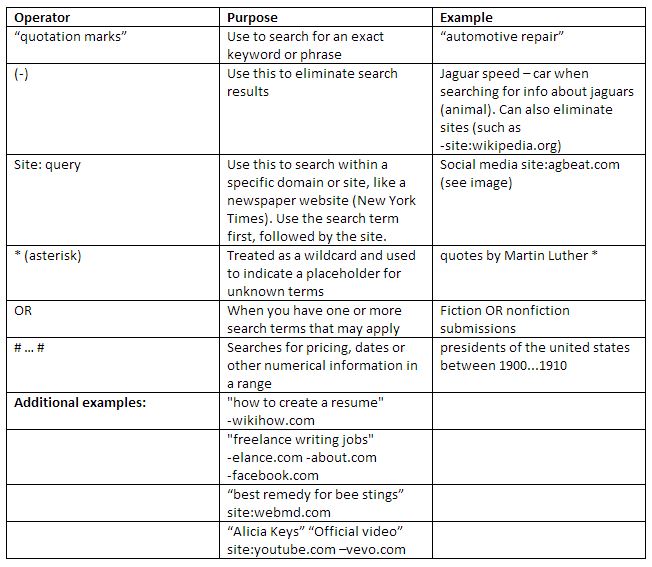
Use the chart below as a reference tool for searches in the future. After a few times, you’ll get the hang out it. You can use these in a variety of combinations to get the results you’re looking for. Of course, for business owners, it’s more critical than ever to ensure you’re utilizing proper SEO techniques to take full advantage of such targeted searches by users. Feel free to print the following chart and post it somewhere for easy reference (printable version here).

Operator

Purpose

Example

“quotation marks”

Use to search for an exact keyword or phrase

“automotive repair”

(-)

Use this to eliminate search results

Jaguar speed – car when searching for info about jaguars (animal). Can also eliminate sites (such as -site:wikipedia.org)

Site: query

Use this to search within a specific domain or site, like a newspaper website (New York Times). Use the search term first, followed by the site.

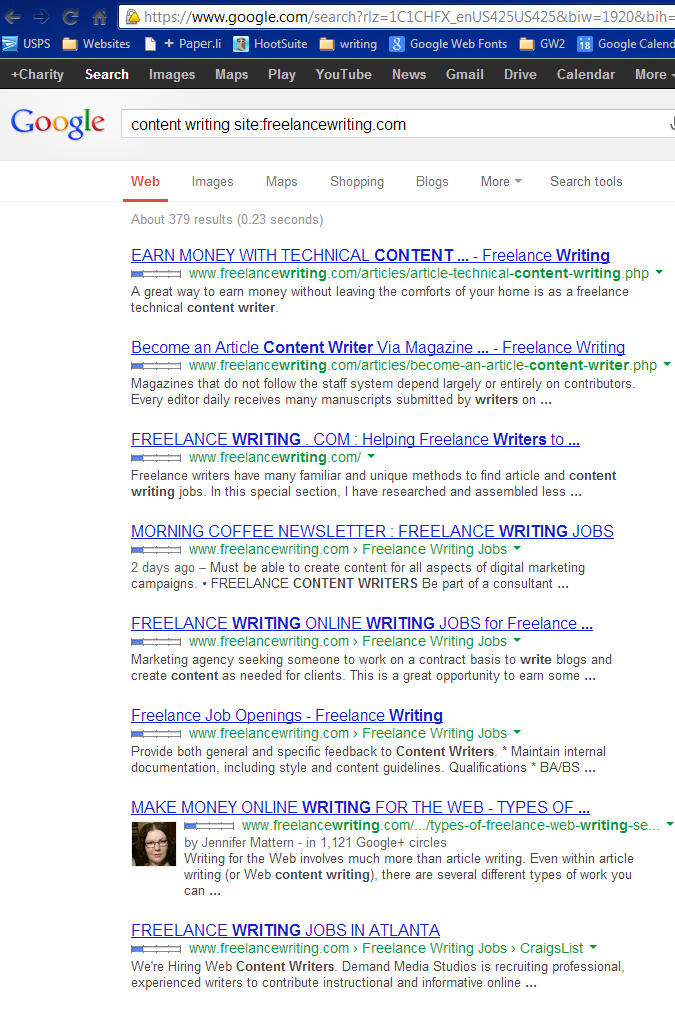
Social media site:theamericangenius.com (see image)

* (asterisk)

Treated as a wildcard and used to indicate a placeholder for unknown terms

quotes by Martin Luther *

OR

When you have one or more search terms that may apply

Fiction OR nonfiction submissions

# … #

Searches for pricing, dates or other numerical information in a range

presidents of the united states between 1900…1910

Additional examples:

“how to create a resume” -wikihow.com

“freelance graphic design jobs” -elance.com -about.com -facebook.com

“best remedy for bee stings” site:webmd.com

“Alicia Keys” “Official video” site:youtube.com –vevo.com

Example:

content