Home Blog Page 288

Postable: greeting cards are going high tech

postable

Postable brings greeting cards into the 21st century

How many people still mail physical cards anymore? With the postal service continuing to struggle after reporting a $1.9 billion loss in May for the last quarter, a new online card service might be a shot in the arm for first class mail, the USPS’ most profitable service.

New York based website, Postable.com, offers easy greeting card mailings with personalized messages regardless of the number of recipients. The online service, which went live in February 2012, offers a secure address book, easy and individualized customization options, a small array of designed cards, and an economical price point of $2.00 per card plus postage.

This includes printing, stuffing and mailing. Setting up an account with Postable, unlike the popular Send Out Cards, is free with no monthly fee and takes less than 30 seconds.

That’s less than the average greeting card sold in stores which the Greeting Card Association (GCA) reports is between $2 and $4. The GCA also reports Americans send out 6.5 billion greeting cards each year, which offers Postable a huge market to target.

Bonus: solving the address book problem

Postable’s goal is to solve the perplexing problem of maintaining addresses by providing each individual a customized link to send to friends and family where they can enter their own address information. Postable’s goal isn’t to “change the world” but instead to “make your life a little easier.”

The primary drawback for the site is in its evident lack of greeting cards. While there are numerous thank you cards, baby, wedding, and graduation cards, greeting cards for other occasions are much more limited. No card designs are available currently for most of the major U.S. holidays like Father’s Day, Mother’s Day, Valentine’s Day or Christmas. There also is no option to create your own card design, however, for special occasions, Postable could be just the right combination to use for easy greeting card mailing for business or personal use.

Home prices surge 10%, highest annual increase in 7 years

housing shortage

Home prices see massive improvement

According to the S&P/Case-Shiller Home Price Indices released this morning, the 10-City and 20-City Composites increased by 10.3 percent and 10.9 percent in the year to March with the national composite rising by 10.2 percent in the last four quarters. S&P reports all 20 cities in their study saw positive annual home price growth.

Economists expected continued improvement, but this reading exceeds what the consensus was for this period and while they are still roughly 30 percent off of their summer 2006 peak, the beat up sector is due for these kinds of improvements.

Phoenix again had the largest annual increase at 22.5 percent followed by San Francisco with 22.2 percent and Las Vegas with 20.6 percent. Miami and Tampa, the eastern end of the Sunbelt, were softer with annual gains of 10.7 percent and 11.8 percent. The weakest annual price gains were seen in New York (+2.6 percent), Cleveland (+4.8 percent) and Boston (+6.7 percent).

Home prices post historic gains

“Home prices continue to climb,” says David Blitzer, Chairman of the Index Committee at the S&P Dow Jones Indices. “Home prices in all 20 cities posted annual gains for the third month in a row. Twelve of the 20 saw prices rise at double-digit annual growth. The National Index and the 10- and 20-City Composites posted their highest annual returns since 2006.”

Blitzer added, “Other housing market data reported in recent weeks confirm these strong trends: housing starts and permits, sales of new home and existing homes continue to trend higher. At the same time, the larger than usual share of multi-family housing, a large number of homes still in some stage of foreclosure and buying-to-rent by investors suggest that the housing recovery is not complete.”

Below is the the 10- and 20-city home price index over time:

home price index

Commercial real estate improving, but recovery is uneven

commercial real estate

Commercial real estate improving, but there’s a big catch

According to the National Association of Realtors’ (NAR’s) quarterly commercial real estate forecast, market fundamentals like vacancy rates and rents have improved, but financing continues to be the pestering challenge for the sector. NAR reports vacancy rates over the coming year are expected to decline 0.1 percentage point in the office market, 0.5 point in industrial, and 0.3 point for retail; however, the average multifamily vacancy rate is forecast to rise 0.2 percentage point, with that sector still showing the tightest availability and biggest rent increases.

Dr. Lawrence Yun, NAR chief economist, said the market is showing an uneven recovery. “The wheels appear to be greased for the big players, but not so much for small business,” Yun observed. “Overall, the commercial sectors are firming nicely, with multifamily continuing to show the best performance.”

Property size a major factor

Separately, the Commercial Real Estate 2013 Lending Survey, shows widely varying availability of lending capital depending on property size, with a significant disadvantage for buyers of smaller properties.

Sales volume of commercial properties valued over $2.5 million rose 35 percent in the first quarter compared to the first quarter of 2012, and 16 markets saw triple digit gains during this period.

Realtor commercial members report 85 percent of their clients’ transactions are for purchases under $2 million – generally small businesses, and as these transactions are financed largely by private investors, along with local and regional banks, NAR says this marks a bifurcation in capital availability based on property value.

Financing remains unnecessarily tight

“Despite the improvement for major commercial properties, 52 percent of Realtors report they had a commercial transaction fail in the past year due to a lack of financing,” Dr. Yun said. “In addition, 42 percent of respondents said clients failed to complete a refinancing. Credit for small business remains unnecessarily tight.”

“Commercial members report that new and proposed U.S. legislative and regulatory initiatives, and regulatory uncertainty for financial institutions, account for the lack of capital in commercial lending for smaller properties,” NAR reports.

Forecasting various sectors

NAR forecasts that multifamily vacancy rates will rise from 3.9 percent in the second quarter of this year to 4.1 percent in the second quarter of 2014 while rents are projected to increase 4.6 this year and another 4.6 in 2014. Areas with the lowest multifamily vacancy rates currently are New Haven, Conn., at 2.0 percent; New York City, 2.2 percent; and Minneapolis and San Diego, each at 2.3 percent.

Office vacancy rates are projected to drop from 15.7 percent in the second quarter of this year to 15.6 percent in 2014 as rents are forecast to rise 2.6 percent this year and another 2.8 percent in 2014. Currently, the markets with the lowest office vacancy rates are Washington, D.C., with a vacancy rate of 9.4 percent; New York City, at 9.9 percent; Little Rock, Ark., 12.0 percent; and Birmingham, Ala., 12.3 percent.

Industrial vacancy rates are expected to slide from 9.4 percent in the second quarter of this year to 8.9 percent in the second quarter of 2014 as rents rise 2.4 percent in 2013 and 2.6 percent in 2014. The areas with the lowest industrial vacancy rates currently are Orange County, Calif., with a vacancy rate of 3.9 percent; Los Angeles, 4.1 percent; Miami, 5.8 percent; and Seattle at 6.3 percent.

Retail vacancy rates are projected to drop from 10.5 percent in the second quarter of 2013 to 10.2 percent in the second quarter of 2014 as rents rise 1.4 percent this year and another 2.2 percent next year. Presently, markets with the lowest retail vacancy rates include San Francisco, 3.6 percent; Fairfield County, Conn., at 4.1 percent; and Long Island, N.Y., and Orange County, Calif., each at 5.3 percent.

Short sale agents: how to postpone a foreclosure date

postpone a foreclosure

Watch for upcoming foreclosure dates

When taking a short sale listing on a property owned by distressed borrowers that have missed a few mortgage payments, it is vital for agents to be aware of any looming foreclosure dates. For the last several years, many beneficiaries have been sued for wrongful foreclosure, but that doesn’t change things for short sale listing agents.

One of the most common problems faced by a short sale listing agent is the looming or unknown foreclosure date. That date is like a deadline: if the transaction doesn’t close by that date, then the property will be sold at auction (or revert to the Trustee). To avoid the stress of working around a foreclosure date, any real estate agent with a short sale listing should be very aware of any upcoming dates. In fact, some agents even find success in convincing short sale lenders to postpone auctions in order to entertain the idea of approving a short sale transaction.

Some states (California, for example) have even passed legislature that prohibits certain forms of dual-tracking (actively pursuing two things at once, such as foreclosure and loan modification). But, overall, it is the agent or short sale negotiator’s responsibility to work with the short sale lender in order to get an auction date postponed so that the short sale can be completed.

How to postpone a foreclosure

Here are four tips for how to get an auction or foreclosure date postponed:

  1. When you take the short sale listing, order a property profile or preliminary title report. Check what items have been recorded against the property. If there is any foreclosure activity, add those dates to your calendar.
  2. Have the seller open any and all mail, and alert you immediately if there is information about a pending foreclosure or foreclosure filing.
  3. Contact the short sale lender regularly. Sometimes short sale lenders change dates and do not record those changes in the city or county. So, check in with the short sale lender regularly in order to see if there are any new dates on the calendar that pertain to the subject property.
  4. Remind the short sale lender of upcoming dates. Don’t just wait for the short sale lender to contact you. If you want a bank employee to postpone an auction date, you need to be proactive and assertive. Notify the bank that the date is looming and that the seller is really motivated to continue in the short sale transaction.

On a side note, mortgage lenders are not always the foreclosing party. For example, you may find that a homeowner’s association is the party that will be foreclosing. If that’s the case, you need to work with the HOA to settle the matter before your client loses the property.

The key to a successful short sale is to be mindful and attentive to any looming dates. Imagine what happens when you miss a loved one’s anniversary or birthday? Well, if you miss a foreclosure date, the consequences could be far worse!

Get alerted when your address shows up on Craigslist

craigslist

Craigslist can be good and bad

Craigslist is great for selling items from lamps and chairs to boats and houses, and it has been a majorly disruptive force online, but it has its shady underbelly filled with scammers and spammers. Free services tend to attract trolls and Craigslist is no different, and while the site has put into place better safeguards than it had in its earliest days, it has been a breeding ground for scams.

There are two scams that can be avoided with simple alerts – the revenge post and the stolen deposit post. The revenge post on Craigslist looks something like “Everything free at [address], just walk in,” prompting people to come to your house and take everything, and why not? Someone on Craigslist told them to.

The second scheme is more complex and we’ve witnessed this first hand. Someone will post, “[address] for rent” and you’ll contact the poster, they’ll say that it’s occupied and you can’t look at it yet, but if you want to reserve it, you can put down a deposit and renter’s application. Of course after you do, they’re gone forever and the house was never on the market, nor did the owner or renter know it was listed on Craigslist. Similarly, a home may be posted for sale on Craigslist by a shady agent, but the home is occupied and the agent is using it to generate leads of interested parties so they can say, “shucks, you just missed that one, I sold it an hour ago, but I have another listing just like it I can show you in an hour.”

How to get alerted in case YOUR address pops up

Imagine the horror of seeing your address listed in any capacity on Craigslist. “Party at [your address],” or “free trees in yard at [your address], just dig up,” and so forth can be alarming.

Using IFTTT, a free service, you can instantly set up alerts to avoid your address being drug down into any bizarre Craigslist scheme. First, go to Craigslist in your city and perform a search for your address on the left (don’t go into any category, do it from the main page). Copy and paste that URL, you’ll need to paste it in place of the existing search URL for these alerts:

  1. Get a TEXT the second your address shows up on Craigslist
  2. Get a PHONE CALL the second your address shows up on Craigslist
  3. Get an EMAIL the second your address shows up on Craigslist

It is unlikely your address will ever be abused, but it’s better to be in the know than to be surprised.

How to close the generation gap in the workplace

generation gap

The generation gap in the workplace needs work

With today’s younger generation being so career driven and with the “twenty year” career with a pension becoming a thing of the past, workplaces are now more than ever host to the generation gap. New recruits want a fast paced route to the top, but baby boomers are not transitioning into retirement soon enough to clear a path for them. This can cause animosity.

To better understand and to nurture a respect for the older working generation, take a few cues from counterparts outside the business world:

  1. Parents. When we have our own children, we don’t discount our parents as incapable of parenting. No. In fact, we give them the dignified title of “grandparents” signifying our recognition that they have met these struggles, battled them, and survived. Think of your older co-workers who are company veterans as you would your own parents. They have guidance to give, they have perseverance, and they have experience. Maybe they aren’t totally up to date on the newest ideas, but they have been a foundation on which those new ideas were built. Harboring a respect for these vets can prove to be symbiotic. You’ll learn from each other.
  2. The entertainment industry. How often do we watch up and coming entertainers crash and burn? They get their hands into too many projects, their egos get the better of them, and they try to rehabilitate but end up lurking on reality shows for a slight bit of recognition. Meanwhile, the older entertainers, the ones we call legends, offer advice and boosts to no avail. Why, we wonder, don’t the newbies take a cue from their mentors? The same is true for business. There is a reason your older co-workers are still in the business. Take their advice. They aren’t the new rage of the company because they’ve already ridden that wave. They can help make sure that you don’t drown.
  3. The military. The chain of command is put in place in the military and it is respected even for the most menial tasks. Sometimes career military men and women are the ones giving the orders to baby soldiers or airmen. Sometimes brand new officer training camp graduates who can’t fill out their battle dress uniform outrank twenty year vets, but the chain of command is not broken. Accept your rank and respect all others. It captured Osama Bin Laden; it is surely at least applicable to your career and business goals.

3 tips to maximize your company’s global HR

global hr

Global HR is often an overlooked part of international business

It’s a must now days-in order to stay agile and competitive, companies must seek ways to leverage current, often commonplace, departments. Research and Development/Innovation and Marketing are two departments most companies focus their efforts when maximizing efficiencies to stay ahead of the curve.

I wonder why the ever humble HR department gets overlooked? Here are 3 tips to create a competitive advantage in your global HR.

1. Activity oriented interviews

This is a phrase I’ve tossed for the type of interviews we conduct. Essentially, it goes beyond just the normal (and expected) meet and greet. In an A-O interview, the interviewer would give the interviewee an assignment to present or come prepared to discuss at the interview.

I often select a portion of an ongoing or upcoming project and assign it as the activity portion of the interview. It gives both the interviewer and the interviewee an up-close look at potential work product and work styles.

2. Stay abreast of local changes that can keep you competitive

More often than not, global and multinational companies adhere to the home or headquarters’ rules. In an effort to leverage your HR, stay abreast of local changes.

For instance, knowing that Japan just raised the retirement age to 65, China has a new 5-year work visa, and the minimum wage has risen among a myriad of ASEAN countries can all help you be competitive when acquiring talent.

3. Have your compliance covered

Using local best practices that mirror company objectives can greatly improve the effectiveness of your HR machine. In addition, making compliance coverage part of your corporate culture will definitely serve you well.

Many companies are creating global SOPs (standard operating procedures) in an effort to ensure all bases are covered in terms of local and global compliance.

Whatever you do, be sure that all of your departments are in lock step to fulfill the company’s goals.

Marketing on Instagram: what really works for companies?

instagram

How brands are already using Instagram

Instagram is well-known for being a simple way to post pictures, but now companies are realizing its great marketing potential. Instagram reaches a wide audience. It provides a great collage and gives you the opportunity to promote anything your company is currently doing, from products and employees, to services and customers.

For example, Juicy Couture is putting fashion front-and-center along with the use hashtags to link their products to events, models, Hollywood stars and magazines. This not only reinforces the Juicy brand, but effectively brings in fans from other feeds. If they tag @metmuseum, people who are fans of The Met, but haven’t yet “followed” Juicy, might see something they like because of a simple hashtag and become a converted follower.

Sharpie, on the other hand, does not merely share traditional advertising methods on their Instagram account; they have invented a Sharpie “comic strip” feel. Each image is hand-drawn, and mostly submitted by followers, making them unique and intriguing. Their strategy of showcasing how their products can be used to inspire creativity is definitely inspiring their fans to visit and submit their own artwork to the Instagram feed.

Ways you can market with Instagram

Instagram can also be used as a platform for photo contests which creates a constant engagement with customers. Most companies simply ask users to use a particular hashtag for the contest and all entries are tagged. Then, picking a winner from the tagged entries is a breeze.

Also, companies can use Instagram to reward followers. If you want to reward your followers for sifting through your images and captions, you can easily include promotional codes for followers to use. There’s nothing more fun than a little game of hide and seek with your customers to keep them excited about your products. Kohls is a good example of a company using these promotions on Instagram.

Companies like Wells Fargo, Bank of America, and Citi Group all have Instagram accounts, but there are no images currently on their accounts, leaving users wondering why they are even signed up for Instagram, if they aren’t using it for imaging or marketing. While they could be simply parking their name (so no one else can have it to avoid the destiny companies like Dillards have endured as their names have been used by every day people), reserving their space at least merits a “coming soon” photo.

The takeaway

Instagram is becoming a tool creatively used by marketers and non-marketers alike, and building an audience is being effectively done through creative image sharing, hashtags, and mentions, but mostly by being relevant and capturing potential fans’ attention for more than one image at a time.

Magnetique: see outfits in magazines, find them nearby

magnetique

Magnetique offers a new way to find high end apparel

In an ever increasingly competitive marketplace, luxury brands are finding new ways to reach their target market. In the mobile app industry, a new free app has launched named Magnetique; available for download from iTunes and Google Play, this app is a fashionista’s dream come true.

The Magnetique app helps fashion fans find the latest trends from national magazines. Currently, Glamour and InStyle are on board with the new venture and feature May and June 2013 fashions.

Included in InStyle are fashions by Ella Moss, French Connection, J. Crew, Calvin Klein and Marc Jacobs to name a few. Because these are the latest fashion trends, they have price tags to match.

Glamour’s fashions have a distinctive, red-carpet look and price point. Fashions included are a dress worn by Amanda Seyfried by Bottega Veneta ($8,300), a blue lace dress by Elie Saab for $7,300 and others. The app, for all of its high priced apparel, has a feeling of being incomplete, with many of the items having “N/A” for a price listing and even some entries being discontinued from 2012. A few are missing pictures entirely.

Connecting shoppers with retailers

The purpose for the app is to connect shoppers looking for these fashions with the stores in their area carrying the item. It’s a clear attempt to take readers of the popular fashion magazines past just looking at fashions and getting them into the stores to buy them.

Clicking on an image redirects the user to an online website but not always to the specific item for purchase. The app also has the capability to capture items from magazine pages using the camera but during testing, I sadly didn’t have a magazine available to try that function. Regardless, the app still has room for improvement even though the possibilities are impressive. There are also limitations with the geography portion of the app as some fashions are not offered locally or even nationally and can only be found with the designer.

Don’t expect to see lower priced retailers included in the app anytime soon, if at all. It’s clear this app is catering to a high-income market segment and females only. Men might find it handy for finding the hard-to-find item on their sweetie’s wish list but no men’s fashions are included in the app currently. A welcome email from Magnetique made it clear they’re committed to adding new fashion magazines monthly.

Send money through email using Google Wallet

google wallet

Google Wallet is pretty easy

Google is officially expanding the payment possibilities for ecommerce with the launch of its newest product through Google Wallet. This simple feature in your email allows you to send money to anyone from a linked bank account for free. For a small fee of 2.9% you can also use a linked debit or credit card. No downloads, no long process to set up like PayPal and others.

There’s even options to send money with your mobile phone or if you don’t have a Gmail account. Google provides robust security of the system and states all transactions are monitored. Google also offers a Wallet Purchase Protection but with some caveats. The protection is not applicable to Youtube or Google properties; you have to contact their customer service teams directly to resolve issues. Also not covered are wrong transaction amounts or anything resulting from user errors.

Google provides guidelines for safe usage of this new service, including providing information about fraudulent merchants. Spoofed invoices are one area of weakness for the product and Google says these invoices are commonly “related to fraudulent vehicle, boats, pianos or tractor purchases, where the scammer persuades the buyer that the high-cost purchase will be protected by Google Wallet. However, the transaction is fraudulent and has nothing to do with Google Wallet.”

Google Wallet is taking the place of Google Checkout

Unfortunately, as a result of this change, Google Wallet will no longer support physical product sales and merchants will need to find other payment methods. It’s not known if that feature will come available in the future. Google Checkout will officially shut down on November 20, 2013, giving merchants time to find an alternative. Google does provide links to three popular services for these businesses and individuals including Freshbooks, Braintree Payments, and Shopify.

This change comes as an obvious bid by Google to jump into the growing and as yet, untapped potential, of mobile transactions. Major payment processors like PayPal, Intuit and Flint are all working to capture this market as well.

Additionally, Google offers a loyalty program through Google Wallet for businesses to help increase customer engagement. The program allows instant signup and live updates. Most beneficial however, is the ability to communicate with existing members of the program, something non-digitized loyalty programs lack.

Once again, Google’s ability to innovate in a timely manner and provide solutions is showcased through this new product. The product will be rolled out to users throughout 2013 and can be seen as a $ sign in the bottom menu of an email message.

Viber hits desktops, is it the next Skype?

viber

Viber launches desktop app

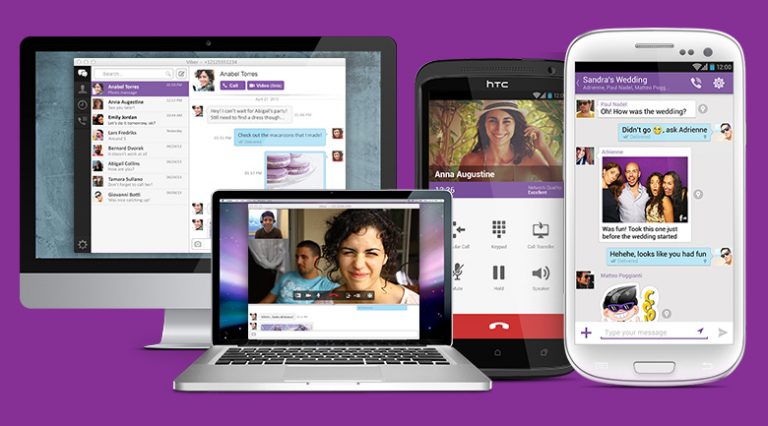
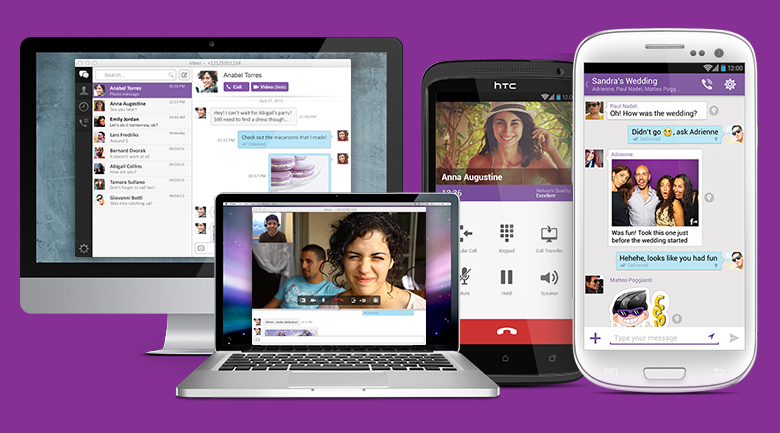
Viber for mobile devices allows you to make 100% free calls to other Viber users over both 3G and WiFi. It also works over Bluetooth and claims to not drain the life of your battery because it runs in the background. And now, Viber has released the Viber for Desktop 3.0 app for desktops and laptops.

The new desktop app provides the same functionality as the mobile app, but adds support for desktop-to-desktop video conferencing as well. To use the new desktop app, users must first register and configure the mobile phone app (available for iOS and Android devices). This is because Viber uses your phone’s contacts to connect you to other Viber users.

Direct video conferencing is not available to mobile users, but it is on the desktop app. However, Viber does offer a video message feature, comparable to Skype’s. There is support for transferring live calls between desktop and mobile, as well; making it great for people on-the-go.

Viber is simple to use

Unlike Skype you do not have to activate anything, create a username, remember a password, or send out invitations. There is no registration process. After your download is complete, you can start making calls, sending texts and pictures with one touch.

Viber uses your mobile phone number (which serves as your “user name” of sorts) and address book to instantly show you which of your friends are using Viber. Unlike Skype that asks you to manually add contacts and then wait for them to be approved.
Viber is also ad-free.

The downsides of Viber

Whomever you wish to conference with must be a Viber user, so you will have to convince your friends to make the switch to Viber.

The main downfall of Viber is that your whole address book will be sent to Viber’s servers and kept there according to their privacy statement, “a copy of your address book will be stored on our servers and will be used to…”

It also states that they will collect and log all your phone calls and may share your personal data with 3rd parties they “trust.” But, a lot of other applications do the same thing, so, used cautiously, Viber is great alternative to Skype.

4 tips for encouraging strong team work

team building

Building and coaching a strong team

American culture is sometimes contradictory. As soon as we begin kindergarten, and sometimes before, we are pressured to socialize – we must “play well with others.” The conundrum that plagues us is this. We play on teams, yet individual awards are given to the best offensive player; we are put in groups at school, yet we get individual grades; we are socialized in PE and on the playground, but we are singled out for reward and discipline.

It’s no wonder that when we enter the work place, that we want to be the “I” in team. A strong team in the workplace is a major asset, and while you may have built a potentially strong team based on abilities and strengths, to have a team that is truly successful, you may need to do some coaching. Try these four tips for encouraging strong team work.

Four tips for encouraging strong team work

  1. Set clear expectations. Inform the group that you are working for a purpose with specific goals, and give each team member a clear role. We’ve all seen a t-ball game. Nine little guys are sent out on the field, and while they may be given positions such as first baseman or short stop, they really don’t understand the role of those positions. They all leave their posts and run for the ball when it is hit, and inevitably, instead of throwing, one little dude will grab the ball from the outfield and physically run it infield to chase the runner himself. Don’t forget the kiddo in right field picking weed bouquets for his mama. Give specific responsibilities and explain how they are conducive to the goal lest you be the proud recipient of those weeds.
  2. Don’t micromanage. A micromanager is a boss who assigns tasks and then meddles in the details. It’s patronizing. Did you have that mother that would assign you a chore, tell you step by detailed step how to do it, hover and instruct while you tried to work, and then secretly (or so she thought) go behind you and re-do it? Yeah. Don’t be that boss, or your team will pull the old teenager trick on you. They’ll procrastinate because they know you’ll eventually do everything yourself anyway. There’s no “u” in team either.
  3. Have regular meetings with your team. Gather on a regularly scheduled basis to discuss progress. Point out accomplishments and brainstorm where things aren’t working as well. Ask for input from the team as equally important players. Listen to the consensus, and implement the suggestions.
  4. Don’t forget morale. In addition to celebrating successes and praising the strength of the team, participate in some fun for the fun of it. Knowing each other on a more personal level makes for an amiable team, and let’s face it. Once you’ve made a Harlem Shake video together, there can be no animosity.

One in six Americans moved in the last year

moving

Survey finds one in six moved in the past 12 months

According to self-storage marketplace SpareFoot, over the past 12 months, one in six Americans moved homes, with 57 percent relocating within 25 miles. The most common reason for relocation was to move into a bigger or better home (18 percent) followed closely by moving for work (15 percent) which SpareFoot says points to “positive economic movement.”

“The SpareFoot survey results are a positive sign for the economy. Slowly but surely, Americans are on the move in bigger numbers, whether it’s across town or across the country,” Chuck Gordon, CEO of SpareFoot, told AGBeat. “I believe we will see an increase in the number of Americans who move over the next few years. As the economy continues to improve, we’ll see increased mobility, with people moving around the country for new job opportunities.”

National Moving Day – May 28th

SpareFoot says the day after Memorial Day is one of the busiest moving days of the year, so they’ve launched the first annual National Moving Day on May 28th, coinciding with the release of their survey results.

According to the U.S. Census Bureau, 12 percent of Americans older than age 1 changed residences in 2012. The moving period covered by the SpareFoot survey was spring 2012 to spring 2013. The Census Bureau says 11.6 percent of Americans older than 1 moved between 2010 and 2011 — a record-low percentage. In the SpareFoot survey, the South was the region with the highest percentage of movers (19 percent), followed by the West (18 percent), the Midwest (14 percent) and the Northeast (12 percent).

“National Moving Day marks an unofficial start of our peak do-it-yourself moving season for one-way and local truck rentals at our over 2,200 locations across North America,” said Don Mikes, senior vice president of Rental for Penske. “Our rental truck fleet consists of more than 50,000 vehicles. We offer consumers one of the newest truck rental fleets in the industry and free, unlimited miles on one-way moves.”

SpareFoot steps in to help Oklahoma tornado victims

SpareFoot did not notify us of their charitable deeds, but we have learned that the company is donating a month of free storage to businesses, families, and individuals who need temporary storage to protect their possessions after the devastating tornadoes in the Moore area.

SpareFoot will mail a check to cover a victim’s first month of self-storage rent (up to $100). The check will cover rental of a storage unit within a 50-mile radius of Oklahoma City, OK. Customers must move in by June 21, 2013. Details are available on the SpareFoot site.

“The images of the destruction in the Oklahoma City area are heartbreaking. Our thoughts go out to the communities in this region that felt Mother Nature’s wrath,” SpareFoot CEO Chuck Gordon said. “While human lives obviously are the most important consideration in a situation like this, we at SpareFoot hope our offer of free storage space can help people in the Oklahoma City area recover from these powerful tornadoes.”

MobileDay app: never dial in to a conference call again

mobileday

MobileDay makes conference calling suck less

The MobileDay app enables you to use your smartphone, both Android and Apple, to conference call with one touch. MobileDay integrates with your calendar, dialer, email, text messages and contacts to provide you with streamlined, one-touch access to any voice conference call. You can also use the preset messages to reach all conference attendees at once to say, “I’m running late,” or “Are we still meeting?”

MobileDay enables you to use your existing conference call provider to access the one-touch features. If, for some reason your conferencing provider is not on the list, MobileDay encourages you to let them know through the “Tell Us” button on the web site.

How the app works

Once you launch the app for the first time, you will only have to put in your basic information. Once that is done, it will automatically sync with what it needs on your phone. There is nothing you have to do to join a call as a guest. The app takes care of all the connecting. It also eliminates the need to re-enter information about yourself and your invitees, for each new conference. Once you set up the first meeting, either as a guest or a host, MobileDay will connect you to all of your upcoming calls; you do not have to do a thing.

The best part about the app is you do not even have to open the app first (once you complete the initial set-up), because it alerts you just before the call begins and you simply tap the “Join” button. If you frequently take conference calls on-the-go, MobileDay is definitely worth a look because it can save you time and frustration.

[pl_video type=”youtube” id=”5I2stircXp8″]

A call for the firing of Abercrombie & Fitch CEO Mike Jeffries

abercrombie

Abercrombie: apologies will never be enough

Retailer Abercrombie & Fitch has come under attack recently about previous statements made in 2006 which have re-emerged to take the internet by storm. Thanks to social media sites like Facebook, YouTube and others, the outcry has been loud and resonating.

A&F’s CEO Mike Jeffries attempted a half-hearted, at best, apology this week saying, “While I believe this 7 year old, resurrected quote has been taken out of context, I sincerely regret that my choice of words was interpreted in a manner that has caused offense.”

It’s obvious in this statement that Jeffries is still blaming others for “interpreting” his comments “in a manner” that wasn’t how he supposedly intended. When he said A&F is “absolutely exclusionary” and only markets to “cool, good-looking people,” we’re supposed to believe there’s an alternative way to interpret that statement other than the obvious? No, there’s only one interpretation and that’s what people are justifiably outraged about.

Bringing prejudices to light

Even more telling is a recent meeting held between Abercrombie executives and teen protesters at which Jeffries was not present. In the meeting, Benjamin O’Keefe, who created a Change.org petition, pleaded with the executives to change their company’s “DNA.”

Furthermore, what is an aging and obsolete individual like Jeffries doing judging other people? He’s not some icon of saintly virtue or sexiness, he doesn’t give unselfishly to the community, but yet he points a finger at others and deems them unworthy of over-priced clothing that will fall out of fashion in its own time and way. And the reality is, this media storm has brought his prejudices to light and painted him in a spotlight so bright it’s blinding. Woe to the retailer who incurs such public wrath.

How A&F can apologize

If Abercrombie & Fitch as a company wants to truly apologize, they will fire their CEO. Immediately. Without any bonuses or benefits, because it’s a guarantee that if another employee other than a top executive had made those comments, not only would they be in court, but fired immediately.

Abercrombie’s continued allowance of this individual to represent the company is unacceptable and makes Jeffries’ apology worth less than the paper or screen it appears on. It’s obvious from his statement that Jeffries is only pandering to the media and telling consumers what he thinks they want to hear to save face. It will not work.

For A&F to repair the damage, it will undoubtedly take time. They need to find new leadership that will help steer the company in a better, more positive direction. And it’s possible for retailers to be properly exclusionary toward your market without being ignorant or prejudiced in the process. Let this be a warning to retailers everywhere: the American public will hold you accountable. Corporate executives must be held responsible for their actions.

13 motivational quotes to kick you into gear

motivation

Motivational quotes to get you going

Whether looking for motivation in your personal or professional life, one can find inspiration in the volumes of words spoken and written by those that have come before us, no matter your goals. From Ziglar to Einstein, here are 13 inspirational quotes to get you in gear:

  1. “To accomplish great things, we must not only act, but also dream; not only plan, but also believe.” – Anatole France
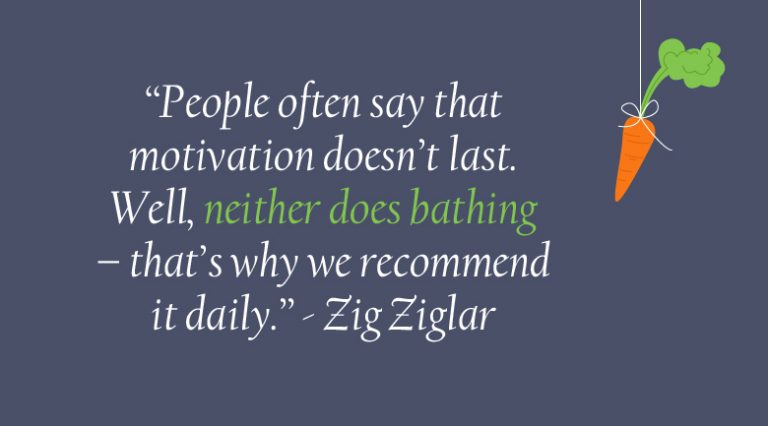
  2. “People often say that motivation doesn’t last. Well, neither does bathing – that’s why we recommend it daily.” – Zig Ziglar
  3. “Success is not final, failure is not fatal: it is the courage to continue that counts.” – Winston Churchill
  4. “Only as high as I reach can I grow, only as far as I seek can I go, only as deep as I look can I see, only as much as I dream can I be.” – Karen Ravn
  5. Do not go where the path may lead; go instead where there is no path and leave a trail.” – Ralph Waldo Emerson
  6. “Life is like riding a bicycle. To keep your balance, you must keep moving.” – Albert Einstein
  7. “Anyone who has never made a mistake has never tried anything new.” – Albert Einstein
  8. “Try and fail, but don’t fail to try.” – Stephen Kaggwa
  9. “What is not started today is never finished tomorrow.” – Johann Wolfgang von Goethe
  10. “You can’t cross the sea merely by standing and staring at the water.” – Rabindranath Tagore
  11. “Obstacles are things a person sees when he takes his eyes off his goal.” – E. Joseph Cossman
  12. “The greater danger for most of us lies not in setting our aim too high and falling short; but in setting our aim too low, and achieving our mark.” – Michelangelo
  13. “People who are unable to motivate themselves must be content with mediocrity, no matter how impressive their other talents.” – Andrew Carnegie

Lesser known tricks to help protect yourself online

0

help protect yourself online

Tips to help protect yourself online

There are hackers and hijackers galore online, and there are ways to protect yourself that go beyond simply keeping your social security number secure. Have you considered that if someone gets access to your email they have not only personal information about you, but possibly your customers as well? That’s not a good day.

Getting started with safeguarding your identity

Dmitri Leonov, Sanebox VP of Growth notes five basic methods to protect yourself online:

  1. Be Unhackable: EVERYTHING lives in your email, so it’s critical to have a strong password for it. Here’s how to make one. Think of a phrase (like a refrain from a song, or some sentence you remember by heart) and make the first letters your password. Yes a personal acronym. Example: “Billy Jean is not my lover, she’s just a girl who claims that I am the one” becomes bjinmlsjagwctiato – a 17 character password that’s impossible to break but ridiculously easy for you to remember. If you’re really smart, replace the O in the end with a 1 (one=1, get it?).
  2. Create Unique Passwords: Having one password for each of your services is not enough. If one site’s database gets hacked, all of your logins will be at risk. You have to add a couple characters unique to each of your services somewhere in the password. For example, add the first vowel followed by the last consonant of the name of the site at the end of the password. So for Gmail, you’d add “al”. Capitalize them if you want to go crazy. Seem excessive? It’s not.
  3. Power Tools: If your appetite for security is still unsatisfied, use 1Password or LastPass. These services generate and securely store truly random, strong and unique passwords for each of your logins. Since this info is stored locally, they are nearly impossible for hackers to access. If you use multiple devices, you can sync the file via Dropbox. (Just make sure to have a really strong password for your Dropbox, using steps 1 and 2 above.)
  4. The Poor Man’s Backup: This tip is specific to the safety of your email and is still very important! Forward your email to another account. If you somehow lose your main email (whether your provider goes down or your account gets compromised), you’ll always have a copy of all your emails in another account.
  5. Be Smart, Just Be Smart: Another email based tip, but equally as important. Sending passwords or credit card information through email is NOT smart. You’ll notice that developers (i.e. people who know how the Internet works) never do it. Send part of it via SMS or Skype (you can delete a message on Skype after the recipient has read it). Please understand that none of the emails you send are private -just ask David Petraeus. Think of it this way, don’t send anything through email that you would not want displayed at the Super Bowl halftime show… oh awkward, does that still sting, Janet?

Lesser known tips

Many people haven’t come close to mastering the tips offered by Leonov, but there are other, lesser known ways to help protect yourself online.

Steve Thomas, CEO and Co-Founder of PwnedList adds the following tips:

  1. Don’t use a password memory formula, such as website + date of birth. Hackers are smart and figured out how to guess the rest of your passwords a long time ago. Use computer generated passwords and save them in a secure location.
  2. Use a unique strong password for every website. Password management tools are a great way to take the headache out of doing this. Most tools these days give you the option to sync between devices. This is a huge time saver.
  3. Assume your e-mail will one day be broken into. Make sure you can get control of it back with another e-mail account. Never save personal information in your e-mail account, such as credit card numbers, bank account usernames, pins. Hackers love to take over an e-mail account, find bank account information, and have a shopping spree.
  4. Minimize the damage that a hacker could cause: Delete, delete, delete. Destroy everything that you do not need to have a record of. If you need to have a record of it, save it to your computer and encrypt it. This goes for everything ever stored on the Internet. The Internet is forever.
  5. Use different e-mails for different parts of your life. One for banking, one for random websites, one for personal, one for business. Personal/random websites are more likely to be broken into and if your e-mail account is stolen from one of those, make sure that only a part of your life is vulnerable.
  6. Monitor for your e-mail address. PwnedList is a free service to do this. Periodically search the internet for your e-mail address. Setup a google alert for your e-mail address. You will want to know how much exposure you have. The e-mail address that can’t be found is the one that can’t be targeted.
  7. Change e-mail addresses every few years. Update only the websites you still use. Delete the old account if possible.

Georgia Tech to offer a $7,000 advanced degree, will others?

graduate

Georgia Tech offering a prestigious degree at a low cost

Georgia Tech is teaming up with Udacity, a massive open online course (MOOC) platform and AT&T to offer an advanced technological degree. Why is this information considered buzz? Through MOOCs, Udacity, launched in 2012, free online classes are offered to anyone with an internet connection. Georgia Tech’s merging with them allows this advanced computer science degree to be offered for only $7,000 – a fraction of the cost of the current virtual degree programs.

At first thought, it may seem that making an advanced degree more affordable and attainable to the masses would flood the technology institution with a pool of mediocre candidates vying for advancement based on adding the letters MCS to their names, but the difference is that this is Georgia Tech, a reputable school whose graduates are known for being more marketable as employees. If Georgia Tech can implement a virtual advanced degree program with high quality instruction and marketable graduates, they will indeed be the pioneers of reputable virtual education.

Why distance learning blossomed

There has been a need for distance learning or correspondence learning as far back as the 1800s, and as the internet became more and more commonplace in the 1990s, online education began to blossom. But it was the downfall of the economy that really inundated us with virtual education opportunities, according to Stephen Viscusi, author and global workplace expert.

As companies began to have fewer opportunities for advancement, people began to lose jobs, and new college graduates were faced with unsuccessful job searches; people by the masses turned to advanced degrees hoping for a leg up. Well educated prospective employees became commonplace.

More and more people found themselves with upwards of $20,000 in student loans due to the high cost of distance and virtual programs, and though an education is always a good intellectual investment, these degrees didn’t gain individuals promotions or, in some cases, jobs at all. Being more in debt while simultaneously not gaining income doesn’t allow frivolous spending which is what the economy needed to recover.

Throwing affordability into the equation

An MOOC allows for affordable learning and coursework anywhere, anytime. It eliminates looming debt associated with advanced degrees and, therefore, is a potential boost to the economy as graduates, even if they don’t immediately advance in salary, throw less toward school debt and, therefore, a little more toward plain old spending.

With the economy slowly recovering, if Georgia Tech can pass the test of producing graduates with hireability, other institutions will get on board with MOOCs, and in a full circle moment, those Georgia Tech grads will be in high demand to build and run the new and affordable virtual advanced degree programs.

Google Glass’ far reaching possibilities

google glass

Is Google Glass a toy or a tool?

Few people really know what to do with Google Glass. Some are shunning it as a useless toy while others have embraced it whole heartedly. Now parodies and videos recorded with the glasses are popping up all over the internet, including a recent one with an adorable two-year-old toddler. Is Google Glass just a techie toy or could it be something more?

Through the Eyes of a Babe

When the two-year-old son of Chris Angelini puts on the glasses, his immediate response is “Look at my cool glasses!” He even toddles into the hallway and tells his momma about it. The intrepid young techie gets juice with Daddy, then goes to his toys to show them off. Father and son even toss a ball and at the end, the junior Angelini says, “They’re hot”. Apparently the glasses got warm from usage. Or perhaps he just meant they were cool? In either case, he was impressed, at least as much as a two year old can be.

Cute toddlers aside, Angelini proves, quite by accident, a great range of possibilities for the newest and albeit exorbitantly expensive gadget (~$1,500).

Business Possibilities

Imagine giving a presentation in front of a client or a major speech and being able to record it, crystal clear and in exact focus. Later, you can review the recording for audience reactions and discern the pulse of your audience. Record your presentations in real time with video to go along with it and share online through popular sites like LinkedIn or Facebook. Never miss an audience question or reaction as long as you’re looking in the right direction.

Personal Uses

For personal uses, you can easily record family interactions and make fun videos. Never miss a moment of that birthday party or special event. No more missing an important moment, just keep staring and don’t worry about checking your video equipment. Other sample videos have been recorded by pilots in flight, from hot air balloons and more.

Not Everyone Is Thrilled

Of course, for every post or video about the benefits of Google Glass, there’s always going to be an opposite viewpoint. One video, The Hard Truth about Google Glass states “with less capabilities than the smart phone in your pocket, this isn’t anything more than a vanity attachment to let the world know you are a complete tool who wasted $1,500 and have no idea what it means to be present.”

While the glasses aren’t available yet for purchase, Google did announce on May 22, 2013 that it would be shipping 8,000 glasses to the winners of the Google Explorer program. As with any new technology, not everyone will immediately embrace the possibilities and opportunity but for the brave few willing to experiment, Google Glass might be a fun new tool full of unexplored possibilities.

Can being less productive improve your productivity levels?

productive

Obsessing about how productive we are

Imagine Peter Gibbons from Office Space for a moment. MMMmmmm, yeah. Lay down your TPS report for a few, and read up on why you can stop obsessing about your productivity, and calm down.

Let me first say, planning and diligence is a definite necessity. There are no two ways about it, you must work hard to get ahead. However, obsessing about said productivity can quickly diminish your efforts at success.

Give your brain time to recharge

We are human, and we need rest… including in our careers. When we’re constantly working, we’ve squeezed out all room for creative thinking. We need to give our brains time to reset, recharge, and be refreshed. There is much research to back taking yearly vacations or periodic time away from our jobs. It boosts productivity, focus, and contentment in our professional roles.

The same can even be said in our day-to-day actions at work. When I’m writing, for example, and find myself stuck… the best thing for me is to close the laptop for a time and go do something completely unrelated. When I return, my mind is clear and I can continue.

Embrace the ANTI-PLAN

Seriously, lay off the planning for a while. No, don’t spend time planning on how you’ll lay off the plan. Just stop. Trust yourself. You’re probably doing something you love, or at least enjoy to some extent, so just go with what you know. We can get so weighed down by our bottom line that we start to lose sight of it. Just diving in and working as you go teaches you to adapt to the circumstances. It keeps you flexible – and able to make decisions on the fly which ultimately boosts productivity.

Simplification is, in my opinion, one of the biggest ways to refocus. We create such a complex structure, that we’ve overcomplicated things and are struggling under the pressure. The easiest path to simplification is single-task. Crossing as many things off of our to-do lists as quickly as possible sometimes renders our work sloppy and leaves us feeling harried. Relax, slow down, and commit to one thing for a while. Focus on one project and the satisfaction of seeing it to completion. Doing so may actually accelerate your work than if you were juggling multiple projects.

Take a day off, close the planner, and single-task. You might just be surprised at how that actually boosts your productivity.

Zillow’s realistic look at the negative equity rate

underwater mortgages improving

Negative equity rate improving, but there’s more to the story

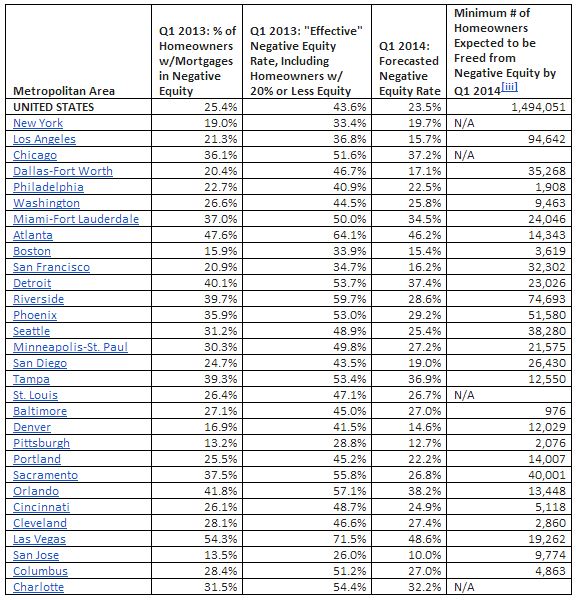
According to Zillow, although the negative equity rate among homeowners with a mortgage fell to 25.4 percent in the first quarter, another 18.2 percent likely do not have enough equity to move.

Over 13 million remain underwater and another 9 million don’t have enough equity to leave, and when including homeowners with less than 20 percent home equity, the “effective” negative equity rate was 43.6 percent (22.3 million homeowners), all unlikely to be able to afford a down payment for a new home, keeping them tied to their current home, keeping inventory levels tight.

Zillow projects that the negative equity rate will fall to 23.5 percent by the first quarter of 2014, and 1.4 million homeowners will be lifted into positive equity territory, with these “newly freed homeowners” anticipated to hail mostly from Los Angeles, Riverside, and Phoenix.

Many homeowners are simply stuck

Zillow Chief Economist Dr. Stan Humphries said, “Reaching positive equity, even barely, is an important milestone. But things like real estate agents’ fees and a down payment for the next home traditionally come out of the proceeds from the prior home’s sale. Without enough equity, these costs will instead have to come out of a homeowner’s pocket, leaving many still stuck.”

“Looking at the effective negative equity rate could explain why recent, healthy declines in the number of underwater borrowers haven’t yet translated into more homes for sale,” Dr. Humphries added. “The only cure is patience, as rising home values continue to build equity to the point where more homeowners can realistically sell.”

Negative equity differs from city to city

Among the 30 largest metro areas covered by Zillow, those with the highest effective negative equity rate, including homeowners with 20 percent equity or less, include Las Vegas (71.5 percent); Atlanta (64.1 percent); and Riverside, Calif. (59.7 percent).

Zillow predicts the negative equity rate will improve, but no dramatic surges are foreseeable, a sentiment most economists agree on.

zillow negative equity

5 ways to argue fairly in the workplace

argue fairly at work

Is there a professional way to argue fairly?

It depends on what your definition of an argument is. When I think of arguing, I think of unfair, emotionally charged jabs at my opponent. I use big words, poke at weaknesses, roll my eyes, bring up the past, utter something about his mother, and slam the door. So, no. There’s no good way to do this at work. There are plenty fair and effective ways, however, to converse about disagreements in the workplace.

1. Focus on the positives

It is important in a workplace disagreement to identify the issue positively. Focusing on why an idea will work and not on what won’t work, and keep your arguments focused on the idea being pitched—not the person pitching it. Rather than pointing out where someone’s pitch falls short, try saying something like “your approach to this issue will solve A, B, and C, while my approach is more conducive to X, Y, and Z.” How can we merge our ideas to cover all of these?

2. Don’t take criticism personally

A true professional can both criticize and take criticism, but if you are dealing with someone who cannot not make a professional assessment of a situation without getting personal, remember what we teach our children. When a person begins to feel inadequate, s/he will begin to belittle others. If you can identify when this happening, you will be less defensive and more able to focus on the actual disagreement regardless of the other person’s behavior.

3. Set a time limit

Mentally take note of when a conversation turns to disagreement. If you are unable compromise or move past an issue in fifteen minutes, table it. Once the conversation has reached this point, it is more likely to stray off topic and participants are liable to become frustrated. Move on to the next agenda topic, break for lunch, or just say, “Let’s gather our thoughts on this subject and table it until tomorrow’s staff meeting.”

4. Don’t be the workplace gossip

This one is painfully self explanatory.

5. Don’t listen to the workplace gossip.

If it is therapeutic for you to talk about your personal or professional frustrations with someone, find someone outside of work who will listen to your rant. We all know the typical repercussions of workplace gossip. But even if you aren’t engaging in the chatter, just listening to it affects your opinion of those involved. You will bring your subconsciously formulated and unfair opinion with you into professional conversations. Perhaps you have listened to a co-worker verbally bash someone. You may find yourself backing down from that person in a workplace disagreement because you don’t want to be the victim of the next bashing. If you can’t change the subject when gossip is brewing, find a reason to walk away.

Bitcoin’s long term impact on crowdfunding

bitcoin

Bitcoin’s role in crowdfunding

It’s obvious that the world is digitizing. Books can now be read electronically, some of us keep in touch with friends and family via social media sites and texts versus phone calls and letters, and even our ways of raising and transferring money haven taken on digital characteristics.

In the past, business owners would go to banks or other traditional lenders to fill out an application for funding. Now, entrepreneurs can bypass the need to go through a financial institution and instead, crowdfund from investors, peers, friends, and family on digital crowdfunding platforms. As the digital crowd continues to flock towards these alternative funding sites, it’s quite possible that digital currencies such as Bitcoin could begin to play a larger role in this space.

Bypassing the red tape

quoteOne of the reasons that Bitcoin is so popular is because it’s a digital currency that doesn’t have to be routed through a financial institution, and various project owners have their reasons for why this matters to them. This same sentiment holds true for entrepreneurs who would rather raise money via Kickstarter or Indiegogo as opposed to a bank or credit union.

By utilizing crowdfunding sites, project owners can bypass the red tape and long, strict approval processes often associated with a bank, and instead, persuade friends and peers to give money via a portal with the click of a mouse. With this method, entrepreneurs have more control over the date that they can start to receive funding – essentially only needing to post a pitch and business plan to an online community in order to persuade others to invest.

Crowdfunding and digital currencies

Sites such as CoinFunder have already specialized their crowdfunding capabilities by accepting Bitcoin donations only. Since crowdfunding and Bitcoin operate with no direct ties to a financial institution, it makes sense that more platforms may start to accept digital currency for projects that lend themselves to that form of funding.

Lou Doctor, CEO of Crowd Supply believes the two are a strong match. “Digital currencies and micro-payment solutions in particular are likely to have a major impact on crowdfunding,” Doctor tells AGBeat. “For example, transaction costs are on credit cards are currently so high, that someone trying to raise a modest amount of money from a large number of people (say $500 from 5,000 people) has no practical solution today. If individuals could effect a transfer of a few cents to an artist that is ‘giving away’ a song or video, the fund-raising potential could be enormous.”

There are talks around regulating Bitcoin, so that could potentially become another factor that crowdfunding sites would have to consider if they want to implement digital currency fundraising in the future. But as the space in general starts to lend itself to more digitized funding options that are independent from a financial lender, there’s a strong possibility that Bitcoin could start to play a bigger role.

Study: 41% of websites fail to ever respond to leads

web leads ignored

Website owners are failing to respond to leads

According to a new InsideSales.com study, there is a systemic failure on the part of website owners to respond to consumers visiting their sites, with 41.4 percent not responding in any way to a basic contact form being filled out, and of those who actually responded, the median first response time was around 2.5 hours.

This presents a major opportunity for small businesses with a web presence, knowing that competitors are unlikely to actually respond to basic web contacts, but serves as a reminder to “secret shop” potential competitors on a regular basis to determine their strengths and weaknesses.

Study finds response times to be slow

A technology called the ResponseAudit system tested how quickly and persistently companies are contacting web leads, which begins with a “secret shopper” who fills out contact forms on websites, recording all call attempts, email messages, and timestamps for each response within the next two weeks.

InsideSales found that nearly one in three companies took over 24 hours to respond to the secret shoppers, and only 5.0 percent responded in under five minutes. The study also focused on persistency, and even when combining phone and email, the average number of response attempts was 1.7 wth only 22.5 percent of companies making more than two attempts.

The study says, “companies are giving up calling on leads far too quickly. To compound the problem, since many companies likely have contact rates under 50% per call, most leads will probably not be contacted on the first phone call. Since most companies do not call again, there is a lot of potential revenue in leads that have not been given a fair chance.”

So how persistent should a company be?

InsideSales asserts that assuming every contact attempt has the same probability of reaching the lead, it would take four to 11 attempts to reach over 90 percent of leads if contact rates are between 20 percent and 50 percent.

We would note that most companies will never take on that many attempts not only due to manpower but for fear of being too pushy, but it is interesting to observe that all of this data pertains to warm leads, to consumers that reached out to the company – this isn’t cold calling we’re talking about here.

insidesales study

Companies’ perceptions of themselves are wrong

Nearly one in four companies believe they respond in under five minutes, and 80 percent believe they respond to consumers from their site within 24 hours, and of course none think they fail to reach out to customers at all, but the following chart shows there is a large gap between what companies think they do and what they actually do:

reality-chart

reality-2

While some of these cases may simply be companies failing to use a CRM or basic technologies to track leads, other cases are simply leads falling through the cracks due to human error/unwillingness.

“Companies have shown that they have lofty perceptions of how they respond to leads,” the study concludes. “However, performances do not meet their expectations. Companies should take a hard, honest look at how their company is really performing, not just in responding to leads, but in all areas.”

Mortgage application volume drops 9.8% in one week

signature

Mortgage application volume dips

According to the Mortgage Bankers Association’s (MBA) Weekly Mortgage Applications Survey for the week ending May 17, 2013, mortgage application volume fell 9.8 percent from the week prior on a seasonally adjusted basis, dipping 10 percent on an unadjusted basis. The culprit? Primarily refinance applications which took a nosedive of 12 percent in one week, while purchase applications only dipped 4 percent.

“Mortgage rates increased to their highest level since March last week, leading to the largest single week drop in refinance applications this year,” said Mike Fratantoni, MBA’s Vice President of Research and Economics.

“The refinance index has fallen almost 19 percent over the past two weeks and is back to its lowest level since late March. Purchase activity declined over the week but is still running about 10 percent above last year’s pace at this time,” Fratantoni added.

For most of 2012, the refinance share of mortgage activity hovered steadily around 80 percent, but continues to slowly decline, as it fell to 76 percent last week, and now slipping to 74 percent in the current week of reporting. Meanwhile, the HARP share of refinance applications increased from 30 percent last week to 32 percent this week.

Average contract interest rates

According to the MBA:

  • The average contract interest rate for 30-year fixed-rate mortgages with conforming loan balances ($417,500 or less) increased to 3.78 percent from 3.67 percent, with points decreasing to 0.39 from 0.41 (including the origination fee) for 80 percent loan-to-value ratio (LTV) loans. The effective rate increased from last week.
  • quote

  • The average contract interest rate for 30-year fixed-rate mortgages with jumbo loan balances (greater than $417,500) increased to 3.93 percent from 3.87 percent, with points increasing to 0.36 from 0.25 (including the origination fee) for 80 percent LTV loans. The effective rate increased from last week.
  • The average contract interest rate for 30-year fixed-rate mortgages backed by the FHA increased to 3.53 percent from 3.43 percent, with points decreasing to 0.13 from 0.16 (including the origination fee) for 80 percent LTV loans. The effective rate increased from last week.
  • The average contract interest rate for 15-year fixed-rate mortgages increased to 2.96 percent from 2.88 percent, with points increasing to 0.32 from 0.31 (including the origination fee) for 80 percent LTV loans. The effective rate increased from last week.