Home Blog Page 289

Bronko Box founders set out to solve a common problem

bronko box

Bronko Box solves a problem

Founded in 2013 by Brooke and Bo Cox, Austin’s Bronko Box was launched to serve movers by replacing cardboard boxes and tape with stacking plastic moving boxes that the company says is not only more friendly to the environment, but costs less than disposable supplies. Customers essentially rent the boxes for a period of time, they’re delivered empty, you pack them, you move them, and when you’re unpacked, they come pick them back up.

I reviewed the company’s services myself for the Mad Betty lifestyle blog and found the service to be extremely useful and I’ve already referred people their way, but what was most fascinating is exactly how they came to be.

Tapping into the entrepreneurial spirit

We’ve seen totes used by retailers and grocers for decades to help simplify transportation, and it make sense that it would be used by the moving industry. The Cox couple had simply moved enough times and saw a problem they could help solve in a simple way. Brooke Cox tells AGBeat, “In college, we moved every year – after college, it seemed like we were moving at least every two years – so, like most people: we’ve got some experience in the painful and exhausting process of moving.”

Rather than experiencing a problem and simply walking away, glad the problem was behind them, the couple racked their brains with exactly how to meet this need in a more practical way by not only reducing the pain of traditional boxes, but the cost and waste.

Brooke said, “We found ourselves mulling over the pains of moving: finding, or worse yet: buying, cardboard boxes, building them, taping them, overpacking them and then having to move them – and it doesn’t end there: the unpacking, breaking down, bundling up and dragging to the curb (or worse yet – finding your things damaged!)”

Becoming a service provider

Through endless research, the team discovered that in Texas, where they are based, most people move within the same county, so they not only offered the product, but became a service provider by dropping off and delivering the heavy duty totes.

The company has plans to expand to the Houston, College Station, and Dallas areas as they grow. The gumption of solving a very basic problem is one to inspire any potential entrepreneur just sitting on ideas for how to solve life’s practical problems.

5 mistakes businesses make when developing their app

0

smartphones

Businesses having an app developed make mistakes

In our increasingly mobile culture, staying connected to customers means being available and easy to use from anywhere and on any device. Businesses are rushing to create apps, but in the process everything from user experience to privacy can get lost in the shuffle.

Ed LaFoy, mobile developer at Table XI, has outlined the top 5 mistakes businesses make when developing their app:

1. Recreating the web experience

If you’re developing an app that recreates your website, you’re probably wasting your money. It’s important to sit down and determine what’s going to provide value to the user-on-the-go, and use responsive design to make your website accessible on multiple devices. Take advantage of mobile-only functionality like barcode scanning and location-based recommendations to enhance the user experience.

2. Ignoring the rules

Apple has lots of rules and it’s easy to find yourself on the wrong side of them (since they are often inconsistent and not clearly defined). Read the Apple Guidelines to ensure your app is viable before you invest time and money developing it. This is particularly relevant for nonprofits interested in collecting donations through their app, since this is an area Apple strictly enforces.

3.Throwing branding out the window

An app is an opportunity to be an extension of your brand, but in the excitement don’t lose site of your brand identity. Maintain visual consistency with your business’s other touchpoints and experiences (mobile, app, web, print, and real world) through the use of color, typography, and personality.

4. Overlooking privacy

Apps provide tremendous marketing insight, but don’t collect or use personal information (such as location and contact list) from mobile devices without the explicit permission of the user and disclosing data use. It’s not just uncool, it’s not kosher.

5. Assuming there’s an audience

This one cannot be understated. As is the key with just about any marketing effort, know who you’re targeting, and know how you plan to measure your success before you begin. If you build it they will not necessarily come. Without a plan, your app is likely to be one of the 400,000 “zombie apps” that are never even downloaded from the app store. Study your audience, identify the unmet need, and then use your app to solve that problem. And don’t forget that you’re not done once your app is accepted: You still need to promote it.

Tumblr Alternatives for fans jumping ship

tumblr alternatives

Tumblr alternatives as Yahoo steps in

After acquiring Tumblr for $1.1 billion, Yahoo! CEO Marissa Mayer promised “not to screw [Tumblr] up,” yet some fans are still skeptical and looking for alternatives.

Here are a few that do the same or similar thing that Tumblr does:

1. WordPress

WordPress is probably the most popular alternative to Tumblr. One of the founders of WordPress, Matt Mullenweg, stated on his blog, “Sunday, over 72,000 posts were imported, compared to the 400-600 posts that we normally see.” WordPress offers numerous themes and plug-ins for posting and sharing on social media sites. This allows users a very similar experience to what they had with Tumblr.

2. Jux

Jux contains no ads or sidebars, making it a popular alternative to Tumblr. When you subscribe to the free service you can expect it to categorize posts by content, such as, images, video, text, and much more. It also because a very modernized view, that allows for fullscreeen optimization, which integrates well with all iOS devices; the only thing it lacks is the community aspect of Tumblr. There are not a lot of people cruising your site like there are on Tumblr. But, it is a simple, pretty, alternative to Tumblr.

3. Soup.io

Soup.io’s attraction is simplicity. It offers an easy, straightforward way of posting and re-posting content, as well as, “life streaming” all in a basic blog format, much like Tumblr. There is also a “scrapbook” feature: when you see something you like online, you can click one button and add it to your “soup” (your site). Sign-up only takes one step or you can connect via Facebook. This is very similar to Tumblr and just as simple.

4. Posthaven

Posthaven costs $5 a month, but if you’re willing to pay that you can have up to ten sites. Since Posterous was acquired then shuttered by Twitter, the owners have decided that Posthaven will never be closed, so in essence, you are paying $5 for a blog URL that will never die. It also boasts that it will never show ads. It is not looking for investors and that is why they are charging for the site.

All of these are good alternatives to Tumblr and most of them do the same or similar things that Tumblr did for users. However, it might be worth waiting to see how much or if Tumblr changes its interface, features, and stability, even though all of these alternatives have value on their own merits.

Italian liquor throughout: marketers shouldn’t drink & type

marketing errors

Marketers: step away from the booze and keyboard

It’s Blooper day, and the MLS never disappoints. Thanks to Indiana’s own Bruce Walter and to Jan Pastras of Los Angeles for a number of great contributions this week. I hope you can help me with the last one by adding your comments. I laugh so hard every time I read it that I cannot come up with a retort!

Check out these classics:

For the Record…

“Italian liquor throughout”  (This must be the autopsy report for Sonny Corleone.)

“Polish cement floors.”  (What’s in them – Kielbasa?)

“See the surprise over the mountains”  (Note to Bubba: When the mother ship lands, try to cover the empty beer cans in the back of your pickup.)

“The horse you’ve been waiting for” (Attention McDonald’s meat buyer – there’s a call for you on line one.)

“Donot call with qestions” (Well I doubt you would have the answers anyway.)

For Yo’ Mama…

“No smaking on premises” (Okay, but I’m going to smack you with a Dictionary as soon as you step foot off the porch.)

“French doora in bedroom” (…French Doora’s maid’s costume  and feather duster on bedroom floor.)

“Agent must accompany clint” (Make my day!)

“2 unit home with tons of characters” (Sign at the California Actors Retirement Village.)

For the Road…

“Lower back is in flood plain” (Have you tried Depends?)
“Listin agent is owner” (Well that certainly puts a slant on things.)
“We hace interpruters” (I suggest you call one.)
“Correction oven” (Maybe you should put your head in it.)
“Spinal staircase” (Thus the footprints on your back?)

One For Me, Because I Can’t Stop Laughing!

“Do not disturb octopus” (I just have no words for this!)
That’s it for this week, folks. Remember: spell well and sell

Message to new college graduates about jumping hoops

graduate

Why do we jump hoops?

Let me just say, this cartoon is awesome. It expresses so many different ideas in a succinct, entertaining manner. We do jump through hoops to get in, hoops to excel in our particular degree, and to obtain that long-sought after hoop which holds the diploma… but why?

I believe the hoop jumping of our educational careers has taught us more than what our degree states. Allow me to use the cartoon as my template. To be admitted, we must jump through the required hoops of admission, scholarships, and possibly financial aid.

During college, we most certainly deal with competitive hoops. This is where we learn to strive for excellence, while honing our personal skill sets. We learn what we love, and what we can leave behind.

The hoop of perfect timing, in my opinion, is out of our hands. We can only do the best we can – in college, those classes might fill up before we get a chance to enroll or we didn’t get that “perfect” internship. We’ve learned roll with the punches, through this. Imagine that perfect job, being filled by someone else just a mere week before you were available to begin. Patience. our perfectly timed hoop is on its way.

You will be surprised by your own aptitude

Many hoops seem unreachable, at first… but sooner or later, you will surprise yourself at your aptitude. This instills confidence in yourself, and through diligence, that goal is attainable, be it finishing up that project before the deadline, reaching for that promotion, or even starting up your own business. When you do inevitably fail, you must learn to be proud of the work you’ve invested, as it will never be lost. Failing creates humility, which can never learned by winning. This too will come back up after graduation.

You will be bored, get burned, and embarrassed. However, it is in those moments that we still learn to persevere. Isn’t that life? We endured it in high school, in college, and we would be wise to expect it in our careers.

It’s in that moment of realization

Then, we graduate and get a job. We grow up. And go to work. Go home. Go to work. Go home. We mustn’t forget that it’s our choice to allow the cattle herding to continue. I believe it’s in that moment of realization of our choice, something happens.

There’s a little something deep within us. We get to a point where we think along the lines of, “Wait a minute… I want to do this.” The fires of passion and excitement are ignited. We realize we can create our own hoops, as the comic called it. When we look back, we see the years of hoop jumping behind us. We’ve endured many, while learning along the way that hoops are necessary. Large hoops, small hoops, firey, seemingly elusive, boring, difficult, and even easy to navigate hoops.

Regardless of who has held your hoops in the past… you, new graduate, now have the freedom and responsibility to create your own. Good luck, and don’t forget – a hoop is just a big circle, just begging for you to sail on through.

Oklahoma tornadoes prompt all to consider safety apps

oklahoma moore tornado

Oklahoma tornadoes and safety apps

One of my first thoughts upon seeing the destruction of the tornadoes in Oklahoma was to wonder if friends and their loved ones in the state were making it through the storms safely. Social media answered my questions about most of them fairly quickly, but communication can be one of the most challenging aspects of a disaster situation.

The top priority, of course, is communication with and between emergency first responders. Then, people want and need to be able to locate and know the status of friends and family. There are a number of phone apps available to assist in this effort – including social media.

Some of the apps focus more on providing information to emergency personnel in case they find you and your phone, others focus on communicating quickly with a variety of people you choose. And still others provide information on helping you provide basic first aid when emergency personnel have not yet reached you.

Safety apps everyone should have

I keep a couple of my favorite apps on my phone and updated. There are several “In Case of Emergency” apps you can choose among based upon your phone platform. My favorite app to update friends and family is Microsoft’s free HelpBridge app which not only allows you to set up custom lists from among your contacts to contact quickly through a variety of platforms simultaneously, but also allows you to donate to a number of disaster recovery organizations easily through the app.

Another of my favorite emergency apps is the American Red Cross First Aid app. The free app not only helps you know how to react to an emergency situation, but gives tips on how to prepare for them and offers tests so that you can assess your preparedness.

Apps such as HelpBridge and the First Aid app are also a good way for you and all of the employees in your company to be better prepared and communicate with one another. With HelpBridge, for instance, you can set up lists to quickly pass emergency information to your employees to instruct them and update them on critical information.

While no app will help in some situations, every bit of preparedness improves your chances of surviving a disaster situation and communicating with those whom you most care about during and after the event.

Note from AG: if you feel called to help, we ask you to donate financially to the reputable organization of your choice, and if you are searching for a missing relative or friend, check Red Cross Safe and Well’s website. Here are some ways to donate – texting is the easiest.

American Red Cross: 

  • Donate to the Red Cross Disaster Relief fund here
  • Donate $10 by text to the Disaster Relief fund by texting “REDCROSS” to 90999 (donation will show up on your phone bill)
  • 1-800-RED CROSS (1-800-733-2767); for Spanish speakers, 1-800-257-7575

Religious Organizations:

Salvation Army

  • Donate to SalvationArmyUSA.org.
  • Text the word STORM to 80888 to make a $10 donation (will show up on your phone bill).
  • Call 1-800-SAL-ARMY (1-800-725-2769).

United Way of Central Oklahoma

  • Disaster relief fund donations may be made online here.
  • For more information:  Karla Bradshaw at (405) 523-3534 or kbradshaw@unitedwayokc.org
  • A disaster relief fund is being activated as of May 21 so that individuals can specifically donated to tornado relief-and-recovery efforts, the organization says on its site.

Feeding America

  • Donate here to feed locals in their time of need.
  • Call 1-800-910-5524.

Convoy of Hope

  • Donate online here on their website or through  HopeMob (crowdfunding site).
  • Call 1-800-988-0664

AmeriCares

  • Donate to the Emergency Response team online here .
  • Donate $10 by texting the word LIVE to 25383.
  • Call 1-800-486-HELP.

Homeowners: read your mail to avoid unfair foreclosure

mail

Wells Fargo Forecloses on Home After Mortgage Overpayment

In a long line of sad foreclosure tales, there was a recent report about a homeowner with a Wells Fargo mortgage who was offered a loan modification, accepted, never missed a mortgage payment, and then lost his home to foreclosure. On the surface, it certainly doesn’t make sense, and it’s definitely not the happily-ever-after story that the Treasury department was hoping for when they created the Home Affordable Modification Program (HAMP).

With only limited details available, it appears that this erroneous foreclosure is yet another sad commentary on how human error, poor communication, and inefficiency can seriously impact the lives of homeowners. Additionally, it’s ironic that the Independent Foreclosure Review settlement checks (payouts for this very error) are now in the mail, while this grievous error still occurs.

Common Pre-Foreclosure Mailings

One thing that this story brings up is the extreme importance of opening the mail. Borrowers facing foreclosure and borrowers with pending foreclosure dates are deluged with mail, and many are too scared or uncomfortable to open the envelopes.

Depending upon where the borrower resides, here are some items that may come in the mail once the property is actively in the foreclosure process:

  1. Notice of Default. This is a copy of an official document that has been recorded by the foreclosing party. It states that the property is in active foreclosure status, generally due to multiple missed mortgage payments. Copies of the Notice of Default are generally mailed to the mortgagee.
  2. Notice of Trustee’s Sale (or Sheriff’s Sale). Once the subject property is close to the official foreclosure date (the date that the bank will auction the property or the property will revert back to the bank), this notice will be mailed to the mortgagee and posted on the door of the property. In most states, the Notice of Sale is posted about 3 weeks prior to the sale date.
  3. Postcards and Direct Mail. Once the property is on the public records as an active foreclosure, all sorts of businesses will send direct mail. From loan modification companies to Realtors® looking to list the property as a short sale, the owner’s mailbox will be filled with all sorts of pre-foreclosure advertising.

Sometimes Good Things Come in Small Packages

There are occasions when individuals facing foreclosure receive good news in the mail. Here are just a few instances when good news is sent to distressed borrowers:

  1. Principal Reduction Offers. Some lenders offer borrowers a reduction in principal on their mortgage via US Mail.
  2. Short Sale Incentive Offers. Certain mortgage lenders offer up to $40,000 to distressed borrowers facing foreclosure when those borrowers agree to participate in a short sale.
  3. Mortgage Forgiveness. Junior lien holders may write off the loans and send the borrower a reconveyance, which states that the borrower does not owe any money: the debt it totally forgiven as if it were paid in full.
  4. Loan Modification.  Many distressed borrowers are offered trial periods for loan modification. And, if they make the payments and submit requested documentation in a timely manner, they will receive the benefits of improved rate and terms on their existing mortgage (of course, this didn’t work quite right in the case of the Wells Fargo borrower in the recent report).

There is no question that a person who makes mortgage payments in a timely manner and never misses a mortgage payment should not lose his or her home to foreclosure. That being said (and knowing what we do about the quantity of mail that fills the mailbox during the foreclosure process), you have to wonder how the situation described in the report got so out of hand. Did the owner live off site? Was the mail in English and perhaps this individual speaks another language? Or, did the homeowner lose the key to the mailbox?

If you are an agent working with distressed borrowers, it is vital to assign your clients the task of opening each and every piece of mail that comes to them. Meet clients weekly to review the mail and be sure that you are cognizant of any looming foreclosure dates. Of course, you and the seller may be in for a few pleasant surprises as well.

Yet another court rules MERS had authority to foreclose

court justice mers

MERS still being sued for role in foreclosures

MERSCORP Holdings, Inc. today announced that Judge Thomas Rice of the U.S. District Court, Eastern District of Washington, has ruled in favor of Mortgage Electronic Registration Systems, Inc. (MERS) and its co-defendant members, denying a nine-count complaint alleging wrongful foreclosure and violations of Washington’s Consumer Protection Act (CPA).

MERS has been sued numerous times, with plaintiffs commonly citing the Washington Supreme Court’s decision in Bain v. Metropolitan Mortgage Group, Inc. wherein a judge ruled a beneficiary cannot foreclose on a property under Washington state law, and regardless of what cases are cited, MERS continues to argue in court the legitimacy of its role in foreclosures as plaintiffs continue to come forward saying their foreclosures should be voided.

Judge Rice found no merit to the plaintiff’s reliance on Bain in support of a wrongful foreclosure count against MERS, in his opinion writing, “The fact that MERS is listed as a beneficiary of the deed of trust is not relevant to the outcome of this case,” noting that as U.S. Bank was the holder of the note and deed of trust, it had the authority to foreclose.

The plaintiff also alleged violations of Washington’s Consumer Protection Act (CPA), but that count was also rejected, as consumers must demonstrate injury as a result of the act, to which Judge Rice said, the “Plaintiff simply has not been injured by MERS’s involvement with her loan.”

The crux of the case

“Here in Ukpoma, the plaintiff relied on the Bain decision in an attempt to stall the non-judicial foreclosure of her property after she defaulted on her loan,” MERSCORP Holdings Director of Corporate Communications Jason Lobo said.

“Unconvinced, Judge Rice explained in detail why a borrower’s attempts to halt a non-judicial foreclosure using the Bain decision and claims against MERS will not be successful,” Lobo added. “We continue to emphasize that struggling borrowers are better served by working with their mortgage servicers and seeking appropriate financial counseling, than by attempting to use the judicial system to avoid valid foreclosures.”

After being sued by counties and homeowners alike, MERS is coming out on top more frequently, but the issue remains contentious as some believe MERS played a role in the mortgage collapse while others point to cases like this, opining they are a stunt to avoid foreclosure.

Yahoo buys Tumblr, promises not to screw it up

tumblr yahoo

Yahoo! bought Tumblr for $1.1 billion

Yahoo! announced that is has officially bought Tumblr for 1.1 billion dollars. Many critics worried that with the buyout would come Yahoo!’s infamous advertising popups. However, Yahoo! CEO Marissa Mayer states that, “Tumblr will be independently operated as a second business and David Karp will remain CEO.”

Tumblr has creators and curators of all ages and it will lend its tremendously popular community to Yahoo! In Yahoo!’s press release they state, “Tumblr+Yahoo! is expected to grow Yahoo!’s audience by 50 percent, to more than a billion monthly visitors and the grow traffic by approximately 20 percent.” Tumblr also bring 50 billion blog posts with 75 million more arriving each day, to Yahoo!’s network and searches.

Mayer summarizes the two companies: “on many levels, Tumblr and Yahoo! couldn’t be more different, but, at the same time, they couldn’t be more complementary. Yahoo! is the Inernet’s original media network. Tumblr is the Internet’s fastest-growing media frenzy. Both companies are homes for brands- established and emerging…fundamentally Tumblr and Yahoo! are both all about users, design, and finding surprise and inspiration amidst the everyday.” Karp said that the Tumblr team would not be changing and that their direction would remain the same: empowering creators to make their best work and get it in front of an audience.

Not the end of the world for Tumblr lovers

In an image on the web site, it is not quite time to panic, as Tumblr will benefit from the Yahoo! purchase. Frequently, Tumblr is down and unreliable, but with Yahoo! this should change. Also, Tumblr can deploy Yahoo!’s personalization technology, along with its search infrastructure allowing users to discover new creators, bloggers and content that they can connect to and love.

Only time will tell what type of integration it will have and what it will look like, but, with Karp still in charge, the changes are not likely to be too drastic.

Is one billion dollars the new price tag for startups?

One begins to wonder in light of the fact that Facebook bought Instagram for one billion dollars and is now buying Waze for one billion dollars; it could be pondered that this is the new chic price tag for startup acquisitions. Also, the job search site Indeed was acquired by a Japanese company, Recruit Co. Ltd. for one billion dollars. Along with the travel site Kayak being purchased by Priceline for 1.8 billion dollars; one begins to wonder if this isn’t the magic number.

Missio: Vatican news app keeps up with modernity

missio

Missio launched by Vatican, inaugurated by Pope Francis

Marking its official launch, Pope Francis has clicked open the Missio app on an iPad, developed by Father Small, National Director of the Pontifical Mission Societies in the United States and his team to offer news from the Vatican website and Pontifical Mission Societies, photos, streaming and replay videos, and the Pope’s homilies to Catholics and non-Catholics alike.

Available in English, Spanish, Italian, German, French, Portuguese, Chinese, and Arabic, the app is compatible with iPhone, iPod, iPad, and Android devices which Father Small says seeks to help people see the world through the eyes of faith.

Social media and religion

Most social media gurus will tell you not to talk about religion on social networks, but what is a religious organization to do in an effort to become modern as demanded by a rapidly innovating world filled with people relying on whatever devices their eyes are locked in on at the time, be it smartphone or tablet.

Missio is primarily focused on news, and while there are many apps already available that pertain to religious news, observing the Vatican remain relevant when it comes to technology is a fascinating study, particularly in light of so many businesses still struggling with the decision of getting online, much less launching an app.

Vatican’s history of technology

In 2009, we took a marketing publication to task for asserting that The Pope was essentially ignorant to social networks, which could not be further from the truth.

The Vatican has always embraced technology, dating back to pamphlet distribution at early onset of print publication, to the Vatican Radio station launch in 1931 all the way to modern web technologies. The Pope publicly said in 2006 that technology should be embraced to “spread the good news” and has had live broadcasts of his addresses for years. Since launching the Vatican YouTube channel in January of 2009, over 1,300 videos have been uploaded and Pope Benedict encourages others to use social media to network around common human interests, to support others and to do good works through social networking.

In January 2009, Pope Benedict said, “I am conscious of those who constitute the so-called digital generation and I would like to share with them, in particular, some ideas concerning the extraordinary potential of the new technologies, if they are used to promote human understanding and solidarity. These technologies are truly a gift to humanity and we must endeavour to ensure that the benefits they offer are put at the service of all human individuals and communities, especially those who are most disadvantaged and vulnerable.”

It remains to be seen what Pope Francis’ long term message regarding technology and social media as a communication device will be, but his inaugurating the Missio app is a supportive step toward engaging Catholics and non-Catholics alike.

Summit brings $3B in funding to business owners

sbir/sttr summit

Businesses face steep challenges

Today’s business marketplace is competitive, and it can be challenging to stay on top of what customers want and maintaining enough business to stay in the black. In their search, many businesses are confident that they have what it takes to win big accounts, only to lose out to a competitor in the end. What if you could attend a conference that put you in front of 11 agencies with $3 billion dollars to spend, each of which will provide details on what they’re looking for in a contractor?

The Small Business Innovation Research/Small Business Technology Transfer Summit & Conference taking place in Austin on June 12 is an event designed specifically to get small businesses in front of agencies looking to utilize their services. The $3 billion in funding will come from 11 different Federal agencies, including the Department of Defense, Department of Energy and the National Science Foundation.

The event will also have buyers from federal prime contractors such as Lockheed Martin, Boeing and L3 Communications. With such a deep bench of major players in attendance, small businesses and nonprofits can have conversations with these agencies and companies, find out key requirements needed to win contracts and take the steps necessary to strengthen their bids.

Helping small businesses become more competitive

The event is sponsored by the Texas Foundation for Innovative Communities and co-sponsored by the Texas State Small Business Development Center, and the SBIR and STTR programs help small businesses become more competitive by providing support for the commercialization of federal R&D efforts. If your business regularly makes efforts to become more innovative, you are likely eligible to receive tax credits and other benefits provided by the government.

The event serves as a one-stop shop for entrepreneurs seeking funding for innovation research and networking opportunities with buyers from federal agencies and prime contractors, providing advice on networking, investing and grant funding and proposals. This is a huge opportunity for you to listen in on what agencies are looking for and then promote how your business can meet those needs.

Flickr ends Pro accounts, gets a modern makeover

flickr-1

Flickr makes some big changes

While the world focuses on Yahoo! acquiring Tumblr for a hot billion, another Yahoo! property unveiled a huge makeover today with some amazing new features, but there are some details tech analyst cheerleaders have missed, namely that Flickr is ending Pro accounts and taking a new approach.

What has people the most excited is that Flickr will now offer users one terabyte of free space (aka 1,000 GB), enough space for 265,000 photos uploaded at 13 megapixels each. Very few users will ever reach this amount of stored photos and videos, but Flickr has the bragging rights to assert itself as relevant.

The company said on their blog, “At Flickr, we believe you should share all your images in full resolution, so life’s moments can be relived in their original quality. No limited pixels, no cramped formats, no memories that fall flat.”

Additionally, the entire site has had a makeover to bring it into modernity, riding the trend of minimalist UI and full screen images. Flickr is also reminding people that they are a social network and have jumped on the “cover photo” bandwagon as Facebook and Twitter have, allowing users to upload an image to their profile to represent themselves.

Yahoo acquired Flickr eight years ago, now boasting 89 million users and over 8 billion photos. The company says that if all photos uploaded to the internet were uploaded to Flickr at once, there would still be room for more.

Photo tour of the sexy new Flickr

We’ll let this quick photo tour speak for itself:

flickr6

flickr-1

flickr2

flickr3

flickr4

flickr5

Images above pulled from the famous photographer, ulovei’s Flickr profile.

Okay, wait, no more Flickr Pro?

What slipped through the cracks of coverage so far is that starting today, Flickr Pro subscriptions will no longer be offered, and users will no longer have a “PRO” badge on their accounts, once used to differentiate professionals from standard free users. Most of the Pro features will be folded into the free accounts.

According to Flickr, recurring Pro users have the ability to renew and eligible Pro members can switch to a free account until August 20th of this year, but the “Gift of Pro” will no longer be offered.

Now, there are three levels of Flickr accounts – Free, Ad Free, and Doublr:

Free accounts get 1 Terabyte of photo and video storage, users can upload photos of up to 200MB per photo (a common complaint already surfacing in light of the 1TB announcement), the ability to upload 1080p HD videos of up to 1GB each, video playback of up to 3 minutes each, and uploading and downloading in full original quality.

Ad Free is $49.99 per year and is everything mentioned in the free offering, only without ads.

Doublr accounts are $499.99 per year, offering 2 terabytes of video and photo space in addition to everything offered in the free account, likely to be used primarily by media companies, movie houses and the like.

Beardvertising: paying epic beard owners to wear ads

beardvertising

Beardvertising is a real thing

“Hey, you’ve got a little something in your… wait, what?” It’s an advertisement and the practice of wearing it in a beard is called, “Beardvertising.” Oh, so it is supposed to be there. The company, which seeks to explore this new area of advertising, pays men up to $5 per day to walk around with a “BeardBoard” clipped to the hair on their faces. And, evidently, they’re serious.

The website tells potential “Beardvertisers” (those who currently sport an “epic beard”) that, “It’s simple – turn your beard into a business.”

Considering that 55% of men worldwide have facial hair, and the sales of electric shavers and men’s facial trimmers fell 12% in 2008… maybe they’re on to something.

It makes me feel weird

A&W Restaurants and Eagle One Automotive have signed on to have their ads placed on BeardBoards. Will it get potential customers’ attention? Yeah, I’d probably notice a BeardBoard… because, let’s face it, we’re all going to notice something stuck in some guy’s beard. But would I be comfortable staring at a man’s face long enough to read the ad? Probably not. It’s just something that makes me feel weird.

The guy put the BeardBoard there with the intent to have people stare at it. Maybe that’s where my personal problem lies… I don’t want to start. You want the attention? Nope. I’m going to purposely look away, because I know you want me to look at you. So, I’m going to avert my eyes. Advertising fail, in my book. Besides, it flies in the face of the appropriate public staredown. We’ve all done it. But, the point is to not get caught while doing it, right?

Perhaps. Then what do the advertisers have to gain with this type of exposure? Is there any way a company can track success with this particular advertising route? Probably not. Except the aforementioned Beardvertiser’s own report of who saw his ad (and the fact that we’re talking about it here and now). Then, there are people like me who are quite the experts at people watching on the sly. It just seems a little far-fetched to be effective. Beardvertising will get noticed, but more of as trash in an unkempt beard than to make me think favorably upon a particular company.

Kind of a harsh statement, I know. Perhaps they should just take it on the chin.

The rise of visual storytelling in marketing

visual storytelling

Visual storytelling goes beyond just status updates

Annual reports are supposed to be just the facts, right? Not anymore. Calgary Zoo has turned their annual report into a piece of digital art using the popular picture service, Instagram. Instagram is an online social photo sharing site with mobile applications for iTunes and Windows phones.

Calgary Zoo’s annual report uses 55 photos and includes a balance sheet and statement of revenues for 2012. Calgary Zoo had a record breaking 1.47 million visitors for the year and each photo includes details about the year’s successes. One image even lists all the individual donors for the year and their amounts. Other achievements included opening new exhibits, the down listing of swift foxes from endangered to threatened and status updates on various zoo projects.

Calgary Zoo’s not the only organization to jump on the digital marketing band wagon for annual reports. A growing trend in the last few years, many businesses are starting to realize annual reports offer a unique marketing opportunity. For example, at the 2012 Cannes International Festival of Creativity Austria Solar literally had judges walking outdoors to see the annual report. Austria Solar’s report was on a specially treated paper that would only react to sunlight to reveal the contents.

visual storytelling

Garnering positive attention

Marketers for these organizations have succeeded in garnering positive attention by taking the annual report and including professional creativity. However, it’s not all about show. These organizations report that their annual reports brought significant business. Warby Parker is an online retailer of eyewear based in New York, who recently created their annual report to be similar to a story. Director Tim Riley stated the report, which was well received by consumers, “generated our three highest consecutive sales days to date at that time… in mid-January when retail isn’t necessarily at its hottest.”

The online report opens with a central popup saying, “Herein you’ll find detailed information about our accounting policies, followed by a terrifying array of charts. Just kidding. The annual report is our chance to sneak you inside Warby Parker headquarters and show you how it all goes down – bagels and bloopers included.” The report details a variety of information, including employee information and “fun facts.”

It’s clear digital marketing is revolutionizing the way businesses present information, especially when it is a series of dry facts.

Most people unprepared for data loss, fail to back up

data-loss

Data loss is a problem most are not prepared for

Data recovery and computer forensics company, Flashback Data surveyed 411 of their customers regarding individual data loss and how often these losses occur, revealing that like many Americans, most are not prepared for data loss.

The survey found that most users, over 52 percent, ignore backup maintenance, failing to perform regular backups of their data. This does not seem to make sense because 80 percent of the respondents said they would be upset if they lost their unbackuped data. Data loss is exceedingly common with almost 70 percent of the respondents reporting they have experienced data loss, even though such an occurrence would upset them.

Mobile devices being neglected

Fully 35 percent of respondents stated that accidental deletion of data was the reason for their data loss, along with 13 percent stating dropping the device and 18 percent attributed the loss to water damage. A mere 33 percent of survey takers regularly backup their phone data.

This is quite alarming considering the amount of data our phones now hold. Our phones store treasured pictures, data, application, work documents, addresses and contacts, appointments and social media. The survey demonstrates the majority of survey takers backup their computers, but not their phones.

Data recovery services can retrieve your valuable information

In the survey, only 55 percent of respondents said they would know what to do if they lost their data. Russell Chozick, Vice President of Flashback Data states, “data backup is similar to insurance because when you need it, it’s a real lifesaver.”

Services like Flashback Data can recover lost or corrupted files, damaged media or files and they can also recover data after a hurricane or other natural disaster. They are unique in that they work in a Class 10 clean environment, so your data is in a safe, clean environment.

However, you should take the necessary steps to regularly back up your own data, and backing it up to more than one device is ideal. For example, you can back up to a USB thumb drive, as well as an external hard drive or CD. By taking precautions and backing up your data, you lessen the likelihood that you will lose your treasured and valuable data.

3 ways to boost productivity, even when traveling

travel productivity

The challenge of modern productivity

Let’s face it-we live in a world of instant gratification, bigger is better and get-it-done yesterday. With all these demands, it’s vital to one’s career (and sanity) to stay ahead of the curve and maintain continual, consistent productivity. Making sure your output is of utmost efficiency can be a breeze when your routine is constant.

But what about those one-of business meetings off site or, even more detrimental to productivity, intermittent travel? With international travel and technology, one would assume it’s easy to be productive anywhere. While it usually is, here are the top 3 tips to ensure that productivity.

1. Get Acclimated Quickly

The most important word, often mistaken for a dirty word, in life-work balance is routine. I don’t mean a boring, creativity stifling routine; but a daily, consistent plan of attack for your day (and life!). It’s quite easy to get acclimated wherever you are if you have an already established routine you can rely on.

It can be as simple as: eating breakfast every day, only checking email at the top of the hour for 15 minutes, taking a break mid-afternoon, and stopping work at a set time. Now this work routine may not work for every industry, but I find when I go about my day with a “business as usual” mentality, I tend to stay productive. For you international traveler, make sure you get ahead of jetlag.

2. Invest in the mobile you

In order to be productive anywhere, you must make it easy on yourself to be mobile. I recommend investing in lighter, more agile, travel-friendly technology. The most important things that come to mind are phones, computers, and files. Cloud or remote file storage (or mini-external hard drives if your company has a technology policy against using cloud storage), free Wi-Fi finding apps, more agile peripherals, netbooks or tablets instead of the traditional computer, and a transferable phone number (like Google Voice) are some things to investigate as you build out this mobile-friendly work version of you.

My newest lifesaver technique is to invest in 2 sets of chargers (phone, tablet, laptop, etc.). I keep one in my travel/computer bag and one in the office.

3. Know thyself

Knowing how, when and why you work best won’t just help you be productive anywhere, it’ll also help to narrow your focus, cultivate better work habits and generally make work more enjoyable. Take time to discover if you work best in low light, noisy environments, when you’re hungry, after a nap, or in a group.

Many of us don’t talk about work/study habits post-college and many more of us don’t know how to work at our full potential. Knowing a bit more about yourself can make you more productive instantly and anywhere!

GreenSpur: sustainable construction, reclaimed materials

sustainable construction

One of a kind sustainable construction project

This weekend was full of anticipation and completed, what could be called “full-circle-excitement come to fruition” for those who have been keeping tabs on the GreenSpur construction team. Not so long ago, I brought word to you about the incredible opportunity that Mark Turner and his concept team were working on regarding a fully sustainable, green-built home constructed of Structurally Insulated Panels (SIPS) and reclaimed materials.

This project is the first of its kind and is hopefully going to be one of many that will be replicated internationally as a model of sustainable construction that meets the needs of a true nest.

Flying into the Nest

Minimalism, with a true rustic elegance is what you find peering out at you as you make your way up the steep, curving drive to the Delaplane OneNest home set atop a perfect hill overlooking the foothills of the Shenandoah mountains. It is almost as if someone has called in the gentle fog to hover just at the top of the treeline for intrigue, mystery and sultry ambiance to pull you into the site. Recall those mystical tendrils of smoke that lure… that is what pulls you here…to something new and exciting.

Before you get to the site, strategically placed communal fire pits with site-found logs are hissing, popping and generating that delightful campfire smell and then there is that house. With the elevation of a classic barn marrying a contemporary sanctuary, OneNest sits there among newly planted native river-birch trees, nestled in yet peeking out. The patina of the tin a deliberate match to the brick-red rust of the seamed and painted hardi-plank that covers the SIPS.

The standing seam metal roof line is a delicate yet masculine balance to the reclaimed history that is woven into this home through the use of wood paneling straight from past cabin quarters of the John Marshall property. The facade wouldn’t be complete without the mirror image of floor to ceiling windows flanking a steeple like fireplace that is masoned in stone harvested directly from the site. Usable porches galore. Panoramic views of the fog rolling on and on across the pits and valleys of the foothills while the cows come home. A matching barn is just beyond the main house that has an awning wide enough for a classic riding tractor. Classic is right. This is just the exterior.

Getting Cozy on the inside

Delivering more inside, OneNest’s vaulted ceilings are welcoming and open, leaving one to be baffled by the thought that this space is one-thousand square feet. It could be thousands more; the trompe l’oeil affect of the grande windows to the view beyond pulls the eye out and into the distance. The living room has very functional usable built-ins and is open to the stunning kitchen with a wonderful amount of storage. The fantastic use of counterbalanced Connecticut-style pull down lanterns is just one more ‘trick of the eye’ and fun for the gorgeous space and means to draw the eye up to the loft space above which is the master suite.

Past the kitchen, a full bath, well appointed and glowing is to the left, and storage to the right. Beyond that, windows, again floor to ceiling brighten the space and pull in the outdoors while highlighting the spiral staircases to go up and up into the nest. Before heading up, a nosy poke into the crawl space reveals some more smart design, wine-cellar in the crawl built from galvanized metal buckets and wine-racks; a good use of space in an otherwise unusable crawl!

The second floor is home to the lofted main bedroom, which has a lovely view of the great wide yonder and can be conveniently enclosed with thoughtful curtains; wrapped around the far right of the bedroom is a little nook- great for reading, a dog-friend or maybe some lovely indoor plants for creating a nice indoor air quality. The master spa-bath is impeccable with an egg-shaped soaker tub, walk-in shower complete with rain head and well, it is simple, yet stunning. Plus, there is a fireplace above the bath. Nice… I

n the central stairwell, up once again, the next level houses the guest room with incredibly functional use of space, reclaimed wood and a sumptuous bathroom which is just incredibly well done. This OneNest space is an unbelievable four stories of beautiful, reclaimed, green living space built to help the owner truly nest in, living in what they need.

sustainable construction

sustainable construction

sustainable construction

sustainable construction

sustainable construction

Nesting as a Trend

Why OneNest? Business partner, Arian Lewis, stated “this is something that can be replicated in any country across the world. I’m currently talking with contacts in Malaysia to see about using our concept houses there.”

Lewis is the partner based out of the Oxford England team, who has been working on outreach to developing nations. These homes can be built anywhere. They are sustainable and don’t have to take up a lot of space or resources. Minimal or luxury finishes can be put into them and the product can be built an a relatively small amount of time.

Mark Turner, the brainchild behind GreenSpur and the OneNest project, said when asked what the biggest take away should be for the project, “Well, this was absolutely a labor of love and I wouldn’t have had it any other way. I wanted to do something different that other builders weren’t doing and that would change the way things were being built in the construction industry.” He has proved it once before when he built a net-zero house on Capitol Hill, now he has done it again with the OneNest project’s first completed home, built in 100 days in Delaplane, VA.

Turner reminds us all that “OneNest is the context of everything in one world- a natural resting place.” Mark has also been quoted, “When I think about designing and building PLACE, I am inspired by Stegner’s quote, ‘There it was, there it is, the PLACE where during the best of our lives friendship had its home and happiness its headquarters.’ This 1000 SF OneNest Project is our team’s best attempt to capture this spirit. We are using radical approaches in design, materials and building science to capture that simple notion that we all universally yearn for: ‘happiness its headquarters.'” I love this about this team, they are so grounded in their since of duty to balance and harmony with nature, life and the elements.

What is Next for OneNest

Looking at their mission, Delaplane was a lovely place to select for the first part of this project’s journey. Just off of John Marshall Highway in historic wine country, this may be an idealistic “happiness headquarters.” The first OneNest will be open for extended stays as well as events for the next six months to continue to the conversation within the community and beyond about this intriguing and passionate design and building concept.

Where do you think we’ll see more of these beautiful, sustainable creations across the States and internationally? Start the conversation by making the visit.

Proof! app turns friendly competition into motivation

proof app

Proof! app makes goals more competitive

Proof! is the newest app from Mindbloom. It invites users to challenge friends, family members and co-workers to reach weekly personal or group goals. This can be as simple as cleaning out your inbox, or as complex as bringing in a set number of new clients.

What’s the twist? This app is much different in that it requires users to post either a photo or a video as “proof” that the challenge has been completed. This gives users a sense of accountability; to not only accomplish a goal, but to prove that they have done it.

Proof! also has a full catalog of “customizable 7-day challenges from well-known experts” in case you do not want to create your own challenges. These range from losing a few pounds to getting your finances in order. There are several categories to choose from, such as: Health, Relationships, Career, Creativity, Finances, Lifestyle, and Spirituality, or you can enter your own.

Bringing in other people

Additionally, users can connect with friends and encourage them to try the same challenge, and a “prize” can be offered, which the user determines, to keep friends, family members, or co-workers motivated and keep the competition going. The app also allows for some good-natured social banter, because you can connect with Facebook friends, Smartphone contacts or email friends to ask them to join you.

The app uses that same refuse-to-lose sentiment as a motivator for both career and personal goals. And as if just adding proof was not enough, there is also a real-time leader board where players can not only engage in “trash-talk” or offer words of encouragement, but also, use photos and videos as actual ‘proof’ to showcase well-deserved bragging rights. Anytime a proof photo, video, or comment is added, all players will be notified via email and in-app notifications, creating fun, healthy competition that keeps you motivated and connected to your friends.

iPhone 4 power button issues subject of new RICO lawsuit

iphone

Allegations of Apple violating RICO laws

Debra Hilton, a Florida woman, has filed a class action lawsuit against Apple under the Racketeer Influenced and Corrupt Organizations (RICO) statute in regards to a faulty power button on the iPhone 4.

The complaint claims that Apple both knew of the issues with the power button (most notably the flex cable connecting the button) causing the button to prevent the phone from being locked or powered off, and remained silent about the issue in order to sell more devices and require $149 service repairs on the device after the one year warranty expires, which seemed to correspond with the timeframe of the power button’s malfunction.

Power button issues not uncommon

Issues with the power button have been noted by many of Apple’s consumers, who have posted complaints on Apple’s own forums, and even by some who have created entire videos on fixing the problems related with the iPhone.

Hilton’s complaint seeks $5 million in compensation for iPhone 4 consumers who have experienced the same issue. The complaint reads:

“Despite touting the iPhone as a technological marvel…[it] has suffered, from a latent defect in a relatively simple component… Each iPhone 4 contains a flex cable that connects the power button to the phone. Premature deterioration of the cable causes the power button the become harder and harder to depress until eventually it becomes entirely unresponsive…”

Problem for Apple?

The complaint additionally mentions how the failure of this component of the device makes it essentially unusable, and that failure of the component seems to predominantly occur around an 18 month interval from the devices activation, causing it to fall outside of the 12 month warranty period offered by Apple.

The complaint addresses the concept that Apple knew beforehand about the defects and remained silent by utilizing hundreds of complaints posted on the official Apple forums from people who experience the same issue and have received no response from an Apple representative.

Apple has not yet made a response or comment for or against the allegations.

Natalia Project relies on the power of social media

natalia project

Natalia Project reaches unique sector

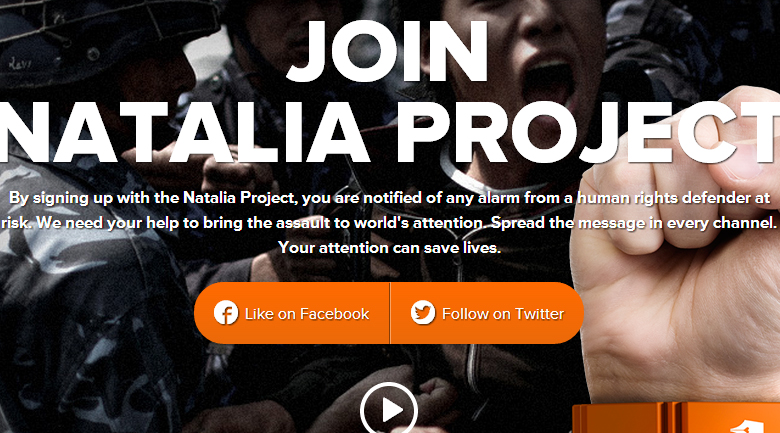
Termed the “Natalia Project,” a smart bracelet is being developed for aid workers that triggers a digital alarm when a worker is in danger. This bracelet uses Twitter and Facebook to broadcast a message to people nearby, as well as to the international community who subscribe to follow these alerts on their site.

Yet before getting carried away with imagining the numerous commercial uses of a piece of rather cubist jewelry (a feature that no-doubt could be improved), you should know that the company manufacturing these bracelets does not offer this social networking capacity for commercial consumption. Why are these bracelets relevant beyond saving aid workers’ lives? They serve as a reminder of the power of social media.

Social media represents access to a local and international community. But access isn’t guaranteed! A critical mistake of businesses is to assume that by creating a profile and posting content to Facebook or Twitter they are using all the resources that social media has to offer. This is far from the truth.

Observe, react, and engage

The Natalia Project calls on Facebook and Twitter users to observe, react, and engage. This last step is what is missing from so many social media campaigns. Good advertising in social media isn’t just posting content for viewers to see and then buy. Good advertising makes the audience feel empowered.

Make your social media campaigns interactive, encourage the role of the individual in promoting and sharing information, and he or she will gain a vested interest in your company. Of the 3.2 thousand Facebook followers of the Natalia Project, no more than a handful of them are really in a position to react to an alarm, yet what is so appealing about the project is the belief that by subscribing anyone can save lives.

Natalia Project bets on longevity of social media

So what are you waiting for? Social media is here to stay. Even the Natalia Project is betting on the longevity of Facebook and Twitter so that in time, when more bracelets are issued to aid workers, alarms will literally be heard around the world.

Social media has the power to globalize and connect people, but it has also developed a strong culture of activism and grass-roots information sharing thanks to initiatives like the Natalia Project and the uprising in Egypt. So it is no longer just enough to establish a Twitter or Facebook account, you need to buy into and engage the culture of activism by allowing your targeted audience to play a more active role.

Facebook users can rate movies, TV, books: what’s next?

facebook ratings

Facebook users can now give star ratings

Facebook users can now give “star ratings” to TV shows, movies, and books. This feature accompanies Facebook’s announcement that it has finished rolling out the “Sections” feature, which shows what apps you currently use.

Users will notice a cleaner looking Timeline because Sections will keep Timeline posts divided. On the left column, each type of content will be in a separate “Section” (movies, games, books, etc.). There is also a section that showcases your music choices if you use the Spotify app.

What is the purpose for the star rating system?

Facebook will be able to get more of your opinions. It will allow you to connect with people who like the same content, as well as show you how your friends have rated the same content. Also, if you rate something with five stars, Facebook will know to show you more of these updates. For example, if you give “Chronicles of Riddick” five stars, it will show you more updates for that page than it would for the film “Top Gun” that you only rated with three stars, even though you’ve given them both a “like.”

The star rating system will also serve as a data Valhalla for developers. For developers of content consumption apps like Spotify, Sections will offer another way to offer content, outside of the news feed. Also, Facebook has created an “Insights dashboard” to demonstrate to developers just how much traffic they receive from Sections.

Facebook is the world’s largest social network, with over 1 billion monthly active users, developers (thus businesses) have access to even more personal information about their users likes and dislikes.

What next?

If this is indicative of things to come, it is not hard to imagine Facebook allowing the rating of professionals or professional services. If this happens, it could undermine a plethora of rating-centered sites. It would virtually eliminate a user’s urge to go to another site for ratings because so many people are already plugged in to Facebook. The sheer convenience of it alone would draw people in.

Some critics think that the social media giant should stick to social media and stop trying to integrate the elements that other apps provide. For example, GetGlue, Netflix, and Moviefone all offer users the ability to rate movies, share them, and connect with like-minded movie goers, but it is completely movie-centric. However, some people only want to use Facebook to connect with their friends, not review movies.

For some people, this is just another downfall of the Facebook streamlining process that began long ago with the conversion to Timeline. And yet, for others it is merely another way to share what they like and connect with friends who like the same thing. Facebook touted Timeline as a “way to tell your own story, your way,” and for most of us, media is very much a part of who we are. If Facebook is trying to be a one-stop-shop for socializing, it is well on its way, but is this a good thing? Or is it too much information in one space?

84% of smartphone owners use device while in stores

smartphone

Smartphones being used for shopping

There’s no denying the constant presence of our smartphones in all of our day-to-day actions. They are used for everything, especially in the online and offline shopping process. Fully 79 percent of smartphone owners are ‘smartphone shoppers’ meaning that they are using their phones to research or purchase products via their mobile device. Simply entering into a search what a consumer is after will help narrow down the specs, prices, and even pinpoint that particular item locally. Smartphones play an active role in shoppers’ buying experience, with 84 percent now use smartphones while in the actual store.

Interestingly, 82 percent of consumers use search engines to help make purchase decisions. A customer can stand in front of a washing machine, for example, touch it, play with the knobs, and then go online and read reviews and compare prices.

How mobile impacts small businesses

Comparing prices is perhaps the biggest way that this could affect small businesses. Your business may not be in appliances, but the stats speak for themselves. Now, 53 percent of shoppers do price comparison, 39 percent look for offers and promotions, 36 percent find locations of other stores, and 35 percent are looking up the hours of a particular store. The savvy business owner would do well to beef up their business’ mobile presence.

According to the study, “While many businesses might assume that smartphone use in store drives shoppers to seek better prices elsewhere and order online, we found that the opposite was true.”

Consumers are looking online for information or savings at a time when they are making purchase decisions, and your business should make sure it’s there as well. Especially considering that 1 in 3 mobile shoppers would rather find information on their phone than to ask a store employee, spending approximately 15 minutes doing so. In some of the high-research categories, such as appliances and electronics, upwards of 50 percent of shoppers do their own research.

There are many ways to boost your small businesses online and mobile presence. From expanded online inventory, price matching, to QR codes strategically placed may really help to reach that substantial group of mobile shoppers. They have their phones in their pockets anyway, why not give them something to do with it?

5 ways to conquer jetlag when traveling on business

jetlag

How to conquer jetlag when traveling

There is nothing worse that going on a trip, business or otherwise, and you have a meeting two hours after you land, but your body is hungry and thinks it’s 10pm. You’re all hocked up on melatonin and vitamin D, but is it enough to truly overcome the uphill battle that is jetlag? Even if you’re only going to the opposite coast, jetlag can be a pain.

CheapAir.com CEO Jeff Klee says there are five primary ways to conquer jetlag in his own words below.

5 ways to conquer jetlag when traveling on business

  1. Prepare for the trip. To deal with jetlag the right way, you have to start before your flight has taken off. Sleep a few hours extra a day or two before your trip to give your body the extra energy it will need to fight jetlag.
  2. Reality check. If you are only in a time zone change for three or four days, realize that you are not going to be able to adjust to the new time zone fast enough before you’re ready to return to your regular routine. If you are going on a short trip—and especially if you are traveling with a kid—you may want to stay on your home time zone, or close to it. Blackout curtains in hotel rooms are great for this tactic.
  3. Get active. If your goal is to adjust to a big time zone quickly, then try to move as much as you can. Walk to destinations versus taking a taxi or subway. Use the hotel gym or go for a jog. Any physical activity you do will help to exhaust your body so when it’s time to lie down you are able to fall asleep quickly.
  4. Do as the locals do. While your body may be craving dinner or snack in the middle of the night, resist! Eat all meals and snacks on local time to help get your body on the right track. Additionally, if you arrive mid-day or morning, stay up until night time to help reset your clock.
  5. Gear up for long plane rides. In the spirit of getting as much rest as possible, pack headphones, sweatshirts, socks and maybe an iPod to put the odds in your favor for quality sleep on the airplane.

So pack your bags and consider these tips for your next trip, and you’ll be the most bright eyed and bushy tailed of the bunch.

Calm down, “zero down loans” isn’t a cuss word

sba loans

“Zero Down” nearly a cuss word

The term “Zero Down Loan” is almost guaranteed to induce an immediate negative response in any one hearing the term. After all, unlike many other terms that we became reluctantly familiar with during the financial crisis (think tranches, negative equity, mortgage backed securities, bond insurance) the term “zero down loan” is easy to understand. We all know what a down payment is, and we all know what zero is. And “common sense” says they don’t belong together.

The fact that two credit unions – Navy Federal and and NASA Federal – have had great success and a very low default rate with their zero down loan program over the past two years backs up my personal experience that the financial crisis wasn’t the result of zero down loan programs, but the result of zero underwriting loan programs – either by carelessness or purposeful deceit by the major banks.

The key to a successful lending program

The key to any successful lending program is smart underwriting. And anyone that got a mortgage in the years leading up to Lehman Brother’s bankruptcy in the fall of 2008 will attest that underwriting standards were “aspirational.”

Which meant that as long as you could document that you aspired to pay back your loan, regardless of your documentable income or means, you could have the loan. While aspirational underwriting isn’t entirely to blame for the financial crisis, it certainly played a significant role.

If you were hoping for a laundry list of reasons why zero-down loans are a bad idea, you’ll have to look elsewhere. Zero down loans are just one tool that can unlock home ownership. Like every other tool, it can do great good when used appropriately or cause great damage when used recklessly.

Zero down loans are just one tool

The buyers I’ve worked with in San Francisco that purchased with zero down have all been incredibly solid people that remain in their homes to this day. That’s right: My experience with zero down programs and my buyers is zero default. Why?

The buyers that I know that have used zero down loan programs were incredibly successful and hard working individuals that had everything needed to buy a home except the down payment. They weren’t looking to increase their leverage, make a quick flip, or qualify for a home that they otherwise couldn’t afford. All they wanted was to be homeowners in San Francisco, and that dream came true thanks to zero down loans.

But then there are reasons they don’t make sense

There are a few situations where zero down loans don’t make sense and should never be allowed. Investment property is one such example that comes to mind immediately. It’s one thing to walk away from a loan – “strategically default” – on an investment property. It’s an entirely different act to walk away from the home that provides the roof over your head. Regardless of the financial equity in either situation, a homeowner occupying the property is far more emotionally invested in continuing to have a roof over their head.

So I say bring on the zero down loan programs. As long as zero down loan programs are tightly coupled to thorough underwriting standards, I believe they are a great tool for helping broaden access to the real estate market for first time buyers. A smart loan to a well-qualified buyer that has been extensively vetted is a smart loan regardless of the buyer’s down payment.

Wells Fargo foreclosing on home for overpaying mortgage

questions

Wells Fargo and the case of the confusing pre-payment

If you’ve read AGBeat for any number of years, you’ve read endlessly about cases wherein banks foreclose on the wrong address, homes that no longer exist due to storms, or worse, when a payment is made early. Yet another homeowner has gotten the dreaded, nasty foreclosure filing papers on his Orlando door, according to WFTV because he overpaid.

Having never missed any payments, the man is likely in disbelief as he says he was offered a loan modification last year, and should he make four consecutive monthly payments on time, a permanent modification would be awarded and a lower rate would be given. During the trial period, he overpaid, so Wells Fargo would no longer accept payments and began the foreclosure process.

Wells Fargo takes a harsh tone

“When he came in and showed me all of the documents, it was just unbelievable,” says the homeowner’s attorney. “Who gets foreclosed on when they’ve made all payments on time?”

Often, in these types of cases, banks typically say they’re “looking into it,” but Wells Fargo didn’t take that position, no, they told WFTV “For some loans, completing trial payments is a significant step toward a permanent modification; however, in this instance, the loan was part of a mortgage-backed security and in a protected pool, with specific payment guidelines. We are working with [the homeowner] to explain the guidelines and explore options that may help.”

Also in Florida, in 2011 we told you about an elderly homeowner who was foreclosed upon for paying Bank of America a few days early under the same federal program which was designed by the Obama Administration to save struggling homeowners. Servicers apparently did not get that memo, as if any homeowner is off by even a penny below or above or a day early or late, their payment is not within the parameters of the program guidelines and the payment is kicked out, automatically subject to foreclosure.

During the robosignature debacle which cost banks billions after moving forward with foreclosures without any human review of cases, there was an air of deniability, but in this case, and possibly others, the bank is unsympathetic and appears to disregard the very spirit in which these modification programs were designed.