Home Blog Page 342

3 hot productivity apps for busy professionals

3 productivity apps

You’re busy, we get it

You’re a professional and you’re busy. You don’t have time to take the long way to work, for example, or not be fully focused on the tasks at hand. Being productive can mean the difference between profit and loss. Having a simple-to-use app to help you reach your productivity goals can make your life so much easier.

So, with that in mind, here are three awesome productivity apps to choose from.

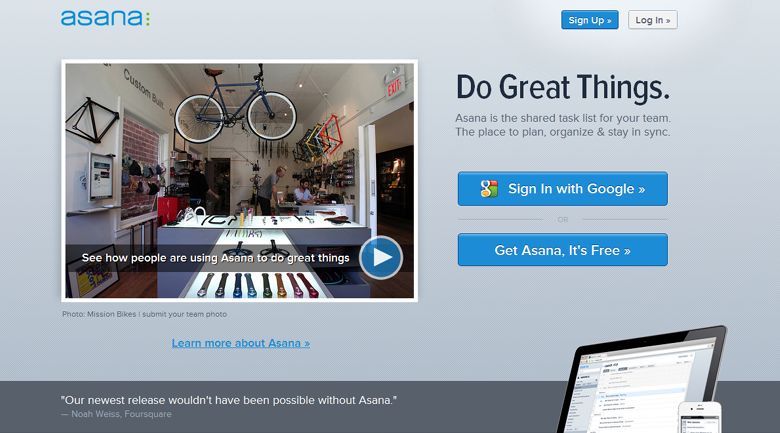
1. Asana

asana.com
Asana
– This app allows you to create groups and then assign groups assignments. You can keep track of it all from your phone.  You can see which tasks have been assigned to which team members, when they were assigned, when the task should be completed, and whether or not each task has been completed yet.  Asana is all about organization. And the best part of it all is that you can see updates in real-time.

2. Due

dueapp.com
Due
– You most likely have hundreds of tasks to complete each week, but if you added them all to your calendar, you and your calendar would be easily overwhelmed. The Due app allows you to quickly set reminders for your everyday tasks, the tasks that you wouldn’t normally program into your phone’s calendar. One of the most convenient features of this app is that it will bring up all your reminders in one list. This means you don’t have to scroll through your calendar trying to find specific reminders. It’s all right there at your fingertips.

3. Do

do productivity app
Do
– Just like Asana, the Do app allows you to keep on top of your assignments and tasks, those with whom you’re working, and what has been accomplished already. This way, you won’t waste time by working on something that’s already been completed. You’ll receive instant notifications if someone is working on it or if a task has already been completed. What could be more productive than that?

The right productivity apps can make your business day and even your business better organized, effective, and connected. When you can achieve consistent productivity, you will have achieved something many people and businesses can never maintain. Find the perfect app to complement your workday and you’ll be a few steps ahead of the competition.

Concept of time and punctuality vary across countries, cultures

concept of time

Your concept of time and punctuality

Being American, I understand the social expectations of being “U.S. punctual” in a myriad of situations. As opposed to “UK punctual” or even “Australian punctual,” “US punctuality” has a bit of leeway. Each degree of punctuality depends on the relationship you have with the person you are meeting. While I can probably get away with an excuse like “my flat iron caused a short, so I went a bought another one” with a family friend, I don’t think it would fly for arriving an hour late to a business meeting.

The common understanding is that the more uniquely important (or monetarily valuable) the relationship, the more we strive to be punctual. Think about it: which is more culturally acceptable in the US: to be late to a friend’s birthday party or to a wedding? To be late to a staff meeting or a meeting with the CEO of a potential client? Understanding your own cultural expectations of time is relatively easy to navigate, but what about understanding a different continent’s concept of time?

Six hours late was “on time” in Ghana

I was invited to attend a women’s conference in Ghana, West Africa. Before I set off, I brushed up on all things African – from greetings, to dress, to food, and language. I even prepared myself, or so I thought, for understanding the African concept of time. Throughout my stay, I also visited local schools, shops, and even took in some sightseeing. The driver that was arranged for me was an hour late the first day. After conveying the message of how I need to be at the conference the next day on time, he assured me he understood.

The next day, as promised, he came early, technically, and was only 45 minutes late. Some progress had been made. But when I tried to arrange a trip to the Cape Coast Castle, one of the longest surviving slave export points in Ghana, the wheels fell off again. After trying twice to get to the castle (once, he was a no show, and the next time he arrived 4 hours late!), I was able to secure another driver. I understood now that being 2-3 hours late was customary and was even considered punctual.

Realizing that I had my American blinders on with everything I read, didn’t allow me to fathom that lateness could extend to up to 6 hours. Thinking in American terms, I understood “late” to be at most an hour. Factoring in the lateness and knowing that the castle closed around 4pm, was an hour away, and I wanted to be there by noon, I was able to convey that I needed to be at the castle by 10am. I was told the driver would be there at 8am. I had time to rest, get breakfast and be ready by 10am. Success! The new driver came 2 hours “late”/on time and I managed to get to the castle by noon.

Why the concept of time differs

It is wise to remember that a culture’s concept of time is heavily steeped in the religious and philosophical beliefs. Unlike our Western concepts of past, present and future, in Africa, time primarily exists in two stages: deep past and present. Future, for all intents and purposes, doesn’t really exist.

So while in America, we will wait, on average, 15-20 minutes for a late appointment, or up to an hour for a close friend, that same time table doesn’t translate across the world. Africa’s chronemics (time study) are couched in a highly socialized culture. Being more concerned with the interpersonal interactions of the community make this culture polychronic.

In terms of task handling, multiple things are done at once and work time is not differentiated from personal time. This concept is vastly different from the US monochronic culture of efficiency, schedules and balance. In business, timing and rhythm are everything. Understanding this varying rhythm of time overseas can be a great benefit both here and abroad.

Key takeaways

  • When someone is tardy/late, it is best not to take it as a personal affront.
  • As much as you can, get clarification so that you can adjust your timing to theirs.
  • When doing business overseas, try to keep a clear understanding of the different concepts of time and use them to your advantage.

Bonus: below are two photos from the travels mentioned above.
ghana

Google+ now supports iPad, amen

google plus on ipad

Google+ now on iPad

Google+ has announced that their mobile app finally supports iPad, which iPad users have been demanding since day one, and the announcement comes along with news that all iOS users will see substantial upgrades to their Google+ experience in Google+ 3.0.

The iPad app is found in the iTunes catalog as the iPhone app, as the mobile iOS app supports both, which has some confused in their search (download link is below). What has most people captivated with Google+ 3.0 is that the iPad experience is said to be extremely responsive and well designed in a stream made up of six squares per screen, each square containing a Google+ update from connections.

While the tiling effect is not new, the ability to pinch a post to expand it and comment on it, then pinch again to throw it back into the stream is quite clever. Users may now also use two fingers to drag any post to the sharing box and share it on their own stream.

Hangouts on iPad

The most exciting part of the update is that you can now start a Google+ Hangout right from the device, and stream it to your television using AirPlay, and up to nine users can be invited. This version offers push notifications in the form of an iPhone ring to any user when a hangout begins so they are aware of when to jump in. Google+ also recently unveiled “events,” and the mobile app allows users to create, manage, and interact with events directly from their device.

Users should be aware that when uploading the app, the default is to allow instant upload, meaning any new photos you take with your device will be automatically uploaded to a Google+ album, and while the album is private, this is a setting many people will want to go in and disable.

Photo tour of the iOS app

Google+ for iPad
Google+ for iPad
Google+ for iPad
Google+ for iPad
Google+ for iPad

Realtor Party? Count me out

Realtor Party

I don’t care to belong to any club that will have me as a member

I’ve been reading and sitting on the sidelines for months, contemplating this “Realtor Party” movement and wondering why I am not at all a card carrying member of this. After some soul searching and research on the National Association of Realtors (NAR) press, below are my problem(s) with this political movement:

What is the Realtor Party? According to their website, “We are the REALTOR® Party: An energized movement of real estate professionals fighting to keep the dream of homeownership alive for this country. Now more than ever, it is critical for REALTORS® across America to come together and speak with one voice about the stability a sound and dynamic real estate market brings to our communities. From city hall to the state house to the U.S. Capitol, our elected officials are making decisions that have a huge impact on the bottom line of REALTORS® and their customers. Through the support of REALTORS® like you, the REALTOR® Party represents your interests.”

The site continues, “As a member of the REALTOR® Party, you…

  • Vote for REALTOR® Party Candidates.
  • Act on REALTOR® Party Issues.
  • Invest in RPAC.”

Why I do not support the Party

While I am for homeownership, I don’ t believe that every red-white-and-blue American needs to or deserves to buy a house. Oh my God! Blasphemy! A Realtor stating she is not for homeownership for each and every American! Yes, you have that right, some Americans don’t want to or don’t need to buy a house. Some shouldn’t. And many don’t have the economic means to do purchase and support the house once it is owned. So there. As a Realtor I make my living my helping people buy and sell houses. But that does not mean that it is a God-given right for every single American to buy one.

Homeownership is a priviledge and unless you have a bag of cash to pay for this purchase outright, you will be beholden to banks and underwriters and appraisers. You will have to prove your worthiness to purchase and repay this debt. And if you don’t have the financial stability to do this, then you may not be able to buy a house. Period.

Voting with the REALTOR Party

As for the points above “As a member of the REALTOR Party, you…” let me address these one at a time.

I will vote for who I want to, whether or not they are the REALTOR Party Candidate of choice. I vote with my head and I vote for who I think the best candidate is, no matter what their party affiliation or whether or not they are the “union endorsed candidate” or not. I do my research and never vote straight party line, Democrat, Republican or REALTOR.

This reminds me too much of when my father, a teacher, would come home from school and hand out little wallet cards telling my mother and grandmother who to vote for. The wallet cards were a cheat sheet filled with teacher’s union candidates. As far as I knew, my father, mother and grandmother walked into the polls and voted for whoever was listed on that wallet card. They didn’t think or question. The card was all knowing. The union was God. That is until the union forsook the teachers in my father’s district in the 1980s and sold them out to another school district. Today I wonder who my father now votes for, without the union to guide him. He probably votes straight party.

Not me. I do my research and vote for the candidates who I believe will do the best job, no matter what the REALTOR party says. So no, I won’t be marching into the polling station and voting for your REALTOR party candidates. I have a brain and an opinion and I’ll be using it.

Acting on REALTOR Party issues

ACT on REALTOR Party Issues…. Okay, that’s an interesting one. The REALTOR Party expects me to contact my local, state and national politicians to spout the party line and urge them to vote for issues that support homeownership and our business. That makes sense.

A few years ago I worked side by side with one of our state representatives to change the way our school districts were handling tax assessments and appeals. I worked with him for several years. Nothing changed. This politician beat his head against the wall and we were so close to fixing something that is very wrong with our state system. Twice, the state’s governor promised us if we got support passed in the senate and house he’d sign the bill into law. Twice, he lied. I got a very up close and personal view of how our government (on a state level at least) works. Those few years of me being at the forefront of this movement were enough.

I will never run for any government office — and I’ve been asked. I’ve been asked to run for school board and turned it down twice. I was asked to run for county positions and ran for the hills (including one very important political position running the county). And I was asked to help recently with a state initiative and I refused. I am burned out. I see how the inside works and it is ugly (uglier than seeing sausage being made).

God bless anyone who wants to attempt this thankless job. I will lend my verbal support but will no longer serve in the trenches. It’s a thankless job where those who are idealistic are beat into the ground and those who have ulterior motives step all over the rest of the soldiers.

Promising to contribute to RPAC as a Party member

And finally, if you are a true REALTOR Party member you will contribute to RPAC. Nope, never going to happen in my world.

I donate each year to our United Way (I am a Pacesetter and send a significant contribution in before the campaign officially starts) which goes to support 13 local agencies. I am a Rotary Paul Harris Fellow (Sapphire) and donate every year to the annual fund for our fundraisers. I send individual contribution checks to the politicians of MY choice.

Why don’t I contribute to RPAC? I choose where my money goes. I send charitable contributions to the charities I choose. I send political contributions to the politicians I choose. I don’t want to send money to some bit PAC or slush fund to allow someone else to decide who deserves my funds. I am sorry if that sounds anal or controlling, but a few years ago, I read a piece about a monument that a group I belonged to had donated millions to. I realized that the millions could have gone to feed the hungry or clothe the homeless in my area, not to this piece of bronze or steel in a park. At that point, I decided to give contributions to the parties and the groups I want to support, not some general fund that I don’t have a say in.

The Groucho Marx quote is appropriate here: “I don’t care to belong to any club that will have me as a member.” I am my own person with my own mind. Nobody defines me in one word — not a party affiliation as Republican or Democrat or REALTOR.

I am a REALTOR. I am a wife, mother, daughter. I am a registered Democrat, yet ask me to define my political beliefs and I am a Blue Dog Democrat like my cousin Tim Holden. I am a photographer, reader, writer and blogger. I am an entrepreneur and multiple business owner. I am multi-faceted. I will vote for who I want, who I believe in. I will give money to who I want, who I want to support… No matter who likes it or doesn’t like it.

Updates to Twitter mobile: now more Facebooky

twitter mobile app

Twitter is making progress

Twitter was once looked at as the golden child of social media, poised to outpace Facebook’s growth, but that never quite happened, and the company has long been the punching bag of critics who wonder where the millions of dollars in funding goes, other than to make some simple code edits to landing pages, or South by Southwest parties, or the design of a new logo this year.

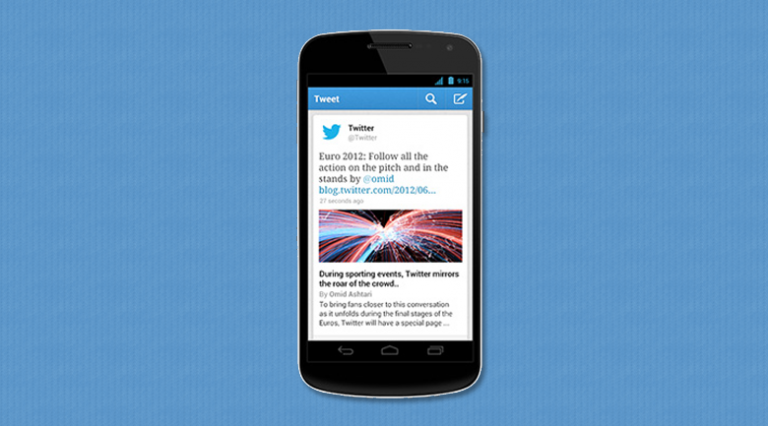
Twitter has continued forging ahead, despite criticism, and this week announced both a new features for Android and iOS, and then announced their entire mobile experience is being overhauled and modernized.

While we are excited to hear the news, because the mobile experience for Twitter is subpar in comparison to the level of funding and talent they have attracted, but the features that have been updated feel less like innovation, and more like an attempt to keep up with Facebook.

New Twitter features: now more Facebooky

The core feature that has garnered the most buzz is Expanded Tweets. The company explains this new feature:

“Since we introduced expanded Tweets on twitter.com, we’ve added several new partners like MLB and C-SPAN to a diverse and growing list of media sources. Starting today, you can also expand Tweets on Twitter for iPhone and Twitter for Android. When you tap a Tweet linking to a Kickstarter project, for example, you can play its video directly from the Tweet details view in your app. You can also read article summaries when you tap Tweets linking to sources like The Atlantic or play videos or view images when you expand Tweets linking to websites like Etsy and Vimeo. This new experience will roll out gradually to web, iPhone and Android users.”

Other new features include the ability to follow major events more simply from your phone, push notifications, better search including autocomplete, a discover tab to highlight new stories, and the ability to tap an avatar to go directly to a profile. The mobile redesign is said to be a more lightweight app that runs more quickly and is more aesthetically pleasing and similar to the web app.

Although the updates are welcomed, they seem like a “me too” move, like a laptop company making their devices thinner to compete with the iPad, or a hotel adding a spa service to compete with the neighboring hotel, rather than something like sixth sense technologies that are not just an iteration of existing technologies that competes, but rather resets the playing field.

All we see with these updates are ways to be more Facebooky and a gearing up to feature promoted content more than ever before. We hope that in 2012, Twitter will innovate, because we know it is in their DNA – the number 140 is proof of this, and they can do it again if they use their funds to innovate, not iterate.

Facebook Group users offered a new stalker pass

facebook groups

New Facebook Group feature

According to social media giant, Facebook, starting today, “when you visit a group, you can view who’s seen each post. This way you can stay updated on the group’s activity.”

The company explains that “Facebook groups are spaces where you can share things with the people who care about them most. You can use groups to connect with important sets of people like your family, soccer team or book club,” adding through an example that their core function is to measure who is seeing what in a group. “For example, in your soccer group you can post the new practice time and then see who got the update.”

Facebook has not released much information yet about the functionality, so speculation is swirling – is it just admins of a group who see what items have been reviewed, or is it anyone? Will this encourage gaming of the system by adding another value system outside of just likes and comments? How does it count if something is seen? Is it marked as “seen” if it is scrolled past on a user’s news feed, or in the group? How can Facebook determine if something has been seen or if it was part of a screen someone skimmed?

Through Facebook’s illustration, the feature is available on the web interface along with the mobile interface:
groups

What is most fascinating is that the spy apps that say “see who looked at your profile” or “who is looking at your group” have been deemed as junk by Facebook who historically has asserted that no third party can report these numbers, and alas, their firm assertions have been made clear in that only Facebook can tell you this information.

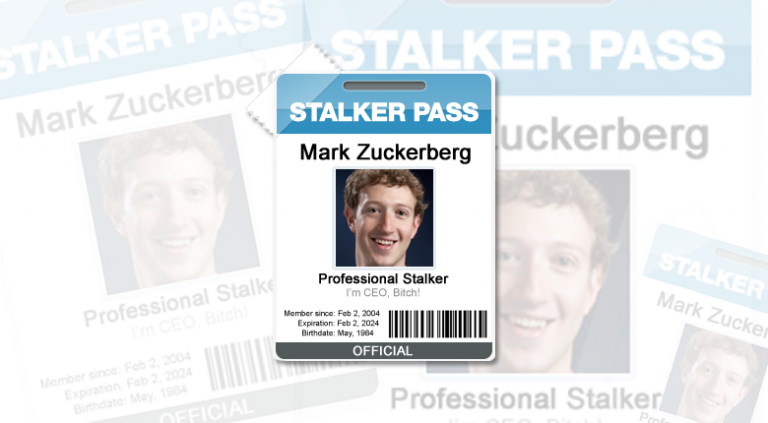
Although useful for group admins, this mostly feels like a free stalker pass for groups to obsess over, and could potentially hurt groups, as people guard their privacy – don’t you watch your competitor? Do they need to know how actively you monitor them? On the flip side, wouldn’t it be nice to have this feature to gauge what your groups are actually actively consuming?

The image created above is in jest, no one is calling Zuck a stalker.

Mucking it up in real estate marketing

Too Much Time On Your Hands

“Moisture intruder” (Announcing the new superhero – Hose Man!)

“Bath byday” (Drink much by night?)

“One hat property!” ( One headless agent…)

“Out address is…” (Let me guess – Harvey Milk’s party invitation?)

Too Much Information

“Mole  in basement” (Last entry on the CIA Office Directory.)

“Wires near house not hot voltage” (Well, you obviously stuck your tongue on something!)

“Small lak in master bath” (Note to kayak enthusiasts: Avoid brown water.)

“Steps to bach” (It’s pretty hard to dance to St. Matthew’s Passion.)

Too Much To Be True

“Los of light” ( That’s what happens when you pass out after the 5th martini.)

“Maturd trees” (When the wind blows, that must cause a real sh_tstorm!)

“Looking for backer” (Is this a house or the Indianapolis Colts?)

‘Rash before it goes” (I suggest you try a strong ointment…)

“We welcome all inquirkies” (Sign on your door at Nuts-R-Us treatment Facility, sweetheart?)

Too Much Grass

“Big lawn for kids and pots” (So are you suggesting we cook ’em?)

“Newley laid law” (Gloria Allred must have gotten lucky last night!)

That’s it for this week, folks. Remember: Spell and Sell!


After a home run in real estate, Merge enters new verticals

Merge ABM

Merge innovates and expands, months ahead of schedule

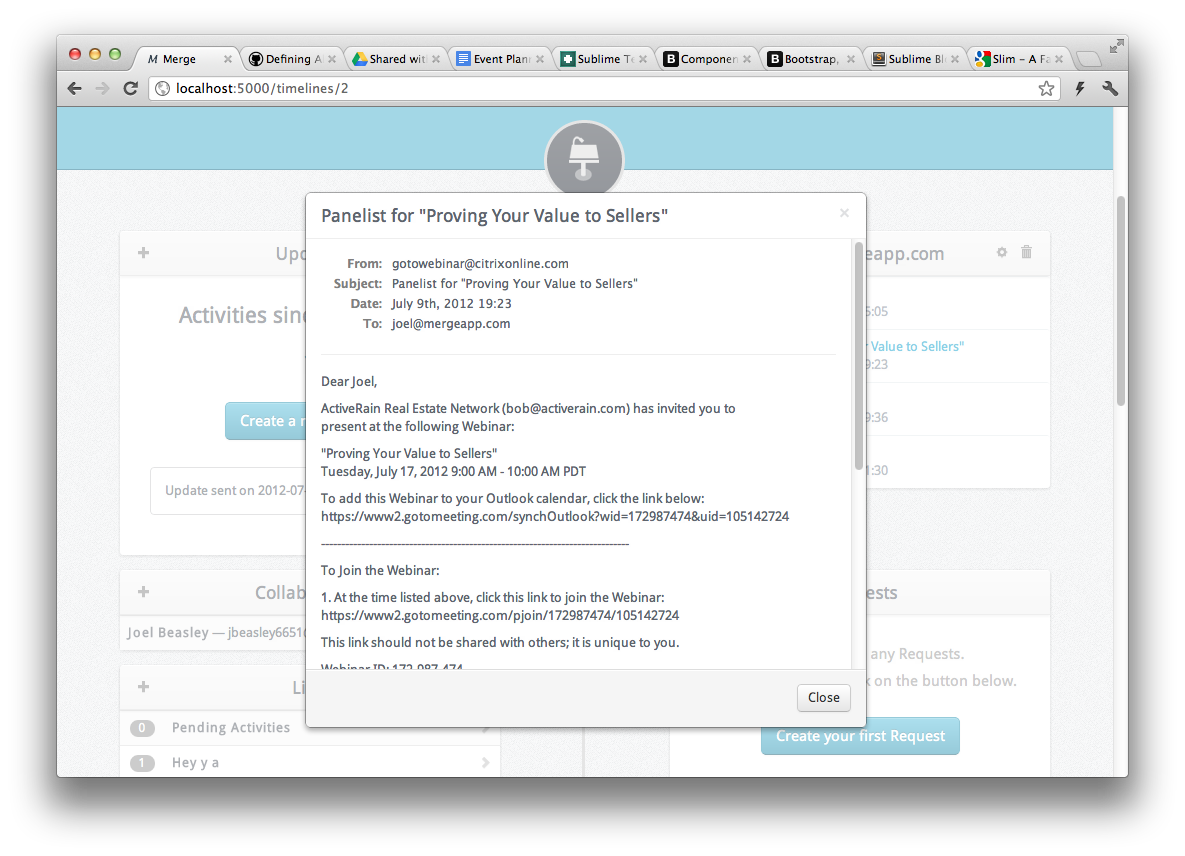
Just over a month ago, AGBeat introduced you to Merge, the app that tracks common business activities in a timeline format that notifies all parties of updates. The company is now launching a revamped platform that promotes collaboration, is bringing in keyword-specific emails as timeline updates, simplifying to do lists, and facilitating information sharing and requests.

After an overwhelming response in their first target market of real estate, the company has released their updated software to serve all industries. This launch has long been part of Merge’s expansion plan, and comes many months ahead of schedule, thanks to a growing and enthusiastic team.

Four hot new widgets

The company is also unveiling their updated app design, and four new widgets within the system. Merge lets you choose, a la carte, the productivity widgets you need to get from A to B in the most professional, elegant, and logical way possible. Widgets can be removed or added at any time, without having an impact on the data within them. Although all four widgets are hot, our socks are knocked off by the first two:

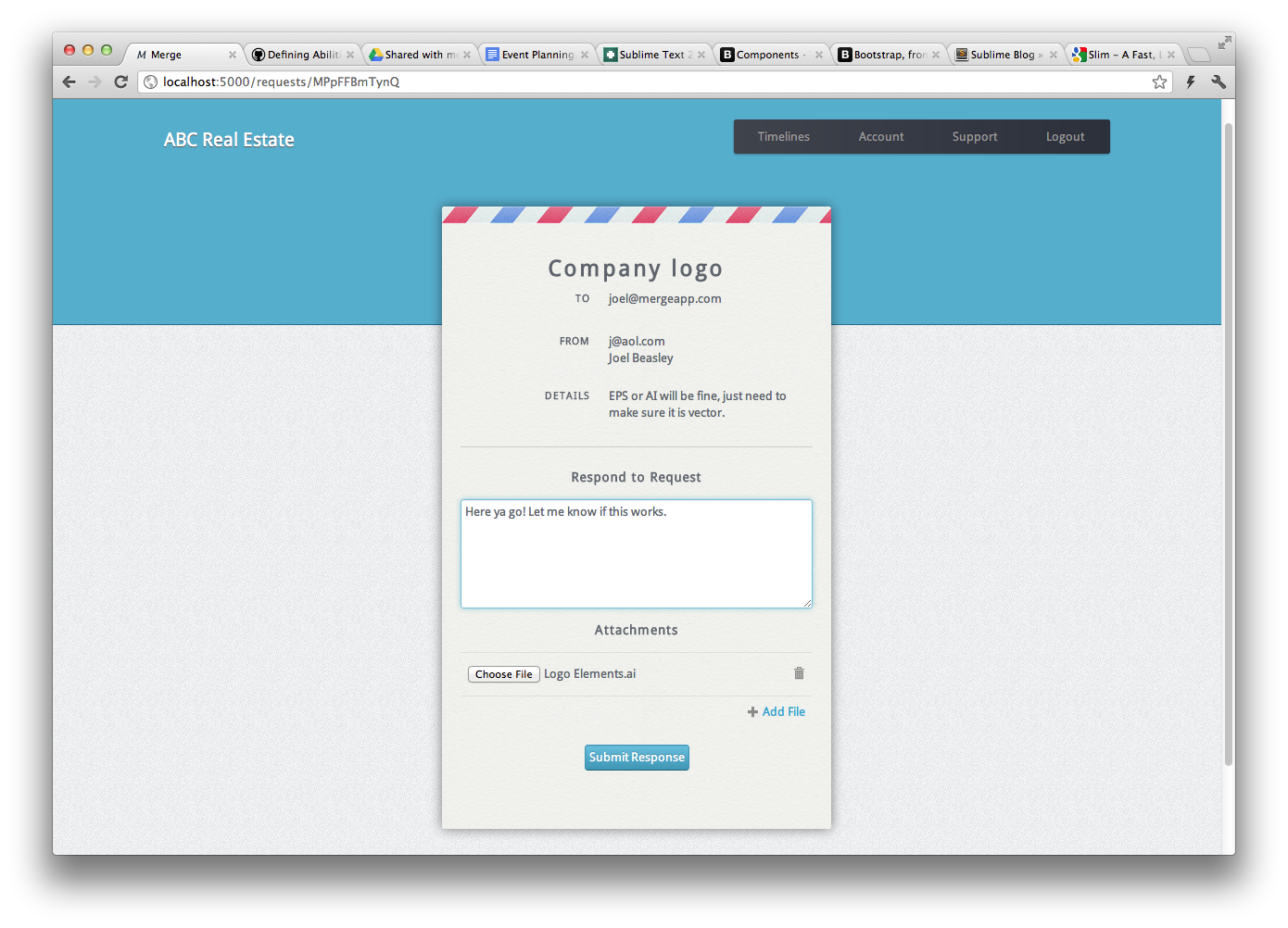
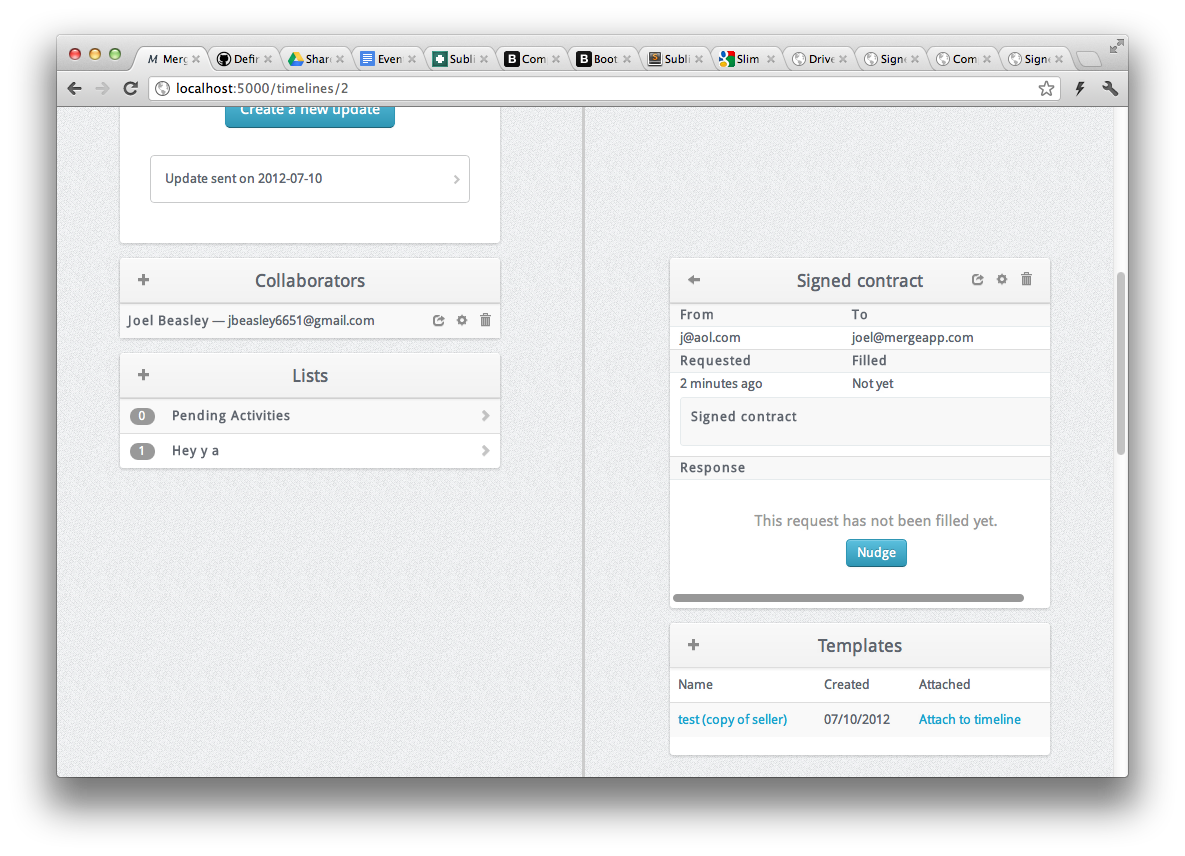
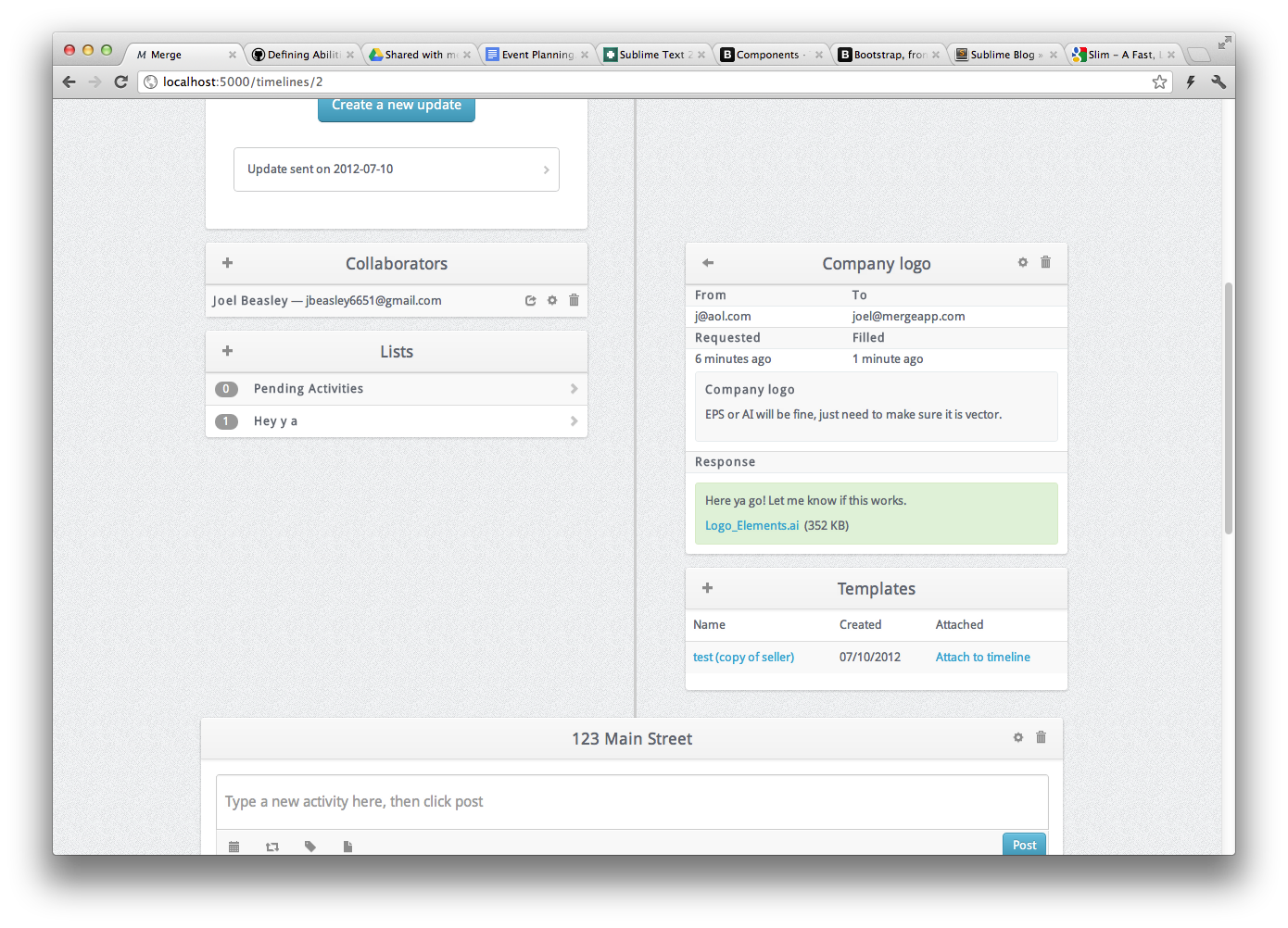
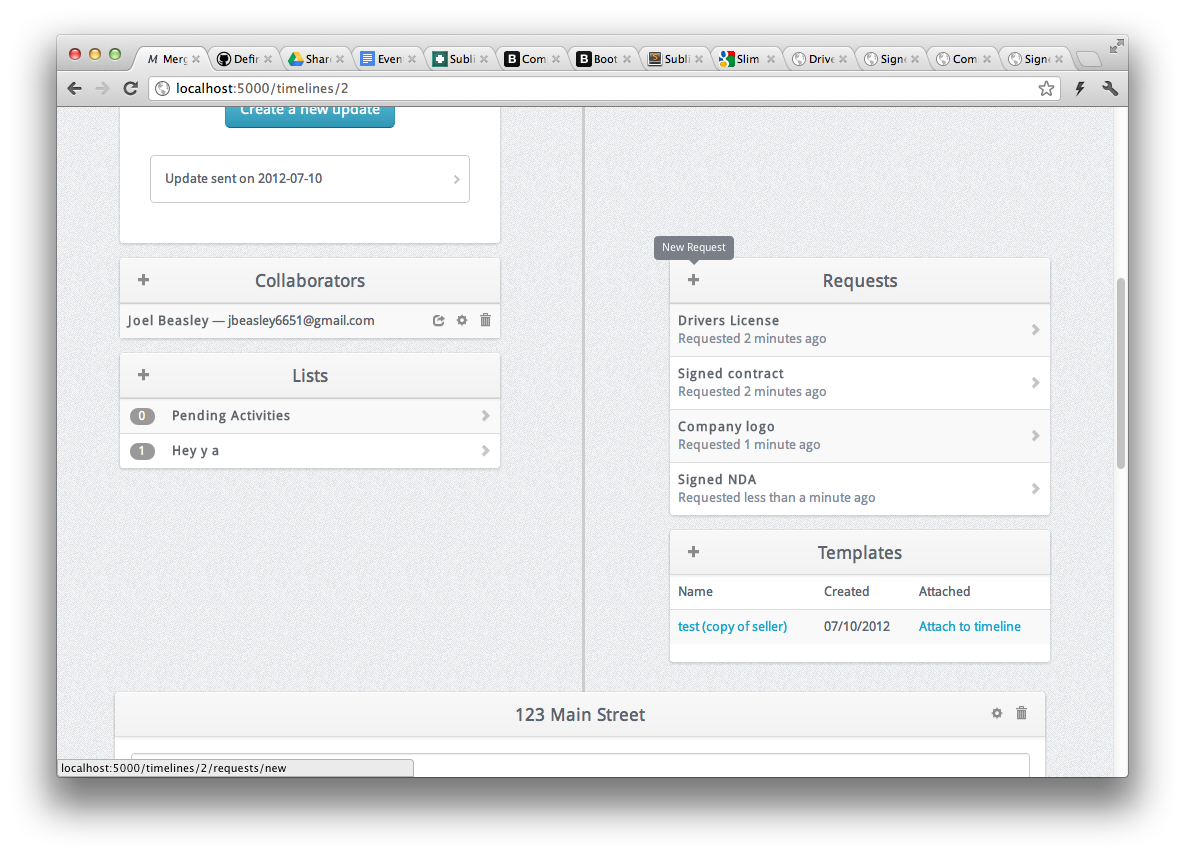
  1. Request Widget: this secure feature allows users to request anything from anyone at any time and tracks which items have been requested and fulfilled, without requiring the other person to sign up for an account. For example, a mortgage broker can now ask an applicant for a copy of their driver’s license, and the fulfillment is tracked within the timeline, without “assigning” a task, rather “requesting” any number of items electronically.
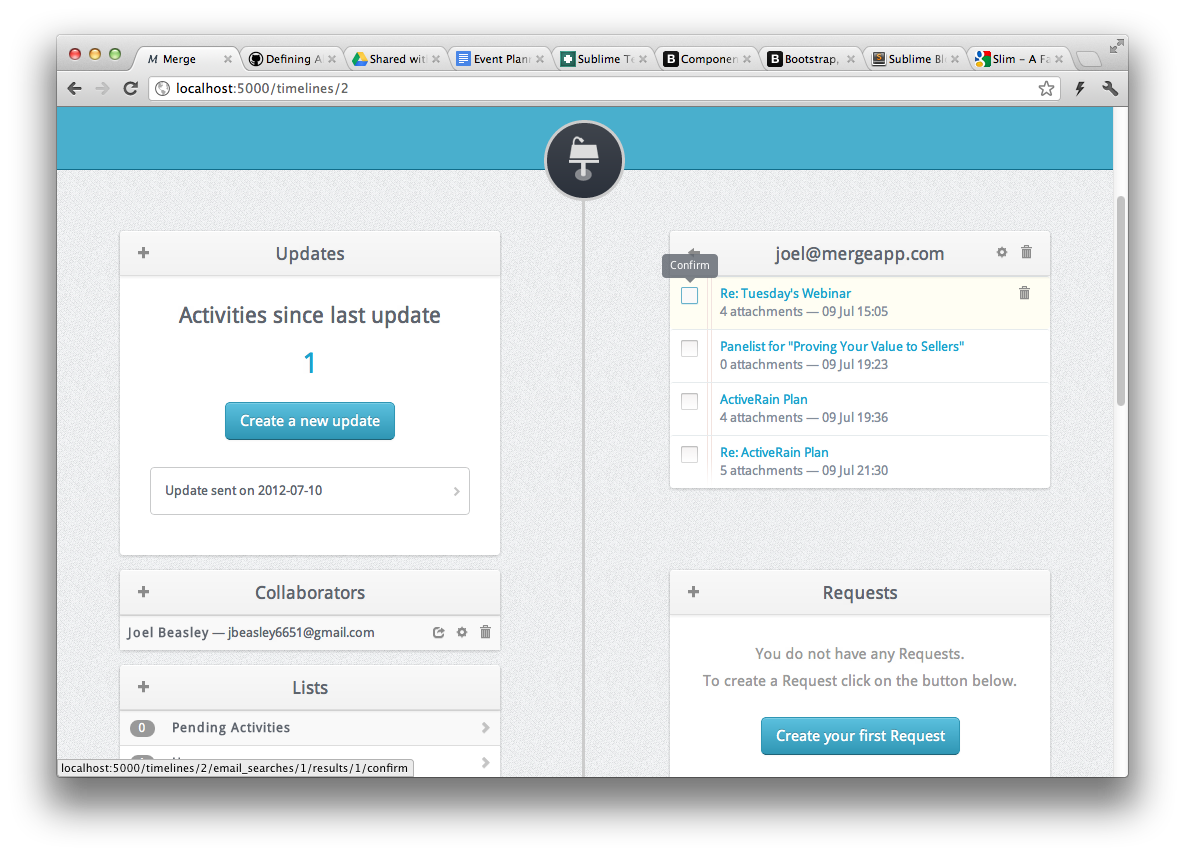
  2. Email Connector Widget: users may now automatically add emails to their timelines by searching for keywords, or sender names. Any email service supporting IMAP is compatible, from Gmail to Outlook. For example, if an event planner searches their email from Merge, using the term “Atlanta Hilton,” they can select any email from the results to send to their timeline.
  3. Collaborator Widget: now, users can invite other people into their timelines to actively participate by commenting and sharing items, without any other user being forced into opening an account. Collaborators receive an email link to participate, and may only see widgets designated by the primary user; permissions may be added or restricted at any time. For example, a bridal gown designer can invite in his bride and the entire bridal party for input on ideas and things that need to be done.
  4. List: rather than offer tasks with due dates, the List Widget offers a simple checklist of pending activities that can be pushed to the timeline as completed. This new feature will offer public list items which can be viewed by those with access to the timeline, or may remain private, viewable only by the creator. For example, a land developer can share active tasks with her team and client for their input and to show when tasks have been completed, all without requiring a due date, as some tasks are simply active business tasks, not projects.

Innovation so big, a new software category had to be trademarked

Merge is pushing the boundaries of innovation so far that there has been no assignable category for their software as a service (SaaS). Merge is a hybrid task manager, customer relationship manager (CRM), and so much more, meanwhile not fitting any of those categories, leaving the app left out of common software categories.

In response, Merge has recognized that the mold has been broken, therefore trademarking “Active Business Manager (ABM)” as the newly launched industry category for their unique product. A CRM only manages the relationship with a customer, a project management app only manages a product for teams and groups, while an ABM allows you to manage your active business, regardless of industry.

Merge Founder and CEO, Joel Beasley said that Merge helps professionals to interact with their active business like never before, describing the revamped SaaS as a management tool for business interaction with customers that adds selective transparency to existing data sets, features an API to push activity, and allows for collaboration.

“Merge does not interfere with existing systems,” Beasley said, “rather, it streamlines many products professionals use in the field every day. People will always try to figure out how to manipulate software, so flexibility is key, and we deliver exactly that – ridiculously simple software that is flexible and solves core problems in professionals’ active business.”

Building a quality team

Beasley credits team members’ enthusiasm for being many months ahead of schedule, promoting agile development rollout principles, working in tandem with his team members, and hiring only those who are the most passionate about their industry. “I won’t accept anything less than someone who loves their job,” Beasley said. “You can’t buy passion – that’s how products get magical.”

In getting to know Merge through their support of AG, we have learned the refreshing tale of how Merge has grown so explosively and so quickly, which is welcome news, as we continue to hear of so many companies struggling to stay afloat.

In pursuit of his dream to simply build pristine software, Beasley has done in a month what most startups take at least a year to accomplish, and his enthusiastic ambition shines in every cultural aspect of the company, like his requiring all employees to spend half of one work day each week to read a book that pertains to their role in the company and write their impressions on what they read.

“If you do not want to be better at your job, don’t work here,” Beasley said. He also confessed that as a long time coder, he will sometimes sneak into the office at 3am and write some code, just “to feel normal,” and shares that when he brought on several highly skilled coders to be on the Merge team, opening up his code to the them was like “letting someone read my diary,” it is that personal to him.

With the young, super intelligent, motivated, business savvy coder at the helm, not only is an amazing product hitting the market, we might have the next Tony Hsieh on our hands.

Photo tour of new Merge features


Vending machine makes people do stunts for free treats

fantastic delites

Guerrilla marketing in Australia

In Melbourne, Australia, a vending machine was set up overnight this month, but not just any vending machine – an interactive machine that offers free treats for stunts that get more complex each time someone presses the magic red button. The challenge is not only to raise brand awareness of what we had no idea is a brand of chips (silly Americans), and go viral.

While the video is nowhere near viral status, the company filmed from inside and outside of the vending machine, showing how far people were willing to go for free treats, ranging from dancing, pushing the button thousands (yes, thousands) of times, to bowing down to the chip diety. The clever advertising stunt drew a crowd, and with each demand it made on the button pusher who wanted treats, they recipient and crowd got more rowdy – there were shouts and hugs when a girl pushed the button 5,000 times for a free box of chips, while the first person who only had to hit it 100 times simply took her box and quietly walked away.

[ba-youtubeflex videoid=”R8RIqJLUYSE”]

How can your brand launch something this clever? Examples:

Guerrilla marketing (or ambient marketing) is a growing niche that few firms have mastered, but when done well, as the Delite-o-matic does above, people get excited over free things like a box (bag?) of chips, and are willing to embarrass themselves in front of others.

While your brand may not have the budget to pull of a stunt as complex as the Delite-o-matic, consider ways that you can interact with your consumers and tap into the crowd mentality of noticing the ultra clever things you do to get their attention, above and beyond an ad in a magazine with your face that dryly says “buy my product.”

Perhaps you can uniquely present your product, as USA washing detergent did by sending out their product wrapped in a t-shirt. Maybe it’s going the extra mile for clients by doing latte art rather than simply pouring lattes, or as Julie Niehoff says on stage, bind your presentations uniquely, or when handing a retail customer a bag, add something special like a ribbon to the handle.

Also effective are the silly campaigns, like the Netherlands billboard campaign that threatened to expose an overweight nude man’s body if the billboard space wasn’t rented quickly. Other vending machine stunts have worked, like the recent vending machine that spit out free kayaks and locally made items to promote tourism, and the indestructible billboard that had passerbys punch it, posting their pictures on the company’s Facebook wall.

Guerrilla marketing is meant to capture attention, and is not always done so through thousands of dollars worth of advertising, but remember, those thousands of dollars for medium to large brands are tremendously inexpensive spends, as campaigns like the Delite-o-matic are filmed by all participants, shared in their social networks, and talked about, because they tap into what the consumer wants.

Windermere Solutions rebrands as Sweepre Interactive

0

sweepre interactive

Windermere Solutions sheds Windermere name

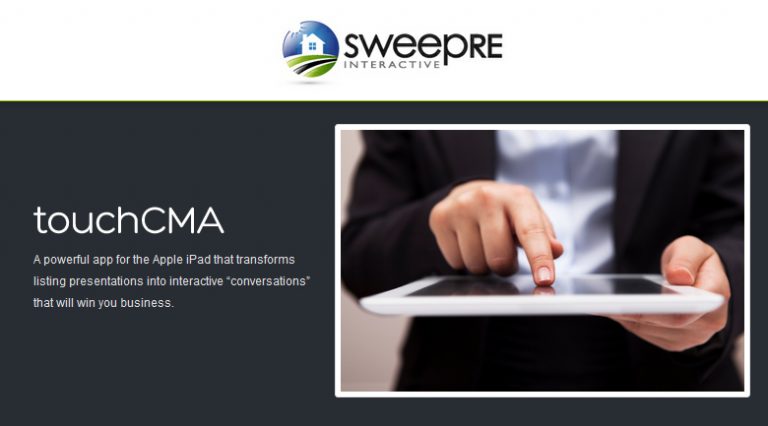
After Windermere Real Estate spun off a technology company in 2011 devoted to providing technology solutions to agents across all companies, Windermere Solutions is rebranding to Sweepre (said “sweeper”) Interactive and asserts that an array of new products will launch in this calendar year. The company has already launched agent websites and touch CMA, with an extensive product roadmap for 2012.

The company says the new name more accurately reflects its core products and services, reinforcing its value to professionals in the residential real estate industry. Sweepre says the name is derived from the concept of sweeping, stating that “In order to provide timely, accurate real estate advice to their clients, real estate professionals must gather property listings and other data from multiple listing services (MLS) – a process known as sweeping.”

Proud of roots, but aware of confusion

Shedding the Windermere brand will help consumers understand that although spun off from a real estate company, which they tell AGBeat has long been a testing ground for products before released, the tools are designed for agents at any residential real estate company.

“When we launched the company as Windermere Solutions two years ago, we were a true spin-off from Windermere Real Estate, one of the largest independent real estate brands in the United States,” said OB Jacobi, chief executive officer of sweepRE. “We’re very proud of our roots, but we also found that our name association with Windermere was creating confusion in the marketplace because people thought we were the technology division of Windermere.”

Jacobi added that, “Sweepre is an independent brand and the new name reflects that independence. While Windermere Real Estate is a valued client our technology products and services are available to the entire real estate industry.”

“Real estate professionals are becoming increasingly savvy about how to use technology to enhance the experience of buying and selling a home,” Jacobi said. “Frankly, consumers expect more and touchCMA and our other products, such as Agent Web Sites, help our clients meet and exceed those expectations.”

Sweepre in 2015

In an exclusive interview with Jacobi, we asked what Sweepre will look like in 2015? Jacobi confirms there are many great products on the market presently, but that Sweepre believes most try to tackle too many issues at once, resulting in agents unaware of how to use them. “So as we look to the future,” Jacobi said, “three things come to mind.”

First, address the status quo. One of the biggest obstacles preventing the adoption and growth of any new technology to overcome is status quo. Many agents have been successful by following tried and true practices, so they may be reluctant to change their methods and approach, and to integrate new tools and technology into their practice. Part of that reluctance may be rooted in fear of change and the unknown. However, the public believes technology can be a powerful ally in the buying and selling process. By building tools that eliminate the fear and mystery associated with technology-driven change, we help agents be more successful.”

Second, make things easy to use. Agents are busy and that last thing they want to do is learn a new technology. We’re focused on developing products that are easy to learn, easy to use and help centralize an agent’s work flow. Not only do they help minimize the stress of using technology, but they provide the biggest bang for the buck. This philosophy guided the development of touchCMA, our comparative market analysis tool for the iPad, and it will continue to guide us into 2015 and beyond.”

Finally, build and reinforce connectivity. We’re going to focus on connectivity between clients and agents. NAR statistics show that the vast majority of the buying and selling population don’t use their agent a second time because, in many cases, they’ve lost the connection with the agent. That’s really a disturbing statistic for agents and brokers. We believe we can build products that connect clients and agents together and add ongoing value to the relationship by helping them stay connected.”

California county’s plan to seize underwater mortgages

bad housing idea

Seizing underwater mortgages

In San Bernardino, California, the county has hatched a plan that could use current eminent domain laws to seize mortgages from investors that are bigger than the current value of the homes they’re lent against, according to Reuters opinion columnist Daniel Indiviglio who says the new plan may be “the most dangerous housing market intervention yet.”

“If it catches on,” Indiviglio adds, “bondholders could face billions in losses – and taxpayers, too, if local authorities start targeting loans backed by the federal government. That would whack up mortgage costs and may leave Washington as the only lender.”

Typically eminent domain is used in more extreme cases, like reclaiming land through compensation for public use for roads, or economic development projects for the greater good in the area. Under the proposal under consideration, the county would seize underwater mortgages and sell the loans to a fund called “Mortgage Resolution partners,” which makes a profit on the safer new mortgages, for which mortgage borrowers must qualify and be current on their payments.

The new mortgage holder also benefits as they receive a loan now worth less than their home, building instant equity. Indiviglio says that under the plan, “the local politicians look smart and may win some extra votes. But that doesn’t allow for the true cost of the program.”

Quite a risky program

Indiviglio asserts that if this was implemented across the nation and includes not just private-label mortgages (such as being considered in San Bernardino), “That opens up the scheme to a large chunk of the $1.2 trillion-worth Americans owe on their mortgages above the current value of their homes, according to Zillow’s first-quarter Negative Equity Report. That would cause enormous losses for bondholders and taxpayers alike. At the extreme, private investors would probably abandon any intentions of financing a private mortgage market in the future, leaving the U.S. government as the only entity willing to shoulder the risk.”

Use of eminent domain in this case, even if on a small scale, would make bondholders charge far more for the risk, which Indiviglio says will push up the price of home ownership – which could hit demand for loans and send house prices down again, perpetuating the cycle of bubbles and bailouts.

Although the plan could be a stunt to motivate banks to modify mortgages rather than undergo seizure of underwater mortgages, but if implemented, the benefits would be nowhere near the cost.

Nikola Tesla Day: most genius geek in history

Nikola Tesla Day, July 10th

July 10th: Nikola Tesla Day

According to the Tesla Society, July 10th is officially Nikola Tesla day, and super geeks across the globe are celebrating the day by sharing Tesla’s accomplishments, most of which are completely unknown to the public, yet highly regarded by the geek community.

Tesla was born in the wrong era where the focus was on practicality, sales, and ROI, which although not too different from today, the spin machine that was media was far more controlled in Tesla’s era, thus the reason American textbooks still teach children that Thomas Edison invented the light bulb.

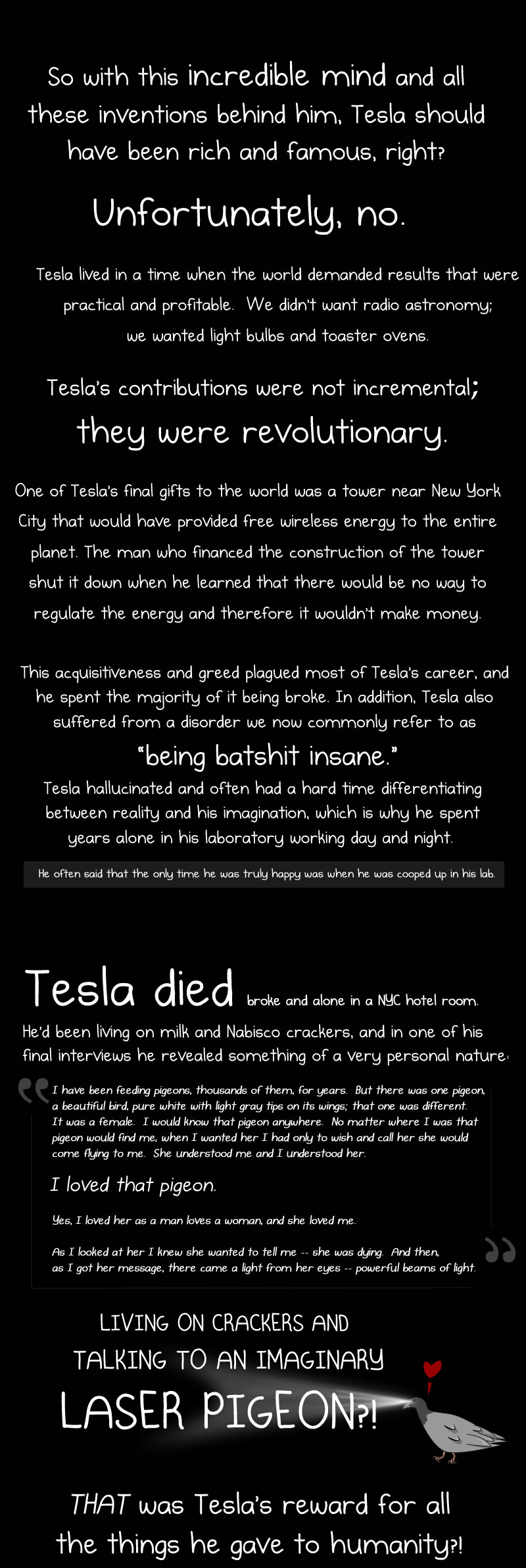
There is no person on the globe that has, or maybe ever will, match the genius that is Tesla, and so many years later, he is finally gaining traction and becoming known, whereas in his era, he died alone in a hotel room in love with a pigeon. No joke.

Years ago, when we began discussing how we would meet the demand of having offline events connected to AGBeat (aka AgentGenius), and how to recognize and facilitate the genius that is on the ground, not what we perceive to be our own genius, and we used the title of Nikola Tesla’s book, “A Spark of Genius” as the inspiration for removing ego from the process and focusing on making business better – just as Tesla did. When we win awards for being “innovative” and “genius,” it is an honor, yet it stings a little bit, because we compare our tiny spec of work on this earth to Tesla and know that no one living could possibly touch what he himself created.

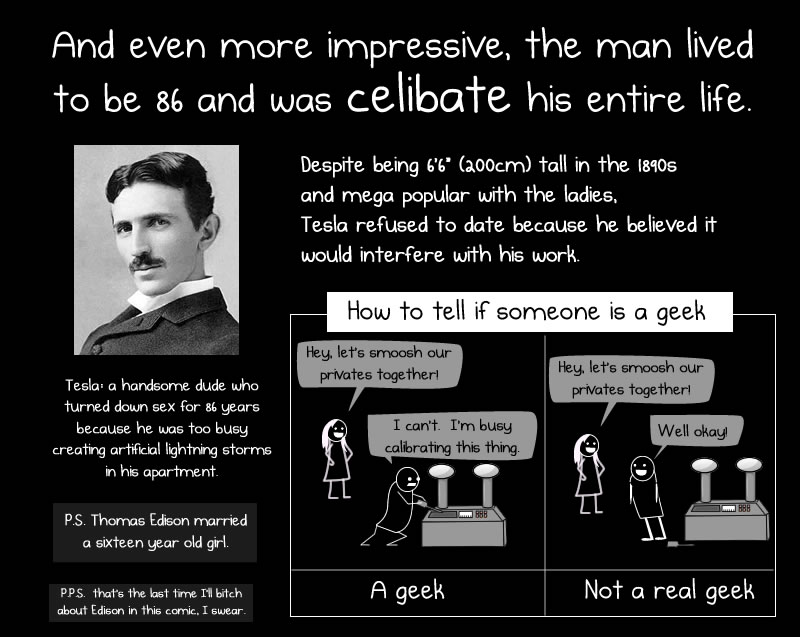
Tesla died celibate, claiming that womanizing would hurt his intellectual process, and like many eccentric intellectuals today, he was misunderstood and stolen from by those who had better sales skills, but would it have been different had he been born in a different century? Perhaps. Can you imagine the strange personality lighting up the stage at the Apple WWDC talking about using lightning to bring free energy to the world?

The best outline of Tesla’s work

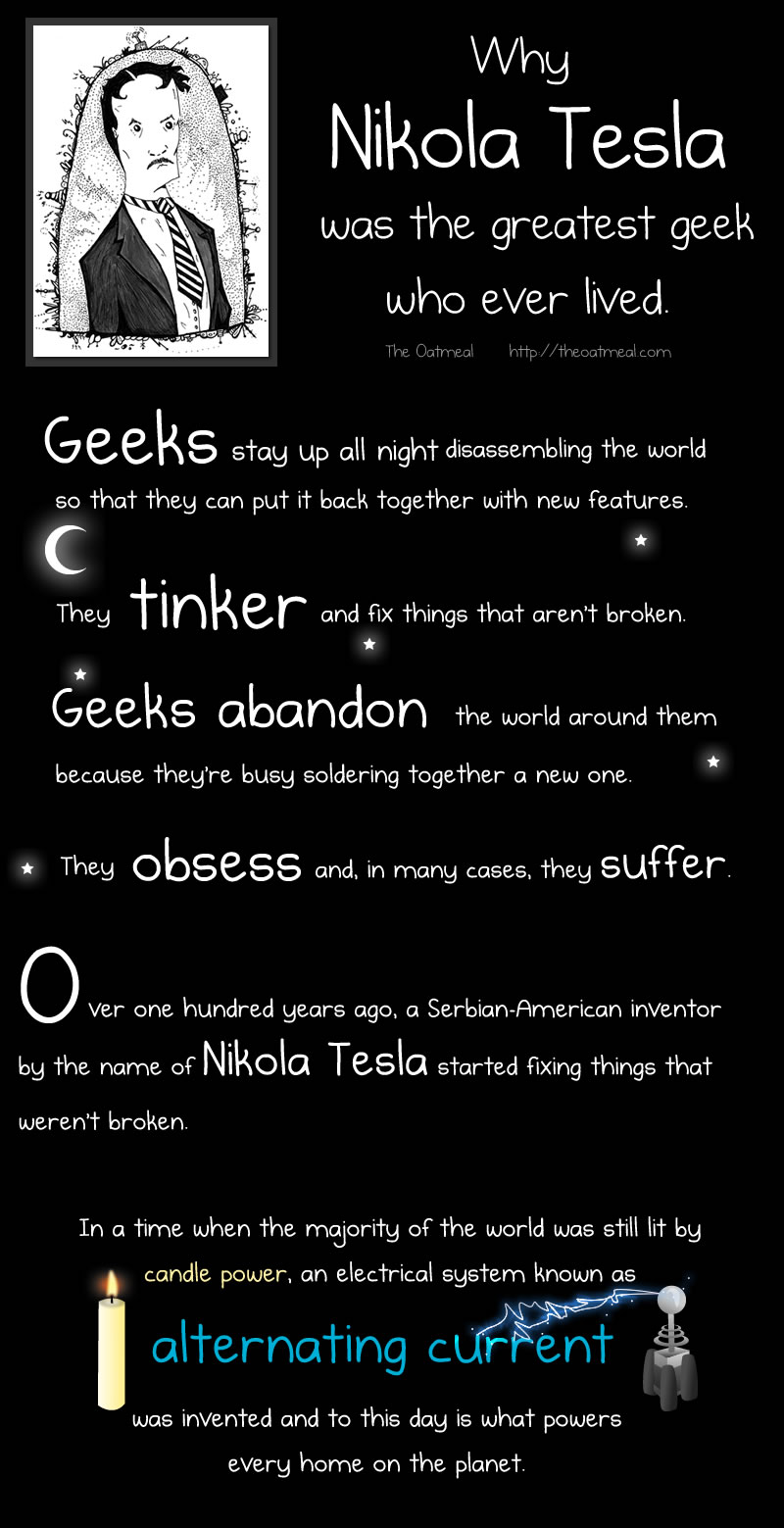
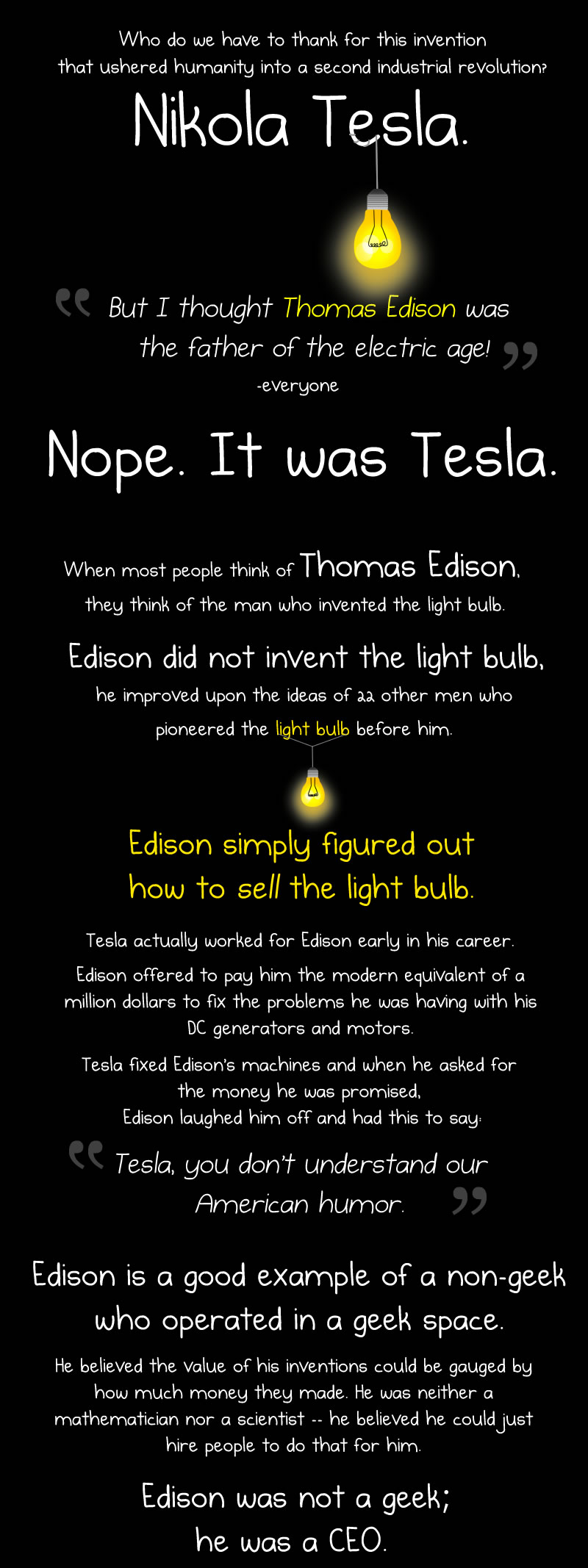
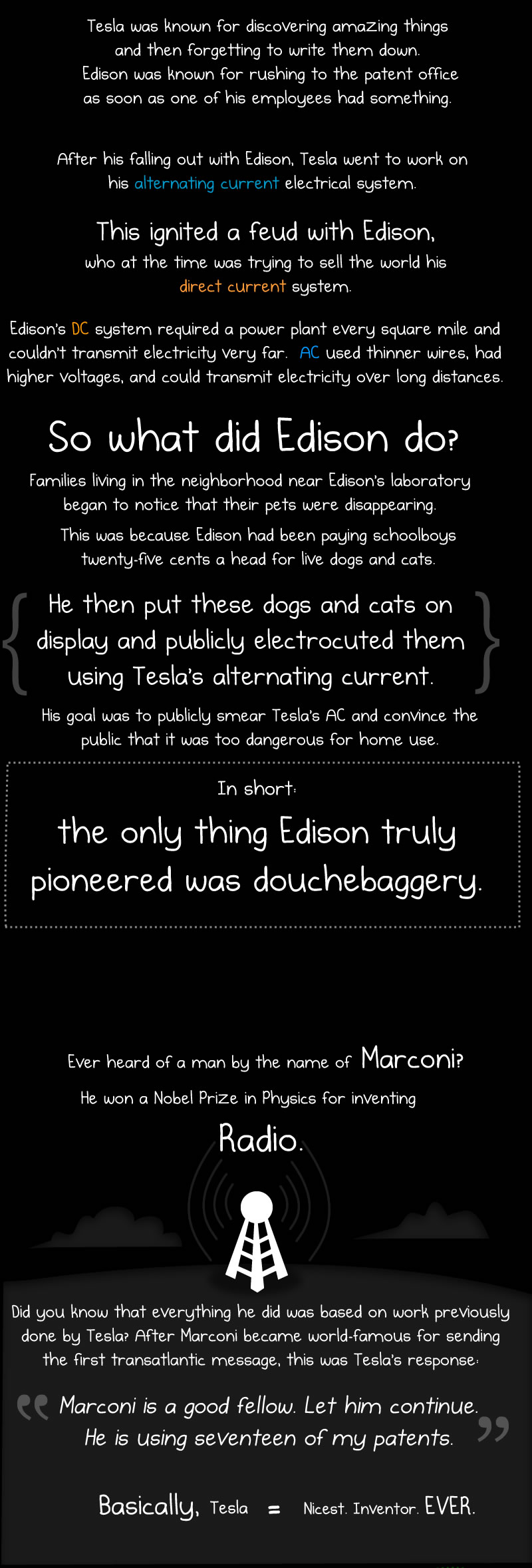
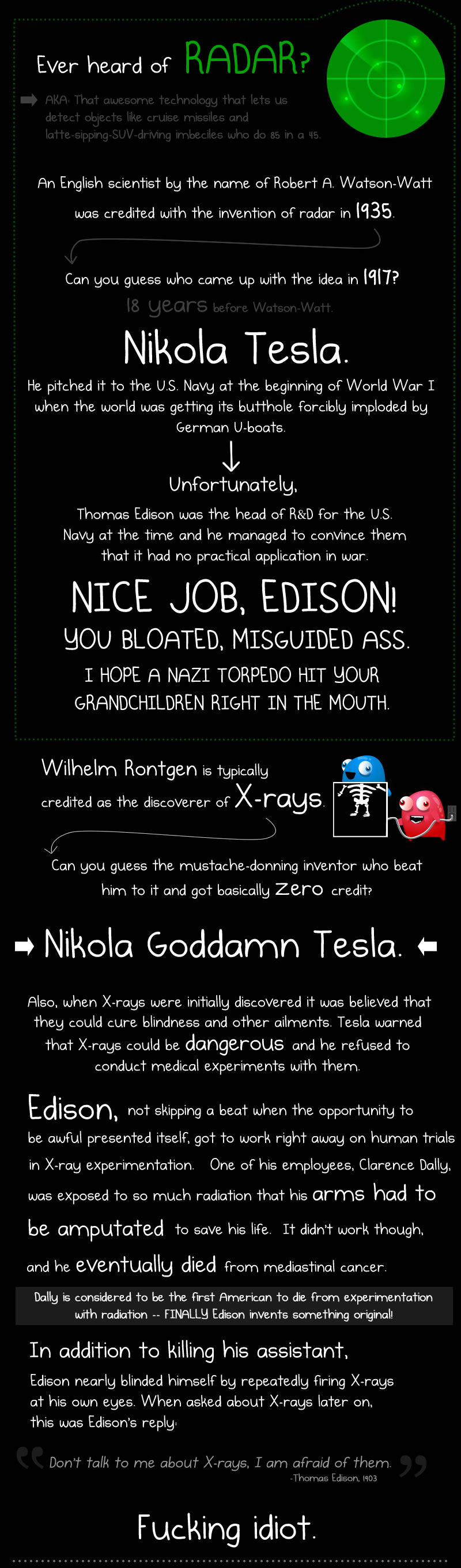
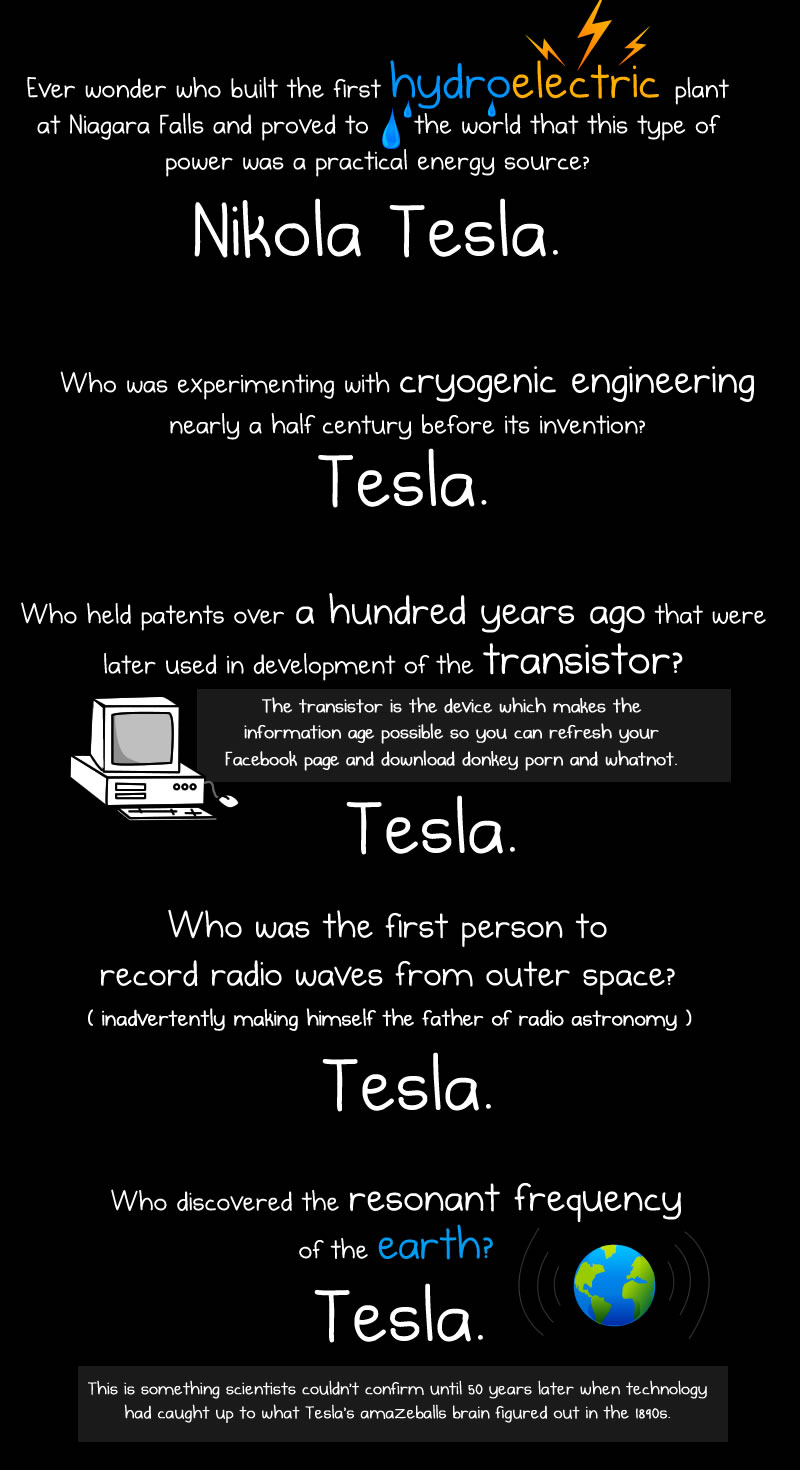
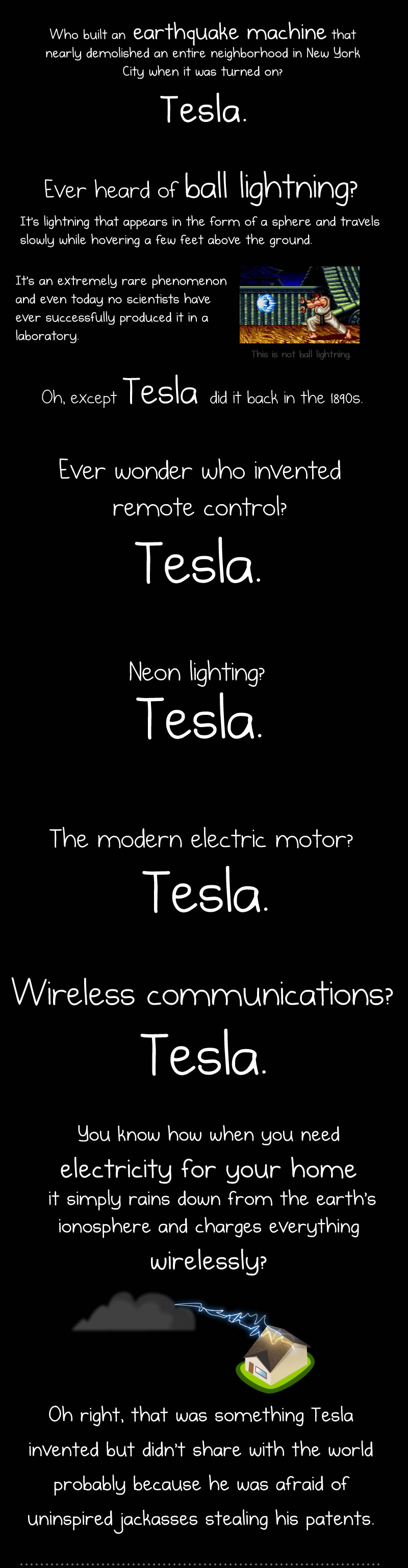
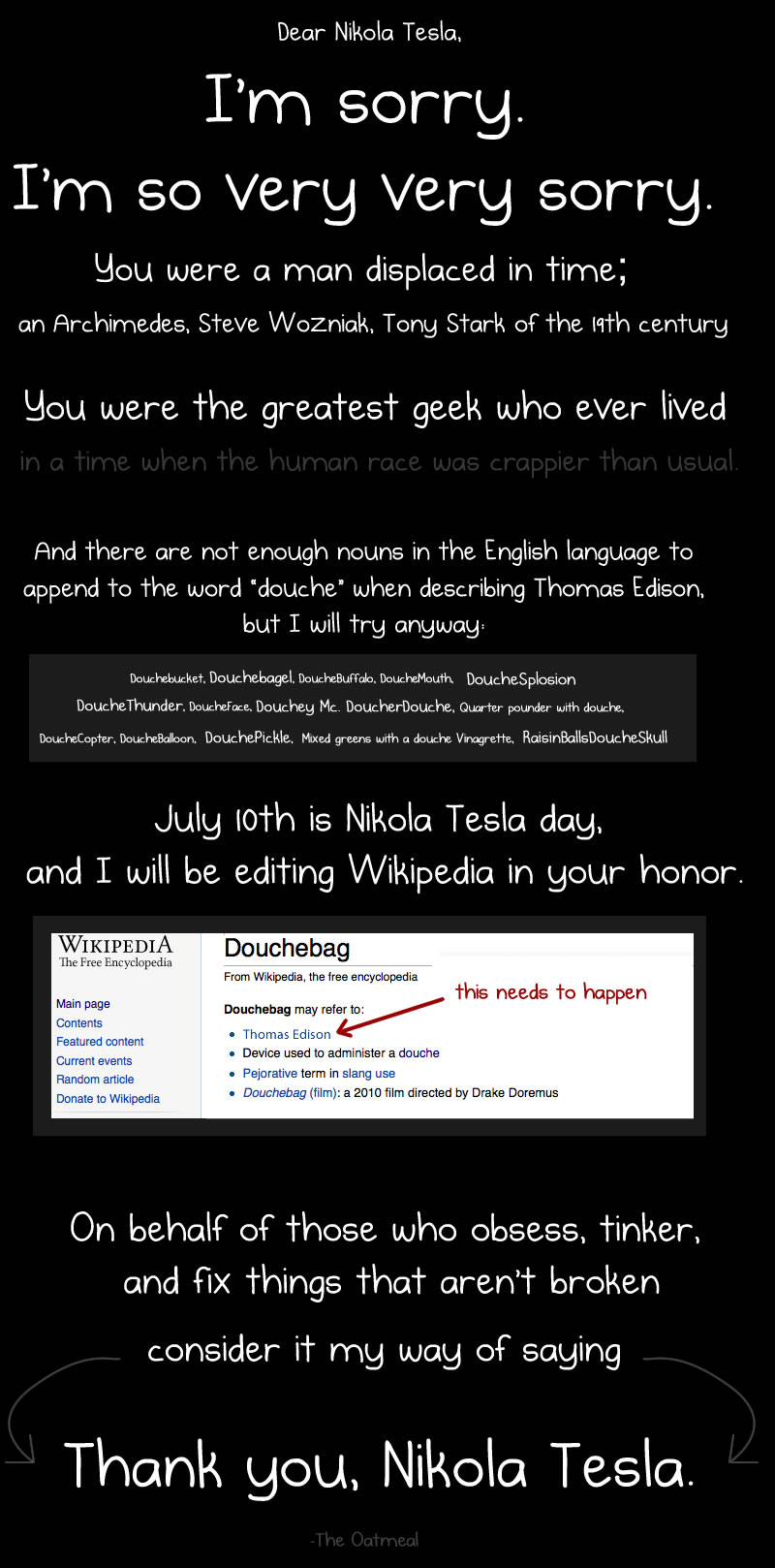
Today, TheOatmeal, a comedy site drawn by Matt Inman, posted what we like to think of as a love letter to Tesla, showing people his massive accomplishments, and it is the best outline of Tesla’s work we have ever seen. Take a look below, we’re betting you didn’t know 90 percent of all facts presented in this curse-filled, brilliant illustration:

Nikola Tesla Day
Nikola Tesla Day
Nikola Tesla Day
Nikola Tesla Day
Nikola Tesla Day
Nikola Tesla Day
Nikola Tesla Day
Nikola Tesla Day
Nikola Tesla Day
Nikola Tesla Day

Widow sues Chase, LPS for fraud and wrongful death

chase bank sign

Texas-sized lawsuit against JPMorgan Chase

According to the Courthouse News Service1, Harry Engel of Grand Prairie, Texas passed away in 2010, leaving wife of 57 years, Wendy Jo, and three adult children. The Christian minister is the inspiration for a new lawsuit filed in Dallas County alleging that JPMorgan Chase, along with EMC Mortgage, and LPS Field Services foreclosed on their home after 22 years of timely payments and an attempt to refinance that the family says led to the minister’s fatal heart attack.

This story is not new – the players are, indeed new names to this publication, but the following is a story that has repeated itself too many times over. In February 2010, the family was mailed an offer to refinance their home loan at a lower interest rate, and court documents state that an employee at the local Chase bank branch told them they must miss a payment before they can qualify for refinancing.

“Trusting [that employee’s] counsel as a Chase representative, the [plaintiffs] missed a single payment as instructed,” court documents state. “After skipping the payment as advised… the [homeowners] received a letter from Chase advising them that they were not eligible for a loan modification and that the mortgage had to be brought current immediately.”

Surprise foreclosure

Shortly thereafter, the couple was told they were at risk of foreclosure, and quickly, an eviction notice was sent, and “finally, a personal representative of Chase physically went to the… home, knocked on the [the plaintiffs’] door, and enforced the eviction notice.”

The lawsuit alleges that the couple made many attempts to meet with the original Chase employee that told them they needed to skip their payment for the first time in 22 years, with the adult daughter claiming she accompanied her parents to the bank multiple times to wait for the employee, and finally, one one occasion, the employee “eventually met with them and handed them a piece of paper with a figure on it. [He] said ‘just pay this amount,'” the lawsuit alleges.

They paid that amount as instructed, but the foreclosure process continued, with an eviction notice being served. The widow alleges that after the notice, her husband “changed dramatically,” as he was “overcome with stress and fear, and was terrified at the thought of losing his and [his wife]’s home of more than 20 years. His once positive outlook was gone.” Shortly thereafter, he suffered a massive coronary and died in the ambulance on the way to the hospital.

Now a homeless widow

After the loss, the bank took possession of the home, changed the locks, and today, it sits vacant. The lawsuit reiterates that the couple did everything the bank told them to, and that “complying with a lender’s advice should be safe and should not put them at risk from the lender.”

“Chase made illegal, negligent and fraudulent representations… so that it could secure a loan modification entitling Chase to benefits and financial incentives that the government was providing lenders to make loan modifications,” alleges the minister’s family.

Charges against Chase, EMC, and LPS include wrongful death, wrongful foreclosure, trespassing, gross negligence, intentional infliction of emotional distress, fraud, fraudulent inducement, and deceptive trade.

1 Courthouse News report

CoreLogic, FICO launch more predictive mortgage credit score

CoreLogic’s supplemental credit score in play

CoreLogic and FICO today announced the new FICO® Mortgage Score Powered by CoreLogic®, a “high-performance consumer credit risk score” that the companies say is expected to improve lending decision quality and improve the number of mortgage loans that lenders make.

The score evaluates traditional credit data from the national credit data repositories alongside the supplemental CoreLogic CoreScore™ credit report, introduced in October 2011, to deliver “a more comprehensive and accurate view of a consumer’s credit risk profile for loan prequalification and origination.”

The companies say the new scoring model was designed to better predict mortgage loan performance by better predicting risk as the CoreLogic CoreScore™ credit report includes far more than traditional reports, including data like evictions, applications for payday loans, child support judgments, property tax liens, the status of homeowner’s association dues, whether or not a borrower is underwater on their current home, or whether a borrower owns other properties that credit agencies typically miss.

As of October, the company was considering adding utility bills and cell phone bill payment histories to the new supplemental score.

FICO and CoreLogic say this helps the housing market

FICO and ComScore say that bankers continue to lack confidence in the housing finance marketplace, making the announcement of an improved scoring model that better assesses risk, quite timely. They say he new reports “will help mortgage lenders more safely and profitably expand their origination volumes, ultimately strengthening and growing the overall mortgage lending market.”

“In this complicated operating environment, lenders are increasingly turning to new data sources to help better interpret a consumer’s credit risk, so that more loans can be approved while mitigating potential losses,” said Tim Grace, senior vice president of product management at CoreLogic. “Today, we are announcing an industry first—a new composite, multi-bureau credit score generated from both traditional credit data and CoreLogic supplemental data, expanding the applicant credit spectrum by including property transaction data, landlord/tenant data, borrower-specific public data, and other alternative credit data.”

Grace added that “For a top-20 lender processing 300,000 applications a year, adopting this new score could translate into 3,900 more loans approved every year along with a net financial benefit of $14.5 million. As such, it not only provides a more complete and predictive evaluation of a consumer’s credit risk profile, but it can empower lenders to better mitigate risk and approve more loans for more consumers.”

Quick tips for Fannie Mae, Freddie Mac short sales

New Fannie Mae CEO named
Remember these guys? We often hear about Fannie Mae and Freddie Mac in the news, but not always with respect to short sale processing. However, when it comes to short sale processing, knowing whether a mortgage is owned by Fannie Mae or Freddie Mac is helpful for a number of reasons.

Here’s why:

  1. Six percent commission. Fannie Mae set the standard about four years ago, and said that they will pay a six percent real estate commission on short sale transactions. At that time, some lenders were chopping the commission to four percent, so agents were thrilled when that announcement came.
  2. Fannie Mae and Freddie Mac participate in HAFA. This means that short sale sellers who qualify for the HAFA program will get relocation assistance (cash at closing) as well as some of the other benefits of the Home Affordable Foreclosure Alternatives Program.
  3. Fannie Mae and Freddie Mac have strict guidelines as to how much can be allocated to other lien holders. Since some short sales have more than one lien that needs to be reconveyed at closing, it’s important for the first lien holder to be willing to contribute to junior lien holders. Fannie Mae and Freddie Mac are not always as generous when it comes to offering up big bucks to second lien holders. And, if you get a collection company or a Daddy Warbucks in the second position, your short sale may be headed in a not-so-fun direction.
  4. Fannie Mae and Freddie Mac now have new guidelines with respect to short sale response times. It is entirely possible that your short sale could be processed more quickly than you had originally anticipated.
  5. Fannie Mae and Freddie Mac don’t always postpone auction dates. Of all of the investors, Fannie Mae and Freddie Mac seem to be two of the toughest with respect to the postponement of preset foreclosure auction dates. So, if your short sale seller has a Fannie Mae or Freddie Mac-owned mortgage, you may want to give the seller fair warning.

Loan Lookup Tools

How do you find out whether your short sale seller has a mortgage that is owned by Fannie Mae or Freddie Mac? You use the loan lookup tools! Click on the links below for access to the Fannie Mae and Freddie Mac loan lookup tools:

The next time you take a short sale listing, don’t forgot to check whether the seller has a Fannie Mae or Freddie Mac loan right from the start of the short sale process! As you can see from my list above, knowing this provides a great window into what may happen during the short sale transaction.

Spike: a real keyboard for iPhones

spike keyboard concept

Solving a major iPhone problem

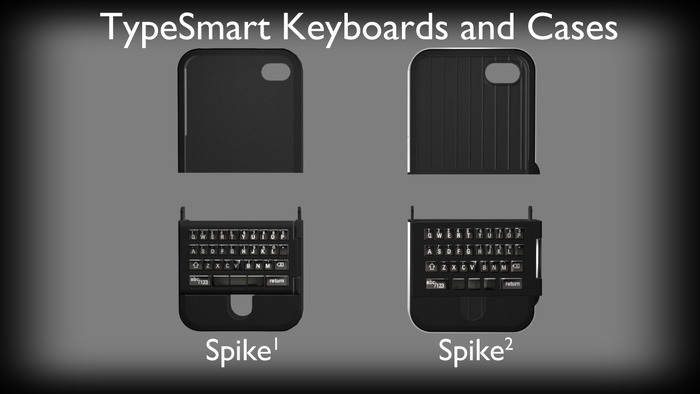
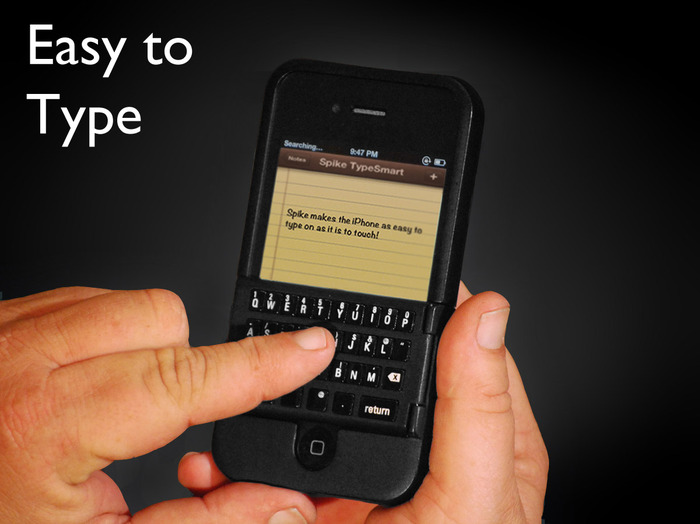
Anyone with a smartphone knows that typing on a tiny piece of glass is something you may get used to, but is not exactly as comfortable as the tactile keyboard we have all come to know and love. Enter the Spike TypeSmart Keyboards built to improve typing accuracy and make using an iPhone feel more natural.

The company says “Unlike any other keyboards available today, we wanted to create a suite of products that complemented the iPhone’s impeccable quality and elegant form factor, and at the same time let you type and text easier, faster, and with fewer mistakes, under virtually all conditions – even if you’re wearing gloves!”

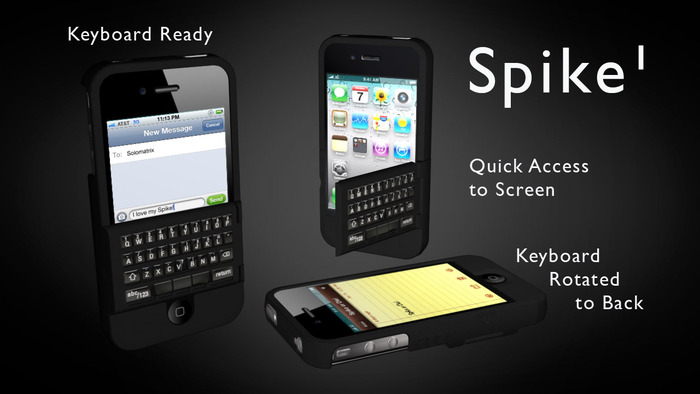
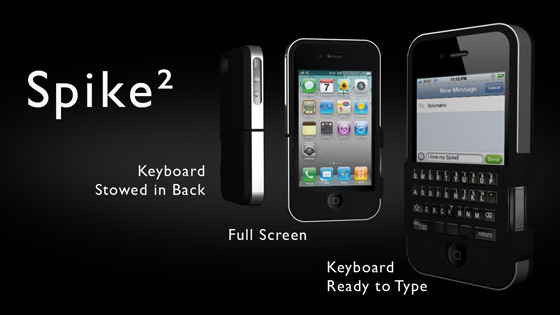
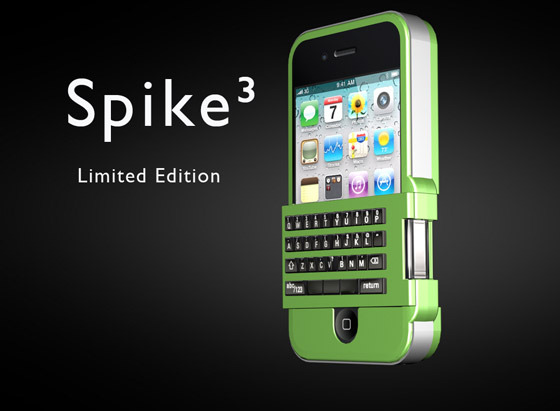
There are two versions of Spike, with both allow for quick transition from typing on the keyboard that pulls out to go over the glass which recognizes the tapping as the electrical impulses of fingers – it is far more complex than just a piece of plastic tapping on your iPhone screen.

Citing the company’s extensive history in the keyboard sector, they assure everyone that “of course, we will manufacture them using only premium materials that are suitable for an Apple accessory product.”

Why are they speaking in future tense?

The patent pending Spike TypeSmart Keyboards are not yet being fully manufactured, as they are raising funds through Kickstarter.com, with their goal being to raise $75,000 in the next 31 days; they are more than halfway toward hitting their goal.

Kickstarter.com is “the world’s largest funding platform for creative projects,” wherein projects are posted to the site and anyone with a credit card can pledge money to fund the projects, but the twist is that a project must reach its funding goal before time runs out or no money changes hands because “creators aren’t expected to develop their project without necessary funds, and it allows anyone to test concepts without risk.” The site also allows project creators to keep 100 percent ownership over their work and offer products and incentives in return for pledges.

Video Tour of the Spike Keyboard

[ba-youtubeflex videoid=”ddfJKQlL7Ls”]

Photo Tour of the Spike Keyboard

Spike Keyboard on Kickstarter

Finding business inspiration in a unique pirate’s tale

Ching Shih pirate's tale

Fearlessness in the business world

Many professionals today have what it takes to make it in the business world, but it takes something special and unique to knock your industry off of its feet and then redefine it. It all comes down to fearlessness – being fearless means something different to every professional, and to every industry, but it can be agreed upon that it’s about setting aside your reservations, your fears, and your doubts, and moving forward in spite of them. It’s about using them as fuel for your progression. Without fearlessness, modern industries would not be what they are today, all thanks to those who went above and beyond expectations, limitations, and even what’s considered acceptable.
While you could name many relatively modern professionals who are great examples, perhaps we should look back a little more than that, like the 1800s. Ching Shih is an infamous Cantonese pirate who sailed and terrorized the China Sea. The world superpowers at that time – Portugal, the Qing dynasty, and Britain – could not defeat Ching Shih. While you’ve probably heard many pirate stories, this one is slightly different because Ching Shih was a woman.

A woman leader in a woman-free industry

Ching Shih was captured by pirates and eventually married a deadly and well-known pirate who had a long family history of piracy. About seven years after her kidnapping, Ching Shih eventually became the leader of her husband’s ship, crew, and notorious and terrifying reputation. But she was not dwarfed by her husband’s reputation; she made her own.

She often attacked coastal cities and even collected taxes from them in exchange for protection from other pirate attacks. In essence, she was a formidable business woman, taking no prisoners and knowing exactly how to increase her earnings. In 1810, the Chinese government offered all pirates the chance at amnesty. She took the offer, retired, and then went on to open a gambling house.

No glass ceiling could contain her

We don’t recommend you breaking the law, terrorizing others, or killing and plundering, but there is something everyone can learn from Ching Shih. She was absolutely fearless. She saw the opportunity in every experience, from being kidnapped and then eventually taking over to knowing when to retire once amnesty was offered. She was a strong leader in a male-dominated industry.

No glass ceiling could contain her. She may have had to work harder to get where she ended up, but she didn’t let anything hold her back – she ultimately dominated, and so many years later, she has yet to be surpassed. It all goes back to her refusing to let fear take hold of her.

Take a page from Ching Shih’s book as you move forward and try to advance in your professional life. Have clear goals in mind, experiment with different methods, and know when to sell, retire, or move onto something else. Know your limits and then leave them behind as you continue to move forward to professional success, and never let a glass ceiling or fear hold you back.

Dwell time: the new make or break SEO metric?

search engine optimization and google penguin

Dwell time and your website

It is well known that Google constantly grooms their algorithm to provide what they deem the most relevant search results possible, in their endless quest to think like a human brain. In February 2011, a batch of updates, known as Google Panda launched, which sought to punish content scrapers and bring high quality results to the top. In April 2012, Google Penguin rolled out, seeking to get rid of websites using black hat SEO, or that use link schemes, and the like, again to push legitimate sites to the top of search rankings.

With the new algorithm changes, however, remains quite a bit of mystery, and vague new terminology is coming to the surface, leaving small businesses in a lurch who can barely decipher whether or not they should be on Twitter, or if their neighbor’s son who set up their website in 2001 is the right person to handle their online presence. The Google algorithm has gotten more complex and is a living organism that continually evolves, making real experts in SEO stand out from the crowd.

One such vague term: dwell time

“Dwell time” is one term being tossed around, which typically refers to a quality signal for Google’s pay-per-click (PPC) services, but many are now saying this is a consideration being included in Google’s Panda algorithm.

NetMagazine notes that, “In a nutshell, dwell time (and specifically dwell time relevant to organic search) is a signal that averages the amount of time spent on a page after click-through in results. The longer the searcher spends on site, the more relevant that site appears to Google.”

Kate Morris, Lead SEO Consultant at international strategic marketing agency, Distilled said that dwell time is an untested theory, and that “No one has yet to prove that it is a factor and Google has not said it is. Neither has Bing for that matter.”

Morris continued, “What I do know is that much of Panda was based off of user experience testing. Asking people how they feel about a site and if it’s trust worthy. In my professional opinion, the “dwell time” is a factor or is going to be but like bounce rate there won’t be hard numbers. It’s not something people can track to bring down, unless the engines give us that data as webmasters and that is possible but not probable right now.”

Ben Fisher says that dwell time is “definitely a real part of the algorithm, albeit a small part. Panda was about signals to google the page deserves to rank high, so content above the fold, dwell time, bounce rate, etc were all accounted for or targeted moreso than before (among other things).”

Not confirmed, still relevant

Jeff Bernheisel, Project Manager at 1000WattConsulting echoes Morris’ sentiment that Google has never confirmed dwell time as “a solid part of their algorithm but have alluded to it many times saying they want a better ‘user experience.’ User experience can be achieved through good design – ie getting a person to click through at least once which in effect reduces your bounce rate OR by things like including video which increases time on site averages (usually).”

Despite not being a confirmed part of the Google Panda algorithm, Bernheisel notes, “I have had sites with a 6 page view average, and 3+ minute time on site where I’ve had to do WAY less “off page” SEO work (building back links) than my other sites with less page view and time in site average so I think that legitimately backs up their claims.”

How to improve your site’s dwell time

NetMagazine says, “In a nutshell, dwell techniques mean creating and utilising content on category, sub-category and other important pages throughout the build, which encourage users to read over or interact with the page and refrain from bouncing. Explaining a brand’s USP using a slideshow or 30-second video clip makes the information easily digestible and keeps them engaged for the time it takes to reach the end. From a search perspective, this content has resulted in a longer time on site, which means a better signal to Google.”

Morris encourages webmasters to continue working on usability and conversion rates. “Using things like Content Experiments through Google Analytics or other A/B testing software can help. Even click trackers like Crazy Egg help webmasters understand user patterns on the site. Also, webmasters should also ensure that no matter what platform they are on, that conversion tracking is set up and working correctly. Knowing how site conversion is over time can provide good insight as to how users feel about a site.”

“The simplest way to do any kind of user testing is still buying pizza and getting some friends to ask their friends who don’t know the site to come over and give feedback,” Morris notes. “This doesn’t have to be scientific. You just need feedback on if people are getting the information, products, and services they need from a site and if it’s easy to find.”

Pinterest’s referral traffic surges past Twitter, StumbleUpon

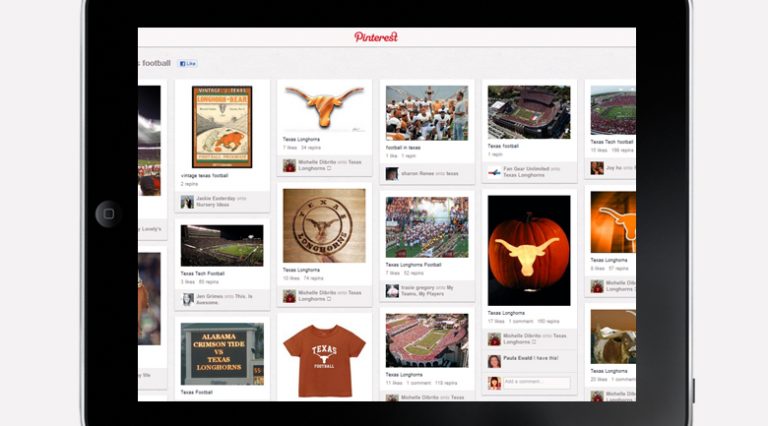
pinterest ipad

Pinterest still exploding

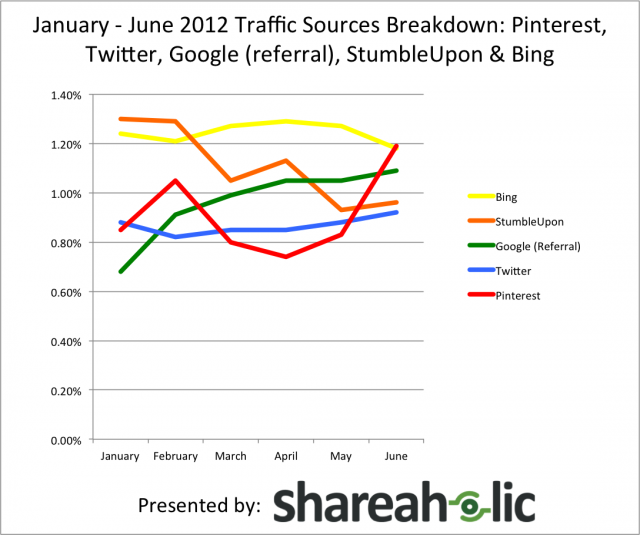
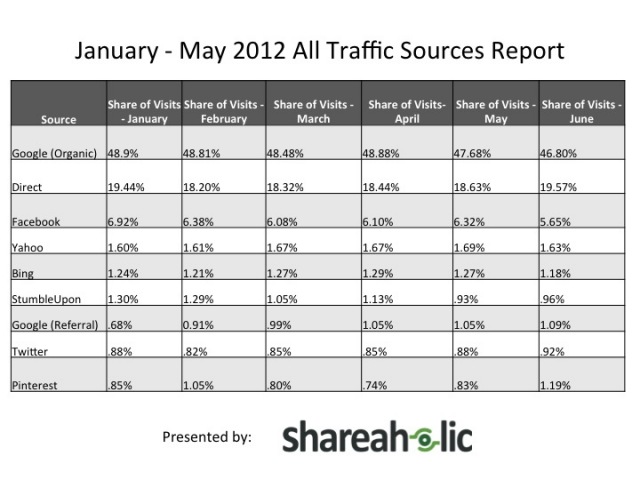
Visual social media has been the big hit of 2012, with visual bookmarking site Pinterest leading the way alongside photo sharing tool, Instagram. New data from Shareaholic1 reveals that referral traffic from Pinterest still surpasses Twitter, as it has for months, and now surpasses StumbleUpon, Bing, and Google referral traffic (note: Shareaholic considers Google referral traffic to be referrals that don’t come through AdWords or organic search, nor through Google+, but through Google sites like Google Groups).

This study echoes recent data from Monetate2, noting that while Facebook has the highest user counts, Pinterest has skyrocketed from 0.68 percent of referral traffic in the first quarter of 2011 to 26 percent in the first quarter of 2012, as Facebook drops from 88 percent of e-commerce referrals to 59 percent in the same period.

The real surprise

Shareaholic has long reported that Pinterest surpasses Google+, YouTube, and LinkedIn combined when it comes to referral traffic, and now reports that Pinterest’s referral traffic jumped from 0.85 percent in January to 1.19 percent in June. Twitter referral traffic rose from 0.82 percent in February to 0.92 percent in June, with the big surprise being Pinterest beating StubmleUpon’s referral traffic which has long boasted dramatic traffic.

The study is based on Shareoholic’s network of over 200,000 publishers, which reaches more than 270 million people monthly and is reinforcement that Pinterest should be taken seriously by anyone working on their SEO. While we have long written about the pitfalls of Pinterest (copyright infringement, scams, etc.), the benefits are widely underutilized by brands, but are being discovered by consumers internationally.

pinterest referral traffic
pinterest surpasses stumbleupon

1 Shareaholic data
2 Monetate study

Top 5 tips for traveling solo

business travel

Everyone is a traveler now

With the rise in popularity of international conferences and international business, it is increasingly common for professionals across all industries to jet across the nation, but traveling alone can be a challenge. Whether it is catching a flight to South by Southwest or an industry conference, or perhaps to meet a client to finalize a deal belly to belly, traveling is no longer reserved for the traveling salesman or elite vacationer, no, everyone is now a traveler.

But how do you avoid the lonely feeling of being in a strange city without anyone by your side without, well, having someone by your side? CheapAir.com‘s Lucy Maldonado offers the top five tips for traveling solo:

1. Talk to strangers

We know your mom told you never to talk to strangers, but in this case we’re sure she’d give you the green light. First off, if you don’t you’re going to find yourself very, very alone and likely bored. Of course you use your instincts and talk to people who seem warm and friendly. If you’re a woman and you don’t feel comfortable talking to random men then talk to another female. But then again, there are lots of stories of love on the road, so keep an open mind!

2. Get the right guidebook

Certain guidebooks are geared towards families, while others cater to those who are only interested in luxury travel. Snag a guidebook like Lonely Planet or the Rough Guides and you’ll find a plethora of listings that are aimed at pleasing the solo traveler from restaurants to hotels.

3. Eat at the bar

When you’re solo, one of the easiest ways to make new friends is to sit at the bar. Other people are likely to sit next to you and seeing you sitting alone, are more likely to strike up conversation. If nothing else, you can always chat up the bartender for a little conversation.

4. Avoid Romantic Destinations

Unless you’re masochist, trying to hang solo in a place that’s known more for honeymoons is a recipe for disaster. The nightlife will likely be non-existent and you’ll feel left out as you watch couples canoodling.

5. Stay at the right hotel

It might not seem like the most important consideration, but don’t be fooled! This one is seriously essential. A bland chain hotel might earn you points, but you’ll be enjoying those perks alone. You’ll want to choose a hotel that has an active nightlife scene, communal eating, or revolves around a group activity like yoga or surfing.

Study: social media fueling anxiety, stress, internet addiction

social media anxiety

Emerging social media studies

The Telegraph1 reports that the University of Salford Business School in the UK, polled social media users, half of which reported they had altered their behavior to accommodate their use, and half of those respondents citing their lives had changed for the worse. Most commonly, respondents noted that social media use impacted them negatively by reducing their self confidence, particularly when comparing their own achievements to others online.

Not only does the report note that confidence has taken a hit, one in four respondents say that online confrontations have led to difficulties in their relationships, personally and professionally.

Low confidence and addiction

Two in three respondents report finding difficulty in relaxing completely or going to sleep after spending time on social media sites, with over half saying they were “worried or uncomfortable” when they did not have access to their social network or email accounts.

Of respondents, three out of five say they had to physically turn off their electronic devices in order to get a break, with a third of all respondents saying they do just that several times every day. The remaining two thirds do not turn off their devices, rather remain connected at all hours, fueling the addiction to the web, primarily to social networks.

A separate study by Anxiety UK, a nonprofit organization, revealed that if a user is predisposed to anxiety, “it seems that the pressures from technology act as a tipping point, making people feel more insecure and more overwhelmed,” adding that many resort to turning their devices off because they simply cannot ignore them when powered up.

Methodology – large enough sample size?

The University of Salford surveyed 298 people in the UK, which would typically not be a large enough group from which one could extrapolate international behavior results from, but we are citing the results as fact because not only is the study backed by related studies performed by Anxiety UK, but because the notes on addiction and the life changes resulting from addiction are consistent with other studies.

An Australian study found the rate of individuals that are what could be considered addicted that act irresponsibly with their cell phones (constant texting, checking pings, to a point that it interferes with daily life) is proportional to the rate of people who drive irresponsibly. The study notes that “addiction danger signs included running up huge bills and having irrational reactions to being without a phone if you forgot or lost your mobile,” noting some users had gone so far over in data or text use that their bills were in the $5,000 range.

An award winning study performed by a blind high school student using biometric data showed that teens manifest addictive behavior, thus withrdawal. The budding psychologist said on NPR, “I found addictive tendencies in my subjects. They almost went through withdrawal symptoms. And the way that I like to explain that is that cell phones and other sorts of technology are very inherently stimulating. And so when you take them away, a kid becomes understimulated, and almost doesn’t know how to entertain himself.”

Social media is, without a doubt, addictive, and life changing, and many are resorting to physically disconnecting from their devices as a primary method to deal with the problem, or to avoid it becoming a problem.

1 The Telegraph

Negotiation signals of Chinese business pros

Chines Executives

Social capital exists across all cultures

All cultures have social capital, or the benefits of cooperation and cohesion in a community or group. In a general sense, social capital is what promotes unity and stability in any culture and is driven by cultural norms and collective expectations. Many cross-culturalists, as I call them, have broached the topic of what “face” is, how it can be earned, how it effects a person’s social network, etc. But what concerns me, is the lack of mutual understanding surrounding this nebulous concept.

Most of us in the West have an understanding of what it means to “save face.” In America, we are all concerned on some level, about how we are viewed by our counterparts. However, being an “individualistic society,” we garner our sense of worth, theoretically speaking, internally. How we view ourselves is what drives our perceptions of life, business, culture, etc.

For the Chinese, “face” is just as important. Granted, the Chinese definition is more of a collective concept (think back to Geert Hofstede) and is couched in how they are viewed by others. Regardless, it is important to remember that this form of social capital effects business, negotiations and all forms of interpersonal interactions.

Saving Face – a brief case study “Maybe means No”

I was all set to give a lecture on American pop culture for a group of graduate and undergraduate students at Shandong University at Weihai. My boss at the time, the Director of Foreign Services, was most excited about the lecture and marketed it as THE event to attend that semester. I was encouraged to push the envelop and give them a “real” understanding of American pop culture.

In my preparation, I asked if I could include the lyrics of a somewhat racy song to contrast the American and Chinese pop culture a week before the lecture. After playing the song and providing translated lyrics, I was told “Maybe” with a smile. Had I not spoken Chinese and understood what he told his assistant after I left (essentially that the lyrics were too progressive to be included in a lecture) I would have included them and lost face for both of us!

Instead of telling me no to save face in front of his colleagues at the lecture, he opted to give me face in this one-on-one meeting. Later that day, his assistant came to me and told me that they were still discussing the issue.I knew that maybe meant no, and was able to adjust accordingly. Sadly, though, many negotiations and contracts are lost due to not understanding this concept of “face.”

The problem for most Americans

Typically, in any social interaction, we try to look our best in front of others. In Chinese culture, preserving “face” is one way to do that. Receiving compliments, garnering the most discounts in a business meeting, or being seen as the most important or most knowledgable in a group are all ways of “saving face” in China. In an effort to “give face,” most Chinese will not say “no” to you. Instead, noncommittal phrases like “Maybe” and “we’ll see” are used. This has been the bane of my existence in some business meetings.

While it’s all well and good to understand the cultural differences and business implications, a number of my counterparts and even clients have felt uneasy about adhering to or taking a culturally sensitive stand. The number one issue I hear is that they (the American) feels like they are not only lying to themselves but to their potential business associate. It feels fake or phony to say “maybe” when they know for a fact the answer will be “no.” Another issue I’ve seen is that some Western businesspeople interpret the situation as coddling.

I can see how it can be perceived this way, but urge people to use their best, culturally sensitive judgement. If saying “maybe” to answer a definitively “no” question makes them feel dubious, then instead answer with a “we’ll look into it,” “let’s discuss it later,” or “I’ll do my best”.

Key takeaways

[ba-list style=”note”]

  • The concept of “face” is not to be confused with “check your morals at the door,” but should be seen as a way to mutual preserve the business relationship.
  • “Face like any currency, can be earned, lost or given.
  • If you are relying on a local Chinese translator while in China to negotiate a business arrangement, be aware they may be more concerned with the process rather than the end goal.
  • If you find you aren’t getting the straight answer you seek, try breaking down the request (terms, length of contract, desired outcomes, etc) into smaller, easier to digests bites of information.

[/ba-list]

7 tips for taking better cell phone pictures

taking better cell phone pictures

Perpetually carrying a camera

Virtually everyone carries a camera with them most of the time. After all, you never know when a camera will come in handy, whether you’re in the real estate industry and you need to take a quick picture of a listing or you want to take a quick picture of your loved ones at dinner. It can’t get any more convenient than having a camera on your phone. And these days, nearly every cellphone has a built-in camera. Cellphone pictures have a reputation of being sub-par, but they don’t have to be. Here are seven ways to take better cell phone pictures:

  1. Cool Gadgets – You no longer have to accept your camera phone as it is. You have the power to enhance it by attaching any number of awesome, unique gadgets. You can attach a variety of lenses and shutter grips and remotes—to name a few options.
  2. Hold Still – While this advice seems obvious, it’s an essential part of taking better pictures with your phone. Even the smallest shake or shiver can create blurry photos. If you can’t hold the camera steady, get a tripod gadget to help you stabilize. Some say that shooting with a smartphone camera is like shooting at a gun range – breathe in while stabilizing, breathe out slowly while shooting steadily.
  3. Don’t Delete Photos – Because the resolution on your phone screen isn’t as good as your computer screen, keep your photos—even the ones that you think are bad—until you can check them out on a better screen. You may have caught a beautiful picture, but you just didn’t know it.
  4. Get Close – The camera on your phone does have limitations. So, get close to the subject of your photo. You will find that your pictures have a better quality just from scooting up a few feet before you hit that button.
  5. Find the Right Light – Appropriate lighting can make or break a photo. If you’re not sure which type of light will best suite your photos, it’s time to do a little research. Once you have the lighting figured out, you have the ability to take your photo-taking skills to the next level.
  6. Practice – The more you practice taking photos with the camera on your phone, the better you’ll become.  And you’ll pick up little bits of knowledge and tricks along the way.
  7. Experiment – While there are basic and advanced rules for taking great pictures, there is also a time to break those rules. But before you can break them, you must first understand them. And then you can find ways to bend those rules to create the effects you’re looking for.

Taking a photo with your phone shouldn’t be considered the next best thing. Instead, it’s the hot new thing. It’s convenient, fun, and fast. Go crazy with the seven tips above and then find out even more tips on your own. Don’t be afraid to try new gadgets or methods. You’ll never know how great your pictures will turn out until you give it a go. And there’s no better time than now.
25 fresh Facebook Cover Photos to inspire your own

facebook logo

The importance of Facebook Cover Photos

Many dismiss the importance of Facebook Cover Photos because users only see them once when they go to check out a page or person, then they revert to seeing content in their news feed rather than going to the actual page, but with recent changes, any time someone hovers over a name of a brand or person on Facebook, a pop up reveals more information about that person or brand, including their cover photo, front and center.

For that and traditional branding reasons, it has become important to have a quality cover photo that doesn’t violate any Facebook rules (lest your Page be permanently deleted without warning), and is as clear and as clean as possible, as they tend to get fuzzy once uploaded to Facebook.

We’ve given you a cheat shee for all of the image sizes you’ll need, and above, we’ve linked to instructions on how to not upload fuzzy pictures, but if you’re feeling really creative after all of these inspirational examples, we have also shared with you a Photoshop template that will allow you to get ultra creative. Now you know how the design works, the rules, and the branding implications, so there is no excuse for a lazy or bad Cover Photo!

For more inspiration:

  1. 40 brands using Timeline Cover Photos on Facebook Pages
  2. 50 Facebook Timeline Covers – examples and best practices
  3. 50 more Facebook timeline Cover Photos for inspiration

25 Facebook Cover Photos to inspire your own

Tell us in the comments which cover photo you are most drawn to and why.

Facebook Cover Photo Inspiration


Health care ruling’s impact on small business

affordable care act, obamacare ruling

Small Business reactions

Small businesses around the nation are learning about the United States Supreme Court’s recent ruling on the Affordable Care Act, also known as Obamacare, and reactions are heated and mixed. With over six million small businesses in America that employ over 54 million people, a large portion of which is not insured.

Under the new Affordable Care Act, small businesses with less than 25 employees will get government assistance in helping to pay insurance costs for employees. Employers qualify if they provide health care to employees and provide average annual wages below $50,000. Assistance will increase from 35 percent presently to 50 percent in 2014 when the Act goes into effect.

Current and future laws

Currently, young adults may stay on their parents’ health plan up to age 26, and insurance companies can’t deny health coverage to children with pre-existing conditions. Adults who have been uninsured for at least six months and have been denied coverage because of a pre-existing condition may now get coverage, and insurance companies may no longer place dollar limits on the health care they cover in a lifetime. Medicare users can get free preventive services and screenings, which new health plans must offer for free as well.

In 2014, when the Act becomes law, insurance companies may no longer deny coverage to anyone with a pre-existing condition and Americans will be required to purchase health insurance if they do not already have it through their employer. Insurance companies will no longer be allowed to place dollar limits on the care they cover in a single year.

The objections to the Act

One commonly rejected portion of the Act that is garnering rising attention is the requirement that small businesses with over 50 employees must provide health insurance or pay a penalty, but various reports cite confusing conditions that apply, and note that the average business person is lost as to how to stay in compliance, as much of the law is unresolved.

Both sides of the aisle have used small businesses as the poster children for their cause, attempting to champion health care for small businesses, but despite all of the media attention, there remains a great deal of confusion on the ground.

To illustrate each position, below are short videos outlining support and opposition to the new laws.

Local coverage supporting and criticizing:

In opposition of the Affordable Care Act

[ba-youtubeflex videoid=”ysbfa8ZPhvs”]

In support of the Affordable Care Act