Home Blog Page 172

Extroverts have a surprising responsibility at networking events

Working the room

I suppose a networking event is like a blind date: You only have a few minutes to make a compelling impression on someone. Most networking events I’ve attended are stock full of alpha personalities. I mean, there can be enough testosterone in the room to make even Sylvester Stallone a bit envious.

But you know not everyone fits that bill. Some of the individuals present at networking events are perfectly nice introverts. Can You Spell BACKFIRE?

bar

Everyone is nervous

Why the heck extroverts think they’re doing a good deed by cornering an obviously introverted person and talking to them and trying to “coax them out of their shell” is beyond me.

What happens half of the time is that the extrovert gives the introvert more anxiety! The best approach is to keep it really simple and don’t be overenthusiastic. Try toning it down and keeping it chill and like I just said, simple is the best approach. Remember that most people in the room at any given networking event feel the same way you do: scared to death.

No matter your type, you can make it work

Attend any social function and you will find extroverts, introverts and people who are shy. There really is a difference. But no matter what type of person you are you can make a networking event work for you. Jacqueline Whitmore, etiquette expert and author of “Poised for Success: Mastering the Four Qualities That Distinguish Outstanding Professionals.” Make the most of networking opportunities and garner valuable connections by considering some of Jacqueline’s advice:

  • Manage your expectations – If you’re attending some kind of networking event, you don’t have to put pressure on yourself to meet a lot of people.
  • Plan some ice-breakers ahead of time – Shy people, in particular, have a hard time starting conversations with strangers, but doing a bit of homework before an event can help anyone come up with good questions to ask.
  • Set a time limit – Instead of committing to stay for the duration of an event, tell yourself you’ll only hang out for an hour, or some other chunk of time you’re comfortable with. The point is to take the pressure off yourself and just show up.
  • Ask for an introduction – This tip is a good one for anyone, regardless of your personality. Find someone who knows everyone and ask that person (maybe the individual hosting the event) to connect you with whoever it is you want to meet.

Be aware and listen

If you’re an extrovert you may be wondering why you even need advice in the first place. But it could be that you are so intent on “mastering the room” that you lose out on potential encounters by sheer virtue of you not keeping your mouth shut and just listening. Hey, crazier things have happened. No matter where you find yourself on the social scale you need to practice.

An article on Inc.com sums it up this way: “The more you network, the easier it gets, but you have to keep doing it!” Even during the course of every work day you can exercise this muscle by getting up, walking around, and starting brief conversations with co-workers.

So get to it! Start talking and at the same time start listening and who knows where it might all lead!

#Networking

Shoppers are seeking experiences, not things (how retailers are adapting)

Don’t blame it on the weather

Retailers closed out 2015 with weak sales. However, this decline can’t entirely be attributed to a weary post-recession climate. Instead of purchasing the newest designer jeans, it seems shoppers are opting to spend their money on experiences such as a vacation, a dinner or a show.

bar

We’re still spending, but…

It is increasingly evident shoppers are more than willing to open their wallets. However, there is a definitive shift in what they’re willing to open their wallets for. Macy’s, Ann Taylor, Dressbarn, and Nordstrom have all alluded to this issue as being the reason for their disappointing sales.

Opposite to declining retail sales, U.S. air travel saw record levels in spending last year. Restaurants also saw increased revenue in the first 11 months of 2015. According to a study by research firm Mintel, between 2015 and 2019, there is an expected 27 percent increase in consumer spending for each vacations and dining out.

Millennial-driven statistics

Experts say the new spending-on-experiences trend is most likely driven by millennials. A survey last year by PwC found that for 52 percent of millennials their holiday spending would be on experience-related purchases. Still, millennials aren’t the only ones choosing experiences over stuff. Older consumers are also shelling out for vacations or fine-dining over retailer goods.

For many retailers, the environment is now tougher than ever before because of the new experience-oriented mindset. In addition to competing with one another for consumers, sellers must also persuade shoppers to opt for their product over an experience.

Targeting the experience-seeker

Several retailers have started to configure themselves for an experience-seeking consumer. They’re enticing shoppers by giving them experiences along with their product. Target, for instance, recently partnered with SoulCycle to offer consumers a unique opportunity. In addition to a line of dual-branded clothing, the retailer included wellness shops inside some of its stores and free spinning classes in 10 cities.

Nordstrom has also jumped on board by adding counters to its women’s shoe department in which women can create their own customized shoe. Meanwhile, Lululemon’s New York flagship store now comes with a concierge to help shoppers book an exercise class or find a running route in the city. Advents in experiential shopping will most-likely continue as brands adapt to the new shopper mindset.

#RetailExperience

Could you fund your next startup idea by selling your old Star Wars collectibles?

The force is reawakened

The force of “Star Wars” fan-frenzy was reawakened this year with the release of the latest installment “The Force Awakens”. Now, you cannot walk through any Jewel, Target, or Walmart without a lightsaber staring you in the face.

bar
These films have truly stood the test of time and have some of the most dedicated fans in history. For the fans who have been on the journey since the beginning, there is a chance for them to make some big bucks by going through their old memorabilia.

What’s your collection worth?

Save My Bacon recently released an infographic that complied vintage “Star Wars” memorabilia and what their worth is today. As stipulated on the infographic, the values are quoted in U.S. dollars and are sourced from referenced websites. Toys such as these often sell privately for more than the “official” values listed.

Blue Snaggletooth (produced in 1978)
In 1978, Sears released a series of small action figures that came with a plastic casing and cardboard backing. The Sears version wore a blue suit and was full-size while a version released by Kenner wore a red suit and was shorter. The error made the blue Snaggletooth more valuable.

Original cost: $1.99
Today’s value (mint condition): $700
Loose value: $200

Luke Skywalker (produced in 1978 by Kenner)
This Luke Skywalker action figure was from an earlier release by Kenner that kids had to send away for. He came with a rare double-telescoping lightsaber. Later versions featured a smaller lightsaber, making this model more valuable.

Original cost: $1.99
Today’s value (mint condition/boxed): $1,000
Loose value: $100

Collectable Vehicles and Accessories

  • Death Star Space Station
    Original cost: $19.99
    Today’s value (boxed/mint): $1,500
    Loose value: $150
  • Millennium Falcon
    Original cost: $29.99
    Today’s value (boxed, mint condition): $1,650
  • Radio Controlled Jawa Sandcrawler
    Today’s value (boxed, mint condition): $3,300
    Loose value: $810

But wait, there’s more

Medical Droid Figure (produced in 1983 by Palitoy)
Today’s value (boxed, mint condition): $12,000
Loose value: $200

Han Solo w/ blaster (produced in 1978 by Kenner)
This action figure was part of a 12-figure set released in 1978. Two variations of early Solo figures were released with the initial one having a smaller head.

Today’s value (boxed, mint condition): $1,000
Loose value: $55

Yak Face (produced in 1985 by Kenner)
One of the last Kenner action figures to be produced, Yak Face sold in Canada and Europe due to low demand in the U.S. This explains the increase in today’s value.

Today’s value (boxed, mint condition): $2,300
Loose value: $300+

Vlix w/ blaster (produced in 1988 by Glasslite)
This is an action figure from the television show titled “Star Wars: Droids and Star Wars: Ewoks”. According to ToyWorth.com, a C10 class Vlix can earn up to $18,000.

Today’s value (boxed, mint condition): $6,000
Loose value: $600+

Obi-Wan Kenobi w/ double-telescoping lightsaber
Released by Kenner in 1978 alongside the 12-figure release, this action figure holds value in the form of the double-telescoping lightsaber.

Today’s value (boxed, mint condition): $7,000
Loose value: $30

Darth Vader w/ double-telescoping lightsaber
Released by Kenner in 1978 alongside the 12-figure release, this action figure holds value in the form of the double-telescoping lightsaber.

Original cost: $2.49
Today’s value (boxed, mint condition): $7,000
Loose value: $2,000

Rocket Boba Fett (released in 1979 by Kenner)
This figure finds its value in the fact that it had to be remade due to a rocket blaster that posed a choking hazard.

Today’s value (boxed, mint condition): $2,000
Loose value: $30

Vinyl Cape Jawa (released in 1978 by Kenner)
The vinyl cape sets this figure apart as it was remade with a cloth cape soon after its release.

Today’s value (boxed, mint condition): $18,000+
Loose value: $500

#UseTheForce

What types of brands are crushing Facebook marketing (by like, a lot)?

Social media: A place to be and been seen

Day in and day out, social media is used as a platform for people to be noticed. While individuals may use it as a way to be noticed by friends and family, industries are able to reach out and be noticed by their audiences.

bar
One of the best places for industries to do this is Facebook. Being that there is no character limit and that there are sections for detailed information and photos, Facebook is a prime place for industries of all kinds to promote their work.

Leading retailers interact well with others

eMarketer recently published the results of a 2015 Facebook study conducted by Adobe, which found that leading retailers tend to see the highest amount of Facebook interaction rates. It was also found that there is a significant gap between leading and average retailers.

According to the research, there was a 3.6 percent likelihood of interactions including, likes, comments, and shares with the posts of retailers that fall into the top 20 percent by this metric. This is compared to 2.4 percent of the total industry average.

The gap between leading and average of 1.2 percent was larger than any difference of other industries studied. Other industries researched include: media & entertainment, travel, automotive, technology, and financial services.

Other industries see gaps

Leading versus average percentages in these industries were: media & entertainment – 3.5 versus 2.5 percent; travel – 3.5 versus 2.4 percent; automotive – 3.4 versus 2.7 percent; technology – 3.4 versus 2.7 percent; financial services – 2.0 versus 1.2 percent.

It is almost impossible in the United States to find a retailer, leading or average, without a Facebook page. Brands have hopped on the social media bandwagon as it has become a vital way of engaging customers.

What sets Facebook apart?

According to research by Gorilla Group, Facebook was used by 97 percent of retailers and brand manufacturers between September and December of 2015. Twitter came in second with 91 percent usage.

As seen in other social media retail surveys, especially concerning Millennials, many social media users follow retail brands on Facebook in order to keep up with promotions and coupons. This may have factored into retail have the highest percentage of Facebook interactions.

#RetailSocial

How can slowing down help your productivity?

It’s about quality over quantity

Most of know the fable about the tortoise and the hare, who had a race in which the hare was the favorite but ultimately it was the underdog who won simply by keeping on no matter what. In a race with unequal partners, it’s not how fast you are, but your dedication. I’d like to make a slightly different analogy today. It has to do with productivity.

bar

What’s your approach to productivity?

The hare is the fast-paced multi-tasking approach to your day. If you’re the hare, you handle multiple projects at one time, jump from task to task, and just stay in a state of busyness all day long. At some point after all this activity, you probably need a nap, much like the hare in the race. You think you’ve accomplished a lot, but have you? Really?

If you’re a tortoise, you tend to stay focused on your priorities, doing one task at a time until you’ve finished it. You set aside times to focus on emails, maybe five minutes each hour to answer urgent questions. Another thing you do is take smaller breaks for yourself and your body to ensure that you’re getting enough energy to carry on with the day. It’s a slower pace, but you have confidence in your work.

Who’s really the winner?

Many industries want their employees to work fast, forgetting that with haste often comes mistakes or errors. It’s not about you winning a race, it’s about staying productive for the long haul. That fast pace which makes you feel like you’re getting ahead is just increasing the overall stress you have because you aren’t focusing on completion.

When it comes to productivity, maybe you need to think about the race between the tortoise and the hare. The race isn’t about you versus your competitor, but about you and doing your best. Slow down and breathe. It’s not the pace you keep, it’s how well you finish your tasks.

#DoItSlowlyDoItWell

Which jobs pay the most without requiring a college degree?

No degree, no problem

It’s common knowledge that getting an advanced degree is a guaranteed way to land a higher paying job. Yet college education isn’t for everyone.

bar
Not everyone wants to put in two or more years of working to pay the bills while attending classes on the side, and when your goal is to make more money, incurring a whopping student loan debt might not appeal.

Make bank, don’t break the bank

So what options are out there for the money-minded potential employee with only a high school diploma? Fortunately there are a handful of high-paying jobs that don’t require a college degree, and may not even require any previous job experience. The U.S. Bureau of Labor Statistics has released a list of the top 25 highest-paying jobs you can land without a bachelor’s degree. All of the jobs on the list provide a median salary of at least $55,000 per year.

Work up to supervisor

If you are willing to work a few years in an industry to gain some experience, the fastest way to a higher salary may be becoming a supervisor in the field you’re already working in. Many of the highest paid workers without college diplomas are those who supervisor the work of others.

Supervisors of construction sites, of mechanics, installers, and repairers, of non-retail sales teams, and of correctional officers, police officers and detectives all made the list. Other managerial positions pay top dollar as well, relatively speaking. Farm, ranch, and agricultural managers ranked at number nine, casino gaming managers are ranked at eleven, and transportation, storage, and distribution managers outrank them all with yearly earnings of $81,830.

Through the rain, snow, and sleet

You could start out, without any previous experience, as a postal service mail carrier and earn $56,000 per year. Stick with it and you could advance to become a post master or mail superintendent, and your salary will raise to $63,050.

Little to no experience required

What if you’re degree-less, and don’t have a lot of job experience either? Most of the top 25 jobs on the Bureau of Labor Statistic’s list require little to no previous experience.

Many of these jobs are related to manufacturing and to operating the various systems that provide power to the electric grid.

Operators for gas plants, petroleum pump systems, refineries, nuclear reactors, and power plants are all highly paid. So are subway and street car operators. Installers and repair people fair well, especially those who install and repair power lines (#13) and elevators (#3).

Location, location, location

What if you prefer a more hands-off profession? Real estate brokers, buyers agents, and claims adjusters all ranked high on the list as well.

If you’re feeling undereducated and underpaid, there are jobs out there for you that pay a respectable wage.

#NoDegreeNoProblem

“Smart Moderation” auto-protects your social networks from trolls

Spammers can be harmful to your company

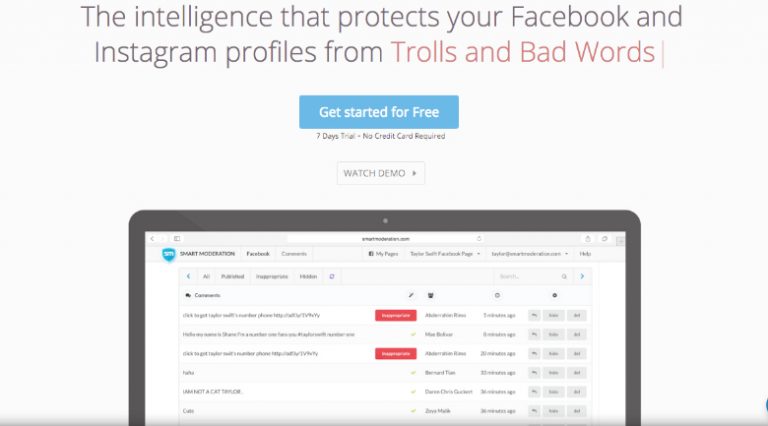
Have you ever received those weird comments on your Facebook page about “Someone finding bad pictures of you” or “Click here to get Taylor Swift’s phone number?” On a personal page it’s just annoying, but on a business page it can look unprofessional and be potentially harmful to your image.

Which is why Smart Moderation launched – it is a intelligence tool that“protects your Facebook, Instagram and other profiles from trolls and bad words.

Protect your brand

Suitable for businesses who get spam on their sites, or for personal accounts too; Smart Moderation was created for moderation teams, marketers, celebrities and enterprises. This new service promises to eliminate the comments and threats on your site so you can focus on more important things like content management and campaign creation.

With 24/7 protection, auto hide, and significant accuracy, bad words or inappropriate content won’t ever be an issue. Significant accuracy understands bad words, unwanted messages and trolling attacks and acts as a self-learning engine that blocks the wrong comments and keeps the right ones.

Smart Moderation in action

Save time and money

Smart Moderation can also help save you time along with money. By eliminating the time it usually takes you to delete those mal-comments, you automatically increase the time you could be dedicating elsewhere. Furthermore, bad comments can be detrimental for potential consumers who may be offended, which is inherently a loss in money. Smart moderation makes there is no loss, by blocking the comments and spammers, to ensure your customer stays around.

Smart Moderation is compatible with Facebook, Instagram, and YouTube and gives users the ability to reply to all those platform’s comments directly from the tool.

With social media being as popular as it is, it’s no surprise spammers are just as popular, making tools like Smart Moderation a necessity. There’s no word on when it will be released to the public, but they are accepting early access and premium members subscriptions at the moment.

#SmartModeration

Every job hunter should go get “Hire Me!” cards made up at Moo

Get noticed, be remembered

Standing out in a job hunt is like successfully getting a clearance priced TV during Black Friday at Walmart: exasperating, yet rewarding if you can pull it off. The loads of different advice on how to get noticed is just as frustrating, and typically requires a ton of time, preparation, and energy: to simply say “Hire Me”.  Well Moo, a beacon of light for job seekers, embraces that simplicity and provides several ways to get noticed without all of the unnecessary fluff and stress.

bar

Keeping it classy

Moo’s standard sized card is an ideal replacement for the typical business card eliminating all of the frills and including only the necessities. The front of the card includes your name along with your education, contact information and skills. The back tells exactly what your goal is, reading “Hello my name is Your Name, I would like to work for you”.

So simple it’s almost deceptive. This card, with its retro color palette and concise information, is sure to catch the eye of everyone who receives one and waste little time getting to the point.

Super cute, tiny minis

The mini-moo is probably the quickest, and easiest way for someone to keep up with your contact info. Packed in a card half the size of the standard, this little card will definitely stop an otherwise busy hiring manager in their tracks. It’s also easy to throw in your pocket to pull out later without getting damaged or being in the way. Proof that sometimes the smallest things do indeed pack a big punch.

moo mini business card hire me

Everyone loves stickers, right?

Moo Stickers are a great way to make your point stick in a memorable, and create a personal brand. Place a sticker at the top of your job application, or paperwork. In a pile of the same information, yours will pop out like a sore thumb. It will also match the design on your business card, and show your attention to detail and how much you care about your personal brand. Other places these can be used include: Thank you cards after a meeting, next to your name at on the sign-in sheet pre-interview, existing business cards and any other paperwork they ask you to fill out and return.

moo stickers hire me

Leave an impression

Moo cards for students are a great way to answer all of the same questions you get asked at every interview: “What’s your major?” “When do you graduate?” etc. All of that information is available to students with premium formatting; and trust me premium goes a far way in a room full of free-trial business cards that are popular amongst broke college kids. And while they aren’t free Moo understands the struggle, and offers 20% off for accounts registered with a college-issued email address.

moo college hire me

You’ve got this!

Imagine these Moo cards and stickers are like a skip the line pass at Walmart, it doesn’t guarantee you’ll get the TV (or job) but you have a bigger chance than you did before. Proper care towards your personal brand will lend itself in proving to your hiring manager that you typically go above and beyond and will use the same care on the job. Head to Moo, or create your own so long as you leave a lasting impression. Happy job hunting!

#Moo

Facebook meets Square: Why this integration matters for your business

It just keeps getting better for marketers

Does your company advertise on Facebook? If not, now might be the time to invest—Square and Facebook recently paired up, and the result is a streamlined, comprehensive, affordable way to put your information out there and start getting results.

bar

Square up

For those a bit late to the party, Square—a San Francisco-based “merchant services aggregator”—specializes in simplifying commerce by creating payment platforms that utilize already-existing technology (i.e., smartphones).

Rather than requiring customers to purchase bulky or expensive hardware, Square recognized a need for software compatible with current technological trends and ran with it. The result? An easily-obtained, efficient, and relatively affordable alternative to modern-day commerce.

Square and your business

So how does this integration help your business? Well, for starters, Facebook has the largest user base out of all the social media sites by far, boasting well over a billion active users. You’ll find the greatest diversity of target demographics here, and marketing your product or service will net far greater results than on a smaller social media platform—that just stands to reason.

Where Square makes its grand appearance is in the actual marketing statistics. Facebook is a veritable cesspool (negative connotations aside) of social potential and variety; toning your ads to just the right poignancy or depth is crucial—and with Square’s ability to give you feedback and show you exactly which ads are being responded to best, this crucial task becomes completely manageable.

Oh, and, as mentioned about a hundred times so far—Square is HELLA affordable, and customizable in that respect. You’re basically losing money by NOT advertising on Facebook, guys.

Buy Square, save a goat

In a status update, Square included allusions to future endeavors as well, saying they will be “adding support for other social channels in the coming weeks” so, with any luck, you won’t have to sacrifice a goat or sell soul equity for a chance to advertise on other social media giants like Twitter and Instagram.

Baller.

If you still aren’t entirely convinced that Facebook’s integration with Square makes advertising on a new platform worth your while, head on over to their site and check them out for yourself!

#FacebookMeetsSquare

How traditional and flexible work schedules impact productivity

Businesses are looking at ways to boost productivity

There is a theory in management that assumes employees need supervision at every step, because they are inherently lazy and don’t want to work. Businesses which operate under these conditions tend to be supervisor-heavy with control given to a central group.

If that attitude sounds cynical, consider that the majority of businesses today operate with little flexibility when it comes to scheduling staff. Sure, there are certain industries which do require staffing needs to be met without input from the employees. But there are many other organizations which can provide flexibility for their staff as long as the work is getting done.

bar

Do flexible work schedules work?

The alternate management theory recognizes that workers do have motivation to fulfill their goals and take responsibility. Management is de-centralized, and employees have input into their own schedule and time frames.

Two researchers, Phyllis Moen, (a sociology professor at the University of Minnesota) and Erin Kelly, (a work and organization professor at MIT) studied two organizations which agreed to set up a flexible initiative. One company was the electronic retailer, Best Buy, and the other company was only referred to as TOMO in the paperwork, as they wished to remain anonymous.

With both organizations, there were two groups. The control group operated under the same company work schedule that had been in place. Supervisors granted time off and gave employees their schedule. In the second group, the employees had control over their time. They were told that projects had to be completed on time and goals had to be met. But the focus was on productivity and results, not hours in the office. With the second group, managers were encouraged to be supportive about priorities outside of work.

Survey says: Flexibility improved productivity

At the end of the study, the group with flexible time were found to be happier and less stressed. They had met their goals and were even sleeping better. In another study related to this one, researchers found that the effects of having a flexible work schedule trickled down to the children of the employees. The children were less stressed and slept better.

In addition, employees who had the flexible work schedule were more likely to stay with the company than those in the control group. Ultimately, in the right environment, flexible schedules do work.

What’s your management style?

There are always people who just want the paycheck and won’t give their all to work no matter what the incentives are. I think, on the whole, most people take a great deal of pride in their job, but they do need to be able to balance their situation at home and their work life. It’s not just those who are married and have kids. Single people actually do better under flexible scheduling, because they don’t have to ask permission to take time for themselves.

Think about your staff and how they work most effectively. If you’re having a hard time thinking about flexibility as the work-family balance, change the wording. Balance may be an unrealistic goal. What you want is a work-life fit, which is the term used by the American Psychological Association, because it is gender-neutral and implies that flexibility is for everyone, not just the elite few.

#FlexSchedule

Face2Face: Creepy tech will soon make you distrust everything you see

Don’t believe everything you read (or see)

We all know that we shouldn’t believe everything we read or see on TV. But if the news is showing a video of someone speaking, we can rest assured that the person really did say it, right?
Perhaps not for long. Researchers from the University of Erlangen-Nuremberg, the Max Planck Institute for Informatics and Stanford University are developing a technology that would make it incredibly easy to manipulate videos live in real time, using only a standard PC and web camera.

bar

Manipulates videos in real time

The technology has to be seen to be believed, so check out the video here. Using software and a standard webcam, Face2Face can be used to “manipulate Youtube videos in real time,” replacing the facial expressions of the person in the target video with expressions generated by a source actor.

“No good reason for this technology other than to do nefarious s- – -“

Using a web cam, the team films the facial expressions of a source actor, which are then re-rendered to simultaneously replace the original facial expressions of the person in the video. Similar technologies have been used to this effect before, but have rarely been convincing (see Beyoncé’s “Grown Woman” video), and the technique has never been applied in real time.

The improvement comes from a more accurate re-rending of the interior of the actors mouth, such that the movements of the source actor’s mouth are matched with the mouth of the target video.
The project seems to arouse both excitement and suspicion. Youtube users’ responses to the project range from “wish I could go back to grad school to play with technology” to “there is no good reason for this technology other than to do nefarious s—.”

Purely research-focused (for now)

The applications of such a technology are, undeniably, a bit frightening to think about. The research team seems aware of the potential sketchiness factor, explaining defensively that their project is “purely research-focused.” They claim that they have no sinister purpose, but are only hoping to “demonstrate the capabilities of modern computer vision and graphics technology….in an approachable and fun way.”

#Face2Face

99Deductions: The must-have tool for freelancers and entrepreneurs

Freelancing on the rise

We have long reported on freelancing and how it’s on the rise. More Americans than ever before are freelancing, choosing to ditch the boss and security of a full-time job. One of the worst things about working for yourself is paying your own taxes.

However, as a business owner, the IRS allows for deductions to help off-set your taxes and help you keep more of your hard-earned income.

Do you know which deductions freelancers are entitled to?

In 2015, the tax code was over 70,000 pages. How anyone can keep up with that information from year to year is astonishing. Short of having a CPA in your back pocket, how can freelancers keep up with what can be deducted or not? Hurdlr, Inc. has put together a great website to provide quick answers about what can and cannot be deducted.

What’s great about 99Deductions is that it’s not just geared toward one type of freelancer. AirBNB hosts, landlords, photographers, and Uber Drivers can use the site to make sure they’re taking advantage of every deduction available to them.

Users have the option to choose their line of “work,” then they can choose which aspect of the tax code they need information for. Each section goes into a great deal of detail. 99Deductions also has a comment section, in which many users have asked questions, but I could not find where they were providing answers. Hopefully, those comments will let their team identify places where further information is needed.

How 99Deductions came to be

99Deductions was developed to complement Hurdlr’s app, which tracks expenses, income, and other financial information. Hurdlr extracts information from popular apps to help you keep track of all that financial data which can be overwhelming. I don’t use it personally, but it does look promising for freelancers without a traditional accounting program.

99Deductions offers a great deal of information, but it does offer a disclaimer: “The information contained in this document is provided for informational purposes only and should not be construed as financial or tax advice. It is not intended to be a substitute for obtaining accounting or other financial advice from an appropriate financial advisor or for the purpose of avoiding U.S. Federal, state or local tax payments and penalties.”

In other words, don’t ditch your CPA just yet. Freelancers need other professionals to help them maximize their business expenses and profits.

#99Deductions

What Snapchat’s most recent acquisition means for you

Who cares about an acquisition? You should. Maybe.

The ever-popular social media platform Snapchat has reportedly purchased Bitstrips, several anonymous sources told Fortune. Teens, rejoice!

bar
Apparently the company has paid somewhere near $100 million, in cash and stocks, to Toronto-based Bitstrips, a company that began making personalized comic strips back in 2007.

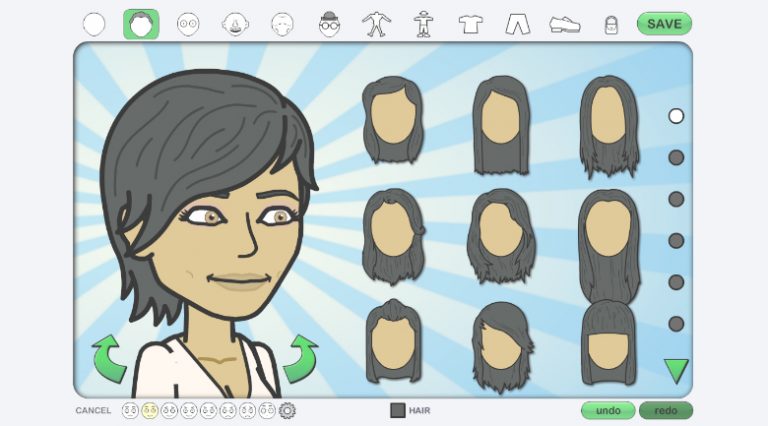
Bitstrips allows you to create digital comic strips featuring characters that are designed to look just like you. Using the Bitstrips website or app, you create an avatars that resembles you or your friends by selecting skin colors, hair styles, nose shapes, and other personal features. The avatars can then tell a story through a digital comic, or can be arranged in different poses with different accessories into a personalized “bitmoji.” The only thing better than an emoji is one that looks like you.

The emoji angle is important

Facebook blew up a few years ago with Bitstrips digital comic strips. Then in 2014, the company began focusing on mobile, and on “bitmojis,” creating a third party keyboard that allows users to send their personalized emoji as a text message.

Both Snapchat’s spokesperson and Bitstrips founder Jacob “Ba” Blackstock have declined to comment, but it seems likely that Snapchat will find a way to incorporate the personalized emojis into its offerings.

The acquisition follows a general trend of increasing use of emojis on social media sites and on mobile.

It seems that modern technology users are looking for more and ways to express themselves beyond just words – millennials love visuals and video. Facebook recently announced that they would be expanding beyond the “like,” giving users several visual responses ranging from a heart to an angry face.

Snapchat has often given users fun ways to jazz up their pictures and videos, including the infamous “puking rainbow” lens. Videos are fun, but adding an emoji that looks like you could take your snap to the next level. Watch for this acquisition to make Snapchat an even more attractive social media opportunity as the masses flock to the novelty.

#Snappy

The top 100 cities for recent college grads [#WhereTheJobsAt]

Pack your bags, new grads

It’s that time of year again. A new cascade of graduating seniors will soon be hitting the streets and fortunately for them, employers plan to hire 11 percent more college graduates from the class of 2016 than they did for the class before, that according to data from the National Association of Colleges and Employers (NACE).

bar
This year, like in other years gone by, the key to job hunting success is relocation. Studies support that college graduates need to be willing to move to a place where they have the best chance of snagging the job of their dreams. Or at least one that will pay a decent wage and leave something left over for a cup of coffee at Starbucks.

Where opportunity runs rampant

NerdWallet has you covered: NerdWallet recently surveyed the 100 largest U.S. cities and ranked them according to the places that provide the best environments for college graduates who are just starting out.

The Nerd analysis focused on 2014 U.S. Census Bureau data covering job options, the age of the population, rent costs and median earnings, as well as December 2015 unemployment rates from the Bureau of Labor Statistics.

And the winner is…

Arlington, Virginia tops the list in no small part because 67.1 percent of its workforce find jobs in management, business, science or the arts. These fields have the most jobs that require a bachelor’s degree or higher. In fact, more men and women per capita hold Bachelor Degrees than almost any other city on the list.

The Top Five

  1. Arlington, VA – Additionally you’ll be happy to know, as NerdWallet points out, “The median annual earnings of $72,406 for a worker 25 and older with a bachelor’s degree. Which is up from $64,957 in 2015. The flipside to all that opulence? Rent runs on the high side.
  2. Madison, WI – About a quarter of the population (24.7 percent) is in the 20- to 29-year-old range, likely thanks in part to the University of Wisconsin-Madison. According to research by the Capital Times, Madison has worked to attract these young people with a boom in high-density apartments downtown
  3. Washington, D.C. – Check it out: 60.5 percent of the workforce found jobs in management, business, science or the arts. About a quarter (26 percent) of employees work for the federal, state or local government, according to the U.S. Census Bureau’s American Community Survey.
  4. Boston, MA – Boston residents ages 20-29 make up 24.8 percent of the population. Area universities, such as MIT and Harvard, have an impact on the median age of the population and the local economy, since the academic institutions serve as employers and a source of talent for the city’s tech industry.
  5. Minneapolis, MN – Here’s one perk to choosing the Midwest over a coastal city: You get to hold onto more of your paycheck when it comes to rent. Of the cities in NerdWallet’s study, Minneapolis residents pay the least in rent as a percentage of their income. Annual earnings are a bit lower so it all evens out I guess.

The Rest of the Best

Seattle, Pittsburgh, Austin (where we are headquartered), Atlanta and San Francisco round out the top 10. And the best advice to give soon-to-be graduates? Wherever you are is the place to be. Make the most of wherever you call home, whether it’s a city of 5 million or town of 5,000.

That said, when opportunity knocks, be ready to pack your bags if necessary.

#WhereTheJobsAt

Harvard says more MBAs should buy small businesses

The MBA road less traveled

You’ve just earned your MBA—what’s next? Most MBA graduates will attempt traditional career paths, such as joining a corporation or becoming a consultant. But Professors Richard S. Ruback and Royce Yudkoff of the Harvard Business School think that a lot more graduates should consider a small business.

bar
The trend is increasing, but acquiring a small business is still the lesser-traveled road amongst MBA earners. With a chance to be your own boss and run your own business, why aren’t more MBA graduates giving it a shot?

“Bushwhacking in the forest of opportunity”

According to Ruback and Yudkoff, students express that searching for a business to buy is too “risky.” But the professors argue that the overall lifetime financial risk isn’t much worse when you own your own business versus a career in consulting.

Apparently there isn’t a whole lot of data to compare the financial risk of different career paths. However, most MBAs are probably balking at the angst-ridden search phase. Searching for an acquisition is a full-time job that often takes one to two years, and you never know what you’re going to find. Ruback and Yudkoff compare it to “bushwhacking in the forest of opportunity.”

Decrease in stress

In fact, Stanford reports that about 26 percent of searches end without an acquisition – a frightening fail rate. However, the Harvard professors argue that most people who fail to find a business to acquire gain valuable experience and still end up landing decent jobs – not so different from a more traditional career path, where people usually change jobs within the first few years anyway.

While the search process itself can be very stressful, stress tends to decrease over time for CEOs who own their own business, as the business “shifts to align with the CEO’s skills and interests.” A consulting job, on the other hand, may be easier to land at first, but will likely get more stressful as time goes on.

Finding professional independence

Ruback and Yudkoff conclude that the risks and stresses of searching for a business to acquire are well worth it, since owning your own small business leads to “professional independence, something few ever achieve in a traditional job.”

#BuyingSmallBusiness

How the fathers of Austin tech feel about the future

Austin has deep tech roots

As a native Austinite, I sometimes secretly think that I’m special in a sea of east and west coasters, and I’ve been involved in the Austin tech culture for most of my adult life. But then my secret feeling of being a unicorn is one I laugh at when I think of the people who paved the way for me to even be employed here that were making deals and attracting tech companies here before I was even born.

So now that we’ve established that I’m no more special than the oldest McDonald’s in this town, let’s pay homage to those that came before any of us even conceived of being part of the Austin tech industry that we are lucky and honored to be a part of today.

To do that, we tap into the mind of Scott Francis, Co-Founder and CEO of BP3 who recently attended a talk by three names anyone who is lucky enough to work in Austin should know by heart (if they don’t already (natives do)). In his own words below, he breaks down Austin tech through the eyes of its fathers:

Spelce, Powers, and Falkenberg

Three legends of Austin’s Tech Economy came to SXSW Interactive this year to hold forth on how Austin became Silicon Hills, and to talk about the future of tech in Austin. It has become a popular pastime in Austin to pine for the good ole days, and complain about the growing pains. But these 3 gentleman remind us that the best days for Austin are now, and in the future – thanks to all the hard work of all the people that have come before us.

Neal Spelce, Pike Powers, and Howard Falkenberg are names known or familiar to many Austinites, along with other names like Inman and Kozmetsky. They held a panel at the Austin Chamber of Commerce that should have been recorded for posterity, it was so good.

spelce-powers-falkenberg

As Neal put it, they were in Austin at the very beginning of technology in Austin – the time of Adam and Eve as far as that goes. And in that mythical time, civic leaders looked around Austin and saw a lot of city, state, and federal government jobs. And a lot of university related jobs. And not enough diversity in the economy. Not to mention, all of these government buildings didn’t pay any property taxes to the City of Austin. They say the mother of invention is necessity. So Austin set about trying to change the script.

The first big opportunity was to recruit MCC to Austin

The feeling was that technology was a good fit for Austin because there wasn’t a transportation and manufacturing infrastructure, and tech was relatively low-impact on the environment. Even in the 70’s the Austin culture was pro-environment, and this was a strong consideration.

I liked the story that Pike Powers told about being asked by city leaders to go talk to Cisneros (Mayor of San Antonio) and the Governor Mark White and explain why luring MCC to Austin was so critical.

Pike recalled the governor telling him: “Listen Pike, I don’t want to lose. And I don’t want to win by an inch. This is your total focus.” This is a great example of both leadership and motivation in action.

The team worked hard to recruit Bobby Inman and his team to Austin. They invested their most senior leadership every time Inman’s team came to Austin for a site visit. That personal attention helped overcome more established cities who didn’t need it as badly. MCC came.

From day one, the environment mattered

Then Sematech. Then the suppliers like Applied Materials, and the chip companies like AMD, Freescale, and Samsung. We won that competition for MCC against 57 cities and 25 states.

An interesting point that Neal made was that Austin partly won because of the fresh air and outdoor amenities. Even in the birth of tech in Austin, both Austin and the organizations it attracted, cared about the environment and viewed it as an asset and an advantage.

Howard Falkenberg stated that Austin has doubled every 20 years since time began, but pondered whether that would have happened without efforts like these? The efforts required get bigger as the city grows. Soon we’ll be bigger than San Antonio, which is hard to believe, but likely true.

They saved Austin from being dubbed the “Silicon Gulch”

He also told a fun anecdote of how close Austin came to being known as Silicon Gulch, thanks to one article in the New York Times that referred to us as such. He and his team made it a point to always refer to Austin as the Silicon Hills in any media conversation from that point on, to cement a friendlier, more positive framing in everyone’s mind. It worked.

Given all that Austin has experienced over the last 40 years, you’d think that these three might be a little bit cynical about the future, or our current generation of leadership. But it isn’t so.

They point to some interesting developments:

  • The new medical school coming to Austin over the next year, next to UT. It took 10 years to make it happen, but that is the kind of investment horizon you have to have. It was too important to let the idea die. People bet their careers on it.
  • An innovation district is being formed just south of the medial school – eventually four million square feet of space.
  • Conde Nast is putting their digital convergence effort in Austin.
  • Under Armour has located their software efforts here in Austin with their MapMyFitness acquisition as the core.
  • The transformation of Austin is spreading outward into San Marcos, Round Rock, Pflugerville, etc.
  • Lots of transportation challenges – this is the next major investment. Austin missed an opportunity to move Union Pacific rail outside of the downtown corridor. One idea is a regional taxing district that can find and fund our own solutions.

They feel positively about Austin’s future

I asked them if they felt like they were seeing the next generation of leadership emerge in Austin, to take us to the next level. Perhaps not unsurprisingly, they said they did, with conviction. They declined to name names but they see a lot of good things happening in Austin that will keep the momentum going.

It has become a popular pastime in Austin to pine for the good ole days, and complain about the growing pains. But these three legends remind us that the best days for Austin are now, and in the future – thanks to all the hard work of all the people that have come before us.

And looking at all the cranes in downtown Austin, and seeing all the growing businesses here, and the burgeoning music scene, I have to agree.

Francis’ words originally appeared on the BP3 blog.

#AustinTech

Calculator shows what each Presidential candidates’ plan will cost you personally

Test out the candidates’ tax proposals

I’m just not sure how much stock I can put into the Vox.com Presidential Candidate Tax Plan Calculator. Maybe I just don’t want to know so I can’t get any more flustered then I already am. Vox points out that “The presidential candidates have widely varying tax proposals.”

bar
To wit: Donald Trump and Ted Cruz propose massive cuts that would greatly reduce federal incomes taxes on everyone (especially the wealthy) and pay for it all by cutting a wide host of government programs.

On the other side of the ticket, Bernie Sanders proposes virtually the opposite of Cruz and Trump: tax increases for everyone including the wealthy, and somehow he’ll add comprehensive government programs. Meanwhile, Hillary Clinton proposes much smaller tax increases, all focused on the wealthy.

Cuts and breaks

Vox.com’s Ezra Klein wrote a fascinating article on what is to be gained and/or lost by all the presidential candidate’s tax proposals. Believe me, I’m not picking favorites but of the four candidates Klein writes, “Cruz would have to do something on the order of eliminating Medicaid, the Children’s Health Insurance Program, all federal education spending to include Pell grants, K-12 subsidies, Head Start and similar programs, all federal spending on justice to include the FBI and DEA, all international spending, all federal transportation systems and all veterans spending programs. Trump on the other hand would have to do everything Cruz does and then on top of that find another Trillion dollars in savings.”

I haven’t even gotten to the point of asking you to plug in some numbers in the Tax Plan Calculator. Heck, it doesn’t even have to be real. Make something up and plug the numbers in here if you haven’t already.

What’s good for the goose

Vox.com suggests you, “Play around with difference incomes other than your own to get a better idea of how each candidate deals with the poor, middle class and the wealthy.” You should come up with the following assumptions:

  • Clinton proposes keeping things mostly the same as the current administration.
  • Sanders wants to implement massive changes across the board including the poor.
  • Cruz and Trump propose cuts for everyone but you’ll keep more change in your pocket if you’re wealthy.

The current tax proposals looks like it has all the elements of a new game show: We can call it “Wheel of Misfortune.”

#DeathByTaxes

Declutter your office by asking yourself these two questions

You’re not alone, desks across the globe are filthy

March is nearly over, we’re past all of the New Year’s resolution garbage, and many of us remain settled in our old ways. If you find yourself struggling to maintain your composure this early in the year, rest assured you’re not alone.

bar
The first step in combating the post-winter funk is to organize your life for success. Becoming Minimalist’s Joshua Becker wrote about decluttering, and while its specific focus is directed more toward one’s home space, the article’s philosophy is absolutely applicable to your office setting.

The first question

A lack of organization in your workspace has been linked to detriments ranging from decreased productivity to developing depression—neither of which makes your job the least bit enjoyable. Becker’s analysis comprises of two simple questions, the first of which is: Do I need this?

When answering this question, be as objective as possible. What do you absolutely, uncompromisingly need in your office? Desks, chairs, computers, filing drawers, and wastebaskets come to mind for most occupations; obviously, your specific needs might extend to including a printer or scanner, a digital design pad, or a workbench. Look at the fundamental requirements of your job, and ask yourself what you can’t do it without.

Unless you really want to piss off your boss, keep those things.

The second question

The second question is a bit more complicated: Why do I have this? Apply this question to everything you have left over from the first one—“because I need it to do my job” isn’t the answer you’re looking for here. Sure, your workspace should be clean, organized, and maintainable, but it should also reflect your personality and reason for being there. Pictures of family or friends, a favorite mug, or a customized lamp might complete your office space, so long as they aren’t too intrusive—so don’t junk these.

The life-sized inflatable corgi your mother gave you for Christmas that you kept out of guilt, though—you know, the one that’s been crowding the entire left half of your keyboard since day one? That can probably go.

Sentimental value always has a place—but, like most things, that place lies in moderation. Pursue these two questions to fruition, and you will notice a staggering difference in the organization of your workspace, even if you didn’t notice any encroachment beforehand.

Cleaner space leads to cleaner work—so keep it clean, folks.

#SoTidy

Google announces Fiber phone, $10/mo for the ultimate landline update

0

Ring, ring, ring: Fiber phone

Google has today announced Fiber Phone, a new home phone service that uses Google Fiber, the company’s broadband and TV service, as its connectivity backbone.

bar
In a blog post announcing the service, Google said, “Landlines can be familiar, reliable and provide high-quality service, but the technology hasn’t always kept up. That’s why today, we’re introducing Fiber Phone as a new option to help you stay connected wherever you are.”

Not your typical landline

Available as an add-on only to people who already have Google Fiber’s internet service, Fiber Phone will cost $10 per month.

That price gets you unlimited local and nationwide calling, as well as cheap international calling options, the ability to choose your own phone number, and your voicemails can be transcribed and sent to you via text or email.

If you’ve used Google Voice, Google’s app that provides select phone services, many of Fiber Phone’s features will be familiar to you. Additional features such as spam filtering, call screening, and do-not-disturb are also included with the service. You can also use call waiting, caller ID, and 911 services just as easily.

It isn’t a typical landline. Google’s new super-charged VoIP service will apparently allow users to have a phone that rings when they are in the home, but then acts as a cell phone when you’re on the road, at the office, or wherever. A user’s Fiber Phone number lives in the cloud, which means it can be used on almost any phone, tablet or laptop. Therefore, it can ring your landline when you’re at home, or your mobile device when you’re out and about.

Only available with Fiber

The phone service will only be available to residential customers with Google Fiber. At launch, only a handful of areas will be able to take advantage of Fiber Phone. Google says they plan to slowly roll out Fiber Phone to their other Fiber-enabled cities. As of now, Google’s larger Fiber service is only available in four cities — Provo, Utah; Kansas City, Missouri; Austin, Texas; and Atlanta, Georgia. While there are plans to bring Google Fiber to seven more cities, Fiber Phone will most likely only launch in current Fiber markets. When the Phone service does eventually make it to your city, there’s an easy sign up and installation process.

To stay updated on the latest Fiber phone news, fill out their interest form here.

#GoogleFiber

Facebook to open Messenger Bot Store, could completely revolutionize ecommerce

Opening the opportunity for chatbots

Insider experts predict that Facebook will announce its Messenger Bot Store at this year’s F8 conference in a move that Tech Crunch is calling the “most important launch since the App store.” The Messenger Bot Store will give developers unprecedented opportunities to create chatbots for messenger.

bar
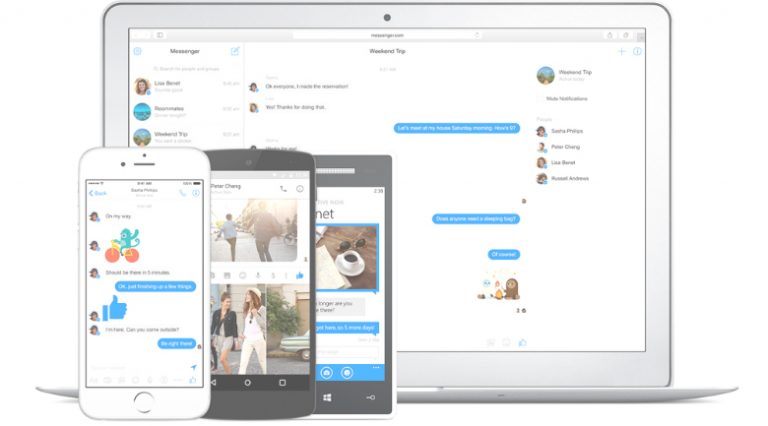
The Messenger Bot store could herald a new era of what Chris Messina calls “conversational commerce.” Facebook Messenger can already be used to make purchases, restaurant reservations, or travel arrangements. A Messenger Bot store will encourage developers to come up with even more ways for users to interface with brands directly through their Messenger app, including moving beyond text-based bots into dynamic user interfaces that combine text with graphics and video.

Potential to surpass apps

Said TC, “when you can easily interact with Dominos, United Airlines and Capital One on Messenger…will you ever use their bloated native apps again?” suggesting that chatbots have the potential to eventually surpass apps.

Already there is a growing “ecosystem” of chat-based bots, what with the recent expansion of the Telegram Bot Store and Google’s research and development of a chatbot. A lot of major investors are also throwing down big bucks on bots. Albert Wenger of Union Square Ventures called the recent flood of investments “the Great Bot Rush.”

Stayed tuned for the revolution

The possibilities seem endless. Some experts are even saying that “bots are the new apps.” When Apple launched its App Store in March 2008, the number of iPhone sales doubled, then doubled again for several subsequent years. Currently Facebook Messenger has over 800 million active monthly users – that’s 100 times more than the number of people using iPhones when Apple launched in the App Store.

In other words, Facebook has a huge audience that could launch a revolution in how we interact with brands on mobile – through bots, instead of apps.

Only time will tell if bots will truly be the next apps – but tech companies and investors are putting the money, research, and development into making it so.

#FbMessengerBots

Television quality video coming to Facebook (big news for the big boys)

Video is king

Video is ruling the internet right now – and Facebook is one of the main platforms where users are watching video content. The social media site, in collaboration with several publishers, is about to make it even easier for publishers to post live, TV-quality videos, according to Digiday.

bar
Facebook has already been hosting live videos, such as those filmed on a smart phone or tablet, but now publishers will be able to integrate Facebook’s technology into their production processes, allowing for a TV news style broadcast, with multiple cameras, “remote segments,” and more professional production quality.

This is obviously great news for both publishers, as well as for Facebook

Newscasters with the big television news organizations and even sports teams are surely looking forward to getting more live streaming content out to their audience. Large publishers that are already seeing success with live streams on Facebook will likely see a boost from higher quality video that matches their television presence.

Facebook has been working to get more television networks to distribute video content over the site – after all, more content means more ad sales. This technological advance will definitely help make it easy for publishers to stream live, especially because it requires fewer specialized resources.

News networks can stream their live broadcasts to Facebook simultaneously with their TV broadcasts, or can produce TV-quality programs specifically for the site. The ease of this technology is pulling many publishers away from more complicated sites and onto Facebook, further marrying TV and facebook

Facebook crosses their fingers

Digiday reports that the company will announce this news at its upcoming F8 developers conference, which takes place on April 12 and 13 in San Francisco where the social media giant clearly hopes to court publishers. Digiday’s source stated, “F8 is critical in terms of media publishers right now.” The company was reticent when questioned, saying only that “we’re working with a small number of partners to test different ways to share live video on Facebook.”

#FBvid

FDA pushes back deadline for labeling menus (again)

The original deadline was coming up soon

In 2010, regulations which applied to food labeling were passed to give customers knowledge about what they are eating. Businesses were given time to comply. The first deadline was in 2105, but businesses were given an extension to 2016.

bar
By the end of the year, restaurants, convenience stores, and grocery stores with prepared foods were supposed to have calorie count and nutritional labels on the items. This included the salad bar and bakery items, but excluded daily specials or seasonal items and food trucks.

Another extension for retailers

The FDA has once again pushed back the deadline to 2017. What’s the problem? Supermarkets and convenience stores are saving that the labeling is burdensome and problematic. They have too much volume to label each item they sell, unlike restaurants, which have a limited offering. Now that more people are ordering online, some restaurants are saying that it doesn’t make sense for them to include labels on the food.

Vermont and New York City have their own menu labeling laws that are being followed by local businesses. Many states, for example, California, have passed laws concerning menu labeling, but have delayed implementation until the federal standards are codified. The real problem is that the FDA hasn’t finalized its guidelines for menu labeling. Retailers have a year following issuance of the guidelines to implement the labels. The FDA has not released a timeframe in which the final rules will be completed.

Businesses are concerned about following the complex guidelines for food labeling, but that hasn’t kept Panera, Starbucks, or McDonalds from giving their customers the nutritional information they need to eat healthier. The House is pushing legislation that offers narrower rules and provides options for restaurants and retailers to give the information. Supermarkets could use message boards. Restaurants could post calorie counts online, instead of at their business location. The Senate has not acted on the bill to date.

Do menu labeling laws work?

Most people aren’t sure if calorie counts help people be healthier. In one study, from Hunter College, the researchers did find that calorie-labeling altered the behavior in overweight and obese individuals in an urban setting. The BMI of overweight women dropped by almost 1 percent, and for overweight men the change was 1.4 percent. Obese men changed their BMI by about 2 percent, but there was no drop in the BMI of obese women.

While this study doesn’t answer every question about calorie-labeling laws, it is a start to show that people want and need the information.

#MenuLabels

DARPA prepares for the next cyber-war (and how it impacts your life)

DARPA is preparing for the threat

You might not know this, but the Internet wasn’t built for you and me. Back in the 1960’s, which somehow seems like an eternity ago, DARPA (Defense Advanced Research Projects Agency) envisioned a network of computers that could collaborate on scientific and technological research projects from coast to coast. The name given to this proto-Internet was ARPANET, and by 1969, it represented the framework and series of standards that would later become the Internet as we know it today.

These days, DARPA is still developing breakthrough technology to answer the increasingly complicated demands of global security and defense. One of those demands, inevitably, is the ever-greater risk of cyber-attacks — both from within the United States and from without. To speak plainly, the amount of stuff on the Internet makes it more and more difficult with each passing day to keep our personal information — to say nothing of state secrets — safe from prying eyes.

This tug-of-war has become something of a full-time job over at DARPA. Here’s how they’re preparing themselves — and the country at large — for the newest threats to cyber-sovereignty.

There’s no “unhackable” code

DARPA’s Arati Prabhakar and Steve Walker will be the first to tell you: “There’s no unhackable code.” That’s a bit of a mood-killer, really, but it’s also old news — the best the tech community can hope for is to make “less hackable” code, and to try to stay ahead of the cyber-criminal (“hacker,” if you prefer) community and their ever-larger bag of tricks.

In answer to rising concerns over data breaches and cyber-terrorism, DARPA has spun off a new project called High-Assurance Cyber Military Systems, or HACMS. DARPA’s formal description of HACMS and its mandate is full of not-so-helpful jargon, so let’s break it down what they’re trying to accomplish in terms that will be familiar to anybody who studied sixth-grade math.

One can think of the HACMS approach to cyber-security in terms of basic mathematics. Everybody knows the Pythagorean Theorem: a2 + b2 = c2. This theorem is accepted because it works every time it’s put to the test. This is an effective metaphor for the long-sought unicorn that is unhackable code. Think about it like this: A right triangle is “unhackable” because a2 + b2 will never equal anything other than c2. The code being developed by the HACMS works a little bit like this — not literally, mind you, but the metaphor is a good stand-in for the kind of mathematics-based algorithms they’re trying to develop.

It works because it simply cannot work any other way.

And so far, they seem to be meeting with preliminary success. When the HACMS team unearthed an effective piece of code that works along the lines described above, they gave it to a team of “professional hackers” to try out. The HACMS team stored the code on a real-life, unmanned attack helicopter to see if their team could retrieve it.

The results were extremely promising: Even after the hackers were handed access to the actual source code of the helicopter, they were unable to penetrate the main systems and retrieve the code.

The implications of these preliminary tests are enormous. Americans are a fearful lot (Why else do we have more guns than people in this country?), and right now, cyber-attacks are at the top of the list in a recent Survey of American Fears. It’s encouraging to know that the institution that brought us the Internet in the first place is making significant progress toward discovering ways to make it hack-proof. We’re not there yet, but HACMS has delivered a promising proof-of-concept.

DARPA has also recently chosen to enlist the help of the public with the Grand Cyber Challenge — a competition (with a $2 million grand prize) that encourages self-styled hackers to build software that can compromise encrypted data faster than the competition. Think of it as a digital capture the flag game: The team that manages to retrieve a particular piece of data from a closed system gets the prize money and significant bragging rights in the hacker community.

It might sound counter-intuitive, encouraging people to break encryption. But DARPA considers challenges like these to be invaluable recruiting tools. They’re always looking for the next generation of government technologists.

Security is EVERYBODY’s problem

Like much of what DARPA gets up to, HACMS feels a little bit abstract, and perhaps difficult to apply to our everyday lives. The truth, though, is a bit more complicated. With huge battles brewing between corporate America and the government, emerging forms of encryption and new approaches to cyber-security are more important for the “average consumer” than ever before. Battle lines are being drawn between companies like Apple, Google and Microsoft and the would-be surveillance state envisioned by some of the more fearful statesmen serving in Washington, D.C.

And they’re also becoming important for modern entrepreneurs.

We’ve seen egregious lapses in cyber-security before, write large across national headlines. Remember Target’s data breach? Or the Sony hack that compromised some 102 million company records in 2011? The list of “unprecedented” data breaches is a long one, and becomes more precedented with each passing day.

Two reasons a business owner should care about cyber security

First: Modern entrepreneurs have to fight an uphill battle against market fluctuations and competition alike. Knowing your proprietary company secrets are under lock and key is hugely important if you want to make it.

But there’s a second reason, and it sometimes gets overlooked. To speak plainly, your customers take it for granted that you’re looking out for them. Almost every business stores a great deal of personal information about the people they sell to: Names, credit card numbers, addresses, and on it goes. People want to be able to count on their favorite businesses to make sure criminals can’t get their compromising data without a fight.

So — yes. This is a struggle that affects all of us. The world has turned downright Orwellian while our backs were turned. There are now eyes and ears everywhere. H

ow we go about answering this challenge in the coming years will reveal quite a bit about who we are and what we really value.

#CyberWar

Nokia’s OZO might be the 3D camera that defines VR

3

Nokia makes their move

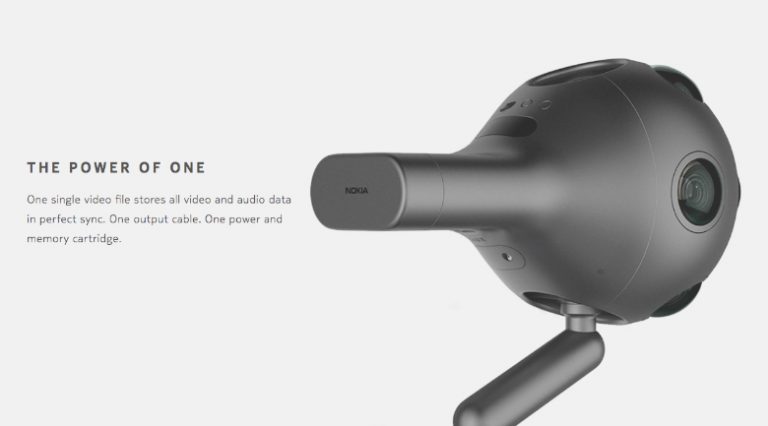
Now that Nokia is through with phones, their next move is to high-end 360-degree video. In an effort to reinvent itself, the company is manufacturing the first professional VR camera targeted at media production.

bar
Until now, VR news has primarily been centered on headsets such as the Oculus Rift or HTC Vive. With such a focus on headset hardware, it’s easy to forget that there’s a whole world of software and content needed to make VR work. This is where Nokia hopes to find its niche.

Live streaming, 3D audio and video

Nokia’s Ozo is marketed as the go-to solution for VR production. The advanced VR camera tackles many of the problems currently facing VR content creators. The camera’s extensive capabilities include live monitoring, live streaming, 3D audio and video and automatic stitching. For example, users can watch a live playback of content recorded by Ozo on a device such as the Oculus Rift.

Ozo saves quite a bit of time for directors who use existing VR recording solutions, as they currently have to wait for the post-processing to be complete before viewing the final product. The camera also outputs 360-degree 3D video and surround audio through a single cable, making setup much easier.

Nokia’s VR camera is comprised of eight cameras, each of them able to record video clips in 2K x 2K resolution. Sitting next to the cameras are eight microphones, which enable Ozo to record the “sound sphere” of the environment where it is placed. The camera is also fitted with a 500 GB SSD and a powerful battery, giving filmmakers the ability to shoot up to 45 minutes of video footage.

Content is key

Nokia hopes Ozo will be the catalyst for a huge wave of quality VR content to ensure VR isn’t just a passing fad. Guido Voltolina, head of “Presence Capture” at Nokia said, “I think adoption will be driven by what you feed people with. It’s not the device. Let’s assume that tomorrow someone comes up with a great headset that’s £199. It has perfect resolution and everything, but there’s nothing to watch. The real key is when you start seeing content that is really what people want to watch, not an experiment.”

While it comes with a $60,000 pricetag, Ozo isn’t for the average consumer. Although, if things go Nokia’s way, the majority of us will enjoy the fruits of Ozo’s labor when viewing a stunning 360-degree video on our VR headsets.

#NokiaOzo

EverSeller: Turn your Evernote account into an online shop

Access your memory anywhere

Since it’s private beta release in 2008 through today, Evernote has been an almost indispensable tool for users to store everything they could possibly need and make it available everywhere. If you’re unfamiliar with the product, it’s essentially an electronic memory. You can put in information in any form, whether that be a typed document, a photo, a handwritten note on that napkin from your working lunch, a cool webpage you found, or even a spoken conversation. And all of that information you stored in your electronic memory is instantly shared onto any of your devices on the fly without worrying about how to organize it.

bar

Turn your memory into money

In addition to being a central repository of all of your meaningful electronic memory, one of the more interesting features of Evernote is its collaboration abilities. Evernote allows you to communicate, collaborate, and share in real-time with anyone in the world without ever leaving the app. New startup EverSeller is enhancing Evernote’s capabilities by enabling you to turn your Evernote account into an online shop. With EverSeller, you can sell digital access to your notes, e-books, design assets, courses, and stock photo’s all directly from Evernote.

Evernote expert, Stacey Harmon tells us, “EverSell looks interesting. For those already centralizing their work in Evernote, being able to simply convert a note to a product without needing to export and upload the product to a 3rd party solution (such as SendOwl, Gum Road, etc) has appeal. I like how postach.io instantly converts notes into blog posts. It seems that EverSell may be offering a similar function for products. I look forward to seeing the details of how it works once launched.”

All of the seller goodies

EverSeller provides you with a landing page, a product link and embeddable widgets for your website, blog, newsletter, and social media profile. EverSeller also features the ability to get insights you need to know your customers and where they come from. You can also easily export your customer data for use in other applications. The company also has what they call a ‘fair’ fee, charging only a 5% fee on each transaction, letting the user keep 95%.

While the online shop hasn’t been publically released yet, you can request early access on the EverSeller site.

#EverSeller