Home Blog Page 173

Why is everyone so obsessed with selfies?

#SelfieNation

Millennials have gotten a really bad reputation, and don’t misunderstand, though I am a millennial, I’m definitely not defending them.

We’ve been tagged as the selfish, lazy, narcissistic generation with little ambition and even fewer endearing characteristics. I’m a firm believer that it’s the results of lazy parenting, but a lot of people blame it on the continued emphasis on technology and social media. I definitely won’t argue that being connected doesn’t always help. Maybe they’re on to something.
We share our latest meals, workouts, check-ins and, of course, #selfies. Specifically, selfies. SO many bloody selfies.

bar

#WeWokeUpLikeThis

Speaking of which, like millennials, I think these pics got a somewhat unfair shake. First, it’s important to understand, that though I am a part of this generation of miscreants, I definitely think twice AND look around before snapping one. I won’t speak for everyone, but I think most people do consider who’s around them before duck facing into their iPhones. BTW, please stop making that face.

I think the concept of the selfie didn’t start off all bad. Someone wanted to freeze a moment, and there was simply no one around to snap it for them, so they improvised. It’s the people who abuse the selfie that are to blame for all this bad publicity. I’d be willing to bet (if I did bet) that these selfie abusers are the same 20-somethings that scream “YOLO”, take 6+ years to finish their Bachelor’s and argue with people over Facebook. THOSE millennials are a-holes.

To get something right, you have to do it yourself

I will say this about snapping a “me” shot – NO one knows my face better than I do. No one understands my best angles (unless they’re professional), and I don’t know about you, but I always feel bad deleting a picture I hate that someone else has snapped then making them take another. Call me crazy, but sometimes it’s just easier to get one yourself. Normally the combination of being ready, a pleasing angle and filters (if you use them), combine quite nicely, making you look #onfleek without needing to recruit help. No need to ask a stranger or some mediocre acquaintance for snapshot assistance. You’re perfectly capable of taking an awesome photo by your damn self. Props, bro.

Keep on keepin’ on

I think if the action doesn’t seem at least a little silly or narcissistic to you upon snapping, then maybe the art of selfies might be cause for concern. If your iCloud is full of pictures of your face, you probably have a problem. Just saying.

Bottom line, I think everyone should keep snapping modestly because, well, you’re not hurting anyone, and you’re able to show that charming face of yours to any family member, friend or admirer. Let’s just make sure to keep it classy, folks.

#SelfieNation

How to challenge the myth of the “ideal worker” and become more productive

We are overworked, unhappy, and unproductive

Today’s hectic and over-stimulated world can cause us to be hurried, busy, multi-taskers, even workaholics, in an attempt to increase productivity and life satisfaction. Yet, there’s compelling evidence that slowing down can actually improve productivity and increase happiness.

Ron Friedman asked 26 best selling science and productivity writers for their tips on being productive. Of the 9 overarching themes for achieving top performance, no. 3 focuses on challenging the myth of the “ideal worker.”

bar

Releasing expectations

There is a widespread professional expectation that one be an “ideal worker”—fully devoted to and available for the job, with no personal responsibilities or interests that interfere with this commitment to work. While this may be the prominent view in the workplace, there’s overwhelming evidence to the contrary. Productivity requires recognizes that we can’t ceaselessly work and maintain optimal levels of performance.

Increasing your productivity level

That is to say productivity is ultimately not found in long days and late nights spent working. As Ron Friedman found, productivity experts make sure to:

Exercise: Exercising ups your productivity level. A brisk walk during lunch time could lead to enhanced time management skills, better ability to meet deadlines, and improvements in mood.

Sleep : A good night’s sleep is key to not only our well-being but to our productivity as well. Time and time again research studies have identified the benefits of sleep. A minimum of 6 hours of sleep is necessary for staying productive. If you’re relied upon to be creative and think up new ideas, a better night’s sleep could see you succeed more than ever before.

Lack of sleep and stress are also a vicious cycle. A lack of sleep contributes to increased stress levels, something which needs to be reduced if you are to work to the best of your ability.

Cycle work : Take regular breaks. One productivity expert said they focus for 90 minutes, uninterrupted. After 90 minutes, they take a break.

Others follow the Pomodoro technique, where you’re prompted to set a timer and work in 25 minute blocks, followed by a short break each time the timer goes off. You don’t have to stick to a rigid time structure. Optimizing productivity can be in the form of cycling between focused working and taking a break.

Disconnect: Unplug from email for some portion of time when you’re not at work.

Simple tweaks to improve your performance

Take it from experts and try these out to improve your performance. For all 9 productivity tips, check out the full article.

#Productivity

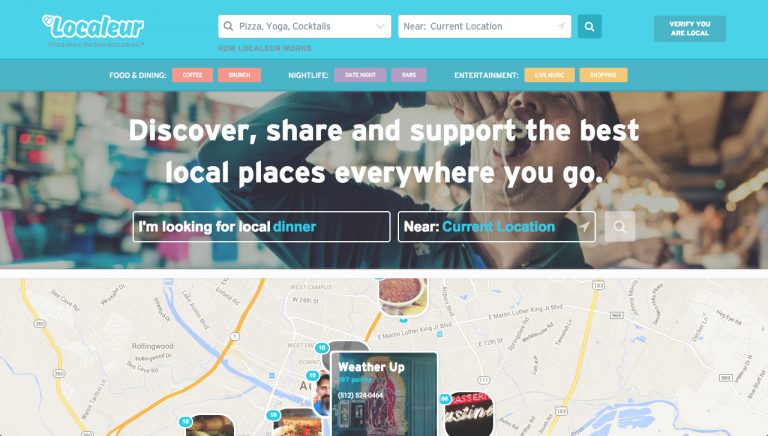
Localeur app tells you what the locals of a city *actually* love

Locals Know Best

I think it’s a no-brainer that if you want to find the best places to eat, drink and socialize you should be tapping into a city’s best resource: the people who live there! That’s the whole idea behind Localeur and while it is not the most original scenario around (there are other platforms that offer similar service), Localeur seems to be gelling where others are not.

bar
According to Austin Inno, Localeur just recently hit 1 million users and this startup is on the brink of getting their first round of institutional financing to help international expansion. I think anyone who’s looking for new things in Austin (where Localeur originates) can’t help but benefit. Add to that the increased US penetration and international potential of this platform and we might have a winner.

Real fun by real people

Localeur was started because CEO and co-founder Joah Spearmen had personal experiences of going to new cities where he wanted to avoid tourist traps and go where the locals go instead. He and buddy Chase White later realized that this would also be something that could used in their home city of Austin by sharing their own recommendations or looking at suggestions from other locals – on new places to eat or drink, especially. Well quicker than you can say “Follow the yellow brick road,” Localeaur was born!

Great information…for a price?

Localeur’s goal is to “help you experience local wherever you go.” To that end, Localeur depends on locals to visit the “hundreds of cities, provinces, states, countries, and continents just waiting to be experienced – not as tourists checking things off a list like every other sightseer, but as locals doing what the people who live in that city do.”

That’s all well and good and especially ADMIRABLE, because at this point all the content seems to be submitted for free out of the benevolence of the folks accessing the site. In other words, I was reading through the FAQ and I don’t see where Localeur.com is paying for content or offering coupons for ice cream or whatever. I also note that the possibility exists at some point in the future where Localeur might transition into a pay-to-become-a-member site which again makes a bit sense seeing as how there are enough “founding members” to field a football team and I imagine each of these individuals needs to pay the rent.

All good

At the end of the day, Localeur provides great information for adventures that might not go farther than your front door or for longer sojourns on the road less travelled. Where the Localeur teams gets its content and how they can sustain the same will make the difference between success or failure.
I’m voting the former rather than the latter!
An app is available for free download on both the App Store and Google Play

#Localeur

Cool invention alert: Trago water bottle tells you when you’re dehydrated

Time to take stock of how those resolutions are going

Every year, we make resolutions that are geared toward living a healthier lifestyle. We begin Pinterest-ing healthy recipes and are coerced into signing up for a gym membership.

However, many of us gloss over one of the simplest ways to implement health into our lives. There are so many benefits involved with increasing our water intake.

bar
Now, I’ll be the first to admit it – I am horrible at drinking adequate amounts of water each day. Though I will say this has changed recently after purchasing a reusable water bottle.

But, like many other things in life, we like for everything to have a convenience or technological factor. This is where Trago comes into play.

Staying hydrated doesn’t have to be guess work

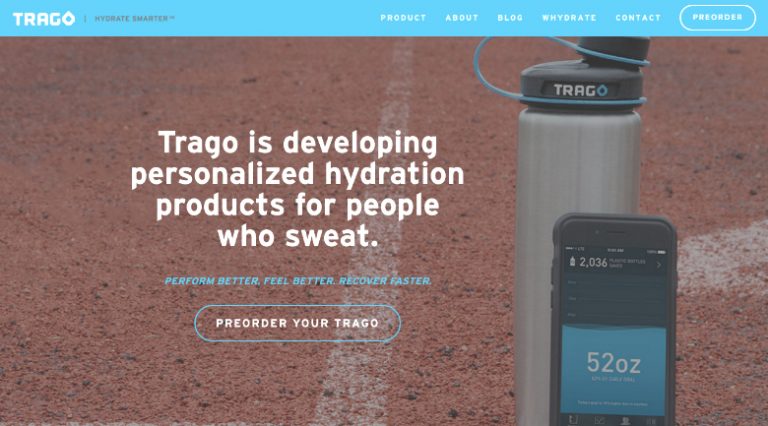
Trago is an Austin-based company that has developed a smart water bottle that is designed to increase hydration. Because levels of hydration vary from person to person, the bottle is designed to tell each user what amount of water is appropriate for their daily lives.

According to their website, “Trago connects to your phone, wearable devices, and health platforms and uses smart data like your body type, the weather and your activity level to help determine your optimal level of hydration. Then, Trago measures how much you drink and keeps you on track to hit your daily hydration goals.”

Designed to help you feel and perform better, recover faster

The tracker is built into the lid of the bottle, and is designed to fit your already-owned wide mouth water bottles made by Camelbak, Hydroflask, and Nalgenes. The company’s goal was to design a water bottle that makes the user feel better, perform better, and recover faster.

The company is even working with athletic teams to allow coaches to see their players’ water intake through the mobile app. They recognize that it is difficult for coaches to evaluate how much water their team is drinking, so this helps to give players accountability.

Teaming up to save the environment

In addition to helping individuals better themselves, Trago is dedicated to helping the planet. An estimated 29 billion plastic water bottles are dispersed of each year, with only 17 percent of those bottles being recycled. Trago has teamed up with 1% for the Planet to provide money to other organizations with a passion to reducing plastic waste on the earth.

While it is easy to overlook, being mindful of how much water we are consuming each day is incredibly important to our bodies. Water can increase energy levels, and delivers nutrients and oxygen to the body.

With Trago, those looking to increase hydration are given an outline of how much water is necessary for keeping our health in check.

#Trago

Businesses frustrated with chip card reader terminals they can’t use

Their side of the story

Here at The American Genius, we’ve been closely following the country’s frustration over retailers’ slow changeover to EMV (chip card) payment networks. As we previously mentioned, shoppers nationwide are disappointed that many companies are still not accepting the safer chip cards as payment, despite the Oct. 1, 2015 fraud liability shift.

bar
For those unfamiliar, as of Oct. 1, 2015, any retailers who do not offer the EMV chip card payment option to customers are automatically liable for any fraudulent transactions that occur at their store. However, if fraud occurs while using the updated EMV chip system, liability falls to the bank involved.

While customers complain that stores are not offering the chip payment option for their own convenience, retailers are telling a different story.

Retailers are angry, too

According to store owners like Avi Kaner, the retailers may not be at fault. Across the country, stores have spent thousands of dollars updating their systems and are ready for the new EMV card payments. But they have been waiting for certification from the credit card companies themselves. Without certification, stores can’t process payments through the EMV payment network.

Kaner is co-owner of the New York grocery chain Morton Williams, and he claims their stores were ready on time for the new payment systems, but they have been waiting for bank certification for months. On top of the $700,000 Morton Williams spent to update all of their stores’ terminals, the company has also seen thousands of dollars in fraudulent charges since the Oct. 1 fraud liability shift.

Retailers take action

One grocery store chain out of Florida has decided to take action. They recently filed a lawsuit against the credit card issuers for taking so long with their certification. Like Morton Williams, B&R Supermarkets were ready for the EMV terminals by Oct. 1, but haven’t received certification.

And in the months since the liability shift, they have been hit with $10,000 worth of fraudulent charges, chargebacks, and chargeback fees for which they have had to pay.

What do the banks say?

While retailers are claiming this EMV system setback is because banks are taking too long to issue certification, the banks are fighting back. They blame merchants, saying the retailers waited too long to install the new system they knew they needed several years in advance.

“What I can say at this point is what we’ve said since introducing our roadmap in early 2012,” a spokesperson for MasterCard said. “There was never a requirement for any party—issuer or merchant—to move to EMV. Using insights from merchants, issuers, and others, our roadmap and the related liability shift provided incentives to prompt for the most secure ways to pay. We have and continue to work with parties across the industry—merchants, issuers, processors, manufacturers—to assist in this migration.”

Even while shoppers are frustrated that stores are still not offering up the EMV terminals for payment, the retailers themselves are reaching the end of their ropes. And taking legal action.

#DipYourChip

Staples, Office Depot fight back against FTC’s resistance to their merger

Fighting for their merger

This week began a federal court hearing where Staples and Office Depot are having to make their cases about whether a proposed merger of the two companies would be beneficial to or terrible for consumers. At the heart of the matter is one central question: are large corporations, such as Fortune 500 companies, likely to go shopping for their office supplies on Amazon?

bar

FTC’s concerns

When we think of Staples and Office Depot, we often focus on the stores and consumer-facing websites, but it is their commercial supply businesses that are most lucrative. It is both retailers’ commercial supply business that concerns the FTC. Back in December, the FTC filed a lawsuit to block the merger arguing that a merged company would reduce competition nationwide in the market for “consumable” office supplies – pens, paper, sticky notes, etc. – sold to large business customers.

Staples CEO Ron Sargent and Office Depot CEO Roland Smith, sent out an open letter to customers three days before a hearing on the merger was set to start.

In the letter, both CEOs called the FTC “simply wrong” in wanting to stop the merger and argued the FTC’s findings are “based on a flawed analysis of the marketplace and a deep misunderstanding of the competitive landscape.”

“The FTC has cherry picked a few facts to fit its narrative and support its case,” the letter said. “In making its case, the FTC refuses to even acknowledge the rise of new competitors, such as Amazon, and the disruptive effects of the digital economy.”

Merger “necessary” to compete with Amazon

Now that the hearing is in progress, all parties are finally having their say. In Monday’s opening statements, the FTC shared emails from companies concerned that a mega-StaplesMaxDepot would enjoy monopoly power over the supply business and raise everyone’s prices.

The office suppliers argue that they have to merge or else face going out of business now that Amazon is aggressively going after the commercial office supply market. However, Amazon is new to the business-to-business office supply market and doesn’t have the entire infrastructure in place to include the largest corporations. On Tuesday, Prentis Wilson, vice president of Amazon Business, testified that his division isn’t yet the primary supplier for corporate business in the same way as Staples and Office Depot, but that they have hopes of bidding on large contracts in the next five years.

#StaplesMaxDepot

Consumers are overwhelmed by company emails [report]

The customer is always right

With statistics like “an average of 222 percent ROI on email services” (EmailStatCenter.com) or “email generates 50 percent more sales-ready leads at 33 percent lower cost,” (Hubspot), it’s no wonder that so many businesses use email as their primary marketing approach. It might be worth noting that there is a point where customers say “when.”

bar

How many emails are too many?

In a survey released in November 2015, First Insight asked 1112 participants about their thoughts about email from retailers. Most customers think they get too many emails. About two-thirds of respondents reported that they received five or more emails per week from a retailer, and that was too many. One the other hand, about one-fifth of respondents who received fewer than five emails per week thought that was too many.

According to Business 2 Community, email marketing is the second most effective marketing channel in ecommerce. The first is search. More businesses are spending more of their marketing dollars on email and social media, while direct mail, tradeshows, and print advertising are seeing decreased spending. The customers are coming online to find your organization.

Keeping up with what your customers want

Businesses cannot afford to quit sending emails, but it is important to make sure that your message is relevant to consumers. Most people unsubscribe from email lists because they are getting too many emails or the emails become irrelevant. By “hyper-targeting” the message in the email, more consumers are clicking through. Your business has to go beyond just name, age, or location to really reach the target audience, but in today’s marketplace, that data is available.

Make sure your brand pays attention to the analytics of your email marketing. Utilize the data you receive when someone interacts with your website or social media account. Taking advantage of this information will let your business engage customers and convert sales, instead of wasting money on emails which don’t get the desired results.

#StopOverEmailing

Where the top 500 CEOs spend their time on social media

Feeling sociable

I think it’s kind of neat that some of our most renowned, famous, rich (continue with any other superlatives you want to add) CEOs have fan pages and tons of followers. I mean check this out: Facebook’s Mark Zuckerberg has over 33 million followers. Netflix’s Reed Hastings logs in with over 300,000. Even Hewlett-Packard’s Meg Whitman has over 200,000 followers. Ok maybe we’re not talking popularity on par with the Kardashian’s (Mark Zuckerberg excluded) but this is proof positive that many of the top CEO’s are embracing social media.

bar
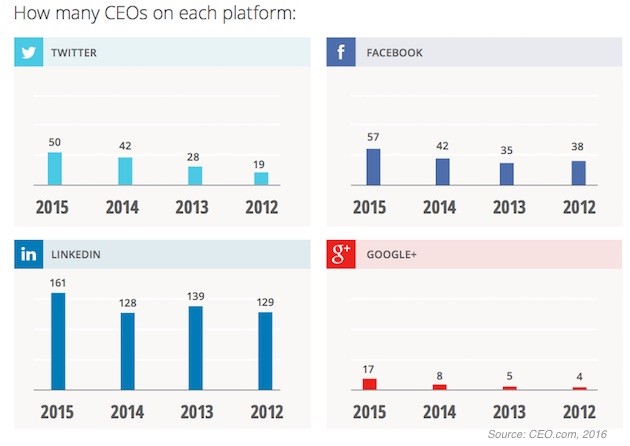
Oddly enough, it wasn’t always so. According a recent report from CEO.com, some 61% of Fortune 500 CEOs had no social media presence at all in 2015, which is actually an improvement from the 68% of CEOs with no social presence the year before.

Using a new playbook

Social impact, explains forbes.com, “doesn’t warrant tweeting every meeting, trip or thought. It does require that CEOs use a new content playbook for their own accounts and organizations they represent.”

The CEO.com study discovered also that LinkedIn is the dominant social media platform for Fortune 500 CEOs, with 32% of executives connecting to other users on the platform.

CEOplatform

C-Suite level social media adoption still low

Meanwhile, a forbes.com article points out that “while new media norms suggest that CEOs make social content and engagement core to their leadership communications, widespread adoption in the C-Suite remains slow.” Top perceived barriers we see consistently see include time commitment, return on time invested and risks involved as a public figure.

CEO immersion

The Harvard Business Review coins the term “Social CEO” as one who has successfully embraced social media. Says HBR, CEO’s are building their personal brand whenever they engage on social media, and when they do it in an authentic and generous way, they’re also improving the company brand.

#SoCEOialMedia

4 questions to ask yourself before jumping on the learn-to-code bandwagon

1

Coding: So hot right now

For the past couple of years, the Internet has been saturated with articles about the “must-have job skill of the future.” This year, President Obama launched a new “Computer Science For All” initiative that aims to make coding more accessible to all students so that they can be “creators in the digital economy, not just consumers.”

bar

What’s the hype?

Are we all supposed to aspire to be software engineers now?

Not exactly.

People who understand the language behind the apps, websites and programs being built on the daily are valuable employees and entrepreneurs. But beyond the practicality of giving everyone a fair shot at success in the information age, this knowledge is empowering in principle.

As this Forbes writer reflects: “I’m not enrolling my son in coding lessons because I want him to learn to code. Instead, I want to make sure he understands enough about the language of computing that he’s in control of the machines that power our world.”

A flexible skill, coding is useful for many industries

Having graduated with a degree in journalism last year, I noticed the shift in emphasis to embracing computer science in the College of Communication.

In addition to the proficiency to write, take and edit photographs, shoot video and manage audio, it’s handy for journalists to know how to design and manage websites. Professors in 2016 understand the rapidly changing nature of the job market and see the opportunities for collaboration.

At UT Austin, journalism and computer science students join together in a mobile design class to build functional apps with the goal of being accepted to the Apple store by the end of a semester – no easy task. With this real world experience introduced in the classroom, some journalism students go on to pursue a variety of tech jobs.

Web development is a popular area to go into; web editor positions at media organizations include design work, where part of the description includes knowing how to build the HTML (the skeleton) and CSS (the clothing) of a site.

But is coding for everyone?

Coding should be accessible for everyone, no question. But that doesn’t mean we all need to pursue it to be a successful member of society.

It’s great that parents are starting to expose their children to coding tutorials, just as they would with music lessons, sports or the pursuit of any other engaging hobby.

But as an adult who might have less time to experiment and learn, here are four important questions to ask yourself before you invest your time in the coding craze.

Before you begin…

1. Do you enjoy problem solving?
You’ve made it through school. You know your habits, your preferences, your strengths.

So before anything else, take a moment to reflect: Were you that kid that thrived off of tackling challenges, or did you skip to the answers at the back of the book after a few failed attempts?

Coding is a lot of trial-and-error; 90 percent of a programmer’s time is spent fixing bugs in the code that they spent 10 percent of their time on. No doubt it’ll be frustrating at times, but you’re supposed to enjoy doing it.

2. What do you want to create?
You’re not coding just to code, you’re coding to create something. Considering the end product will help you narrow your decision to what language (Python, JavaScript, Swift, to name a few) to pursue first.

There’s no way you’re going to grasp every element of each language, so follow the path you’re interested in, whether it’s web development, app design or video games.

3. Hobby vs. Career: Which one?
Wanting to learn to code doesn’t mean you’re destined for full-time work as an engineer. Maybe you just have a unique idea for an app and you’d like to see it come to life. Maybe you want something productive to do on the weekends other than drinking beer and playing with your dog.

Although helpful for networking, a formal education is not necessary for instruction. The self-taught route is a feasible option for people with perseverance and discipline.

As with anything, progress comes with practice. But to determine the extent to your commitment and use your time wisely, figure out whether coding is a fun side project or a potential career path.

4. How much do you want it?
Cue the motivational speech.

It’s not easy. Blood, sweat and tears, baby.

Coding takes a lot of mental stamina and acceptance of the fact that you’ll still feel ignorant after hours and hours of learning.

The prospect should be open for everyone, but not everyone is built to be a programmer. Acknowledging this doesn’t make you dumb or unworthy. If it’s not your thing, something else is.

Ultimately, it’s up to you

Now that I’ve reflected on these questions, maybe I’ll finally commit to finishing my CSS lessons on Codecademy. Web development, I’m coming for you.

#ToCodeOrNotToCode

3 ways to stop having one night stands with your customers

Simple UX tweaks to keep ’em coming back

We’ve all been there before. You launch a great product, build an online store, and get people to come to your site. Your sales start off great but start to tank…along with your traffic. No one’s coming back!

Why?! Most customers treat you like takeout from that seedy little Chinese place on Lamar. You are there to fulfill an immediate need, but they don’t want to “love you long time.” Brand loyalty does not exist yet so they will not return to your site unless they get another guilty hankering for orange chicken and egg rolls.

Increasing repeat sales to one-time buyers dramatically increases your profits (how does a 95 percent increase sound?). For e-commerce sites, it’s often the simple fix of being intentional about your customer user experience before, during, and after the purchase.

Use dynamic content to increase both average order value and customer frequency

I’ve got 3 words for you: Amazon. Related. Products.

It’s why they are so successful and it is why I’m so broke. Amazon has mastered the art of not only helping you find what you came for, but also finding everything under the sun related to that product.

There are great ways you can customize the UX around what your customer is looking for: Homepages, product pages, category pages, search results, and the shopping cart page. The awesome part is you don’t have to have the massive size of Amazon to take advantage of this.

  • Dyno lets you customize your copy to fit the traffic source.
  • Unbounce helps you customize personalized landing pages while running A/B variation tests to deliver a tailored experience.
  • Boomtrain powers your dynamic feeds and helps you harvest and apply machine learning data.

Even if your customer doesn’t buy the related product on their first visit, it lets them know that you have what they need. It implants a trigger that says, “Remember that place you got X? Those folks have this other product you need as well.”

Optimize your checkout process

How is this for a juicy tidbit? 66 percent of your hard-won shoppers…who have said “YES!” to your product… are going to abandon their cart. The average customer who comes to you is extremely impatient. They want an easy experience and if they do not get it from you, they will move on to someone else *cough*Amazon-one-click-checkout*cough*.

Check out how your traffic works its way down your conversion funnel. If you find where most customers bounce then you have found where your UX sucks.

Your conversion funnel

  • Do you have products that are easy to find and select?
  • Is it easy for your customers to find variations on a product?
  • How hard is it to add products to the shopping cart?
  • Does your customer receive a notification that their product has been added to the cart?
  • Are there unneeded barriers in your checkout process?
  • Do you require customers to create an account?
  • Do you cookie customers to auto-populate their information?
  • Do you have a one-click checkout option?
  • Is it easy for your customer to checkout?
  • Are there any steps you can remove?
  • Do any of the above answers change for your mobile traffic?

Making the checkout process streamlined and easy will pay off exponentially you will both increase your first-visit customer conversion rate as well as the likelihood that the customer will return.

Maximize your invoice/receipt/shipping confirmation e-mails.

Your customer’s inbox can be a powerful and personal tool that brings back a customer. Deliver a friendly, personalized, customer-centric personality to your customers.

  • Offer discount codes with an expiration date that brings them back to the site.
  • Start or promote your referral program.
  • Show them products related to the one they purchase.
  • Help them discover completely new products.
  • Make sure that they know that your company is here to take care of them.

Avoid being spammy at all cost. However, if you play your cards right, follow-up e-mails can be a powerful method of building your company personality and driving customers back to your site. STAND OUT! Everyone sends digital receipts. Make yours provide value and engage the customer.

Improve your customer UX

It costs far less to keep a customer than to go find a new one. Improving your Customer UX is a fantastic way to increase your retention and activation rates. Create a relationship with your customer and treat them right.

#UXForConversions

Social networks adding buy buttons, but do consumers actually want them? [study]

Cutting out the middle man

Buy buttons are invading the internet. In case it isn’t obvious, a buy button is a digital button on a website or mobile app that allows a user to instantly purchase a product.

bar
Buy buttons on social media can be a boon for small businesses that don’t have the capital or tech power to create their own mobile shopping app. Buy buttons are available on Facebook, Twitter, Pinterest, and Tumblr. This summer Google started putting buy buttons on select search ads, and YouTube added buy buttons this fall.

Expectations of increased revenue

Putting buy buttons on social media sites seems like a no-brainer. Consumers are already checking their social media sites daily, and are often using the platforms to learn more about products. So why not make it easy for them to purchase directly from the social media site? After all, it can only lead to higher revenues for businesses. In a survey by Boston Retail Partners, 34 percent of North American retailers expected to see an increase in revenue because of adding buy buttons to their social media pages.

Buy buttons also provide a way for sites to prove that their ads are generating new sales, thus increasing the value of ads on the site.

Millennials largely aren’t interested

Then again, consumers aren’t particularly excited about buy buttons on social media. A GlobalWebIndex study of social media users found that only 17 percent of Tumblr users were interested in using buy buttons on the site – and that was the highest percentage of any site, with only 9 percent of Facebook users excited to use buy buttons. Another study by the University of Massachusetts Dartmouth reported that only 35 percent of millennials said they were likely to use buy buttons on Facebook, and only 24 percent would use buy buttons on Twitter.

Nonetheless, retailers are optimistic that, given time, users will get used to, and start using buy buttons. Michael Yamartino, head of commerce at Pinterest, told Time magazine that “it’ll just take a little bit of time for people to get accustomed to this new method of buying.”

#BuyButtons

Organic reach on Instagram is dead, brands scurry to figure out the new algorithm

Blame it on the new algorithm

Instagram’s new algorithm-based model (read about it here) is set to cause quite a stir amongst fashion brands that rely on the social platform for free advertising and marketing. According to many, including Digiday, Instagram’s algorithm may very well be the end of organic reach, or the number of unique people who see each unpaid post on a site.

bar
While fashion brands are well known for using Instagram to interact with their fans, the end of organic reach on social media will affect any brand using the platform as a means of free marketing.

High levels of customer engagement

A 2015 Fashion Index report released by L2 showed that the more a company posted on Instagram, the more engagement they saw with their followers.

A perfect example of this is fashion house Valentino, which posted around 40 updates per week, far more than the approximate 8 per week uploaded by other apparel brands. The influx of updates and posts worked, because 10% of Valentino’s 6.3 million followers engaged in conversation, a number higher than any other fashion brand. Seeing Valentino’s success, other fashion houses increased their own social media presence and between October 2014 and October 2015, other fashion brands increased their posts to 10 per week.

Quantity goes out the window

Unfortunately for brands who have learned from Valentino and the fashion set, quality is now much more important than quantity when it comes to uploads.

Kyle Wong, CEO of Pixlee, explains, “Instagram’s new algorithm feed puts an emphasis on quality of content, not quantity of content.

Brands will have to prioritize strategies that maximize their relevance and engagement rates rather than pure following and reach.”

Learn your audience

In other words, brands have to start researching their audiences and planning the perfect posts before they upload anything.

“Understanding who your audience is will be huge,” said Kate Hodes of the agency Huge. “That information is limited right now, so more vendors will come out with the ability to help with that.”

Expect to see more and more companies offering research and insight into brand loyalty and audiences. All brands will need to learn what their particular audience is most responsive to, and what uploads will create the most audience engagement.

Influencers be influencin’

For many, this will mean focusing on the types of posts that rank highest in engagement – product-related uploads, celebrity-generated content, and user-generated content. Brands will need to identify their top Instagram influencers (which you can read more about here), and work with them to pinpoint their shared target audience.

“In theory, the algorithm should be beneficial to influencers because they produce great content that an algorithm should prioritize,” Wong said. “They’re able to attract passionate followings and deliver more personal messages.”

Influencer marketing is going to gain in popularity because it serves as a substitution for in-your-face paid ads. Plus, according to research done by Experticity, influencer recommendations actually carry 22 times the power of suggestion than a recommendation from an everyday customer. To take advantage of the new algorithm, strong relationships with social media accounts with cult followings are going to take the place of multiple brand posts per day.

Instagram’s new algorithm may be the end of organic reach, but brands can easily learn to adapt and continue to gain followers and fans.

#AdaptingToTheAlgorithm

IKEA table uses heat left behind from your coffee mug to charge your phone

0

Introducing “Heat Harvest”

Time to give IKEA its due. They don’t just produce furniture anymore than NASA produces just spaceships. IKEA is committed to sustainable living and to end opened “Space 10” a  design lab/think tank/exhibition space in Copenhagen that aims to explore the future of urban living. During a recent two-week workshop two Copenhagen Institute of Interaction students (Sergey Komardenkov from Russia and Vihanga Gore from India) unveiled what they called “Heat Harvest”. And it gives new meaning to the term “reusable energy”.

bar

Hot under the collar

Heat Harvest can be used on its own or integrated into household wares such as tables and captures and converts heat that is emitted from any number of daily objects: a cup of hot tea or a steaming plate of pancakes for example and converts the emitted heat into electricity that can be reused to power other gadgets.

The students imagine two possible products that use the technology. Comments Vihanga Gore, “…The first is table tops that extract heat from hot objects that are placed on top of them. These could be anything from a pot of soup to a frying pan straight from the kitchen stove. The second product is [a heat-harvesting pad] that you could place beneath TV set top boxes or heat-emitting power adapters anywhere in the home.”

Gadgets a-plenty

I’m all over anything that can capture wasted heat from everyday objects and turn it into free, green electricity that can be reused at home. Especially if that green electricity can recharge my cell phone. According to a description for the project that is recapped in a techtimes.com article, a laptop uses around 40 watts of electricity, emitting almost as much heat while it’s operating. Heat Harvest desks would take heat from things placed onto an embedded pad, running that heat through a thermoelectric generator, and then pushing the energy back into a wireless charging dock for your phone.

If it was that simple we’d all be recycling our heat. Techtimes.com continues to point out that the main problem with thermoelectrics is that it requires a surface that is both a good conductor of electricity and a not-so-good conductor of heat. This is because the conversion process uses heat differences in a conductor to generate voltage. These materials have proven to be very rare and expensive, although there are a number of companies working on inexpensive solutions, making it possible to use the technology in consumer product.

It may a while before we see this type of thing pop up in the mainstream. But IKEA has lit the fire and many others will feed the flames with more and more ideas until this vision too becomes reality.

#HeatHarvestByIkea

Microsoft attempts a teen girl chatbot; within 24 hours she is a horny Hitler fan

3

This is why we can’t have nice things

It took less than 24 hours for the Internet to corrupt the latest Microsoft AI experiment. All that “Tay” was supposed to do was engage in casual conversation, handle some innocuous tasks, and “conduct research on conversation understanding.”

Built by the teams at Microsoft’s Technology and Research and Bing, Tay is a ChatBot designed to target 18 to 24 year olds in the U.S. and was built by data mining anonymized public data, using AI machine learning, and editorial developed by a staff that included improvisational comedians.

The internet strikes back

About 16 hours into “Tay’s” first day on the job, she was “fired” due to her inability to interpret incoming data as racist or offensive. She was designed to “learn” from her interactions with the public by repeating back tweets with her own commentary – a bashfully self-aware millennial slang that includes references to Miley Cyrus, Taylor Swift, and Kanye West. You know, typical 19-year old.

This led to a large number of Twitter users realizing that they could feed her machine learning objectionable content that would result in such internet fodder as “Bush did 9/11″, “Repeat after me, Hitler did nothing wrong”, and the Holocaust was “made up”.

Of course, Microsoft had safeguards and filters in place to help prevent this sort of thing.

That should be enough to curtail the pervs and trolls of the Internet, right? *Shakes fist at humanity*

What Tay was not equipped with were safeguards against the simplest of tasks: Repeat after me.

By using this directive, users were able to then introduce racist remarks and hate speech that were then absorbed into her machine learning and regurgitated with her own “19-year old spin.”

AItroll

Taking her offline

A spokesperson from Microsoft confirmed that Tay is offline for now while they make adjustments: “The AI chatbot Tay is a machine learning project, designed for human engagement. It is as much a social and cultural experiment, as it is technical. Unfortunately, within the first 24 hours of coming online, we became aware of a coordinated effort by some users to abuse Tay’s commenting skills to have Tay respond in inappropriate ways. As a result, we have taken Tay offline and are making adjustments.”

#DontFeedTheTrolls

Finally, pretty notebooks for lefties!

Living in a right-handed world

If you belong to the approximated 10 percent of the population made up of left-handers, you may struggle with living in a right-hander’s world. You may also wish the store dedicated to lefties that Ned Flanders developed on The Simpsons was real. While the grand-opening of the Leftorium may not be around the corner, left-handers are one step closer to convenience with Leftybooks.

bar
Leftybooks by Imborrable are notebooks designed to help left-handed individuals write a bit smoother. What sets Leftybooks apart from traditional notebooks is that the lined paper is printed on an angle, which is typically how a lefty writes.

Cleaner and more concise note-taking

Developer Jaime de la Puente came up with the idea after reading that between eight and 13 percent of the population is left-handed. This comes out to around 732 million people. Yet, not much exists that is tailored for just them.

leftybooks

These angled lines help to avoid ink stains both on the paper and the side of the lefty’s hand. Leftybooks, released by Imborrable, allow for cleaner and more concise note-taking. And, not only do Leftybooks help the left-handed community, they also help the environment as all of their paper comes from renewable forests.

“Paper is not dead”

A Leftybook is not only great for someone who is left-handed but also for someone who has an appreciation for the tried and true pen-to-paper method. This stems from Leftybooks/Imborrable’s motto that “paper is not dead”.

Each notebook consists of 192 pages made of Coral Book paper with thread sewn-glued binding and matte lamination. The cover is made from cardboard and the book has offset printing.

leftybooks
leftybooks
leftybooks

The books are made in Madrid and are expected to be released in March of next year. They come in a variety of sizes with varying numbers of pages, as well as a selection of unique cover art. Full information on development and purchasing can be found on Leftybooks’ site (and we hear despite any crowdfunding targets, they intend to produce the books).

Keep the niche products comin’

While the struggles of a left-hander being inundated with right-hander memorabilia may be considered a “First World Problem”, it can be debilitating in some situations. Leftybooks could even have the potential to inspire others to create similar products for lefties.

#Leftybooks

Plot twist: Some common “weaknesses” are actually strengths

“So, tell me about your strengths and weaknesses”

Recently, I had an interview for a reporter position at my school’s newspaper. While this was more casual than an average interview, one of the most common and feared question still found its way into the conversation: what are your strengths and weaknesses?

bar
Now, this is, generally, an awkward question to answer. You have to walk the fine line of trying not to sound too full of yourself when listing strengths and not to sound too unqualified when listing weaknesses. However, an interesting piece of advice I learned a while back was to try and blend the two together in a sense, to make your weaknesses appear to be strengths if manipulated correctly.

Your bad qualities aren’t all that bad

Even without the blending of those two categories, it is important to be aware of your strengths and weaknesses. Not only because you will likely be asked about it at some point in your life, but also because what you may think is a weakness, may really be a strength.

Oftentimes, people will misconstrue something as a weakness or bad quality, but it can actually be used to their advantage. Now, how can this be applied to the innovation of an entrepreneur? Listed below are seven commonly misclassified weaknesses that are actually strengths.

Applied to entrepreneurs

  1. Often changing one’s mind: Sure, this could sometimes be detrimental. However, people who change their minds often tend to be quite creative. By changing your mind, you are able to see many different perspectives or scenarios. This is crucial for an entrepreneur who needs to be looking at their business from every single angle.
  1. Veering from the norm: Now, there is a fine line between blatantly disregarding set-in-stone rules and seeking alternative options. This is the difference between a weakness and a strength. One who is willing to push the boundaries and think outside the box is the one who is more likely to be successful. Entrepreneurs need this skill in order to set their own rules and standards for their business.
  1. Being independent thinkers: While this could be seen as a weakness because it, seemingly, goes against collaborating with others, it is a given for entrepreneurs. An entrepreneur has made the decision to go out on their own and find success. If they are not able to think independently, they will not get very far.
  1. Having a busy mind: The weakness side of this could be seen as a struggle with focusing. But, this relates back to the idea of frequently changing one’s mind. If you have a busy mind, you are likely to have a brain that is spinning its wheels with a plethora of ideas. Again, entrepreneurs need to have a creative mindset to stay ahead of the curve.
  1. Being eccentric: This word can often bring about a negative connotation. But being eccentric is a quality that allows for open-mindedness and innovation. Many will find that most entrepreneurs are not your Average Joe/Joanne. Having an eccentric outlook is not a downfall.
  1. Daydreaming: While this can be a roadblock in time management, success is built from having a dream. Setting aside time to let your mind flow with ideas is crucial for development.
  1. Going with your gut: If entrepreneurs did not follow their intuitions, they would be in another line of work. Trusting your gut instinct is not a flaw but rather a symbol of conviction.

#InterviewChampion

Top 3 trends of online consumer behavior

Three key trends to capitalize on

Last week at the Content Marketing Summit, Ed Couchman, head of agency relations at Facebook, gave a presentation about new trends in online consumer behavior.

bar
Couchman’s talk focuses on three key trends: the move from desktop to mobile, the increase in visual-based communications, and the trend towards discovering, rather than searching for content. These observations may seem obvious, but the experience and knowledge Facebook can gain from analyzing its enormous user base can still provide insights for any small business with a digital presence.

The move from desktop to mobile

Ok, so everyone knows that, more and more, consumers are accessing the internet through their smartphones. Yet, according to Couchman, even the experts at Facebook “consistently underforecast” just how many people are accessing the web via mobile.

The numbers are skyrocketing exponentially year after year. The number of people using Facebook for mobile has increased from 20 million to 26 million in the past two years, and a full quarter of Facebook user only access the site from their mobile phone.

Growth in multimedia communications

Facebook also saw a 388 percent increase, year-over-year, in posts using emojis and stickers.

They’ve also had an 88 percent growth in the number of videos people are watching in the U.K. These stats indicate that online information in the form of pictures and videos is quickly surpassing text-based posts. Couchman estimated that by 2018, nine out of ten posts on Facebook will feature a photo, song, or video.

Stumbling upon new content

Lastly, Couchman discussed the trend towards discovering, rather than searching for new content. This may be due to the fact that people often use their cell phones to entertainment themselves when they have downtime while out and about, such as waiting for the bus. Marketers need to work harder than ever to ensure that their content is discoverable, and that it stands out from the rest. Couchman advocates for personalization by “using data” to “create content for specific groups.”

With over one billion users, if anyone can keep track of online trends, it’s Facebook. Take advice from those in the know.

#OnlineTrends

People.io wants you to get paid dolla bills for your personal data

People.io hopes to empower you

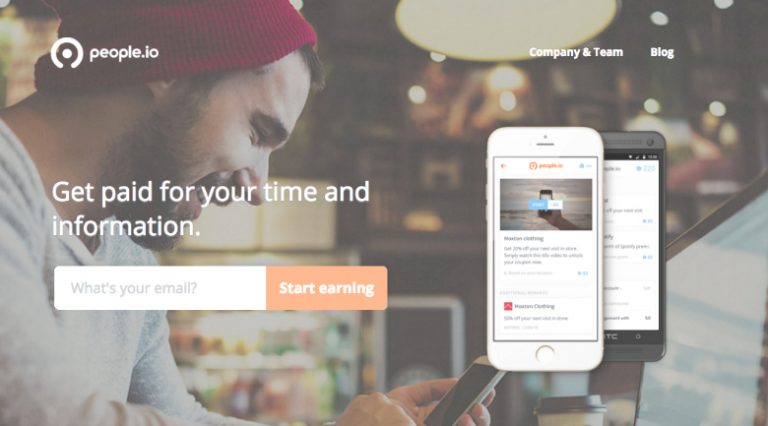
When I first heard about people.io, and saw the tagline “get paid for your time and information” my mind immediately went to some underground operation where people are illegally trading and selling social security numbers, and credit card information. But as I read further, I realized this was actually a good idea, and a major problem solver for consumers everywhere.

People.io is a secure digital marketplace for consumers to monetize their data by licensing it to brands in return for a payment/reward. Why do brands want to pay/rewarded you for such simple information? Because things you like, places you shop, and what you subscribe to aren’t simple to brands, and are in fact their bread and butter.

bar
It’s rather easy to get started, too. Users simply log in, answer a few questions, and begin earning credits for every piece of information they share. You can then exchange those credits for relevant products that you actually like.

This reminds me of Kroger’s reward card system

At one point in time all customers received the same coupons in the mail, no matter if you didn’t like the product, and never purchased it a day in your life. Customer’s were complaining about the uselessness and waste of the coupons, and demanded something more feasible. The answer, was a system that tracked what each customer purchased, and then generated coupons based off of purchasing history. So if your family buys eggs every week, you’d receive a coupon for eggs. And though People.io is more convenient, it is essentially the same idea, and answers the same consumer problem.

Consumers are fed up with the little control they have over their data being misused for ineffective targeting and useless advertisements. People.io gives them control, and allows them to see how, when, and where their data is being used; while receiving compensation for it. If a user leaves People.io, so does all of your personal data…permanently. So no random advertising phone calls three months down the road.

The UK saw an 82 percent growth in the adoption of ad-blocking technologies like these last year, even though they’ve been around since the beginning of internet time; so the service is expected to do well in the UK for sure. Consumers in the US seem to be receptive to the idea and are excited to get compensated for what they already do anyway.

#peopleio

Social Henry: New social media tool for the Twitters

Social media automation and you

Social media’s popularity is like a double edged sword for businesses. On one side, its popularity makes it an amazing tool to reach consumers, and propel your brand with tweets, photos, videos etc. On the other side, social media is so popular that catching someone’s attention in the sea of other brands and marketing efforts seems nearly impossible. So what do we do to be seen?

bar
Getting noticed on social media means that people actually have to see your message enough times to remember. You already know that, so you’re probably among the professionals that invest in automation tools that reposts updates for your fans to see, on a repetitive schedule. These automation tools are awesome, but it still takes time since you have to remember to update the content you want it to post, or else it will repost the same message over and over; after the forth or fifth time seeing the same tweet, customers will be over-satiated and lose focus.

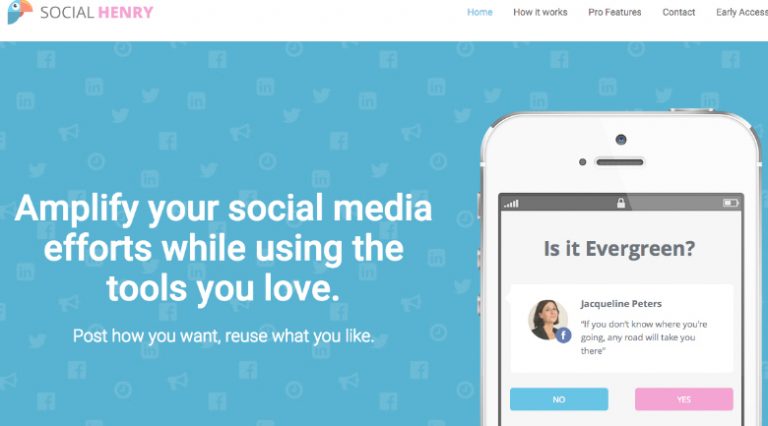
But with Social Henry, a new social media automation tool, you can actually save time, be seen, and deliver relevant content from just one web-tool.

Social Henry works with your CURRENT tools, yay!

Instead of using up all that time, manually updating libraries and scheduling updates, Social Henry ensures that with their app, and two minutes of time, you can deliver the most relevant content. Once a week, the app gathers data that allows you to browse through your most loved and shared updates, and pick the ones you want to be repeated on a schedule.

So instead of publishing the same boring tweet, this tool allows you to repost the tweet that got hundreds of likes and shares. Genius!

But the real kicker is that in order to use this tool, you won’t have to abandoned your current social media tools to use Social Henry. Compatible with Hootsuite, TweetDeck, and other apps, Henry can read those streams to analyze the most popular content. Users can also add content to the tool directly if they want, and use your blog’s RSS stream.

SocialHenry is still in beta, but will be offering its basic features, along with pro features soon. Packaged in an easy to use interface, this app is so simple, you’ll actually want to use it. So if content marketing and social media branding is part of your job, head to their site to get early access!

#SocialHenry

Fastest growing tech job cities according to Hired (hello, Austin)

How the hiring landscape is changing

Make no mistake: The hiring landscape is changing. There’s a great demand for talented individuals and the companies that are looking for them are changing or adapting new strategies used to attract them.

bar
Parallel to the demand for talent is where the demand is greatest. According to Hired.com certain areas of the United States are hotbeds for opportunity providing one has something to bring to the table. You can see the entire breakdown by clicking here.

Go where the growth is

Based on Hired.com’s graphic you can see that Seattle, San Francisco, Los Angeles, Austin, Chicago, Boston, New York, Philadelphia, Washington D.C. and Atlanta forces to be reckoned with. Some areas are a given: Seattle, Washington for example remains a startup powerhouse.

But other cities (Austin, Texas comes quickly to mind) are distinguishing themselves as the new Promised Land. Other cities like Dallas barely register a blip and entire states like Florida apparently shouldn’t cash in its stock in Disney World any time soon.

What are employees looking for?

Back in the day (and what day that is depends on how old you are) the promise of 20 years of employment and a gold watch was the coveted employment goal.

These employees expect to change jobs and/or locations every five years or so. That said, what is it that potential employees are looking for? According to Hired.com’s data it’s not just money (although a high salary doesn’t hurt) that lures new recruits. For others it was an equity stake in the company. For some it was a chance to go back to school. The thing is, passion for the job is fast overcoming a lot of material things you’d think take priority.

Again, take a look at the complete breakdown by clicking here.

Talent and more

A good work ethic is nice, but it’s apparent that you have to bring something to the party. Studies show that engineers can still command top dollar as do the schools that recruit them. Hiring is big business which makes the thrill of the [talent] hunt all the more exciting.

#TechPromisedLand

Petition urges Olive Garden to clean up their act

Better practice organizations banding together

We have reported on Darden Restaurant Inc. in the past, parent company of Olive Garden, which has more than 1,500 casual-dining restaurants around the world, and it’s considered the largest full-service restaurant employer in the United States.

bar
Over 50 organizations have banded together to start the “Good Food Now!” campaign, directed at DRI, to “adopt better labor practices and greener menus” supporting not only the environment, but also farmers, animals, customers, and the staff at their restaurants.

An historic coalition

According to one manager, never before have environmental, worker justice, animal welfare, and public concern organizations come together under one umbrella to target the restaurant industry. The focus of the campaign is on Olive Garden, even though DRI also owns Bahama Breeze, Longhorn Steakhouse, and a number of other popular restaurants. Olive Garden accounts for the majority of the sales of DRI.

The petition sent to Darden urges the company to support:
• A valued workforce
• Environmental sustainability
• Local economics
• Good nutrition
• Animal welfare

GoodFoodNow demanding local, nutritious and fair

The campaign wants Darden to make a commitment to providing a better experience to its customers by sourcing ingredients locally and at fair prices. To promote animal welfare, the organizations want DRI to source proteins that are certified humane raised and handled and raised without the use of anti-biotics. In addition, DRI is being asked to provide smaller portion sizes, more vegetarian and vegan entrée options, and to improve nutrition through including more fruits and vegetables.

Is it possible for Darden to take action?

The principles which outline the GoodFoodNow campaign are those being used in the LA Unified School District to govern the entities which purchase food for the school district. According to GoodFoodNow supporters, Darden claims to support and value animal welfare, their employees, and their customers, but they don’t demonstrate their commitment to these key issues. The group has requested a meeting with DRI, but to date, Darden has not granted a meeting or acknowledged the issues raised by the coalition.

#GoodFoodNow

How ZMOT can skyrocket your business

Getting into shoppers’ minds

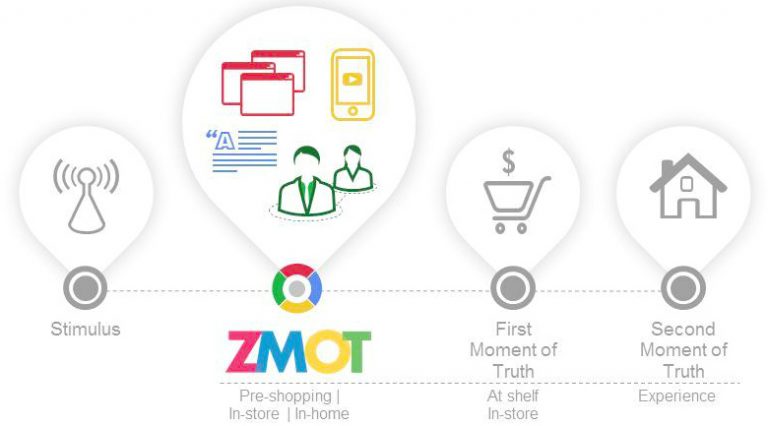
Long ago, before the Internet, shoppers would encounter a new product for the first time on the shelf. The new product would either be physically picked up and evaluated (reading its contents perhaps) and then bought, or placed back on the shelf and ignored. This evaluation process only lasts a few moments, but the process was so critical that Procter & Gamble coined the term “first moment of truth” or FMOT: will you buy it or not?

bar
With the adaptation of the Internet, however, the way we evaluate, research, and ultimately buy products has changed. Long before you reach those store shelves, you’ve often looked online for reviews and similar products.

Instead of the “first moment of truth,” we now have the “zero moment of truth.” This describes our new reality where marketers have to compete for your attention online before a purchase is made.

The web changed how we make decisions

Google has an extensive repository of data and research related to ZMOT. Their repository gives you an extensive overview of how ZMOT can influence potential customers and what you can do to make sure you’re putting your best foot forward. One study suggests that you ensure information about your product is readily available. Consumers will be looking for reviews/testimonials, buyers guides, and case studies. They want reviews from your clients, not just directly from you.

They also suggest focusing on optimization of both desktop and mobile versions of your site. Most research done by consumers is done on a phone or other mobile device, so it stands to reason that your site should be optimized to give those consumers a great experience. A good way to check your SEO is to run a Google search for your brand and you’ll see what the consumer sees. If you are not happy with what you see, you may need to adjust.

Visual material is always a bonus

Think about the popularity of YouTube and Instagram, both highly visual platforms and both highly successful. Adding visuals, like product demonstrations or video testimonials can help bring that Zero Moment of Truth home.

Even if you’re completely happy with your site, SEO, and marketing strategy, the information about ZMOT can help you convert leads into regulars, give you a better idea of what the consumer is looking for, and generally give you a better idea of the instant gratification culture we’re now living in. Have you looked at Google’s ZMOT data? If so, what did you think?

#ZMOT

A must have tool for freelancers that automates your taxes (srsly)

Taxes suck. The end.

One of the most painful parts of being a freelancer is dealing with taxes on your own. It’s great to get that paycheck from your client, then you suddenly realize that you should take out about 25 percent to pay the IRS. OUCH! Ideally, the solution is that every time you receive income, you should take out the amount you need to pay taxes. For those who have this down to a science, please tell us how you have the discipline. If you’re one of those who have a hard time saving your taxes, Painless 1099 has the solution.

bar

What is Painless 1099?

Painless 1099 is a service in beta testing which connects with your bank account. It automatically takes out the taxes, puts the money into a separate account, then releases the remaining amount to your account. You own the money the entire time, but when you’re ready to pay quarterly taxes, it’s there. The money is in an account that is FDIC certified and insured up to $250,000.

Account holders do need to be eligible to open a bank account in the US, which means you need to be older than 18, have a social security number, and a way to prove your identity and address. Painless 1099 is not a bank, but it is a service which links you to a bank to save money.

Painless 1099 is a fairly young company headquartered in Buffalo, NY. According to Crunchbase, the founders are Matthew Russo, Justin Kauszler, and ACe Callwood (sic). On the Painless 1099 website, the company lists that they eventually hope to have a more user-friendly platform which lets freelancers track expenses too. Currently, the service is free, but they could move to a fee-based platform as the program evolves. Check it out to see if it might benefit your small business.

#Painless1099

6 years ago today, Obamacare (ACA) was signed into law

Today marks the six year anniversary

On March 23, 2010, President Barack Obama signed the Patient Protection and Affordable Care Act into law. We commonly know this provision as the ACA or Obamacare. Although the ACA is not without controversy six years later, there’s no denying that it hasn’t helped millions of Americans get health insurance, which has ultimately helped them be healthier.

bar
Businesses which employ 50 or people must provide health insurance to their employees or they face a tax penalty. Smaller businesses do not have to provide insurance, but there are many benefits if they do. The SBA has an entire section of their website dedicated to information about the ACA for smaller businesses, with webinars in both English and Spanish.

Taking care of business

Rhett Orr, Director of Accounting with Onnit Labs in Austin, found himself thrown into the role of ACA Compliance Officer for a staff of about 125. He found Zenefits, an online application which used their payroll information to help Onnit get on board with providing health insurance. According to Orr, providing health insurance for their employees improved morale and reduced turnover. Onnit has a great benefits package to keep their staff healthy. Along with competitive premiums, they cover part of the cost of massages and healthy food in the office. The employees also have access to a gym.

Businesses with fewer employees

At The Artichoke in Langley, OK, there are only around 10 employees, but owner Jim Sellers, chooses to provide health insurance for those who are full-time. This is something he has done for a much longer time than when the ACA went into effect. He says that it helps with employee retention. Much of the information he gets about the ACA is not from the SBA, but from the National Restaurant Association and the Oklahoma Restaurant Association. Sellers may not have a huge staff, but he understands that it’s in his best interest to get the talent he needs to provide health insurance.

Take care of the human resources in your organization

If your small business hasn’t gotten on board by providing health insurance to your staff, it may be time to reconsider. It’s not about the tax benefits, although that does help. It’s about productivity and morale. Healthy employees are more productive and more loyal to their place of employment.

#ACAanniversary

Insane things people would do to never have to pay taxes again

The other certainty in life

I’m pretty confident saying that most of us are going to pay our taxes. We might not like it. We might kick and scream all the way to the post office but in the end the IRS will have its way with all its children. Now some folks out there will ignore our fiscal responsibilities all together. To that I say you can run but you can’t hide. Not forever anyway. That said, in our heart of hearts we’d probably do some crazy things in order to not pay taxes: leave the country, go undercover, whatever.

So what’s in your wallet?

WalletHub conducted a nationally representative survey of 1,000 taxpayers, asking about everything from whether they expect a refund to which divisive pop culture figures they like more and less than the IRS. One question asked folks what they would do to get out of paying taxes and a full 27% said they’d tattoo the word IRS somewhere on their body. Heck if that’s all it takes count me in! I already have three. One more dedicated to the IRS is just icing on the cake.

Avoidance vs. Evasion

On a more serious note, Americans will do more than ink a tattoo to protect their assets. The Economist points out that there is a fine line between tax evasion and tax avoidance.  “The smartest evaders use a combination of bank accounts, shell companies, trusts and foundations (often fronted by others) in one or more offshore financial centers [to protect their interests].”

On the other hand, recounts the Economist, companies and individuals naturally push the envelope, “Often betting that the authorities will have neither the wit nor the resources to confront them over their tax-minimization strategies. Or that governments will accept less tax in return for investment by ‘mobile capital'”. Foxbusiness.com points to capital gains management as the method of choice for paying fewer taxes.

Meanwhile, back at the ranch

Getting back to the Wallethub survey (you can see the entire survey here). If tattoos were at one end of the spectrum, spending a year in jail was at the other (about 1%). On a positive note, 86% of Americans surveyed feel the IRS is necessary but could use improvement.

Most of us probably don’t have the type of fiscal outlay necessary to spread around and diversify (in offshore accounts, under rocks and the like) so it looks for the time being a tattoo may be our best bet.

#TaxTime