Home Blog Page 166

Senator presses Facebook for answers on suppressing news – does it even matter?

Facebook continues to deny claims

Senator John Thune, Chairman of the Senate Committee on Commerce, Science, and Transportation, opened the doors to an inquiry of Facebook’s bias against conservatives in the newsfeed known as “trending topics.” Facebook has repeatedly denied the claims, even though it’s been reported that this list is not compiled strictly by an algorithm, as many users believed. Humans are involved in every step of the way.

bar
There’s quite a few different issues here. Let me see if I can break them down. I’ve already reported that Facebook seems to be creating a monopoly. We ran this article, “Forget Facebook’s alleged bias, worry about their growing tech monopoly.” I’m seriously concerned about this. But I’d like to discuss some of the other issues at play.

Facebook in meetings this week

Over the weekend, Facebook invited multiple leaders in the news industry to meet with them this Wednesday. Reuters reported that Dana Perino and Zac Moffatt would be two of the leaders, and then Glenn Beck confirmed in a Facebook post that he would also be meeting with Facebook.

Facebook is a private company and it has a right to its business model, but, in the words of Glenn Beck, “While they are a private business and I support their right to run it any way they desire without government interference, it would be wonderful if a tool like Facebook INDEPENDENTLY CHOSE to hold up freedom of speech and freedom of association as a corporate principle.”

Should we get our news from Facebook?

According to a Pew Research Survey, about two-thirds of Americans get their news from Facebook and Twitter. I find this alarming, since the news in my trending topics seems to revolve around celebrities. Personally, I’ve never taken the trending topics on Facebook very seriously. I always get news somewhere else. I find it problematic that so many people are relying on Facebook for news. Is it a governmental concern? In my opinion, it’s not. It’s a cultural concern. I believe people should be reading multiple outlets for news. There’s no denying that Fox News, MSNBC, or even CNN isn’t a little biased.

What can Senator Thune do?

Let’s suppose that Facebook is suppressing conservative news. I’m not saying it is, but let’s say that it is. What can the Senate Committee on Commerce, Science, and Transportation actually do? They haven’t sanctioned Fox for being conservative. The Committee doesn’t seem concerned that CNN has a more liberal bias. Facebook itself has never said that it is a news aggregator, but a lot of news does filter through its feeds. I doubt Senator Thune’s inquiry will go far.

Another waste of time and money in the government when there are real problems facing our country.

Facebook makes it easy to get news and access it, but we, all Americans, should be looking at other sources. Don’t let Facebook, Twitter, LinkedIn, and other social media sites be the only websites from which you access news. We’re the ones who have created these sites and now we have to live with the consequences or make changes.

#FindRealNews

Over 70k OKCupid users just had their personal data made painfully public

3 Danish students have published a paper on your failing love life

OkCupid users, beware. Your data may have just been published in an academic study.

bar
Motherboard reports that three student researchers from universities in Denmark have published a paper containing a dataset with information from 70,000 OkCupid users. Experts warn that it may be possible to match data with users’ real identities.

Members between November ’14 and March ’15 are vulnerable

The data was collected between November 2014 and March 2015 using a tool called a “scraper” that automatically saves certain parts of a webpage. Data collected included usernames, ages, genders, locations, religions, astrological signs, and answers to the 2,600 most popular questions in the OkCupid surveys – questions that reveal such sensitive information as users’ political leanings, religious views, sexual orientations, sexual fetishes, and drug habits.

Data from OkCupid is considered “semi-public.” If someone searches your OkCupid profile name in Google, they will see some of your information, but will not be able to see your complete profile until they log into the site.

They hope other researchers will use your data

According to researchers Emil O.W. Kirkegaard and Julius D. Bjerrekaer, “OkCupid is an attractive site to gather data from.” The purpose of the research was to figure out whether or not “users’ general cognitive ability” could be discerned from their survey answers.

The researchers even went on to say that they “hope that other researchers will use the dataset for their own purposes.”

The researchers’ use of the dataset, while violating OkCupid’s Terms of Service, was not illegal. After all, one could argue that the data was already easily accessible by the public, since anyone can open an OkCupid account. However, many experts question the ethics of publishing such sensitive personal information.

They could have left it anonymous… and didn’t

In the past, other researchers using scrapers have made a point to remove usernames and anonymize the data, so that information can’t be paired with users’ real identities. However, the Danish researchers failed to anonymize the data they drew from OkCupid.

Said Rasmus Munksgaard, a researcher who also uses a scraper, “the data may be ‘public,’ …but that does not absolve anyone from ethical responsibility.”

#ForeverAlone

Siri hires an assistant: Introducing Viv

Radically simplifying the world

Siri, Cortana, and Alexa, you’d better watch out. Your little sister, Viv is about to upstage you.

Viv was unveiled at the recent Disrupt NYC event, a conference for debuting new technologies and startups. Viv is an artificial intelligence platform introduced by Viv Labs of San Jose, which is run by Dag Kittlaus and Adam Cheyer, the developers who crafted the artificial intelligence for popular personal assistant Siri.

bar
Viv Labs says its mission is “radically simplifying the world” by making AI work for us.

The super personal assistant

If Viv can do everything that her makers promise, she stands to not only compete with, but entirely replace other personal assistants.

While Siri can answer basic questions, Viv promises to answer much more complicated questions, and can interact with third party services, such as businesses.

Said Dan Olds, an analyst with The Gabriel Consulting Group, “Viv is more than just an evolutionary step in the development of personal assistants. It’s a game changer.”

Theoretically, Viv will be able to complete complex interactions and sales transactions. For example, you could tell Viv to book you a flight on a certain day, and Viv will automatically select your favorite airline, apply your frequent flyer miles, and book you a window or aisle seat, depending on your preference.

Still some work to be done

With AI bots taking on more and more functions, Olds predicts that personal assistants like Viv are “going to advance much further into our everyday lives.” Bots like Viv will continuously improve because they “will be able to learn more about you over time and become even more helpful.”

Other experts, however, say we have a long way to go before AI bots become intelligent enough to learn our preferences and complete complex transactions.

Judith Hurwitz, an analyst from Hurwitz & Associates, LLC, thinks that getting Viv ready for customers “will require continuous deep learning.” She went on to predict “that it will be years before these types of systems are ubiquitous.”

#Viv

Study says we trust influencers just as much as real life friends

Friend or foe?

Back in the day, product marketing relied heavily on celebrity endorsement. It still does to an extent but the keyword now is “influencer marketing”, which basically means anyone with a certain amount of brand knowledge and cachet has built the street cred for his/her word to actually mean something.

bar

The clout doesn’t lie

There has been, for the longest time, four general levels of Influencers:
1. Celebrities (think the Kardashians)
2. Publishers (bloggers, vloggers, and social media)
3. Fans (customers and stakeholders)
4. Friends (friends, family and coworkers)

This is not a hard and fast rule and the pecking order can change at any time. New research in fact claims that social media influencers might have nearly as much clout as a friend or neighbor—and brands know how to harness these new household names.

The social megaphone

Influencer marketing, according to an article on Social PR Chat, “Taps into the social megaphone of high-profile industry experts to carry your brand’s message.”

They are the ultimate connection between your brand and a consumer.

To explain it more in layman’s terms, brands often seek out influencers using the formula RRR (Reach, Relevance, and Resonance) to promote their brand in exchange for financial reward or exposure.

Who loves ya, baby?

According to a joint study by Twitter and analytics firm Annalect, “Around 40 percent of respondents said they’ve purchased an item online after seeing it used by an influencer on Instagram, Twitter, Vine or YouTube.”  Also, 20 percent of respondents said they shared something they saw from an influencer, while one-third of millennials say they follow a creator on Twitter or Vine.

Twitter VP of market research and insights Jeffrey Graham explains that, “What this is telling us is that you don’t have to be a mass media star or a household name to be influential and actually drive people to buy stuff.” This whole cadre of influencers, comments Graham, through social media (especially Twitter) are driving a lot of purchases by a lot of people.

Numbers don’t lie

Influencer marketing, explains the article on Social PR Chat, is effective because the relationship is two-fold. That is, “It gives brands reach within their target demographics and an influencer holds a lot more weight and trust for products.” Thus there are four reasons influencer marketing is not going away any time soon…

  • Cost effective:Marketers who implemented an influencer marketing campaign earned an average of $6.85 in media value for every $1 they spent on paid media.
  • High ROI: 81% of marketers say influencer marketing is effective.
  • Gaining consumers’ trust: 92% of consumers trust recommendations from personal connections, while only 33% trust ads.
  • Has mass popularity:74% of all marketers plan to use influencer marketing this year.

It’s who you know

Who you know has always been important. But who wields that influence is changing. Influencer marketing continues to become more and more accessible to any size business or campaign. The key, say many industry analysts, is in balancing the reach and influence without losing the authenticity and passion that makes the influence marketing so…influencial.

#InfluencerMarketing

The anatomy of a Kickstarter scam, starring Peachy Printer

Bad apples spoil the bunch

I always wondered what BS smells like and now I know. The Kickstarter Peachy Printer scam is so unbelievably crooked that I can’t help but wonder if these guys had just put the same amount of effort into actually following through on their promises that they did on siphoning money from investors, something worthwhile may have actually been produced.

This is going to be a wild read, hang on to your butts.

bar

The short version

Two young entrepreneurs come up with an idea to create a desktop 3D printer that would cost consumers only $100. Dreamy, right?

Impressed Kickstarter investors ponied up $600,000 (Canadian). For reasons that completely escape me, the inventor and his partner do this without having set up a business banking account, so all the money goes into a private checking account where one of the partners’ proceeds to spend most of the funds on a new house!

Said 3D printer never gets made, no one gets arrested, and the whole scam is covered up for more than two years before it goes public.

Note from the Editor: This all feels like an elaborate hoax, but is being reported by even the most credible sources (like BBC), but we’re still holding our breath – filmed confessions that sound like a high school play? We’ll see.

A template for success

Kickstarter has set up a process where entrepreneurs have the potential to find investors so funds can be raised and dreams can be realized. The track record for this is pretty good because Kickstarter seems to be stronger than ever and is extremely vigilant about protecting their community.

Further, Kickstarter tells you (in fine print) that respective products may never see the light of day. Which is why money pledged is considered a donation.

But I digress. The Peachy Printer debacle is a prime example of why the government is getting involved and trying to regulate crowdfunding sites in order to make those receiving funds legally responsible.

The fine print

Always read the fine print. This is from the Kickstarter Website:

“Kickstarter does not guarantee projects or investigate a creator’s ability to complete their project. On Kickstarter, backers ultimately decide the validity and worthiness of a project by whether they decide to fund it.”

What is a creator obligated to do once their project is funded? (Notice it says fundamental and not LEGAL obligation). I’m glad you asked.

“When a project is successfully funded, the creator is responsible for completing the project and fulfilling each reward. Their fundamental obligation to backers is to finish all the work that was promised. Once a creator has done so, they’ve fulfilled their obligation to their backers. At the same time, backers must understand that Kickstarter is not a store. When you back a project, you’re helping to create something new, not ordering something that already exists. There’s a chance something could happen that prevents the creator from being able to finish the project as promised.

If a creator is absolutely unable to complete the project and fulfill rewards, they must make every reasonable effort to find another way of bringing the project to a satisfying conclusion for their backers.”

That is what is SUPPOSED to happen. It doesn’t mean that is what WILL happen.

Integrity is SO overrated

You can see Kickstarter has tried to insert some inherent sense of doing the right thing. All they do is provide a template. They get their percentage and sleep well at night because investors more or less know up front what they are getting into.

As bad as the Peachy Printer project is/was, it’s nothing compared to the recent Zano mini-drone initiative that scorched investors for several million dollars.

In both cases, the project developers apologized and tried to smooth things over by presenting professionally made graphics that explain how the money was spent. I noticed in both cases that no one made the effort to include a pie chart showing expenditures for a new house or a private island in the tropics, but I guess that’s neither here nor there.

Like money in the bank

In the bigger scheme of things how this ultimately ends is anyone’s guess. Regarding Peachy Printer, so far no printers have been made, most likely for the simple reason that one of the partners in the project took the money and built a house with it. Investors are likely pissed off because they got burned.

Will this give investors more pause before investing in crowdfunding sites? Maybe, maybe not.

Lino Rivera tells us, “My overall opinion on crowdfunding is a positive one, but there are no doubt pitfalls at every corner. I’ve had customers come from that space who were wildly successful out of the gate only to lose steam and ‘realign themselves’ a year after. I’ve backed a few projects myself, now that I think about it though, I haven’t received anything yet from those campaigns.”

“The last one I backed was actually from an established company who said crowdfunding sped up the time to market,” Rivera notes. “Really though, I believe it had more to do with market validation, which I think is one of crowdfundings greatest strengths. Before investing in huge amounts of capital, you get to see if it is even something the market wants.”

Will one bad apple spoil the bunch? Probably not, because as Rivera notes, there are other reasons for crowdfunding than the actual dollars. And Peachy Printer is hardly the first to victimize the crowdfunding space, so stay tuned.


All links he mentions are on this site.

#KickstarterScam

Focusing on one major task just got easier with this app

Slow down, bro!

Here at The American Genius we recently debated the pros and cons of multitasking versus zeroing in on one main project at a time. For all of you who agree that focusing on a singular activity instead of several at once is the most productive way to go – well, now there’s an app to help you out. Of course there is, there’s an app for everything!

bar

Laser focus

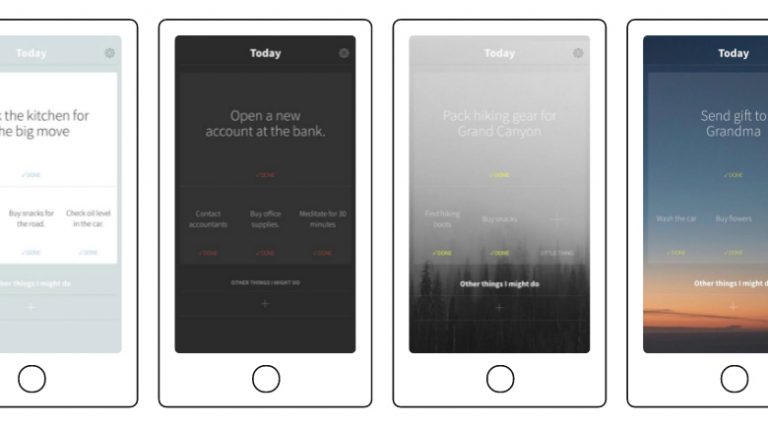
Enter One Big Thing, the app that is going to help you go from scatterbrained and all over the place, to focused and full of intent. One Big Thing describes itself as “the simple app to keep you focused on your biggest task every day.” And it’s honestly as simple as it seems.

With the free version of One Big Thing, all you do is type in the one main thing you want to accomplish for the day. There’s also space to include a couple of smaller tasks you’re hoping to get done, but aren’t your number one goal for the day.

All you have to do is check the app throughout the day to make sure you’ve stayed on task and are accomplishing your #1.

Unlike other daily trackers, there are no angry reminders or pop ups that will guilt you at the end of the day if things went off the rails.

Upgrade, upgrade

The simple act of deciding your most important goal for the day and then actually typing it out is extremely helpful and motivating. And if you really get into the concept of One Big Thing and find it helpful, for $4.99 you can download the upgraded version and experience its fun perks. The basic version of One Big Thing is very basic, with a mint green background and a white table in which to type your daily tasks. By upgrading, you’ll have access to a variety of themed backgrounds and fun stickers to make your mundane tasks more interesting.

Do things your way

While some people thrive by working on three projects at once and getting four hours of sleep at night, a lot of us will find more success in taking on our assignments (and days) one by one. As Dawn Brotherton so aptly put it, “Slow down and breathe. It’s not the pace you keep, it’s how well you finish your tasks.”

#OneBigThing

A kickass solution for when copy/paste can no longer hack it

0

Experiencing loss

Everyone has been there. You copied an important address or detail from a webpage to your clipboard, switched tabs, accidentally clicked that stupid cat video that has been filling up your newsfeed, copied THAT and sent it to your sister (because she digs those). Next, you return to your project, hit “?+V,” and… cat video. Good luck on the tab hunting! Need to copy multiple items and then paste each into a different place? Ever lost power or experienced a computer freeze while you had precious info on your clipboard? I’m very sorry for your loss.

bar
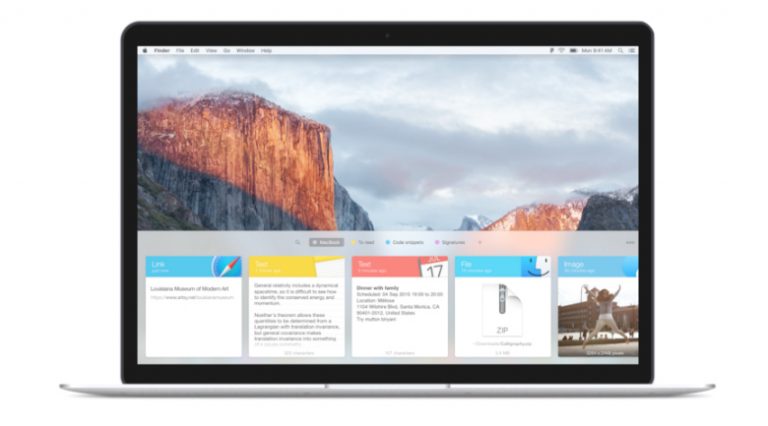
Paste 2 by Wirelessheads offers a beautiful clipboard manager app to help solve this problem. It recognizes text, images, links, files, calendar events, and other content when copied and stores it a keyboard shortcut away.

Seamless productivity

It is still in Beta but I was able to snag an invite and have been using it for the last week. I have been impressed with how seamlessly it has become a part of my workflow. If you don’t like the default shortcuts, just define your own. It also offers pinboards so you can organize and save your most used snippets.

For the security conscious, there is even a feature to exclude Paste2 from copying for certain apps to avoid copying sensitive information.

Streamlined efficiency

Founder of Wirelessheads and creator of Paste and Paste 2 Dmitry Obukhov commented, “Paste was started as an UI experiment, I wanted to make a “different” UI for a desktop app that doesn’t use any private API and is valid for Mac App Store…I think such kind of apps must be tightly integrated into the system, so Paste looks and feels as a part of the OS with native animations and full screen user experience.” Paste 2 builds on that seamless integration and user experience.

It is a complete redesign that keeps the same feel while improving the functionality and organization. “We’ve redesigned Paste from scratch to change the way you work with clipboard. Keep everything you copy and store the most important snippets in a well-organized way.”

Paste 2 offers a chance to shatter your workflow, in a good way. It beautifully demonstrates how improving an everyday task can make your life so much more efficient.

P.S. I have two more free download codes – the first 2 folks to share this article and tag @AGBeat and use the hashtag #Paste2 gets them!

#Paste2

Short, simple videos have changed how we cook (thanks, @Tasty!)

We want to know everything, fast

While we all know that technology has served as an important tool in our lives, I think we can all admit that it has had an impact on our attention spans. We want everything from news, to sports, to entertainment to be served in condensed, easy-to-digest packages.

In keeping with this trend, the way we learn about recipes has shifted over the last year or two.

For those of you like myself who thought that garnering recipes via Pinterest was revolutionary, than your jaws probably hit the floor, too, when you say what Tasty has to offer.

bar

Tasty offers A-to-Z in one minute

Tasty is a sub-culture of Buzzfeed that offers typically minute-long videos showing the A-to-Z of making different dishes. From pasta, to pizza, to paninis, and from cakes, to cookies, to cocktails, Tasty has a little something for everyone.

The videos all feature the recipe being made quickly, as peppy music plays in the background. Fitting an hour-long recipe into a minute-long video gives the illusion that just about anybody can handle the task.

Easy to digest for busy schedules

I normally see the videos while scrolling through my Facebook feed and always get sucked into viewing them.

And, after each time I watch a video, I have it in my head that “I could do that.”

I definitely could handle these tasks, despite not being the most skilled cook. However, day-to-day hectic-ness prevents me from trying all of these, seemingly, awesome recipes.

Expand your recipe collection

But for those who may not be as lazy as I, Tasty videos are an innovative way to spark new ideas. Being that, as previously mentioned, I usually get my Tasty fix from Facebook, I had no idea how in-depth the Buzzfeed page was until I searched around it a bit.

Each article offers a recipe title, photo of the completed product, an ingredients and preparation list, and, of course, a video. At the bottom of each recipe is an option to “share,” which is perfect for me and my Pinterest friends as you can save recipes to your pre-existing food board.

You can teach an old dog new tricks

The biggest takeaway of these videos for me is simply creativity. Not only are Buzzfeed writers consistently coming up with recipes and content, but they have taken an age-old skill like cooking and have turned it into something that people are excited about.

When was the last time you got so jazzed about a recipe in a standard cookbook that you called your friend about it? Probably never.

Now, these videos see thousands of comments from people tagging their friends to share the recipes.

Not only does Tasty provide you with new ideas, but the overall concept of Tasty is a reminder that anything can find improvement if we are willing to think outside of the box.

#TASTY

Which professions have the highest divorce rates?

Which professions are most likely to kill a marriage?

A successful marriage depends on a lot of factors — a strong emotional bond, realistic expectations, a lot of trust, and clear communication, just to name a few. But to what extent does your career choose impact the success, or failure, of your marriage?

bar
Popular UK dating site, FreeDating.co, has released a study of the correlation between different professional fields and divorce rates. It turns out that people in certain professions are more likely than others to end up divorced.

Professionals with high divorce rates included athletes, performers, dancers, nurses, psychiatric care givers, home heath aids, telephone operators, factory workers, gaming service workers, massage therapists, bartenders, dancers, and choreographers.

The root causes of discord

Although the study didn’t dig deeply into the reasons why certain professionals are more likely to divorce, we can draw our own conclusions. Clearly, professions that demand long work days and irregular schedules strain relationships, leaving couples with little quality time to spend together.

Even if you are making time for your spouse, if your job leaves you feeling irritable or drained, you will have less emotional energy and attention to share with your partner. For example, nurses who provide patient care and witness trauma regularly may feel too emotionally exhausted after work to be sweet to their spouse.

Similarly, factory workers who perform physically demanding labor may simply be too tired at the end of the day to make romance.

Mind your marriage

One of the best ways to make sure that your work life doesn’t kill your marriage is to be sure to share household chores evenly. Research by the London School of Economics found that spouses who don’t equally share household tasks, such as cleaning and childcare, are twice as likely to divorce as couples who try to make sure that chores are evenly divided.

The double burden of a career combined with household tasks that often falls upon women leave wives feeling stretched too thin to prioritize their marriages, sometimes resulting in divorce.

#MindYourMarriage

Forget Facebook’s alleged bias, worry about their growing tech monopoly

If Facebook is biased, is that a problem?

As I’m writing this, The Commerce Committee, led by Senator John Thune (R) of South Dakota, has asked Facebook to answer questions about their trending news feed. Allegations have been made that Facebook is suppressing conservative news. It’s an issue of bias in journalism. Based on the news feed on my Facebook page, it’s mostly celebrity news and feel-good information. I get my real news from other sites, which all seem to have conservative or liberal biases.

bar
Maybe Facebook is biased, but is that a problem? Fox is certainly biased towards the conservative platform. They’re going strong.  In my opinion, Huffington Post tends to lean toward liberal viewpoints, and they’re one of the biggest in the industry. Why should be we be concerned with Facebook, more than we should with say CNN or the BBC?

Is Facebook becoming a monopoly?

The real issue people have with Facebook seems to be its domination and control over what information is flowing through its channels as a platform. It owns Oculus, WhatsApp, and Instagram, just to name three of its many acquisitions.

In 2013, Mark Zuckerberg compared Facebook to a utility company, “Maybe electricity was cool when it first came out, but pretty quickly people stopped talking about it because it’s not the new thing, the real question you want to track at that point is are fewer people turning on their lights because it’s less cool?”

If it’s akin to a utility company, can you imagine if your power was cut every time a cable news channel espoused something the utility company didn’t lean toward?

Who governs what we say online?

Republicans and Democrats shouldn’t be concerned about Facebook controlling the news, but in becoming a monopoly. Just a few days ago, a federal judge blocked a merger between Office Depot and Staples, citing antitrust concerns.

Senator Thune may simply be making noise, but someone should be paying attention to the potential monopoly that Facebook is learning towards and how it affects freedom of expression. When you use Facebook, you’re bound by their terms of service. Facebook determines what you can say, not the First Amendment.

I’m not sure that I want the government to get involved in social media, nor do I want a free-for-all on my Facebook or Twitter feed. There are certain types of self-expression which are inappropriate. I am concerned about only getting my news through the Facebook platform. It is alarming to think that someone behind the scenes could be censoring what I have access to.

#FBmonopoly

Walmart nixes organic food brand after only 2 years

Bringing organic to the people

It should come as no surprise that most grocers use organic food to lure shoppers to stores, especially desirable higher-income customers. Nielsen Research points out that “Sales of food labeled organic rose 16.7 percent to $13.4 billion for the year ended April 2.” Conversely, sales of all food rose 1.6 percent to $468 billion during that time.

bar
If that’s the case then why did Walmart, the world’s largest grocer, start phasing out its Wild Oats organic food brand, dropping a line of products introduced two years ago to bring inexpensive organics to the masses?

Targeted to whom?

Walmart chief merchandising officer Steve Bratspies said in a recent November 2016 interview that, “Adding food perceived as healthier like organic is not our affluent-customer strategy, its broad-based strategy, but it’s a key piece to being relevant with that customer base in recent months.”

That said, Walmart executives say they are making a renewed push to increase organic food sales. Walmart is adding more organic fresh produce and small organic brands to shelves.

Maybe it’s me, but when I think of where an “affluent shopper” is going to buy groceries the image that comes to mind doesn’t include Walmart. It’s tempting to think there is some other agenda a work here. And there probably is, but ultimately this comes down to dollars and cents.

Corporations jockey for position all the time. Billionaire Ron Burkle bought the Wild Oats brand after the Boulder-based grocery chain was sold to rival Whole Foods Market Inc. and Walmart probably saw it as an opportunity. When that didn’t happen, the brand started getting pulled from the shelves.

To their credit, Walmart is hoping to add organic products to shelves in other ways, including selling more fresh produce and going it alone by adding more organic food to its existing “Great Value” store brand.

Good but not great

Some Wild Oats products sold well at Walmart, especially staples like jars of pasta sauce priced at about $2, the same as nonorganic brands like Prego and Ragu. But the brand didn’t grow as quickly as some at Walmart hoped, in part because the products weren’t in every store and weren’t called out on Walmart’s shelves at the time.

Biggest isn’t always best

Walmart is the country’s largest grocer but has been slow to become an organic powerhouse on the same scale, stymied by the food’s often higher production costs and unique supply chain, clashing with the retailer’s low-price model. Overall, Walmart has been battling slow-growing sales and a shift to online shopping. It recently closed more than 150 U.S. stores.

#WildOatsSown

How famous folks have bounced back after failure

Falling down, dusting yourself off

Let’s establish something right off the bat: it’s pretty clear that a whole lot of people fear failure. You know what? Shit happens. The trick is (and anyone who has been up and down and up the entrepreneurial or corporate ladder knows this) that when failure comes, you need to pick yourself up, dust yourself off, realize you’ll be okay, and bounce back stronger than before.

bar

The key to success (is failure)

I once knew a guy (actually an old boss) who used to brag that he never failed. I was too far down the food chain to dispute it or even care but deep down I knew that this guy probably hadn’t taken many risks.

Lots of famous people have failed and bounced back. Athletes, business men and women, even students and teachers. Let’s take a look at a few that too me are particularly memorable:

J.K. Rowling: At one point in her life, Rowling was nearly penniless, depressed, divorced and had to raise her child on her own. While writing the manuscript of Harry Potter, she was on welfare. Adding to that, 12 publishers rejected the manuscript. Rowling then created Harry Potter, a global brand estimated to be worth $15 billion today.

Walt Disney: It’s easy to forget that the brand behind Frozen and The Little Mermaid was actually a person. Walt Disney started his own business from his home garage and his very first cartoon production went bankrupt.

During his first press conference, a newspaper editor ridiculed Walt Disney because he had no good ideas for film production.

Disney was an American film producer, director, screenwriter, voice actor, and animator. One of the most well-known motion picture producers in the world, Disney founded a production company. The corporation, now known as “The Walt Disney Company”, makes average revenue of US $30 billion annually.

Henry Ford: Ford’s first two automobile companies failed. That did not stop him from incorporating Ford Motor Company and being the first to apply assembly line manufacturing to the production of affordable automobiles in the world. He not only revolutionized the industrial production in the United States and Europe, but also had such influence over the 20th century economy and society. His combination of mass production, high wages and low prices to consumers has initiated a management school known as “Fordism”.

He became one of the three most famous and richest men in the world during his time.

Failure is not fun

Hey, make no mistake, failing sucks. There’s shame involved, hurt, emotional and financial pain and anyone who tells you different is in denial. But as the above mentioned individuals and countless others have proven time and time again, it WILL be okay.

#FailToWin

The role of fathers is shifting, so take note marketers

Picking up the slack

Millennials are changing the way America works and plays. As a business, it’s important to keep up with the patterns of shoppers, especially when it comes to families. It’s no surprise that the role of motherhood is changing, but what is often overlooked is who is picking up that slack. Although the media attention seems to be on dads who aren’t involved with their children, there are many families with hyper-involved dads who are doing the shopping and making decisions about dinner and other aspects of their children’s lives. If you’re not marketing to these families, you’re missing out.

bar

Who’s making the decision – Mom or Dad?

EMarketer.com recently released survey results from fathers aged 18-34 who were either expecting a child or had a child under the age of 5. These men were asked who had the primary decision-making for product purchasing in eight different categories.

The men were primarily responsible for consumer electronics and financial services, but they were more equal partners in the grocery and food, personal care, household, and baby’s products than in the past.

Although the survey was recently released, Amazon has acknowledged the father’s role in shopping by changing its Amazon Mom program to Amazon Family.

Dads are taking part in the shopping

The general consensus is that single moms don’t have the disposable income that families and dads do. This makes them an attractive market to reach out to when marketing. There is a difference in marketing to fathers, though.

A dad who goes grocery shopping is probably not embracing new concepts of role reversal. He is more likely taking the time to shop in order to have dinner. Marketers will need to explore the behavior or men as it relates to purchasing products for babies and children to effectively reach out to that consumer.

Interestingly, even though dads are seeing themselves taking a bigger role in the shopping than ever before, many moms don’t agree. Don’t discount the power of men when it comes to shopping for their kids though.

#MarketingToDad

Company cultures are shifting, here’s how to ease the transition

The growth of a company

Scott Berkun, author of Amazon’s Best Book of 2013, The Year Without Pants, astutely commented, “There is no company that has the same culture today that it did 10, 20 or 100 years ago. Cultures often change dramatically as they shift from birth, to immature success, to full maturity and of course the vast majority of companies die before they even hit [corporate] adolescence.” If that concept is difficult to wrap yourself around then ask the first ten employees who leave a successful company what prompted them to leave and many will answer “The company changed.”

bar
Which brings me to today’s question: Why do company cultures change or shift over time? The easy answer is “It probably needed to change to continue its success.” Ok I’ll concede that but the bigger question is HOW. Because change does not come easy. Companies that evolve and adapt continue standing others that don’t whither on the vine.

Change takes time

Let’s face it: A company’s culture can’t be traded as if it were a used car. For all its benefits and blemishes, it’s a legacy that remains uniquely that of the company. Which is exactly why many companies don’t change. Take Kodak in Rochester, NY. For decades Kodak remained set in ways. That whole digital photography thing? Just a fad! No way would a roll of film ever get bumped for a memory card! Right? Just ask all the employees who were forced to retire.

According to an article on Harvard Business Review:

“It takes years to alter how people think, feel, and behave, and even then, the differences may not be meaningful. When that’s the case, an organization with an old, powerful culture can devolve into disaster.”

This has happened at organizations like the above mentioned Kodak but also organizations as diverse as Washington Mutual, Home Depot (before its recent turnaround), and even the U.S. Marine Corps during the Korean and Vietnam wars.

Baby Steps

HBR explains that “The impetus for change lies with managers and leaders who are willing to work with corporate cultures and within them, rather than fight them.” The result is that cultures do evolve over time: Sometimes slipping backward and sometimes progressing. Change comes in baby steps and sometimes that’s all you can ask for.

Getting back to Scott Berkun, he found himself within a culture that was not used to being shaken up. While that approach may not work for every team he was able to institute change with little things like benchmarks and deadlines for long range projects and thinking.

Harvard Business Review meanwhile points out five principals that are worth applying if change is to be expected:

1. Match strategy and culture
2. Focus on a few critical shifts in behavior
3. Honor the strengths of your existing culture
4. Integrate formal and informal interventions
5. Measure and monitor cultural evolution

Read more about these principals here. The most successful companies are the ones that consider corporate culture as a competitive advantage: An instrument for change. Managers that can facilitate such change have broken the code so to speak. Not an easy thing to do.

#CultureChange

Cyndi Lauper and James Corden’s kick ass anthem for wage equality

James Corden: Karaoke extraordinaire

James Corden has made a name for himself recently as the go-to person for celebrities looking for a singing partner. His “Carpool Karaoke” has featured famous faces such as: Gwen Stefani, Justin Bieber, and Jennifer Lopez.

bar
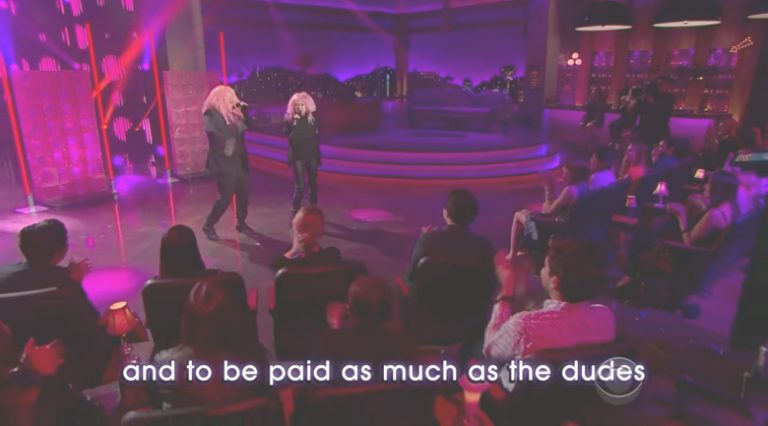
This segment is part of “The Late Late Show with James Corden,” which also features many well-known names. The most recent one to make waves was guest Cyndi Lauper.

“Girls Just Want Equal Funds”

Famous for a plethora of hits and a vivacious fashion sense, Lauper appeared on the show performing her long-time hit “Girls Just Want to Have Fun.” However, with the help of Corden, there was a twist put on this pop favorite.

Lauper is stepping out as one of the many celebrities fighting for wage equality between men and women. By changing her song to “Girls Just Want Equal Funds,” Lauper pointed out the well-known but unaddressed issues with the wage gap.

Let’s continue to point out the obvious

“I come home, in the morning light. My mother says, “Why don’t you make the same as a guy?”” are the songs opening lyrics. The song continues on to point out that a woman’s workplace angst is not related to her menstrual cycle, but to the fact that she is doing the same job as a man while making less.

One of the highlights of the parody was touching on the fact that women will begin to pay for dates when they are paid the same as men. The song is catchy and relevant, but will it do anything to change the minds of those in charge?

Will it create change?

If I were a betting woman (which I’m not because I don’t make as much as a betting man), I would guess that this will not have the power to make great change. However, that does not mean it won’t aid in keeping the ball rolling in the journey to change.

This reminded me of when Patricia Arquette won Best Supporting Actress at the 2015 Academy Awards and used her speech as a means to point out the unfairness of the wage gap. This really got people talking, but ultimately didn’t do much.

The song will most likely make waves on social media throughout the next few weeks and then will turn into something of a memory. At the very least, it should serve as a reminder of the fact that there is still a long road ahead in the fight for equality.  (At the very very least, the tune makes for a great theme song for the fight).

#GirlsJustWantEqualFunds

Krispy Kreme being acquired by a rich German family

Taking a jab at the donut industry

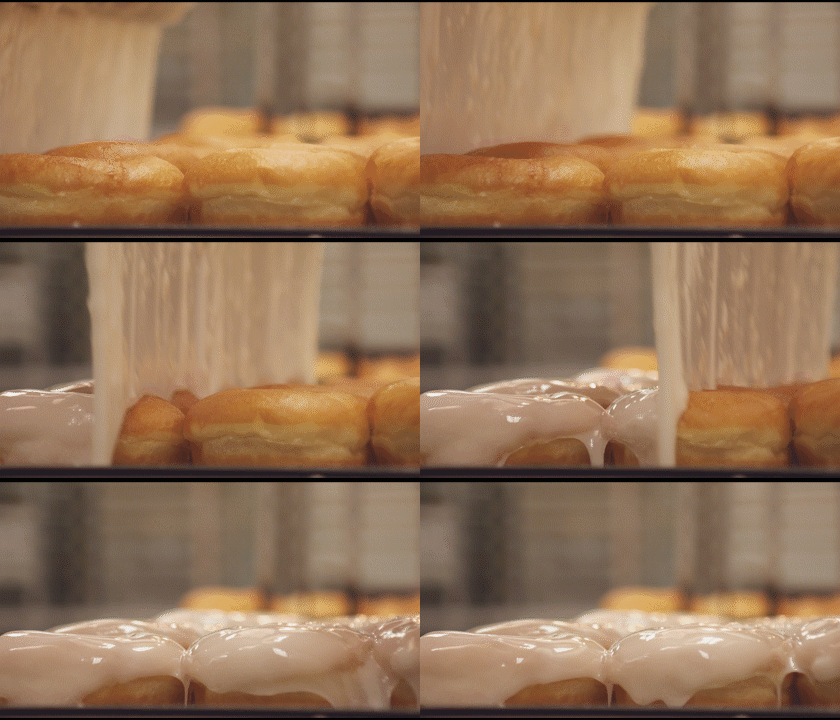
European investment fund, JAB Holding Co., will acquire popular donut chain Krispy Kreme for approximately $1.35 billion, the company announced Monday. JAB is the investment fund of the wealthy German Reimann family. JAB stands for Joh A. Benckiser, the patriarch of the Reimann family who made billions by buying up consumer goods companies.

bar
Peter Harf, senior partner at JAB, said, “We are thrilled to have such an iconic brand as Krispy Kreme joining the JAB portfolio. This is yet another example of our commitment to investing in extraordinary brands with significant growth prospects.”

They own basically everything already

For JAB, breakfast is truly the most important meal of the day. While the company owns a variety of different consumer goods companies, such as Jimmy Choo shoes, Durex condoms, and Coty cosmetics, most of its holdings are breakfast restaurants and coffee shops and roasters. Krispy Kreme will join a portfolio that includes Einstein Brother’s Bagels, Caribou Coffee, Peet’s Coffee & Tea, and Stumptown Coffee Roasters. Last December, JAB also acquired coffee roaster Keurig Green Mountain for 1.39 billion.

Because JAB already has expertise when it comes to coffee and breakfast, Will Slaubag, analyst at Stephens investment bank, calls JAB a “near-ideal candidate” to acquire Krispy Kreme. JAB will be able to help Krispy Kreme add menu items, expand nationally and internationally, and compete with other fast food chains, who are making big bucks and drawing away customers with their breakfast menus.

Another company, BDT Capital Partners, will also hold a minority stake in Krispy Kreme.

donut

Going private

Krispy Kreme, which was founded almost 80 years ago, will continue to be independently operated from its headquarters in Winston-Salem, North Carolina. The company will no longer be traded in public markets.

The transaction is still awaiting shareholder approval; the deal will likely be signed at the close of the third quarter.

#DasKrispyKreme

Facebook group admins will now see “auto-reported by Facebook”

Snitches get stitches

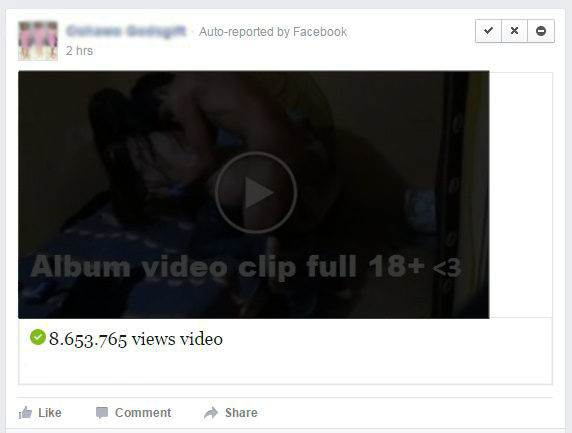
If you use Facebook, and especially if you administrate a Facebook Group, you are probably well aware that users can flag one another’s posts for inappropriate or offensive content. When a member of a group flags someone else’s post, the post is sent to the group administrator, who then assesses the post and decides whether or not it needs to be removed.

bar
Pretty simple, right? But last month, quietly and without fanfare, Facebook began using an algorithm to automatically report suspicious content before it gets published. If you administrate a Group, you may have already received posts “auto-reported by Facebook,” with the option to publish the post or delete it, as well as the option to block the group member who made the offending post. Facebook’s watchdog robot automatically detects inappropriate content, such as pornography, then reports it to group administrators.

auto-reported-by-facebook

Still in need of some tuning

At this time, it appears that the auto-reporting robot only works on Groups and not on the site in general or on Pages — but that could change. Some administrators are celebrating the new innovation, saying it will save them lots of time moderating, since they won’t have to go hunting for offensive posts. FBtutorial.com, who reported the change on their site after receiving auto-reported posts for their Facebook Group, says that auto-reporting is “definitely well needed in Facebook Groups and is a time-saver.”

Others, however, complain that the auto-report feature actually wastes their time, because Facebook often reports posts that are actually completely acceptable. After receiving many questions and complaints, Facebook added an explanation of the feature to their Help page, and also attempted to fine tune the algorithm.

Facebook still has the right to remove content

Facebook says that if administrators continue to approve similar auto-reported posts, the robot will eventually learn not to flag such posts. However, any posts approved by administrators must still comply with Facebook’s Community Standards, and the company retains the right to remove offensive content, even if group administrators approved it.

Note from the Editor: We’ve seen several “auto-reported by Facebook” posts in various groups we have on Facebook, but many aren’t NSFW, they’re more in line with posts we’ve deleted from members reporting to us as admins in the past. It is our belief that the algorithm is smarter than just “oh, that’s porn,” and based more on the administrators’ history of deleted and/or reported posts. This feature could save us a lot of time in our rowdier and heavily populated groups.

What about your Facebook Group? Have you received any auto-reported posts? Has it saved you time, or is it a nuisance?

#AutoReport

Target gets hammered for gender neutral bathrooms, other brands quietly follow suit

An open target

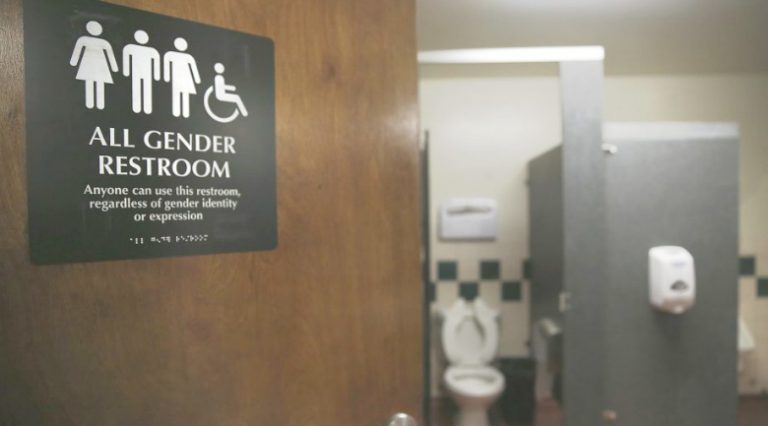
More than 1,000,000 people have signed a petition vowing to boycott Target over their gender neutral bathroom policy expressing concern that for women and children who may be taken advantage of by predators. It’s one of the most popular campaigns on the American Family Association’s website. North Carolina, Mississippi, and some towns in Texas have all made headlines recently as laws have passed to limit bathroom use.

bar

Gender neutral bathrooms aren’t only at Target

According to Fox News, Ken Paxton, Texas Attorney General, has sent a letter to Target’s CEO, asking Target to outline their plans to keep women and children safe from voyeurs and predators. I wonder if similar letters have gone out to other stores and businesses in the area which are more quietly transgender friendly.

The Mueller Starbucks in Austin offers private restrooms that are gender neutral. In fact, the sign has half a man and half a woman on it.

Barnes & Noble and Hudson’s Bay Co. (parent company of Lord & Taylor, Saks Fifth Avenue, and Gilt) also have transgender friendly bathroom policies. People can go into the restroom with which they identify. A Kroger store in Athens, Georgia also has a unisex bathroom.

Who are we really concerned about?

The way I see it, it’s not the transgender community that should concern people in a bathroom, it’s predators who are going to disregard privacy. For example, the University of Toronto attempted to implement gender neutral bathrooms on campus, but had to change the policy after two incidents of voyeurism. I agree, there are predators who are going to take advantage of the policy. But I disagree that bathroom laws are the answer.

The Christian community is so worried about women and children in bathrooms with transgender people, but where is the concern for the LGBTQ community?

Transgender people suffer higher rates of discrimination and violence than most.

In one survey released by the National Center for Transgender Equality, over half of the respondents had experienced harassment in a public place. Fifty-seven (57) percent of respondents were not even welcome within their own family. Where’s the outrage for the amount of discrimination, violence, and mistreatment of people who just want to live in peace?

I’m not sure there’s an easy answer for anyone. I don’t think boycotting stores who are trans-friendly is the right choice. Ostracizing the LGBT community and making transgender people outcasts isn’t going to solve this problem. On the surface, this debate may be about privacy. But it’s really about a lack of tolerance and exclusion. If you’re really concerned about the safety of individuals, look at the statistics and see who really needs help.

#NatureCallsEveryone

Why I’m glad Proposition 1 failed in Austin [editorial]

Your problematic fave

I want your service but I don’t want you, Uber and Lyft. Just like you want my business but you don’t care about me.

So here we are, at a crossroads.

What do you do when you discover that one of your favorite artists, someone that you idolized for their work, has a record of problematic offenses? Knowing this information, listening to their songs or watching their films becomes a moral dilemma. You can’t choose the path of willful ignorance and turn a blind eye. You want them to be better. But is that even a possibility? There are plenty of other artists out there, ones who produce great work and generally strive to be good people. As art is a reflection of the artist, it’s hard for me to separate the two.

It’s not a perfect analogy, but it’s the problem I have with Uber and Lyft.

After the headache-inducing madness of Proposition 1, their departure from Austin feels almost cathartic. There’s hope for a fresh start with a new ride-sharing company that preserves the innovation of the service while pairing it with genuine care for driver satisfaction and rider safety. The $8.6 million Ridesharing Works campaign felt false, like a lover who spends outrageous amounts of money when all I’m asking for is concern for my well-being.

bar

Prop 1’s failure was a public call for corporate ethics

The City of Austin needs ride-sharing companies.  We all know the spiel. Transportation network companies (TNCs) fill a gap in the market of our lively, boozy city that lacks the developed public transportation systems of other US metropolitan cities. They’re cheap and convenient. They provide jobs and reduce drunk driving.

There are definite benefits to the ride-sharing work of the world’s two most powerful TNCs. But in a debate over company ethics, the majority of Austin voters decided that the end doesn’t justify the means. And I’m with them.

The botched Prop 1 campaign was bad business in a larger sea of oil stains across the globe, the biggest stain being Uber’s notorious reputation for combating criticism with advertising influence (read: lots of money) instead of meaningful self-reflection.

Let us not forget: Uber’s VP of Business Emil Michael drew controversy in Nov. 2014 at a high-profile NYC dinner when he suggested that the company should hire a task force of its own researchers and journalists to dig up the personal information of reporters behind negative media coverage of Uber.

Dinner joke or not, off the record or not, his statement is illustrative of the standard by which Uber has reacted to lawsuits and attempts at government regulation around the world: With a well-funded plan of retaliation.

Can Uber play ethical catch up?

Jeff Cherry of The Conscious Company Magazine posed a reasonable question about the “missing link” of Uber’s ethics:

“How much better could the company be, how much more value could it be creating if only it paid as much attention to innovating on its cultural model as it has on its competitive model?”

It’s a conversation we need to be having, but with all the blame tossed and bad blood, it’s hard to bring people to the table to chat. Cherry argues that an ethical mindset is instilled in a startup at its inception. Could Uber, now a 7-year-old global company worth billions of dollars, play catch up, if it wanted to? And the more important question, do we want it to? Or is it time to invest in another TNC (eyes are on GetMe in Austin right now, as many Uber and Lyft drivers have already made the transition) to get things right?

Personal bias, because politics are personal

To put my perspective into context, here’s a quick profile on me and my relationship to TNCs:

Like many Austinites, I thought cabs in Austin were too expensive and didn’t use them often. I also didn’t get my driver’s license until my senior year of university, so I’ve had a lot of experience with Cap Metro. But bus routes are limited and navigating the system takes time, so I welcomed Uber and Lyft into the Austin market in 2014 with open arms and have used both services frequently since then. I’m also an infrequent Uber driver; I downloaded the partner app last March during SXSW when a friend referred me, but I don’t rely on the service as my main gig and I haven’t driven in months.

When I wrote about the proposed City Council regulations last November, I fed into the #KeepAustinUber campaign. Even though there was life before Uber, I couldn’t envision how I got from Point A to Point B in pre-2014 Austin. I’d grown dependent – even worse, complacent.

I didn’t smell bullshit until later in the mess of the Prop 1 debate. Now there’s such a giant stain left behind, it’s impossible to ignore.

Uber’s regretful but “Thank You” mass email sent out to all drivers on Saturday night announcing its departure, with its disappointed tone and a promise that it’ll keep fighting for Austin, felt like a slap in the face to drivers.
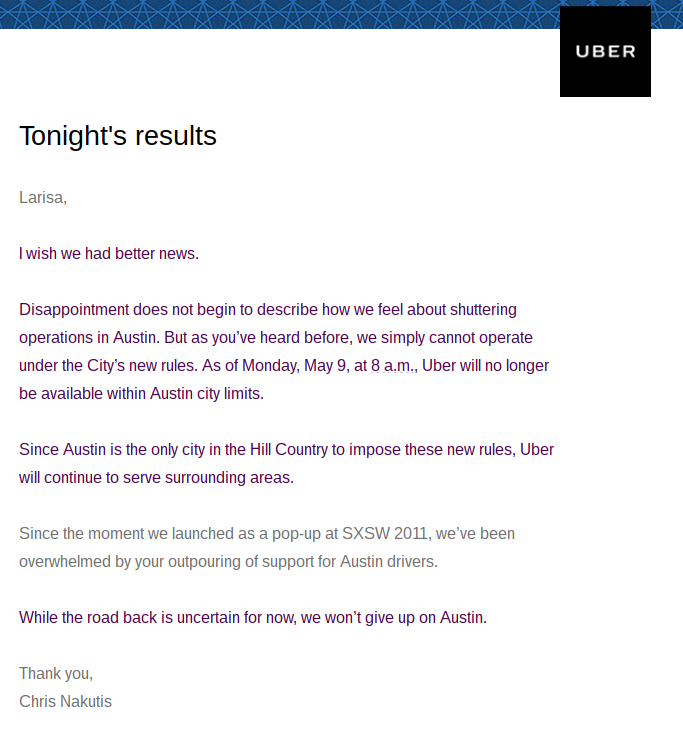
uber lyft prop 1 austin letter

To be clear, I’m usually an early tech adopter and a big proponent of tech innovation to address societal issues. But as much as I want to use Uber and Lyft’s services, I can’t support them in good conscience. Not after Prop 1, or a simple Google search. The trust’s just not there.

And finally: I didn’t (couldn’t) vote on Proposition 1. If I could, I would have voted against it.

Conscious consumerism in a globalized economy

With an increasingly globalized economy, it’s difficult to be a conscious consumer. The decision for conscious capitalism requires that we persistently challenge our purchases, from what we eat to where we shop, and now, which transportation initiatives we use.

But we have to try. It’s not too much to ask for a company that can blend purpose and profit, interacting with all of its stakeholders in an authentic way and addressing legitimate safety concerns without waging a war on regulation that sacrifices entire markets of people in the crossfires.

So I challenge Uber and Lyft to be better and to use the loss of Proposition 1 as a moment of internal reflection. Not just in Austin, but all over the world. What’s ethical isn’t always convenient, but it’ll go a long way with consumers in the long-run. I’m thankful for the innovation, but I want the company values to back it up.

#ProblematicFave

Podo Camera is the alternative to the awkward and embarrassing selfie stick

Tag a friend

So often while scrolling through Facebook, I see group photo after group photo. Once I get over the whole “everyone’s doing cool stuff while I’m just sitting here” complex, I notice a commonality between many of these group shots.

bar
They are often posed to where it’s obvious that someone snapped the picture with a selfie stick. Don’t get me wrong, I find selfie sticks as entertaining as the next person, but I can’t help but think of that scene in Talladega Nights where Will Ferrell says, “I’m not sure what to do with my hands.”

A selfie stick alternative

The person responsible for holding the selfie stick is always left with their hands and arms in an awkward position, which reflects in the photo. But, what other alternative is there other than asking someone to take the picture for you? (And who wants to interact with others?)

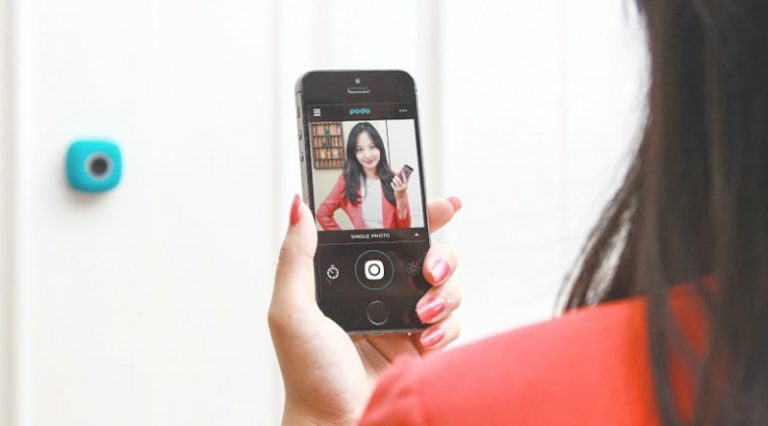
Enter the idea of Podo. Titled the “World’s First Stick & Shoot Camera,” Podo is a handy little device designed to take photos of you and your crew.

A small, adhesive device

It is a wireless device that you are able to stick to anything in order to keep it held steady for a shot. The back of the tool has a magnet and micro-adhesive pad that allows for easy adhesion.

Podo connects directly to your smartphone by utilizing Bluetooth technology. The photos are wirelessly saved to your phone. This allows for simple posting and sharing.

Podo’s capabilities

Tech specifications for the device include: 2 X 2 X 1 inch in size, 1.8 ounces in weight, 8 megapixels of photo quality, 720p 30fps of video quality, 8 LED flash, Li-ion (up to two hours video) battery, 8 GB of memory, and an accelerometer sensor.

Podo is designed to take photos and video clips up to 15 seconds long. Lapse is also available for use, allowing Podo to document whatever it is the user is doing.

In their own words…

“We believe that pictures are an important way we represent and record our experiences. We also believe that getting the perfect shot shouldn’t be a pain in the ass,”

The three friends-turned-founders created Podo because it’s what we wanted—a better and easier way than taking awkward selfies or getting someone to do it for us,” according to Podo’s website.

#PodoSelfieCamera

What makes Favor different, and why does Austin love it so much?

Anything, anywhere, anytime (in Austin)

Instacart. GrubHub. BiteSquad. AmazonNow.

The online delivery field is getting crowded. Companies are competing to create a faster, more reliable, and all-encompassing online delivery service. But, how do you differentiate yourself in a world where dinner can be delivered within the hour and designer shoes arrive at your doorstep the same day you order them?

On-demand delivery service, Favor, has managed to do just that. There are competitors, but Favor considers itself unique. The company will deliver just about anything, anywhere, anytime in designated neighborhoods via its app. Favor has risen to popularity by differentiating itself from the rest of the competition in Austin in a few key ways.

bar

Personal assistants – they’ll pick anything up

First, they don’t limit themselves to just delivering food. Unlike services such as GrubHub or BiteSquad which places orders only at certain restaurants that already have delivery services, or Instacart, which only goes to certain grocery stores, Favor will go anywhere to pick up anything in its targeted region.

Favor co-founder Ben Doherty has said, “Favor, at its core, is a team of personal assistants.” The team of “personal assistants” has delivered everything from the latest video game to Christmas trees during the holidays. The fact that Favor’s runners can run annoying errands to pick up the dry cleaning makes the service more attractive.

It’s also nice to have more options with food. In a city long lacking an ample supply of restaurants that deliver, it’s nice to be able to order something other than the usual pizza or Chinese fare. Gone are the days of choosing something simply because it is the only option.

If you want it, Favor can get it.

Speedy order and delivery

The service is also known for its speedy delivery. Anything except alcohol can be ordered for delivery in the Central Austin area within a few seconds. Says Ben, “We can make just about any restaurant in the city into a Jimmy John’s.” Additionally, the entire Favor experience is wrapped around their mobile apps, which makes ordering easy.

Personalized service

Finally, Favor let’s you even call or text your runner with additional instructions, all within your iPhone or Android. Personally, being able to communicate with my Favor runner is one of the main reasons I use the app. I appreciate getting status updates and being able to update or clarify my order. The app also allows you to rate your experience of food quality and service.

How to use Favor

The app itself is very easy to use.

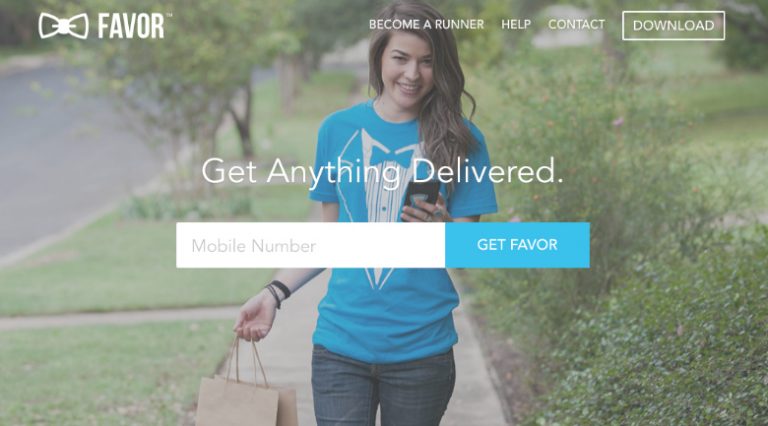
  • To get the app, simply type in your mobile number on Favor’s homepage and they’ll send you a link to download the app.
  • Once in the app, register by providing your email, address, and credit card information. You can also login through Facebook, which makes it easy (and you’ll never forget your password).
  • After registration, you’ll be taken to a “Spotlight” list with items from restaurants near you. You can order something listed on the app or choose to ‘Order Anything.’

The service itself has a flat fee per use, plus tips for your runners.

#Favor

The struggle of perfectionism, and how to rise above it

Procrastination in the form of side projects

I signed up for this assignment and then immediately gave it back. Because I want it to be excellent. I want everything I do to be good, but especially words that I have to put on paper. Where people can read them. It’s all part of a thing I call Hermione syndrome, and it almost ruined my work life.

bar
I have several college degrees. At every graduation, I looked around at my job options and decided I’d rather stay safe in my academic ivory tower. Eventually I found myself a doctoral candidate on the road to professorship. But I was deeply unhappy. I was writing fiction when I should have been writing my dissertation. I started a small press, a monthly literary event, and a zine all in my “spare” time.

Taking a page out of the entrepreneurs’ book

While I was working remotely, I joined a co-working space and, for the first time, was surrounded by people whose work life was very different than mine. Entrepreneurship requires being comfortable with a certain amount of risk. And suddenly I was surrounded with a disproportionate amount of career risk-takers. I found this mystifying but also inspiring.

Taking risks means being comfortable with being imperfect. It’s showing a lot of rough draft work. It’s something, basically, that I’ve avoided my entire life.

Symptoms of Hermione syndrome include reading the entire textbook before showing up for class. I have never been comfortable deciding to do something and then figuring it out as I go. And that’s exactly what you do when you make changes, start businesses, and pursue passions.

Taking the leap

The economy and the work industry is changing rapidly. And, though they’re given a bad rap, the millennial generation has made pursuing your passion a big part of career path in a way that sets them apart from their parents and grandparents. I looked around at the inspired weirdos in my office and decided I wanted some of that too. I could no longer justify staying in a job that was so far from where my passions were.

So I took a leap, broke up with grad school, and started writing for a living. It’s required a lot of risk, a lot of letting people look at imperfect work, and a lot of imposter syndrome. But it’s also been incredibly rewarding. I’ve learned a lot by admitting that I don’t know how to do something perfectly.

Finding inspiration from imperfection

Rough draft work invites learning, collaboration, and strengthens relationships in a way that perfectionism doesn’t.

After all: “Sucking at something is the first step to being sort of good at something.” –Jake the Dog

So don’t be too comfortable with your work, life, or relationships. Push things a little farther. Try something new. Ask for help. Seek inspiration. Hermione gets a lot of things done, but sometimes you have to channel your inner Harry Potter too. And the next time you’re worried about showing somebody something you really care about, something you know is not perfect, remember:

“Perfectionism may look good in his shiny shoes, but he’s a little bit of an a**hole and no one invites him to their pool parties”Ze Frank

Just how big is the “learn to code” movement?

Big data for a big undertaking

FreeCodeCamp’s 2016 New Coder Survey is providing an unprecedented glimpse into how adults are learning to code. There is so much data from over 15,000 coders who took the survey (raw results are here). I’ll touch on some of the demographics in a bit but allow me to map out a scenario that hopefully will allow you to connect the dots in a much broader fashion.

bar
Consider: Coding isn’t just for the cybergeeks anymore. Understanding even a little bit about coding can pay off in a big way. Coding is a valuable skill for marketers and any other members of a business team. Forget about sustainable algae farms, I would posit that learning to code has evolved into a global movement and is fast becoming one of the biggest phenomena of our time as there are literally millions of adults around the world who are learning to code.

Why code?

So what does coding allow you to bring to the table? Let’s break it down for you:

  • Use HTML to fine-tune some wonky text paragraphs. Even the smallest bit of HTML knowledge can be helpful when dealing with finicky content management systems.
  • Communicate better with your company’s programmers. Maybe you don’t need to be a programming pro yourself, but having basic code literacy will help you relate to the coders in your workplace and better understand how and why bugs occur.
  • Optimize and test landing pages. Basic HTML and CSS are crucial if you want to optimize and test your landing pages. And trust me–you definitely want to be doing those things!
  • Cut down on IT managers. While you’ll likely still need some head IT honchos, more coders means less workout for the IT team.
  • Empower creators. Understanding code opens up huge opportunities to create original, unique content, whether in the form of websites or through app development.

And not only that, there are plenty of sources where you can learn coding for free or pretty close to it (we’ll get to that shortly).

Learning to code: Just a school thing?

So we’ve established that learning to code can open all sorts of doors for you. It’s a career path that is age and gender neutral. But here’s the dilemma: Do you go to school and get into debt trying to maneuver through the coding jungle or so you try to just “pick it up” and learn by doing?

I’m glad you asked, and here’s where it get’s interesting. A recent study about the New York tech industry found that half of New York City’s technical work force doesn’t have a traditional college education (I’m using New York as a template because I happen to live in New York). That’s where a coding conduit like FreeCodeCamp comes in: FreeCodeCamp (and similar “institutions”) is an open source community that helps individuals learn to code. Students work through self-paced coding challenges, build projects, and earn certifications. As you learn you can get connected with people in your respective city so you can code together.

Take it one step further and you’ve got schools like Flatiron in NYC, General Assembly and Galvanize with locations across the nation, or Austin Coding Academy that are all trying to keep tuition to a minimum while teaching students how to code. Faster than you can say HTML, you can see that coding IS becoming a phenomenon and really is opening all sorts of doorways for young and old alike.

The survey

And now I can take the discussion back to the 2016 New Coder Survey. FreeCodeCamp’s Quincy Larson, who led the survey project, explains his goals quite simply when he states, “The more data we all have to learn from, the better we can understand why and how individuals are learning to code.”

With the trove of demographic and socio-economic data that is surfacing, researchers can better understand a coder’s employment goals, and their strategies for getting there.

Like I said earlier, the amount of demographic data is staggering and I encourage you to check it out here. Or follow me in Part II of this report and dig deeper together and see what we come up with.

#LearningToCode

Cool idea: Bring your roadtrip vacay into the 21st century with VR

As American as apple pie

When I was kid and we were trapped in a car going somewhere I don’t know what I did to pass the time. Probably just stare out the window and keep my mouth shut (that’s what happens when you’re the youngest of five kids) but I do fondly recall at least once when I got my hands on one of my brother’s ViewMaster which for awhile was all the rage. The ViewMaster was a cheap stereoscopic viewfinder that had a circular slide with enough 3D “movies” to keep you occupied for awhile. The content was usually based on comic books and travel documentaries but TV shows started to pop up over time as well.

bar

What’s old is [kinda] new again

With that in mind I couldn’t help but smile when I started hearing about VR headsets and how they are catching on with kids. It seems like a logical extension of the ViewMaster but obviously a lot more high-tech and with a much higher price tag.

The principal is the same though: Google cardboard and the entire virtual reality landscape that comes with it will continue to get more and more refined and more user-friendly for kids (and adults) and before you know it we’ll have another interactive tool that keeps us occupied and amused and busy (especially when the kids are in the car and you’re going to visit Grandma who lives a couple hundred miles away).

It’s all good and I say it’s about time.

Affordable fun

I have a few options for headsets I’d recommend (but for the record, there are literally a ton of options out there so your own mileage may vary):

  1. Least expensive: Google Cardboard – We’re talking basic fun in a box here. Get it, fold it and look inside to enter the world of Cardboard. It’s that simple and really, really affordable. Once you have it, you can explore a variety of apps that unfold all around you. And with plenty of viewer types available, you’re sure to find one that fits you just right.
  2. Mid-range: Samsung Gear VR – True 360° virtual reality will transport you to new worlds in a way you never imagined. Look up. Look down. Look around. It’s all yours to explore. Where will you go first?
  3. Standard: Oculus – A serious step up from the cardboard model. The Oculus Rift or Gear VR radically redefines whatever perception you had of digital entertainment. It’s not so much the breadth of games you can enjoy; it’s the ability to really get deep inside the 3D world. I’m thinking the kids will not want to get out of the car with this one.
  1. Luxury: Playstation VR – Don’t let that hefty price tag scare you. This is for those of you who want to have it all. Just plug and play. Created with gamers in mind, PlayStation delivers a new world of unexpected gaming experiences through PlayStation VR. Seamless visuals keep you connected to a virtual world. Makes reality seem so…boring.


More games and movies than you know what to do with

Trying to find a “few” VR games or movies that already exist and will make for a kickass summer is an understatement. Contrary to what some naysayers want you to think there is a significant amount of content out there. Here are a few that jumped out at me (Get it? That’s a VR joke)! And go to Wearable for an in-depth article on even more games, demos, and apps.

Dead Secret – A mystery thriller in which you get to play detective/reporter as you investigate a suspicious death of Harris Bullard, with four main suspects. It’s very good at keeping things tense with spooky sound effects, disturbing clues to discover and head scratching puzzles to solve. Not one if you’ll get impatient reading notes, documents, blackmail letters and maps but for everyone else, well worth the money. Dead Secret is also coming to PlayStation VR.

Keep Talking and Nobody Explodes – KTaNE is an example of a game that’s designed for a bunch of you to play. Only one person needs to wear the Gear VR and the rest give the headset wearer instructions (via pages and pages of a printed manual) to defuse the bomb they’re trapped in a room with. Also on Steam but comes into its own in VR.

Land’s End – Ustwo’s first VR game is pretty damn mesmerizing and that’s no surprise. It’s a slow, relaxing puzzle game over five chapters (for now), which makes lovely use of the Gear VR’s head tracking as controls. Serene sunsets, blocky mountains and a range of easy to head scratching – but always mysterious – puzzles. It’s best played while standing or on a swivel chair.

Gunjack – It’s a great little arcade space shooter with big attention to detail, you get a body to look down at in your fixed cock-pit and there’s cracks in the glass as you get hit by enemies.

Oculus Arcade – This is another virtual environment in which you do things in 2D but hey, it’s a virtual arcade so shut up. Play Pac-Man, Sonic, Galaga and more in three arcade rooms. Everything is free for a bit but you have to pay to unlock unlimited play.

Dreadhalls – First person is where VR really comes into its own and the Gear VR is no exception. The journey through creepy dungeons in Dreadhalls, picking locks, opening doors, keeping your lamp going and checking behind you is damn scary especially considering how long it makes you wait to get attacked. Then you run away, heart genuinely pumping. Super terrifying. Also being developed for the superior Oculus Rift.

DarkNet – An arcade-style, strategy hacking game with lovely visuals and a stern voice giving you instructions, Darknet sees you spread viruses through a network of nodes, banking the Bitcoins and causing carefully constructed mayhem.

Only the beginning

Like all technology that has been labeled as the Next Best Thing, VR headsets will surely become more and more user-friendly and more affordable while at the same time the amount of content will no doubt become staggering.

If we could any closer to the action we’d be inside it. I mean “really” inside it. I’m sure that’s coming sooner than we expect!

#VRRoadtrip

Find, track, and cancel all of your subscription services

Not reading the fine print can cost you

In our fast-paced lives, it can be easy to overlook the small things, like reading the fine print. Oftentimes we may sign up for a service or subscribe to a website without knowing exactly what it is we are paying for.

Over the course of my life, I’ve heard a number of subscription sob stories. You sign up for a service, provide your credit card information, then decide after a few months that said service is no longer necessary.

And, shockingly, getting out of a subscription never seems to be as easy as getting yourself into it. In many cases, there is a minimum timeline required of payment. Best-case scenario, you have to spend at least 45 minutes on the phone with a customer service representative getting yourself out of the subscription ties.

bar

Unsubscribe with ease

Wouldn’t it be great if you could rectify subscriptions in an easy manner? With Truebill, we are getting closer to that reality.

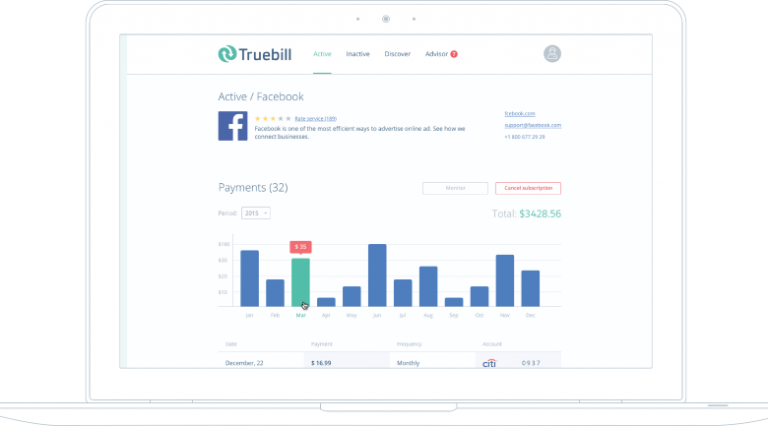
Truebill allows users to find, track, and cancel paid subscriptions with one click. The website claims that an average Truebill user saves $512 per year by canceling unwanted subscriptions.

How does Truebill work?

The system works through three stages. First, find your subscriptions. This is done as Truebill scans your online statements and identifies your subscriptions, giving you a list of who and what is charging you every month.

Second, you cancel unwanted services. Their “one-click” cancellation system cuts out time spent waiting on hold. Finally, Truebill allows you to take control of your finances by continuing to monitor your statements and sending a monthly report. The reports will flag any changes made to the statement.

Security is a factor

The company prides itself on a high-security system. Their platform uses the most up-to-date industry protocols for storing a user’s account data, this includes use of 256-bit SSL encryption. Statements with read only access are also utilized for your protection.

It can be easy to overlook the small things in life, but this may be costing us. Something that initially started as a free trial may now be charging you, a gym membership or streaming service you never use but still pay for, are all things that will add up month after month.

#Truebill