Home Blog Page 165

Focus for the next 30 minutes or a tree dies

Procrastination can be so inviting

If there’s something that people love to do, it’s to avoid their responsibilities. While this is not something practiced frequently by everyone, I have to admit that I enjoy indulging in the art of procrastination every once in a while.

bar

It is so much more attractive to put off something boring by engaging in something more appealing, like watching every episode of House of Cards in one weekend. Now with the availability of our handy little smartphones, it’s easier now than ever to find ways to distract yourself.

We all do it

And, it’s nothing to feel guilty about as I, and many others I know, find myself mindlessly scrolling through Facebook or Twitter at least once every waking hour. This is particularly alluring when I am being put to sleep while working on something mundane.

However, in situations like these, people often benefit from incentive. It is easier to push ourselves to do something we don’t want to if there is a reward at the finish line (this very thing happened this morning when I pushed myself to run an extra mile so that I could eat a giant blueberry muffin, sans guilt).

Stay focused, be present

It’s simple: If there is a reward or some other factor that pushes us to challenge ourselves, we are more likely to stay focused. Now, there is an incentive to keep us from checking our phones every 12 seconds.

The new app Forest aims to make smartphone users “stay focused” and “be present”. The app is designed to keep you away from your phone while focusing on a task (and it’s totally adorable for friends of the environment).

Build a forest #gamification

When you sit down to start a task, open the Forest app and plant a “tree”.  While you are working, the tree will begin to grow. If you leave the app to check something else, the tree will die.

To clarify, no real trees will be harmed in the utilization of Forest – they’re not really playing hardball. As you continue to stay on track with your tasks, the app will develop a forest for you.

One tree = 30 minutes of work

Each tree symbolizes 30 minutes of distraction-free work. The tree only dies if you exit the app within the first 30 minutes.

Forest is operable for both mobile and desktop format. Downloads are available for iOS, Android, Windows Phone, Chrome, and Firefox.

#ForestApp

Which of the 9 types of intelligence do you possess?

Intelligence is more than book smarts

When you hear the word “intelligence,” what is the first thing that comes to mind? Do you think of someone with a super high IQ? Someone who’s book smart? Street smart?

bar
Intelligence can absolutely mean different things to different people; in fact, the word “intelligence” is a fairly broad term. By and large, we’ve come to interpret intelligence to mean “smart” and while that is true, people can be “intelligent” in many different areas. There is certainly no one subject, or area that defines and explains intelligence.

Different types of intelligence

Psychologist, Howard Gardner detailed nine different types of intelligence that humans have and how each one functions. This could help us understand while one friend may be highly gifted musically, another struggles to hear the difference in pitches.

Likewise, it shows that not everyone excels in all areas; we all have weaknesses and strengths. Gardner published a book, titled, “Frames of Mind: The Theory of Multiple Intelligences,” in which he explains, “there exists a multitude of intelligences, quite independent of each other, [and] that each intelligence has its own strengths and constraints.”

Each type of intelligence can help us gain a better insight into many different aspects of our lives as it reinforces the notion that every individual thinks and learns in many different ways. Rather than focusing on demonstrating “the facts” what would happen if you took into consideration musical aptitude, logical reasoning, or spatial intelligence? Would you engage more members of your audience? Gardner contends, when these nine forms of intelligence are taken into consideration, everyone can flourish.

What are the nine types of intelligence?

According to Dr. Gardner, the first type of intelligence is spatial. Spatial intelligence includes how you visualize and judge the world around you. It’s your ability to see and interpret the world in 3D.

The second type of intelligence is naturalist. You may be strong in this area if you are highly attuned to living things; having the ability to read and understand nature and all living things. Farmers, biological scientists, and even hunters are examples of individuals with high naturalist intelligence.

The third type is musical intelligence. Musically intelligent individuals are able to discern sounds, differentiate pitch, understand tone, rhythm, and pitch. Often times these individuals can pick out harmonies from melodies, play a musical instrument, compose music, or sing very well.

Number four on the intelligence list is logical, or mathematical intelligence. This type of intelligence includes logic, reasoning, numbers, quantifying things, and critical thinking. This also has to do with having the capacity to understand the underlying principles of some kind of causal system.

The fifth type of intelligence is existential intelligence. Existential intelligence seems to be in opposition to spiritual intelligence according to some scholars. However, Gardner stated that this type of intelligence includes tackling the “big questions” like why we live, why we die, and what our purpose is on Earth.

Gardner’s sixth type of intelligence is interpersonal intelligence. This type of intelligence includes sensing people’s feelings and motives. Individuals who have high interpersonal intelligence are characterized by their sensitivity to others’ moods, feelings, temperaments and motivations, and their ability to cooperate in order to work as part of a group.

The seventh type of intelligence is bodily or kinesthetic. This type of intelligence involves coordinating your body with your mind. People who have high bodily-kinesthetic intelligence should be generally good at physical activities such as sports, dance, acting, and making things. This also includes a sense of timing, a clear sense of the goal of a physical action, along with the ability to train responses. Soldiers, police officers, athletes, dancers, and actors are all examples of individuals with high kinesthetic intelligence.

Number eight on the intelligence list is linguistic. These individuals will be able to find the right words to express themselves. They are also typically good at reading, writing, telling stories and memorizing words along with dates.

The final type of intelligence is intrapersonal intelligence. This area has to do with introspective and self-reflective capacities. This refers to having a deep understanding of the self; what one’s strengths or weaknesses are, what makes one unique, being able to predict one’s own reactions or emotions including what you want or need.

9-types-of-intelligence

What can you learn from all of this?

The takeaway here is that no matter which area(s) you excel in, learning about the other areas can help you develop your weaker area(s).

It also helps you gain insight into what makes other people tick. In the workplace, having strong interpersonal skills can help you relate to your coworkers quickly, but having strong logical intelligence may help you solve problems more efficiently.

No one area is more important than another, but each area plays an important role in our lives. Which area(s) do you think you are most gifted in and which area(s) do you think you could improve upon?

#intelligence

Is Buffett bolstering brands to build a Facebook competitor?

Recently revealed $1B stake in Apple

Warren Buffett’s Berkshire Hathaway Inc revealed a more than $1 billion stake in Apple Inc in a rare foray into the technology sector, which Buffett has largely shunned apart from a poorly performing investment in IBM.

According to Reuters, “Shares of Apple rose 3.7 percent on the news, closing up $3.36 at $93.88. Berkshire made its investment in the first quarter, before the iPhone maker in April reported its first quarterly revenue decline in 13 years.”

In search of technology

It seems apparent that Apple CEO, Tim Cook is looking to develop other technologies for the Cupertino, California-based company, and last week unveiled a $1 billion investment in Chinese ride-hailing service Didi Chuxing.

bar

In fact, Synovus Trust Company portfolio manager Daniel Morgan, noting that Buffett is known as a value buyer, added his take on the proceedings, saying; “That kind of puts the icing on the cake that Apple now is probably considered more of a mature technology company, like we would think of Microsoft, Intel or Cisco.”

On paper at least, Apple demonstrates low price-earnings ratio and high dividend yield.

The sun also rises

Meanwhile, it is reported that the world’s third-richest man, Berkshire Hathaway chairman Warren Buffett is behind a consortium of investors bidding for some of Yahoo’s internet assets. Also on board: Quicken Loans founder and Cleveland Cavaliers owner Dan Gilbert.

Why Buffett and Gilbert would be interested in a declining business like Yahoo remains unclear. Forbes recently pointed out that although in a possibly unrelated move, “Yahoo Finance did host the first livestream of Berkshire Hathaway’s annual shareholder meeting. Last quarter, Yahoo reported $0.08 in adjusted earnings and $1.09 billion in revenue, both down significantly from the same quarter a year ago.” At the time, Yahoo executives said the strategic alternative process was the company’s top priority.

Could this all be a play against Facebook?

Forbes also points out that Verizon has long been the rumored front runner for Yahoo, ever since it bought AOL’s similar media and advertising business in June of last year. The wireless giant wants to create an advertising technology platform that leverages the company’s deep knowledge about its more than 140 million customers.

In meetings, our CEO, Benn Rosales wondered aloud, “could be Buffet buying up tech companies to combine and compete with Facebook?” It’s just a theory, but if that ended up being the long game, Buffett would certainly be in the best position to combine disparate brands for a mega competitor.

Interesting thought.

#BuffettOnFire

How isolation can foster imagination and creativity

Getting back to your roots

Do you remember as a kid when you’d hang out in your backyard alone? Your best friend was sick and couldn’t come over, so what did you do? If you were like me, you’d create stories with your dolls and toys.

bar
Those of us born before the 1990s, and even the 1980s, didn’t have the technologies of today, so we were almost forced to be imaginative. In some ways, I worry that it’s a lost art. Then I watch the neighbor girls when they’re playing outside, and I see them climbing trees and pretending to have tea parties. My faith in humanity is restored.

Adults need to be creative, too

Rather than worry about the next generation having imagination, it’s more likely that I should worry about my own peers not having those creative moments that stimulate our brains and provide impetus for new ideas and ways of thinking.

I always found that it was in isolation when I was most inspired and inventive. As an adult, I have to force myself to spend time alone, in the quiet of myself, to find those innovative notions.

Using imagination to drive a project

It’s hard to sit down at a desk and create something, like a novel or even an annual report. To really put your mind to that task, you have to tap into three networks in your brain:

  • The executive action network which monitors external events when we need to be present to process information
  • The imagination network which is the internal network of dreams and thoughts
  • The salience network is the bond between the two networks, allowing us to change direction when necessary

In order to really set projects in motion, you have to imagine where you want to go. It’s hard to do that with co-workers and bosses asking you about the possibilities. You have to be externally present to answer their questions and give appropriate responses. But it’s in the imagination where the project begins to come to life. It’s important to allow yourself to be alone and consider all the directions you can go. It’s not wasting time, but investing in the end project.

Take a time out

Give yourself some down time without your electronics, family, or music. Take a few moments when you’re alone to really dream. If you have to, start out in your shower and let your imagination run wild. Once you remember how much fun it is, you’ll want to find those times when you can be in isolation and let your creativity flourish.

#Create

Presumi charts and tracks your job search

The technological and societal evolution

We often talk about the ways in which technology and society have evolved in recent years. These evolutions often cross paths as society becomes reliant on technology.

bar
Something that has, and always will, stayed constant in life is that we continuously are seeking strong employment opportunities. What has changed is the way we seek out these opportunities.

The internet reigns in job searching

Gone are the days of sifting through a newspaper to find an ad for your next job. The Internet has become the tool for looking for jobs.

However, there are many different platforms of Internet job searching and knowing where to start can be overwhelming. Monster, Indeed, and Looksharp are just drops in the bucket of what’s available.

Presumi aids in managing your resume

One of the latest sites to assist this group is Presumi. While it does not post job listings, the idea is users can keep a closer eye on their job search through a series of steps.

These steps include: 1) Upload your resume and apply for jobs, 2) Send trackable emails for job applications, 3) Allow Presumi to go to work. With the tracking system, a user can see if an employer has looked through their resume or not.

But, what does it do?

What Presumi offers is the sending of tailored emails before deadlines, creating personal calendars, and tracking all users’ email and resume activity. With a visual platform, users can see their job search progress.

Presumi strives to reduce the stigma of a job applicant just being a statistic and helps create a path for more thoughtful job seeking. It serves as a tool to help on the job hunt, but does not work alongside job offerings.

What works for one, may not work for all

The platform is simple and offers an abundance of charts and graphs to make tracking easier to digest. Being that users can apply for jobs by linking their uploaded resume, Presumi is able to track a page’s traffic.

This site could serve as a beneficial tool for job seekers who may not be 100 percent confident in their resume. It may not be the best tool for someone who has a specific resume style and way of applying for jobs.

In the end…

What is important to remember when searching for jobs online is not only researching the job and the company, but research the website you are utilizing. What may work for one may not work for another.

Sites such as Hired offer a more stylized job-search niche, while a site like Monster is more broad. Being mindful of finding a site that works best for you is likely to correspond with job postings that are more specific to what you want.

#Presumi

Annoying clichés you MUST stop using at work

Adios, overused clichés

Clichés come and go, thank goodness, and there a lot of them that should go now. I absolutely hate it when someone says to me, “with all due respect,” because it generally means that they think they’re going to say something offensive.

bar
If you think it’s offensive, maybe it shouldn’t be said. Here are some other phrases you might want to consider kicking out of your vocabulary, especially in the business world:

  1. Just sayin’– This one might be fine for casual conversation, but try to be more professional when you’re speaking to colleagues or supervisors. It just sounds disrespectful to my ears.
  2. YOLO – If you need a reason to act stupid, don’t announce to your co-workers. Think twice before YOLO at work.
  3. Think outside the box – We get it. You want us think about what’s not been done. This one is so tired (how tired is it?) that it has excessive fatigue and needs medical treatment.
  4. Synergy – Does anyone who uses this word actually know what it means? According to Businessdictionary.com, synergy is a state in which two or more things work together in a particularly fruitful way. This word is overused and misused to sound pretentious.
  5. Empower – In the workplace this word can backfire. It means to give authority to do something. Many times, it’s used to let employees feel like they have power, but not really.
  6. Thanks in advance – This phrase can come off as demeaning in the workplace. It’s kind of like saying “I know this thing sucks, but you better do it.” A more polite method might be to say, “Thank you for handling this. I know it’s not the most exciting job, but I appreciate it.”

That said, let us end with the wisdom of Buddha who once said, “Whatever words we utter should be chosen with care for people will hear them and be influenced by them for good or ill.”

How is Austin’s tech economy performing compared to the rest of the U.S.?

Zooming out of the Third Coast

Anyone who spends time around the Austin tech community knows we are a proud people who enjoy drinking our Silicon Hills Kool-Aid. And there’s nothing wrong with that; we should be proud of what we have built over the last several years. However, it’s always good to take a step back and look at the bigger picture. While Austin gets a lot of things right, we still have some room to do better.

bar

Ye olde “Innovation that Matters” report

The United States Chamber of Commerce Foundation, 1776, and Free Enterprise released their annual “Innovation That Matters” Report, which “examines and ranks 25 cities’ readiness to capitalize on the inevitable shift to a digital economy.”

The city of Boston ranked first, ahead of the Bay Area. According to the report, while the Silicon Valley still reigns supreme across certain categories, “its rankings in ecosystem connectivity suggests that the competitive nature of the region may be reducing collaboration” between startups and other civic entities. They still succeeded in several areas, such as total number of startups.

So, where did we land?

Austin placed sixth in the rankings, beating out urban centers like New York, DC, Portland and Seattle.

We excelled in areas of talent, ecosystem connectivity and culture.

Because of Austin’s population growth, especially with the educated millennial crowd, Austin continues to grow a strong force of workers ready to take on present and future tech jobs.

Additionally, the tech community continues to establish strong connections with other community stakeholders, such as universities, investors, veteran corporations, and civic institutions, just to name a few.

Finally, when it comes to quality of life, Austin earned strong marks for its openness to new ideas and general quality of life. Frankly, since queso is basically happiness in a jar, this comes as no surprise to those who live here.

Our weaknesses, and where we can go from here

Still, our city isn’t without its struggles when it comes to our tech ecosystem; we still have a ways to go when it comes to capital generation. According to the report, we generated north of $3 billion in general capital last year. A nice sum to be sure, but we still have a ways to go to hit the $101 billion generated by the Bay Area in that same time frame. Even top-ranked Boston generated over $19 billion. We also had fewer acquisitions than some of the top cities; while Boston had 401, Austin had 141.

Our city also fell behind in the industry specialization department. According to the report, as digital technology continues to permeate into new industries, cities and companies need certain resources to make that change. The scoring here looks at the number of startups in emerging tech industries, such as education, energy and healthcare. They also looked at the number of legacy businesses in these sectors, as these companies can support the next generation of startups bringing new technology into the sector.

#AustinTech

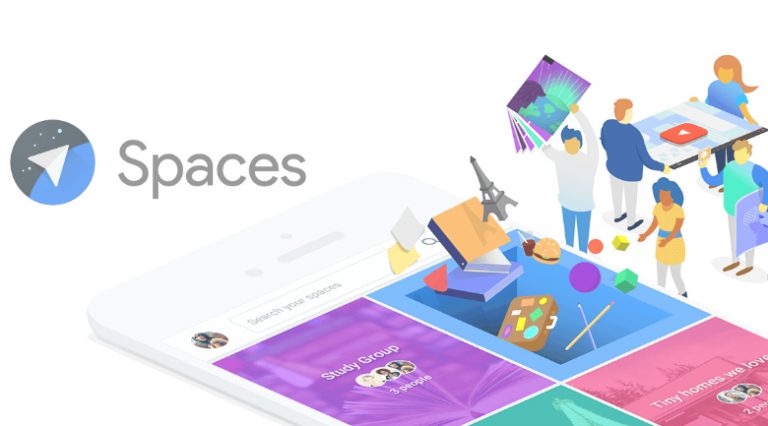
Google’s freshly announced sharing app Spaces could be big

Share and share alike

I don’t know if friends or colleagues actually get together anymore to talk. It seems so old school. In this day and age, I guess it’s much easier to connect by not being connected. Which is why a new app from Google, appropriately called Spaces is so intriguing. Spaces lets people get people together instantly to share around any topic and you don’t have worry about getting bogged down by a lot of face time or any of that touchy feely stuff that made conventional get-togethers so unique back in the day.

bar

Big fun for small groups

With Spaces, it’s simple to find and share articles, videos and images without leaving the app, since Google Search, YouTube, and Chrome come built in. When someone shares something new to a space, the conversational view lets you see what the group is talking about without missing a beat. And if you ever want to find something that was shared earlier, articles, videos, comments or even images, a quick search lets you pull it up in a snap. You can create a space with just one tap for any topic and invite anyone via messaging, email, a social network, or whatever way you like.

Easy to maneuver

Admit it. Group sharing isn’t easy. Sharing things typically involves hopping between one app and another as you attempt to copy and paste links. Group conversations often go astray and don’t remain on topic. Original topics get buried in endless threads and that make it difficult to get back to. The creators of Spaces are sharing your pain. Whether it’s micro-blogging or group sharing, Spaces looks to create a better overall experience.

You and your friends can get together in the cyber space and share articles, video and images and never leave the comfort and security of the app. With Spaces, it’s simple to find and share articles, videos and images without leaving the app, since Google Search, YouTube, and Chrome come built in.

Spaces. Cause everyone needs their space, right?

#GiveMeSpaces

When it comes to influencer marketing, consider me #NotInfluenced

Just how much influencer does your marketing dollar buy?

A controversial article on the imminent demise of influencer marketing brings what I feel is the dilemma of IM to the fore: The market for IM is getting oversaturated. Campaign prices are skyrocketing.

Is the IM talent pool too full of influencers who aren’t bringing enough influence to the table?

I’ve written about the IM phenomena before and maybe I look at it with a jaded eye. Sorry, but it still looks like a dressed up version of celebrity product endorsement, except now the celebs are you and me and the followers are those we stroked on social media.

Influencer marketing is just a new version of celebrity TV spots, but on social media with smaller followings. I’m just not sold that IM delivers any tangible value, especially compared to a normal strategic media buy for the same budget.

bar

Pay the piper

Speaking of which, in terms of value, what influencers should bring to the table is engagement. The street-cred that an influencer has should work to build a following. I mean that’s the whole idea, right? Otherwise what are you paying the influencer for? I would hope that there is a relationship between the influencer and with whatever following exists. To what extent the loyal follower has emotional ties to the influencer and vice-versa is negligible.

Genuine interest would be novel. This has been happening for years and years with affiliate marketing. The difference is that there has always been performance based with metrics and bench marks.

Does IM actually engage a community in conversation about a product that leads to a purchase?

The price of popularity

I will say one thing: back in the day (and that day depends on how old you are) celebrity endorsements resulted in maybe a half-dozen TV commercials a year. Now with social media, a car brand can post a half-dozen times a day! But does the constant stream-of-brand-consciousness result in a decrease in quality of work?

Influencer marketing has quickly gotten to the point where it can’t really be considered new. In fact the article I cited earlier says IM peaked in 2014. The thing is, you see a new marketing strategy and fresh out the blocks it’s going to be underpriced because no one even knows its value. Once it catches on and brands start to see value in influencers, there’s an increase in demand and prices go up. It’s the natural progression of economics in general (and entertainment in particular). It won’t become cheaper to engage with bigger and bigger influencers as long as the demand is there.

What I see is that the price of influence is not in line with the ROI of same.

Influence has always been about changing perceptions and behaviors. In order to measure the change in perception of a company or a behavior towards it, it requires you to create benchmarks that show progress. And that requires identifying who, exactly, you want to influence and the change you want to see.

When we figure that one out we’ll really get a handle on whether influencer marketing is a viable strategy or whether we’re paying for a lot of fluff and no real substance.

#NotInfluenced

The Hyperloop had it’s first test run: The future of transportation is here

The first test run of a pipe dream

The Hyperloop sounds like science fiction, and has been accused of being a pipe dream (pun intended). But a successful first test earlier this week makes it seem much closer to reality.

bar

A peek into the future of transportation

Last Friday viewers, including government officials from all over the world, investors, and journalists were invited to a remote place in Nevada to see the first application of the technology. The test lasted only a few seconds, but might be the first step in changing transportation forever.

The final form of Hyperloop involves shooting passengers or cargo through steel vacuum tubes at over 700 miles per hour. This test was only the beginning and was conducted in open air, no vacuum tubes to be seen. Just an aluminum sled shooting along a track demonstrating the basics of the propulsion system based on “active stator” coils in the track that react with magnets in the sled to push the cart forward.

The mini-version: A success

And push they did. The sled went from zero to 60 miles per hour in 1.1 seconds, reaching a maximum speed of 100 miles per hour and traveling about a thousand feet before being slowed by a sand bank and gliding to a smooth stop. The lofty speed goals for the final form of the hyperloop are based on encasing this propulsion system inside a vacuum tube that will reduce air resistance to almost nothing. The team said they’d be testing a more complete version by the end of the year.

This is already more progress for the project than many people have expected, especially considering the idea for hyper loop was first introduced in 2013 through in a 58 page white paper by Elon Musk.

From the garage to Nevada

But Musk has maintained his distance since then, making room for venture capitalist Shervin Pishevar and BamBrogan, a former Space X engineer, to form Hyperloop One in 2014.

Only 16 months ago, the company was housed in Brogan’s garage. The road from there to Friday’s “Kitty Hawk Moment” (a reference to the Wright Brothers first successful flight) last week has travelled at hyper speed.

Hold on to your butts

As Rob Lloyd observed, all the technology used for this test was assembled in the last six months.

Along with the successful test announcement, the company said it has completed an $80M series B investment with supporters like GE, Western Technology Investment, and the French National Rail Company.

The future of transportation can now begin. Now, pick up your jaw and get on with work, we’ll keep you updated!

#Hyperloop

Could your browser history cause denied health insurance coverage?

Your devices are listening to you

Have you noticed that apps on your internet devices are getting smarter about integrating your data?

bar
Case in point – About two weeks ago, I was emailing someone on my laptop to set up a time when we could talk on the phone.When they finally called me on my smartphone, the number popped up and underneath the digits it said, “Maybe [Andy Smith].” I had never put his name in my phone as a contact, and it was a one-time thing. I’ve noticed that what I search for on my laptop often shows up in other apps as ads on my phone.

Does that scare you? It should. Just a little bit.

So, what does this have to do with health insurance?

Castlight Health, an app which works to lower healthcare costs for businesses, is being used by quite a few companies. Walmart, CVS, and Liberty Mutual are just a few of its corporate customers. (I have no personal experience with the app.)

On the Castlight website, it gives examples about how the app helps employees and employers. For example, “Mary searches for an orthopedic surgeon.” The app then guides her to different options other than surgery to help her find treatment.

Who is tracking your searches?

Right now, you would have to use Castlight Health to have it track your searches. But with so much data available about your search and shopping history online, could it be feasible that insurers would use it to measure your insurability?

It could be much like a credit score, but a health score based on your internet use.

Tack on other elements of your internet use, like your political leanings or friends’ activities, and you have the beginnings of a serious profile that may or may not be really you.

As a professional writer, I routinely search for information about different topics that are totally unrelated to me personally. Two weeks ago, I was looking for information about the First Amendment and stats on watching porn at the library. My search history also includes information about low-income housing tax credit and real estate discrimination laws. Dear Internet Police, I’m not looking for an apartment or housing, please don’t tailor my ads to show me places to live. I wonder if an employer would be afraid I was getting ready to make a move?

Do you know how your data is being used?

I’ll admit my internet search history is much more varied than most of my friends.

But what if you had a friend who told you they were using drugs, and you do a search to find treatment options. Would an employer believe it was for you?

Does your current internet use indicate future behavior? I can very honestly say that my internet usage is much different than it was just five years ago, and I would suspect that most of you would say the same.

If I was working for an employer in an office, I wouldn’t appreciate them tracking my online searches to see how insurable I was or wasn’t. We need to pay attention to how our data is being used. We should all be watching this topic.

#FutureOfData

How will students offended by chalk survive in the business world?

Is the university system really preparing students for real life?

You probably heard about the incident at Emory University in March where college students felt frightened when they woke up to chalk messages written around campus in support of Donald Trump. Maybe you did what I did, dismiss it as an overreaction.

In the weeks following the incident, I began to read more about different colleges and how students are “offended” when served Mexican cuisine. (Clemson University actually apologized for the incident.)

It makes me wonder how these individuals are going to function in the real world.

bar

The business world is harsh

In business, you’re confronted with differences of opinions and even hostility every day. There are people who will be intentionally rude and inconsiderate and those who are unintentional. If you’re going to be threatened every time someone delivers a contrary opinion, you won’t last long.

What do you do when it’s the owner of the company or the representative of a large account disagreeing with you? Your feelings may not account for much then.

That’s not to say that you should just let people walk over you, but by continually going to HR or whoever is in charge, you come across as someone who can’t stand up to others and deal with your differences. Or adult. Let’s just say you get to work and someone has a bumper sticker that supports Trump or another candidate with whom you don’t agree. Guess what? Your boss doesn’t care. There’s something called the First Amendment.

You have a right to be offended, but it could hurt your career

I’m sure there’s something even deeper going on at Emory than just political rhetoric. What’s incredible to me that no one said to the students, “you’re going to deal with this type of speech anywhere you go. Trump is a candidate. Deal with it.”

My advice for the offended students? You are free to be offended by anything you want. You have a right to your feelings. In business, you’re going to have realize that there are times when you just need to get over something and move on.

#RealWorldChalk

Which social media platforms attract *and* hang on to users?

Social media in 2016

If you’re going to make the investment in social media, you want to know that your brand gets the visibility you expect from those channels. You can control what your follower see, but you can’t control how often your followers interact with a given social media channels. So, how do you know that you’re working with an attentive audience?

bar
SurveyMonkey Intelligence, which provides metrics to thousands of mobile apps, decided to measure just that. They measured churn rate by looking at people who used the app in one week but didn’t use it again the following week.

Who won?

Facebook, Snapchat, and Instagram reign supreme in this category. You can also see associated Facebook apps, like WhatsApp and Facebook Messenger, heading up the middle of the pack. On the other hand Twitter, Vine and Periscope all have churn rates well over 20 percent. This might explain why Twitter’s reported growth has stagnating recently. While they are still pulling plenty of new users, many are leaving at the same rate.

There’s no denying Facebook’s power, and this is just another stat confirming that you can’t miss out on Facebook. It also reinforces that paying to play here can be worth your money. It’s still a cheap branding exercise, since Facebook ads are fairly inexpensive. With the right kind of business, you may be able to cultivate leads and sales that justify the investment as well.

Snapchat may still seem like an odd choice to you, but there’s no denying that it commands real attention. As a corporate brand, it can be tricky to advertise on Snapchat. Those who can put a human face to their brand (see: Gary Vaynerchuck, or The Points Guy, among others) should be exploring the opportunities provided by the platform. If you have had prior success with visual content or video content, you can find a following here. Otherwise, look at options for sponsored content and the Discover feature.

What about poor Twitter?

Speaking of visual content, it’s a good time to figure out that part of your content strategy so you can be on Instagram. As one of the fastest-growing social channels of last year, you can reach a lot of eyeballs here, and those eyeballs browse the channel religiously. Much like parent company Facebook, Instagram uses an algorithmic timeline, so paying to play may be worth it to get the attention you want. Influencers can also bolster your brand, if you can connect with a few in your industry.

What about poor Twitter? Well, as the saying goes, your mileage may vary. Just because Twitter is bleeding users doesn’t mean those users are from your audience. Just keep an extra sharp eye on your engagement numbers, and double down on ways to give your audience a better experience with your posts. Be the reason your followers come back to Twitter week after week!

#SocialMedia

Procrastination: Can it be cured or is it hopeless?

Happy Procrast-iversary

At this exact time last year, I sat in the exact same spot and was doing exactly the same thing: procrastinating studying for finals. It feels strangely bittersweet that this is the last time I’ll be performing this specified procrastination (assuming I pass all of my classes and they give me one of those degree things).

bar
Ironically, during last year’s procrastination session, I wrote about a video that explored the art of procrastination. The video made the case that, while we avoid what we should be doing, we may be mastering procrastination.

Can we overcome procrastination?

Now, a video has been released that focuses on overcoming procrastination and the science behind why it happens. The video poses the thought of: Imagine all the things you’d accomplish if you never procrastinated.

The creator first asks the question of: “Can I solve procrastination forever?” Kind of a loaded question that offered a whole bunch of science-y jargon.

A second opinion

After seeking out information from professionals, the idea that you can just see what’s going on in the brain simply by doing an MRI was refuted by a neuroscientist. Additionally, psychologist, Dr. Tim Pychyl, explained the Happiness Theory may play a large role in procrastination.

Basically, there are two parts of the brain: the Limbic System and the Prefrontal Cortex. The Limbic System is more instinctual, acting as a “fight or flight” basis to keep us alive. It also focuses more on our emotions as well as hunger, sex drive, and fear. The Prefrontal Cortex is more rational, putting more of an emphasis on our goals, dreams, and future plans.

Happiness is a warm theory

The Happiness Theory argues that, when we have an urge to avoid a task, the Limbic System takes precedence and keeps us from thinking about the future in an effort to avoid said task. Eventually, the Prefrontal Cortex comes along and reminds you that the actual act of completing this task will not kill you.

This creates a dichotomy of good and bad. First, you act on something that makes you feel good and free. But, eventually, the lights at the party turn on and you feel guilty for avoiding your work.

I’ll have the procrastination with a side of neuroplasticity

Though they do not offer a solution to avoiding procrastination, they do suggest a scientific (though highly unlikely) fix. If modern medicine could find a way to give our brains more neuroplasticity (matter in our brains that can cause change) then we may be more likely to train our brains to break habits and to do what we need to do.

When it all comes down to it, procrastination affects everyone. And, in many instances like this, it affects everyone differently. There are ways to help yourself quit procrastinating, (i.e. utilization of a planner/to do lists, setting deadlines, etc.) but there is no universal cure.

But, is procrastination that bad?

It may be worth mentioning that, since it does affect all of us, it may not always be a negative thing. For me personally, when I’m procrastinating a task, I always manage to complete a few other (albeit, less important) tasks as a result. In addition, it often sparks creativity as I’m actively placing my trains of thought on different tracks.

Procrastination hits all of us, there’s no denying that. It’s how you decide to let it affect you that ultimately has the say.

#Procrastination

Google Cardboard to sell outside of US, VR is finally expanding

Welcome to the big times

Rule Number One: Free is always good. In the absence of free, inexpensive is also a runner-up. Such is the case with the Google Cardboard VR headset. Long given away as a tradeshow freebie or with special promotions, GDVR is now being sold cheap in several major countries.

bar

A real steal

Don’t get caught up in the fact that this is the basic OG Cardboard design, and not the slick foldable C1 Glass viewer or the retro-chic Mattel View-Master version. Beggars can’t be choosers. According to an article in Android Police, the GCVR is going for $20 in Canada, 15 pounds in the UK, or 20 Euros in France and Germany. Granted, at the current exchange rates that’s a bit steep for a piece of cardboard with a plastic lenses. The solution? Buy in buy and share the fun: You can save a bit of dough by buying Cardboard in pairs, which saves you $5, 10 pounds, and 10 Euro, respectively.

Hopefully Cardboard will be available in more countries, and in more variety, soon.

Into the mainstream

There’s nothing like [not quite] worldwide sales to give a product some street cred. VR is catching on quick, and brands are seeing the super-cheap Cardboard as an easy means to drum up some interest quickly. The flip side to all the publicity is that without sufficient content, even the best technology is meaningless.

A recent article on Tech Crunch explains that “VR has the potential to transform nearly every industry imaginable: product design, interior design and even car manufacturing.”

But in order to reach those innovations on VR’s horizon, industry content experts must partner with leaders in the tech sector to craft immersive content that educates, informs and entertains. Probably not in that order.

Google Cardboard: There’s a pair out there with your name on it.

#GoogleCardboard

Après’: A LinkedIn for women that have hit pause on their career

When life happens

I will always have a soft spot in my heart for my mother: After raising five kids and putting up with my father as a bonus, by the time she wanted to re-enter the workforce she was ill-equipped to make much headway. Technology had passed her by and there just weren’t a lot of resources out there that women could tap into. This was pre-internet and social media.

bar
This is a give-and-take situation that any parent (not just women) can surely relate to: You give some of the best years of your life to raising a family and discover that the skills you once had don’t exactly carry over, or you’re now in an older demographic. This is not just a woman-thing. Guys experience it as well.

Getting back on track

Fortunately in this day and age there are many resources to take advantage of in terms of networking and job search. Just how many are specifically geared for women is negligible but one in particular, Après’, launched recently and was created by Jennifer Gefsky and Niccole Kroll, two women who’d been there and done that: both enjoyed promising and lucrative careers in the corporate market only to let it go while raising their respective families.

Après’ officially launched this month and is a marketplace for both full- and part-time positions, consulting projects, maternity fill-in positions, and pro-bono opportunities across a wide range of industries.

Note from the Editor: Although they’re pitching it as a service for women, we strongly believe that it could (and SHOULD) blossom to include the fathers who have been stay at home parents, because parenthood isn’t exclusive to women.

One heck of a talent base

Après’ membership, which consists of “several thousand” women who signed up to receive notification of the launch (and which is now growing with each passing day), will also have access to editorial content, career coaches, and industry experts who can guide them on the road back to employment.

By Gefsky’s estimation that there are about three million educated women looking to enter or re-enter the workforce. On FastCo, Gefsky commented:

“When older workers opted out, they tended to stay out of the talent pool. This virtually untapped pool of candidates is an invaluable source of talent for corporate America. They bring a strong skill set, a proven work record, reliability, and life experience.”

Après’ typical member is female around age 35 or older. They cut atypical profiles: Many of the members hold graduate degrees and would be open to alternative types of work. They aren’t bored; they are looking to get back to work to be financially independent she says, particularly in the wake of divorce, or if their spouse loses their job.

The fine print

Like LinkedIn, Après is free to join and search jobs. Those who want to be found by potential employers can pay $250 per year or a $25 per month charge (with a three-month minimum) for a premium membership. For its part companies pay an annual fee on a sliding scale based on their size. Unlike recruiters, Après will not take an additional fee if a candidate is placed through the platform.

Après’ is redefining how women reenter the workforce by offering inspiring content, tools to successfully navigate your transition, a roster of the very best career coaches and a diverse job market where you’ll find full-time, part-time and project-based positions.

This is a startup that matters to job market ecosystem. Après’ is a great example of what it takes to focus on the emphasis of work/life balance. It’s something that parents (not just moms) could not do even a decade ago but are just now finding that diverse choices to reenter the job market exist.

#Après’

If someone is using a drone to spy on you, what can they actually see?

Super secret surveillance gadgets

Drones were originally invented to perform surveillance functions for the military, and to drop missiles. It was only a matter of time before these aerial spies began to appeal to entrepreneurs and consumers. Nowadays, drones are available to the general public, ostensibly for photography projects and entertainment. For example, the sophisticated DJI Phantom 4 is available to customer for about $1,400.

bar

So what can people actually do with them?

As you might imagine, the availability of drones to the general public has raised some concerns about spying. Can and do people use drones to spy on their neighbors?

A number of lawsuits have already cropped up between drone flyers and the people they may or may not have been spying on – including one Kentucky dad who shot down a drone that he says was spying on his teen daughter.

Slate journalist Aymann Ismail was curious to find out how easy it would be to spy on people with a commercial drone. He took his DJI Phantom 4 on a test drive. With the permission of Slate Video’s executive producer Ayana Morali, Ismail flew a drone outside Morali’s second story Brooklyn apartment to see what he could see.

Ismail found that it was very easy to see Morali, including detailed facial expressions, but only when she stood near the window. Otherwise, it was too dark in the apartment to see what was going on inside.

Easy to peek, not so easy to spy

Ismail flew his drone down the street to try some outdoor spying at a nearby park. He found that it was easy to identify people and see the details of their clothing and facial expressions. Caleb, a 26 year old that Ismail filmed with this drone, was made rather uneasy by the encounter.

He said, “it’s easy to imagine people using it for malicious intent potentially.”

Indeed, it’s not hard to image that as technology advances, using a drone to spy will only become easier. However, Ismail assures us that, at least for now, it would be pretty tricky for a drone operator to spy on you undetected because the rotors on the drone are “as loud as a lawn mower.”

#DroneSpying

Supreme Court sends controversial contraceptive mandate back to lower courts

Kicking the can down the road?

In a potentially landmark case pitting access to birth control against religious freedom, the Supreme Court of the United States (SCOTUS) has issued a decision that is the judicial equivalent of saying, “we can’t decide – y’all work it out for yourselves.”

bar
The case was a response to the Obamacare birth control mandate, which requires employers insuring their staff through Obamacare to also cover birth control. Although the mandate made exceptions for houses of worship, the government was still issuing fines to faith-based organizations such as schools, hospitals, and charities who were refusing to cover contraception because doing so would conflict with their religious views.

Putting the pressure back on the states

Two dozen such organizations brought the case to SCOTUS, who, in an even split amongst the eight judges, sent the case back to the lower courts this Monday. The result is that the rulings made by the regional appeals courts will stand, meaning that some states will continue to require employers to cover birth control, while other states will continue to let religious organizations and businesses opt out. A lot of women will be left waiting to find out whether or not their birth control will be covered.

The ruling also will allow the government to continue to provide contraception coverage to employees of religiously-affiliated groups, but will forgive the organizations of the fines they would have had to pay for refusing to cover birth control.

Hoping for a compromise

Although SCOTUS did not rule on the case, they did send their opinion back to the lower courts with a strong endorsement for a compromise that would cover employees’ birth control, but without the religious organizations having to provide it.

In an unsigned, three page opinion, the justices wrote that their decision would “afford an opportunity for the parties and Courts of Appeals to reconsider the parties’ arguments in light of petitioners’ new articulation of their religious objection an the Government’s clarification about what the existing regulations accomplish, how they might be amended, and what such an amendment would sacrifice.”

#SCOTUS

The 7 qualities that make a successful entrepreneur

These traits determine how successful you’ll be

Take a look at all of the radically successful entrepreneurs you read about in the news or see raking in billions of dollars. Do you think they were born to be entrepreneurs? Do you think they created themselves?

That’s a debate that isn’t singularly answerable. Yes, there are some people who are born with genetic predispositions toward leadership, but at the same time, most successful entrepreneurs started their careers as very different people than they ended up, going through a transformative process that helped them carve their place.

bar
What really matters is a set of characteristics, which will cumulatively determine how successful you can be as an entrepreneur. Are you cut out to start your own business? These seven qualities will tell you:

1. Creative

First off, you need to be creative. Why? For starters, you need a killer idea at the foundation of your company—something new, exciting, that nobody else has done before (or at least, not like you’re doing it). But the demand for creativity doesn’t stop there; you’re going to encounter hundreds, if not thousands of problems and obstacles as you develop your business, many of which will demand creative problem solving and lateral solutions if you’re going to overcome them.

Does this mean you have to be a creative genius whose every idea is perfect? Absolutely not. It just means you have to think harder and come up with more ideas.

2. Passionalte

You need energy if you’re going to be a successful entrepreneur. This starts with being passionate; if you’re passionate about building something, or about your specific industry, or even about the team you lead, you’ll be excited to come in every day.

Work will seem easier, you’ll work harder, get stressed less easily, and perhaps most importantly—your energy is going to be contagious. If you’re passionate about this business, truly, your other team members can’t help but get excited by proxy.

3. Dedicated

This should go without saying, but entrepreneurship demands dedication. You can’t start a business on a whim, mentally check out after a week or two, and hope that it grows legs on its own. You need to be deeply involved in the process, from the beginning, working hard on every aspect of your business, even when the going gets tough.

Most entrepreneurial roles will demand that you work long hours, nights and weekends, sacrificing some of your personal time and hobbies. If you’re only half-dedicated to your idea, you won’t be able to succeed.

4. Communicative

Your communication skills are going to be imperative in a number of business applications. You’ll need to describe your business idea clearly to investors and partners. You’ll need to recruit the top talent for your team. You’ll need to confer your goals and objectives, and resolve disputes between workers. You’ll need to negotiate deals, make sales, and collaborate with the team on a regular basis.

In fact, most of your job as an entrepreneur is going to demand some form of communication. You need to be able to express yourself, clearly and openly, if you want to succeed.

5. Humble

It’s important to be humble as an entrepreneur; at its core, being humble is simply admitting that everything you do isn’t perfect, and that you don’t know everything. This simple mentality will help you remain open to other people’s ideas, insights, advice, and suggestions, which can come from mentors, advisors, employees, and even your friends and family members.

You don’t have to be ruled by outside influence, but it definitely pays to keep an open mind and listen to whatever the people around you have to bring to the table.

6. Patient

Success doesn’t come overnight, even if it looks that way in major news articles or in certain startup case studies. In fact, some estimates project it takes you 10,000 hours to become truly good at anything.

If you go into business thinking you’ll be an overnight success, you’ll become disillusioned when you hit your first roadblock, and you’ll be unable to progress any further. Bring a degree of patience to your stay as an entrepreneur, and keep your vision on the distant horizon. Always plan for the long-term, and be prepared for things to take longer than you initially expect them to.

7. Adaptable

Things will never go the way you expect them to. Your business plan won’t pan out as you’ve outlined. Your research won’t be exactly spot-on. New competitors will arise, new technologies will develop, and trends you never predicted will start to unfold.

If you want to be a successful entrepreneur, you need to be able to adapt to these rapid changes. Few businesses make it to the top by picking one direction and sticking with it forever; instead, the successful ones are the businesses that have transformed and adjusted over time.

The bottom line

Some people are born more patient than others, or more passionate than others, but there’s no quality on this list that’s completely out of reach for anyone.

If you want to become a successful entrepreneur, you can, and by either refining or acquiring these seven qualities, you can put yourself in the best possible position.

You may not be successful the first time you try it, or the second, but if you keep working hard and improving yourself along the way, eventually you’ll find the right ingredients for success.

#Entrepreneur

How banks systematically undercut women entrepreneurs

Are banks sticking to bad habits?

Money doesn’t care who spends it — but, apparently, many banks do. In 2014, banks awarded only 4.0 percent of commercial loans to women entrepreneurs.

The previous year, financial institutions gave the green light to less than one-third of loan applications from women-owned businesses. That’s 15 to 20 percent lower than for male applicants.

bar
What gives? Banks are concerned that women-led companies typically have lower annual earnings, higher operating expenses, and lower credit scores. While that’s often true, it’s not because women are inferior managers. There’s no sex-related chromosome that gives males a more savvy business sense. The truth is that women are more likely to head up retail enterprises, which are simply more expensive to run.

Banks also believe that women are less likely to take business risks, so their growth potential is limited. But a two-year 2016 Canadian research study headed by Carleton University reports that women business owners aren’t afraid to speculate in order to help their businesses grow.

Banks have some erroneous ideas about female entrepreneurs. If banks examine their preconceptions, maybe they’ll make some changes. Not just for the sake of women, but for the benefit of the whole economy.

The uphill battle

Many banks have deep-rooted assumptions about what constitutes a “good risk.” Unfortunately, because of the nature of many womens’ businesses, they don’t traditionally fit into that category:

  • Collateral: Banks are big on collateral. You need some form of security to back up that loan. The trouble is, small businesses often don’t have much in the way of collateral, and women run about 30 percent of small and mid-sized companies. Many of these are e-commerce operations, so they don’t have real estate investments to put on the line. However, certain lending institutions let small business owners use personal property for collateral.
  • Comparatively low earnings: Over 65 percent of female-led businesses bring in less than $25,000 annually. Banks are concerned that companies with such modest revenues will be unable to pay back their loans. But there’s a reason why the word “small” is in the phrase “small business loan.” Income is somewhat limited, but the requested loan is generally proportional.
  • Unfinished homework: Some lenders are under the impression that women aren’t fully prepared for loan meetings. Paperwork is missing — so is confidence — and their monetary needs are not well reasoned. Certainly, some women fall into this category, but so do some men. Banks shouldn’t get caught generalizing again. Lack of readiness isn’t a gender-linked trait.

The Battleground

In order to build good relationships with women entrepreneurs, banks must recognize what these business owners bring to the table. These features are not insignificant:

  • Women typically have a different approach to risk-taking. When assessing opportunities and dangers, many components influence women, including economic factors, social success, external support, self-confidence and professional networks. Women consider multiple factors when making decisions about advancing their businesses. Growth is generally a long-term project, not a short-term goal.
  • Women are open to taking business risks. However, many banks have the opposite perception, and this impacts their lending process. But simply starting a business is a gamble. Between 1997 and 2015, the number of American female-owned businesses increased almost 75 percent. They popped up faster than new businesses operated by men. Who’s the risk-taker now?
  • Women are innovators. The Carleton study determined that between 2008 and 2011, female- and male-led businesses introduced innovations at about the same rate. These included new products, processes, marketing strategies and organization. The result of this cutting-edge work? Many women-run businesses noted that these changes increased their market shares significantly.

The road to victory

Currently, a lot of women forego attempts at traditional loans. Though sometimes they avoid banks because of prior negative ­— even humiliating — experiences, many women are unaware of potential funding opportunities that are available at lending institutions.

Women often start their businesses with personal funds or loans from family members and friends. Women want to retain control of their operations, so they often avoid investors and venture capitalists. However, hands-on, involved partners bring both expertise and money to the business.

Once banks understand that women are capable — yet sometimes different — business owners, the two groups might improve and expand their relationship. The loan process should be more accessible for small business owners who may have limited commercial experience. The end goal is an alliance where the bank is not simply a moneylender but an entity that works to help the business succeed.

Most women are committed to their businesses for the long haul and seek sustained growth rather than quick profits.

Women’s businesses bring in more than $1 trillion each year. When compared to all businesses, they’re expanding one and a half times faster. With that track record, banks, as well as venture capital funds, angel investors and small lending institutions, should rethink their positions. Imagine it: a future where funding women entrepreneurs is the norm rather than the exception.

#Funding

10 Ways technology can declutter your workspace

Let’s do an exercise together

Look up from your computer. Don’t worry; I won’t go anywhere. Just examine your work area and notice if it’s clean or messy.

Are you back? Great! You barely kept me waiting. What does your work area look like? Is there clutter everywhere? A few pictures on your desk is fine. But if you can’t move your laptop an inch without knocking pens and papers off the side of your desk, then you’re in trouble.

You might think this clutter doesn’t bother you. However, it does affect how you work.

Why you should declutter

You shouldn’t just declutter because it looks messy. You should declutter so you work more efficiently.

bar
Clutter competes for your attention, which makes it more difficult for you to focus and be productive. Clutter distracts your brain from concentrating on your work. Your brain can’t efficiently process the information of the work you’re trying to get done. This happens because it’s trying to process the information of the clutter on your desk at the same time.

Decluttering your workspace will lead to you being more productive. Luckily for you, technology can be used to help with the decluttering process. Here are ten ways technology can declutter your workspace!

1. CableBox Mini

How many times a day do you have to step over the cords of your laptop charger, Ethernet cable, etc.?

These cables make your workspace look messy. Use a CableBox Mini to store these cords. Your charger is usually much longer than you need it to be. Stick it in your CableBox Mini, and slide it under your desk so it’s not a distraction.

2. Scan your documents

One of the most popular forms of clutter is paperwork. Documents can compile on your desk at a rapid pace and build up to a tower of unorganized files.

These documents need a place to be stored, and there’s no better place than your computer. Scan your documents and organize folders on your computer. You’ll still have all the paperwork you need while keeping your workplace organized.

3. Get a Kindle

I’m sure you’re always learning. If you’re in college, then you probably have textbooks all over your room. If you aren’t in college, you probably have a bunch of informational books in your office.

These books can be distracting. The best way to combat this is to purchase a Kindle or any e-book reader. Shelves of books are now held in a tiny tablet, and will clear a lot of space.

4. Separate computers

Do you use the same computer for everything? Do you have your computer, tablet, and phone out on your desk as you work?

Your work computer is the only thing that should be in your workspace. Your tablet or phone will only be distracting, and you’ll feel the urge to pick it up and take your focus away from your work.

5. Charging station

Are there gadgets lying around your office? Store them all in a charging station.

Charging stations are shelves where you can charge all of your electronics. These stations look nice and provide a home to your technology when you aren’t using it. This’ll help you keep everything organized instead of leaving your electronics on the desk or floor.

6. Touchscreen tablet

Want to know how to keep pens and papers off your desk? Get a tablet.

With a touch screen tablet, you can write everything down and store it on your tablet. You can get a stylus to help you write.

7. All-In-One printer

The clutter made from four machines can now be narrowed down to one. Now you can recycle those other clunky machines and save room with an all-in-one printer, since most printers can now scan, copy, and fax documents.  You can find many popular models online or in-store for your convenience.

8. The Boogie Board

Want another way to save paper? Try The Boogie Board Sync.

This electronic notepad lets you write down notes. You can then save it to the board as a PDF file, or you can send it to your smartphone. You can also connect it to your PC via USB cable. Now your hand-written notes are easily saved electronically.

9. Use your smartphone

Your smartphone can pretty much do anything you need it to do. You can use the calendar to remember dates, notepad to jot down notes, and you can send any document you want.

A lot of your clutter can be saved on your phone and stored in your pocket.

10. Multiple computer screens

Clutter can exist on your desktop too. Too many tabs or programs open can be distracting and make you work less.

Get multiple computer screens at work. This will help you organize everything you’re doing, and you can concentrate better on your work.

The takeaway

Clutter can seriously affect your productivity. It’s time to go to your workspace and do a little spring cleaning! Do you have any tips for decluttering your workspace that aren’t mentioned here? I’d love to know what works for you in the comment section below!

#Declutter

Texas Governor, Greg Abbott hires out of state firm for site redesign

Texas Governor site, built by non-Texans

With nearly 30 million residents, Texas is home to the Silicon Hills of Austin and is rich with talent in the tech industry. There are thousands of tech companies within the state’s borders, and hundreds of web design firms. Which is exactly why some are scratching their head at the announcement that The Office of the Governor (OOG) has hired an Arkansas-based firm to redesign its public-facing website for $85,000.

bar
The OOG’s current site greets you with the lead image of a group of women with Governor Abbott, proclaiming “making Texas #1 for women-owned businesses,” followed shortly by “the Texas economy continues to thrive,” which is in direct conflict with sending business outside of the state. Was there no woman-owned firm worthy of hiring in Texas?

If the mission truly is to support and expand the healthy business ecosystem which Texas is so famous for, the decision to send $85,000 of taxpayer money outside of the State may confuse some.

$85,000 in taxpayer dollars goes to an Arkansas firm

Although the OOG put out a request for proposal (RFP) solicitation to Texas companies, they also did so through the Department of Information Resources (DIR), which allows local and state governments to get discounted services from DIR-approved vendors from across the nation.

“I am surprised to learn that the Governor of the great state of Texas was unable to find anyone in the large State of Texas to handle the job,” said Jay Matthew of Jay Matthew Consulting. “This does not really do much to show that [Governor Abbott] values the hard working people of this state… many of which I know would be more than capable of handling this project. Outsourcing something that represents Texas is an extremely poor decision.”

Although it does not appear that the Governor’s values are misaligned with the hard working folks in the Lone Star State, this contract could lead people to think otherwise.

UI designer, Robert Emery Shelton tells us, “Given that the Governor’s office sits in the heart of the tech industry in Texas (Austin), it’s an odd choice to give an out of state firm the design contract, given the subject matter.” Shelton adds that “Because it’s taxpayer funded, the contract most definitely should have been invested in a Texas designer/firm.”

But there might be a good reason

It’s possible that of the Texas companies that submitted proposals, none were willing to do the scope of work within the budget range, so getting a discount from out of state might have been the best option (too bad India isn’t an option for DIR-approved vendors).

It’s also conceivable that none of the companies that responded to the RFP had the high level of experience that the winning firm obviously has, regardless of geography.

It is possible that Texas firms were honest with the OOG (“no one can do that much work for that little cash”), but it is equally possible that the Texas firms submitted bloated proposals with over-priced cockiness.

We have requested access to the redesign proposals and requested further information as to whether or not the OOG hired a non-DIR vendor without acquiring an exemption. We have also requested comment from the Governor himself.

The story is developing, and the inspiration for hiring a non-Texas firm remains unclear, but it is certainly clear that it doesn’t put Gov. Abbott in a positive light as he promotes all of the good that the OOG really, truly does to develop, attract, and expand the business economy in Texas.

#Texas

After Prop 1 mess, Austin loosens regulations for friggin’ taxis

Smoothing the ruffled feathers

With Uber and Lyft leaving Austin in the wake of the Prop 1 rejection, citizens became concerned about their lack of options getting around town. Looks like the city is listening, and they have a solution.

bar
According to the Statesman, earlier this week, Austin’s Transportation Department issued a memo to City Council recommending that the city’s taxi industry should be partially deregulated.

Removing restrictions for cabs

The loosened rules include removing restrictions on the number of cabs that can operate in the city, as well as eliminating the regulation of fares. Both moves would give the cab companies some more room to compete in an open marketplace against Uber and Lyft. It would also increase the number of cabs on the street to better meet the public transit needs of Austin residents and tourists. It’s not hard to find complaints from folks about cabs showing up late or not at all to pick up requests, so here’s hoping the increase in drivers helps improve that issue.

It’s important to note that these recommendations don’t include the removal of mandatory fingerprint background checks, the very public hot-button issue of the Proposition 1 debate.

I’m somewhat pleased, yet still skeptical, about this turn of events.

Corporate greed and ham-fisted political campaigning aside, I felt frustrated and angry towards Austin’s government for passing this regulation in the first place. It felt unnecessary to homogenize the standard of safety while a large segment of the Austin population accepted and supported how the ride-sharing model operated in the city. So, less regulation comes as welcome news to my ears. This also gives cab companies a chance to show that government regulations may have something to do with poor service, if they can step up and take advantage of having more cars on the streets.

A leg up for the taxi companies

On the other hand, this very much feels like a half-measure, one that creates an open advantage for taxi companies in town. First, it doesn’t eliminate the main issue at hand when it comes to fingerprinting. More importantly, this gives taxi companies more flexibility to operate without restrictions at the exact time Uber and Lyft leave Austin.

Yes, those companies left (“suspended operations”) voluntarily. However, that makes the timing of this advantage for taxis all the more suspect. This certainly doesn’t help the image that taxi companies bought the regulations from the government with regards to Proposition 1.

Still, the Transport Committee isn’t the city council, and it’s very possible that they are recommending what they can to meet Austin’s demand for safe transportation. This is a good recommendation in the short term; long-term, we’ll see if it improves cab company service. They’ll still have to compete with GetMe and Fasten as they establish themselves in town.

#Prop1Saga

Yahoo’s $23M bet was a bust; now what?

Nowhere to go but up

The fact that a year ago, Yahoo bought a mysterious company for $23 million, didn’t go public with it and then wrote it down as a loss is just symptomatic of Yahoo’s overall fortunes which for quite some time have been pretty much slim-to-none.

bar
The truth is, according to a recent article on CNN Money, Yahoo itself has essentially no market value. It currently has a market cap of $35 billion, which is approximately the value of its holdings in Alibaba and Yahoo Japan. In other words, the stock market thinks that Yahoo’s core Internet business is worth about $0.

Yahoo’s value is closer to $0 than anything else

Yahoo is also in the process of offloading its massive stakes in Chinese e-commerce giant Alibaba and Yahoo Japan, which constitute virtually the entire value of Yahoo. Effectively, that means the stock market has valued Yahoo’s core Internet business as worthless.

Shedding Yahoo’s Asian holdings and giving the company’s turnaround plan time to succeed may give Yahoo the boost it needs to compete for the future. But we’ll likely never know. Yahoo lost $99 million as its legacy search business declined 15% and the share of search sales that Yahoo pays to its partners increased by 44%.

Spend money to make money

CNN Money points out that “Yahoo has been spending a lot of money in an effort to accelerate the growth of its core businesses.” For its part, Yahoo said its mobile, video, native ads and social grew by just 7% this quarter, far slower than last year’s growth.

It’s no secret that Yahoo is putting itself on the auction block. Verizon has already shown a willingness to acquire Internet companies, plunking down $4.4 billion last year to buy AOL. Verizon also scooped up ad tech firm Millennial Media last year for about $250 million.

Bidding for what?

The big players, Google and Facebook, dominate the online ad business now. But Verizon could become an even more significant player if it scooped up Yahoo and combined assets like AOL’s Huffington Post and TechCrunch with Yahoo Finance and Yahoo Sports.

Many industry analysts feel that Yahoo may find itself with no choice but to pick up the phone if Verizon calls with a takeover offer. Yahoo is running out of options. And time.

Still, according to CNN Money, that loss looks pretty good compared to the $4.4 billion loss Yahoo posted in the fourth quarter of 2015.

#DeclineOfYahoo

The FBI and Apple are still going at it over the unlocked iPhone

0

Safe to say we didn’t raise our hands

The kerfuffle between the FBI and Apple continues (raise your hand if you’re shocked).

bar
First, there was the lengthy legal spat, as the government attempted to force Apple’s collaboration in an effort to hack into the phone of one of the terrorists responsible for the attack on San Bernardino last year. Then, the FBI confirmed they have found an alternative way to hack the phone. Now, as of April 27th, they won’t tell Apple how they hacked their device. What’s up with that?

“We don’t know how we did it”

In this case, the FBI claims they don’t know how the hack works. According to a statement made by assistant director for science and technology Amy Hess, the organization purchased the method, but not the rights to how it works, or the assumptions behind why it works.

Normally, when the FBI uncovers security holes like this, they submit them to the Vulnerabilities Equity Process, a review panel that decides whether they share that information with the company. In this case, due to the FBI’s lack of knowledge, any meaningful review to determine whether they should turn it over would be fruitless.

Exciting stuff, right?

FBI remains secretive (big surprise)

The FBI also asserts that the solution works on a narrow segment of iPhone 5c models running iOS 9. The reality is, even if the secret were to get out, it wouldn’t compromise the security of most iPhones in existence.

However, given how high-profile this case has been, it’s just easier for everyone involved to keep their mouths shut, as far as the public is concern. Even in lower-profile cases, this isn’t an unusual stance; the FBI leans towards secrecy when it comes to things like this, and for good reason. According to the LA Times, an Italian company that bought and sold security flaws found its entire database leaked onto the Internet in 2015. The security issue could explain why the FBI and the outside party are being so secretive about the process.

The saga continues

The secrecy does create some concerns. Jonathan Zdziarski, in a blog post published on April 26, criticized the FBI for knowing so little about the safety of the tool while still allowing it to access terrorist information on the phone. He called the behavior “reckless,” claiming it could have exposed sensitive information on the phone to others.

Furthermore, Zdziarski contends, without knowing how the tool works, it could threaten legal cases where evidence from the tool is used. That’s significant since the FBI is already lending out this solution to law enforcement agencies across the country.

Ultimately, only time will tell how this plays out. Here’s hoping that this dog-and-pony show keeps this contained. Or, hope that Tim Cook and company fix the hack before someone else finds it.

Or, if you’re thirsty for a conspiracy theory, this could all be a Wizard of Oz situation with Cook and Comey cooperating behind the curtain. We’ll never know.

#FBIvsApple