Home Blog Page 167

Facebook denies they suppressed conservative news

Is Facebook picking what is “news”?

An anonymous former Facebook worker is claiming he witnessed fellow Facebookers suppress news about “popular conservative topics” from the trending topics section to prioritize liberal viewpoints, according to Gizmodo who broke the story.

bar
Facebook is kicking back, saying they take “allegations of bias very seriously,” and that if any staff was engaging in this behavior, it would have violated company policy. In a statement, the social media giant says “These guidelines do not permit the suppression of political perspectives.” Further, they add that the guidelines do not “permit the prioritization of one viewpoint over another or one news outlet over another.”

The tug of war of truth

Separately, Tom Stocky, a VP at Facebook who leads the trending topics team, said that he has “found no evidence that the anonymous allegations are true,” while other curators say they are proud of their transparency and lack of bias. Other Facebookers have indicated that there is no “institutional bias” at the company, but some Gizmodo sources say personal biases might creep into their day-to-day “trending” work.

Gizmodo’s primary source (which was echoed by a second anonymous source) said the suppressing of conservative stories happened subtly and depended “on who was on shift.” One noted, “I’d come on shift and I’d discover that CPAC or Mitt Romney or Glenn Beck or popular conservative topics wouldn’t be trending because either the curator didn’t recognize the news topic or it was like they had a bias against Ted Cruz.”

Let’s say the allegations are false

Let’s say the allegations are false, and this is just an angry former Facebooker. Perhaps they’re conservative and jaded after working in the liberal-centric industry where he or she may still be entrenched.

The danger of assuming these allegations are true is as bad as assuming they’re false, but this could very well be someone angry about how they got paid or treated, and bent on revenge. Since all sources spoke anonymously and off the record (which is no surprise), there is no way to independently verify the information, which puts other news organizations like ours in a tight spot.

Let’s say the allegations are true

But let’s say there’s truth to these allegations. What then? As a news organization dedicated to digging for the truth, we would have to vehemently object. It may start with politics, but what’s next? Facebook has already squeezed their algorithm to favor big brands and big news organizations, but maybe next they’ll allow you to share your blog post yet surface it to literally no one if they object to the content or worse, favor your competitor.

Further, these allegations stoke the flames of the people flocking to Trump. There is growing frustration with a perceived liberal bias in the mainstream media, and the average consumer is now catching on to a liberal bias from the tech industry that is also supposed to be agnostic. Americans are being told the entire system is “fixed,” and this will be used as further evidence of those claims, true or false.

Can we trust Facebook?

To be honest, when this story first broke, a group of us were chatting about it, and the universal reaction across political spectrums was “duh, of course they do.”

Whether Facebook suppressed conservative news stories from trending topics or not, the question that stands out to us is – can we trust Facebook? They have a pretty spotty track record of doing whatever they wish, looking down their noses at those outside of the Valley.

So, can we trust Facebook? No. Does that make them guilty of these allegations? No.

It is our solemn wish that these allegations are proven false, because this is the very 1984-esque behavior that has a growing segment of America afraid, and that fear is turning into anger, which may eventually boil over in ways we simply can’t predict.


#FacebookCensors

6 scary things hackers can do if they hack your smartphone

Most people don’t know what hackers will actually do

Hackers have been around for just about as long as the internet. And now that phones have become more or less like miniature computers connected to the web, I’m sorry to inform you that your smartphone is also vulnerable to hacking.

bar
It goes without saying that one of the main goals of hacking is to steal personal information and credit card numbers. But here are six other terrifying hacks for you to get paranoid about:

#1. Hackers can eavesdrop on your calls

Using fake cellular base stations, hackers can intercept, listen to, and even record your voice calls.

#2. Hackers can hold your phone ransom

Ransomware holds your phone hostage until you pay up. This hack can seriously disrupt your phone, holding it on lock down so that you can’t even use it until you pay the ransom. Often this includes blackmailing you with threats to report you to the FBI for possession of child pornography.

#3. Hackers can make 3D maps (WHAT!?)

First, you approve an innocent-looking photo-based app to access your phone’s camera. Then, the spy cam takes photographs of your surroundings throughout the day. This can include sensitive images like your computer screen, your documents, or your checks. But what’s even creepier is that the hackers can use collections of images of your environment to create composite images that give them a 3D map to your home or office.

The technology is called PlaceRaider, and was developed by the U.S. military, but may also be used by burglars as a high-tech way to case the joint.

#4. Hackers know what you are typing

Using the sensors on your smartphones tilt detector – the feature that flips your browser when you turn your phone on its side – hackers can detect the vibrations of your finger tapping your computer keyboard, then use mathematical algorithms to calculate which keys you are typing. In this way they can record your chats and emails and even your passwords.

#5. Hackers can use your phone to hack other people

Hackers can use radio signals to command your Siri, using your phone to send spam and malware to other users. This masks their trail but points law enforcement in your direction.

#6. The NSA can hack your smartphone

The leaked Snowden documents revealed that the National Security Agency has assigned teams to investigate how to hack all major smartphone brands and operating systems. iPhone, Blackberry, and Android are all vulnerable. The NSA can access your contact lists, text messages, notes, and personal information.

Phones are getting smart – and hackers, unfortunately, are getting even smarter.

#Hackers

Austin residents the latest victim of the Uber (ridesharing) regulation saga

Uber, Lyft suspend operations in Austin after Prop 1 fails

This weekend marked an important moment in the ongoing saga between ridesharing and city regulation, right here in The American Genius’ backyard of Austin, TX. It’s a familiar story in the ongoing discussion of the place of ride-sharing in cities across the world.

Frankly, the outcome isn’t exactly positive. However, we can still learn from this instance and find ways to press on to a better tomorrow.

bar

Here’s the gist of what just went down

City Council passed an ordinance requiring Uber and Lyft to obtain fingerprint-based background checks for all drivers. In response, a pro-ridesharing political activist group successfully petitioned for Austin to vote on Proposition 1. This proposed addendum to the ordinances would allow Uber and Lyft to run their background checks through their current third-party partners. Both companies claim their background checks are comprehensive as is, allowing them to safely employ enough drivers to best serve Austin’s market.

This weekend, the city voted against Proposition 1, 56 to 42. And on Monday, keeping good on previous promises, Uber and Lyft pulled their business from Austin. Now, about 10,000 drivers are out of work. Residents and tourists lost a transportation option sorely needed in a congested city with few efficient transportation alternatives.

So, how do we end up in a situation where Austin residents drew such a short straw?

A city campaigning for safety overextends their reach

While the City of Austin championed the need for safety when it came to ridesharing, opponents found plenty of flaws within that message.

There’s the issue of how much safer a fingerprint background check can be. Almost a third of Austin taxi and chauffeur drivers who tried to sign up for Uber failed their background check. That shouldn’t be possible, right?

What about the safety concerns of drunk driving? In Austin, such incidences dropped by 12 percent in the time since Uber and Lyft entered the market.

Finally, ask any Austin resident, and they will tell you that public transit still has a long way to go to serve the city’s needs. Our single rail line mostly runs on commuter hours, and it only serves a few northern neighborhoods. Anybody south of downtown must use the bus, and their frequent stops make it very difficult to get anywhere quickly. Unlike a city like New York or Chicago, ride sharing in Austin is a near-essential alternative.

But the root issue with the city’s focus on safety is that plenty of residents don’t agree with it. While a 56-to-44 defeat is politically decisive, it still shows a large consumer base who accepts the Uber and Lyft model for what it is. At the end of the day, those who don’t like it still had the option of taking cabs or using a ridesharing service that does comply with more extensive background checks.

Instead of leaving that choice up to the consumer, the government decided to homogenize the services in the name of controlling the “safety” of the process.

Companies campaigning for consumer choice don’t seem concerned about their customers

Uber (and to a lesser extent, Lyft), found business success and controversy by upending traditional regulations to reach markets hungry for their service. Austin was no different. However, that attitude now looks more self-interested than anything else.

In the Prop 1 election, these companies bankrolled 8.6 million dollars in campaign spending, the most ever spent on a city political campaign. People rightfully point out Uber could have covered the regulation costs at a fraction of their campaign spending. Furthermore, while, both companies quickly pointed out the cost to taxpayers of the fingerprint background checks, their political maneuvering brought on this special election that cost taxpayers $650,000, according to the Statesman.

Taking all of this in a context where ridesharing companies are fighting similar regulations in other major cities, and you can see a picture of a company trying to use Austin as an example.

Frankly, after all the other strong-arming, it’s hard not to see their decision to leave town as another bullying tactic, one that signals their belief in their way or the highway.

That also makes it feel plausible that those who voted against Prop 1 may have taken more issue with Uber’s tactics than the issue of safety itself. For these voters, a vote of “no” is about standing up to the bully, regardless of the underlying issue.

The solution: Be the bigger person

Consider the following sentiment by Joshua Baer, over on AustinStartups.com:

” I’ve seen a number of people on social media attacking the Mayor or individual council members and I really discourage that. I know you’re angry — but let’s focus on the issues and not question other people’s intentions.

While the city council’s campaigning created its own brand of animosity, we can’t let those emotions cloud the discussion going forward. We must be a positive yet assertive voice for what we as consumers will and will not tolerate. That goes for both government regulation and corporate behavior.

To do any of that, we must start by being present in the process. Turnout for this measure was 17 percent of registered voters. Even worse is how Uber’s target audience, the young adults aged 23-35, likely turned out even worse.

So, call your representative. Get registered to vote; the issue may come up again in state legislation. Join some activist groups. Or learn more about public service through running for a position or participating in a forum like Leadership Austin (thanks to Joshua for these suggestions).

While you’re at it, support the ridesharing companies that still run in town. If the market and free choice should dictate what consumers want, show the city and these other companies what kind of business you want to support.

When we are proactive consumers and proactive participants in government, we can help craft the kind of progressive change where we, the citizens, come out on top.

#Prop1

North Carolina responds to DOJ with a lawsuit over “Bathroom Bill”

Local showdown goes national

The fight for transgender rights has just begun, but in North Carolina, the epicenter of controversy, things seem to be getting even more heated. Several companies have rallied against North Carolina’s new law, termed the “bathroom bill,” and refused to bring their business to the state because they felt North Carolina’s new policy violated a basic human right. PayPal and Deutsche Bank have publicly protested the bill by suspending expansion plans into the state, directly influencing the business ecosystem.

bar
Of course there have been other businesses, entertainers, and activists that have refused to do business with North Carolina because they do not agree with their new law.

Dueling lawsuits have been filed

Now, North Carolina is making headlines for a different reason: Both North Carolina and the Justice Department have filed dueling lawsuits over the state’s “bathroom bill.” The battle begins over the current law which bans transgender people from using bathrooms that don’t match the gender on their birth certificates.

These dueling complaints were filed mere hours apart according to The Washington Post. North Carolina continues to contend that its law does not discriminate against transgender people or treat transgender employees differently than non-transgender employees; the Justice Department disagrees.

The Justice Department’s civil right’s office states the measure is discriminatory and violates civil rights.

The DOJ’s position:

Attorney General, Loretta Lynch stated during a news conference, that “this action is about a great deal more than just bathrooms. This is about the dignity and respect we accord our fellow citizens and the laws that we, as a people and as a country, have enacted to protect them.”

Vanita Gupta, head of the Justice Department’s civil rights division stated Monday, that the lawsuit “speaks to all of us who have ever been made to feel inferior — like somehow we just don’t belong in our community, like somehow we just don’t fit in.” She added, “Let me reassure every transgender individual, right here in America, that you belong just as you are.”

North Carolina has until Monday to decide their course of action. Currently, North Carolina receives federal education funding every year in excess of $4 billion; this money can be withheld because the “bathroom law” violates civil rights. The government has withheld funding before over civil rights issues (desegregation for one) so North Carolina will want to make their decision in a timely manner to avoid some pretty hefty repercussions from the government.

North Carolina’s position:

North Carolina Governor, Pat McCrory, has asked the Justice Department for an extension to the “unrealistic” Monday deadline, but was turned down unless he stated that the law was discriminatory.

To this, Gov. McCrory stated, “I’m not going to publicly announce that something discriminates, which is agreeing with the letter [from the DOJ], because we’re really talking about a letter in which they’re trying to define gender identity. And there is not clear identification or definition of gender identity. It’s the federal government being a bully.”

McCrory said Monday that the Justice Department had asked North Carolina officials to “set aside their constitutional duty and refuse to follow or enforce our state law.” As he did last week after receiving the letter, he said that this has broad implications, stating: “This is not just a North Carolina issue. This is now a national issue.” Thus the lawsuit filed the same day as the DOJ’s.

What Americans think

More than 50 percent of people recently polled by CNN stated they opposed laws (like North Carolina’s) that require transgender individuals to use facilities that do not match their gender identity, while 38 percent support such laws. The CNN poll was conducted prior to the Justice Department’s finding that North Carolina’s law violates civil rights.

At the time of publication, it is not clear what path North Carolina will take, but one thing is clear: Something will need to change, on one side or the other.

#BathroomBill

Smart home security cam comes with facial recognition

Home security is now smart

Home security has unfortunately become a necessity. Gone are the days where you could leave your front door unlocked and never worry about criminal activity. Now, we have fully monitored alarm systems, dead bolts, window locks, and outside motion sensors.

bar
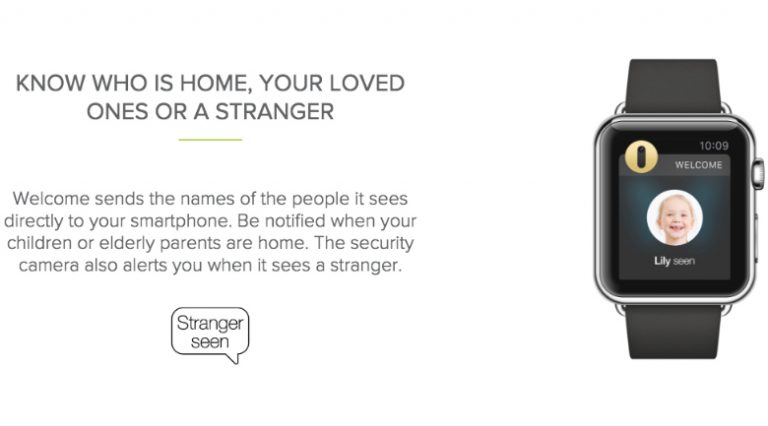
But what exists leaves much to be desired. What if you need something to monitor your family and make sure they arrive home safely and remain where they are supposed to be? What if you’re looking for your smartwatch to tell you which kid is home, or that a stranger has been detected by cam?

What is Netatmo Welcome? It’s awesome, that’s what

This is where the Netatmo Welcome comes in. Netatmo Welcome is a completely self-contained, home security camera featuring facial recognition and no cloud connectivity needed. Plus, there are no subscription fees.

It’s sleek design and small size makes it easy to hide in plain sight. It almost looks like a speaker, honestly.

One thing to keep in mind – while it is self-contained, it does need a few things to be fully functional: constant power from a micro USB cable, your smartphone (to sync coverage), and a MicroSD card to store footage. Definitely nothing major, but the need for constant power may change where and how you place the device.

Ease of setup

Welcome is best aimed at a front door, or other main entry point into your home. Monitoring apps are available for both Android and iOS phones.

Once you’re ready to set it up, you’ll turn the Welcome upside down and enter your Wi-Fi information into the app. Once you’ve done this, the app will start to create a timeline of events, triggered by movement, and whether or not it has “seen” a face it recognizes.

Any time a “recognition” happens, you’ll receive a notification on your phone. This notification will either contain captured footage, or direct you to a live feed of the Welcome. There is a small delay, most users say a few seconds, from the time the activity is recorded to the time you receive a notification on your phone.

Our favorite part: Facial recognition

The main selling point of the Netatmo Welcome is its ability to memorize and recognize up to 16 different faces.

How does it do this? The learning process is a secret, but Netatmo states that it can take the device five times of seeing someone’s face before it can consistently recognize and identify them as a member of your family and not a stranger.

This can be a bit annoying in the beginning as you receive an alert when an “unknown” person is in your home. During the learning process this “unknown” may be your child. Once Welcome has learned the faces of your family, however, you won’t be plagued by those notifications.

One caveat with recognition: if the Welcome is placed in a dimly lit (or overly bright) room, it will have a hard time distinguishing faces, or so I’ve heard.

As it learns, it gets smarter

Obviously you need a bit of patience in the beginning with Welcome, but I find this to be true with a great deal of electronic devices, especially those that fit a particular niche. For example, if you have a busy home, with children, babysitters, and lots of coming and going,

Netatmo Welcome will offer you peace of mind, knowing everything is okay and everyone is where they are supposed to be. This is also useful if you want to keep a watchful eye on parents or caregivers without robbing them of their sense of independence.

A few drawbacks to keep in mind

While I have not tested the Netatmo Welcome myself, several other users have said it does come with a few drawbacks. For example, the Wi-Fi range of the device seems to be limited. The can make it difficult to place the device where it would be most useful. Also, there is no battery back-up built in to Welcome, so if you lose power, or an unscrupulous thief cuts the power to your home, the device will be of no use. Perhaps in a future version.

As previously stated, the facial recognition component of Welcome is said by some to be spotty, or take a while to fully recognize a member of your family. This could lead to unnecessary notifications and alarm, but there is a learning curve with almost all new technological devices. Also, as all recorded video is stored on the MicroSD card, if someone happens to break in and steal the Welcome, all recorded and stored video will go with it.

Even though Welcome has a few potential drawbacks, it has several clear advantages as well: Its small size, facial recognition, and ability to hide in plain sight are excellent reasons to give Welcome a trial run.

#NetatmoWelcome

There’s a new Twitter growth hack tool on the block

We can all use a little Twitter help

Trick question: How effective is your message if you are delivering it to an empty room?

Answer: Not effective at all, which is why getting a community of people to listen to you is important. Whether you provide a service or sell a product, neither can be done without a community of people that are actually interested.

bar
Social media platforms like Twitter, Instagram, and Facebook are excellent ways to build that community and spread that message, but what if you have no followers? It’s just like talking to an empty room, which is what Hashbot, an automated growth hacking tool for Twitter aims to resolve.

No people, no sales

Hashbot realizes that an empty room is no good, and offers an easy three-step process to combat that using the #Hashtag. After giving Hashbot your Twitter info, you will first have to set a target using a Hashtag that your prospects will potentially use, i.e. #RealEstate targets those looking for homes, and #Advertising for those needing marketing.

Next, set the customized automated message they will receive on behalf of your business, in response to the targeted hashtag; if it’s someone that used the #RealEstate hashtag, you’d say something like “@User need a home? I know just the right Realtor.” This will grab the attention of users, and potentially provoke them to respond; overall growing your following and increasing feedback. At least that’s the Hashbot robot’s theory.

Don’t turn your back on Twitter quite yet

Hashbot is a service solely for Twitter, which isn’t the most popular social media platform as of late, but does still boast a large following.

If you are just starting a business or trying to grow your following, going without Twitter shouldn’t be an option just yet. Even if it’s popularity is dwindling, Twitter has millions of active users, which are therefore prospects that could be crucial for your business’ growth.

Hashbot is great for those without an existing Twitter account, or those interested in revamping, or growing current followers. It is also free in beta for now, which makes this a zero risk option for a potentially high rewarding situation.

#Hashbot

Stop with “female empowerment” already (editorial)

When feel good marketing doesn’t feel good anymore

Women’s issues have been a popular marketing tactic, with overall femvertising on the rise as a way to attract female consumers. With Mother’s Day having come and gone, the tear-inducing, heartstring tugging ads targeted specifically at motherhood have been especially popular (and effective on this mother of two), because we all know if she’s not crying, she’s not buying. Beyond tears, there’s one other area of marketing that seem to be targeted at women – girl power and empowerment.

bar

But… empowerment is positive, right?

Empowerment, on the surface, doesn’t seem like a horrible concept. Who can be upset with the idea of building someone up, encouraging them to go out and achieve their dreams? Nothing… except the fact they’re only targeting women.

Dove’s body positivity, Brawny’s #StrengthHasNoGender, Aerie’s #AerieReal, and Always’ #LikeaGirl are just a few examples of female empowerment campaigns that are seeking to make a profit off of real issues.

Where are all the male empowerment ads?

Advertising agencies aren’t pouring their time and money into ads that seek to build men up or encourage them to reach for the stars. That’s because the ones doing the empowering are already empowered.

Instead women are told to “lean in” (when they should instead be pushing for equal pay) and serious issues of inequality, body image, rape, and poverty are given hashtags, while pointing you to the paper towel aisle.

Stop pretending this is changing anything

I’m not anti-feminism; I’m actually quite the opposite (and you probably are, too). I’m supportive of diverse advertising, targeting differing audiences. I’m supportive of some ads being aligned with male or female issues. I’m not ok with marketing tactics that spew the message of empowerment but are essentially exacerbating a larger issue.

Maybe instead of spending millions of dollars telling women they’re beautiful despite their body shape, hair type, or skin color, while pushing their bar of soap, companies could work towards combatting deceptive advertising tactics influencing body image. Instead of making an ad showing a successful businesswoman, who is also a mother, help lobby for paid parental leave and better family benefits.

All about the bottom line

In the end, it’s all about the bottom line. Despite the marketing tactics, companies are using advertising dollars to make money. Stop trying to pretend you’re working toward a common good or social change, when women’s issues and inequalities are helping your profits.

#Empowervertising

BetterCompany anonymously connects you with industry peers; we’re hooked

Making social media better

Social media has filled a place in our world to connect people, but it’s more for friends and family or businesses and consumers. Talking about your workday can be difficult on Facebook or Twitter, but even entrepreneurs and small business owners need a positive and supportive community where they can find more information or get another perspective. Fortunately, a startup out of San Francisco has recognized this and developed an app to help the business world.

bar
The company is called BetterCompany. In just two years, it’s raised $7.7 million from investors to provide “an entirely new type of dialogue.”

How does it work?

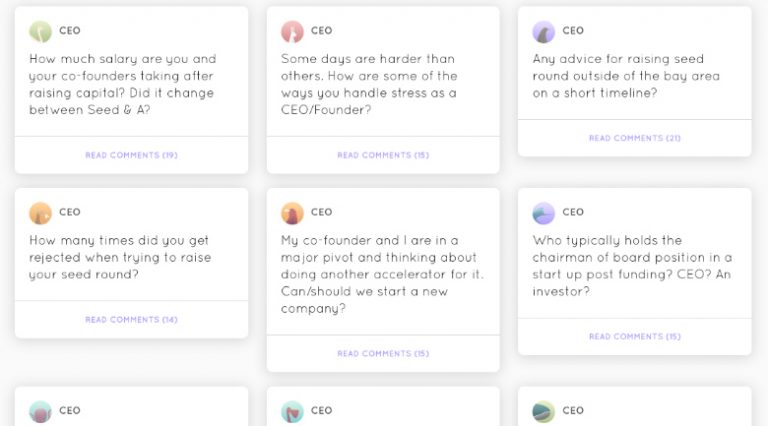
BetterCompany is available in both Google Play and the App Store. When you register, you are actually identified as your title. You can choose what fits you, Business Owner, Founder, CEO, or Graphic Designer, or many more. You are given a unique icon as an identifier, many of which are animals. The anonymity is one of the key ingredients that makes BetterCompany different.

You can ask questions about situations and don’t have to worry about being identified. Once you’re registered, it looks a lot like a Facebook feed, but the posts are currently limited to text. You can choose which communities you want to interact with on your feed, based on job titles. There are no advertisements, videos, or photos to weed through.

The team at BetterCo keep the posts business-related and positive. They are committed to their code of conduct, which includes violations for privacy disclosure, harassment, or unrelated content. Incomplete posts in which there is no way you can give constructive feedback are deleted. This is one of the questions placed on the app: “Does anyone ever feel heavy stress over having to make the big decisions? If so, what’s your process for managing and getting to a decision?” Every one of the responses has been helpful and positive.

My experience with the BetterCo app

I downloaded the BetterCo app about two months ago. It actually took me a while to start using it, but I am hooked. It’s helped me gain confidence in responding to others. I have knowledge, but sometimes I feel like I don’t have the real-world experience to say anything. Because I’m anonymous, I can give my two cents with less anxiety.

We recently had a discussion about using freelancers or employees. Most of the advice was to use employees, but I was able to share my experience with a company that has a great business model for freelancers. Never shared the name of the company, but I was able to say that it can work. Made me feel good.

If you’re looking for a place to gain information and give out your experience, check it out. I’ve learned so much about dealing with others in the business world in a short time, and I’ve been able to direct people to information I have. I think you’ll find it a positive place.

#BetterCo

As retailers bet on the web, H&M focuses on opening more stores

Betting big on the future

Businesses worldwide are investing more and more in ecommerce – but that doesn’t mean that brick and mortar stores are a thing of the past. In fact, some companies are putting just as much or more investment and energy into growing their store locations than their online shops.

bar
Take, for example, Swedish clothing retailer Hennes & Mauritz, better known as H&M. H&M’s Chief Executive Officer Karl-Johan Persson declared that H&M plans to double its number of stores in an attempt to catch up with its rival, Inditex.

Persson reports that while they are “not stressed to reach a certain size or to be number one,” they are still focused on the “expansion ahead,” and will attempt to open more locations until they reach somewhere between 7,000 and 8,000 stores. Persson hopes to reach this goal within four to eight years by increasing the store count by 10 to 15 percent every year. Currently H&M has about 2,000 stores, and will soon open new locations in New Delhi.

This expansion contrasts competitors

This expansion of brick and mortar locations stands in contrast to other fashion brands, including Inditex, who plans to slow down store expansion while investing more and more online.

Meanwhile, online retailers like Amazon.com are revving up the competition. Amazon just released a catalogue of private-label fashion brands. Persson says that while he is “a huge admirer of Amazon,” he still thinks that “H&M and many other companies will bring something different into the fashion world.”

Declining earnings mean a new strategy is in order

H&M’s last quarterly earnings report saw the largest decline in five years, possibly as a result of a strong U.S. dollar inflating the cost of garments produced in Asian countries. Despite these losses, H&M’s earnings were still higher than analysts had predicted.

Just because H&M is investing in stores doesn’t mean they are ignoring their online customers. Persson says the company is continue to invest online wherever they have “good profitability.” The company plans to begin selling clothing online in eleven new countries next year, including Ireland and Japan.

H&M shows us another great example of a company that is following its own path, despite industry trends. Don’t be tempted to copy your competitors – stick to what is working for your brand.

#HMoffline

Amazon cleans house by suing fake review sites

The anti-troll

We wrote about Amazon’s mission to stamp out fake reviews and the first lawsuit they filed against these companies here. Now, it seems, Amazon is launching a full scale campaign aimed at stamping out fake review sites. Amazon has sued several operators of websites that sell fake reviews of products for posting on the Amazon site. Amazon also holds hope that they will be able to determine who has been buying these fake reviews as well.

bar

Filing suit against fake review providers

The latest lawsuit was filed in King County Superior Court and took aim at Chris Embry, operator of a New York-based company fittingly called, amazonverifiedreviews.com. Amazon stated Embry’s site promises to help sellers promote their products by offering falsified “verified” reviews. Typically, a “verified” review is only supposed to appear if the person offered the review has bought the product from Amazon. By offering falsified “verified” reviews, products are not being accurately represented. Embry’s site is offline, now, but…

Amazon has named a second site in their most recent suit: Jane John-Nwanko. John-Nwanko is the creator of paidbookreviews.org, a site that offers to purchase an author’s book and give a positive review on Amazon.  The Seattle Times also stated that Amazon filed suit against five other people who couldn’t be identified. Three of the sites whose owners couldn’t be identified were: amazonreviewsstar.com, buyamazonreviews.info, and reviewconnections.com.

Why take aim at fake reviews?

Amazon has been rooting out fake reviews for a while now. While they state that only a small portion of reviews are fake; a large portion of their success was founded on the premise of honest reviews. Amazon has filed claim against more than 1,000 people since the beginning of last year for manipulating the review system.

Amazon is seeking damages, but they are also seeking information from the accused in an effort to identify parties that paid for the reviews.  Amazon stated, “to help eliminate the incentives to engage in reviews abuse, we will continue to pursue legal action against the root cause of the reviews abuse — the sellers and manufacturers who create the demand for fraudulent services — as well as the ecosystem of individuals and organizations who supply fraudulent reviews in exchange for compensation.”

What this means for the future

Whether or not Amazon will be successful in uncovering who is buying and providing reviews remains to be seen; but one thing is clear: Amazon is taking aim at fake reviews and seems to be bound and determined to pursue this until they’ve cleaned house. What do you think? Will this change the quality of reviews, or will it merely change the way in which fake reviews are contracted?

Will Amazon’s quest to clean house influence other companies to follow suit? Possibly; I think if nothing else, this will give consumers pause when reading an online review.

Previously, a consumer read a review and if it was “verified,” I think by and large people believed it was legitimate. Now consumers will be wondering whether or not they can trust the reviews and I think this is why Amazon and other large retailers are taking aim at fake reviews before the doubt runs too deep.

#FakeReviews

If you hate your job, here’s how you can shine anyway

W-O-R-K

Though it may not always be the case, for some there is a reason why they say, “work is a four letter word.” Many people walk into their workplaces each morning dreading the day that lies ahead.

bar
There are many factors that may cause this: poor boss or coworkers, underutilization, burnout, underpaid, etc. And, if you have no other alternative in the works, it gets harder and harder to put on a positive face everyday.

But, as we all know, our jobs are a large part of our lives and they provide us a means to live. Finding a solid work-life balance, even in jobs you may detest, is crucial in the long run.

Five ways to cope

Kat Boogaard of The Muse came up with a list of five ways to combat this hate. These include: assess your situation, have the tough conversations, switch your perspective, vent about it, and do your best work.

This list is a great jumping-off point. Like any other problem in life, if you start to feel disdain toward your job, it is important to get to the root of the problem in order to begin the alleviation process.

Once this is determined, it may be necessary to speak to your employer about options to improve the situation. This may be in the form of a promotion, raise, or less/more work. Without confronting the situation with the person in power of changing it, you’re left with complacency. (And, word to the wise, complacency is generally not a fixer.)

Get it off your chest

Let’s skip ahead to venting. This, again like any other life issue, can be a solution in and of itself. Perhaps there isn’t a true problem you have with your job, but you just need to get frustrations off of your chest.

However, there could be a deeper problem you’re not seeing that venting will shine a light on. This will then re-route you to taking the steps to fix it: establish a cause and seek options from an employer.

Happiness comes from within

I skipped over ‘switch your perspective’ because I feel that can be coupled with ‘do your best work’. These two have to come from within.

It is unlikely that situations such as these can be mended without an attitude change. If you go into work day after day with a downtrodden attitude, you will never see a silver lining.

“You can do it!”

These two steps can be the most difficult to implement because, again, they are internal. Something as simple as hanging a motivational quote in your cubicle or office can help to brighten your mood.

Once you feel better with your perspective, you need to focus on the task at hand: your job. By ensuring that you’re giving 110%, you will feel better about yourself and your performance. It is likely that, in turn, you may look at your job more positively.

Good ‘tude = good mood

While workplace situations are circumstantial and what works for some may not work for others, it is important to remember what an impact a positive attitude has on your wellbeing. Our jobs may not be a definition of who we are, but they are an important aspect of our lives.

Hate toward your job can bleed into other portions of your life. Therefore being proactive in creating the best workplace situation will help you in the long run.

#StopHatingYourJob

The first computer programmer was a female in the 1800s (yep)

Representing for the ladies

The statistics about women in coding are dismal. Last year, a Huffington Post headline read, “The stats on women in tech are actually getting worse.” An infographic from the National Center for Women & Information Technology asks, “Technology is everywhere, where are the girls?” The computer science industry has one of the lowest representation of females.

In some ways, this isn’t surprising. For years, girls have not been directed toward the sciences and mathematics. Interestingly, one of the pioneers in computers is a woman whose father was a famous poet.

bar

The Enchantress of Number

Ada Lovelace, nee Byron, was the only legitimate child of Lord Byron and his wife, Annabella. Out of bitterness, Annabella encouraged her daughter’s interest in mathematics and logic, but she was really not much of mother. Annabella hoped that Ada would not develop the insanity of her father. Ada was a very sickly child, developing a paralysis after a bout with measles.

Ada furthered her education under such scientists of her time, such as Michael Faraday and Sir David Brewster. She also knew Charles Dickens. But it was Charles Babbage, the father of computers, who really gave Ada her start in technology. Babbage is the father of computers. In 1837, he described the Analytical Machine, but he could never get it built. He did have a prototype for the difference machine, the precursor to the Analytical Machine. When Ada demonstrated an interest in this machine, he encouraged it.

Babbage called Ada “The Enchantress of Number” after she translated notes about the Machine and how it worked. Based on this work, she is considered the first computer programmer. Sadly, Ada died all too early in her life, not from insanity as her mother had feared, but from uterine cancer. She was just 36. Imagine what Ada Lovelace could do with today’s technology.

Her legacy

England celebrates Ada Lovelace Day in October each year. More importantly, in her memory, the British Computer Society has begun to promote more awareness of women in computers and technology. One of the computer languages created for the United States Department of Defense was named “Ada” in her honor. Her contribution to science and math has not been ignored. She is a heroine who went beyond her position in her point in time. If you need inspiration to enter the STEM field, look at her life.

#AdaLovelace

Online haters: What do they really want?

Some people just want to be mad

In the good ‘ol days (and where technology is concerned with how fast it changes those “good ‘ol days” could pretty much be last week) if you had a customer service complaint you could email the appropriate department and maybe you’d get a stock answer saying “I’m sorry.” Chances are nothing would ever really change but at least you’d walk away with the feeling that someone fake-apologized to you. The turn-around time for that type of complaint/response could be anywhere from 24-48 hours or more.

bar
A superb Marketing Profs article by author Jay Baer recently tackled this issue head on as he explains that “Social media is facilitating complaints and breeding onstage haters.” The reality is that the issues that are communicated in social media, review websites, discussion boards, and online forums are sometimes more frivolous than those in telephone or email interactions. Especially in social media, consumers often post quick missives without much depth.

On stage and off stage

Baer has created two complaint archetypes: On Stage haters that seem to want the world as their platform and complain about darn near everything via Twitter, Facebook or similar platforms without much regard for resolution and Off Stage haters who have something significant to say and want to hear back from a company’s HR department and are content to communicate by email or a phone call.

It’s hard to argue with that type of logic. With social media if you have an issue you can vent in real time and keep venting. And why stop there: make your complaint viral and send it to all your friends and really, REALLY drive the point home that you feel vexed because your Happy Meal was missing a balloon or whatever. But what is the end game? To express your frustrations and find resolution, or use social media for a platform that enables the entire world to know that you are upset?

Haters gonna hate

Across every social media platform, including Facebook, Twitter, Pinterest, Instagram, Snapchat, Vine, WhatsApp, and WeChat, the heavier the usage, the more likely the consumer is to complain about businesses. The Marketing Profs article has come up with some significant findings.

I don’t want to get on a soapbox here but social media – for all its wonderment – is breeding a new generation of onstage haters. It has spilled over into society and doesn’t seem to be skidding to a halt any time soon.

Can’t complain about success

How a business deals with public hate forums is certainly one of the major challenges of 2016 and beyond. Tactile professionalism and doing the best job possible doesn’t leave much wiggle-room for someone with an axe to grind. They simply find another subject to whine about.

#OnlineHaters

Sales success begins and ends with engagement

We all know we’re supposed to “close,” but how?

We’ve all been to a conference, a team meeting, read an article, or attended a webinar that told us that sales is all about engagement. But if you’re selling jewelry and have expanded to six distribution centers, for example, you as a founder can’t exactly tweet every person that ever buys something or call them and talk about their hobbies and families.

So how exactly do you “engage,” and what does that mean for non-conslutants that rely on someone hitting a “buy” button? Kurt Bilafer, Global VP of Sales & Success at WePay outlines below in his own words, exactly how sales success begins and ends with engagement. We’re featuring his thoughts because as a 20-year sales veteran, he has experience as the Global VP of Sales at SAP, was SAP North America’s VP, and spent a year with PricewaterhouseCoopers to rebuild their SAP National Practice – he bleeds sales wisdom, you guys.

My metric for success: Engagement

As a sales leader, my professional life is filled with quotas, metrics and dashboards. But if I had to pick just one thing I’m optimizing for, it would be engagement. Why? Because I’ve learned that engagement is the leading indicator for success with whatever else you’re optimizing to achieve.

Early in my career, I was always optimizing for percentage of quota attained, which is a typical sales metric and usually tied to your compensation. Although I wasn’t insightful enough at the time to recognize it, my level of engagement with a prospect was usually a good indicator of the likelihood of making a sale. If a prospect was asking questions, working through their process, showing increased understanding and asking more questions, those were all signs of engagement. It took me a while to see the value of that.

Optimizing to quota

Optimizing to quota worked fine when I was an individual contributor, but as I moved into management and got further removed from the nuts and bolts of the sales cycle and engaging with customers every day, I had to figure out a way to influence the members of my team to make their number. So, I focused on optimizing for influence, working one on one with people to get them up and running and performing at a high level and hitting their quotas.

That worked fine when I was managing a team reporting directly to me.   As I evolved into more startup-fixit-turnaround specialist I had to shift gears again. Now I was working in matrixed organizations with distributed teams of hundreds of people who didn’t report directly to me. I had to evangelize new processes and programs, organizational changes and strategy shifts. I had to reach a lot of people I’d never be able to meet personally, let alone learn all of their names. To lead effectively, I had to influence the people who would influence them.

When you’re bringing change to an organization, everyone has to work through his or her process. With big, distributed teams, you don’t get to see people and work with them as often. It could take six to nine months to see whether my influence was having an impact. I needed to know much sooner than that whether my message was getting through, and whether people were buying in and working through their process. That’s when I started focusing on engagement. I increased my presence on social media and started blogging as a way to amplify myself and stay engaged even when I couldn’t be there physically. This helped me quickly capture feedback, learn, evolve and improve my message and approach.

Measuring engagement

Engagement can be difficult to measure, but there are ways to do it. One of the ways I’ve done it is by surveying my team. I ask, “On a scale from 1 to 10, how well do you understand the objectives?” Then, “On a scale from 1 to 10, do you understand how you can contribute to these objectives?” and then, “On a scale from 1 to 10, do you think these objectives are achievable objectives?”

Engagement scorecards such as these are a key component of my strategy management efforts, helping me determine where to spend more time reinforcing messages or giving examples.

I also look to see how many people have actually embraced whatever it is we’re doing and are executing on it independently. For example, if I’m implementing a new sales process, one of the ways I measure engagement is how many people are actually leveraging the new sales process.

I do that by doing a deep dive analysis on individual deals to determine if people are actually following all the steps, or they’re just doing it the old way and putting lipstick on a pig to position it differently.

I might also look at how many opportunities the team had to present, what the audience turnout was, the kind of the press or analyst coverage we were getting, and activity on social media.

The loudest actions

Those are all qualitative assessments. But to me, actions speak louder.

In sales there’s an expression, “coin operated salespeople.” It speaks to the fact that the most sales people get compensated on is achieving their revenue quota, and as long as the “new thing” is tied to their revenue quota, they’ll embrace whatever the message of the day is. But even quota attainment can hide lack of engagement, especially in a larger organization, and eventually lack of engagement becomes a problem.

So, I look for signs of engagement every day. Are people participating in meetings and contributing and asking questions? Are they changing behaviors? Am I hearing success stories?

Are they reaching out to me directly to ask clarifying questions, or asking for help on deals?

Beyond that, I know I have engagement when I have people asking to update the sales presentations, taking time to write a blog post, or start being more active on social media. I know I really have it when I hear people evangelizing sharing the message themselves, in their own words.

It’s very rewarding to see that growth, and to know I’m impacting someone’s trajectory. And I know that they’re going to keep executing on the strategy after I leave the room because they’ve worked through their process and made the strategy their own. That’s the level of engagement you need for your team members to be successful, and for you to be successful as a leader.

#Engagement

Spain nixes siestas, we can’t blame our naps on Spaniards anymore

Break time is over, guys

Having spent most of my life in the Mediterranean and elsewhere I can tell you that the whole “siesta” mentality has never appealed to me. In Italy for example, I’d try to run off and pay a bill during my lunch hour only to find everything closed because of the midday break. In Spain, the siesta concept as we know it really evaporated a long time ago. Don’t kid yourself: The midday lunch break still exists but folks don’t really have the time to go home for several hours anymore.

bar
Not only are work hours becoming more and more aligned with mainstream Europe, but workers are travelling farther just to get to work and a typical day still ends late no matter how you cut it. That said; there’s a difference between getting out of the office at 6pm and getting home by 8pm as opposed to getting out at 8pm and arriving home at 9pm or 10:00. Spain’s prime minister recently proposed doing away with this prolonged midday lunch-and-snooze block in an effort to send workers home at 6pm instead of 8pm.

Doing it for a better work-life balance

When you’re on the outside looking in, this must all seem quite amusing. In the United States the very thought of work grinding to a halt for several hours a day would never happen: There’s too much at stake in terms of the bottom line and just getting things done in general. But slowly many of the countries in the European Union are also taking note.

According to the Harvard Business Review, “Managerial thinking around the world has undergone a subtle but important shift in recent years about work-life issues. It is now increasingly recognized that unless organizations provide support and flexibility, employees find it difficult to fulfill their family and work responsibilities. This line of thinking represents a significant shift, from viewing work-life issues as private concerns to recognizing that managers play a critical role.”

The rest of Europe watches for results

In fact, continues HBR, a soon-to-published study in Leadership & Organizational Development Journal will look at the responses of some 2,388 middle managers and their feelings about work-family balance. The fact is more and more managers are discovering that there’s more to gain than lose by empowering employees with some control over their work and family lives.

So the Spanish premier’s proposal to end the working day by 6pm is not about leaving the siesta behind but more about ending the work day at a reasonable hour and giving employees more control over when they go home.

Sounds like a win-win situation and despite the cultural melodrama, much of Europe really IS watching how this plays out.

#AdiosSiestas

Responsiblr seeks to add “radical transparency” to hiring, bridge the pay gap

Conscious and unconscious bias

If you are a woman and/or a person of color, you’ve probably already experience job discrimination. Let’s face it – it’s harder for women and members of racial minorities to get hired, especially in the tech industry. When they do get hired, they are often paid less for the same work as their white male counterparts. Despite much progress toward racial and gender justice, there are still unconscious biases that effect hiring and salaries.

While these disparities obviously harm women and people of color, they also deprive industries of untapped talent.

bar

Radically transparent

Responsiblr is a new hiring platform that hopes to level the playing field and correct the pay gap by providing a “radically transparent” hiring process. On Responsiblr, job seekers’ resumes are anonymized so that employers can’t see their name or any indicators of their age, gender, or race. The result is that candidates will be judged on their merits alone, free from biases, intentional or unintentional. This will lead to a diversification of the workplace in the tech industry.

Because their “mission is to make a social impact,” Responsiblr is offering competitive, affordable fixed rates and 0% commission to employers, so that they will have “no excuse not to use us.” And the site will, naturally, be free for job seekers.

Competitive job hunting intelligence

When you submit a resume on Responsiblr, it is instantly anonymized, including hiding the fact that you posted a resume from your current employer. Next, your resume is pushed to all of the employers in the city. Then Responsiblr circles back with “real-time, contextual salary data” and “competitive job hunting intelligence” to help you with the job search process. With salary data in hand, you will know whether or not a potential employer is offering you a fair deal.

Eliminating racial and gender bias in employment is a long road, but Responsiblr offers the beginnings of a solution to “make sourcing completely bias-free so that more people can get their foot in the door.”

#Responsiblr

Sink your career by ignoring LinkedIn

It’s 87 percent of your job search

According to The Jobvite Recruiter Nation, only 4 percent of recruiters don’t use social media in the recruiting process. Interestingly, Facebook is not the number one site that is searched. LinkedIn has that distinction, at 87 percent of recruiters looking a recruit’s profile when hiring. Don’t ignore your LinkedIn account, especially if you’re trying to get a job.

bar

In a recent interview on Bloomberg Jeffrey Weiner, CEO of LinkedIn, said that LinkedIn is increasing its focus on active job seekers. To do that, they’ve released an app specifically targeting job seekers. LinkedIn is changing its strategy to meet the demands of professionals.

What if you don’t need a job?

You might be perfectly happy in your position, but who’s to say you’ll still be in that position next week, next month, or next year? There are a lot of reasons you might be suddenly forced to change directions in your career. LinkedIn is the place to maintain professional relationships and keep your finger on the pulse of the industry. You may not need a job, but when you’re ready to look for one, having a presence on LinkedIn could be what gets you noticed.

Is LinkedIn passé?

If Facebook is the football star of social media, with Twitter as its prom queen girlfriend, then LinkedIn is the science nerd without a homecoming date. If you hate the desktop platform of LinkedIn, you’re not alone. It’s clunky and cluttered, and you just kind of wonder who in the heck designed it. According to Weiner, they have overhauled the desktop platform, but I’m not seeing it yet. I have seen some posts from friends about new things that LinkedIn is trying, and it does seem promising.

Although, I will say that the smartphone app is much better than it used to be. Whether you use an Android or iOS smartphone, the LinkedIn app has been updated to be more user friendly and efficient. Try it out. It’s much more streamlined than the desktop platform.

Give it another shot

We at The American Genius have been telling you that LinkedIn is not on its way out for quite some time. It’s added video content, and it’s a great place for news junkies. Don’t be left behind in the main professional network. Make connections, but be choosy. You don’t have to accept every connection that contacts you. (That works both ways, by the way.) If you do reach out to someone, send a personal note about why you want to connect. Share your expertise on LinkedIn. You may find it better than you remember.

#LinkedIn

How much is working through your lunch costing you?

First in, last to leave

Most of us have worked through lunch. A lot more of us not only skip lunch but also manage to come in early and leave the office late. I did just that very thing for so many years that it became the new normal for me. The only thing that made it palatable for me was that most of my co-workers were doing the same thing (don’t ask, it’s a military thing).

bar

At any rate, I often wondered what do all those extra hours translated to: Job security? A pay raise? An extra day off every now and then? The tangible answer is none-of-the-above but my skill-set increased and I’m not sure you can really put a dollar amount on that. Or maybe you can, which is why the TwoCents app is so intriguing and so important: you can see what all that extra time is costing you. I just ran some numbers (you can do it here as well) and apparently, I saved the government from having to hire another employee.

Too much of a good thing

This is good information to have. Granted this is geared for English pounds instead of US dollars but you can take the total and easily convert it. Now whether you’re able to leverage those extra hours into a raise or a promotion or just have some extra numbers to place on your resume somewhere is for fate to decide In the meantime there is some scientific data to support the theory that unless you honestly enjoy coming in early and leaving late you may be doing yourself more harm than good.

It’s recently been documented that after working more than 8-9 hours a day your productivity drops.

So those 12 hour days may look impressive but you’re probably not accomplishing a heck of lot more than the person who is working a normal day.

Denmark rocks

Here’s an even better analogy: Denmark is regularly singled out as one of the world’s happiest countries. And why not? Their work culture is as far apart from that of the United States (and many others) as you can get. A great article in Sane underscores the Danish work ethic:

  • Most Danes arrive at work around 8 am and leave the office by 4 pm (often 3 pm on Friday). Thus the average Dane works 35-37 hours a week.
  • Staying late or working overtime is frowned upon
  • Danes get five to six weeks annual leave a year and up to a year of paid maternity or paternity leave
  • Denmark focuses on the life-long education of its workers.
  • The Danes also believe that all work is valuable, so the roles of brain surgeon and baker are viewed as equally important.

That settles it for me: I’m grabbing the next flight for Denmark! That said, I’m pretty sure there aren’t many Danes who give a flip about the TwoCents app. For the rest of us, it may be worth plugging in the numbers to see how much we really work and who is benefitting from our efforts.

#TwoCents

Boxer: A better email inbox

Avoid avoiding your email

My email notifications on my phone are almost always pushing 100, because simply checking them and organizing them isn’t as simple as I’d like it to be. With the standard email app, it’s hard to differentiate between which mailbox I’m looking at, where I need to go to flag it, and where I can go to find a saved message.

bar
So, I’d rather just leave them unread and get to them once my patience and sanity can tolerate it. I was a proud, habitual email avoider until I got the chance to use Boxer and saw how they can eliminate the headache from mobile emailing.

Making email on the fly much easier

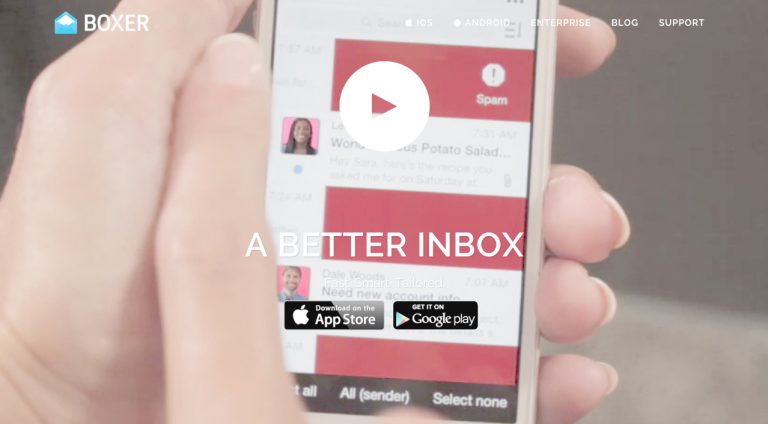
Integrated with mobile email, calendar, and contacts, Boxer is compatible with all iOS and Android devices and claims to be the most complete productivity solution mobile has ever seen.

Email: Email with Boxer is faster and smarter than the standard app that comes on the phone. There’s an option to bulk edit, add smart labels, and quickly respond without having to go one by one to each message. Users can literally control every aspect of your inbox, to make it seamless and quicker with your everyday use.

Calendar: Going from email to calendar to make an appointment isn’t the hardest thing to do, but takes up unnecessary time and may cause confusion. Boxer eliminates the entire need to go back and forth, and has a calendar that can be used without having to leave the app. So the next time someone asks if you’re free, you can answer quickly instead of trying to find the right calendar and day elsewhere.

Contacts: Like the “favorite” capability on iPhones, Boxer organizes your most popular and recent contacts so that they are easily accessible and just one click away when you need to contact them. No more scrolling through people you never talk to just to find the person you were talking to a day ago, as they will appear at the top.

Ditch your current app

If easier emails, smarter calendars, and quicker connections aren’t reason enough to ditch your current mail management system. Take into account that it is also compatible with a ton of other services including Facebook, Salesforce, and Evernote.

Just like it claims, Boxer provides a better way to take advantage of mobile productivity, and can be noticed within in seconds of downloading. But don’t just take my word for it, try it free for yourself.

#BoxerApp

Kickpipe is for anyone that sells anything to anybody

A Real Kick in the Pants: Kickpipe

When it comes to Customer Relationship Management (CRM) tools, anything that streamlines my workflow means I can allocate the time saved for other things. A new kid on the block, Kickpipe, is shaking things up with an all-in-one system for managing client interactions, dealing with future and current customers, optimizing and systematizing relationships.

bar

How Kickpipe works for your business

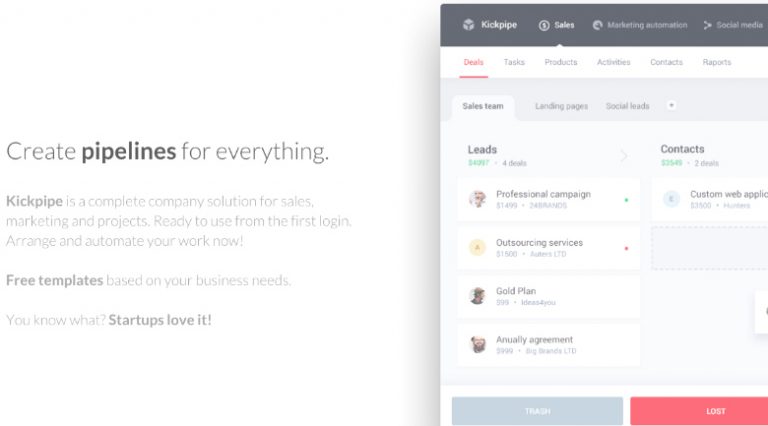
Kickpipe is a complete company solution for sales, marketing and projects. It’s ready to use from the first login. I know because I tried it. Kickpipe offers users a varied pallet. The work templates are broken down into categories such as CRM, Social CRM, Marketing Automation, Projects, Forms and Affiliate Marketing.

It allows me to arrange and automate my work. And believe me, if there is something in my life that needs arranging and automating, it’s my work flow. Just ask my wife. But I digress.

It’s easy to see that Kickpipe has the best interests in mind for anyone trying to get a Start-up off the ground and up and running with as few problems as possible. I am particularly impressed with the free templates that I can access based on my current (and sure to be evolving) business needs.

Less is more

The thing that comes to mind is how efficient Kickpipe is at keeping me organized. Pipeline is the easiest and most effective way to manage tasks. For example, you can organize all your social media platforms (Facebook, Twitter, Google+ and LinkedIn) in one place.

You can schedule posts, publish auto updates, increase engagement, discuss and generate leads and sell from social media. I can effectively manage my work and the work of other employees. Not to mention keeping my documents and files in order.

Kickpipe’s story

Thanks to the internet, the world has become much more linear. So I am not that surprised that Kickpipe originates out of Warsaw, Poland and was co-financed by the European Union, thus making Kickpipe’s appeal truly global in scope. The EU helps small businesses obtain EU funding through grants, loans and guarantees. Grants provide direct support, while other funding is available through programs managed nationally. Funding is managed according to strict rules to ensure there is tight control over how funds are used and that the money is spent in a transparent, accountable manner.

The most successful businesses in the world all began somewhere. Begin yours with Kickpipe. It’s that simple.

#Kickpipe

What Chrissy Teigen critics are really saying about professional women

They don’t want us to have it all

Women today have it rough. Case in point – Chrissy Teigen upset her social media followers when she went out on a date, with her husband. What was her crime? She left her newborn little girl at home. The comments on her Twitter feed ranged from simple concern to downright crazy comments that should not be repeated. To Teigen’s credit, she doesn’t care. She acknowledges the passive-aggressive comments, and quickly moves on.

bar

She’s not alone

A few days ago, a Texas mom took heat from critics for letting her 7-year old daughter ride a motorcycle. She was called names and told she and her boyfriend should be in jail. It wasn’t like the young girl wasn’t wearing a helmet and safety gear; she was. In Texas, the law says that a motorcycle rider must be older than five years old.

What’s going on?

Teigen certainly handled her followers with more grace than they deserve. So did the Texas mom, in my opinion. Neither mom asked for any opinions, but people were more than happy to dish them out. Some were quite rude.

Teigen’s critics not only embarrassed themselves, but insulted parents everywhere who don’t have a choice about spending 24 hours a day with their baby.

It’s great if you have the capability to do so, but lots of parents, moms and dads, have to return to work before they’re ready.

This doesn’t even touch on maintaining a relationship with your spouse when you have a baby. One of the best things parents can do for their kids is to have adult time with each other. Grandmas, aunts, uncles, and friends are perfectly capable of taking care of even a newborn for a couple of hours.

Get a grip, folks

When did it become okay to be so critical of others that they’re called names for doing nothing more than simply living life? What are we saying to moms or dads who can’t take the time to stay home with their children 24/7 when Teigen is criticized for going out to dinner? What happened to feminism being the fight for the ability to make life choices?

As a culture, we need to stop insulting parents for making choices that we ourselves wouldn’t make. There’s no excuse for rudeness and name-calling.

#LetUsHaveItAll

This career has been dubbed the “sexiest job of the 21st century”

Bringing sexy back

Move out of the way librarians, data scientist has recently been named the most popular job of 2016 and the “sexiest job of the 21st century.” But — what is a data scientist, what do they do, and is this something you should be getting in on?

Experian’s DataLabs EVP, Eric Haller, has the low down. Leading the industry of this rapidly growing career, Eric can offer invaluable insight into what sets this profession apart, what exactly a data scientists does, and what skills are necessary in order to excel in this profession.

In his own words below, Eric gives us the juicy details:

Going boldly where no man has gone before

For decades, Star Trek illuminated the television screens of homes across America. Spoken at the beginning of each episode and film were these words: “Space: The final frontier; These are the voyages of the Starship, Enterprise; Its 5 year mission; To explore strange new worlds; To seek out new life and new civilizations; To boldly go where no man has gone before.” Today, there is a new group going “boldly where no man has gone before” – data scientists.

In its short life, the data scientist profession has already been named “the sexiest job of the 21st century” by the Harvard Business Review and Glassdoor’s most popular job of 2016. And rightly so. The profession has come out of the woodwork with immense popularity. However, the term still might be foreign to most.

So, what exactly is a data scientist? And what do they do?

Explorers, problem solvers, and wizards

The role of the data scientist emerged as a result of the vast amount of data companies are acquiring. The problem: most of this data is jumbled, indistinct information. How, then, can a company use this for their own benefit? It was obvious there needed to be someone companies could rely on to take this data, build connections and correlations, and assemble insights useful for the growth of the company. The result: the rise of data scientists.

Individuals in this profession are innate explorers. They are always reinventing the wheel; coming up with new approaches to old challenges; finding solutions to vexing problems. And they do so by listening to hard data. Couple this with their analytical background and one can see what makes data scientists so attractive to the business world.

Data scientists are the wizards making seemingly unattainable ideas and goals a possibility for companies – companies who need risk assessments; companies who strive to better optimize their marketing towards key consumers; companies who could use improvements to their digital consumer user experience.

The realm of possibilities is seemingly endless for data science. Take for example these ongoing ventures. Data scientists are helping policy makers and disaster relief specialists on global security issues, like terrorism, and responding to humanitarian crises more effectively. They’re also helping companies optimize online experiences for consumers. And as these examples show, data scientists aren’t just working to grow corporations. They respond to situations in which they can use data for good.

Could you be a sexy wizard?

So, what are the skills necessary to excel in the profession?

Some include the ability to write code, develop algorithms and glean actionable insights.

Perhaps the most important skill necessary to succeed as a data scientist is effective communication and advocacy for a position. Data science is a brainy, technical field. While scientists working in the field understand the complexity of the information they study, it is highly unlikely that their client does.

Data scientists must therefore be able to think and communicate like business people – to bring the conversation down to a level anyone can understand. It is the only way they are able to successfully deliver and implement their findings.

Every day, from every corner of the world, Experian is working to attract this talent and utilize them to help a host of companies, from financial institutions to healthcare organizations, make strategic decisions towards sustainable growth. No matter the project or task, data scientists are constantly examining problems and discovering solutions that are good for businesses, consumers and society.

The need for data scientists will only continue to grow in the future. A report came out a couple years ago that estimated by 2020 the amount of data globally will grow ten-fold from today. That’s a tremendous amount of data. Raw data. Untapped potential. This alone puts the importance of data science as a profession into perspective. Data scientists are the pioneers going “where no man has gone before” for the good of our future.

#SexyWizard

The state of venture capital: Is there a VC bubble or not?

VC bubble staying strong

Everyone likes to talk about economic bubbles, and venture capitalists are the latest targets of such scrutiny. Everything from less-than stellar IPO markets to floundering tech stocks seems to point to an inevitable bubble burst.

The numbers seem to tell a different story. While investing growth is good, VCs seem to be focusing on safer bets.

TechCrunch recently reported on news from the National Venture Capital Association that venture capitalists spent $12 billion on startups in Q1 2016, spent over the course of 969 deals.

bar
This quarter showcased the second-best start to the year since the dot-com boom in 2001, beat only by last year’s $13.7 billion in VC startup investments. That all sounds awesome (and it is), but there are some signs that VC firms have shirked some of their riskier investment strategies from the quarters of yore.

What are investment strategies looking like now?

The number didn’t move much from quarter to quarter; Q4 2015 saw $12 billion worth of VC investments in startups. Additionally, the deal count dropped 5 percent compared to last quarter.

Furthermore, the breakdown of the investments shows a certain amount of conservative thinking amongst VC investors. The top 10 VC deals of this quarter accounted for 25 percent of total invested dollars. Compared to last year’s 18 percent, it appears that the VC wealth is concentrating on some key players. However, the most telling of all the numbers is 18 percent. That number reflects the decrease in early-stage investments by VC firms.

Put another way; companies with a proven track record of success got the money to keep innovating. Expansion-stage deals grew 25 percent, and late-stage deals increased 10 percent, but seed-stage deals fell 10 percent.

Companies with track records of success

So, where’s the money going?

Ride-sharing service Lyft and augmented reality company Magic Leap won big in Q1, raising $1 billion and $794 million, respectively. Other winners included Sunnova Energy, Lyft competitor Uber, and Flatiron Health, an oncology technology startup. That’s two mature startups amongst the top five pulling in big funding.

When broken down by industry, software won big, attracting $5.1 billion in investments through 376 deals. Biotechnology came in second with $1.8 billion. This dovetails nicely with an IPO boom for the sector, which could be a predictor of even more explosive growth in quarters to come. Finally, media and entertainment snagged $930 million in VC money through deals conducted with 109 startups.

Showing caution

When compared with the top 10 deals of Q4 2015, the industry range holds pretty steady. However, Q1 saw more prominent deals struck in two industries that didn’t show as much prominence last quarter: computers and peripherals, and industrial/energy.

So, while the numbers may be up overall, the investor behavior shows a certain element of caution as experienced software startups lap up investor dollars.

#InvestorMoolah

7 fabulous hiring tools (for freelancers, entrepreneurs alike)

Hiring can be difficult

The hiring process can be incredibly daunting if you are not sure of where to start. There are so many different where you can look online, but it is tough to determine what is good to use.

Never fret, we have compiled seven great hiring tools worth checking out below!

bar

7 fabulous hiring tools for ya

1. Gigster: If you’re looking to form a development team, Gigster is the place to start. Users are connected with Silicon Valley based product managers as well as the top five percent of software developers. In minutes, you will have a price quote.

2. Juiiicy: This is a fresh way of finding freelance projects from top designers. The platform is a private community for designers to refer freelance jobs to others or apply to jobs posted by others. Juiiicy boasts hundreds of jobs per week making it the perfect place for freelancers to peruse.

3. OnSite: This is a curated marketplace of freelance opportunities, matched to qualified, available talent. Companies that are members of the site post jobs which detail the exact skills, location and dates that are required. OnSite is built to give information on skill match, availability, rate and interest.

4. Freelanship: These freelance-based projects are built for interns. Their idea behind “Why intern when you can freelance?” is based around gaining experience. Users can apply to projects which can help expand networks, add to your portfolio and give enough experience for a full-time job. In addition, their idea of “Why outsource when you can insource?” is based around getting projects completed by affordable and talented students and graduates. These workers also benefit from adding to their portfolio and gaining experience.

5. AirPair: This site offers a network of the world’s top software developers. With pair programming, code review, resources, chat support and training, AirPair works to introduce users to software experts and allows them to hire developers for their work.

6. gun.io: This team works to find users the world’s top freelance developers. Through the steps of Discover, Appraise and Deliver, gun.io learns about what you’re looking for and sifts through the competition to find you the perfect developer.

7. PayDesk: “Hire a journalist” is the simple explanation of what PayDesk is all about. They have over 3,000 journalists in over 150 countries that are ready for hire. Through three simple steps of Find A Journalist, Book An Assignment and Pay Securely Online, users can find the journalist perfect for their project.

Hiring can be a tricky process but these seven sites can help get you off on the right foot for your next project.

#Hiring

This app understands how you really want to use email & to do lists

Productivity can be a bear

An inbox full of emails you’ve kept hanging around as reminders just so you won’t forget to check up on projects tomorrow, next week, and next month is enough to drive anybody crazy.

bar
So stop using your email inbox as your personal to-do list and sign up for FollowUpThen. Let this clever service remind you in five minutes or five months or five years to contact your latest sales lead, wish your great aunt a happy birthday, or order your significant other some anniversary flowers. And probably everything in between.

Learn the lingo and you’re good to go

FollowUpThen works with any type of email account, so just by providing FUT with your email address, you’re ready to get started. It’s recommended you begin with the free trial of FollowUpThen to see if the program is right for you before committing to a $2-$9 per month yearlong contract.

After you learn the FUT lingo, the service itself is extremely easy to use. Simply type a FUT address into the “To,” “Cc,” or “Bcc” field of your outgoing email and FUT will take care of the rest.

For example, if you don’t need to respond to a certain email until Tuesday, send your email To Tuesday@followupthen.com and the email will disappear, then show back up in your inbox on Tuesday. Respond to a client’s email and add a FollowUpThen Bcc with 2hours@followupthen.com and you’ll be reminded to give your client a call in two hours, and no one will ever be the wiser. List up to 15 people in the Cc field and everyone will receive a followup, yourself included.

Why you’ll want the premium plan

Additional helpful features are offered to those paying for the Premium plan of FollowUpThen. One example of this is the ability to receive text reminders. Add –sms to your followups and you will receive a text message reminder as well as an email. One simple example would be tomorrow1045am-sms@followupthen.com.

Premium account members can also include multiple email addresses under one FUT account, where all of their information and emails can be consolidated.

#FollowUpThen