Home Blog Page 168

Consumers are upgrading their technologies less frequently [stats]

We used to upgrade every year

Smartphone technology used to be updated so quickly that by the time you picked up a new phone, it was already out of date. It’s no secret that companies like Samsung, Motorola and even Apple flooded the market with subsequent product launches. A majority of the time, the hardware and feature upgrades between models were minimal at best.

But people kept buying in more and more frequently, which is why we have the new wireless subscription models that allow you to upgrade more often than once every two years.

Who needs a new iPhone?

However, it looks like that model may be about to change again. According to one BTIG analyst, smartphone upgrade cycles are taking longer, resulting in fewer sales, especially for Apple. The analyst firm lowered their annual sales estimates for iPhone sales as well. Customers just don’t feel the need to upgrade.

iPad sales have declined for the past few years as well, and for good reason. Nothing is enticing customers to upgrade, especially when they already have a fully working device capable of doing what they need.

It’s not just smartphones and tablets either, because there are a lot of people sticking with the same old PCs and computers they’ve had for years. Even PC upgrade cycles have slowed so much that in 2015, the market saw the absolute lowest level of sales since 2007.

Folks — like gamers — who live on the cutting edge are just now starting to upgrade because virtual reality tech calls for more powerful hardware. It took an entirely new and innovative type of technology to get people to start upgrading their PCs, at least more frequently.

Varying hardware upgrade cycles

It’s interesting, considering all of these devices have different release cycles. If we go by Apple’s schedule, new iPhones are good for about a year before customers are tempted to upgrade. If you don’t count the “S” incremental updates, then iPhone owners don’t really need to upgrade until about the two-year mark.

In comparison, Samsung’s smartphones aren’t relevant nearly as long, but the company also releases way more devices than Apple.

Then there are tablets, which have a slightly longer lifetime of about two to three years.

We’re not even going to discuss computers, which can have varying lifetimes depending on the type, brand and hardware — though it is worth noting that hardware upgrades for computers have slowed in more recent times.

There are several reasons why these devices have different upgrade cycles. With smartphones, it’s because we use them more often, and because the technology is advancing at an alarming rate. Computers and tablets, on the other hand, remain relevant longer in terms of processing power, so there’s no need to upgrade as often.

Why aren’t customers upgrading?

All this information is great to know, but it doesn’t answer the main question: Why are upgrade cycles slowing?

Barring economic changes — let’s be honest here, everything is getting more expensive — the build quality, hardware and even software for a lot of these devices are good enough to stretch out those upgrade cycles. As the saying goes, if it isn’t broken, don’t fix it.

When customers have a working smartphone, tablet or computer, they’re less likely to upgrade.

With smartphones especially, the big wireless providers have dropped contract-based subscription plans, prompting customers to stick with one device for longer. There’s also the fact that they have to pay full price for a smartphone up front, as opposed to paying subsidized fees in a contract. When you go from paying $200 or cheaper for a new phone to well over $400, you tend to make that kind of purchase less often.

What does this all mean?

To be perfectly honest, it just means that consumers are playing things smart for now. Companies like Apple will likely have to adapt, lest they bleed revenue after launching incremental hardware upgrades that no one wants.

We’ll probably see these companies slow their product launches. Apple, for instance, may release fewer products over a greater period of time to minimize a loss in revenue. Samsung will definitely have to do something like this if they haven’t already.

In the end, this is not necessarily bad news for everyone, but it does signify that the mobile tech market is slowing a bit, even if other markets — like wearables and smart home tech — are booming.

#Upgrades

When marketing to momlennials, do you go for “mom” or “millennial”?

More spending power than ever

When it comes to marketing, the big challenge is always what strategy works best for each demographic. Brands can’t just look to tap into, say, “30-40 year olds” and hope for the best.

Nope, within that demographic are sub-categories like males and females, singles, parents and even single parents just to name a few. Parents are savvier now more than ever before, particularly web-connected, millennial moms ages 18-34. Today’s mother (and millennial women in general) is more tuned in to the internet and mobile devices than Gen X and previous generations.

bar

Turned on[line]

According to Digiday, brands are focused on what moms say and do online, and as a result that’s where the majority of marketing is aimed.

It turns out the top five favorite websites among millennial moms are Facebook, Google, Yahoo, Amazon and Ebay.

Just on Facebook alone (#1 website ranking) the sites that get the most hits are Tide, Bounty, Pampers, Walmart and Kraft.

Just how vast?

Certainly the millennial market is big. Industry experts point out that there is somewhere in the neighborhood of 123 million women in the 18 and over category and out of that, millennial moms account for about 22-25 million. Also consider that millennials in general are perhaps the most culturally diverse generation ever.

Latina women are responsible for 1 in 4 births nationwide and 1 in 2 births in California and Texas alone.

POPSUGAR’s latest study of more than 800 women shows that young millennial mothers have created their own demographic. Complete with their own specific needs and platform preferences. Nothing especially new here.

You can apply this type of categorizing to any specific age group and see what you come up with. But in terms of millennial moms, brands that tap into what young mothers are thinking (and better yet, what they are thinking about purchasing) means they have access to some $200 billion in potential purchasing power.

#Momlennials

The one perk highly-skilled job seekers are looking for

The evolution of a standard workday

As we as a society continue to evolve, especially with the aid of technology, old ideologies tend to fall by the wayside. The most recent being the 9-to-5 workday is no longer desirable.

bar
While this has been a long time coming, the resistance towards 9-to-5 can be attributed, somewhat, to the ease some professionals have working from home. With platform after platform developed to assist in virtual team building, the idea of working from your couch is much more attractive than sitting in a cubicle for eight hours (minus that one hour you run out to Subway).

Flexibility is on the rise

A recent study conducted by the Indeed Hiring Lab found that the trend in interest for flexible work increased by 42.1 percent from 2013 to 2015. This was a reoccurring trend in nine of the 12 countries being observed (with the 12 countries being: Australia, Brazil, Canada, China, France, Germany, India, Italy, Japan, Russia, United Kingdom, and the United States.)

This study looked at job searches for remote, weekend, and flexible work and found them to be on the rise between 2013 and 2014; a trend which continued in the following year. So, why the increase?

Flexibility increase stems from varying instances

Some of the interest can be linked to the difficulty in finding full-time employment, leaving job seekers to look for flexible opportunities. This is likely true of people searching for extra income, or people who are unable to work full-time jobs.

The research negated the stereotype that part-time, flexible work tends to be low paying and low-skill. The searches that dealt with flexibility were correlated to jobs seeking talent with high-skills, such as the tech or healthcare fields.

Also found in the study was the idea that job seekers desire more of a say in when and where their work is done. They want to have greater design on their schedules, organization of priorities, and getting work done on their own terms.

What does this mean for employers?

Employers seeking individuals with high-skill levels, especially in technology, may have to change their view of a structured workday. This research suggests that everyone involved, employers and employees, are working towards an environment of more flexibility.

#Flexibility

Memory champ shares how to memorize anything

Strategies for memorization

If you’re running a small business, you probably have approximately a million things to remember: names, faces, products, numbers, an unending to-do list of tasks, and more. How can you possibly expect your brain to recall everything?

bar
Joshua Foer, winner of the 2006 USA Memory Championship and author of the book Moonwalking with Einstein: The Art and Science of Remembering Everything has released a video revealing one of his strategies for memorizing unbelievable quantities of information.

The Major system

Memorizing the first 100 digits of pi, for example, should be humanly impossible. But Foer shows a simple (well, ok, it’s a little involved, but it does seem to work) method for memorizing long strings of numbers. It’s called the Major system.

In the Major system, each number is assigned a letter or sound like “D” or “Sh.” Groups of numbers are translated into sounds, then combined to make word forms that call up an image. For example, 141 is translated to DRD, which evokes the image of a druid.

Visualizing in your memory palace

Once Foer has compiled a list of images corresponding to the digits of pi, he visualizes them placed around his “memory palace” – and imaginary house inside his mind populated by nymphs, a wolf peeing on the floor, Michelle Pfeiffer taking a shower, and Michael Jackson moonwalking in the kitchen. The images help him recall the letter combinations, which he translates back into numbers.

Okay, so maybe you don’t need to know pi

Admittedly, there are very few times when you’ll be required to memorize a string of 100 random numbers. But Foer’s method could be useful for other situations.

For example, let’s say you have to give a presentation that will involve a lot of numbers, percentages, and statistics. If you want to look like you’re really on top of your game, and spend less time glancing at your notes, you could use the Major method to use visual images to help you remember numbers. To use more examples from Foer’s video, if you needed to remember that something cost $5272, you could translate that number into LNKN, then picture Abraham Lincoln, rather than trying to memorize the number directly.

Give it a shot!

The memory palace could be used to keep track of long lists of tasks. Visualize an image corresponding to each item on your to do list, then place them in your memory palace. When it’s time to take action, close your eyes and imagine yourself walking through the memory palace, and voilá! You will see the images in your memory palace and remember the items on your to do list.

Don’t forget to try it out next time you need to remember something.

#MemorizeAnything

Teleport helps you find the best place for you to live AND work

If you’re gonna go, be prepared

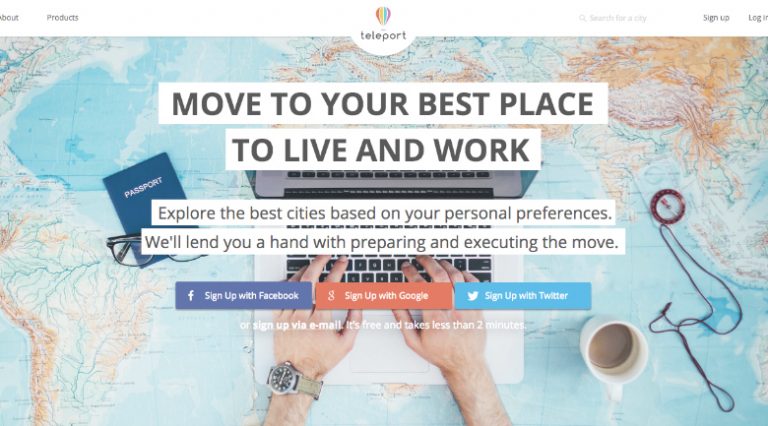
I am absolutely fascinated with the concept behind Teleport, a way cool app that puts you in the driver’s seat of where you want to live based on your preferences for the job market, startup scene, housing, social life and much, much more.

bar
I’m not sure if a similar app exists, although it wouldn’t surprise me. Certainly all I need to do if I want to know how it is to live in Austin, Texas is Google the location and I’ll have gosh-knows-how-many links to investigate. Teleport, however, puts it all under one roof.

Smart information

The site is geared toward startups, but it offers a lot of applicable information for just about anyone sniffing out a new city. You simply click on the city, and you’ll get a world of demographic data including but not limited to:

  • The average cost of housing, including median rent
  • Affordability of healthcare
  • Taxation information
  • How much it costs to eat out

It’s a big world out there

I think what impresses me the most about Teleport is that it allows me to think big. I mean like the “Whole Wide World” big. If I’m going to move, it’s going to be somewhere I can shake things up or somewhere that’ll shake me up! Based on my preferences (and you can reset your preferences whenever you like) I was given a list of cities worldwide from Singapore to Jacksonville, Beijing to Sofia, Bulgaria and I was easily able to see how I can live based on my current earnings (assuming I can still earn a similar salary).

Right now the site is limited to 100 cities but according to co-founder and CEO Sten Tamkivi, more locations are being added all the time.

“We actually built a custom index of 60 most “startup-friendly cities” (open economies, availability of talent and capital, etc) around the world, and then augmented it to get decent coverage of smaller capitals in European Union, and some key hubs in Asia. In the US, for example, this got us to Boulder, CO and Austin, TX quicker than their population would suggest. This got us to the first 100 cities. And from there we currently add cities based on user pull, where people searching want us to go. We have added 2 batches of 5 to date. Voting is open in our mobile app, and will be on the web soon too.”

Pack your bags

The world has become a much more linear place in the last decade alone. There’s nothing stopping us (except maybe a travel visa) from packing a bag and boarding the next plane flying. Places we’ve always dreamed of are within our grasp more than ever before.

And apps like Teleport will help us get there.

#Teleport

Being an entrepreneur is a “dangerous fantasy,” claims tech expert

Taking a chance and wild success

At some point during our lives, we have all had that Jerry Maguire moment where we want to drop everything and start anew. While Maguire wasn’t necessarily a pioneer in the world of athletic agents, this is typically the trajectory that entrepreneurs take.

bar
Successful startups are often fronted by men and women who finally decided to throw in the towel on a job they hate in order to chase their dreams. As a result, we constantly hear stories about the success these Zuckerbergs of the world have found. However, what we don’t usually hear about are the many that have failed.

The dangers of the entrepreneural fantasy

C. Custer recently wrote about the dangers of the entrepreneurial fantasy in Tech In Asia.

His claims were that: 1) It is rarely rags to riches, 2) You don’t need to be Facebook, and 3) Money won’t make you happy (within reason).

He elaborates by saying that most of the people who begin startups come from middle or upper class families. Therefore, it is not the scraping-to-get-by story that we’ve heard again and again. His thought is that, even if things don’t work out, there is still a job waiting out there for this person.

It’s about being realistic

Second, he is warning against shooting for the end-goal rather that what is at face value. By that, you do not need to think, “My company needs to be as big as Facebook”. The likelihood of that panning out is quite slim. Not impossible, but slim.

Finally, research has been conducted to prove that happiness and money do have a correlation. However, the more money you make, the more likely you are to be less happy. So, if someone is going into the entrepreneur life with dreams of big bucks that equal big happiness, that may not be incredibly realistic.

Show me the happiness

Custer’s claims stand valid, as it does seem that the entrepreneur life is not as glamorous as depicted in films such as The Social Network. If it were, then everyone would be an entrepreneur, right?

Of course, there is still something to be said for a person who works tirelessly in order to make their dream a reality. The dangers of this are when money begins to skew their vision.

While Jerry Maguire and his friend Rod Tidwell advocate to “Show me the money,” that may just be a component of a disillusioned reality of happiness.

#EntrepreneuralFantasy

Top 7 signs that your website is out of date

Don’t get left in the past

Just as styles of clothes come and go, website styles can date your business. How can you tell if your design is stuck in the past? Here are seven things that TNW wants you to consider about your design style:

bar

Keeping up with design trends

1. Sans serif or not? With 4K on the horizon, serif types are coming back into vogue. A serif typeface is one with small lines attached to the end of a letter.

Sans serif typefaces, those without those small lines, were introduced for readability on mobile devices which used to have much lower resolution.

2. Are you constantly changing colors to keep up with trends? Although the “best” color for marketing changes annually, it’s not really about what color you use. It’s about consistent design with color saturation.

3. Where do you work? Sitting at a desk waiting for inspiration is a thing of the past. Get out in the world and work on your tablet to enhance your ideas and take pictures to bring more elements into your design.

4. What’s your perspective? Look through your social media account and look for variety in your photos and posts. Find a new angle for photos and text to give more interesting content.

5. Are you using trends to brand your company? Coloring books may be the hot ticket item in 2016, but where will they be in 2017 when the population moves on to the next thing?

Use trends in marketing, but not for branding.

6. What’s your design style? Flat design is a trend that is going by the wayside. Get one step ahead by using elements to add depth to your site.

7. Do your templates look like templates? Word Press is great for small businesses, but when you use one of the templates without any customization, you look like you don’t know what you’re doing.

Spend a few dollars and get some help implementing your own images and graphics to fully adapt your site.

An updated website is a necessity

TNW assumes that your site has already been on the cutting edge. I’m seeing a number of small businesses who don’t have much content about their business.

Having a website is vital in today’s economy, and even if you’re the only one in your community that provides your service or product, you cannot expect to stay on top by just having a minimal website.

Make it a part of your marketing strategy to update your site weekly and keep your customers engaged.

#UpdateYourSite

TabbedOut makes tabbing out the easiest part of your night

Taking going out to eat to the next level

Going to a popular bar or restaurant to have a good time after a stressful week can make for a peaceful yet enjoyable Friday night. That is until a million other people get the same idea as you and choose the same bar or restaurant to have a good time at as well.

bar
When that happens, one of the following three also inevitably happens: It’s too busy to get someone’s attention to initiate a tab, you can’t find your waitress to pay the tab, or you’ve paid the tab but can’t find the waitress to get your card back. It’s happened to all of us, including the developers over at TabbedOut, who now introduce to us, the safe, secure, and fast way to initiate and close a tab.

The easiest way to pay

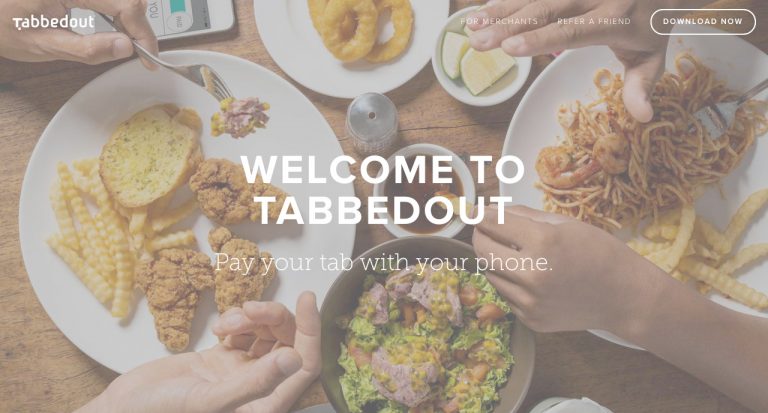
The all-in-one dining partner presented in a very easy-to-use interface, keeps your credit card safe, allows you to pay at your leisure, and get access to exclusive perks!

To get started, users must first download the app of course, find your venue, open a tab, tell your server that you opened a tab, review the check once you’re done (here you have the opportunity to split the bill, tip, and more), pay with your phone, and leave overall feedback. Simple!

Free and expanding

And now, this simple to use app, headquartered and started in Austin, TX has begun to expand outside of the Austin area into locations near you! But in case they still haven’t included your favorite restaurant, you can email, tweet, or Facebook them to ask that they be included.

But what’s even better is it’s free and available for both Androids and iPhones! The special deals, ease of pay, and convenience of not having to wait, are all free for you as long as you use the app to pay your tab.

No more waiting, no more missing credit card, and tons of free perks right in the palm of your hand; doesn’t get more stress free than that. So the next time you and your friends go out on a Friday night, use TabbedOut to guarantee that it’s headache free.

#TabbedOut

Science can say how memorable your profile picture is (or isn’t)

Is your profile picture working for you?

If a picture is worth a thousand words, what kind of story is your profile picture telling? Granted, I’ve always stood by the old axiom that “Looks aren’t everything.” I’ll take personality over looks any time because you know, at some point in a relationship, you actually need to speak.

Maybe talk about things a little more profound than the latest episode of Property Brothers. But that’s me. Obviously that’s not the case in advertising. There just isn’t enough time to develop a rapport in 30 seconds or less with someone hawking diapers.

bar

Smile and say cheese

Whatever the case, the truth is that in terms of attention, we allocate less and less time to everything! It doesn’t matter if we’re talking about a dating site or profile picture on a job board. When you only have about 10 seconds or less to make an impact your photo better be good! The Massachusetts Institute of Technology claims their new MemNet algorithm can predict how memorable your photos are.

According to research from MIT’s Computer Science and Artificial Intelligence Lab (CSAIL), the algorithm has performed better than any existing visual processing algorithms out there and is close to replicating human performance. If you’re curious how awesome your own photos are, you can test them out on their LaMem Demo page.

Once you upload a photo, you’ll receive a score between zero and one. In the example image above, there’s a score of 0.93, which means 93% of the people that view that image will still remember it after 100 seconds.

TC points out that the MemNet algorithm was created using deep learning AI techniques, and specifically trained on tens of thousands of tagged images from several different datasets all developed at CSAIL, including LaMem, which contains 60,000 images each annotated with detailed metadata about qualities such as popularity and emotional impact.

Why your vacation pictures are forgettable

PhD candidate at MIT CSAIL, Aditya Khosla puts it this way, “In general, the algorithm makes use of the objects and scenes in the image but exactly how it does so is difficult to explain. Some initial analysis shows that (exposed) body parts and faces tend to be highly memorable while images showing outdoor scenes such as beaches or the horizon tend to be rather forgettable.”

The research, according to TC,  involved showing people images, one after another, and asking them to press a key when they encounter an image they had seen before to create a memory-score for images used to train the algorithm. The team had about 5,000 people from the Amazon Mechanical Turk crowdsourcing platform view a subset of its images, with each image in their LaMem dataset viewed on average by 80 unique individuals.

Cute criteria?

The Memnet algorithm isn’t identifying what it thinks are the characteristics of “cute” or “handsome”, rather the study and resulting data takes researchers closer to identifying why certain things are memorable.

#MemorableProfilePic

Better for biz: Virtual reality OR on augmented reality?

Beyond the hype

There’s a lot of hype surrounding the concepts of augmented reality and virtual reality marketing, especially if South by Southwest is any indicator, where people loudly clamored for a view of the latest technologies.

bar
However, hype doesn’t help you understand how it will help your business. That’s why the fine folks at eConsultancy put together a comparison of the two formats. The winner? Well, it depends.

Non-answers are no fun. However, the article does offer key facts to help you answer the question as it pertains to your own business. So, let’s dive in!

Augmented reality

Augmented reality enhances your view of the real world using computer-generated information. For example, IKEA knows that after taking two profanity-laced hours to put together one of their nightstands, consumers want to know it will look just right in the corner of their living room, so they built an app for that. Other augmented reality apps, like Yelp’s Monocle, superimpose information and reviews about your surroundings onto your surroundings.

If you’re in the business of eCommerce space, this type of marketing tool is invaluable for your consumers. It’s also a boon for businesses that can collect and utilize lots of data, such as web communities and social media sites.

Augmented reality marketing has a few other logistical benefits. For one, many campaigns can integrate into an app format.

With everybody glued to their smartphones, you can tap into a captive audience. Plus, 84 percent of that audience uses their phones at the point of decision. Score!

Second, augmented reality marketing is a bit older, which means there are more best practice resources, like this one from Catchoom, to help you get started. This can come in handy if you’re working an early-stage startup where you have to wear many hats.

Virtual reality

Virtual reality creates a new reality through computer-generated sensory experiences. It also creates demand for some sweet new head gear.

vr sony gif

Because it can create these experiences, it’s a great tool for businesses trying to sell something that a consumer can’t fully experience before they buy it.

While you could test-drive a Volvo, your experience with their VR test-drive can be even more enriching! Most importantly, many businesses use virtual reality marketing to create an experience for their current or potential customers. Qantas Airlines helps airplane travelers survive long-distance flights using virtual reality simulations. Marriott allows you to travel to exotic destinations from the comfort of the hotel bed. Any business selling an experience as a way to augment or sell their service will eventually be invested in virtual reality marketing.

I say eventually because, for the moment, virtual reality marketing costs a lot of money. The camera equipment needed to produce 3D content can cost over 10,000 dollars, according to Wired. Plus, being the burgeoning trend that it is, consumers and businesses are just beginning to adopt the technology.

As much as we all love the challenge of navigating uncharted territory, the journey into virtual reality marketing is a costly one.

If you’re a startup looking to dip into these marketing channels, your best bet for the moment seems to be augmented reality. Still, as price becomes less of an obstacle for virtual reality marketing, you’ll have to carefully consider which technology better communicates the values of your product and your brand.

#VRvsAugmented

What careers are suited for you? Use these assessments to find out

Assessing what’s right for you

We’ve all seen the “personality” tests on Facebook, “What’s your perfect career?” or “Which Disney princess is your dog?” While those are just for fun, wouldn’t it be nice if someone could help us find the right path before you graduate college or spend 20 years in a career you hate? In a Sept. 2014 report in “The Daily Princetonian,” a survey found that 70 percent of students change their major after enrollment. And really, how many of us are working in the exact field dictated by our degrees?

bar

Finding direction

One of the most obvious examples of someone getting into a field that is evidently wrong is putting an introvert into sales. While some people who are reserved can definitely be successful, it does take a lot of motivation to want to talk to customers all day long when you’d prefer to be alone.

Knowing your personality traits before you start your education and job search saves time and money.

Instead of wasting tuition in classes that don’t work toward your degree or in getting into a field that isn’t fulfilling, take a real career assessment or personality test. College and high school students may have access to different tests through their school. Check with a career counselor. If you don’t fit into one of those categories, here are some tests that you can use to help find the direction you want. You might be surprised at the results.

Assessments for individuals

1. Sokanu
The questions are very career-minded. At the end of the test, which does take about 30 minutes, you get matched with jobs

2. Mapp Career Assessment
This test is for high school and college students, or adults at all stages in their career path. It is free, but you can purchase upgrades. Plan to spend about 15/20 minutes through the process.

3. My Next Move
A very short assessment, but with some valuable information. You can easily see if you’re more artistic, realistic, or scientific within the evaluation and get some career paths that can help you.

4. Career Key
For $13.00, an individual gets access for one year. There are different assessments for adults, high schoolers, and college students, and even middle school students. It would be worth the investment if you saved money at college by starting out on the path you’re really interested in.

Assessments for employers or those who are already employed

Personality tests can often tell you where you need to grow. You may have a good idea of your strengths, but we often overlook our weaknesses. Many employers use these tests in hiring to build a team with a variety of strengths. Make sure you check with all the laws should your business implement personality testing in your hiring process.

The Myers-Briggs Type Indicator® costs $49.95, and it’s available online or in testing centers. Counselors who give the test can help you better interpret the results. Whichever option you choose, you will have a better understanding of yourself and how you fit into a team dynamic.

The Achiever, from CRI, measures cognitive skills and behavior dimensions. CRI created and copyrighted the first job assessment test in the United States. They’re a small business with personalized service, based in the DFW area, and they work with employers to find team members who are a good fit for a specific position.

#CareerAssessment

Innovating from within: Inside the intrapreneur movement

Wait — intrapreneur?

When most people think of entrepreneurs, they think of folks owning their own thing. Whether that’s a small business, or the next great disruptor that’s the Uber of something, it’s a story and lifestyle as old and revered as the American spirit.

bar
But what happens if you haven’t found your idea yet, and you’re not ready to strike out on your own? How do you scratch that gnawing itch for independence and innovation in a 9-to-5 gig, the suppose mortal enemy of the free-spirited entrepreneur?

That’s where intrapreneurship comes in!

The innovation is coming from INSIDE the house

According to Investopedia, intrapreneurs, “[act] like an entrepreneur within a larger organization.” Companies finds folks with entrepreneurial qualities and direct them to “take initiative…in pursuit of an innovative product or service.”

Companies who correctly foster intrapreneurship reap the benefits of innovation, an increasingly necessary result in a more competitive business environment. That last piece matters a lot, because it can be hard for older brands to keep it funky fresh. It’s tempting, both for the sake of employees and for shareholders, to rest on old laurels to ensure growth and stability. However, intrapreneurial success stories resulted in everything from Facebook’s “Like Button” and Gmail, to video projectors and Post-It Notes. That growth keeps companies at the forefront for years to come.

Reward without the risk

In turn, intrapreneurship programs can greatly benefit employees. They teach entrepreneurial types to grow and strengthen their muscles of independence, proactivity and innovation with the confines of a stable organization. Investopedia points out that “The major difference between entrepreneurs and intrapreneurs is that the fruits of success default to the organization.

On the other hand, the intrapreneur also has the comfort of knowing that failure will not have a personal cost – as it would be for an entrepreneur – since the organization would absorb losses arising from failure.

Striking out on entrepreneurial ventures can be risky, and that risk can be hard to justify with a mortage and a few kids to put through school. The ability to innovate from within gives you stability and a place to showcase your natural visionary gift. Innovating from within also gives these employees access to more resources to make their vision a reality. That’s a just a smidge easier than having to hustle for funding from the beginning.

Hanging onto the restless millennial

Finally, intrapreneurship may improve a company’s ability to retain employees of certain demographics. “The rise of the intrapreneur is driven in part by a restless, younger workforce to make a real impact with their careers,” according to Fast Company. Additionally, “Older generations, perhaps inspired by their younger colleagues, are thinking more about their legacy and launching new projects in the companies they’ve worked for, sometimes for decades.”

Both groups understand the need to fight for the right to be where they are, so it’s only natural that they gravitate towards opportunities that showcase their ability to get shit done and move the needle for the business in a big way.

So, next time you find yourself daydreaming about the entrepreneur’s lifestyle, think like an intrapreneur and ask yourself, “How can I start that journey in my current role?” Then, go make it happen. Both you and your employer stand to gain a lot from the answer.

#Intrapreneur

Should your brand focus on Pinterest or Instagram?

Double tap that

Pinterest and Instagram both have the potential to electrify your business, but how can you tap into that revenue potential? Which platform should you use as your foundation for visual marketing? If you are looking for the best return on your visual marketing, Instagram seems to have the edge.

bar

Click through conversions highest on Instagram, but why?

Instagram already boasts the highest click-through conversion rates, and while both Pinterest and Instagram attract predominantly female subscribers, Instagram is slightly more evenly split.

Research shows women are 10% more likely to support their preferred brands online, however, women are less inclined to act on a buy button than men.

Why have brands on Instagram been able to get their followers to use the buy button? Due to  the even split of men and women, brands can target their posts by gender. Pinterest marketing caters to a predominantly female audience, which forces marketers to keep their messages unisex in nature. Instagram offers marketers the ability to create multiple accounts, allowing the opportunity to market products to specific audiences. Posts can be tailored to any audience, and allows brands to interact with the audiences on a more personal level.

Making emotional connections

When you are able to take generic product promotion out of the equation, your marketing becomes more personal. Posts become more about the emotional connection to the brand, rather than an ad to convince users to make a purchase.

Instagrammers follow people and brands they have a connection with. This emotional interplay builds brand loyalty, and when a user sees that buy button, they click on it because of the connection.

If you want to make real strides in claiming a place in social media, you need to consider Instagram for what it is – a way to connect with people. That connection you create will promote a way for people to connect to your brand.

#InstagramMarketing

At what age will you be able to retire based on your current trajectory?

Retirement: An age that keeps getting further away

It should not be news to anyone that in order to retire comfortably you can’t just count on Social Security benefits, especially because who the heck knows how long Social Security will continue to exist. That withstanding, it’s our savings that will make or break us in our golden years. The older we get, the harder it is to stash away anything of significance, which is why investment professionals recommend that you start saving as early as possible.

bar

The big three

According to Life Hacker, there are three factors that influence when you’ll be financially independent: the age you start saving, how much of your income you save and the return on your investments. The other factor, I guess you can refer to it as number four on the list, is to consistently save the same percentage of your income every month/year once you start.

Think about it: there are very few things in life that you have more control over than your savings. That said, before you run off to the bank, let’s reiterate a few things. Again, Life Hacker offers up some great advice and is a lot more eloquent than I could hope to be.

Savings redeux

Step 1.
Determine when to retire: This is not your father’s or grandfather’s retirement. The age of 65 is no longer the typical retirement age. People live longer so they can work longer. Or they can retire early and party longer. No matter, whatever your retirement age goal is, be sure to plan for all the years you may need to be covered financially.

Step 2.
Create a longevity plan that takes in to account how many years to include in your savings plan: This is a critical part because the whole point of retirement planning is to not outlive your savings.

Step 3.
Estimate what your expenses will be in retirement:
Most people will have fewer living expenses by the time they’ve retired. That’s the hope anyway. Kids are out of school, house is paid off, etc. Industry professionals recommend needing 75%-80% of your current income in retirement.

Step 4.
Make an inventory of your current assets and savings:
Gather your investment and savings account statements so you can get a clear picture of what you have to work with right now.

Take a look at the following chart (courtesy of Lifehackher). Feel free to plug in a number greater or lesser than 4% interest rate to see how the results change over time.

retirement

Resources a plenty

Keep in mind that there are a wide variety of asset allocation tools that can help you decide on the right mix of investments. A balanced portfolio will mitigate your risks while giving you the best chance of increasing your wealth.

It is possible to save for retirement. But you have to save right now if you haven’t already. “Now” being whatever age you are that enables you to start saving!

#Retirement

Magic Leap is AR + VR, and could legitimately change the world

The best kept secret

Magic Leap is the most amazing mixed-reality technology company you may never have heard of. What makes them so secretive is also what makes them so amazing: a leading edge on a unique approach to the future of virtual reality and mixed reality. (VR and MR, respectively)

“Experience is the new currency of VR and MR” – Kevin Kelly for Wired.

bar

What is mixed reality?

In the wireless age we have been able to access and digest information, but only now are we about to be able to experience it.

As a mixed reality technology, Magic Leap does not attempt to do the heavy technological lifting of creating a world from scratch. Rather it focuses on bringing fantastic elements into every day life. The effects of which are astonishing.

What’s behind the curtain?

As a business, they’ve already made history with backers including Google, Andreessen Horowitz, and Kleiner Perkins investing over 1.4 billion dollars to date. This comes on the heels of their record breaking C- round of financing totaling $793.5 million.

This is exceptional not only because of the amounts, but also because Magic Leap has yet to release a beta version of their product.

Very few people have been able to experience the technology but the ones who do have come back astonished and impressed, even in the world of rapidly growing virtual reality technology. A reporter for Wired writes:

“…amid the low gray cubicles, clustered desks, and empty swivel chairs, an impossible 8-inch robot drone from an alien planet hovers chest-high in front of a row of potted plants. It is steampunk-cute, minutely detailed. I can walk around it and examine it from any angle. I can squat to look at its ornate underside. Bending closer, I bring my face to within inches of it to inspect its tiny pipes and protruding armatures. I can see polishing swirls where the metallic surface was “milled.” When I raise a hand, it approaches and extends a glowing appendage to touch my fingertip.”

magic-leap-3

Magic Leap

magic-leap-2

magic-leap-3

This could (and we bet will) be something big

To understand whats so unique about Magic Leap, you have to look at the industry as a whole. An industry that is still being defined and developed, and where innovation still reigns.

Everyone is racing towards virtual reality technology and everyone has their own ideas which is the best path. Every large technology company has a dedicated team frantically developing virtual reality technology including Facebook, Amazon, Google, Apple, Samsung, Sony, and Microsoft.

In addition to those household names, there are almost 300 other companies racing to create content and context for the platforms as they are developed.

You can see both why virtual reality is about to change everything, and why Magic Leap has the potential to be one of the biggest companies in the next technological age. This is a result of the combination of their innovative tech and their business savvy.

Because of it’s focus, it’s fundraising, and its unique technology, Magic Leap’s visuals are hailed as some of the best in the business already. Keep your eye on this quiet, Florida-based company.

They’ll be a household name before you can say “Is that a treasure chest in the living room?”

#MagicLeap

Pandora’s unique (and effective) new ad campaign

“Unique as we are”

Just in time for Mother’s Day, Pandora drove home its latest message “Unique as We Are” with an equally unique series of videos currently posted on YouTube (but airing nationwide in time for the holiday).

Here’s one to give you an idea of what they’re up to:

bar

The scenario:

Pandora set up an experiment and got eight daughters to write a unique sentence. “Defined by shared experiences and extraordinary qualities passed on from one generation to another,” the celebrated jewelers then decided to explore whether it is possible to connect mothers and daughters through a single, anonymous yet personal message.

The messages were inspired by a daughter’s own mother’s words of wisdom once (or many times) passed on to her during life. Many messages took form as a “Thank You” or appreciative acknowledgment of a certain way of living.

According to its website, “Pandora then asked if the mothers could find their daughter’s unique message in a room with all of the messages hung as a beautiful exhibit display in faux museum.” Without help, the mothers walked around and had to choose which one they believed to be from their daughter. Needless to say, all mothers found the right one (message that is).

And because this is a video campaign, Pandora had each daughter appear via iPad to explain to their moms why they had written the specific message and how thankful they were of their mothers.

Thumbs up

A great example of video marketing at its best, Pandora knows how to appeal to its demographic. It’s not for me to take the roles of either Siskel and Ebert but I wonder if the idea could have been just as effective in a more local setting: In someone’s house as opposed to a museum. Regardless, if anyone needs a huge “Thank You” it’s all the mothers in the world.

And if you want to toss in a diamond pendant that wouldn’t hurt either.

#Pandora

Smartphone dependency is a thing, but we’re not hopeless

0

The mindless scrolling is real

I don’t need an app to tell me I’m highly dependent on my smartphone. I know it when I sense the feeling of my hand gravitating towards the device, programmed to drift through social media apps or refresh my inbox. Hours of mindless scrolling, out of years of habit.

bar
The Checky app offered an opportunity to collect data to confirm what I already dreaded: The daily number of times I check my phone. I was hopeful. Similar to apps that monitor quality of sleep, the underlying intention is that you absorb the realization that a lifestyle change is in order and you put forth effort to make it.

Questioning your dependency

It didn’t work. As in, the app itself wouldn’t track my activity.

Although I’ve tried to run it on my phone over several days for my mini experiment, it said I only looked at my phone an average of 11 times. I know that number’s – at minimum – 10 times too small.

However, making that realization on my own was enough to inspire a re-evaluation of my phone habits.
This isn’t a radical view of our relationship to our phones, and I know I’m not the only one that’s questioned mobile dependency. It’s not news, but it’s worthwhile to engage in a deep reflection about time spent on our phones and the true value of information being added.

Constant stream of easily digestible content

The majority of smartphone owners use their phones to follow breaking news and to share information about happenings in their community. On the surface, that seems like a positive attribute. It is, to an extent. I’m amazed by the immense accessibility of information at our fingertips and the power of revolution that social media holds.

However, it’s an oversaturated, messy place. Trying to keep up with the hoards of easily digestible content is not making us more informed.

Rather, the rat race of the information age is often distracting, stressful, and leads to a lot of misinformation.

Internet access causes people to think they’re smarter and more well-informed than they really are, according to a recent Yale study.

To nail the point home, the World Economic Forum lists “massive digital misinformation” as a main threat to society. When progress is dependent on an informed populace, of course misinformation is as dangerous as terrorism and cyberattacks. It’s the epicenter of all other risks.

Breaking the illusion

As someone who’s worked in the journalism and social media industries, I understand the nagging fear of missing out (FOMO) that accompanies the digital world. We may dream of tossing our phones aside and retreating to an unplugged paradise, and then that fantasy dwindles with each notification, email and article shared.

But being “plugged in” is an illusion: you’re not going to miss out on important news and no one, at least not the people that matter, is going to miss your 24/7 online presence that much.

The good news: It’s an illusion we can break. We hold the individual power to stand up to smartphone addiction. And we should, for the health of our minds and the way in which we process information.

The healing process

I’m not advocating any absolutes. You don’t have to suspend your social accounts. We can remain accessible to our networks but not be chained to them. We can practice the art of self-control, making it easier by deleting apps off of our phones (hello, desktops) and filtering our social media feeds as a preventative measure to not be exposed to so much recycled content.

A friend of mine, a social media manager for an online nonprofit media organization, decided to reduce the Facebook pages he followed from 85 to 6 because he was “tired of seeing the same thing repackaged 25 different ways.”

Let’s allow our minds to rewire and heal, so that we can begin to seek out information in a smart and meaningful way.

#PhoneDependency

Facebook Messenger is exploding, companies jump on board

Significant user growth

Facebook Messenger reminded people of its existence most recently, when it reported significant user growth within the feature. Statistics gathered by Global Web Index, show that people are finding various ways to use messenger

bar
It should come as no surprise that 90% of users use messenger to send a message, since that’s it’s sole purpose. However 50% use messenger to send a photo, and 21% use it to send videos.

Users will be chatting with companies soon

At the bottom of the list are users that have used messenger to receive a message from a brand or company, coming in with 15% of people saying that’s been their experience. And though that number is low, it is expected to rise with Facebook’s recent integration with the Uber app, shifting from peer-to-peer messaging to service-facilitating messaging. Now users can you messenger to chat with Uber without having to leave the app.

More companies are expected to join this chat wave, with the opportunity to offer services via Facebook’s chat app. Users should except to  receive more messages from various brands and companies, as they figure out to leverage it correctly.

How can your brand use this?

The companies that are looking to use messenger to their advantage should look into the other stats from this same report for their strategy. For example, since 50% of users send photos, companies that use the app to reach out to consumers might want to send their message as a photo instead of basic text. Or even as a sticker since 35% of users send those across the chat app.

No matter how companies choose to use the messenger with their social media strategy, they should definitely take advantage of the apps growing popularity. How do you use the app? Do you think it could be helpful for businesses?

#FacebookMessenger

Google anti-trust lawsuit: Are they really the villain?

Trouble overseas

If you haven’t been following the charges against Google lately, here’s the breakdown: Google has more or less incentivized its own apps and services, leading to companies’ reluctant incorporation of said apps and services strictly for convenience’s sake. This has led to Google basically owning the market, as its competitors’ products fall short due to issues regarding compatibility or, again, convenience. It’s also led to their being slapped with an anti-trust lawsuit in Europe.

bar

Google is everywhere

So what’s the problem? The main concern here is that Google’s statement regarding Android’s availability to everyone–even competitors–seems to be falling flat on its face, since Android is serving as a way to promote Google’s already-extensive services even more. Worse, Google as a dominant company appears to be abusing its power thereof, making it very difficult for anyone else to get a handhold in the market.

Begrudging respect

It’s easy to see Google as the aggressor in this situation–partially because it IS the aggressor–but try to see it from their perspective as a strictly-business endeavor. Yes, Google used its already-prevalent technology to solicit further use of that technology, and yes, this solicitation pretty much closed the door on future rebuttals by competitors–but isn’t that just good business practice?

Consider an alternative scenario in which a small business uses these tactics to effectively eliminate its competition, even on a small scale. It would be celebrated as a success, of course! Hell, most large brands have been built off of this methodology. For once, Google isn’t doing anything new here–it’s just a matter of routine.

All hail

What this all comes down to is Google’s status as a global superpower. A fair amount of concern is being directed toward a single case in Europe when that concern should really be focused on the fact that Google is rapidly approaching monopoly status; using press time to dial in on their business model regarding Android technology when that same technology holds over 80 percent of the global market is a bit of an exercise in futility.

Watch and learn

I’m not going to say that Google’s actions are admirable–they’ve crushed plenty of small businesses and endeavors, and will likely continue to do so–but observing and correctly applying their business strategy on a microcosmic scale will absolutely result in unprecedented success. They deserve a round of applause, even if it’s a really slow clap.

#GoogleMonopoly

You may earn cash from your Facebook posts soon

Everyone’s favorite timesuck

Facebook is most always finding new enhancements to add to it’s already extremely popular website and has found yet another way to separate itself from the competition: monetizing your posts.

A user survey released this week hinted at various ways users like you could make money or promote a cause by including a tip jar, branded content, and receiving a cut of the ad revenue Facebook earns from posts. The survey also asked for user feedback on a “call to action” button that would allow followers to make donations, and a “marketplace” to pair users with advertisers.

bar

What else is new?

Just a few of the changes Facebook is considering to add to its growing arsenal of user targeted features:  In February the company began letting anyone publish Instant Articles (a feature that uploads material in an easy to consume format), and in March acquired the video filter app MSQRD.

Whether or not this “profit for post” change will be available to everyone though, is still unclear, as the language of the survey seems to be targeting verified users only.

Facebook is the first amongst its immediate competitors (Twitter, Snapchat and Instagram) to allow profit for posting, but isn’t the first social media platform to offer revenue opportunities to its users. YouTube launched a revenue sharing program for verified users in 2007, and Twitch, a streaming platform for gamers, lets select partners make money in various ways. With Facebook’s already massive lead in following, this money-for-post idea could be exactly what it needs to maintain and grow its popularity.

Why the change?

Social platforms have been able to grow tremendously with user content, while paying nearly nothing for it, which has left some upset. Critics have criticized these platforms for not sharing the wealth, and instead keeping it for themselves.

As a result Dan Rose, vice president of partnerships for Facebook, responded with Facebook’s interest in creating revenue-sharing deals prior to the survey; even if it is only targeted at those with a large following.

Now that there are surveys floating around backing up Rose’s claim, we should be seeing something imminent soon.

Post for Profit sounds like an amazing feature, especially for company owners and brands alike, but is still only in survey phase, and could very well never make it past that point. Approval of this feature however, will give the company the edge it needs to maintain its social media dominance, and its users a piece of the pie we deserve.

#PostForProfit

Is big tobacco making the transition into big marijuana?

The cannabusiness of cannabis

Well of course there’s big money to be made in marijuana! You don’t think with tobacco revenues declining year after year the “Big Three” tobacco companies (Altria, Reynolds and Liggett) are counting on a cigarette comeback do you? Of course not! Despite any public admission to the contrary, legalized, commercial marijuana is the Next Big Thing.

bar

Up in smoke

According to an article on Comsumerist, “Four states and Washington, D.C., have already legalized recreational marijuana use, while medical marijuana use is currently legal (or about to become legal) in around 20 states.” And that’s not even including the many states that have decriminalized the drug.

So with a reported $45 billion a year consumer demand for marijuana in the U.S., more than chocolate or wine, and about half the demand for tobacco or beer, there’s no way those profits are going to go up in smoke.

The big question, then, isn’t if marijuana consumption becomes legalized at the federal level but when. And if you don’t think Big Tobacco isn’t going to stake a claim, then you need to go back to square one. The investment potential in cannibusiness is too great, the demand too insatiable to go unnoticed.

Not disjointed

Consider the following scenario:  the smoking prevalence rate among Americans in 2014 (the latest available data according to Bloomberg) was 17.4 percent, down from 21 percent a decade ago. Heck, if there was ever a time for the population of the United States to pick up another vice – this is it!

So how do you jump on the money train? Certainly marijuana cultivation under the guise of medicinal agriculture opens the door to organize production and sale at a state level. Don’t believe me? Consider the State of New York (where I happen to be as I hammer away this article on my laptop).

According to Bright Water Landing, if passed by the assembly and senate and signed into law by the governor, “The Marijuana Regulation and Taxation Act would permit the New York State Liquor Authority to issue licenses that would allow entrepreneurs to open marijuana dispensaries.” But here’s the caveat: An excise tax would be charged on all marijuana sales, and the tax revenues collected would be used to fund everything from educational programs to addiction treatment services.

That’s a user-friendly template if ever I saw one and plenty of other states are trying to organize their efforts accordingly.

Cannabis as a business: Providing jobs, profits, and an unparalled entrepreneurial experience to every state in the Union.

#BigMarijuana

Have Potentia Labs’ scientists cracked the productivity code?

The everlasting quest for productivity

Any one with an ounce of hustle in them wishes to be as productive and efficient as possible, in hopes of boosting performance. But with everything that comes at us in a day – stress, work, life, bills, and more life – it’s not always easy to produce at your highest potential. Potentia Labs, a team full of scientists and researches focus this, and developed a site dedicated to solving productivity issues, teaching people how to flourish and perform at their optimal level.

bar
Whether it’s for a large company, a small team, or an individual entity, Potentia Labs uses scientifically proven techniques to help build social, emotional, and professional habits they need to work effectively. Let’s take a look at how it works.

How the process works

First, you and/or your employees must select your personal goals so they can be addressed directly.

Next, you take courses based on your goals, and build skills by completing daily “missions.” The major upside is that courses don’t take long, and don’t interfere with your already busy day.

Once you begin taking courses with Potentia, you will receive training on the importance of habits, and begin building daily or weekly habits to hone skills and reinforce newly learned behaviors.

Finally, all of the work and progress you make is summarized on an engaging dashboard that tracks results, delivering real time stats to help keep you informed and motivated.

Seems simple, but it’s super scientific

It seems like a pretty simple idea, but when you consider the not-so-simple team of psychology, sociology, and neuroscience experts behind it, it’s easier to appreciate Potentia Labs’ process.

A seemingly successful process at that: 85 percent of users report a better work life, 75 percent feel more motivated, 77 percent feel more productive, and 97 percent report improvements in overall well-being. All large feats for an idea so new.

Still in beta

At this point, it is still being developed, and is only available through a demo version. However, when it is completely available, users will have cloud access to their courses anywhere with any device, in addition to real-time analytics that report everything down to the emotional state of your workforce.

Easy implementation is also a plus, with pre-drafted emails and communications to simplify the on-boarding process. There’s even an extensive content library, that includes how-to articles, guided audio, and video exercises to supplement the courses and learning material.

With a whopping 85 percent of people reporting a better work life, businesses should definitely keep their eye on this startup.

#PotentiaLabs

Veeroll solves the video editing challenge for your ads

Solving the video editing conundrum

When you consider that 72 percent of ad agencies reported online video advertising as just as effective as television ads (according to this study), it comes as no shocker that there are services that now provide video templates for advertising.

Veeroll, a YouTube certified video advertiser is one of the most recent to emerge, and is already a favorite for a number of advertising experts.

bar
With over 15 million ads being served via Veeroll, it looks like they know what they are doing. Offering “effortless” video creation, targeted traffic, and proven results without any video editing or coding at all; Veeroll taken the hard work out of producing powerful video campaigns.

How Veeroll works

For video creation, users have a handful of different templates to choose from, all providing premium visuals. You can customize all of the text and images, and craft a video ad, perfected and uploaded in just minutes. There is also full training available for newbies to create expert ads, and get familiar with their effectiveness and proper use.

Once your campaign is complete, Veeroll offers accurate campaign results that teach you what changes need to be made, how to optimize your ad moving further, and how to reduce costs. You can also use the tool to do split testing and create multiple ads to see which would do best.

Free, monthly, or annual

The best thing about this service, especially for the editing challenged like myself, is that we don’t need any experience to create competition-worthy advertisements. What’s even better is that they’re offering their service for four free videos right now on their website. The trial is the perfect way to see if there are any templates that satisfy what you are looking for, and if Veeroll can help leverage your business and monetize where possible. 

If you setup and decide you can’t live without Veeroll, an annual membership starts at $35 and allows you four ads a month (or alternatively, is $47 monthly). If you pay and aren’t satisfied, they’re so confident that they promise to refund your money.

Your editing woes are at an end. Let Veeroll do the work and create high converting video ads for your business instead. Grab your free trial and start creating your own premium video ads!

#Veeroll

ChatPage.io improves lead conversions for any type of company

Keeping people engaged is tough

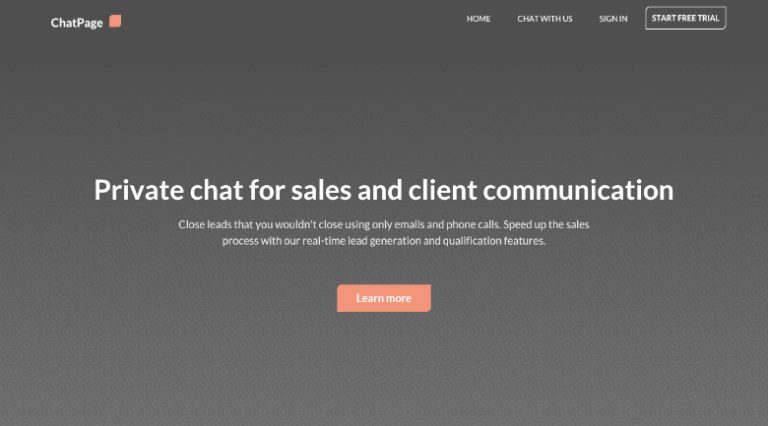
If your business uses cold emailing or email anywhere in the sales process, ChatPage.io promises to make the transition from lead to sale easier and more successful than traditional methods. That’s because keeping people engaged with the traditional method of emailing is hard to do without an immediate individualized response. But with ChatPage.io, consumers stay engaged with their live chat feature.

bar
Created to increase engagement, ChatPage.io gives businesses the perfect chance to engage with a lead, provide customers with instant support, and participate in live client communication. All you have to do is include your ChatPage.io link in your emails, website, and Twitter profile, and anyone who clicks it will be automatically taken to your live landing page where both of you can chat. Once they visit, BOOM they’re a lead, an open issue ticket, or mini presentation for a client.

Live chat, form builders, and more

It also includes a cool form builder tool that allows you to build whatever form you see fit to either qualify a lead, build a chart, ask for feedback, or send order forms. You can send whatever you decide and send the customized forms mid-chat, and have the customer form completed before seamlessly exporting it to an Excel file to work with.

As a business owner, it allows you to speed up the sales cycle, make your consumers feel more connected, and bring the leads directly to you, all with a simple link. For consumers, this could mean a more individualized experience, premium forms, and formation of consistent communication; all of which are essential in getting people to spend their moolah on your services.

Keeping it simple

The idea is simple, and requires zero coding or strategizing to integrate with your current sales cycle or business plan. Simply signup for your free chat page, customize a url, include the url in emails and contact info, and you’re instantly available to interested prospects or customers who click on the link. It also requires zero investment while in beta testing, so if you’re the least bit interested, take a free test drive.

#ChatPageio

The simple way Oakley earned my loyalty for life

When the unexpected happens

I live in Oklahoma. It’s no secret that our weather is questionable, mercurial, and down right nasty at times. We also have some of the most beautiful sunsets, anywhere. In May of 2013, we had one of the largest tornadoes on record, ever.

This tornado was approximately five minutes away from my house. As it approached (before it changed course and veered off) my windows were shaking; there was an intense howling, so indescribably loud, it sounded like a train whistle; the skies were a very funny color of grayish, greenish, black, and the whole day was full of fear, texting “are you okay?,” and gratitude that myself and my family and friends survived.

bar

Losing something well-loved

What does this have to do with business, right? I’ll tell you. On that fateful day, I left my beloved Oakley sunglasses in the car. They’re just sunglasses, but I got them for high school graduation. I clung to them like they were worth a million dollars because my parents bought them for me and we didn’t typically “splurge” on such frivolous things; so they meant a lot to me.

The wind, rain, and hail from that storm cracked my windshield and when the windshield collapsed, it shattered my glasses.

After cleaning up all the mess and thanking the good Lord we were alive, I decided to email Oakley to see if could buy replacement lenses for my beloved glasses. Keep in mind these glasses are thirteen years old at this point and their styles change often.

Earning customer loyalty the right way

I emailed them thinking well, maybe, just maybe, they’ll have some hiding in a stockroom somewhere. I received a message back from their customer service department in less than 24 hours. The note was personal, heartfelt, and polite.

They apologized that they no longer carried the replacement parts for my glasses, but offered me another pair, of my choosing, at a discount, along with a free case.

This gesture made me love the Oakley brand even more. It wasn’t their fault I left my glasses in the car, but they knew how much they meant to me. It probably wasn’t a big loss for their company to offer the discount, as Oakley sells a great deal of merchandise, but to me it was a huge offer. I was able to get a new pair of glasses to replace the old ones and I never leave them in the car. I will always buy Oakley glasses, not just because I love the brand, but also because I love their care, concern, and fantastic customer service.

What has a company done for you that inspired brand loyalty; big or small? What do you do for your own customers to keep them coming back to your brand?

#Loyalty