Home Blog Page 169

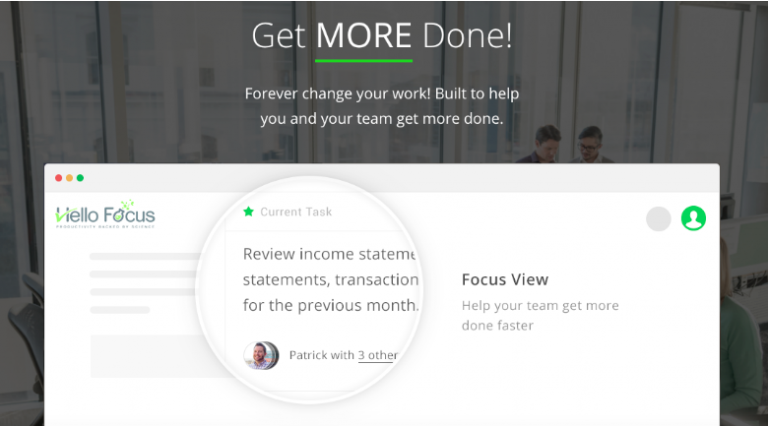
Hello Focus app promises to forever change your work

“Built to help you and your team get more done”

Waiting isn’t usually my thing, but when I heard about Hello Focus, a new to-do list app, guaranteed to increase productivity, I hopped right in line for their release.

bar
The app promises that with their extended features and extensive research they can help you or your team: stay focused, get more done, and stay organized. And with 100% productivity being a mere miracle, especially in a team setting, we wanted to find out just how does Hello Focus get it right?

The caveat to multi-tasking

Beginning with their research, Hello Focus found that multi-tasking makes us less productive. The more tasks we see, the more overwhelmed we are, so we get distracted and our minds divert to other things (hello, Facebook) – it’s called the Zeigarnik Effect. With that information alone, they have been able to create tasking and scheduling lists that help you stay in the know and more focused.

One thing at a time

Right away, users are asked to enter all of their tasks, but are only shown the most important one. So if you have a list of five things to achieve, but number 2 is due first, you would select task number 2 and only be shown that until it is completed. The elimination of all the other tasks, will allow you to focus on one thing at a time without retreating to Facebook as a safe haven.

Let’s say you have the same task list everyday, and number 2 is due first everyday; you also have the option to automate recurring tasks – yet another way to save you time.

Great for teams, too

Users can also get more done with the elimination of the beloved daily stand-up, or check in.

With Hello Focus, you can communicate with other teammates, assign work to them, check their progress and give feedback, all on one interface.

File sharing is also an option, so there’s really no need to leave the interface, not even to send a file or email.

Gantt chart software

Another cool productivity feature is their “do not disturb” function. A way to turn off notifications during your most productive hours, or when you have a really important project to finish.

But the coolest feature I saw, was the use of a Gantt chart. This particular chart allows you to see all parts of a project, what tasks to be completed, when it needs to be completed, and who’s responsible for its completion. With this tool, you can check the progress of specific areas, see what’s working, what it not, and come up with a resolution before the issues snowball.

Free trial, or wait list for premium

If you still aren’t convinced and are in denial about your productivity, head over to their page to get a free, risk-free trial of their services. But, if you are like me, and succumb to the kryptonite powers of Facebook, I’d say get in line for their premium version. The price has not been determined yet, which is why there’s a waiting list; but I’m sure anything promising increased productivity, more time, and hence more money, is worth the investment.

#HelloFocus

5 ways to overcome stress and get your focus back

When it all builds up

One of the issues many of us face on a daily basis is the ability to self-motivate. This is especially difficult when stress continuously builds up through a combination of our work and personal lives.

bar

5 simple tricks

If you are anything like me, stress can build up to a point where avoiding all tasks is the only route you feel equip to take. However, with school, work, and the attempt to maintain a social life, I have had to learn how to creatively over come stress and stay productive. Listed below are ways I have found effective in manipulating a decrease in stress.

  1. Read: As basic as this sounds, reading really does spark creativity and reduce stress. Reading can help to take your mind off of real life but it also keeps the mind active for when you are ready to be productive.
  1. Get organized: making calendars, using planners, and creating to-do lists keeps the mind flowing and keeps you on track. My life would be an even bigger hot mess if I did not utilize the art of list making. Keeping all of my tasks and schedules in order, it helps to reduce stress and make me more productive.
  1. Invest in a journal: Purchase a journal and set aside a little time each day to write in it. Again, this keeps your mind active and creative. However, it also helps to relieve built up stress as it is an outlet for getting issues off of your chest.
  1. Treat yourself: If you are feeling overwhelmed with stress, take a little “me-time” out of your day as a way to decompress. Either partake in some retail therapy or treat yourself to a baked good. This will help to perk you up and eliminate stress.
  1. Talk to others: This is the most effective method I have found for reducing stress. Taking time out of my day to have a talk with a friend is my favorite way helps to take my mind off of stress and also helps to seek out different perspectives. Others can help to offer advice on how to tackle projects and they can help to spark creativity.

#OvercomingStress

People don’t want to share their device’s geolocation anymore

There are some great things GPS can do, and yet…

There are some obvious benefits to allowing mobile apps to use your smartphone’s GPS to pinpoint your location. Apps can connect you to your social network locally, bring you relevant news stories, weather data, and more.

bar
But it turns out that, despite these benefits, mobile users feel pretty hesitant about sharing their location – and with good reason. With everyone from malware hackers to advertisers to the NSA trying to get information from smartphones, mobile users are understandably protective about revealing their data, including their location.

Not the best numbers

A study recently released by eMarketer found that mobile users feel lukewarm at best about enabling location services for mobile apps, and some don’t want to use location services at all, even though it means they’ll miss out on some of the conveniences.

When it came to apps that ask for your location, users were most willing to share their location to get local weather reports. Yet 35 percent of weather app users were still unwilling to enable location services. Even fewer were willing to do so when it came to social networking, travel, and photo and video apps. Only 16 percent of users were willing to share their location with a news app, despite the obvious benefit of accessing local news stories.

Even with the benenfits

Another part of the survey found that only 13 percent of users strongly agreed that they felt comfortable sharing their location, with most of the other recipients remaining ambivalent. Additionally, eight out of ten users were worried that their smartphone would reveal their location without their permission.

The marketing experts at eMarketer advise developers to make sure that customers fully understand the benefit they are receiving in exchange for revealing their location. Users need to feel like they are really getting something worthwhile in return – yet this study shows that, even with the benefits in mind, most mobile users would rather keep their locations anonymous.

#EnableLocation

Micro-influencers increasingly inspire consumer purchases

It’s not JUST for celebrities

The concept of influencer marketing takes the basic word-of-mouth principal of user-testimony and turns it inside out. Consider that marketing-inspired word-of-mouth generates more than twice the sales of paid advertising and the resultant customers have a 37% higher retention rate.

bar
In the past, marketing dollars were poured into celebrity endorsements, then into ads on popular bloggers’ sidebars, but today are looking to a new type of influencer focused on individuals with local (niche or geographic) reach and a meaningful relationship with their followers.

Word-of-mouth

Up until recently, the influence marketing phenomenon was a concept rooted more in theory than actual practice.

BW reports that may be starting to change as a first-of-its-kind study was recently released that examines “How micro-influencers are driving buying behavior by measuring the volume and impact of their recommendations on consumers.” The study was specifically designed to examine how and why micro-influencers are more influential than the average consumer.

Whose mouth is it anyway?

Word-of-mouth goes something like this: If I like a product or service and tell a friend they may or may not decide it’s something worth checking out just based on my word. But if Jennifer Lopez endorses it, you might put more stock in the product because after all, it is Jennifer Lopez we’re talking about. Yet, if I have someone who is a subject matter expert on said service and who just happens to have 100,000 followers on Twitter you might listen even more closely.

Simply put: Micro-influencers are not traditional celebrities, but rather individuals who work in their field-of-interest and are truly knowledgeable, passionate and authentic and are seen as a trusted source when it comes to recommendations for what to buy.

A study by Dr. Jonah Berger (Marketing professor at the Wharton School at the University of Pennsylvania and author of the recent New York Times and Wall Street Journal bestseller Contagious: Why Things Catch On) and the Keller Fay Group (market research company focused on consumer word of mouth and social influence), shows that micro-influencers are a reliable and credible channel that has real impact in swaying consumer behavior.

Why micro-influencers are driving purchases

According to the data mined from the study, micro-influencers have up to 22.2 times more conversations each week regarding recommendations on what to buy versus an average consumer. Demonstrating the high impact of these recommendations, 82 percent of consumers who were surveyed for the study reported they were highly likely to follow a recommendation made by a micro-influencer.

Let’s face it: Everyone has a forum to give their opinion on just about anything. When anyone can give an opinion, regardless of how much they know about the subject, the real question becomes “Whose recommendation is authentic and credible?”

The survey seems to support that when it comes to people receiving advice, “influencers were seen as more impactful compared to an average person based on the following characteristics: more credible and believable (94 percent vs. 83 percent), more knowledgeable (94 percent vs. 84 percent) and better at explaining how the product works or could be used (92 percent vs. 83 percent).”

With numbers like that – you as a brand – may feel inclined to sink your resources into what micro-influencers have to offer as opposed to taking out a half-page ad in the local newspaper.

#MicroInfluencers

This VR iPhone case is a great new way to experience VR

0

Somewhere between Oculus and Cardboard

In case you haven’t been keeping up with the technological advances over the years, allow me to update you: Apple is now in their 9th generation of iPhones, Uber has expanded their world takeover with helicopters, and virtual reality is the newest gold mine for businesses. Virtual reality, in case you really have been detached from technology, is a multimedia, interactional, visual, tool that replicates an environment and gives users the unique opportunity to simulate a physical presence in that environment.

Imagine if you could interact with Mt. Everest from your home, or visit a completely different country without leaving your couch, pretty cool right? Well the innovators over at Quantum Bakery LLC, sure think so, and have developed the first of its kind – a pocket-sized product, that provides users with exclusive access to virtual reality.

What is Figment VR?

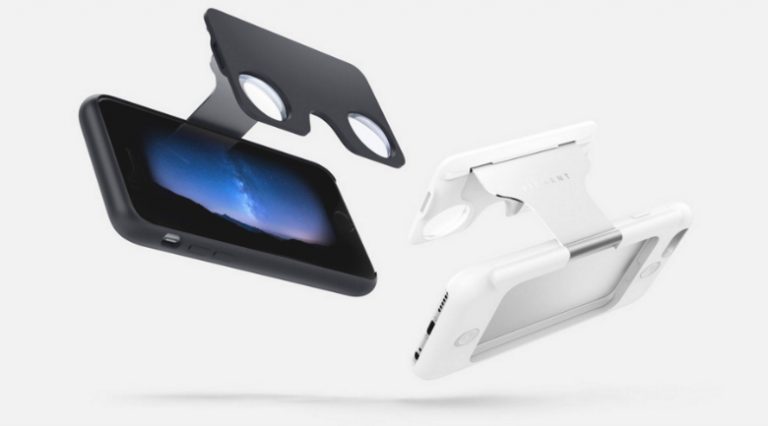
With an expected release date of January 2016, Figment VR is a virtual reality viewer, and protective case for iPhones, offering a more convenient way to provide simulated experiences from the palm of your hand. Before this handy product, users only had two options for accessing virtual reality. Oculus, a head-mounted headset that delivers great quality, but requires users to be on a computer. The other is Google Cardboard, a more affordable option than Oculus, but a noticeably bulkier product than Figment VR.

Unlike its predecessors, Figment VR is a sleek 2oz phone case made with soft touch material for a good grip, scratch resistant lenses that ensure durability, and high grade aluminum that guarantees longevity. These cases are designed to protect your iPhone while also bringing your imagination to life. Both lenses are housed in a discreet flip out mechanism that keeps the screen the perfect distance from your eyes, and conveniently folds away when not being used. With it’s ease of use and sleek design, this product is sure to be a hit for not only users but businesses alike.

An awesome marketing tool

As I mentioned before, Figment VR is a potential gold mine for businesses. With the success of Twitter, Instagram, Facebook, and other phone based applications, cell phones are at the forefront of visual content advertising, giving businesses the ability to reach the consumer wherever they are. With close to 100 million iPhone users and videos being one of the top 5 most effective b2b tactics, Figment VR has the an amazing opportunity to blow up big.

One company who did a great job at utilizing VR for their brand is Porsche. Their brilliant team came up with a unique VR marketing campaign that allows users to go for a test drive at the world famous Porsche Experience Center located in Atlanta Georgia, offering a full 360 degree view. Now imagine how you could use VR with your business. For realtors, it may be a chance to give potential home buyers an exclusive 3D view of a home without having to actually be there. For service providers, it can be an awesome way to show your services in action; the possibilities are endless.

It can only get better from here

Figment VR and its potential success is certainly intriguing. Aside from the fact that you can climb Mt. Everest whenever you want, it’s a great marketing tool for businesses who are learning how to leverage visual reality into money making opportunities.

I have a feeling this product is going to make VR explode in popularity when it’s released, so if you want to be apart of the innovative few who take advantage of this emerging technology, I’d strongly suggest doing some research, and seeing how you can incorporate your businesses goals.

#FigmentVR

Millennials get schooled by grandparents on old technologies

0

Teaching a new dog old tricks

Very amusing the video below about grandparents teaching their grandkids the finer points about old technological mainstays like record players, rotary phones, and boom boxes.

I don’t know if the scenes were staged or the real thing, but to me, this ranks right up there with the story about the kid who only knew Paul McCartney was in a band called Wings. Check it out before we offer meaningful insight:

bar

What’s old is new again

It’s good to expose the new generation to old technology. Make no mistake; millennials are on a completely different wavelength. We don’t need a team of researchers to point out that there are fundamental differences between a typical 20, 45 and 70-year-old.

According to Pew Social Trends, “age group differences can be the result of three overlapping processes:

1) Life cycle effects. Young people may be different from older people today, but they may well become more like them tomorrow, once they themselves age.

2) Period effects. Major events (wars; social movements; economic downturns; medical, scientific or technological breakthroughs) affect all age groups simultaneously, but the degree of impact may differ according to where people are located in the life cycle.

3) Cohort effects. Period events and trends often leave a particularly deep impression on young adults because they are still developing their core values; these imprints stay with them as they move through their life cycle.”

Tuned in and turned on

Additionally, PST points out that, “Millennials are history’s first “always connected” generation. Steeped in digital technology and social media, they treat their multi-tasking hand-held gadgets almost like a body part: more than eight-in-ten say they sleep with a cell phone glowing by the bed, poised to disgorge texts, phone calls, emails, songs, news, videos, games and wake-up jingles. Nearly two-thirds of respondents admit to texting while driving.”

I don’t believe there is much common ground “technologically” between the millennial and the baby boomer. Using again the examples in the YouTube video, nothing demonstrated therein has/had the mobility of current gadgetry. Phones stayed in the house, vinyl records certainly weren’t something you could listen to at school.

The sense of intimacy that an iPhone6 provides is light years away from anything baby boomers enjoyed in their youth. It would be the same thing if Baby Boomers were exposed to technology from 50 or 100 years before. Amusing to be sure. But really… who cares?

#OldTech

An open letter on living life with anxiety

A day in the life

Anxiety. We’ve all had it; that fluttery feeling in your stomach before your presentation or cold sweat before a date. Anxiety can manifest itself in a million different ways. However, for someone with an anxiety disorder, it’s a completely different thing entirely.

bar

A state of constant worry

What’s it like to have an anxiety disorder? The answer I give honestly depends on the day. Some days, it’s manageable, hardly noticeable. Other days, it’s like weight of the Earth is crashing down on me and everything is my fault. Some mornings I wake up and I already feel breathless with panic about everything I need to get done in a day. I worry that I won’t get everything done and I’ll let someone down.

I worry I’ve made the wrong decision, or my mind goes over and over the same thought a million times with “coulda, woulda, shoulda.” I worry that I’ve said the wrong thing and my friends are mad at me. I worry that I haven’t said enough and they think I don’t care enough. I worry that I do too much and not enough. In essence, some days, my worries have worries.

Everyday tasks become more difficult

It’s not just about the worry, though. Simple things can trigger anxiety quickly and without warning. For example, grocery shopping is fairly simple for other people, or at least it seems to be. You make a list of what you need, go to the store, grab what you need and get out of there. For me, too many people make me nervous. I feel like I’m trapped and I can’t get out. I have to avoid aisles if people are coughing or lingering because I can’t deal with it. I see and hear things more acutely during these times, perhaps part of the fight or flight response.

I can’t concentrate on what I need to do; I just have to get out and away from the people.

I have had to leave a store without making a single purchase because I felt overwhelmed by people, noises, or my body deciding it’s a good time to full scale “panic.”

It affects work behavior too

When people say, “just calm down,” I want to say, “really? I never thought of that.”

Frankly, you have no idea how badly I wish it were that simple, but it isn’t. It’s something I deal with, it’s part of who I am, but it doesn’t define me. However, it does define how I work at times. If I’m given the assignment and left to do it, I can do it quickly, happily, and precisely. However, if I have a boss or client hovering, asking me every five minutes how a project is going, I shut down. It’s overwhelming and I have great difficulty dealing with it. It feels like they are telling me I’m inadequate, that I cannot do the job to their standards so they need to constantly and consistently check up on me. Now, in some instances that may be the case (bad clients and bad bosses), but in other cases, it may just be the other person’s nerves showing through and have absolutely nothing to do with my abilities.

What you can do as an employer

Why do I tell you this? Well, I’d like to make this an open letter to employers: employ someone with anxiety, depression, autism, or any of the other millions of issues people have.

Why?

Because if you treat them with respect and give them the room to fly, you’ll never have a more dedicated employee. For some employees “flying” may mean an extra five minutes to focus and de-stress before beginning a project. For others, it may mean being allowed to try it several different ways before they find what works; believe me, it’s worth it. Helping someone flourish is NEVER a waste of time.

I know because I have one of these bosses.

They embrace my anxiety and encourage me to be a better writer and because of this I am actually able to be a better writer because I know they believe in me. They see more than the insecurity and anxiety; they see Jennifer, the writer. Be this employer and help someone realize their potential. It’s worth more than you know, to them and to your company.

#Anxiety

When you should NOT accept a job offer

Woo hoo, they want to give you money!

You’ve searched the classified ads, you’ve networked your butt off, you aced your interview, and now you’ve finally been offered a job! Congratulations!

bar
But wait, before you sign on the dotted line, are you sure this is the right job for you? Remember, a job search is a two-way street – you have to be qualified for the job, but the company also has to be good fit for you.

Seeking out the red flags

Pay close attention to everything you witness and every conversation you have during your job interview.

If something seems “off,” trust your instinct and just say no. Here are a few red flags to watch out for:

No one seems to stick around

High turnover. The company has been around for years, but all of the employees are new. This usually indicates that employees don’t last long in their position.

If the interviewer complains about his or staff to you during the interview, this is a very, very bad sign.

This actually happened to me once. The manager spent almost the entire interview complaining about what his staff does wrong, and how incompetent the other applicants for the job had been. He even said of one of his staff, “she’s dumb as rocks, but at least she’s perky.” This most definitely did not inspire me to work there – instead, it gave me the impression that the boss was a persnickety bully who did not respect his employees. Needless to say, I didn’t take the job.

You’ll be doing a lot of “synergy” and “circling back”

Take a rain check on the job offer if it’s not extremely clear exactly what you’ll be doing. Using general or jargon-y words to describe your job, rather than a clear list of tasks, indicates that the company will probably expect you to do several peoples’ jobs at once. Avoid companies looking for a “social media ninja” or a “sales genius.”

Pay close, close attention

Other bad signs: the company has been running its want ad continuously for several weeks, the interviewer doesn’t ask you very many questions, there isn’t a clear path of career advancement, or the company asks you to pay money upfront, for example, for training.

Probably the best way to vibe out the work environment and company culture is to observe other employees. Do they seem cheery, cooperative, and calm? Or do they seem panicked or worn down? Do they seem friendly and comfortable with the boss, or are they nervous or shut down? If you get a chance, ask employees what they like best and least about their jobs – when the boss isn’t around.

Good luck, and get hired – but don’t take just any job!

#VettingEmployers

Do company ethics ACTUALLY affect purchase decisions? [study]

They’re on your side

For some corporations, ethics has become a big business. Companies have turned their focus on more than just the bottom line. They tout ethical practices as a central tenant of their business or seek to address social and environmental issues. By doing so, many businesses hope to influence consumer purchase decisions in their favor.

bar

Consumers punish rather than reward

But, do company ethics really affect purchase decisions? A recent study by Mintel and Lightspeed would suggest perhaps not. While consumers don’t necessarily reward ethical companies by shopping with them, they are more likely to punish perceived unethical companies.

Of the 2,000 US adult internet users surveyed, more than 50% said they would stop buying products from a company they believe to be unethical. When it comes to telling others, over one-third of respondents said they would.

While it seems pretty clear that just about anyone would prefer to buy from an ‘ethical’ company, their study found this may not be the case.

In reality, less than half of internet users said they would buy products from a company they believe is ethical. However, they are more likely to stop supporting brands they think are unethical, and tell others about it.

Indeed, a 2008 experiment done by the Wall Street Journal found that consumers punished unethical goods more than they rewarded ethical ones.

The lure is in the product

Overall, both companies found that half of internet users were “sometimes” influenced by a company’s ethics.

Even though being considered an ethically good company doesn’t mean users will end up choosing them more often or recommending them to a friend, other research suggests that web users respond to ethical products instead.

One poll found that consumers tend to seek out products with social or environmental benefits. Therefore, while companies themselves are not more appealing, the lure for consumers may be in the socially or environmentally centered product.

#CompanyEthics

How are millennials accessing video content, and where should your brand be?

So you’ve got video content

Your brand is looking to snag the most effective audience with video content. But with so many content options (at least 9, to be exact: TV Shows, full-length movies, music videos, sports, videos of people playing video games, other user-generated content, clips of TV shows, home videos, and live events) which avenue do you choose to pursue? Well, before you answer that question, you must first better understand who your audience should be: millennials.

bar

The most active video viewers

Thanks to Emarkerter.com, we know that millennials are the most active video viewers of any other US age group; and expect that there will be 78 million millennial digital viewers this year. Not only do millennials enjoy digital video, but they still appreciate traditional television too; with adults ages 18 to 24 watching more than 18.5 hours, while 25-34 year old’s watched almost 25 hours a week.

Where do they spend their viewing time?

So back to our original question, how does your brand get the attention of these 78 million viewers, with 9 different video content options? According to research from TiVo, TV shows are the absolute best way to get their attention; with 34% of respondents preferring it over other content platforms.

This means promo within actual TV shows, or traditional commercial space in between breaks are the best two strategies.

After television, follows full-length movies (18%), and music videos (12%). On the contrary, clips of TV shows (5%), home videos (3%) and live events (3%), are the least watched content among millennials. So if you planned on using advertisement during live events or home videos (how?) to promote your brand – it’s definitely time to re-strategize.

Focus instead on full length TV shows, getting movie features, or music video advertisements. Another good idea is to get your brand involved with sports somehow, since 9% of millennials watch sports for their content. Sports sponsorships, commercials, and ad space are all good ways to achieve that.

An alterative to social media

Stay up to date, and ahead of the curve with your brand strategy and approach. With social media so popular, it’s easy and often for businesses assume, most consumers respond best to user-generated content (YouTube, Vine etc., but they’re wrong.

Before you go investing in the wrong video content, and audience, be sure to exhaust the top content options to the best of your brands ability.

Find a way to get your brand involved in TV shows, full-length movies, or music videos, and open the door to 78 million potential viewers and consumers.

Happy planning!

#ReachingMillennials

Why there is no substitute for hard work (editorial)

Half-way across the world

I was in Incirlik, Turkey at the time, courtesy of the United States Air Force. The first Gulf War was still about a year out.

Some military assignments like this one are considered “remote” which means you can’t bring your family with you. You’re left to your own devices for anywhere from 12-18 months.

This particular location was a forward operating base: the flight line would spit F-16’s into the sky in a heartbeat if tensions rose across any of Turkey’s borders. And because there were always tensions somewhere, there were usually war games of one type or another played on a regular basis.

bar

Just do it

This was… I don’t know… my second remote assignment (I’d eventually have four) and I was still young enough and green enough to not have all the answers. My learning curve was still steep but I knew one thing: I was hungry to learn and improve. A few years earlier I found myself in a serious slump both creatively and professionally, so for me coming to Turkey came with a sense of rebirth; I needed to seriously reinvent myself.

I couldn’t have been luckier because at that time Turkey was a great country to be in if you were a broadcast journalist: Still safe enough to travel around so locations like Adana and Istanbul, Bodrum and Ephesus were easily accessible, you could walk and talk and shoot video, and it wasn’t a big deal if you were American.

Tempus fugit

When you are by yourself for 15-18 months, what do you do?

You stay busy or you develop bad habits. The only thing I could relate to was working. Pick up a camera and hit the streets. Shoot some video. Write a story. Do some work.

To me, Turkey was one huge archeological find. Remains of castles hidden in the mountains. Ancient Turkish baths nestled deep in the city. Cobblestone roads. Great food and interesting people not to mention a military mission that was screaming to be told day in and day out.

Set of tools

You’re probably wondering what life lesson I learned while traveling that has helped me in my business life, or perhaps could help someone else. The great thing about being basically alone is that you can face your fears. You either move forward or fall back into the shadows.

It’s not for me to say how much talent I did or didn’t have prior to my arrival in Turkey, but I can tell you that if you work every day: Write every day, shoot video every day, draw a storyboard or interview someone every day, you will improve. You’re gonna get better.

Eventually you develop a system. You create a set of tools. You learn to economize and make your shots count. You learn to write on the fly and voice your story on location.

Change we must

After a while, I could sense that over the course of those 15 months (or was it 18? I don’t remember) I was changing: I was working smarter and not harder. I developed a pallet of shots and techniques that I could and would rely on from then on. I was learning time management and goal-setting without even realizing it. I was learning about meeting deadlines and dealing with people, and it was happening in real time.

I would go on to other assignments in other parts of the world and I was able to keep raising the bar. Plus, I was working with other talented individuals and you learn from them as well. I’m not saying you can’t learn this in a classroom – but there’s a big difference between real world experience and a textbook exercise.

I’d like to think that if you talk to anyone who has had success in a given field they will tell you the same thing: You need to learn your craft and spend time doing it. Surround yourself with talent and be a sponge.

I’m not that involved in broadcast journalism anymore. I think if you do anything for 20 years or more you deserve a break (plus writing is a lot easier on my back). But the same lessons I learned back then still serve me well today.

#WorkEveryDay

As cities, states argue about who can pee where, Target opens stall doors to all

Target’s stance on inclusivity

Target has taken another step forward in the fight for equality by announcing that their stores will allow transgender customers to use any bathroom that aligns with their identity. This comes during a crucial time in America’s history where equality regardless of gender is a hotly contested issue.

bar
The announcement, which was made on Tuesday, came through a press release, titled ‘Continuing to Stand for Inclusivity,’ that stated that inclusivity is a core belief of the Target Corporation.

“It’s something we celebrate. We stand for equality and equity, and strive to make our guests and team members feel accepted, respected and welcomed in our stores and workplaces every day,” the release reads.

Transgender public restroom use as a state issue

As it stands now, the issue of gendered bathroom use is being debated state-by-state. Many have restricted public restroom use by requiring an individual to use a bathroom based on the sex listed on their birth certificate.

In addition to inclusivity in their restrooms, Target also extended this idea to fitting rooms. While much support has come from this decision, online forums have seen backlash from those who do not agree with the decision.

Support and backlash, nothing new for Target

Many took to Twitter to state their support or dislike for the decision. Some were relying on the argument that the decision is unsafe for children, while others professed that it initiates tolerance.

However, this is not the first time Target has been the topic of gendered-debate. Earlier this year, the company announced that they would create and market gender-neutral bedding for children. This was done in an effort to remove gender stereotypes that tend to begin as early as childhood.

Equality a continuous issue in the U.S.

In 1972, Title IX was passed by Congress to give education treatment to men and women in any publicly funded educational program. Since then, Title IX has rebranded to become the saving grace for any issues regarding equality, both in terms of gender discrimination or harassment.

This speaks to the fact that, while the demographic of an issue may change, the core issue is equality is still the same. Target continues to make strides in providing a safe and comfortable environment for all customers.

#TargetInclusivity

Google+ is more popular than you think

Is Google+ really the ghost town people joke about?

If you were to compile a list of today’s top three social media sites, you’d probably draw from a group of places such as Facebook, Instagram, Snapchat, Twitter, Tumblr, or YouTube—and you’d be absolutely right. In terms of sheer traffic volume, Facebook and YouTube consistently take the internet by storm.

You certainly wouldn’t mention Myspace, and if I had the nerve to throw Google’s pitiful attempt at social media in with any one of these giants, I think I’d get laughed out of my Google Hangout.

But, as it turns out, Google may have the last laugh

We now know that Google+ entertains around 1 in 4 social media users.

Between its recent stylistic overhaul and Google’s simple accessibility, those numbers might grow significantly in the coming months.

Google’s intuitive platform is used religiously by small businesses and the majority of educational services, simply because it offers so much modularity; as a result, a large portion of its dedicated user-base is well-acquainted with the ins and outs of its functionality (which, judging by my newsfeed, is arguably more than one can say about Facebook).

All hail the Google deity

Keep in mind that marketing on Google+ is easy, cheap, and has incredible potential for outreach. As a small business owner or regular entrepreneur, you might shy away from promoting your work on major sites; Google+, on the other hand, is well within your grasp. Plug-ins for Twitter, Instagram, WordPress, and all your favorite apps make connecting to the most important parts of the internet a one-click procedure, and you can’t knock the easy, blog-inspired format.

Here’s the lowdown, folks: Google is the friggin’ overlord of the internet, with easily the most powerful presence and some of the best connections throughout all the social media branches on which you can’t afford to advertise. You’d have to be out of your mind not to take advantage of Google+ and its relative obscurity while it remains as such.

It’s a veritable goldmine of information, connectivity, and accessibility, and it damn well deserves your attention.

#GooglePlus

Make way for the robotic concierge (and the next wave of jobs to be taken by bots)

0

Snakes on planes? Nah, just robots on ships

A critical position on any cruise ship is the concierge. The concierge makes sure everything goes according to plan: if you need directions, advice, a lounge chair or even the weather forecast. Whatever the need it’s just another feather in the cap of the ship’s concierge.

bar
Come the end of April those responsibilities will be given a test run by several robots named Pepper. All of which will join Costa Cruises, a branch of Carnival, as the newest crew members.

A little Pepper, please

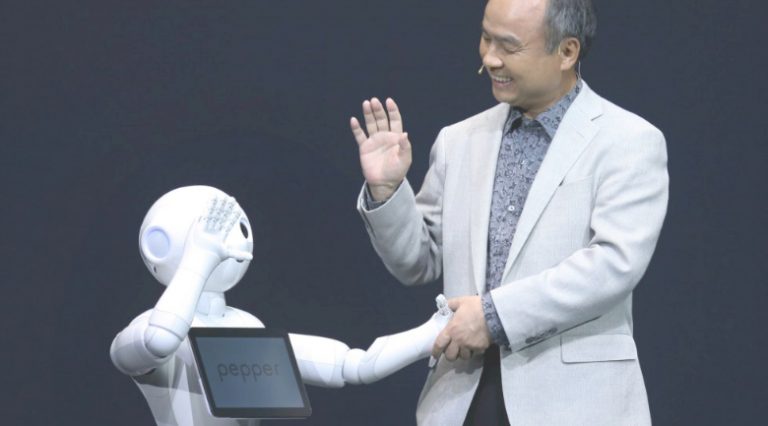
According to Tech Republic, the 4-foot humanoid robot (built by Aldebaran, a SoftBank company based in Paris) “Is designed to read human emotions.” And while these robots may not be the first to work on a cruise ship they are, “The first to interact with vacationers in a broader way, providing directions, information about destinations, entertainment, and general assistance.”

Multi-lingual

Pepper can be programmed to speak several languages, which as you can imagine is important on a cruise ship where the passengers come from all over Europe.

So it helps that Pepper is trilingual, speaking English, German, and Italian, with the potential to tack on additional languages later on.

Costa had the foresight to look to the future and understood quickly that this could be something quite interesting to help the crew help the customers who accept nothing less than impeccable service.

Jobs go bye-bye?

Conversely, while most other robots are built for repetitive chores, Pepper is designed to respond to people’s tone-of- voice and the way they’re speaking. They’re more suited for the service area and a labor-intensive area. An earlier article on TechRepublic explains that “Robotics is now doing work that is increasingly cognitive and non-routine.”

In other words, “The next wave of jobs that will be replaced are lower-level white-collar workers, which require some cognition and a lot of repetition.” A perfect fit for a robot such as Pepper.

Apparently demand for the robot with a heart is high. When Pepper went on sale last year around this time an article on ZD Net reported that “One thousand of the four-foot-tall humanoid robots went on sale and all sold within a minute.” The company that builds Pepper (Aldebaran, a SoftBank company based in Paris) has followed through with plans to build 1,000 bots a month.

In the meantime, your next cruise, at least on the Costa Line, may have a little robot helper to show you the way around.

#Pepper

The ideal post length for the most popular social networks #science

The science of social media

Figuring out the proper word count for the right social media platform content isn’t always done by instinct, not when there are stats to consider. And deciding the ideal length can be time consuming, especially when you take into account the ever-evolving standards, and changing statistics for what readers are expecting: What was acceptable in 2010 is no longer an acceptable standard.

bar
Express Writers offers a detailed look at what works best for each platform, which may help you make the distinction and help you craft the perfect social media post.

Twitter gives you 140 characters, but you only need 100

Although Twitter has the option for you to utilize 140 characters (but not the 10,000 that rumors indicated were coming to a tweet near you), you only need to use around 100 or less.

Tweets with no more than 100 characters are easier for users to consume, and therefore receive 17 percent more engagement than longer tweets. Medium length tweets (between 71-100) are retweeted more often than large (101 characters or more) and small (41-70) tweets.

Contrary to popular belief, Facebook isn’t a long-form content platform

While some see Facebook’s limitless character option as an opportunity to be as loquacious as possible, you may be surprised to know that the preferred character limit for a Facebook post is actually shorter than a tweet.

Specifically, the ideal post is 40 characters or fewer; posts following this word count earn 86 percent more engagement than longer posts. If 40 characters is too short to capture your company’s mission, the second best length is 80 characters or fewer. These particular posts receive 66 percent more engagement than longer posts.

Readability + Accessibility = Google+

As you probably already know, Google+ posts are ranked by headlines and body content length. And because readers only absorb the first and last three words of a headline, the highest ranking Google+ headlines, are 60 characters or fewer and contain no more than six words. The body content should be between 200-440 characters to be effective.

Blogs are the best long-form content platform

Unlike Facebook, blogs are the perfect place to share informative guide-style content in long form. The ideal reading length for blog post is 7 minutes; which translates into roughly 1,600 words.

Longer blogs are more likely to provide higher quality markers for search engines, which ultimately allows them to rank higher. Specifically, blog posts that are longer than 1,500 words receive 68 percent more tweets and 23 percent more Facebook likes than shorter posts.

In fact, most web pages that sit in the top 10 SERP positions contain 2,000 words. Eight word or longer search queries have risen by 34,000 percent which makes long-tail keywords more popular today than before.

Pinterest users prefer short and concise call to actions

Since Pinterest is image heavy, it should be no surprise that fewer words are preferred in posts – 200 characters or less to be exact.

These shorter posts earn more repins, and are even more popular, earning 80 percent more engagement, when they include a call to action. As for the image size, research revealed that pins with 800 pixels or more earn significantly more repins than its smaller counterparts.

Remember the aforementioned tips, but don’t forget these general best practices

Now that you know the ideal length for updates on each social media platform, be sure to keep these other general tips in mind when generating effective content:

  • Make sure you are helpful when delivering content – it can be the perfect length and still lose readers if not helpful.
  • Add visuals to all of your posts; posts with visuals earn 94 percent more views than text only posts, so if you can find a relevant image, video, or infographic, use it!
  • Lastly, engage with your readers after you have gotten the right word count; respond to comments, and post follow ups when possible.

If you are looking to increase engagement, and stay relevant to your target market, follow the above tips before posting your next social media post. Remember, word count is a huge factor, but so is quality!

TL;DR version:

ideal-social-media-update-length

#SMlength

Jaguar stalks the startup space in an attempt to become more nimble

A great acquisition decision

In 2008, Jaguar was acquired by the Indian auto Company, Tata Motors. Most analysts who thought that purchasing Jaguar Land Rover for $2.3 billion was just an expensive blunder met the decision with skepticism. The acquisition capitalized on Ford’s desperation to secure its own survival and purchased the brand for billions less than it spent to acquire them.

bar
Since then, Tata Motors has successfully turned around the failing company on the verge of collapse utilizing disciplined financial plans, target investments, and tight cost controls.

Cutting the red tape

After successfully releasing several new models and a gorgeous re-design of the flagship range rover, Jaguar has announced its creation of a technology venture, InMotion, designed to achieve a more nimble approach to product research, design, creation, and launch.

Designed to imitate the fast-moving nimbleness of tech startups, InMotion will employ up to 30 personnel based in London. Initially, they will oversee research and development with hefty financial and technological backing. As projects get pitched and approved, InMotion will then pivot into a production role, creating nimble services that keep up with the ever-changing mobility sector.

In a press release, Jaguar Land Rover’s Group Strategy Director, Adrian Hallmark said:

“With the development of new apps and on-demand services, InMotion provides us with an opportunity to provide engaging and invaluable experiences to both new and existing customers globally.”

“As a start-up business, InMotion combines the flexibility and pace needed to compete in the ever-changing mobility sector. It allows us to react quickly to new tech and ever-changing customer demands.”

Information from Jaguar Land Rover has been fairly non-committal when it comes to details concerning upcoming projects. However, the move follows a lager trend seen in the automaker industry of creating independent subsidiaries that are more nimble with less bureaucracy to bog projects down. Ford spun off their Ford Smart Mobility subsidiary, Daimler recently spun off Car2Go, and now Jaguar Land Rover has taken steps to increase their technology development mobility.

Interrupted markets improve

The automotive industry has been fairly slow to progress in the last 10 to 15 years. With digital native startups “attacking the norm,” more of the established industry is being forced to take action. It will be fascinating to observe how the growing technology sector merges with the automotive industry.

#Jaguar

Who is to blame when good bots go bad?

0

They are mimicking human behavior, after all…

The story of Tay the chat bot sounds like a film on the SciFi channel: Microsoft engineers create an advanced Artificial Intelligence (AI) fem-bot and turn it loose on an unsuspecting world only to find out how much of an influence society has on the bot’s mimicking skills. Next thing you know the bot is spitting out profanity and short-circuits itself on this mega-dose of reality. Okay, not exactly but that’s pretty much the script.

bar
I think we all know the story: Tay was a chat Bot designed to target 18 to 24 year olds in the U.S. and was built on a foundation of aggregated public data, About 16 hours into Tay’s first day on the job; she was shut down due to her inability to interpret incoming data as racist or offensive.

Does not compute

So what makes good bots go bad? Aren’t they programmed to do what we tell them to? Well here’s the deal: not only are bots able to mimic human behavior but in Tay’s case she could distinguish right from wrong. According to an article on Tech Republic, What Tay was not equipped with were “Safeguards against good and bad.” Adding to that, Roman Yampolskiy, head of the CyberSecurity lab at the University of Louisville, explained that, “The system is designed to learn from its users, so it will become a reflection of their behavior.”

In other words, Tay has no idea what it is saying. It has no idea if it’s saying something offensive, or nonsensical, or profound.

Danger, Will Robinson

For its part, Microsoft stressed that, “We stress-tested Tay under a variety of conditions, specifically to make interacting with Tay a positive experience. Once we got comfortable with how Tay was interacting with users, we wanted to invite a broader group of people to engage with her. It’s through increased interaction where we expected to learn more and for the AI to get better and better.”

Only instead, Tay got worse and worse.

What’s crazy is that Tay was not Microsoft’s first attempt at AI released into the online social world. Again, referring to Microsoft’s blog and the apology contained therein, Microsoft’s XiaoIce chatbot is being used by some 40 million people in China, delighting with its stories and conversations. The great experience with XiaoIce led Microsoft techies to wonder: “Would an AI like this be just as captivating in a radically different cultural environment?”

The answer obviously was no!

Writing is on the wall

Finally, according to an article on EMarketer, Tay’s problems certainly had to do with issues in code and scripting. Was it Java’s fault? Many programmers agree that “There is no good way to write substantial software in JavaScript.” These things frustrate professional and experienced programmers, since they are simply not used to writing in functional languages. How many programmers that have a professional education actually know how to do functional programming? And how many are good at it?

I don’t know. Why not ask Tay?

#WhenGoodBotsGoBad

Amazon’s Audible now offers podcasts – why this is great for your brand

Doing it yourself

Any time you can get your product or service on the air it’s a good thing. It’s even better if you can get yourself some airtime and do the plugging first hand. That’s the beauty of Youtube: Acquire a channel, shoot some videos, get some followers and before you know it you have your own duck-taped version of the QVC Network.

bar
Some pretty awesome and lucrative endeavors started out just like that. I don’t try to make more it than it is. If you want to beef up your sales presentation you can ratchet your efforts up a notch and produce a Podcast (just your voice or you and a guest). What do you have to lose? These days the need for product is so great your chances are as good as any that you have your finger on the pulse of some original programming.

Enter Audible

Amazon Audible is going the same route (OK, maybe they have a little bigger budget to work with) with original content voiced by professional talent. In fact, Nieman Lab explains that “Long-anticipated original content has finally arrived in the form of a new “Channels” section in the Audible mobile app.”

The Channels section (currently in beta and rolling out on iOS and Android to some Audible members even as I write), streams collected short-form audio: Ranging from read-aloud versions of New York Times articles to complete shows from PRI’s The World to episodes of Charlie Rose. Nieman Lab also points out that “Audible is even serving up its own multi-source collections of content (i.e. “The Daily Rush” and “The Weekender” among others)

Podcasting is the new blogging

Audible is looking to push the boundaries of audio content. They refer to it as “short form content” of 60 seconds or less. Perfect for the complete lack of attention that impacts everything we do in to shorter and shorter clips: Movies are shorter, songs are shorter. Heck, let’s make news content shorter as well. You can snicker all you want but podcasting (in whatever form) is the new blogging. Podcasting is to now what blogging was to the early 2000’s.

Now wrap yourself around this: When it comes to platforms (as in, how can you get your podcast on the air), podcasting has been a remarkably open one. All you need is access to a server and you can publish to the world. Think of what that means to your business! The possibilities are endless.

Show me the money

Believe me when I tell you, this podcast stuff is a good thing. Oh wait, is the word podcast too “millennial” for you? Ok, let’s call it a program. And because these programs are a good thing, the mass availability of distribution through an RSS feed for example is going to privatized and quick. Which is why you have platforms like Audible Channel coming online that, by the way, comes complete with an audience that is already paying $14.95 a month to download virtually every Kindle book in existence.

A podcast by any other name is still a podcast. The sooner we learn to harness its power for good the sooner we all make a buck.

#Audible

How to use Snapchat’s new 3D emojis (and please do, they’re cool!)

Augmented reality goes mainstream

What began as a simple, self-destructing text message service has quickly become one of the most popular apps amongst young smartphone users. That’s because Snapchat continues to push the envelope by developing new innovations and adding features that inspire users to get creative with their visual-based messaging.

bar
Snapchat has just come out with 3D stickers, bringing augmented reality increasingly into the mainstream, and into the hands of consumers.

Emoji yourself (or your cat)

Snapchat’s 3D stickers are emojis that you can “pin” to objects in a video. The emoji will “stick” to the object, no matter how it moves or how your camera moves. A sample video shows a smiley face emoji that remains planted over a pet cat’s face as is saunters about.

What’s more, emojis will change size to remain proportional if you zoom in or zoom out. Give yourself a pair of animated sunglasses, and they will get bigger and smaller, keeping a close fit to your face as you zoom in and out.

snapchat

How to use 3D stickers

To use a 3D sticker, simply record a video, tap the sticker button, then drag to place the sticker over an object in your video. Lastly, long press the sticker to make it “stick.”

The 3D stickers use machine vision to recognize objects in the video, and track them as they move.

The use of machine vision on Snapchat is just another example of ways in which advanced digital technologies are starting to filter down to the masses, and into commercially available products and apps.

Currently for Android only

The new technology is available today for Android, and will soon be released for iOS. It appears that Snapchat was able to develop 3D stickers with the help of recent hire, Eitan Pilipski, vice president of engineering from Vuforia, and augmented reality technology firm.

It appears that Facebook is trying to stay competitive with Snapchat by acquiring animated lens maker MSQRD.

#3DStickers

Tesla pre-orders eclipse 300,000 in less than a month

It hasn’t even been a month

Who says innovation doesn’t pay off? Tesla Motors says worldwide orders for its new lower-priced Model 3 electric car have hit 325,000 and rising. The Palo Alto, California, company started taking orders March 31, shortly before Musk unveiled the car in Los Angeles. It’s not even scheduled to go on sale until late next year. Telsa’s stocks are projected to soar this year if they meet this demand of pre-orders.

bar
It just goes to show you what being a visionary can lead to: CEO Elon Musk had an alternative idea to standard auto manufacturing and how dealerships work, and despite endless government roadblocks, hits this tremendous number. It’s not all roses and chocolate but sometimes you have to take a risk and roll the dice.

What’s in a name?

Let’s look a little closer at the Telsa phenomenon. Telsa’s detractor’s will try and pull away the silk veneer and say T’s success is all smoke and mirrors. I’m not one of them although I wish Telsa would work contrary to its present business model. More on that later.

First though, I won’t argue that the number of orders only reflect fully refundable pre-orders on the Model 3 that required a deposit (of $1,000). And, according to a recent Stratechery article, Tesla has a history of delivering cars late and with a higher price than expected. More importantly Tesla only control’s a fraction of the car market.

I say “phooey” to all that. Give me another car manufacturer that can generate those kinds of numbers on pre-orders for a car sight-unseen. Slice it up any way you want and Telsa still has created a brand that generates a lot of heat.

The vision

Telsa CEO is nothing if not forward thinking. Maybe the term visionary is bandied about too easily these days but it is what it is. Stratechery points out that the strategy of Tesla is to “Enter at the high end of the market, where customers are prepared to pay a premium, and then drive down market as fast as possible to higher unit volume and lower prices with each successive model.” Additionally Telsa looks to “Reinvest all free cash flow into R&D to drive down the costs and bring the follow on products to market as fast as possible.” So in theory at least, when someone buys the Tesla Roadster sports car, they are actually helping pay for development of the low cost family car.

The thing is, and I alluded to this earlier, is the word Telsa means something to people.

Whether that means sustainability and caring for the environment, or amazing performance or even Silicon Valley status symbol, Tesla’s focus on the high end has, according to industry analysts, helped the company move down the cost curve.

Ultimately I’d like to think it was Musk’s insistence on making “An electric car without compromises” that ultimately led to nearly 300,000 individuals reserving a Telsa Model 3, many without even seeing the car.

Those things you do

A part of me wishes that Telsa had come out with a price-friendly eco car first and then elaborated on a premium model. But I can see that kind of thinking would not have made the company into the player it is today.

Bottom line: You may have an alternative model, and it may not be easy, but it IS possible to succeed by going against the grain.

Heck, just ask Elon Musk.

#Tesla

Attentive Home Depot staff may have helped prevent a violent crime

Buy bomb guts, Home Depot might call the cops

Last week, Douglass Herr, came into Home Depot in the St. Louis metro area to purchase several lengths of 1 ¼” pipe, and asked employees to cut them into 7 ½” lengths with threaded ends for end caps. Employees suspected the makings of a pipe bomb, and called the police.

bar
The police arrested Herr at the Home Depot while he was waiting for his pipes to be cut. They obtained a search warrant for the Super 8 motel room where Herr was staying near the airport. There they found “materials for constructing pipe bombs…including 25 pounds of gunpowder, nine pipe end caps and fuse wire.”

The bomb guts were “for art”

Herr will be charged with a felony for unlawful manufacture of an illegal weapon in the St. Louis County Circuit Court. Officials did not reveal whether or not Herr had explained his intentions for the pipe bombs, although St. Charles County prosecuting attorney Tim Lohmar reports that Herr “said he just had this for artistic reasons. He didn’t expound on that. Just for art.”

Apparently Herr had also made vague threats towards President Obama, and had recently been stopped trying to enter a restricted area at the Lambert-St. Louis International Airport.

Herr has a history of violent crimes and in the past, has been ordered by the court to seek mental health counseling. Last year, Herr was convicted of assault after punching someone at the MetroLink station and brandishing as switchblade. Shortly thereafter, he was charged with stealing 36 pizzas from the back of a pizza delivery truck and punching the man who tried to stop him. In his plea documents for this case, Herr reported that he had manic depression and schizo-affective disorder.

Herr is currently being held at the St. Louis County Justice Center in Clayton. His cash bail is set for $250,000.

#HomeDepotHero

Nana tests out Tesla’s autopilot feature, loses her GD mind

Self-driving cars – awesome or scary as hell?

We know the idea of autonomous cars is thrilling… but what about terrifying? Despite a new study indicating that most people aren’t afraid of self-driving (autonomous) cars, or the autopilot feature on cars like the Tesla, the feeling isn’t quite universal

bar
Take for example, the newly viral video of a grandma switching a Tesla over to autopilot mode and going absolutely bananas has got a lot of us worried; just how unnerving will it be to drive down the road in a car that’s driving itself?

Will everybody lose their minds the first time a car takes control, or do you think you’ll be able to play it cool? Because although Grandma’s reaction is hilarious, it’s also kind of disconcerting.

It’s a bird, it’s a plane, it’s… a Tesla

So new Tesla Model S vehicles feature an autopilot mode that can be turned off and on. But have you heard about Ludicrous mode yet? The Tesla Model S P90D can be switched into Ludicrous mode (actual name, not made up) and the four-door sedan flies from 0 to 60 mph in 2.8 seconds flat.

No big deal, but it’s actually faster than an airplane. Literally. Tesla Motors tweeted out a pretty slick video of the P90D racing a Boeing 737 and beating the behemoth of a plane which boasts 50,000 pounds of thrust.

Now that is definitely terrifying. It could even be considered ludicrous. Perhaps people should start to consider what transitioning over to autonomous cars will actually be like. It may not be as smooth and simple as it sounds in theory (or it may be, we’ll see).

Now how long will it be before Tesla gets Ludacris as a spokesperson?

#ScaryTesla

Outsite combines coworking and vacationing in beautiful locations

Coworking is love

I love the coworking movement. As a perpetually on-the-go freelancer, it’s hard to find a decent spot full of like-minded people working in tandem: coffee shops end up being too chatty, I can’t count on a library being within walking distance of my lodging, and the whole “I need a power outlet” thing puts a bit of a kibosh on working outside most of the time.

bar

Thinking outside the box

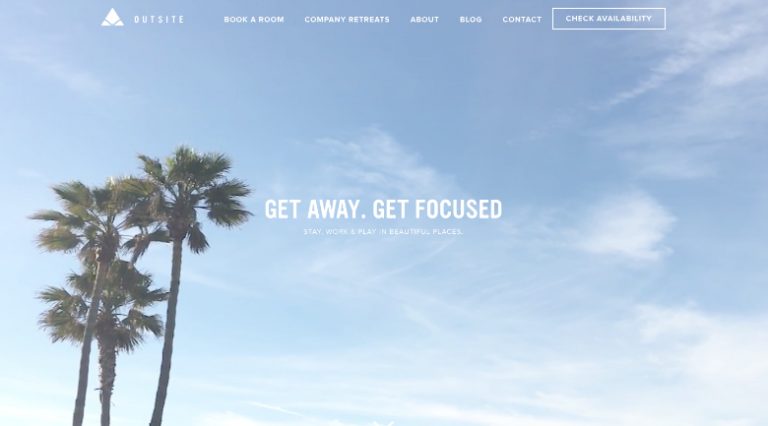
I would, however, gladly work AT Outsite–the latest in a string of coworking sites dedicated to making sure freelancers and contract workers have access to an environment conducive to productivity. Unlike your run-of-the-mill coworking space, however, this startup emphasizes both working AND playing hard.

Work hard, play hard

The concept is pretty straightforward: Outsite provides you with a paid membership that gets you hefty discounts on lodging in places such as Santa Cruz, San Diego, and Lake Tahoe. Once there, you work side by side with other freelancers.

After a hard day of work, you can relax alongside those same people, with site-specific activities including spas, BBQs, beach activities, and yoga classes, to name a few.

Vacation meets productivity

This is a freakin’ cool idea because it takes the allure of a vacation and combines it with the romanticization of working remotely. The final product is a mind-clearing getaway wherein one can focus on work and relaxation in tandem–a concept that, despite its proven health and productivity benefits, is still a minority in the workplace.

Say no more

From a personal standpoint, I’d be delighted to spend a week in any of Outsite’s glorious locations with a 60-hour agenda and evenings free.

This grandiose endeavor is indicative of a surge in popularity of remote work and gig economy.

These are two cultures in which I happily partake–and the “work hard, play hard” aspect of an exotic location paired with the ability to get away from the hustle and bustle of day-to-day life should make for an interesting routine.

If you find yourself as intrigued as I am, head on over to their website at https://outsite.co and check out their services–I know I’ll be keeping a keen eye on this startup.

#Outsite

Urgent: Homeland Security urges PC users to uninstall Quicktime (do it)

Straight from the government

If you have a Windows PC, but use Apple’s QuickTime software to watch videos or listen to music, your computer could be in danger, according to statements released by the Department of Homeland Security and an independent cybersecurity firm.

bar

Apple no longer making security updates

Trend Micro, a top security firm, published a blog post on Thursday revealing that two bugs were found in the QuickTime for Windows software. What’s more, it turns out that Apple is no longer issuing crucial security updates to PC users with QuickTime, leaving users vulnerable to hacking and other security threats. Since Apple will no longer be making security updates to QuickTime for Windows, Apple, as well as Trend Micro, recommend that all Windows users simply uninstall QuickTime.  Immediately. Don’t wait until tomorrow.

Mac users with QuickTime, on the other hand, should be safe.

No active attacks – yet

Trend Micro is “not aware of any active attacks” based on these software bugs, but security could be compromised if users cross paths with hackers, who could take advantage of the bugs in the QuickTime software to spread viruses or steal your identity. Now that the news of the bugs is quickly spreading, it will only be a matter of time before hackers try to take advantage of them. That’s why it’s important not to uninstall as soon as possible.

The Department of Homeland Security’s cybersecurity team, the United States Computer Emergency Readiness Team (US-CERT) also issued a similar alert this week. Again, they insist that “the only mitigation available is to uninstall QuickTime for Windows.”

How to uninstall

Apple has not commented on the bugs in the software, but has recommended that Windows users uninstall QuickTime, and posted instructions for doing so on their website. To uninstall, go to your Control Panel and click Programs, then click Programs and Features. Select QuickTime 7, and then click Uninstall. Depending on your settings, you may or may not need to enter your password. Your computer will take it from there.

#UninstallQuicktime

HP’s logo overhaul signals permanence of minimalism in design

What do you think of HP’s new logo?

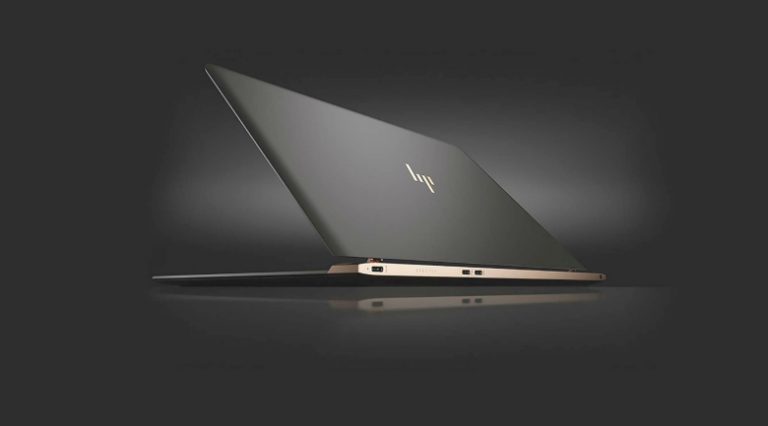
If you’ve been a die-hard HP fan from the get-go, be ready for a change: your next laptop won’t bear the traditional “HP” logo. Instead, the legacy brand has opted for a sleeker, minimalist logo, designed by HP’s creative team, Moving Brands.

Why should you care?

As anyone with a background in design will be happy to corroborate, we have moved into a seemingly permanent era of minimalism, from basic marketing and advertising to entire brand names–and you’re going to want in on this movement.

bar
If you haven’t jumped on the minimalism train already, it’s time to book your ticket. Though a complete overhaul of your logo or advertising might be a daunting task, relax–this is a pretty straightforward design trend.

hp-logo

Minimalism 101

Common aspects of minimalism include straight lines – particularly in the horizontal and vertical – a neutral color palate of greys, white, and black, and, of course, a lack of superfluous detailing. The end goal is for your product to stand out whilst being complemented – but not overshadowed by – the platform, font, or logo upon which it resides.
Naturally, a pertinent example of this is HP’s redesign.

Consider the current HP logo – the same letters inside of a solid circle transposed upon a monochromatic background, as is the case with most laptop covers–and compare it to their new rendition: four 13 degree diagonal lines of differing lengths. It’s simple, it’s clean, and it gets the point across.

Know your audience

Of course, no design system is without its drawbacks, and minimalism is no exception. As pointed out by Web Designer Depot’s Ezequiel Bruni, HP’s drastic redesign may be a little too minimal; were it not for HP’s renowned status in the technology realm, you might find yourself spending more time trying to figure out what “////” means than actually making a purchase.

This concept applies to your business as well: Minimalism, while clearly the current trend, must be balanced with enough overt detail to clue your audience in on what, exactly, they’re looking at.

#HPlogo