Home Blog Page 170

Ford tests their self driving (autonomous) car in the complete dark

Ford out to prove the superiority of their system

In order for the public to accept something as unnerving as cars that drive themselves, auto manufacturers are going to have to prove and prove again their claims that “autonomous vehicles” will soon be able to drive not only as well as a human beings, but better.

bar
Ford seems on the right track, having just shown that their autonomous car can drive itself in pitch black environments. The company tested the new technology in March at the Arizona Proving Ground, a facility that several auto manufacturers use to try out their latest creations.

It comes with it’s own night vision goggles, y’all

The car essentially comes with its own night vision goggles that use Lidar technology. Lidar (pronounced LIE-dar) is like radar, but it combines lasers with distance sensors and 3D mapping technology to help the vehicle orient itself in space, stay on the road, and avoid obstacles.

Previously, most autonomous cars have relied mostly on cameras. But, according to Ford’s technology leaders for autonomous vehicles, Jim McBride, “thanks to Lidar, the test cars aren’t reliant on the sun shining, nor cameras detecting painted white lines on the asphalt.”

Wayne Williams, the research scientist who rode in the car on its pioneer after-dark journey, reports that it was an “odd feeling” when he realized the car was driving perfectly, but looked out the window only to see total darkness.

Test, test, and test again

Of course, there are not many reasons a car would need to drive in pitch blackness. Theoretically, a passenger in a self-driving vehicle doesn’t need to utilize the headlights to see where she is going. After all, headlights are as much about being seen as they are about seeing.

The test is less about practical applications, and is more about using any and all available technologies to give the autonomous vehicle as much data as possible for safe and efficient driving. Says McBride, “To do something as ambitious as making a car drive itself, you need lots of testing in lots of places so that you can cover all the scenarios you might ever expect to see.”

Skepticism remains

Many people are still skeptical about the safety of self-driving cars. However, while human drivers can only use their five senses to gather information and make decisions, autonomous vehicles can instantly compile information from Lidar, radar, GPS, traffic reports, and other sources.

It may time for humans to admit that some machines can surpass us. You wouldn’t dare drive your car down the street after dark, without the headlights, would you?

#FordLidar

Unexpected ways the Internet of Things is changing the world

3

The Internet of Things (IoT) is about to explode

These are exciting times for the Internet of Things (IoT)! Just imagine that in a few short years IoT technology will be connected to nearly 25 billion “things” of one kind or another. That’s not a typo. That’s how fast the IoT is evolving and impacting our lives, and we are fortunate to have a ringside seat as it is happening.

bar
That’s only the tip of the iceberg: The McKinsey Global Institute predicts IoT will have a total economic impact of up to $11 trillion by 2025.

MGI recently spoke to several of the leaders in the IoT arena – many of whom will be speaking or attending Internet of Things World 2016,” (May 10-12 in Santa Clara, CA) for their thoughts on the impact that IoT will have on businesses around the globe. In no particular order are a compilation of responses:

1. Smart Homes

IoT World News points out that the smart-home industry generated $79.4 billion in revenue in 2014, that according to Harbor Research and Postscapes. They predict that number will rise as consumer awareness grows.

Corey Chao, innovation manager at Reliant Energy, explains that “IoT is creating a market for energy companies to unite and automate functions around the home that will provide efficiency, security and cost-savings.” IoT allows us to connect all these devices to the larger world and apply intelligence to it.

2. Industry

General Electric estimates that the market for connected industrial machinery will add $10 to $15 trillion to the global GDP within the next 20 years.

At Hitachi, sensors, bandwidth and processing power are becoming so affordable and ubiquitous that Hitachi can now apply sensors to nearly every piece of machinery to predict when maintenance will be needed.

3. Transportation

If there was ever an area that is screaming for Smart Car technology it is Southern California. According to IoT World News, “San Francisco is leveraging IoT in its quest to become the first U.S. city to have a fully connected ecosystem of transportation, where driverless cars and transit, ride sharing services like Uber and Lyft, and even bike-sharing apps will be connected through one platform where residents can easily plan their transportation from Point A to Point B.”

4. Smart Cities

Sounds like the name of department store but across the country, public-private partnerships are developing smart cities to reach their sustainability and livability goals. Smart cities rely on data gathered from sensors placed all on hundreds of resources to better manage a city’s infrastructure, from traffic signals to streetlights managed wirelessly.

This means lower energy costs, increased public safety, and lowered carbon footprints.

5. Healthcare

According to Global Industry Analysts Inc, “Demand for health-conscious wearable devices like FitBits and Apple Watches has reached an all-time high, and now developers are looking to devices that will assist people with chronic illnesses. The global wearable medical device market is expected to reach $4.5 billion by 2020.”

And you thought that IoT was just a novelty?

#IoTfuture

Google nixes free Fiber option in their flagship city, who’s next?

Google could change some minds

I was still a teenager when the Google Fiber office first appeared on Westport Road in my hometown of Kansas City. At the time, we didn’t know what it was, although we correctly presumed it was some new technology that Google was cooking up – it turns out that Kansas City was to be the test market for Google’s superfast broadband and cable TV service.

bar
Fast forward nearly a decade later – my mom is having trouble streaming her Netflix account through her TV. The show keeps stopping to buffer. My uncle complains – when are you going to get Google Fiber? My mom agrees that she should. But with Google switching up its pricing policy, she may change her mind.

Google Fiber cuts the cord in KC

Until recently, my Mom could have paid a one-time installation fee, then received ongoing broadband service from Google Fiber for free – no contract, no monthly fee. However, Fiber has done an about-face, pulling its plans to offer service without monthly payments to Kansas City residents (the very first city to offer it, to much fanfare, I might add).

Instead, Google will offer a $50 per month plan, with no contract and no installation fee. Fiber will also be installed in public housing neighborhoods as part of an Obama administration sponsored program to get “digitally divided neighborhoods” online.

No idea why this is happening

Representatives of the company confirmed the change, but wouldn’t share the details behind the decision. It may be that the company is under pressure from investors to show more profitability. Or they may be trying to attract more subscribers, especially renters and apartment-dwellers, who shirk at the installation fee, which is $300.

It appears that the company may also be experimenting with different pricing strategies in different cities. The free option is still available in Austin, Texas and in Provo, Utah.

The new plan also provides faster internet service. Whereas the free service would have given users download speeds of 5 megabits per second, the new option offers a much faster 100 megabits per second.

Kansas City residents who already have Fiber received a letter stating that their free internet service would expire on May 19.

#FiberFail

IKEA adopts VR for this really freakin’ cool reason

Always on the forefront

When you think about virtual reality, you usually imagine interactive video games and movies filed in 3D. But as any regular AG reader will have realized by now, the potential applications for virtual reality are nearly endless, and companies and developers continue to come up with new, creative ways to implement the technology.

bar

Design and experience a room before you buy it

It was only a matter of time before someone invented virtual reality shopping. Swedish home furniture company IKEA recently announced that it is testing a virtual reality app for shopping for IKEA products. The app offers a “virtual kitchen experience” that allows a shopper wearing a VR headset to walk around inside a virtual 3D kitchen that they design with products from the IKEA catalogue. A representative from Ikea explained:

Consumers can use the app to explore one of three differently-styled kitchen room settings. The user can change the color of cabinets and drawers with a click.

Another feature is the ability to view the kitchen from different perspectives by either shrinking or stretching yourself to move around the kitchen at the size of a 3.3 foot-tall child or a 6.4 foot-tall adult. This could be useful for the user, since walking around the room in someone else’s shoes enables you to discover hidden dangers or possible design solutions.

Using the app, shoppers can test different colors, finishes, countertops, and cabinets, designing their dream kitchen, then walking around inside of it in virtual reality.

Available on Steam

Ikea has already been pushing the edges of interactive shopping technology. In 2013 the company released its “augmented reality” catalogue, which allows shoppers to explore different furnishing options by placing their tablet or smartphone where the desired piece of furniture will be placed in their home, then flipping through different furniture options.

The virtual reality app is available on Steam and is compatible with the HTV Vive VR headset.

#IKEAVR

Another big name backs out of North Carolina

North Carolina losing more business

PayPal recently announced they would not be opening a new global operations center in Charlotte, NC. They had originally planned to open the center and employ more than 400 people in skilled jobs.

However, after the state’s legislation, which most believe invalidated the protection of the rights of lesbian, gay, bisexual, and transgender citizens, PayPal decided to stand firm and support the community. 

Deutsche Bank follows PayPal’s lead

Now, in a similar move, Deutsche Bank has also decided to back out of North Carolina. Deutsche Bank had planned to bring 250 jobs to the state, but because of the aforementioned legislation, they would not be moving forward. Deutsche stated, “[the legislation] invalidated existing protections of the rights of gay, bisexual, and transgender fellow citizens in some municipalities and prevents municipalities from adopting such protections in the future.”

According to an article by The Consumerist, John Cryan, Co-Chief Executive Officer of the bank, stated their reasoning behind the decision was, “we take our commitment to building inclusive work environments seriously. We’re proud of our operations and employees in Cary, N.C., and regret that as a result of this legislation we are unwilling to include North Carolina in our US expansion plans for now. We very much hope that we can re-visit our plans to grow this location in the near future.”

What will it take for North Carolina to reconsider?

This begs the question: how many businesses will it take before North Carolina reconsiders their recently passed legislation? I would think North Carolina would jump at the chance to bolster their job market with two large corporations offering expansions, but their legislation is effectively closing more doors than it’s opening and rightfully so. In a world where violence is on the rise, our futures seem increasingly uncertain, and job security is questionable for a large portion of the population; the last thing someone should have to worry about is whether or not they are safe from harm and discrimination at work.

To quote my colleague, Gary Picariello, “in 2016 you would think that America is at a point where every state would be committed to the principle that everyone deserves to live without fear of discrimination for simply being who they are;” I couldn’t agree more. However, it seems, unfortunately, that North Carolina, doesn’t see the world this way; at least not yet.  With Deutsche Bank pulling out of North Carolina as well, do you think the state will consider reversing their legislation soon?

#NCbiz

Reddit adds new tools to lineup, facilitates self-regulating PR

Making it more user-friendly

In an age of communication where subtlety and tact are going by the wayside, PR endeavors are likewise seeing an increase in use. Though one might expect this paradigm shift of Subway or REI, an unlikely participant has emerged: Reddit.

bar

Pick your battles

As most of you probably know, Reddit has a reputation for turning into a bit of a battlezone in the click of a button–provided, of course, said “click of a button” launches a controversial topic or comment. Since Reddit’s reputation is largely contingent on the notion that anybody can voice their opinion freely, however, these small wars can quickly escalate past good-natured joshing into the realm of harassment, with little in the way of recourse.

Recently, however–through the addition of tools geared toward blocking unwanted attention–Reddit has been able to make its platform much more user-friendly while simultaneously preserving that which makes Reddit…well, Reddit.

The all-powerful “block user” tool

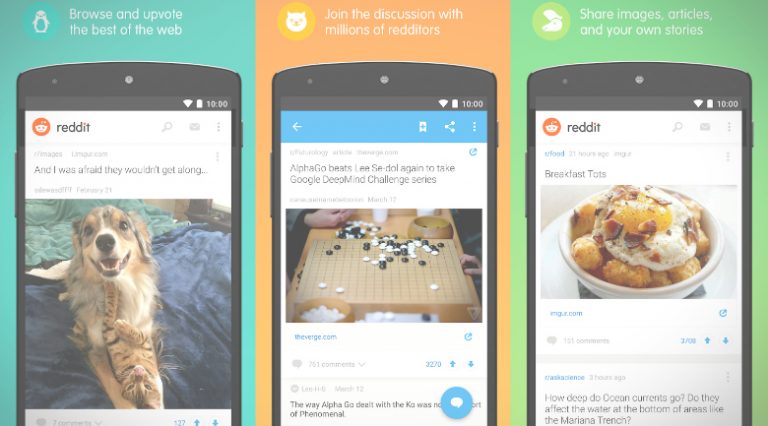
“Believe it or not, we’ve actually had a ‘block user’ feature in a basic form for quite a while,” Reddit admin KeyserSosa pointed out in the announcement on Wednesday. Though the initial tool was meant for private messaging, Reddit developers saw the potential for expansion and ran with it.

Using the “block user” tool results in the afflicted user’s profile, comments–past, present, and future–and any other form of communication being stricken from the blocker’s sight. It’s a clean, simple, comprehensive response to potential cyber bullying or general harassment, and little in the way of active PR is needed.

Power to the people

This is genius concept because, since their platform capitalizes on free speech, Reddit admins have to walk an incredibly fine line between allowing discussion and facilitating harassment. With the addition of the “block user” tool, however, it seems that Reddit is passing the agency over who is heard and who is silenced to the individuals to whom it matters most–right where it should be.

Expect change

Of course, Reddit is an ever-changing machine.

“These are just our first steps toward improving the experience of using Reddit…we’re looking forward to announcing many more,” was KeyserSosa’s closing statement. While you consider how Reddit’s handling of harassment and discourse may apply to your company, keep an eye on any further changes they make–in a bizarre twist of irony, Reddit may be setting the standard for diplomacy in the coming months.

#GoodOlRedditDiplomacy

GCal can now help you find time for your goals

So much to do, so little time

Does anyone else feel like whenever they accomplish one task, at least six more pile up? Yeah, me too.

bar
Sometimes it feels like it’s impossible in our everyday lives to find time to accomplish every single thing. And it seems that the things we would likely enjoy most always fall by the wayside as tasks we “have to” do take precedence.

“I’ve got an app for that…”

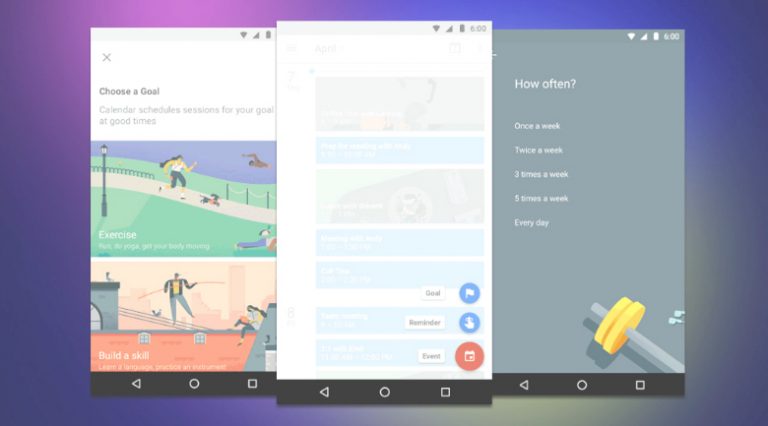
But, as we’ve learned time and time again, there’s an app for that. The already popularly utilized Google Calendar has added an extension that helps you find time in your busy schedule for your goals.

Let’s say, for the sake of example, you want to learn how to speak French. While that is an astute goal, there is not always enough time in the day – or so you may think.

“Now” for Google Calendar plans accordingly

The addition of Now to the Google Calendar allows you to input that you want to learn French. You then select how much time you would like to dedicate to your goal, including: how often you’d like to learn French, how long, and the best time of day it would fit into your schedule.

Calendar then sifts through what you already have scheduled, and finds a time that desire to learn French would satisfy. Once that time slot is found, “Learn French” will automatically be added to your schedule.

Because Google Calendar knows the additions it automatically makes, it will adjust your schedule when you manually add items to your schedule. If a last-minute meeting notice is sent your way, your linguistic session will be re-scheduled for another time.

Google Calendar syncs with Gmail

The app is already designed to help you make the best schedule possible. It syncs to your Gmail account to take any mention of a flight, hotel booking, concert, etc. and automatically adds it to your schedule.

Google Calendar takes on a number of visual aspects to appease (assumingly) every user. There is the traditional calendar layout that allows you to select a day and see a list of events. There is also a thread option that makes your schedule more pleasing-to-the-eye as you can assign colors to different tasks.

The Now addition to the app was just launched this week and is available for both iPhone and Android.

#NowforGCal

Oddly, Staples introduces coworking space in their stores (really)

It’s like sleeping in an IKEA

You may already be shopping at Staples for office supplies — or, like many consumers, you may be buying your notepads and ink cartridges online these days. However, soon you may be able to go to Staples for more than just office supplies, but for the office itself.

bar
This Monday the office supplies retailer announced that it would turn some of its store space into office workspace at three pilot locations in the metro area of Boston. Staples will collaborate with coworking startup Workbar. Workbar members pay a monthly fee to use a number of Boston-area workspace locations. Workbar facilities include offices, conference rooms, private meeting rooms, WIFI access, and telephone services.

Trying to survive in an Amazon world

In-store traffic is slowing down at a lot of large retail stores as consumers are increasingly shopping online. Big box stores with oversized facilities are looking for creative ways to share their spaces, and bring in additional revenue. Department stores have already tried renting out parts of their stores to smaller retailers.

For example, Sears has shared its store space with the likes of Whole Foods and Dick’s Sporting Goods. Meanwhile Macy’s has rented space to the sports retailer Finish Line.

Time will tell

Staples could really use a boost, considering that its retail division has been on the decline. With Amazon.com sweeping up sales in all categories, Staples is hoping to compete by purchasing Office Depot, but they have yet to solidify the deal. Over 200 Staples locations have closed in the past two years, and the company announced last month that they would close another 50 of its 1,607 North American stores this year.

On the other hand, Staples’ business services division, recently renamed Business Advantage from Staples, is still growing. Business services make up 40 percent of company sales, and will probably surpass retail sales in the next year.

#StaplesCoworking

In the midst of Apple vs the FBI, Whatsapp just ramped up their privacy measures

Upholding the 4th amendment

Apple recently went to bat with the FBI to protect the privacy of one of its users. Although the user in question was the terrorist involved in the San Bernardino incident, Apple believed that the court order to unlock the phone was on a slippery slope of legal precedence. In New York alone, the NYPD has about 175 iPhones in their possession which they’d like to unlock.

bar
The right to privacy has always been hotly debated here in the U.S. People with nothing to hide often believe that government data mining is okay when the government is exposing illegal activity. However, Americans have the right “to be secure in the persons, houses, papers, and effects” a quote from the fourth amendment of the U.S. Constitution. So what’s a person or business to do?

WhatsApp offers encryption by default

The announcement by WhatsApp that it would encrypt data of its users came out around the same time as the fight between Apple and the FBI. WhatsApp has been working on the project for more than a year. The timing may have been a coincidence, but it does add to the debate of online privacy.

WhatsApp encrypts its user’s communications, and interestingly, the company will not hold the key to unlock the encryption. The government could produce a warrant signed by the highest court in the land, and WhatsApp could not comply with unlocking the communication between two people in the App.

In order for the chat to be completely secure, both users must have the most current version of software. This is being phased in, with transitional assistance through the app to help users understand the new technology and what it means.

Finding a balance of privacy

WhatsApp’s new features will allow people to conduct business, whether it’s illegal or legal, in a secure chat window.

People who need this type of privacy, like lawyers or doctors, may find new ways to communicate with clients to make things easier. On the flip side, terrorists and criminals will also have more ways to communicate plans without worrying about detection.

As with most technology, the courts and legislators are fumbling with rules and laws after the software has been released. No one wants to think about letting terrorists have the right to privacy to plan and carry out their attacks, but the government doesn’t always get it right. It’s going to be interesting to watch this fight over the next few decades to see which way it goes.

I don’t want to see any more attacks on our country, but on the other hand, I don’t want the government listening in on my phone calls or having the ability to read my chat messages. I have absolutely nothing to hide, but I have the right to privacy. Once the door is opened to allowing the government to decrypt our phones or computers, where does it end?

#WhatsappEncryption

Sen. Warren introduces Tax Filing Simplification Act – will it get through?

Ending the need for third-party tax preparers

As the tax season deadline for 2016 closes, I think it’s safe to agree that most of us think that tax preparation has gotten too complicated. There have been a lot of suggestions on simplifying tax collection, and the newest one is from United States Senator Elizabeth Warren (D-MA).

The Tax Filing Simplification Act of 2016 has been introduced as legislation to compel the IRS to develop a more efficient means of preparing and submitting taxes. Instead of going through third-party preparers or software, taxpayers would be able to tap into the information which has already been submitted to the IRS to report their own taxes. Under Warren’s plan, this system would be free, which would save taxpayers about $200/year.

bar

Isn’t filing taxes already free?

In 1998, there was a mandate for a return-free filing system for individuals. Although many third-party companies offer free filing now, there are so many hurdles to get through, only 3 percent of taxpayers take advantage of it. Free-file is generally directed at individuals who do not need special forms.

Many times, someone begins the form, believing it will be free only to discover they are ineligible and will need to pay the third-party company to complete the filing. And this is just at the federal level. We’re not even talking about state taxes.

Does the legislation stand a chance?

Republicans seem to support the Fair Tax Act, which would essentially eliminate the IRS and create a nationwide sales tax. Warren faces an uphill battle in the legislature to pass this bill. The IRS had a massive data breach in 2015, which makes it unlikely that many taxpayers will want to give them this much power of their data. Although they already have the information that is submitted each year, as taxpayers get access to it, the risk of a larger breach increases. Even if the bill passes, it could take two or three years to actually implement the program. It’s possible that Warren’s Tax Filing Implication Act could be challenged in the courts by tax preparers who don’t want to lose their livelihood.

You can read the staff report that outlines the issues here. Warren’s legislation is supported by many prominent lawyers and economists. I do think it would help some taxpayers, but the whole system needs an overhaul. It’s hard to get 435 representatives to agree on anything, let alone another 100 senators. We’ll probably have a few more years of the bulky system that we currently have.

#TaxFilingSimplificationAct

Walmart continues to expand grocery pickup (will this become standard?)

Cutting time or just dividing it?

At the expense of playing Devil’s Advocate here, I’m trying to think of where the true savings are by shopping online at Walmart: If I go grocery shopping with my wife, it takes about 90 minutes including driving to and from the grocery store. If I order the goods online it takes, I don’t know; about 40 minutes or so and I still have to drive to Walmart and back to pick up my groceries. The service is currently free but I think we all know that is a promotional thing and sooner or later that service will have a price tag attached to it as well.

bar
The Walmart blog is oozing with so much positivity and warmth I practically get cavities just reading it and watching the embedded video of happy faces. That’s to be expected because the blog is a PR tool of Walmart. Still WM’s grocery pickup service is expanding and expansion is good. Lots of Walmart’s out there. Lots of money to be made and that’s what makes Walmart great.

Smart shopping

In the bigger scheme of things, this service and others are really embracing the “smart” shopping experience. This is what we’re aiming for at the end of the day, right? Order on your app, and I would imagine have the order delivered to your home. Now you‘ve saved some time. Sooner or later a grocery-bot will make the delivery in a driverless vehicle. I’m really jazzed about this because smart shopping is serving up yet another opportunity to avoid face-to-face contact with another human.

George Orwell here we come!

That said; the Walmart grocery pickup program must be a success because Walmart says it is so. Other news outlets I put more credence in like Fortune are reporting on it as well, but is putting the service in perspective with similar programs like rivals Amazon, Google, and smaller companies like Instacart and Postmates. These ventures don’t have brick and mortar stores, but do offer grocery delivery to shoppers’ homes.

Competition is good

It’s an interesting dynamic. Instead, Walmart has opted to use its fleet of stores to allow free same-day pick up of food orders placed on its website before 10 a.m. If you’ve seen the press kit, you know that WM has a set-up which is almost like pulling into a gas station: pull in, get groceries, gratuitous tip, and pull out.

However it’s done, it is working for someone. Walmart’s grocery delivery service is available in 30 markets and within some of those markets the service is expanding every more.

In fact, Michael Bender, chief operating officer of Walmart’s e-commerce operations, told Reuters that the data the company has collected so far shows the retailer is winning a bigger share of customer grocery spending and winning over new customers.

Wal-mart’s dream of global domination is contingent on the fact that there must be a venue with 5 miles of everyone’s home.

An American Dream come true!

#GeorgeOrwellHereWeCome

FCC has a new “nutrition label” to help consumers choose the right mobile plans

Those pesky hidden fees

It’s happened to the best of us — you sign up for an internet of mobile data plan, thinking you know how much you’ll pay, only be surprised with hidden fees that crop up on your bill unexpectedly.

bar
Consumerist reports that The Federal Communications Commission (FCC), which receives over 2000 complaints about surprise fees every year, has proposed a new solution to prevent hidden fees and provide consumers with more information when choosing an internet or mobile data plan.

The Consumer Broadband Label

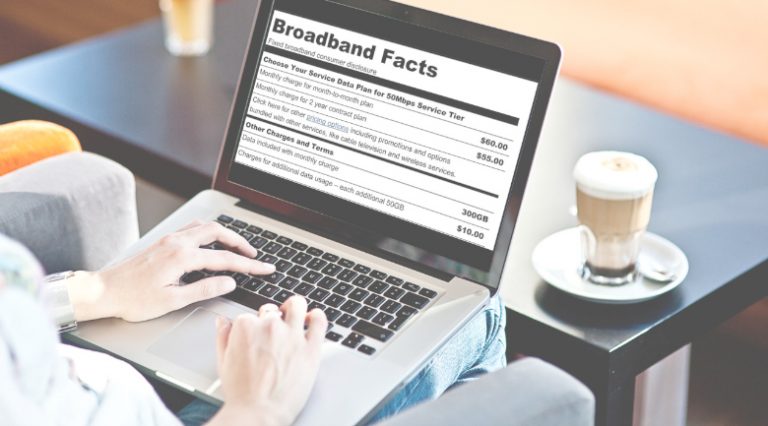
Last year’s Open Internet Order outlined rules requiring broadband providers to be more transparent with information about the costs and performance of their services. To help make it easier for companies to be transparent, the FCC has created a new labeling system that strongly resembles the standard nutrition information labels printed on boxes and cans of food.

The “Consumer Broadband Label” was created by the FCC in collaboration with the Consumer Financial Protection Bureau (CFPB). The idea was to create a standardized label, using clear language, that would make it easy for consumers to make “apples to apples” comparisons of different services. Included in the labels are information about things like monthly charges, additional fees, taxes, average speeds, and data caps. There is one version for fixed services, such as cable or internet in the home, and another label for mobile services.

Giving fees no place to hide

Said Richard Cordray of the CFPB, “consumers deserve to know before they owe, with clear, upfront information about prices, risks, and terms of the deal.” He hopes that the the labels will “affect industry behavior” because hidden fees will “have no place to hide.”

Although the Consumer Broadband Label is optional for internet service providers, the FCC is strongly encouraging ISPs to use it because it is a simple way to ensure that they are following the new Open Internet rules that the FCC agreed upon last year. If companies do choose to use the label, they will be protected from litigation in the future by showing that they attempted to be transparent.

#ConsumerBroadbandLabel

Artisanal Spam is the newest way to get through filters

What was once a joke

Last year, Nerdist.com announced Artisanal Spam, in new flavors, like Sriracha-pickles or lemongrass-coconut oil. It was introduced as purely an April Fool’s joke, and a good one at that. Unfortunately, the digital world is seeing the emergence of artisanal spam – not the kind that’s popular in Hawaii, but the kind you get in your email. What is it and what can be done about it?

bar

Small-batch, micro-brewed artisanal spam

Today’s anti-spam filters typically relegate junk email to folders that you may never even look at. Yahoo and Gmail both have spam folders, and rarely does a real email get dumped into it. Spammers have had to be smarter to get around the filters. One way they’re doing this is to use a small-batch approach with smaller hosts that aren’t on the DNS Blacklist. Hence, the name, artisanal spam.

One company sent out 5,000 emails through a Belgium server linked to a fake login page for Apple. Because of the size of the mailing, it was able to fly under the radar of the anti-spam filters. Spammers get excited when they can just get into your inbox, because they know that even if a few people click on the links, it’s effective.

Be smarter than the spammers

It’s thought that artisanal spam now accounts for about 15 percent of the junk messages which are sent out every day. To put that in perspective, 400 billion spam messages are sent out daily. Do the math, 60 million of these messages are considered artisanal spam.

Artisanal spam isn’t going to go away. Cyber-security experts recommend a global registry for retailers who send out emails to customers. Getting everyone on the same page internationally may be a difficult challenge. Don’t expect any easy solutions.

In the meantime, be careful what links you click on in your email. Always go to the direct site to enter a password or update personal information. We have to be smarter than the spammers.

#ArtisanalSpam

Stop begging people to turn on Instagram notifications; do this instead

Please chill

If you’ve spent any significant time on Instagram recently, you’ve probably been inundated with posts asking you to turn on notifications for the accounts you follow. These cloying pleas for attention have come in a range of creative renditions, from clean-typed formal letters to sappy “let’s stay together” proposals.

Enough already, people. Your users aren’t breaking up with you.

bar

To the uneducated eye

Okay, let’s be fair: from a sympathetic standpoint, Instagram users–especially small businesses, freelancers, and the like–are seeing their preferred social media platform undergo a paradigm shift, and that’s scary. Most of these aforementioned demographics have worked pretty damn hard to build up their proverbial empire, so the potential for it all to come cascading down isn’t a laughing matter.

And, from these terrified users’ points of view, their status is similarly threatened by a convenience factor. Notifications notwithstanding, what if people have to manually search accounts to catch up with these users? Surely that’s too much effort! Logically, then, this algorithm change must spell doom and gloom for Instagrammers everywhere…

Déjà vu

…except remember when Facebook did almost exactly the same thing with their algorithm regarding pages? The takeaway there was pretty straightforward: if the page had any sort of recognizable following or fanbase, it persevered. The kind of people who are worrying about their livelihood going down the drain are exactly the kind of people that shouldn’t be worried about a thing.

And, again, consumers aren’t stupid. I have several people that regularly show up in my Instagram feed, all of whom I adore. If, for some reason, I didn’t see a post from any of these fine folks for more than a day or two, I’d be all over their page making sure they were still alive. As long as you do your job, your fans will do theirs.

Word to the wise

Regardless of what anti-social media activists will have you think, neither Instagram nor Facebook is ever out to “get you”. If they upgrade or change a fundamental aspect of their programming, it’s normally just to accommodate more users in as efficient a manner as possible.

Don’t worry about getting left behind; although you may have to play catch-up at some point down the line, that’s just the way business works.

In the meantime, feel free to steal this image our COO Lani Rosales made for her own Instagram. Let your fans, friends, and followers know you aren’t afraid of a simple update.

#StopAskingPeopleToTurnOnNotifications

If Amazon is smart, they’ll acquire this startup for drone delivery purposes

A cool concept that needs a place to park

I recently wrote about Amazon’s entry into the drone delivery market. It’s a novel idea (Amazon Prime) that hasn’t quite gone airborne yet. Parallel to that, as more and more people choose to do their shopping online, delivery services like UPS and even the United States Postal Service are literally working overtime delivering parcels to consumers. The potential for Amazon’s drone delivery has wings in as much as it might lighten the load of all those parcels being delivered door-to-door.

bar

Parcels free for the taking

The increase in parcel delivery has also ratcheted up another byproduct of more purchases being made online: More parcel-theft on the doorstep’s of consumers. Enter Package Guard a Frisbee sized product that is attached to the floor on your porch or where your packages are delivered. It can be secured to most hard surfaces and is battery operated and is completely wireless. Setup to your computer and wireless network can be accomplished in minutes.

Humor with a touch of truth

So you’ve got Amazon and its drone delivery market and also Package Guard.

Seems like two separate ideas, but it isn’t too farfetched to think that Amazon could end up acquiring Grabham’s company or the patent. And what’s kind of ironic in all this is that real estate brokerage Century 21 jokingly predicted this technology years ago when it parodied Amazon Prime with a mock “landing pad” for Amazon’s drone fleet to land on when it dropped a shipped at someone’s home.

Fast-forward to here and now and Century 21’s parody has more than a few kernels of truth to it (refer to my story link in the first paragraph). And in case you’ve forgotten, the principal of Package Guard is simple enough: it aims to protect the packages that are delivered to your front porch or entry area of your house. Now whether those packages come from a drone or a delivery truck doesn’t necessarily matter.

According to PackageGuard.com, “If a package is taken off of your porch without your knowledge, the Package Guard alarm will sound and instantly you will be alerted via text message and email.”  Of course by then your parcels will be long which is probably why at some point in the future you will also have the ability to have a photo/video sent to you of the person picking up the package via our smart phone app.

Amazon’s drone fleet and a landing pad that doubles as Robocop. Now THAT’s one heck of a combination. Almost makes me want to order something online.

#ThePerfectCombination

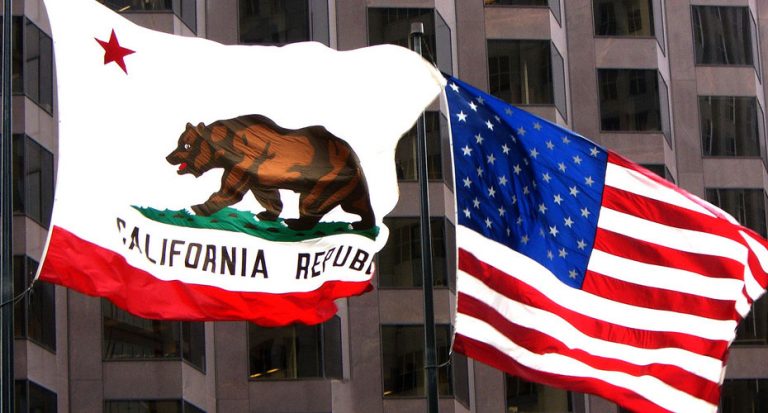
California becomes first state to raise minimum wage to $15

California could change history

In a historic first, California has agreed to raise its minimum wage to $15 by 2022. Despite national disagreements between $12 and $15, California, one of the most expensive states to live in, has opted for the latter.

bar
Following three and half years of one-day strikes by low wage workers and the Service Employees International Union, California Governor Jerry Brown reached an agreement with the state legislature to make California the first state to raise the pay floor to $15.

Incremental change

The increase will be achieved by hiking the minimum wage up by 50 cents in 2017 and again in 2018, then raising it by $1 every year until 2022.

The decision will impact about 6.5 million residents, or about 43 percent of the state’s workforce, who currently work for less than $15 per hour.

According to Paul Sonn of the National Employment Law Project, “this is a very, very significant increase” that would “for the first time…begin to reverse years of falling pay,” and will “create national momentum for other states.”

Said Brown, who retains the right to slow or halt pay increases in the event of an economic disaster, or to free up funds to pay government deficits, “this plan raises the minimum wage in a careful and responsible way and provides some flexibility if economic and budgetary conditions change.”

Still some fight left

The decision is part of a larger national campaign, led by labor unions and grassroots organizations like Fight for $15, to increase the federal minimum wage. Successes have come city by city and state by state. Los Angeles, San Francisco, several cities in California, and Seattle have raised the pay floor to $15.

New York Governor Andrew Cuomo has proposed a similar pay hike for New York City in 2019, with the statewide minimum wage increasing to $15 by 2021.

Federal minimum wage remains at $7.25. Republican legislators have repeatedly blocked attempted to increase it to $10, saying the increased cost will cause companies to slash jobs or shut down completely.

Meanwhile, the Democratic Party has made a national minimum wage of $15 parts of its platform. Bernie Sanders supports it, while Hilary Clinton is satisfied with a minimum wage of $12 per hour.

#MinimumWage

Open letter to first-time female entrepreneurs

Is entrepreneurship right for you?

So many times we think we have our lives figured out and then life throws us a curve ball. You feel the urge to do something different, go somewhere different, or be someone different. You have a great idea for a new business, something that feels one hundred percent right, but you don’t know if taking the plunge into entrepreneurship is right for you.

It is. If you feel it in your gut, it is.

Some things in life are worth the risk. The absolute worst thing that can happen if you try is that it doesn’t completely work out and you come up with a new plan. The absolute worst thing that can happen if you don’t try and you place your dreams on the back burner is that you never know what could have been. Life is full of regrets that we cannot avoid; don’t let your dreams be one of them. If you think about your idea constantly, do something about it.

bar

Find balance in everything

The best advice I was ever given was by my favorite professor. He said, ‘find balance in everything” when we were discussing my career as a scholar and my future as a writer after graduation. Being younger, at first, I wondered what this meant, really. I mean, I was balanced. I worked full-time, went to college full-time and still managed to see my friends and family on the weekends. That felt like balance to me and it probably was at that particular point in my life. However, now that I’m older, I know exactly what he meant (and this is why he was and always will be my favorite professor: he gave students the knowledge, but let them find their own way to the answer).

By “finding balance” he meant don’t let one thing consume you. It’s so easy when you’re just starting out to keep your eye on the prize and not want to give up working on a project to do other things. Those other things are equally important.  Starting a new business can consume you. You’ll forget prior commitments. You’ll forget to eat. You’ll lose sleep. Don’t let it consume you. Instead, schedule breaks and stick to them. Pick a day or time to connect with family and friends. You don’t want to lose sight of “you” outside of work.

Take it step by step, and don’t be afraid to reach out

Starting a business is hard. There will be days you want to give up. You’ll wonder why you ever decided to do this. There will be days you cry. You’ll stress out and shut down. Just because it’s hard doesn’t mean it’s not worth it. Start with your idea. Do some research. Develop your plan. Talk to people who have been in similar situations. Use those social media channels to network with like-minded entrepreneurs.

Then, one day, you’ll see part of your plan working. You’ll make progress and you’ll realize you CAN do this. Along the way, if you find there is something that you can’t do, or don’t know how to do, ask for help. Help can come from a family member, mentor, friend, or expert.  Don’t be afraid to ask for help. Asking for help doesn’t make you look like you don’t know what you’re doing. In fact, asking for help can often save you time and money. If you need a professional website and don’t have a great deal of experience, don’t be afraid to reach out and ask for help. I did this many times when I started as a freelance writer.

Believe that it’s possible

Prioritize what matters and don’t worry about what you can’t control. Stress is always the enemy. Believe in yourself. Believe in your idea, your team, your project and your goals. Don’t let anyone else tell you that you can’t do it. You can. The risk of failure is minimal when you finally realize your dream. Every champion was once a contender. Every pro was once an amateur. Every expert was once a beginner. So dream big and start now.

#WhoRunTheWorld

Need to destress? There’s an app or 10 for that

Technology has a way

It’s no secret that stress can wreak havoc on your body. Stress can affect your mood, energy, and sleep patterns. Stress can increase your heart rate, blood pressure, and risk of heart attack. It can trigger pain, nausea, and suppress your immune system. Stress is bad; prolonged stress is even worse. While constantly checking your smartphone can certainly add to your stress, especially if you have unanswered emails, texts, and pending deadlines.

bar
However, your smartphone also has the ability to help you alleviate stress. Here area few ways you can use your phone to help de-stress and feel better.

Get some tunes goin’

Music. Music really can soothe the soul and the nerves. Soothing, relaxing music can help you regulate your breathing and bring down your blood pressure. I have a playlist on my phone that’s just for de-stressing.

If classical music isn’t your thing, pick out a tune that you enjoy belting out. Singing is another proven way to de-stress. The very act of singing or humming can help to slow and regulate breathing, promoting relaxation. It will also take your mind off your stress for a few moments and allow you time to reset and refocus.

There are several free music apps you can try, my favorite is Pandora. I also like the virtual sound machine app, Rain Rain.

Get your ohm on

Meditation. This doesn’t have to be complex. There are so many apps that offer guided meditations. A guided meditation, has a narrator helping your breathe in and out in a relaxing pattern, oftentimes along with relaxing musical accompaniment.

A simple five minute guided meditation with deep breathing can help alleviate tension, and reduce stress producing hormones. If you can’t listen to these at work, use your phone’s timer function to take five minutes and breathe deeply on your own. The simple act of deep breathing allows your body to focus on what it needs, rather than the millions of tasks that have you stressed to the max.

If you’re looking for a few good meditation apps, I really enjoy Calm. It’s a guided meditation app for Android and iOS. I also like Zen Garden. It turns your screen into a virtual sandbox where you can write, scribble, or mindlessly tap the stress away.

Get up and active

Move. Movement is one of the best ways to clear your mind and refocus your energy. While there are a wide variety of exercise and activity apps, one of my favorites is the work break timer. This handy app reminds you to stand up and move throughout the day.

We all know prolonged periods of sitting still can be detrimental to our health, but when you’re focused on work, it’s easy to forget to move. Not only does this app remind you to move, it also mixes things up by suggesting different types of movement you can do to refocus your attention and come back to your desk refreshed and a little bit less stressed.

For iOS users, Stand Up! and Move are great options. For Android users, Twenty is very similar.

Get your thoughts out

Journal. More likely than not, you already use Evernote or similar apps. Why not use them to de-stress? Recommended by psychologists for decades, keeping a journal is a great way to clear your mind. Unfortunately, constant stress and everyday pressures make it difficult to journal consistently.

Several journaling apps aim to solve this problem by melding traditional diary-like qualities with digital convenience. For Android users, Memoires lets you record daily text or audio entries and attach files or photos to diary notes. It is also password protected, so you don’t have to worry about your thoughts falling into the wrong hands. For iOS users, Narrato Journal  is a similar option.

Get out the photo albums

Photos. From photos of your family and friends, to a photo of your favorite vacation spot, pictures can help you relax. Try creating a separate album on your phone for all the things that make you happy.

If you’re short on space, you can create a private album on Facebook, Flickr, or your favorite photo app. When you need a boost, scrolling through endless happy memories, places, and events, can trigger a stress reducing response.

Get healthy

Regardless of which method you choose to de-stress, know that persistent stress is a problem. If you feel that you are stressed to the point of breaking down, it may be time to reevaluate where and how you spend your time.

#iDestress

Moleskine lets you have your digital cake and eat it, too (we’re pumped)

0

For all of the paper-loving compulsive organizers out there

If you are anything like I am, you love the tactile feel of crafting words and art in your favorite Moleskine notebook. If…you are still like I am, you have dozens of notebooks that once filled, go in the trash or into a cluttered stack on your desk. “I might need that later,” you whisper like the Moleskine-loving hoarder you are as you slip the canvas that holds the ideas of the last 2-3 weeks into the stack, never to be referenced again.

bar

Most note takers continue down this ineffective path for two reasons: Lack of organization and an inability to search and edit your notebooks.

For the first problem, I suggest you check out the fantastic method of bullet journaling. I’ve personally been using it for the last few months and it has become a key part of my workflow.

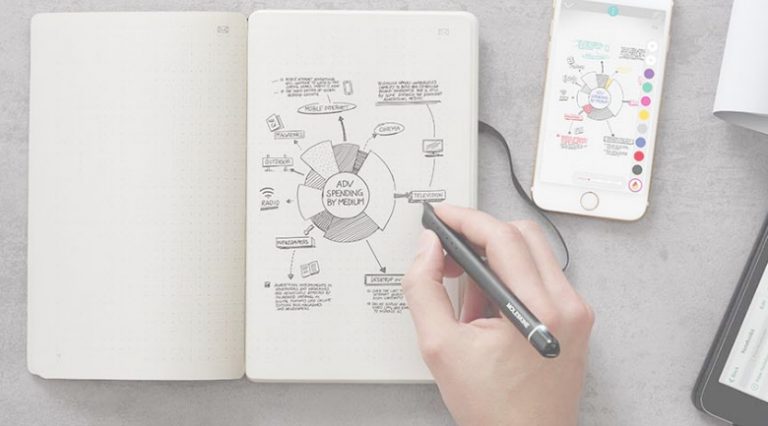
To tackle the second issue, the Italian notebook manufacturer, Moleskine has joined the growing market of digital pens to turn your cat scratching and chicken scribble into digitized copy. Promising to keep your ideas connected, Moleskine aims to connect your analog and digital lives.

Moleskine introduces the Smart Writing Set

To preserve the tactile connection of analog, the set combines the modern Pen+, Paper Tablet, and Moleskine Notes app to allow you to preserve the pleasure of writing with pen and paper while still being able to effectively edit, organize, search, and share.

When used together, the Pen+ recognizes the specially textured paper and records your writing and streams it to your iOS or Android device via Bluetooth to be exported to Evernote, Google Drive, Adobe, and iCloud. Once digitized, you have full control of your writing.

Search, edit, and share

If you don’t have your normal device available, the Pen+ will store up to 1,000 pages of scratchings using internal memory until paired again.

The current price point for the Moleskine Smart Writing Set comes in at $199 and additional notebooks will set you back $29.95. It is a bit of a steep price but will likely be reduced as the digital pen space develops more competition.

#MoleskineSmartWritingSet

You can now tap and pay with your Bitcoins almost anywhere

The currency of the Internet

We’ve been covering the ins and outs of Bitoins, including Bitcoin gift certificates, for quite some time. If you’re still not quite sure what these little guys can do, you can read more about it here. Bitcoins are basically digital currency. When I say digital, I mean completely digital, and operating free from banking institutions. Okay, not completely digital, as you can attain physical Bitcoins, but this does defeat the original premise behind an “all digital” currency and enthusiasts greatly prefer the digital variety. So, Bitcoins are 98% digital.

bar

So they’re digital, but what do they do?

I liken Bitcoin to tokens that you used to get in gaming arcades, with one exception: Bitcoin currency can be broken down into fractions (called satoshis). Using the token example, you gave the machine $1, you got four tokens. With Bitcoin, those 4 “tokens” could be divided into multiple fractions, giving you more bang for your buck…or Bitcoin. The problem with Bitcoins is they are not fully adapted, yet, making it hard to spend them in the places you’d really like to use them.

However, Bitcoin may finally be a global currency with the help of new platform. Bitcoin’s main drawback up until now has been that you couldn’t spend it in places you really wanted to, but that seems to be changing. With OneBit you can now use your Bitcoins anywhere that Visa and MasterCard Paypass are accepted.

Pay with Bitcoins nearly anywhere

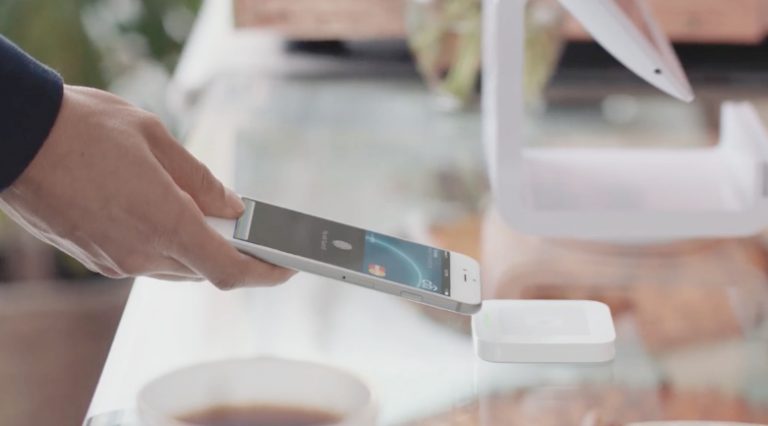
OneBit makes the process sound fairly simple. Simply tap your phone at any MasterCard Paypass accepting merchant via NFC (near field communication) to pay. When you tap your OneBit app at the terminal, OneBit converts your Bitcoins to local fiat in real time, at the best market rate. No more mass-converting, exchanges, or wire transfers involved.

OneBit also states that they hope to add the ability to send and receive Bitcoin from the app, as well as the ability to buy Bitcoin via debit card and bank transfer in the near future. They also have plans to have a physical Bitcoin-backed debit card. With these new options, and especially with the ability to pay via NFC, Bitcoins may well gain in popularity. What do you think; is OneBit the first step in worldwide Bitcoin adoption?

#BitcoinAdoption

Facebook Live now allows streaming to groups

Live it up

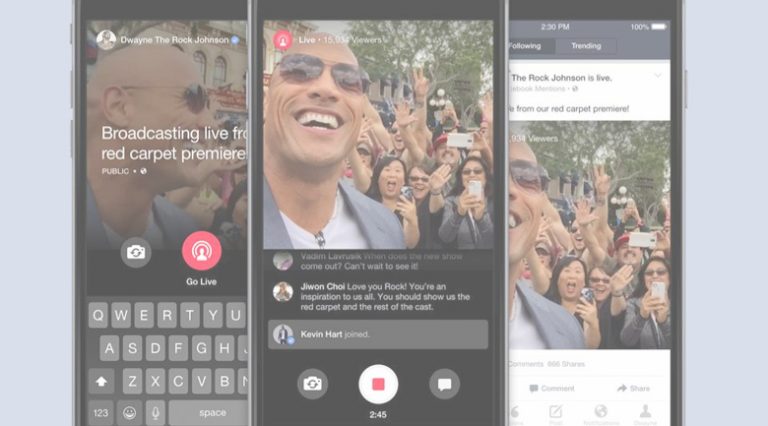
Facebook Live is taking off at breakneck speed, with the most recent development allowing deeper customization of your audience. What a time to be aLive.

bar
For those living under a rock, the latest addition to the virtual multitool that is Facebook came in the form of a live streaming service. Facebook Live–an aspect of the social media giant that does exactly what it sounds like–has been with us for quite a few months now, which means we’re due for an update.

The prodigal update

And an update we have! Facebook Live now allows streaming to groups, events, and pages–all demographics that are selectable in the video preferences, similarly to your profile’s privacy settings. Regardless of why this wasn’t included in the initial launch, it’s here, and its potential is incredible.

For example, if you are a freelance photographer trying to stage a series of wedding shots before the event, you can create a group dedicated to your clients, stream location ideas to that group, and then read their feedback in real time. When you’re done, the video and comments are saved to your account for your later perusal.

Obviously, the applications of this service range wildly from the freelance side of the spectrum all the way to large business. Be creative!

Customize your presentation

Facebook also added the option to apply filters, add on-screen writing, and send emoji-based reactions in real time (nobody tell Snapchat, please–I hate it when my parents fight). All of these features have vast potential to do an incredible job of immersing the audience, which is the main goal of any live streaming service, and they add a quirky, Facebook-flavored accent to this otherwise-done-to-death livestream notion.

Social Darwinism

The nature of social media will continue to necessitate change, of course. Though we recognize several different entities in the social media platform medium right now–Snapchat, Facebook, Twitter, etc.–it is becoming increasingly apparent that all share relatively large aspects of each other. Perhaps Facebook’s push for its live stream to catch on is rooted in a desire to stay relevant in an age of visual media; in any event, it seems likely that this fascination with capturing the moment and multimedia is here to stay, so it’ll pay dividends to familiarize yourself now.

#FacebookLive

Scientists say your staff is starting work at the wrong time and it’s killing their productivity

#RiseandGrind

Many of us know that 9-to-5 grind all too well. With the combination of sleep schedules, commutes, and actual work, the rigid structure of the eight-hour workday can be rough on the body as well as the mind.

bar
For those of you reading and nodding in agreement with this being in-tune with your life, you may be interested in what scientist Dr. Paul Kelley of Oxford University has to say on the matter.

“It is hugely damaging on the body’s systems because you are affecting physical, emotional and performance systems in the body,” Kelley said, as quoted in Sarah Knapton’s Telegraph article.

So, what’s the solution?

Kelley is an advocate for the workday beginning at 10 a.m., as he believes the body and mind are more likely to be productive with that, intended, extra hour of sleep. He has explored the fact that a human’s circadian rhythm is not in sync with 9-to-5 hours until the age of 55. As a result, these hours can be damaging to performance, mood, and mental health.

In an effort to prove that the shift to 10 a.m. start times should be a societal change, tens of thousands of young students in England will take part in an experiment where they begin school at a later time. This change is thought to display an improvement in exam results.

Shifting start times

Studies done on sleep cycles in relation to productivity have found that the average 10 year-old does not begin to focus properly prior to 8:30 a.m. Kelley has stated that shifting school start times can raise grades by 10 percent.

With this, Kelley encourages workplaces to begin having their staff start at 10 a.m. He explains that sleep deprivation can have harmful effects on health that have the ability to impact performance, attention, long-term memory. Deprivation of sleep can also lead to an encouragement of drug and alcohol use, because they can be used as a crutch for sleep aid.

Time to listen to science

Workplaces that have more relaxed hours can often find an increase in productivity. There is room for employees to have an appropriate amount of sleep while getting away from the stress of structured hours.

As time marches forward, we need to use it to our advantage. Why stick with the same old routine of 9-to-5 when mental well-being and productivity can be found with change?

#PleaseListenToScience

Mobile use at work is reaching a tipping point

0

Our cellphones, ourselves

Mobile device usage and ownership has taken a sharp incline in the past years, turning from simply mechanisms to make phone calls to devices that can access and control all major components of life.

bar
Email, banking, social media, presentations, and purchases are just a few of the many things smartphones are presently being used for, causing the need for computer access to become obsolete. It’s clear the mobile vs. desktop technology debate has surpassed its tipping point.

Steady, exponential rise of mobile

With smartphone ownership reaching 68% of Americans, and more notably 86% of 18-29 year olds in 2015, it’s no surprise that mobile marketing is one of the hottest trends of 2016. According to eMarketer’s report, 2014 marked the first time in history that smartphone users utilized their phones more than a desktop/laptop computer.

Not only is desktop computer usage down, but overall ownership is on the decline. eMarketer forecasts that mobile device usage will continue to climb and by 2017 adults will use their smartphones an hour a day more than their PC.

We use it for just about everything

Additionally, Q3 reports from major social media platforms showed a marked increase in mobile access. Over half of LinkedIn traffic (55%) was mobile, while Google reported more than half of its searches, in at least 10 countries, derived from a mobile device.

Business professionals’ access and mobile usage has changed, as well, with the increase of Bring Your Own Device (BYOD) policies, and/or company purchased devices. These practices encourage employees to take their work on the go, further increasing the mobile audience. A McKinsey & Company report found that 71% of employees are using personal mobile smartphones and tablets to conduct business tasks, with 36% reporting in a Gallup poll that they regularly check business emails outside of normal office hours.

Employee mobile device usage range from simple emails and web searches, to content creation, presentations, accessing business documents, data analysis, training, and data sharing.

It’s only getting bigger from here

This information is particularly important for B2B advertisers, as mobile marketing will need to take precedent in this changing marketplace. As of a May 2015 report, only 65% of marketers worldwide were utilizing a mobile website or app in their marketing strategies, and mobile advertising was reported at 40%. Marketers must keep in mind the landscape for business is changing, and rapidly, and look to alternative, digital and mobile options when planning campaigns.

#MobileDomination

Why Sanders calling Clinton “unqualified” is so much deeper than a political attack

When it comes down to qualifications

Recently, Bernie Sanders said Hillary Clinton was “unqualified” to be president. Regardless of your political feelings, there is something infuriating about this statement. I am, by no means, Clinton’s largest fan, but I am a woman. When women are told they are unqualified to do something they are obviously very qualified for, there is a larger issue at hand. Sexism still runs deep, so deep that it can change the way a woman views herself, her abilities, and her future.

bar
538 has addressed this issue in their article, stating, even if Sanders “was attempting to make the basic argument of this election that ‘outsiders’ are more qualified than ‘insiders’ to run the country at this particular moment. Calling Clinton, a former U.S. Senator and Secretary of state ‘unqualified’ is raising ire as a gendered attack, although that didn’t appear to be Sanders’ intention.” Granted, many times statements are taken out of context, especially where politics is concerned to malign an opponent, however, I do not feel like this is the case here.

Sanders has since walked back on his statement, saying, “on Hillary Clinton’s ‘worst day, she would an infinitely better president’ than either of the GOP front-runners.” Again, she’s not qualified enough to stand on her own merit, merely in comparison as a “lesser of the evils” type of deal.

What this says about sexism in a larger context

According to 538, a 2013 paper by political scientists Kathryn Pearson and Eric McGhee, most female politicians are more qualified than their male counterparts. They looked at non-incumbent congressional races from 1984 to 2010, and which candidates had held elected office at a lower level — their metric for qualification — the researchers found that “women candidates in both parties are indeed more qualified than men.”

538 also states, “Why the extra layer of concern on the part of female candidates? For one thing, there appears to be more self-doubt on the part of these high-powered women. A 2004 report by Jennifer Lawless and Richard Fox found that of a pool of prospective candidates — lawyers, business people, political activists — men were about twice as likely as women to say that they were qualified to run. Twenty-eight percent of women said they weren’t qualified at all, while only 12 percent of men found themselves lacking in some way. In the pop psychology parlance of 2016, we might note a whiff of imposter’s syndrome in these numbers.”

Why it matters on a larger scale

This is how pervasive sexism has become. So much so that women believe they are not qualified for a job when they are really better qualified than some of their boasting male colleagues. We have actually written about this phenomenon before. This is not to say that men shouldn’t be proud of their accomplishments as well, because they should. It just seems that society is more readily accepting of the fact that men are qualified for their jobs and promotions. I’d like to see more women take the same approach.

For all too frequently both men and women (although, I’ll argue women are told more frequently) they aren’t good enough. People will say you can’t or shouldn’t do something and often times the person on the receiving end of the criticism will take it to heart and believe it, even when they are perfectly capable of doing the “thing” in question, as evidenced by the women above not thinking they were qualified.

What you can do to change your thinking

I think of it like this: if someone told your best friend they weren’t good enough to do something, chances are you’d rush to their defense. You would state their qualifications, their best qualities, and make them feel better about themselves. So why then can we not see these same things in ourselves? Why do we allow others to break our spirits and tell us we aren’t good enough? If you wouldn’t let someone talk to your best friend that way, you shouldn’t allow someone to speak to you in that manner either.

If you would encourage your best friend to try something, encourage yourself to try it as well. Believe in yourself, your worth, and your ability to do it. Don’t let someone else’s insecurities become your own. You’ve got this and on the days you don’t think you do, ask your best friend; they will tell you, you do. It doesn’t matter if you’re running for president or asking for a promotion, you deserve the same respect and consideration as your colleagues, regardless of your gender.

#YouAreQualified

Is email the next generation gap? A Boomer’s perspective

Anyone out there?

I have a hard time taking anything presented by Gizmodo seriously. But that said, Annalee Newitz did survey nearly 4000 individuals in an attempt (skewed though it is) to get an idea what the under 40’s and over 40’s were using to communicate. As per her post she states the following:

“…The survey was three simple questions: we asked for each respondent’s age, then asked how they communicate at work/school, and how they communicate with friends. People could choose multiple answers to the communication questions, which listed popular apps, as well as “meeting in person” and “using the phone.” I wasn’t interested in numbers of hours that a person spent with each medium of communication; instead, wanted to know how people would describe the way they talk to other people. So what we have here is a record of people’s subjective beliefs about the main ways they communicate.”

bar

Skewed findings?

With questions like that, a lot of meat was left of the bone, but you can check out her results here. After presenting her data Newitz comments, “We discovered a remarkable difference between people over 41, who say they often talk on email more than they do in real life, and younger people who love in-person meetings and use a variety of apps.”

For your consideration

You know, it’s been said that “wording is everything” and Newitz’ phrasing above kind of rankles me. As if the over-40 crowd have forgotten how to communicate while the younger crowd is more socially conscious. I’m not buying it.

In fact; the most sensible discussion in her article can be actually be found in the “Comments section” where reader Captain Jack remarks, “… [It’s] hardly a digital divide. More that habits and needs change as you age. [The] issue that comes along with age is …once you have kids, the importance of going out with a large group of friends diminishes significantly. I wouldn’t say it is because of any sort of technology divide. More that the tools selected are more fitting for the job. It is more about what works for their lifestyle.”

Bingo. I think Newitz’ discussion is lacking the consideration of an individual’s lifestyle especially when you add in factors like raising a family, working full time, owning a home and anything else that demands one’s time.

Mr. X (again in the Comments Section) adds,

“…Email is still the standard for many industries, doesn’t matter what your age is. I’m mid-30’s, in an engineering/consulting field, and communicate with people aged in their mid-20’s to almost 70 for work, and email is by far the most common method. Having a searchable database of the majority of my communications for the last 10 years is a valuable resource.”

Other modes of communication? Definitely? Email/phone calls/speaking in person outdated? I just don’t see it. People in general may text more during the day but are they conversing or just exchanging snippets of thought? I may text my wife or colleague and tell her/ him that “I’ll see you at 6pm.”

But any meaningful conversation happens face-to-face. Just sayin’.

#AgeVsStage