Home Blog Page 177

Senators trying to block net neutrality (again)

A new bill to end net neutrality

If you thought the debate over net neutrality was put to rest last year, think again. Republicans just can’t seem to help themselves. They’ve launched yet another attack on net neutrality, this time in the form of a new Senate bill.

bar
Net neutrality is the principle that all content on the internet should be equally accessible. Similar to how all Americans have the right to travel anywhere in the U.S. without a passport. Keeping the internet open to everyone seems like a no-brainer, right? Apparently not.

Blocking the move to protect the little guy

Big business and politicians have been doing all they can to prevent net neutrality. The debate came to a head last year when federal regulators voted to approve the most sweeping overhaul of US internet policy in two decades. With the new ruling, broadband internet access would be reclassified and subject to new rules under Title II. In addition, new FCC rules would prohibit blocking, throttling, and paid prioritization. Commercial contracts, such as paid prioritization deals, occur when ISPs strike a deal with deep-pocketed companies to get preferential treatment, potentially snuffing out startups. Startups like Google, Twitter and Facebook might never have flourished without open access.

Big business ain’t happy

While the ruling was a landmark victory for consumers, plenty of businesses and politicians don’t care for it. Last week, Senator Mike Lee of Utah, along with seven co-sponsors, introduced the Restoring Internet Freedom Act. The new bill seeks to explicitly reverse the FCC’s ruling and effectively prohibit the FCC from enforcing internet protections.

The legislation states that the FCC’s order protecting net neutrality “shall have no force or effect, and the Commission may not reissue such rule in substantially the same form or issue a new rule that is substantially the same as such rule, unless the reissued or new rule is specifically authorized by a law.”

Aversion to any regulation

At the heart of Republican opposition to net neutrality is an ideological aversion to government regulation. Rooted within the “conservative movement” is a deep-seeded anti-Washington, anti-Obama belief system that feeds this ideology. It should also come as no surprise that many of the GOP lawmakers who oppose net neutrality receive substantial monetary campaign contributions from the broadband industry, which also vehemently opposes the FCC policy.

#NetNeutrality

Deep customer engagement potential with Facebook’s new Canvas

Going beyond a typical news feed ad

As an advertising tool, Canvas creates News Feed ads. The difference is that canvases open from Facebook ads in News Feed to reveal a full-screen experience. Canvas allows advertisers to mix video, photos, text, and call-to-action buttons.

bar

So much possibility

Mixing these elements empowers advertisers to create fully immersive environments for users, which are ultimately more engaging experiences. Within a canvas, consumers can swipe through a carousel of images, tilt to view panoramic images and zoom in to view images in detail. This creates an experience for consumers in ways that mobile sites just can’t match. Plus, because of Facebook’s technology, Canvas ads still load 10 times faster than standard mobile Web.

Product design manager Jessica Watson said the idea for Canvas was to “raise the bar for what people and advertisers should see on their mobile phones.”

Empowering tool for advertisers

The launch of Facebook’s Canvas ad platform opens up a wealth of new capabilities for marketers. Canvas enables advertisers to create interactive, innovative ads that are just one click away from news feed, without adding a frustrating user experience. According to Facebook’s product lead Paresh Rajwat, early trials of Canvas ads found that 53 percent of users viewed more than one-half of those ads, with an average view time of 31 seconds. For top-performing ads, view time rose around 70 seconds.

Interactive storytelling

Facebook’s goal with Canvas was to give brands the opportunity to customize the experience and drive deeper consumer engagement and action. Whether it be a new product launch, an online catalog, or brand storytelling. So far, brands such as Gatorade and Coca-Cola have launched campaigns of interactive storytelling experiences with canvas.

The Canvas Builder tool makes it easy for anyone to create a Canvas. Canvas is available to advertisers in both Power Editor and the Publishing Tools tab on their Page. It requires no coding or new software. The tool also includes real-time mobile previews for advertisers. Facebook is also working to expand Canvas to areas such as Instagram and Facebook Audience Network sometime in 2016.

#FacebookCanvas

Kohl’s takes home the Oscar for Best Ad Campaign during the 88th Academy Awards

Kohl’s launches bright campaign

While Chris Rock, Mad Max: Fury Road, and Leonardo DiCaprio’s best actor win (finally!) were all the talk following the 88th Academy Awards, commercials during the show were some to remember. Kohl’s took home the award for most memorable ad campaign as they used humor to appeal to the audience.

bar
Almost reminiscent of Super Bowl commercials, Kohl’s launched a campaign that related directly to what the viewers were tuning in for. Commercials featured everyday people celebrating everyday “accomplishments”.

Advertisements featured famous Oscar acceptance speeches

The first to be aired showcased a man watching television with his wife and daughter. After his daughter states that her dad should be the one to choose the movie they watch, the man stands in elation. He then begins to lip-dub the acceptance speech given by Cuba Gooding Jr. after he won Best Supporting Actor for his role in Jerry Maguire.

Another featured a girl heading to her mom’s car to go off to school. Her older brother sits in the backseat and allows the girl to ride in the passenger seat. The lip-dub becomes the famous acceptance speech given by Whoopi Goldberg following her Best Supporting Actress win for Ghost.

Two additional ads featured a young boy reacting to be allowed to have a friend sleepover with Jeff Bridges’ Best Actor acceptance speech for Crazy Heart; the other was a woman is asked to play the role of a ‘duchess’ at her daughter’s tea party, and reacts with Penelope Cruz’s Best Supporting Actress acceptance speech for Vicky Cristina Barcelona.

A simple concept ignites resonance

While these commercials highlighted the everyday “accomplishments”, Kohl’s had an accomplishment of their own by instigating this brilliant campaign. The company used the obvious knowledge that movie fans would be watching the awards show, and designed a campaign that would be memorable within the minds of those fans.

Another ad campaign that pulled at the heartstrings of movie fans was Android’s rock, paper, scissors ad that featured the song “Man in Motion” from St. Elmo’s Fire. By taking the simple concept of actually appealing to your audience, these ads left resonance for viewers. These clever ads are a blatant reminder of the importance of using your brand to appeal to your audience.

#OscarsCommercials

Tumblr struggles to grow (no matter how much we love it)

Tumblr’s problems aren’t new

Acquired by Yahoo in 2013 for $1 billion cash, the company expected to go far with Tumblr. However, it hasn’t been performing as well as Yahoo had hoped. Under Yahoo’s ownership, Tumblr has lost almost a quarter of its value. As of 2015, Tumblr had fallen short of its goal of $100 million in revenues.

bar
Tumblr’s performance is especially disappointing when compared to Instagram, which was purchased by Facebook for around the same price in 2012. Instagram is expected to generate an estimated $1.48 billion in revenues for Facebook. That number is estimated to almost double to $2.81 billion in 2017.

Comparisons of Tumblr to it’s counterpart Instagram are quite apt. Both Tumblr and Instagram are similar in that they skew to a younger demographic and take unique approaches to advertising. However, it isn’t necessarily the ads that have hurt Tumblr’s business. What may be more at play are the platform’s lack of reach, targeting, and limited choice of ad units. There is also worry to the overall cost required to pump out all of the content that is shared on Tumblr. Additionally, Tumblr is still a dicey advertising venue given the plethora of porn distributed on the platform.

Tumblr isn’t keeping up with competitors

An eMarketer forecast predicts the social network will continue to fall behind competitors over the next four years.

Tumblr’s growth is plateauing, with this year being the last the network will grow its total user base by double digits. Tumblr’s expected 23.2 million users in the US in 2016, is less than half as many as Pinterest (which has 54.6 million) and less than a third as many as Instagram’s 89.4 million users.

When it comes to growth over the next four years, Instagram will add 26.9 million users, Facebook will add 14.6 million and Pinterest will add 12 million. In that same time, Tumblr, however, will add just 6.2 million users.

“A big factor is that Facebook, Instagram and Twitter are more successful at catering to mobile audiences,” said eMarketer forecasting analyst Oscar Orozco. “Tumblr is pushing for new ways of sharing content on its platform, including video, messaging and GIFs – hoping to increase mobile engagement.”

#TumblingTumblr

How Outlook just got a trillion times better (we might actually use it now)

Attention email users

Heads up, Outlook users of the past, present, and future. After a brief preview period for collecting user feedback and suggestions, Microsoft is rolling out a “fine-tuned and refined” new Outlook.

If you already have Outlook, all you have to do is sit back and wait for your update to arrive, as Microsoft is releasing a “steady stream of updates” to millions of users each week to Outlook for iOS, Android, and Windows 10.

bar
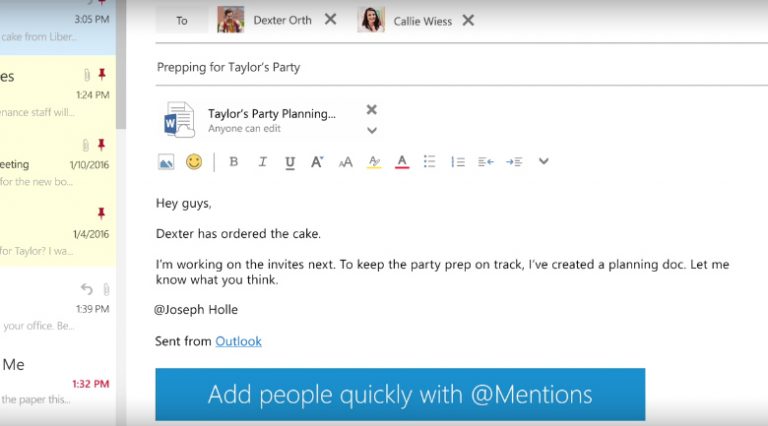
Most of the updates have to do with streamlining your email communications, and with making Outlook a place where you can do more without ever leaving your inbox. In a way, Outlook seeks to make your email inbox the control room for your entire life, often by partnering with other apps and services.

Here are some of the cool new features:

For example, using the new Outlook you can send or receive funds using PayPal directly from your inbox. You can also seamlessly transition between instant message chat, Skype, and email. You can attach files automatically from the cloud, or from Dropbox or Box, as either links or attachments.
Speaking of attachments, if you need to edit a document, you can now do so through any Office app, side-by-side with your email. Outlook simply opens a Word, Power Point, or Excel window directly in your inbox.

If you are suggesting a new restaurant to check out, you can use the Yelp add-in to place reviews, photos, addresses and phone numbers directly into your message. You can even use an Outlook add-in to schedule a ride with Uber – in fact, you get a $20 discount on your first ride just for using Uber on Outlook.

Emails containing specific tasks, like “pick up some toilet paper on your way home” or “try to get me those reports by Monday” can be added automatically to your Wunderlist to-do list.

Outlook also wants to help you sync up information from your email and other online activities with your Outlook calendar. Without leaving your inbox, you can schedule a Skype date or book a bus or plane ticket that will automatically appear in your calendar.

Outlook has made numerous changes, big and small, to improve your email experience, and with these updates, defectors may take a second look at their email options.

#BettaOutlook

SnapChat’s GeoFilter may be the next tool to rock your marketing toolbox

Exposure and engagement

Anytime I get on Snapchat and see a cool branded filter, I always think how many people they are reaching and how cool it would be if my own brand or logo could appear too. I wasn’t sure how it would work, or how much it would cost, I just knew it would be a nice way to include Snapchat as a marketing tool. Well, Snapchat has found an answer for smaller brands and users alike with their introduction of “on-demand geofilters.”

Aside from being another way for Snapchat to monetize the fast growing app, it is an awesome way to gain exposure and engagement for your product or service in a relevant location.

bar

Your business can design a filter

Now, anyone can design a filter and send to Snapchat to be approved in no more than a day. The design must meet their requirements, but once approved the filter can appear between an hour up to a month, and can include a designated area between 20,000 square fee, to 5,000,000 square feet.

Prices begin at $5 for a filter that lasts 8 hours and appears over a small distance. That number increases depending on the desired length of time and square footage you want to access; and comes with a dashboard for businesses and those who care to track analytics and use of the filter.

Geo-Filters gives your brand control

This genius idea comes from Snapchat’s team wanting to increase user engagement and is similar to the geo-functionality of hashtags, and location tags on Facebook and Twitter. It gives businesses control over design and target location, making sure your message is visible to the relevant customers you prefer.

It is perfect short term and long term campaigns promoting for events, a sale, or a simple way to reach people in the area. This method is also significantly cheaper than the sponsored lenses Snapchat typically sales for $750,000. And though the 750k lenses obviously reach more people, $5 is the perfect way to start small and test it out for your brand.

What will your team come up with?

If you’ve been looking for a way to incorporate snapchat into your marketing plan, snap chat on demand is the perfect answer. It’s affordability, control, and analytics dashboard make it easy to target your campaign to relevant markets. If you want to see how it works, watch this video. If you are ready to try it out head here to start your design.

#SnapchatForMarketing

While some brands welcome robots, Mercedes is firing them

Keepin’ it (relatively) analog

While most car companies today utilize robots in the manufacturing and production of their vehicles, Mercedes-Benz bucks this trend. The auto-maker offers consumers a wide-array of features such as carbon-fiber trim, heated and cooled cupholders, along with four types of caps for the tire valves, which the robots just can’t keep up with.

bar

The name of the game is adaptability

At the heart of Mercedes’ decision, and spurring on the shift, is versatility. Within the auto-industry, demand is shifting to offer a broader array of models, each with more and more features. As customization becomes key, humans are reclaiming the Mercedes assembly lines. This runs counter to the long-held tradition of using robots in car manufacturing. However, when it comes down to it, robots are great at repeated tasks at a consistent and fast rate, but they’re not good at adapting. In this case, humans are more cost-efficient for Mercedes, because they can shift manufacturing to a few skilled workers in a weekend versus the weeks needed to reprogram the robots.

Too many variables

Markus Schaefer, Mercedes’s head of production, said at its factory in Sindelfingen, “Robots can’t deal with the degree of individualization and the many variants that we have today. They can’t work with all the different options and keep pace with changes. We’re saving money and safeguarding our future by employing more people.”

Churning out more than 400,000 vehicles a year, their 101-year-old Sindelfingen plant thrives on efficient, streamlined production. However, manufacturing methods are being forced to adapt to the new age of individualization.

Robot farming for the future

While it may seem like the auto-maker is bucking robots, robots won’t be completely disappearing from the manufacturing process. Instead, robots will become increasingly smaller, more flexible, and operate in conjunction with human workers. For Mercedes, this new method of equipping workers with an array of little machines is known as “robot farming.”

And they’re not the only car manufacturing looking into this method.

Both BMW and Audi are testing their own versions of “robot farming” using lightweight, sensor-equipped robots safe enough to work alongside people. As the pace for change within the auto-industry quickens, auto-makers are seeking any edge to be better and faster than rivals.

#Mercedes

Google is making a move to kill passwords in the CREEPIEST way ever

Introducing Project Abacus

Passwords have long been the frontline protection against hacking and identity theft. They may not be perfect, they may be hackable, but they’re the best defense we have, right?

bar
Until now. The tech whizzes at Google are cooking up a scheme to eliminate the password as a means of security, replacing it with a system called Project Abacus. And while some people are celebrating Project Abacus as the next evolution in security, others are skeptical, and frankly, a little sketched out.

Honestly, it’s really creepy

That’s because Project Abacus would rely on an accumulation of highly intimate data that Google would be – or already is – collecting about you. Devices and apps would gather information to create a cumulative “trust score,” combining facial recognition technology with information about where you go and when, your voice and speech patterns, how you walk, how you type, and more. In other words, your device would learn to recognize you, without you having to do anything at all.

These supposedly hack-proof technologies could revolutionize device security by leaving it up to the device, rather than the user, who is susceptible to error, or laziness. Users who choose weak passwords or decline to install virus protection would still be protected by Project Abacus. Regina Dugan, who demonstrated Project Abacus at Google’s I/O conference, said that Project Abacus “may prove to be ten-fold more secure than just a fingerprint sensor.”

Flaw in the assumption that humans are predictable

However, other experts are skeptical about the functionality of such a security system. Have you ever had your bank account frozen while you were traveling, because the bank assumed your identity was stolen? It can be inconvenient when computer system presumes to know more about your behavior than you do. Cisco engineer, Shawn Cooley, expressed concerns about Project Abacus when he tweeted, “very cool until I break my leg or hand & can’t auth to any services to get healthcare info since my behavior is diff.”

Even more information available to hackers

Besides being concerned that the computer might fail to recognize you should you display some unexpected behavior, other experts complain that Project Abacus relies on invasive data collection – the kind of data hackers are after in the first place. If someone is able to hack through your Abacus-protected phone, you’d still be in trouble, and perhaps hackers would be able to gather even more information from Abacus’ data pool itself.

A lack of security endangers device users – but so does exorbitant data collection.

#ProjectAbacus

Modcloth retires term “plus size,” shows how to be inclusive (and make money)

Fashion trends: One category fits all

I think what Modcloth recently did may be a potential template for other clothing retailers to consider. Just what did ModCloth do? The short version is they recently integrated their “Plus size” category into all their other clothing.  In other words, on the Modcloth website, there is no longer a stand-alone category for Plus Size. To quote the MC website, “…we could all agree that shopping categories should be defined by types of clothing, not types of bodies.” Bravo! Someone finally gets it!

bar

Just another size

Ultimately ModCloth came up with the term “Extended Sizes” as an all-encompassing concept that could, in the future, also contain XXS, petite, tall, and other various sizing extensions beyond the standard range. It’s another step towards size-and-body-inclusivity.

Like I said, what ModCloth did possibly went unheralded, but I think it’s still just as timely now. In recent weeks we’ve seen Sports Illustrated welcome a variety of models into their Swimsuit Issue while at the other end of the spectrum, Forever 21 got hammered for using non-plus sized models to demo their plus size line.

Bad for business

In the bigger scheme of things the term “Plus Size” is an outdated retail concept.

Case in point: Actress Melissa McCarthy, herself a woman of substance and also the head of her own line of clothing which runs in Bloomingdales, Nordstrom, HSN and Lane Bryant, has not held back regarding the ridiculousness of the plus size section saying in a recent interview, “Seventy percent of women in the United States are a size 14 or above, and that’s technically ‘plus-size,’ so you’re taking your biggest category of people and telling them, “You’re not really worthy.”

McCarthy said she also finds it very bad business, adding, “It doesn’t make a lot of sense numbers-wise. It’s like, if you open a restaurant and you say, “We’re primarily gonna serve people that don’t eat.”

Baby steps

Fashion, like art or music, should be accessible to everyone regardless of height, weight or the color of their eyes. Sometimes the greatest change occurs with the smallest of steps but the change is happening.

#Modcloth

LinkedIn growing their social ad revenues, still in the big leagues

Slow burn rise

Social network LinkedIn continues to grow its global ad revenues. For 2015 revenue growth is still in the double digits and continue to rise according to eMarketer. Historically speaking, LinkedIn has had one of the slowest revenue growth rates of any social media website. The company continues to trail behind other more dominant and faster growing social networks Facebook and Twitter.

bar
Despite that, the company still took in just under $1 billion for 2015. This amount of ad sales for the last year gives them a fairly good growth rate of 25.1% over the year before. They are also projected to further their growth this year by another 20.5%. This will bring their ad revenues to $1.13 billion by the end of 2016.

LinkedIn trails social media giants, but leads in mobile growth

LinkedIn does continue to stand below it’s larger competitors. Take Twitter for instance, who’s revenue growth is 40.0% this year. Facebook too had a growth rate of 31.5% in the last year. Compared to these, LinkedIn still trails significantly behind.

However, one area where the social network does lead the way in growth is when it comes to mobile users. For LinkedIn, mobile presents the strongest area of growth. In 2015, eMarketer estimated LinkedIn would have the highest US mobile ad revenue growth rate of any company within the US market, at 170.0%. By the end of 2016, their mobile ad revenue is expected to settle around the national average at 35.4%.

Although, such an outcome will mean the social network will take their place behind Facebook and Twitter again. Because of the rapid mobile user expansion last year, mobile ad revenue comprised 24.7% of LinkedIn’s net digital ad revenue for 2015, which is double their 2014 percentage of 12.1%.

Still a contender in ad revenue

Despite it’s continued place behind larger social networks Facebook and Twitter, LinkedIn is expected to continue to be a contender in the world of social ad revenue. Even though the majority of LinkedIn’s ad revenue comes from the US— 63% to be exact— by the end of 2016, 3-4% of the world’s social media ad spending will go to LinkedIn.

#LinkedIn

Senate wants to tax your online shopping and Netflix-binge habits #InternetFreedomAct

1

Keeping states from enacting Internet taxes

The inclusion of the Internet Tax Freedom Act (ITFA) in the Trade Facilitation and Trade Enforcement Act of 2015 had shown some promise when we reported on this critical moratorium a few weeks ago. The intent of the Internet-related legislation is to keep states from enacting new taxes on Internet access.

bar
However, the Senate removed the supporting language from the trade bill and included it instead in the omnibus spending package that passed both the House and Senate on December 18, 2015.

Senate proposing tax for online retailers

The moratorium on new taxes for Internet access has been extended until October 2016. While the White House has shown support for the legislation, through the President’s repeated statements in support of net neutrality, it’s the Senate that is prolonging the stopgap. Specifically, U.S. Senator Lamar Alexander (R – Tenn.), who also wants a vote on the Marketplace Fairness Act, of which he is the lead co-sponsor.

The Act would give states the option to tax “remote businesses” i.e. online retailers selling within states’ borders.

Interestingly enough, the White House has been in favor of Alexander’s legislation, with an endorsement via former White House press secretary Jay Carney as reported by The Hill in this 2013 article. Carney spoke then on “the need for federal legislation to level the playing field for our businesses and address sales tax fairness.”

Leveling the playing field

The debate stems from the impact to various parties from consumers to retailers. The legislators in support of a remote business tax have stated that the law will create a level playing field for brick and mortar retailers, providing much needed revenue to states in need.

The opposing view believes that consumers will bear the cost through discriminatory taxes at the state and local levels.

Taxing your Netflix-binge habit

The concern about discriminatory taxes seems well-founded with Chicago’s July 1, 2015 creation of the 9% “amusement tax” that affects entertainment both in person and electronic delivery. Charges are required to be paid for the privileges of “watching electronically delivered television shows, movies or video,” as well as “listening to electronically delivered music” and “participating in games, online or otherwise.”

The code states that the amusement tax applies only to rentals, and not “permanent” downloads. This local ordinance mostly impacts streaming online services including iTunes, Netflix and Hulu.

Amazon calls for streaming tax

Interestingly, online sales giant Amazon has long supported this legislation as evidenced by this 2013 article from The Hill, stating that “Amazon argues that a single national framework for tax collection is preferable to a patchwork of state laws.” Amazon’s greatest online rivals including eBay and Overstock who don’t have a physical presence in the number of states that Amazon does.

Amazon has been collecting sales taxes in those states where they have a physical presence, including Illinois as of February 1, 2015, and Michigan on October 1, 2015.

On an intriguing side note, former Obama administration press secretary Jay Carney was hired by Amazon in February of 2015 as senior vice president of global corporate affairs.

His position includes oversight of public policy and public relations.

Streaming tax goes largely unreported in state returns

In states that require state income tax returns, consumers have been required to self-report that tax. According to this Detroit Free Press article, Michigan state officials estimated that “only 2.5% of what was really due” was reported for untaxed online purchases in the 2013 tax returns.

States’ rights vs. Net neutrality

Whether Senator Alexander holds true to his principles of the past or will sacrifice net neutrality for states’ rights will play out over the next ten months. Keep in mind that Alexander stated in these remarks from November 7, 2003, on the Internet Tax Moratorium of  “no taxation of Internet access” and that “virtually all of us are willing to keep state and local governments from taxing Internet access.“

Many economists are skeptical, and even accusing Alexander as well as Senate Democrat whip Dick Durbin of holding the ITFA hostage for the sake of their own agendas. National Review economist Stephen Moore pointed out the hypocrisy of some of Durbin’s statements in his article. “… Now the man who says the Internet should be universally available and affordable hypocritically wants to tax it to make it less affordable. The primary victims, if Senator Durbin’s eleventh-hour tax gambit succeeds, will be poor households…”

Indeed, having access to the Internet has moved well beyond being a luxury to being a convenience for all users, regardless of their income and tax bracket.

#InternetTaxFreedomAct

Facebook is testing it’s own browser (so visitors never leave FB)

0

Just browsing around: Facebook gives new browser a test-run

OK I admit it: I am not completely smitten with Facebook. I’m pretty happy with the handful of good friends that I have as opposed to connecting with 500 complete strangers who are five or six steps removed from the one person I actually know! But I also realize that Facebook is so much more than just tenuous connections with friends of friends of friends. The whole social media phenom is opening more doors for entrepreneurs than we can keep up with!

bar
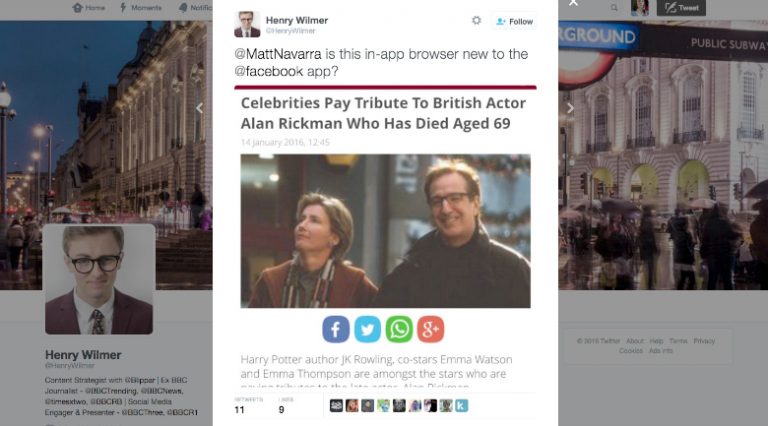
That said, I’m impressed that Facebook continues to look for ways to hook its users. The latest of which is a new in-app browser that lets users look at web pages without having to leave the app. You’re wondering perhaps why this is important but given the fact that the attention-span of the average person using social media keeps getting narrower, this latest effort by Facebook adds another dimension to multi-tasking.

Not just aesthetics

You know, just like I know, that the old FB browser didn’t do much beyond loading the page you wanted to read and following hyperlinks to other sites. According to thenextweb.com the new, improved browser lets you input your own URL should you want to check another page without leaving the Facebook app. For example, you might want to look up a term you don’t understand or better yet, fact-check a detail on an article you read.

Not only that, a new bar on the bottom of the page tells you how popular a post is, includes back and forward buttons, let’s you bookmark pages, and has a menu button.

It only makes sense (or maybe the proper word here is “cents”) that given how many people download articles from Facebook that improving the browsing experience is a sensible move for the company.

Still in test-mode

Underscore the fact that the new Facebook browser is still in test-mode.Gadgets.ndtv.com points out that the browser is only available to a small subset of users (iOS only), but like most public test features Facebook introduces, the lion’s share end up receiving a wider roll-out a few months later.

#FacebookBrowser

Why stress stands in the way of your success

2

The recipe to success doesn’t include stress

Turn on the television, listen to the radio, or flip through the newspaper and you’re inundated with negative. Whether it’s murders, failing schools, government scandals, international turmoil, terror threats, or just plain old local crime, we’ve become surrounded by the bleak and depressing.

bar

I feel sick

Society as a whole has started developing medical school syndrome, and walk around in a state of fear, stress, depression, and hypochondria. These stressors cause strain on the body, increase the frequency of illnesses and can cause serious health problems, such as depression, high blood pressure, and heart disease.

A little positivity goes a long way

Psychologist Shawn Achor addresses the idea that positivity impacts how your brain functions in this TEDxBloomington talk. “The lens in which you view the world is the lens in which you view happiness,” he states, “If we can change the lens we can change every single educational and business outcome at the same time.” Achor argues that dopamine, the chemical in the brain that is released when experiencing pleasure, actually activates the learning centers of the brain. Essentially, being more positive opens the door to more learning and productivity.

Stress and productivity don’t mix

When your brain is stressed, it is 31% less productive than its happy, stress-free counterpart. Individuals utilizing positive thinking experience greater successes, with salespeople closing 37% more deals, and doctors becoming 19% better at faster and more accurate diagnoses, for example.

Success is all in your head

Achor goes on to explain that IQ predicts only 25% of job success; instead optimism and social support act as the greatest influencers.

The mentality that with hard work comes success is backwards thinking. By constantly raising the bar, and upping personal standards about success creates an environment where happiness is virtually unattainable. Success should not be liked to a sales quota, always increasing the expectations after each goal is reached, but instead celebrated.

Train your brain

Achor suggests practicing intentional optimism. Start two minutes at a time, 21 days in a row concentrating on being grateful and focusing the positive events that occurred in the previous 24 hours. Practice this brain exercise with physical exercise, meditation, and a combination of random and conscious acts of kindness to achieve ideal optimism.

Counter the unavoidable

Hard work, long hours, and stress seem to be a standard equation for most leadership roles, small business owners, and entrepreneurs. While stress may be unavoidable, it can be countered with positivity in order to achieve greater success and personal happiness.

#StepsToSuccess

Volvo cars will come with smartphone keys, beginning a new wave of tech

Digital key on your smartphone

While smart technology is on the rise, it’s still largely considered a luxurious add-on option for most products. But that’s all about to change.

bar

Does everything a key can do

Volvo has announced that, starting in 2017, its cars will be sold with a digital car key as a standard feature. The Bluetooth enabled digital car key is a mobile app that does everything your old fashioned physical key used to do – it locks and unlocks car doors, and starts the vehicle. According to Volvo’s director of new cars, Martin Rosenqvist, consumers optionally “can also receive a [physical] key,” but when they sign the deal at the dealership, instead of being handed a set of keys, they’ll download the digital key onto their smartphone.

Convenience vs. Security

Some of the advantages of a digital key seem obvious. Let’s say you’re on vacation and your kid or neighbor wants to borrow your ride – you can actually send a “copy” of the digital key between devices.

However, the digital key raises obvious security concerns, as tech experts are finding smart devices to be particularly vulnerable to hacking, and even the government has admitted that it will use smart devices to run surveillance on citizens.

Too many things can go wrong

And while it might be nice not to ever worry again about losing your car keys, you’re still in a jam if you lose your phone, or if you get caught somewhere with a dead phone battery and no charger. A locksmith won’t be able to help you if you lose your “digital key.” One wonders if all of these “smart” technologies are actually setting us up for frustration, by leaving us dependent on complicated devices that only specialists know how to repair.

A new wave of mobile tech

The digital car key also presumes that car buyers already own another piece of expensive equipment – a smartphone. Readers may be surprised to learn that, in fact, not everyone even owns a smart phone. Some of us are still using regularly old dumb phones.

Nonetheless, Volvo’s bold decision does indicate a trend towards assuming that customers want smart features built into their products.

#VolvoDigitalKey

Hillary Clinton markets designer tees for big bucks

Hillary gets fancy with it

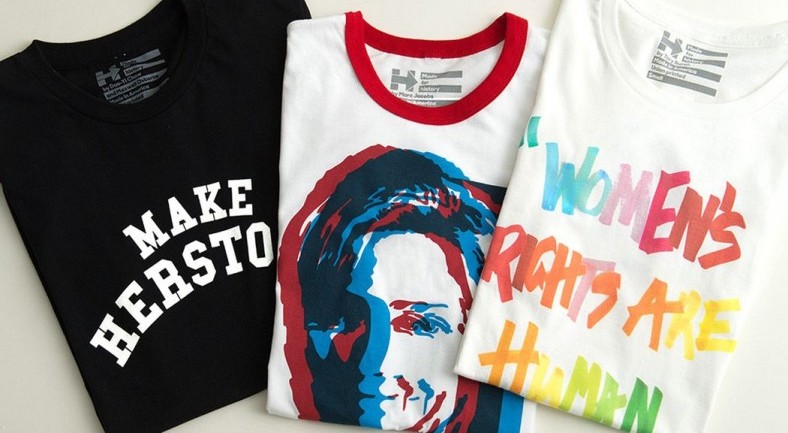
In an effort to keep up with her competitors, Hillary Clinton has launched an exclusive line of designer t-shirts on her campaign site. This isn’t as strange as it sounds when you consider many of the other candidates have launched similarly branded products.

bar
Jeb Bush had a guacamole bowl. Marco Rubio used creative advertising on his logos (Ru-bae-o), and Clinton has enlisted some high end designers to create her campaign goodies.

Designer tees are really a thing

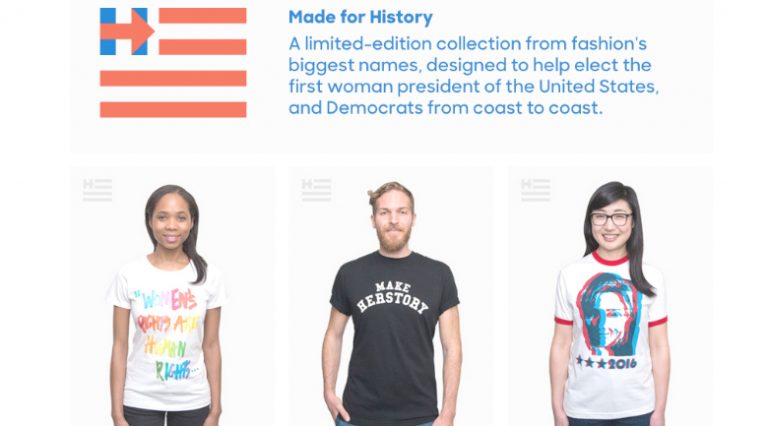
Clinton’s line of limited edition, designer t-shirts cost $45. This seems a bit pricey, but the other candidates offer shirts for $30. Clinton enlisted three designers, each of whom designed one shirt for the line. The three designers are Marc Jacobs, Tori Burch, and Public School.

The collection is said to “help elect the first woman president of the United States and Democrats from coast to coast.” Clinton told Vogue that these shirts are “an extraordinary new way to show enthusiasm” for her campaign.

hillary-clinton-designer-tee.0.0

Why designer tees?

While some will disagree, this was an inventive way for Clinton to up her campaign merchandising game, especially with the younger crowd. According to Vogue, the designers were given free rein to put their own spin on the tee’s design. Burch’s features rainbow script advocating women’s rights; Jacobs’s is a ringer tee, and Public school’s has a decidedly varsity feel.

Jacobs has long been a Clinton advocate. He designed tees for her 2004 Senate reelection campaign, as well as for her 2008 bid for president. He stated, “my support for Hillary is grounded on our long-standing shared belief in equality. I am proud to share this t-shirt as a champion for equal rights, for the progress we have made, and for the hope of continued progress with Hillary as President.”

You can take a look through Clinton’s offerings on her website. Similarly, the other candidates for President have online stores: Sanders, Trump, Rubio, Cruz, Kasich, and Carson. What do you think, does high fashion have a place in politics?

#FancyShirts

What the golden key emoji really means

Yet another emoji that has context

If you use any form of social media, texting, or emailing, chances are you have used emojis. Emojis are fun ways to let someone know how you feel, or a fast way to reply to a message while you’re on the go. Some emojis can be hard to understand and even more have multiple meanings. One of these elusive emojis is the golden key. You may have noticed this emoji ( goldenkey) popping up on Snapchat and Twitter. How they heck did it become so popular and what does it actually mean?

It’s just a key, right?

It is and it isn’t. It’s definitely a key, but it seems to stand for something else.

The use of this particular emoji was popularized by DJ Khaled’s Twitter and Snapchat pages. He used the key emoji to give his followers “the keys” to success, by posting quotes, slogans and advice along with the golden key emoji. Much like the 100 emoji (100emoji ), the key emoji has taken on a life of its own; so much so that many Snapchat and Twitter users were asking what it meant and where it started.


What this says about social media as a whole

Sure, this little golden key is interesting and the trend of using it for giving “key” advice is a good idea, but it also speaks to the importance of social media on the whole.

Emojis are growing more and more popular with social media users and marketers alike. When we’re online, it is hard to express emotion or sympathy in our messages, so we use emojis. Emojis set the tone for the conversation, the way voices used to on the telephone.

So while this golden key emoji is a cool way to impart advice, it’s also the latest trend for marketers to grab users attention. It’s a way of saying, “hey we’re paying attention to the trends here and want to relate to you on every level.”

Emojis have certainly become commonplace on social media channels; the golden key is just the latest one to be noticed. Have you noticed more emojis on social media, or are you using more of them yourself?

#Keymoji

Thinking more deeply about where our clothing comes from

A simple shirt isn’t so simple

I ordered a new black t-shirt earlier today. That may not seem like a big deal to you, but for me, it was quite the process.

bar
I’ve purchased dozens – if not hundreds – of black t-shirts in my life. Look into my closet today, and it’s probably 70 percent black. For something like a simple t-shirt, where brand has never really mattered to me, I’ve always purchased from a big-box store or a fast-fashion retailer, attempting to save money.

I’d spend as little as possible, knowing it wouldn’t be long before I needed another of the exact same thing.

Thinking deeper about consumerism

But I recently read an article that has changed the way I think about that black t-shirt: The Power of Buying Less by Buying Better in the Atlantic. Reading that article prompted me to watch a documentary (The True Cost) that made me think even deeper about the true cost of those fast-fashion finds – those t-shirts cost way more than the five dollars I would spend on them.

I’m a realist. I know that changing the way I buy my black t-shirts isn’t going to save the world. But for me personally, I’m making a conscious effort to be less wasteful and more thoughtful about how I spend my money. Americans as a whole aren’t doing enough of that these days.

Per The Atlantic, “Americans also buy a lot more clothing than they once did, on average 64 items and more than seven pairs of shoes per year – double what they bought annually in the 1990s. What this really means is that the culture of saving up and investing in fewer pieces and wearing them for longer has all but waned.”

Who needs 64 new items of clothing every year?

I don’t. Looking good at work is not worth thousands of garment workers dying when a building collapses. Refugee children should be in school instead of working in a factory creating the latest trend of the week. I don’t want to be a part of what the fast-fashion industry has become.

So I bought a new black t-shirt.

I did my research and found a list of companies who care about our world, the environment, the clothes we wear and the people who make them. My new t-shirt is coming from a non-profit called Krochet Kids International. Part of the reason I purchased with them came from a simple statement I found on their website: “Each piece we make is hand-signed by the woman who made it. Your purchase enables this cycle to continue and gives you a window into what this impact looks like for one person.”

When I wear this new black t-shirt, I’ll know exactly who made it and where it came from. I’ll be comforted knowing that she is working for a company that is empowering and mentoring her along a path to provide for herself and her family well into the future.

As I watched the Oscars last night, I couldn’t help but wonder if anyone there had put as much thought into their dress or tuxedo as I had put into the purchase of my plain black t-shirt.

Of course, they all looked beautiful. Of course, they were dropping designer names all over the red carpet. But I wonder how many can look at the tag inside their dress, call the woman who hand-pieced it by name and know they made a tiny step toward making her world a better place.

I intend to buy less and buy smarter

I’ve decided to buy less and buy smarter, not only for my own pocketbook, but to be a tiny part of a solution to a problem that I didn’t even know really existed.

I urge you to consider doing the same, whether you’re buying to fill your own closet or stocking your retail space with goods. Who says we can’t change the world one t-shirt at a time?

#Consumerism

The rise of dark social: All science, no seduction

Dark social, the (un)sexy underbelly of the social world

Dark Social might sound like something sensual, but it’s really just about tracking those links, baby. And if you aren’t familiar dark social, don’t feel bad, because you’re not the only one. But soon we’ll all be well versed, because dark social is on the rise and something to contend with.

bar

Referral traffic is hard to track

Normally, when a reader clicks on a link that leads to your website from a social media site, your analytics kick into gear. Fairly quickly you’ll learn how that reader was directed to your site, along with plenty of other information you may or may not need. However, when someone copy and pastes a link and texts it to a friend, or shares it through a private messaging app like Snapchat, there is no way to track how someone ended up on your page. The ability to track “referral traffic,” as Olsy Sorokina of Hootsuite describes it, is completely lost.

How much!?

We may not be aware that it’s happening, but dark social is a huge phenomenon. Although it’s a new concept to most people, Patricio Robles of Econsultancy has stated that, “stats from Radium One show that nearly 70% of global sharing activity takes place in dark social channels.”

So around 70% of referral traffic isn’t being tracked accurately or at all, which means your company might be focusing on or marketing to the wrong demographic. For all you know, the majority of that 70% of traffic could originally be coming from a Facebook ad, and you suddenly decide to spend all of your ad money on Twitter.

Using dark social to your advantage

So how can you use dark social to your company’s advantage? For now, there’s no way to track the traffic that comes by way of dark social apps, emails, and text messages. However, Jack Simpson of Econsultancy has a few suggestions on how to zoom in on where you clicks are coming from.

Simpson’s first suggestion is for your own website. Make sure to include share buttons that are obvious, visible, and make people want to click on them instead of copy and pasting the link in an email. Include buttons for email, WhatsApp, Snapchat and other dark social channels, not just the usual Facebook, Twitter, and Instagram. According to Simpson, buttons for dark social channels are actually more important because with them you can start tracking what comes from those sites, instead of playing the guessing game.

Simpson’s next suggestion is to go into your site’s analytics and look at all your direct traffic. The insanely long links like the ones below were obviously not typed in by hand, so someone clicked on a direct link, most likely from dark social.

dark social

“You could set up a segment in your analytics that takes into account all direct traffic links with parameters, so for us it would be all links that aren’t econsultancy.com, enconsultancy.com/blog and so on. This enables you to get a reasonably accurate picture of how much traffic is coming from dark social,” Simpson said.

The future of Dark Social

We’re only just now learning and exploring the concept of dark social. Within a few years’ time, it’s likely that scientists and engineers will have discovered and passed on enough information that we’ll have pulled this social into the light.

#DarkSocial

This one medical test can ruin your chances at getting life insurance

Innovation is rapid, especially in this field

Technology is making advancements so rapidly it feels like there is a new breakthrough every day. This is especially true in the medical field. Technological advancements have lead to the cure for diseases previously thought to be incurable, full facial transplants, and innovations in how procedures are conducted.

bar
Technology has also reduced the recovery time for numerous procedures and decreased fatalities in numerous procedures. With all of these advancements, it is hard to believe that one simple test can change your eligibility for life insurance, but it really can.

Life insurance is good, right?

Life insurance in an investment in yourself and your family; spend a little now and save a lot when the time comes, or at least that’s how it’s supposed to work. Even if you are currently covered with a life insurance plan, you need to know about this stipulation to avoid losing coverage, along with all the money you have already paid into your plan.

Imagine if you will our COO, Lani’s experience, as an example (told with Lani’s knowledge and permission): In 2004, she and her husband were pregnant with their first and only child, Kennedy. There were major complications throughout the pregnancy and they had to have “genetic counseling” in order to discover not only their unborn child’s genetic issues, but also their own, so they could pinpoint any future issues.

Can you imagine enduring all of these very necessary tests, only to have your insurance come back and punish you later? It doesn’t seem possible, but that’s exactly what is happening.

Isn’t that illegal?

You may be thinking this type of discrimination is illegal; I certainly thought it was, but sadly, it isn’t. While the federal government has barred health insurance companies from denying coverage to those with a risky gene mutation, the law doesn’t extend to life insurance companies, long-term care, or disability insurance.

Of course, many life insurance companies do not require you to undergo genetic testing before approving you, they may ask if you’ve done any of these test on your own. This information can then be used against you when you apply. If you choose to withhold this information and they find out, they may have a case against you for “guilt by omission.”

The takeaway on life insurance

As disappointing as this is, it’s better to know, especially if you intend on your family being cared for after you pass away. Genetic testing helps a lot of people. We certainly do not want to discourage you from getting these tests, rather inform you about the risks you may not have known were there.

Life insurance is an investment, just like anything else and the more you know, the better off you are in the long run. Did you know life insurance companies could discriminate based on these types of test results? What do you think?

#LifeInsurance

Qwil is a great help to freelancers during tax time

‘Tis the (tax) season

With tax time upon us and the deadline to file rapidly approaching, you may be looking into which software programs can help you organize all your tax information. If you run your own business, traditional tax programs can be difficult to navigate because you’re never sure if you’re getting all of your deductions, have entered your information correctly, or filed the right forms. Tax season is stressful, to say the least.

bar

Record keeping for the independent contractor

If you are an independent contractor or frequently hire independent contractors, Qwil may be a good option for tax time. As any of the 1099 workforce can tell you, at tax time, rounding up all the necessary documents is a headache. Why? Independent contractors (the bulk of 1099-ers) do not typically get paid on a regular schedule. Many times we complete work and then wait for an invoice to be approved and paid. This makes for awkward record keeping.

Qwil is focused on offering support for 1099-ers. They offer a way to get paid in a timely manner, and a way to keep track of these payments, all in one place.

Instant liquidity

Their payment infrastructure enables instant liquidity for the 1099 workforce by leveraging support across accounting, tax benefits, and legal. 1099ers using Qwil can get liquidity daily for work performed and avoid waiting for payment and invoicing cycles. At the time of publication, Qwil has not returned my messages as to how this program works; perhaps due to the fact that Qwil is currently in beta. However, if it works as well as they state it will, this could be game changing for 1099ers. If Qwil provides working capital for invoices, so 1099ers can get on with their work and worry less about if their own bills will be paid, the freelancing world might sigh a collective sigh of relief.

We’ve still got a lot of questions

However, there are several things I would want to know about Qwil before I jump on board. I want to know how it works, what it costs, and how they decide what to pay and when to pay it. There are a lot of “what-ifs” here, but it’s definitely something to keep your eye on if you’re a 1099er looking to make your life a little bit easier.

#Qwil

SwanLuv: Startup that gives couples wedding cash pivots, pisses off users

File under: If it seems too good to be true, it probably is too good to be true.

Late last year, SwanLuv, a Seattle-based startup began promising engaged couples loans of up to $10,000 to finance their weddings. The startup told couples that they could “receive funds up to $10,000 towards your dream wedding for FREE” – that is, if you stay together.

Couples who divorced would have to cough up the loan, with accrued interest. Supposedly this money would be funneled back into loans for other hopeful couples, and SwanLuv would generate revenue from ads – even providing free online marriage counseling to help couples stay together.

bar
Apparently more couples than SwanLuv could ever have guessed were ready to take a gamble on true love in what SwanLuv founder called a “casino for marriages.” The company received over 200,000 loan requests.

Pivot into crowdfunding

On Valentine’s Day, when the startup was set to launch, SwanLuv unexpectedly pivoted – a word used by startups to describe strategic changes in the business plan, or, in some cases, as a euphemism for admitting defeat.

On their Facebook page, SwanLuv announced that “due to overwhelming demand (nearly two billion dollars at $10,000 per couple) and unanticipated legal regulations/restrictions in the lending space, rather than pull out we came up with a tool we believe still helps couples with their wedding financing.”

That “tool” is a crowdfunding platform that has couples soliciting their friends and families to pitch in towards the wedding – with the same catch that the money will be returned if the couple divorces, but to the original donors.

“What seemed like a dream come true”

As you might expect, a storm of expectant bridal anger was unleashed as many eager couples had been waiting for months for their wedding loan, and now will have to scramble to find other solutions.

One bride told GeekWire, “If so many other couples as myself had the family and friends to help with our weddings, we would have already gone this route, not wait months on end for help from what seemed like a dream come true.”

#SwanLuv

AG’s favorite work productivity tools for your spring cleaning needs

Back into the swing of things

With every passing year, even if we are successful the year prior, we are always hell bent on finding better ways to increase organization and time management. And if you’re like most people I know, including myself, these things are regulars on your to-do list.

bar
So, with the start of spring (and spring cleaning) just around the corner we are setting our sights on organization and time management. Keep reading to see which tools can help you take full advantage of this season!

Spring (productivity) awakening

  1. Asana: built for task sharing amongst groups, Asana is designed to aid with project concepts such as: tracking team progress, deadline fulfillment and task assignments. The easy to maneuver interface, makes it easy for users to communicate to the different team members; with the ability to make announcements, share information or discuss ideas.
  2. Slack: a team communication app that uses public channels, direct messages and private groups to helpgarner effective team collaboration. The coolest feature, is it’s universal search capability that makes finding files, conversations, and notifications a breeze; so no more time wasted searching high and low for a document, or note.
  3. Trello: a favorite here at the American Genius, Trello is an awesome productivity tool that organizes thoughts, projects, and assignments onto easy to read boards. With its deadline feature, communication ability and responsive interface it is one of the easiest ways to organize just about anything for you individually or as a team.
  4. Swipes: is a simple yet powerful task management app that works with a simple swipe. Signup is free and easy. The interface is also very simple, and easy to get the hang of.
  5. Workflowy: takes the stress and pressure out of organizing your workflow and professional projects by streamlining your work load. It allows you to create an ongoing journal, plan outlines, and keep track of progress. This is the perfect tool for those who have multiple ongoing projects.
  6. Wunderlist: is a full-featured to-do list useful for all tasks personal or business related. Colleagues and friends have the ability to share lists, and can leave comments, ideas, or notes on each to-do item. It’s free and can be used on all major devices!

Make it happen, cap’n

Productivity and organization both are crucial in being successful in your business and personal life. The above tools are guaranteed to help you achieve that productive and organized year you resolved to make happen in January. Head to the app store, or website today, to download your favorite, and get stuff DONE.

#ProductivityTools

Brands cashing in on the Damn Daniel meme (we will gladly take this over Be Like Bill)

The newest trend in marketing

It never ceases to amaze me how quickly the smallest trend or video can go viral within a manner of days. Such is the case with the latest meme “Damn Daniel”.

bar
In a compilation of Snapchat videos, a high school student films his friend, Daniel, arriving to school over the course of a few different days. He documents Daniel’s different wardrobe choices while continuously stating, “Damn, Daniel!” A few videos show Daniel wearing white Vans in which his friend, Josh, remarks, “Back at it again with the white Vans!”

Brands showing cat-like reflexes

This spread through the Internet like wildfire and has become the latest “thing” everyone is referencing. I first heard about it through Facebook’s trending section, then saw a group of students watching the video at a coffee shop later that day. Right then I knew that it would become the next funniest meme.

That has proven to be true as brands are now getting in on the action. Axe, Clorox, and Zappos have all tweeted about their products, making references to Daniel. The video even caught the attention of Vans, who Daniel inadvertently has been advertising for.

Oh, the places a meme will go

Axe posted a variety of images with the text, “#FindYourMagic. Every. #DamnDaniel. Day.” Clorox produced an image of muddy tennis shoes with the text, “Damn, Daniel. Back at it again with the Clorox.” Zappos posted a photo of white Vans with the caption, “’Back at it again with the white Vans! #DamnDaniel”. They followed it up with a link to an online shoe store stating, “If any Daniel’s need a new pair…” Shoe store DSW also used this as an opportunity to advertise Vans in their store by writing, “Be like Daniel.”

Influencer and meme marketing

Brands taking advantage of Internet sensations as a way to promote their products is a strategic marketing tactic. In the case of “Damn, Daniel”, this has a way of reaching a younger generation.

The #DamnDaniel hashtag itself has taken over Twitter as people continue to make valentines, text posts, and copycat videos of this week’s funniest clip. While the shelf life of videos such as these is not very long, brands are clearly using their time wisely by hopping on the #DamnDaniel bandwagon.

#DamnDaniel

Who are the 2016 SXSW Accelerator Startups from Austin?

SXSW Accelerator pitch finalists

Every year SXSW Accelerator is tasked with selecting and showcasing new startups around the world to be presented and shown to the people. This year, there were over 470 companies who entered to compete at this years eighth annual SXSW Accelerator, but only 48 finalists made it to the final Accelerator pitch event.

bar
Of the 48 finalists, are five Austin-based companies, up from last years three. There’s either magic in Austin’s water, or innovation in the TX air, because Austin based companies continue to use their home field advantage as leverage to take SXSW Accelerator by storm.

Austin-based SXSW finalists

Here’s what these five Austin companies are bringing to SXSW this year:

Bitfusion:  A developer categorized as Enterprise and Smart Data, offers data-driven organizations various solutions to understand, and accelerate their workloads and applications without having to rewrite code, or rewire data. Bitfusions solutions work seamlessly with traditional data and cloud configurations, and allow software professionals to access acceleration without needing specialized skills. They seek to resolve, and increase the amount of organizations using high-performance computing, without needed extensive resources.

PopUp Play: One of the two companies in the Entertainment and Content Technologies Category, is a website where children or parents can design a custom playscape, and then have it delivered in just a few days. Users begin in the PopUp Play Build Lab where you can select different playscape options such as castle’s or gingerbread houses. Once you choose, they manufacture the life-size creation exactly to your specifications and within days, it’s delivered conveniently at the door step. What’s even better is that is the structures can be assembled in minutes, and folded discreetly for storage.

Emoters: The other developer in Entertainment and Content Tech., is A team led by Dr. Bradley Knox, with extensive experience and knowledge on human-robot interaction and artificial intelligence, is developing tiny robotic pets that seem alive, with their charm and intelligence. Not much has been released about the project, but the little robots are supposed to work seamlessly with your “desktop, countertop, or bedside table”.

Peeptrade: The only Austin company in the Payment and Fintech Category, allows it’s users to see real time updates of what the top traders are dong with their money. “Peepers” can also connect directly with some of the brightest and best trained traders, and improve their own trading. All you have to do is link your brokerage account, and your activity is automatically updated.

Thrillbox: In the Virtual Reality Category, this data analytics platform, provide businesses a way to look beyond play counts and ad impressions, while distributing tools for content generators, advertising agencies, vendors, and networks. Their patent-pending methods, allow them to acquire, aggregate, and analyze audience behavior with spherical video’s and VR games.  Overall, this company allows you to get a better understanding of your audience, and their data, with the use of VR.

March 12th and 13th

If these developments are any sign of the other companies competing, then this year will definitely be a tough one for judges. All 48 will present their innovations and products in the first rounds of SXSW Accelerator, on March 12th and 13th. After the first round, judges will select only 18 to go to the next. You can go to SXSW’s website to see the full list of the 48 finalists, and let us know which one’s you think will make it to the finale. Do you think these Austin companies stand a chance? Let us know!

#SXSWfinalists

You have 6 seconds to make an impression with your resume, here’s how to do it

1

Making the professional cut: Resume building

Hopefully, while you were in school you got some one-on-ones with industry professionals about how to do a bang-up job writing your resume. Considering that a potential employer (based on a recent study from TheLadders) spends only about six seconds looking at your resume, it is of vital importance that your resume leaves an impression.

bar
If you missed the resume builder class in college, don’t panic! We’ve got you covered…

Include a cover letter

We get that it’s a pain to make a cover letter job-specific each time you shoot out a resume online, but if you create a letter that is fairly versatile in your industry, you may be able to get away with changing just the title, date and the recipient name (if you’re absolutely desperate).

However, even if you have a template that works pretty well in most circumstances, we recommend taking the time to include information that is targeted to the job you’re applying for specifically. It’s important. Trust us.

Keep it concise

Employers don’t want to read three pages of text. Keep it short and simple.

Include only clear, concise descriptions that implement “success verbs”.

These are words like expanded, grew or reduced. Don’t spend time on lengthy descriptions. Instead, stick to the (brief) facts.

Your professional resume shouldn’t be more than one page. Trust us — they won’t read it, plus, they’ll wonder why you added all that superfluous information, and you’ll get thrown to the bottom of the pile.

Don’t overdo it

This goes hand-in-hand with keeping it concise. If you have more than a few jobs in your job history arsenal, include only the most long-lasting and relevant. Your list should be pretty short, especially since you’re just now entering the adult world of big boy and girl jobs. Also, if you have a minimal work history feel free to include relative volunteer work.

Highlight

Your potential employer is really only curious about a few things… your job history, name, current position held and education.

Highlighting those areas will make your resume more user friendly.

Stand out without overdoing it

If you’re a graphic designer it may be okay to use an infographic or some type of image to show your abilities, but otherwise please avoid it. Instead of including pictures, images or graphics on your resume, include links to various works and highlight them to stress their importance!

Employ a professional in the industry

Do you have a friend who is already working in the industry? Ask for their help! Seek out expert advice to make your resume more impactful. Plus, anyone who is already in the industry may be able to give you vital insight on networking opportunities. It doesn’t hurt to ask, right?

#6SecondResume