Home Blog Page 175

Why Cheerios will ditch their bee mascot

A morning staple

Cereal used to be a staple for kids, especially on Saturday mornings. Kids used to anticipate Saturday morning like teenagers anticipate Friday night; the freedom was tangible. One of the things most of us remember from those Saturday mornings are the commercials. If I say Cheerios, what’s the first thing that pops into your mind? The magical little honey bee, right? Great marketing on General Mills’ part, without a doubt, but the Bee will soon be disappearing from Honey Nut Cheerios.

bar

Wait, don’t take away the bee!

The Bee‘s disappearance isn’t for some other clever marketing idea, rather, the Bee mascot will be removed from General Mills’ packaging (only in Canada) to bring awareness the declining bee population. This campaign will also launch the hashtag: #BringBackTheBees. It will coincide with Canada’s five month awareness program to help people become more informed about what is happening to the world’s pollination population.

General Mills said in a statement, “with ongoing losses in bee populations being reported across Canada, we wanted to leverage our packaging to draw attention to this important cause and issue a call to action to Canadians to help plant 35 million wildflowers — one for every person in Canada.”

For nearly a decade, the bee population has been on the decline. More and more companies and organizations have been trying to bring awareness to the alarming rate by which pollinators, like bees and butterflies, are declining due to heavy pesticide use and global warming. The United Nations estimates that nearly 40 percent of these perfect pollinators are heading towards extinction; that’s more than a little alarming. Hooray for General Mills using their brand to help bring increased awareness. Now, if only the United States would follow suit.

Awesome campaign, but does it sound familiar?

Not too long ago, Burt’s Bees launched a similar campaign using the same #BringBacktheBees hashtag in an effort to plant 1 billion wildflowers.

They dropped the “b” from their branding becoming “Urt’s Ees” and stopped using the letter in their social media posts to increase awareness. Showing that the bees matter more than marketing, Burt’s Bees, or should I say, Urt’s Ees, responded to the Cheerios’ campaign on Twitter, stating, “ig fist ump to #cheerios for the work you’re doing to help #BringBackTheBees, too. #greatmindsthinkalike”

They also said in a statement to Digiday, “While we are not working directly with Cheerios Canada, we support the work they are doing to drive awareness and help sustain vital bee populations. The bees need all of us!”

How can you help?

I couldn’t agree more. If the pollinators don’t start making a comeback, growing everything from flowers to food could become a lot more difficult. For more information about how you can help the declining bee population, please visit The United Nations Environmental Programme (UNEP) here.

#BringBackTheBees

Kudos to Obama for his U.S. Digital Service and recognizing how to innovate

2

What is the U.S. Digital Service?

I’m convinced that not all improvement and innovation comes from within the walls of government. A good portion of it comes from outside: At the grassroots level by individuals who can make the most impact. People like you and me.

bar
The fact of the matter is, the need for effective government services is rising, while confidence in the government’s ability to deliver the same is dropping. Our current reality is that most day-to-day interactions with government agencies are powered by digital systems. Now we can dress the concept up any way we want and make it look impressive but all too often, Federal IT projects run over budget, arrive late or stall coming out of the blocks. And who gets hit hardest? Working class Americans that need these same services. To its credit, the US government knows a flat tire when it sees one.

Welcome to the digital age

Every day, millions of people interact with the American government. It could be something simple like applying for a passport or filing a tax return. Or perhaps it’s something more complex like applying for Social Security benefits or a small business loan. It might even be something life-encompassing like searching for affordable health insurance or financial aid. The list goes on and on. The thing is, all too often, these interactions can be frustrating and cumbersome because of outdated tools and unreliable systems. The government is ready for a change.

The United States Digital Service is transforming how the federal government works for the American people and that time is now. U.S. Digital Service teams are taking on the stuff that matters: From benefits for Veterans and the health insurance marketplace to student loans, electronic health records, tools to combat human trafficking, and much more.

A textbook example

According to a press release from Whitehouse.gov, no single case exemplified all the challenges and opportunities that needed confronting than HealthCare.gov. Here was a site that would service millions of Americans. This highly public IT project made way for important changes to the way the Federal Government builds its technology and services. A digital team was able to improve the site with a radical new operating model, showing the potential for better processes to have a positive impact if adopted across the government. The confluence of attention on HealthCare.gov and a growing interest in the role of innovation, technology, and design have offered unprecedented opportunity, energy, and direction.

Making progress

By its own accord, the U.S. Digital Service is using the best of product design and engineering practices to transform the way government works for the American people. Teams of problem solvers making government services simple, effective, and efficient.

In every corner of government, passionate and talented tech professionals who are dedicated to public service are joining together to make digital communication with the government more accessible.

#USDigitalService

How brands fail at customer service [editorial]

The cornerstone of business

“The customer is always right” is a phrase that every businessperson and entrepreneur is familiar with. While the phrase may not be accurate, its message of customer service is one that has long been embraced as important to business success. In fact, adequately assessing the needs of the market, pricing your product or services at the right price point, managing costs, and keeping your customers happy are the major cornerstones of Business 101. Or at least they were.

bar

Is customer service a thing of the past?

Just as many companies have switched to overseas production and lower quality materials, customer relations has also taken a hit. Customer service has fallen by the wayside, with more and more companies focusing on higher quantities of customers, and forgetting about quality.  Customer service has become an Olympic sport of avoidance as companies are going to extreme measures to avoid interacting with customers. From adopting lengthy problem resolution processes to not making a phone number available to customers at all, customer service has hit an all time low.

Frustrating, or even unsatisfactory, customer experiences in business are inevitable, but having a proper channel of resolution can significantly diffuse the situation and remedy negative feelings from customers. This idea seems logical, yet I’ve managed to encounter customer experiences recently, personally and professionally, that leave me shaking my head.

Looking for help in all the wrong places

A couple of weeks ago we received a bill that had recently changed and I wanted more clarification on the price increase. My question was simple, and after searching for about ten minutes on their website, I decided to make a brief phone call in order to get clarification. My children were engaged in something that didn’t require my attention, so I figured since I wasn’t readily finding the information I needed online, I’d call and speak to someone. I was greeted immediately with a friendly sounding automation that informed me that I could speak my responses in lieu of typing a number to select my response. This seemed like an improvement to the automated customer service experience of the past. Ok, sure. I’ll play.

My first instruction was to state my reason for calling. It seemed like a long shot that the system would be able to decode my problem in this open-answer type prompt, and I was right. I was directed to another menu where I was to select one of eight different potential problems I needed assistance with – of course none of which applied. I was then moved along to the next menu, expecting at any point to encounter a “press 0 for an operator” option that never came. This is when my young children had some kind of immediate need that had to be addressed that very second or the world end, so I hung up the phone with the idea that I’d call back in a few minutes and attempt to bypass the automation altogether.

“Representative!”

After taking care of my children, and settling them back into an activity, I decided to try again to resolve my issue, this time with a different approach. As soon as the automation welcomed me to the phone call I began pressing numbers hoping to create confusion and yelling “Representative!” into the phone. This somehow worked, and I was able to speak with someone, but only after perseverance and about 45 minutes of wasted time.

Negative feelings linger

When I hung up the phone, while I had received the answer I sought in the beginning, I felt frustrated and annoyed. Clearly, as I am writing an editorial about poor customer service, these feelings have stuck with me and I let out a low grumble every time a correspondence from this company comes across my desk. Why did I have to try so hard to get an answer to a simple question? It seems as if companies have attempted to avoid communication at all costs with their customers. I understand having a tier one support option, maybe a FAQ page or similar, but during my pursuit for answers I began to feel as if they wanted me to give up. They were hoping I’d just say forget it and move on. If I was able to speak to a human, either on the phone or via the computer, I could have had my issue resolved in under five minutes – instead it took me nearly an hour.

Customer service matters

When starting a business venture it’s important to remember that your customers are an integral component to success. The image you portray extends beyond the quality of product you provide. If your customer doesn’t feel valued those feelings can tarnish even best deal they have received. On the flip side, if a consumer does feel valued they begin to associate quality service with a quality product, causing brand dedication, free word of mouth advertising, and a greater acceptance to change, including redesign and price increase.

The moral of this story is be sure the customer service funnel you have in place is effectively giving consumers the answers they need, with as little frustration as possible. Call your own automated help line, submit a ticket, and crosscheck your FAQs. Keep in mind that while the customer isn’t always right, the customer does like to feel as if they matter.

#ServeYourCustomersDummies

FCC to consider making ISPs ask your permission before sharing/selling your personal info

0

The demographic free-for-all

I have always felt that I have a right to know what information is being collected about me and how that information is being used. Because it’s my data and how it’s used and shared should be my choice. There are plenty of people out there that don’t believe that.

bar
A good portion of modern marketing and business in general – especially in this digital age – demands that demographic and personal information is passed around. I get it. That’s how sales are made. That’s what makes the world go round. But establishing baseline privacy standards for ISPs seems like a common sense idea.

Permission granted

The FCC is following suit: Earlier this month the FCC announced a proposal that would regulate how ISPs (over which all that data flows) have to get an individual’s permission to collect and share all that juicy, valuable information. And the proposal, as mapped out in an FCC factsheet, has at its foundation is not so much what ISPs can do, as what they have to tell you.

According to an article published by the Consumerist.com, “the three core principles of the proposal are choice, transparency, and security.” To be more specific: ISPs have to let you opt-in or opt-out of certain kinds of data collection; they have to tell you what the data they’re collecting is and what they do with it; and any data they do collect, they have to protect.

Share and share alike?

It’s a given that given that the job of an ISP is to move our data around. If you think about it we’re consenting to some use just by virtue of the fact that we use a wireless network. Data like our email and home address are needed in order to pay bills and whatnot. Our ISP is automatically allowed to use this kind of info in order to market a higher service tier to us.

But it doesn’t stop there: ISPs can also legally both collect and share some personal data unless you tell them otherwise. For example, I subscribe to DISH but it doesn’t deter Time-Warner from contacting me and they can do so without my permission unless I say otherwise. Usually on their emails I can check a small box that tells them “unsubscribe” or leave me alone of whatever.

Now the FCC is stepping in with its proposal that consumers must opt-in to a particular offer or service ahead of time. This is good for consumers because it gives us some measure of control over who is getting out personal date and it takes significant power away from ISPs who prefer to work unencumbered when it comes to personal data.

It all comes to a head at the end of the month. The FCC will vote on this measure in March 31 open meeting.

#FCCISPBlock

Why a well known venture capitalist calls email an inferior form of communication

But we love you, email!

Communication is the key to any relationship, whether it’s a business partnership or a friendship. Think about how you talk to your friends and family. Specifically, those that might not live close to you. What medium do you use to connect? I would wager that you use Facebook chat, Skype, WhatsApp, text, or phone. Most of us wouldn’t think about using email. Why is that?

bar
John Henderson, a venture capitalist with White Star Capital, believes email is an inferior form of communication. “Email sucks for building a relationship.” He has a WhatsApp group where he regularly discusses work and non-work related things with one of the founders of an investment.

It started out as a non-work thing, but it grew into a way to bring them together. Questions that might seem more “formal” in email format become easier to answer in the app.

So why should you listen to Henderson?

For those who haven’t heard of him, he was the COO of Summly. He supports the boards of multiple companies of White Star, Cryex, Glow Media, and Hole19. His education includes an MBA from London Business School, a Bachelor of Laws from University of Sydney, and a Bachelor in Science. He’s no stranger to entrepreneurship, having formed his own companies after college, but he’s also worked in many international brands.

Email can seem pretentious. The chat forum removes formality from the equation. Henderson says that “there is a direct correlation between my frequency of interaction and the amount I’m able to help.” The more he communicates with the company, the more he can provide direction.

I find his statements to be accurate

I freelance for a couple of different companies. One of them sends out a weekly email with information that everyone needs, but their management team also set up a Facebook group where we can just chat about anything. A lot of times, the group relates to business information where we share links or grammar stuff. Other times, we share pictures of pets. It’s nice to have the connection to others even though we’re located across the United States. I like all the companies I write for, but I know more about this team.

There are times when email may be the better way to communicate. But when you’re building a relationship, chat can be a great medium to include. Both parties don’t necessarily need to be available at the same time, but you can still get those little details that you might miss in an email. Think about how you communicate with your stakeholders. Whether it’s employees, vendors, or your backers, if you want to build teamwork, you may need to find a new platform.

#AdiosEmail

How to persuade customers to share your brand’s videos

The power of persuasion is at your fingertips

In a recent survey by Wyzowl, a vast majority of consumers, 97 percent to be exact, say they would be willing to share a video from a brand with their friends or on social media. That is a huge market potential for those who use videos as leverage to promote their brand.

bar
The survey also reports some 70 percent of respondents said they have actually shared a brand’s video in the past with a friend or on social media.

Here’s why this matters to pros like you

More useful statistics from the report reveal telling behaviors that may be beneficial to brands and companies. So if you own your own business, lead a team, or are earning leads through social media, this is where it gets good and you should start taking notes.

Three out of four people say they would be open to sharing a brand’s video if it was entertaining. That means if your video is boring, you potentially miss out on over three quarters of possible customers. And if it’s entertaining, no matter the brand, you could strike gold! Or at least silver.

Not far behind from entertaining videos, are 69 percent of respondents that say they would be willing to share a brand’s video if it was of interest to their followers. Similarly, 65 percent would share if it was informative, and 55 percent if it were inspirational.

How to use at least one of those qualities in video content

Overall, that gives business four different avenues to expose their brand via video: Entertaining, relevant, informative, and/or inspirational. The more you can incorporate in one video, without getting messy, the more possibilities you have with being shared.

If you want to take advantage of the large amount of consumers willing to share your video, you can even incorporate your current video(s) to incorporate the aforementioned avenues. Think of every video you create as a short tv spot, and consider the audience you’re seeking to earn and being entertaining, inspirational, informative, and/or relevant will persuade your customers to share your fine work!

#Videos

Target is hiring for their ultra mysterious tech startup, Goldfish

West Stringfellow know’s whats going on though…

This new mysterious start-up is the result of West Stringfellow, who was one of three entrepreneurs hired last year to help push Target’s innovation agenda, and is now vice president of internal innovation and operations. In an interview with Star Tribune last year, he mentioned that he was working on various business ideas that could be integrated into Target’s current business plan, or operate as independet spin offs.

bar
The cryptic code names for those ideas were “goldfish” and the other, “bling.” Strongellow concluded his interview assuring us that “It will make sense in the future… I’m being cryptic because I can’t talk about it yet.”

It’s now six months later, and code name “Goldfish” it still as cryptic as before and isn’t making much sense. Jenna Reck, spokeswoman for Target offers an explanation saying “At this point the project and what it is, is still confidential.”

Actually, the only clue we do have about “Goldfish” can be found on the unclear job posting itself, with the statement: “We are ambitious and bent on disrupting the way people shop…”

Here’s what we DO know

What we do know about the mysterious tech startup though, is that it is a wholly owned subsidiary of Target, and will be housed in Sunnyvale, CA. The Sunnyvale office is currently home to 60 employees, and will soon be welcoming the new team originating from Minneapolis where Strongfellow and crew have been working in secret.

We also know that alongside “Goldfish” and potentially “Bling,” another member of Target’s new entrepreneurial team has set up a lab to come up with ideas about the future of food. In January, Target launched a Food and Future coLAB, joining forces with MIT’s Media Lab and the design firm, Ideo. In this lab, students are encouraged to brainstorm ideas for new startups concerning how food is purchased, grown, and consumed. Target will later review those ideas and see if there are any that are worth bringing to life.

What do you think the startup could be?

It looks like we’ll have to wait a little longer to figure out what the big secret is (or just submit our own employment applications for curiosity sake), but if I had to make an “educated” guess, I’d say Target is working on a way to provide premium (gold) sea food (fish) to it’s consumers. I kid, but what do you think?

#YumGoldfish

Amazon applies for “pay by selfie” patent, could change commerce

Amazon wants you to pay with your face

Whether you like it or not, selfies are everywhere, and may soon appear as a checkout method for Amazon users (and people that think it’s cool and jump on the Amazon bandwagon).

bar
Amazon, The most valuable retailer in the world recently filed a patent application for a process that allows consumers to complete a transaction with photo or video of themselves. If this patent application is successful, this will be the second of its kind for Amazon accompanying a current patent that authenticates users with a selfie.

Authenticate purchases with a simple gesture…

This new patent would allow us to purchase anything we want without having to log in manually which is good for those who either forget their information all the time, or want to add an extra layer of protection to their info. This extra protection would essentially eliminate the security risk of having your information automatically stored to log you in on a device, and someone else getting access to the device and subsequently your account info.

With the new patent application, a phone or computer would authenticate and validate a purchase by prompting users to perform certain actions such as blinking, smiling, or tilting of the head. Completing these actions will prove that you are knowingly making the purchase, and safe guards against hackers who could simply use a photo of you for access.

Amazon isn’t the only one using photo based password replacements

Safer and simpler alternatives to account passwords and information will eventually become just as common as the manual password itself. Google is creepily trying to discard passwords, MasterCard is now implementing their own photo based payment technologies, and Alibaba has also pitched their “pay with your face technology” as early as March of last year.

Amazon has yet to comment on the patent, but users should expect to see their traditional payment methods replaced by selfies pretty soon. So if you weren’t a fan of the initially useless selfie, now is as best time as any to climb aboard the bandwagon.

#GimmeYoSelfie

How VR (virtual reality) skeptics are missing the boat

2

Skeptics be skeptin’

Once upon a time, you may have thought that virtual reality wasn’t ever actually going to happen. However, VR is no longer merely an intangible idea. There have been several recent developments in VR, most notably with Google’s Cardboard and Facebook’s Oculus, that have caused the immersive technology to gain traction.

bar
Despite the growth of VR, there remains skepticism over the immersive technology. Although, no longer is skepticism relegated to doubting the inevitability of VR technology. Now, criticism is aimed at the future of VR and its role in our everyday lives.

“VR isn’t a shared experience”

Can VR be too immersive? Skeptics argue that because of its immersive nature, VR creates seemingly solitary experiences. However, there is a shared experience in VR whether that be trying the headset with friends or the inevitable online world VR will come to encompass. Recently, I tried the Google Cardboard with several friends. While we each took our turn alone, we still had the experience together. As we watched each other take their turn, we could picture in our own mind what they were seeing. Afterward, we had this cool shared experience that we were able to digest together and talk about. It built a community in some ways because we are some of the few who have experienced VR.

We have become masters at consuming solitary media together. This challenge is also being tackled by making social VR, which allows viewers to experience content simultaneously. Soon VR will have the ability to create shared social experiences, similar to those of online WoW or Twitch communities. Recently, retail has seen a new evolution via virtual reality. Customers can now browse through virtual storefronts, examining virtual versions of products and make purchases like they would in the real world.

“There’s no advertising potential”

Other criticism is aimed at VRs limited advertising potential. While television is still seen as the most premium space for advertising, immersive technology is slowly moving into the advertising realm. VR and 360 degree video has the potential for content and brands to really make an impact. Publishers have begun to use VR to deliver branded content. Both The Times and Wall Street Journal are using VR to create custom content campaigns.

“It’s too expensive”

Virtual reality is also becoming more affordable. Google’s Cardboard starts at around $20 and can work with almost any smartphone. The foldable, easy-to-use viewers are great introductions to VR. Likewise, Oculus plans to develop affordable VR headsets. The Oculus-powered Samsung Gear VR will only cost you around $99, which is much less expensive than the newest iPhone.

Virtual reality is steadily finding its place in society. And it will only continue to grow as the immersive technology becomes cheaper and more main-stream. In the not-too-distant future, a VR headset could be a staple in most living rooms right alongside your TV or Xbox.

#HatersGonnaHate

Facebook acquires Masquerade for Snapchatty capabilities

Facebook buys into the latest lens trend

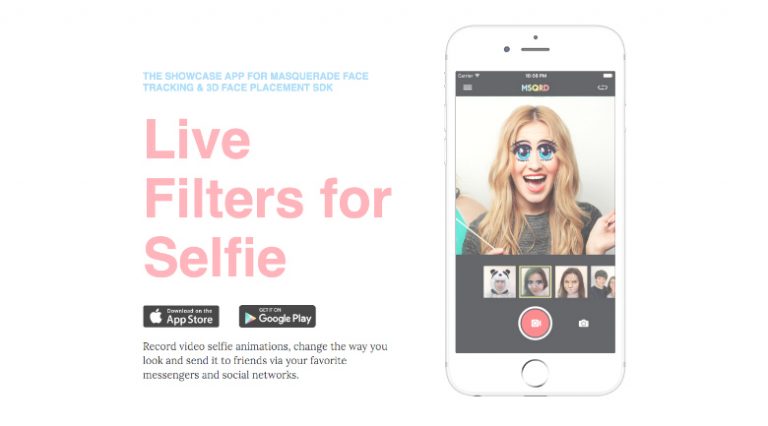
With Facebook’s recent buy out of Masquerade, a startup app similar to Snapchat, It looks like Snapchat won’t be monopolizing the new “Lens Trend” after all. With 15 million users in only three months of their release, Masquerade provides users with selfie-altering lenses that can be shared on various social media platforms.

bar

Masquerade app hit the startup jackpot

The young startup app, created during a 48 hour hackathon in November 2015, announced the sale on Wednesday emphasizing their excitement of joining forces with Facebook’s 1.6 billion users. The most interesting part of the deal is that Masquerade will continue to independently operate its MSQRD app, allowing configuration with several different social media apps beyond just Facebook. Smart move, as it avoids limitations for users: if you want to post to Twitter or Instagra, you can.

It’s no wonder Facebook wanted in on the action…

We first caught a glimpse of the lens trend when Snapchat launched the masking feature in 2015. They allow users to take a selfie and overlay the selfie with an image altering lens. On Snapchat you can overlay your selfie with a dog face, face swap with the person next to you, or a branded image. This capability has created more user functionality for the app, but also new revenue opportunities as big companies now pay to have their brand advertised via lenses.

Along with Snapchat’s advertising success via photo and video customization, other similar app’s such as Dubsmash (over 1,000,000 votes on the Google App Store)  and Face Swap (60,000 votes on the Google App Store) are two of the most downloaded app’s worldwide according to LA Times.

Third time’s a charm…

After offering to buy Snapchat for $3 billion and Snapchat declining, Facebook decided to emulate the app’s most popular features instead; including a chat app, Slingshot, and now lenses. Chat and Slingshot were unsuccessful but with 15 million users already, their partnership with Masquerade may be the “third time’s a charm” Facebook could use.

There is no word from Facebook if the developmental plans pre-deal, including a customization editing tool, will proceed, but I’m interested to see how advertising will work. Until then, head to the app store to familiarize yourself with MSQRD and start planning how you could use it to your brand’s advantage when it becomes available.

#FacebookMasquerade

BetterWorks offers a fresh take on the tired performance review

Getting rid of the annual performance review

Companies of all sizes are doing away the traditional annual performance review. In a recent Deloitte survey, only 12% of HR leaders reported their performance process was highly effective in driving business value. As such, the performance management space is heating up, with tons of new players receiving funding and attention.

bar

Performance development and career advancement

Enterprise software provider, BetterWorks, is announcing two full product additions to its goal setting suite— Performance Development and Strategic Planning. The new performance development modules by BetterWorks allow for more frequent, two-way conversations between managers and their employees. This way, performance conversations can now center around the employee’s goals and top work priorities. By doing so, BetterWorks hopes these conversations can facilitate the real time coaching employees need to become high performers, stay engaged in their work, and advance their careers.

Doing more with less

Kris Duggan, CEO of BetterWorks said, “The modern workforce is demanding a more frequent, open and collaborative solution to workplace operations. We’re giving businesses everything they need to become high performers and execute on strategic plans–both by operationalizing their business and developing employees. This has become vital in today’s climate, where leaders are chartered with doing more with less.”

Betterworks is a long term, all-in-one platform

BetterWorks comes at a time when the modern workforce is demanding a more frequent and open way of measuring and communicating performance. The company has become the first to combine goals, employee development, and long term planning onto one platform. Until now, there’s been a gap in business because no platform has been able to successfully connect the dots between all three. This is where ButterWorks’s Performance Development and Strategic Planning additions really make an impact. The new features let companies take an annual plan and automatically break it into sizable, easy to understand quarterly goals. The BetterWorks platform could be a game-changing comprehensive business operating system for modern businesses. Both modules will be available to BetterWorks users for an additional monthly fee.

Expansion plans

Over the next year, BetterWorks plans to launch an additional peer feedback capabilities focused on individual work as well as contributions to company values. The company also has plans to expand their product to Europe, the Middle East, and Africa by the second quarter of this year.

#BetterWorks

VR glove lets you feel what you’re seeing virtually

Deep, immersive experiences

Virtual reality is making it possible for gamers to immerse themselves in their favorite fantasy realms; for doctors and scientists to demonstrate cutting-edge procedures in real-time; and for students to explore new ideas and concepts as if they were actually partaking in them. Now virtual reality is getting another amazing innovation to fully immerse yourself into your favorite platform.

bar

What is it?

Gloveone are virtual reality gloves that give you the ability to touch and feel VR. They actually turn you into the smart controller. These gloves give haptic feedback through ten vibrotactile. Haptic feedback, or haptics as they are commonly referred to, is the use of touch to send feedback or information to the end user. You know when your phone buzzes a little bit when you send an email? That’s an example of haptics at work. Haptics are of course a large part of the gaming industry. Rumble controllers and integration with mobile apps are a few examples of haptics at work.

How does it work?

With Gloveone you can weigh virtual objects, interact with buttons and elements, feel and differentiate textures, feel sound waves, receive haptic warnings and alert events, trigger action and commands like a smart controller and feel everything from the soft fluttering of a butterfly to the intensity of a virtual fire.

Communication between Gloveone and your chosen virtual reality platform happens through wireless Bluetooth 4.0 technology. This technology is compatible with virtually any tracking system from Microsoft Kinect to Leap Motion and everything in between. There are 6 IMU’s for precise motion tracking as well as a 9-axis IMU for improved hand tracking. Gloveone also comes with a long life Li-Po battery so you can play for extended periods without worrying about batteries.

Why does it matter?

This is just the first of many stepping stones on the path to engaging with the virtual reality world. We told you about a potential Netflix deal that would make virtual reality even more lucrative. Can you imagine what our favorite shows would be like if we could interact with them through Gloveone? We’re not quite there yet, but perhaps one day this will be an amazing addition to the virtual reality world.

#Gloveone

VSCO gives free photography lessons to all from beginner to expert level

Introducing VSCO Academy

Ever wanted to learn more about photography? Now you can learn from the pros at VSCO. VSCO is one of the most popular photo apps, especially among seasoned photographers. And they’re translating their knowledge into a VSCO Academy on YouTube with videos to learn the ins and outs of photography.

bar

VSCO: Professional-quality digital editing

VSCO, which stands for Visual Supply Company, is an art and technology company based in Oakland, California. Initially, VSCO was aimed at providing digital editing tools to the likes of professional photographers and graphic designers.

Co-founder Joel Flory says, “We went to creating tools that we would actually use as photographers and that’s where VSCO was born.”

A few years ago, the company released VSCO Cam – an app which allows users to transform bland photos into gallery-worthy artistic images. However, with over a million downloads in the first week after release, the app’s drawn a massive following that goes way beyond professional photographers. The app bundles in a variety of tremendously good filters (which VSCO prefers to call “Presets”), granular yet accessible editing tools, and minimalist user profiles called Grids. Users can keep their photo “grids” within the app or share their favorites on Instagram, Facebook, and Twitter.

Learn, be inspired, engage in the art

VSCO isn’t stopping with the app. Following their recent rebranding, the company has a new project. They’ve have started a new, original series on their YouTube channel called Academy. VSCO Academy is “a place for photographers of all levels to learn, be inspired, and engage in the art of photography.”

The Academy is hosted by Katy and Max, a pair of visual artists based out of Seattle, and promises to deliver easy-to-understand tutorials. Their aim is to share fun and informative content surrounding photography. Each new video will feature a different aspect of photography. Through their lessons, you can learn about topics such as landscape, composition, and light.

In addition to the videos, they’ll also be posting useful tips, interviews, and written content. All of which can be found on the Academy channel located within the VSCO app or on the VSCO YouTube channel. You can also find the videos on https://vsco.co/academy.

#VSCOAcademy

Why influencer marketing works, and the new direction its taking

Influencer marketing converts sales

In our advertising-saturated age, influencer marketing is becoming increasingly important. It’s getting hard and harder to get to customers through ad-blocking technologies, and even if a lot of people are seeing your ads, it doesn’t mean they are capturing attention and converting sales.

bar

Engaging with customers on a personal level

The fact is, engagement with the brand doesn’t necessarily lead to a sale. When it comes times to buy, many customers look to their friends, family, and their social network for recommendations and advice before purchasing. This is when influencer marketing really counts. Customers are more likely to buy if a trusted friend, especially one with experience with and/or expertise about the product, recommends it.

Authenticity is the most important element

Contrary to what you might expect, it’s not necessarily a good strategy to rely on the most popular or “famous” influencers. Having a lot of followers or a social media profile with a lot of engagement doesn’t necessarily make someone a good influencer.

What’s more important is the passion the person has for the product, their firsthand experience with it, and how much people trust the influencer’s opinion. Said Inga Johnson of Experticity, an agency that connects brand with influencers, “If you have someone who doesn’t have these elements and they attempt to promote on behalf of the brand, it doesn’t come off as an authentic recommendation.”

Two-way street

Instead of relying on influencers with a wide reach, Johnson recommends focusing on building long-term, transparent relationships with “micro-influencers” – that is, influencers who don’t necessarily have a huge reach, but who do have the advantage of being well-trusted by their network. She says that influencers want to engage ever more deeply with the brands; they want insider knowledge about upcoming products, they want to understand how the technologies work, and they even want the opportunity to influence product development and give feedback.

Ditching the fame model

This may seem like a lot of extra work for the brand, but the result is an influencer who will never hurt the credibility of the brand, and whose opinion and expertise will be trusted by potential customers.

Johnson encourages brands to ditch the “fame model” and invest in solid, long-lasting influencers.

#InfluencerMarketing

Marie Curie opened the door for women in tech #WomensHistoryMonth

Opening the doors of tech

As I write this, it’s International Women’s History Day. Most Americans are familiar with women in the United States who changed history, (E.g., Susan B. Anthony, Harriet Tubman, and Clara Barton), so I wanted to take a look at an important woman who opened the doors of science and technology.

bar
Women did not have many opportunities to attend post-secondary education until the 1800s, and even then, it was difficult for them to be taken seriously in science and mathematics. Secondary schools which accepted women were more like finishing schools or led to careers in education.

Making a difference in science

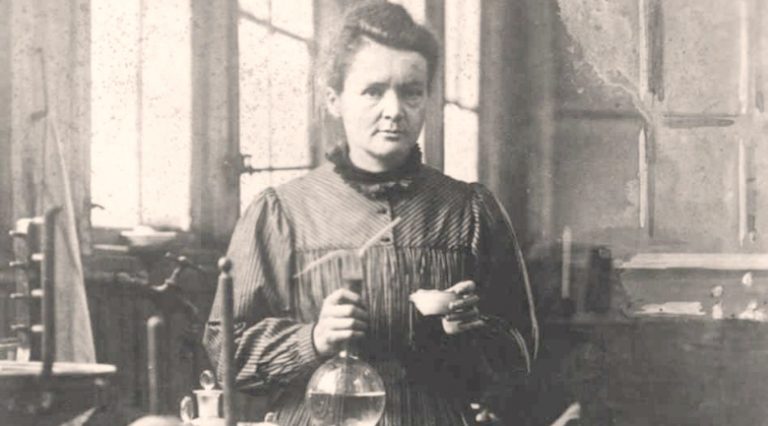
The first woman to earn a Nobel Prize was Marie Curie, a Polish scientist who was a pioneer in the study of radioactivity. She won the Prize in Physics in 1903, then made history again in 1911 when she won the Prize in Chemistry, making her the first person to win the Nobel Prize two times.

She fought hard to get her education, making her instrumental in changing the educational opportunities for women of today.

A Polish university denied entrance

Curie wanted to attend school in Poland, but Krakow University denied her entrance. Their reasoning? She was female.

If that happened today, there would be lawsuits, social media attacks, etc., but Curie kept working until she could raise enough money to attend the Sorbonne in Paris. She made it into their science program, but was often denied access to the laboratory. She ended up studying with her future husband in a lab off-campus. She didn’t let anything hold her research back.

Her legacy

Interestingly enough, when Curie took home the award money, she gave it away. She also did not patent her process, an intentional decision on her part. This let the scientific community continue with their research unhindered.

Albert Einstein once said that Curie was “the only person not corrupted by fame.” In 2009, more than 100 years after receiving her first Nobel Prize, “New Scientist” ranked Curie as the most inspirational woman in science. She truly made a difference for today’s female scientists.

#MarieCurie

The technical side of doing Twitter videos (and why you must incorporate it in 2016)

Social media is entering a new video age

In 2015, Twitter added video features and Facebook had a giant push to make video a major News Feed component. This past year alone, Facebook has seen the number of videos on the site grow by 360%. Of the Americans who use Facebook on a daily basis, 50% watch at least 1 video every day. Similarly, Twitter reports that 82% of its users watch video content on Twitter.

bar
With all of that, video gives marketers great power. Twitter video, especially, should be completely embraced by marketers. Video on Twitter is still relatively new, meaning it’s the perfect time to start using and experimenting with it. Now is the time and opportunity to incorporate video into your Twitter strategy.

Native video improves engagement big time

According to Twitter’s preliminary analysis of performance, “…native video on Twitter drives more overall engagement than third-party videos shared on Twitter: 2.5X replies, 2.8X Retweets and 1.9X Favorites.” Videos on Twitter autoplay now similarly to videos on Facebook which provides you with even more potential to grab your audience’s attention as they scroll through their feed.

And if you want more tips to create the best promoted video, here are 5 from Twitter:

  • Make a human first impression to draw consumers in
  • Highlight how your product delivers value to increase recall
  • Structure storytelling to drive purchase intent
  • Serve up high-energy entertainment to engage
  • Align with influencers to drive earned media

Twitter’s video option is pretty easy to use

Twitter offers several different options when it comes to uploading a video
Option 1. Record and upload directly from your Android or iOS phone app.
Option 2. Import a video the same way you would attach a photo to your tweet.
Option 3. Upload a video from your computer on Twitter.com

Twitter does have some limitations when it comes to videos. When sharing videos on Twitter, keep in mind to keep your videos under 30 seconds. Also, take note of Twitter’s other video requirements:

  • The video format supported for mobile apps are MP4 and MOV
  • The video format supported on the web is MP4 with H264 format with AAC audio
  • The maximum file size you can upload on the web is 512MB

#TwitterVideo

Fake user accounts costing companies millions of cash money dollars

User accounts costing you big bucks

If your company has customers who sign up for a user account online, you may or may not have noticed that some of your account users are fake. If a recent Telesign report is any indication, you probably haven’t, and it could be costing your company big bucks and valuable customers.

bar
The report surveyed a number of companies offering online accounts in order to assess the impact of “bad bots” and fake user accounts. The study found that fake users, also known as “bad actors,” could have a major impact on companies by damaging their bottom line, as well as their reputation. Most fake accounts are opened with the purpose of spamming real users, or stealing their personal information.

Despite all of this, brands do little to fight back

These shenanigans cause up to nine percent of the user base, and four percent of business partners and stakeholders, to bail. Sixty percent of surveyed companies indicated that bad actors had damaged their reputation. Even more startling were the costs of investigating and cleaning up after bad actors. Companies in the study blew an average of $4 million on these efforts.

Despite these high costs, most businesses are doing the bare minimum – if anything at all – to prevent or remove fake accounts. A full 43 percent of surveyed companies didn’t worry about this problem whatsoever, often because they’d rather keep their registration processes as simple as possible than add steps to ensure that users are who they say they are. While most companies require a password and email address to create an account, far fewer use specific questions, mobile phone numbers, or other bot-catching traps to verify that a new user is for real.

This means that companies, rather than preventing fake accounts, are responding after the damage is already done. More than half of companies surveyed have no official process for addressing fake accounts, and about a third don’t even bother trying to identify the fake accounts in the first place.

What about your business? Could fake users be costing you money – and damaging your reputation? What steps are you taking to prevent or curb this problem?

#FakeFollowers

Six Flags adds VR to a coaster; pee pee incidents mysteriously spike 25%

Space and time

Just in case you were starting to get bored with roller coasters – Six Flags has found a way to make them even more thrilling. Starting this spring, Six Flags Magic Mountain in California will incorporate Virtual Reality technology into one of its roller coasters.

bar
The addition of VR to the New Revolution roller coaster is part of a larger renovation of that part of the park. Each rider will wear a Samsung VR headset that plays a 360 degree film designed to sync up with the lifts, drops, and loop-the-loops of the ride. Riders will see themselves in outer space, battling aliens.

Keeping it fresh

Six Flags isn’t the first park to use VR. Europa Park in Germany started using VR last year. A park in England announced in January that it will do the same.

Six Flags plans to incorporate VR headsets into nine of its other parks, with different images for each ride. The software, designed by Oculus VR, can be changed annually, helping the parks to draw in repeat visitors without investing big bucks in brand new rides. Said Dennis Speigel, president of International Theme Park Services, “They can change the story to have aliens or it can take place in a submarine. They can change it annually — just rewrite the software, rather than spend $25 million for a new coaster.”

Competing with Disney

Six Flags will need to pull out all the stops to compete for visitors with Disneyland, which plans to add a 14 acre Star Wars Land, and Anaheim’s Wizarding World of Harry Potter, which will open in April.

Virtual Reality is the latest tech craze – but is it a worthy investment for startups? Only time will tell if VR will become commonplace, or will end up the dustbin of so-so tech products. However, a lot of creative applications of VR have been popping up lately, showing that the market will not be limited only to high-tech geeks and at-home entertainment.

Note: Mentioning urine in the title is pure parody and wishful thinking on our part.

#VRRollerCoaster

5 obscure but highly paid jobs you didn’t know existed

No limits to a great income

You know what makes America great? In this county we’re limited only by our imagination when it comes to earning a living! While there are many of you who gladly toil away working in a fast food establishment or a bank, many others choose the road less travelled.

Read also:

bar
And by that I mean earning living performing jobs most people couldn’t even think of even if someone paid them! Which leads me to the following handful of gigs that might tickle your own fancy!

Golf, snakes, and stanks, oh my!

If you can think of the idea, chances are you can sell it for money! Certainly there are more jobs out there that are above and beyond what typical employment opportunities entail (here are 18), but here are a handful of jobs that really stand out!

Golf ball diver – Not everyone can play like Jack Nicholas, which explains how many golf balls get sliced into lakes and ponds! In this job, you will search for lost golf ball in waters of golf courses. Salaries range between $32,000 and $90,000 per year. Investment on your part is minimal: a lot of times a mask and snorkel is sufficient. For larger bodies of water you’ll need wet gear to include oxygen tank, mask, fins, etc.

Pet food tester – can make you between $11,000 and $34,000 yearly. This sounds like a lark but think about it: if you can’t stand the food why should Fido? Pet food is a multi-million dollar industry. None of the big brands want to blow by producing cuisine that makes Lassie run in the opposite direction.

Worm picker – What do you think worms grow on trees? A lot of worm pickers create their own worm farms. Believe me when I tell you, you haven’t lived until you have a half acre of compost fermenting on your property! But that’s what attracts the worms. Diligent farmers can pocket between $17,000 and $44,000.

Snake milker – Not only will you be the life of any party when you’re asked what you do for a living but you’ll relish the fact that you are performing an important service for medical science! Sucking the venom from snakes is not for someone with a weak stomach. But you’ll be laughing all the way to the bank. Snake venom goes for about $1,000 per gram.

Odor judge – It’s a tough job but someone has to do it. Which is why companies pay between $39,000 and $116,000 for smelling the armpits of people to find out if specific deodorant products are working as advertised. Hey it could be worse: you could be sticking your nose in a cow’s ass, which you can learn more about by clicking here.

Tired of your current job? Try thinking outside of the box and see where your hidden talents lie!

#OddJobs

We all want a simpler life, a less chaotic existence, but how?

Want a simpler life? It’s simple!

I finally did it! I am now the proud owner of a capsule wardrobe. I’ve been thinking about it and researching it and saying. “okay, this is the weekend I will finally make it happen” for probably a year or more now.

bar
If you don’t know what a capsule wardrobe is, you probably at least know Steve Jobs’ standard wardrobe – probably the most famous capsule wardrobe of all – black mock turtleneck, jeans and sneakers.

Simple. Easy. Quick. No stress and no wasted time worrying about what to wear each morning. I have wanted that feeling for a long time.

The freedom of simplicity

I’ll admit, my capsule wardrobe does consist of more than just three pieces though. Probably 40 at this point. Essential basic items and some sentimental favorites that can all be mixed and matched to keep my days fresh. But it has simplified my morning routine like nothing else I’ve ever done. I don’t get up and worry about having “nothing to wear” because my closet is so organized I know exactly what I have in there.

My closet isn’t full of pieces I might wear someday, rather it’s put together with pieces I love and would be happy to wear any day! That simplicity feels wonderful – liberating even. And after reading Leo Babauta’s recent article about simplicity and freeing ourselves of the crap, I think he would agree.

Opting out

His advice and suggestions are simple, but not necessarily easy. He writes in an encouraging way, not at all condescending. In a nutshell, he encourages us to opt out. Opt out of social media, self-improvement, even work! And though he doesn’t mention my capsule wardrobe specifically, he does mention shopping, which for many steals our time, money and our sanity.

And if we do what he suggests – if we simplify and destress by opting out – what’s in it for us?

When you’re free of “stuff”

Babauta puts in more beautifully than I ever could:

Imagine waking up and being free to do anything. You could sell everything and travel the world with a backpack. You could start a business on a shoestring budget, building something meaningful. You could read more, take long walks, go on a bike trip, take classes and meet new people, teach something online, finally write that book you’ve been meaning to write, finally learn to draw, paint, play music, speak a new language, dance.

Or you could do nothing. Just sit. Be content with the world, as it is.

What will you opt out of?

The thought of being content and doing nothing – or anything – sounds quite appealing to me. After reading his article, is there anything you’re planning to do to opt out and simplify? I’d love to hear all about it.

#Simplicity

Small town marketing focuses on community, and it works

Ugly trucks are the new sexy

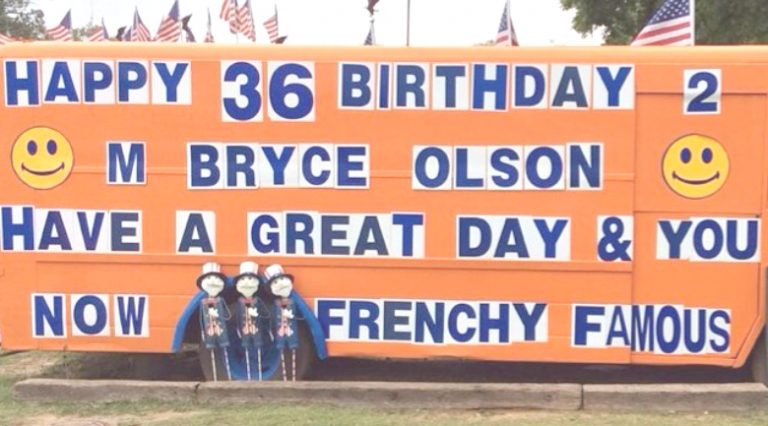
Marketing does not always need to be flashy or high tech. Sometimes, all the brand awareness you need can be acquired with some cheap auto paint, an ugly truck, and being involved in your community.

Lawn care isn’t exactly the sexiest business. If you check the Denton, TX yellow pages, you will find dozens of companies who offer to keep your grass clipped and your shrubs trimmed. However, if you ask almost anyone on the street to name one, you will most likely get the enthusiastic response, “Frenchy’s!”

The secret to this brilliant brand awareness campaign? Orange spray paint. It started as a cheap way to cover the first ugly work truck. Then, it became a method of keep up with tools on the job. Now, it is the instantly recognizable brand of a pillar of the Denton community.

bar

Commitment to community breeds trust

Once Andre “Frenchy” Rheault had his truck painted, he realized that besides hauling mowers and tools, it was also a pretty good billboard. Rather than simply imitate the other lawn care companies, he would set himself apart. “I noticed that there were people that were doing good things and weren’t being recognized, and I decided that I would use my van, one van, to put some good news, some messages and recognitions on, you know,” Rheault said, “We’ll put that on the van, it’s good news, you won’t read about it in the paper. These people that do good things don’t get recognized, so by putting it on my van it gets recognized.”

Meaningful service, dedication, generosity

The key to unlocking this kind of marketing publicity from any other marketing stunt is the dedication to community. Frenchy’s attaches the recognition that ugly trucks generate to a deep commitment to the Denton community. When it comes to charities, events, fundraisers, festivals, or just adopting areas of Denton to maintain and improve, Frenchy’s is always quick to assist by publicizing, raising funds, or donating money and time. The people of Denton see that, and equate the horrible ugly trucks to service, dedication, and generosity.

It is a remarkably simple concept – that is remarkably effective. The Frenchy’s brand will most likely go unnoticed by anyone outside of Denton (and you, of course). It’s not flashy, sexy, or cutting edge. But it makes a difference where it matters – in the community that it serves.

#CommunityMarketing

Clean up your website’s social media feeds with Social Box

Getting rid of the social widgets

Your mom might not be around to yell at you to clean up your website, but it’s still a good idea. Social Box is here to help streamline your company’s site into a sleeker interface that isn’t overrun by social widgets.

Integrating your social content to one feed

Social Box will combine all of your company’s social content and showcase it as one clean, real-time feed on your business’s website. By keeping all of your social content updates together in this tidy little feed, it also lets all of your viewers immediately know on which social networks you’re active. If they love Instagram, they can follow you on Instagram. If they’re into Twitter, they can start Tweeting you questions. As everyone in business knows, you always want to cater to your customer’s needs and interests.

On the flipside, maybe your company hasn’t forayed into the overwhelming world of social media, yet. Social Box is the perfect aide to keep you organized and on track with your efforts as you get started.

Real-time, all the time

While you are busy running your company, Social Box monitors your social media channels for you and all your posts are collected in the widget. All the social channels you choose show up in real-time – Facebook, Twitter, Instagram, whatever you’d like to represent your brand. You can have them show up under separate tabs, or stream all together under “All Posts.”

Social Box claims that by “showing your social channels in real-time, you will boost the conversion rate of your website.”  And just as simple as that, you’ve not only cleaned up your website, but primed it for increased conversion rates.

#SocialBox

DNC Chair backs controversial Payday Loan bill

Payday loan legislation out of Florida

Democrats and Republicans constantly have heated debates regarding new legislation, party issues, and everything in between. While this seems to be the norm, there is one issue that both parties seem to have agreed upon: payday loans. You read that correctly. Legislators are taking aim at payday loans and they do not seem to have the consumer’s best interests at heart.

bar

What is the legislation?

The legislation was introduced by Florida Congressman Dennis Ross and has been somewhat ironically named the Consumer Protection and Choice Act. The Act is being backed by the Chair of the Democratic National Committee, Debbie Wasserman-Schultz; also from Florida. The Act was drafted in response to the Consumer Financial Protection Bureau’s plan to create a set of rules intended to curb the more contemptible aspects of payday lending (hefty fees, sky high interest rates, and not enough time to repay the loan).

Wasserman-Schultz and Ross both want Florida to be the model by which all other states will follow. The problem is that Florida’s payday lending rules are not the ideal paradigm. The CFPB wanted to institute a set of rules that would protect the consumer by offering debt trap prevention and protection. The new bill falls short in some of the areas the CFPB wanted to cover. This was true not only for payday loans, but also for any credit product that requires consumers to pay back the loan in full within 45 days, so it would include deposit advance products, some vehicle title loans, and certain open-ended lines of credit.

That’s a good thing, right?

Well, it would be; except, the CFPB has yet to release its draft of rules. The proposed bill, would not only delay the CFPB’s efforts to structure payday lending, but would also exempt states with existing restrictions on payday lending. This is a huge problem for the consumer. The existing bill does not structure fees or interest in the way that the CFPB wanted to do. This is not good for small business owners and entrepreneurs. Often, entrepreneurs need these untraditional loans between paydays to make ends meet. This bill does not protect the consumer and you need to be aware of the pitfalls.

Why this matters

According to The Consumerist (via Huffington Post), in December, a letter [PDF] was sent to all members of Congress, along with members of the Consumer’s Union, noting that “in spite of the industry-backed Florida law, 88% of repeat loans were made before the borrower’s next paycheck,” and 85% of payday loans are issues to people who have taken out at least seven loans per year.

The Huffington Post cites data from Pew Charitable Trusts, stating the typical Florida payday borrower takes out nine loans in a year, and spends about six months of the year in debt. Pew calculated the average APR on Florida payday loans at 304%, not much of an improvement on the national average (where payday loans are allowed) of 390%. This is the model by which all other states will conform, if the bill passes. This doesn’t seem like much protection for the consumer.

Due to high interest rates and small amount of time to pay back the loan, borrowers are continually in debt (a no-win situation for small businesses using this loan method to survive).

#PaydayLoans

Where CEOs are spending their advertising dollars

CEOs are increase advertising dollars

While some belts are remaining tightened during this economic recovery, a new study reveals that one in four CEOs are actually planning to increase their advertising spending this year. PWC surveyed leaders regarding their spending plans, and the focus is als slightly shifting with sales and marketing.

ad-spend

Not necessarily news

That advertising is fast becoming the focus of big business is not necessarily news. As marketers strive to catch up with digitally savvy consumers, new advertising services and partnerships will no doubt emerge that will drive better brand value. To that end, how best to present one’s brand and use the latest technologies to accomplish the same is what separates the haves from the have-nots.

Advertising trends to pay attention to

A more interesting question may be “How does CEO spending impact the small business owner or entrepreneur?” The answer may be that it forces those with smaller budgets to be more creative with their spending. Below are three trends all brands should be paying attention to in 2016:

  1. All companies are spending more on digital advertising in order to survive, so watch for services to launch that manage the entire ad life cycle instead of just parts of it.
  2. In the crowded digital space, capturing attention requires meaningful experiences, so watch for creativity to blossom, and web influencers to be tapped in non-traditional ways.
  3. Because engaging consumers has become more difficult than ever, advertising through automated ad portals will increase, taking more humans out of the sales equation.

New partnerships and risks

It’s an understatement to say that marketers are fighting harder than ever to make sure their brands are relevant. But money spent on marketing and advertising – no matter how big or small the business is – can’t be a matter of just going with whatever has been designated as the “next big thing.”

Success appears to be with those that push the advertising envelope: Developing new partnerships and taking risks on new ways to create brand awareness.

#AdDollars

MakerBloks, the coolest new STEM toy for all ages

Circuitry learning for the future

You know those cool science experiments where you take a potato and turn it into a battery with a few pieces of metal and nimble hands? It produces enough power to run a small digital clock or lightbulb and is a great way to introduce STEM thinking and skills. The makers of MakerBloks have brought that concept into the digital age with hands-on building and a digital activity book.

bar

What are MakerBloks?

MakerBloks is changing how kids and parents use tablets. Children (ages six and up) learn everything from electronics to cooking with magnetic building blocks that interact with a digital activity book and a variety of tablet games. MakerBloks helps to get kids working with their hands and thinking outside of the screen to keep learning fun and engaging.

MakerBloks link up to each like dominos, only magnetic. Each MakerBlok links up magnetically and when you assemble each component they form real circuits. Kids can build everything from a lie-detector to a voice changing microphone and more. MakerBloks are intuitive, safe, and connect via Bluetooth. With Bluetooth, the blocks can interact with the digital activity book, available on your tablet. In each chapter of the activity book, blocks can be used to tackle problems and solve puzzles. The activities are based on the story of a curious young girl, Gabi, who lives in MakerCity. Use your blocks to help Gabi and her neighbors solve the puzzles and keep your kids engaged in STEM activities.

What kinds of circuits are included?

Currently, MakerBloks offers three kits: a spy kit, music kit, and circuitry kit. The spy kit lets you build a lie-detector, burglar alarm, and more. The music kit lets budding musicians build their own instruments that can play orchestral, space, and farm sounds. With the circuitry kit you can make your own toys, build a Simon-says game, or a voice changing microphone.

There are twelve types of blocks with which you can interact:

  1. Battery Block: everything starts with this block. All the other block rely on this to do their jobs.
  2. Push Switch: push this and it will trigger the actions of the block next to it.
  3. LED Light: comes in all the colors of the rainbow and will literally light up when you have an idea.
  4. High Resistor: this block dims the light or sound of the block beside it.
  5. Medium Resistor: this block reduces noise and light a little, but not too much.
  6. Low Resistor: this block reduces noise and light a little, you’ll barely know it’s there.
  7. Photoresistor: is sensitive to light. If you cover it, it won’t do anything, but if you put light on it…
  8. Rocker Switch: just like a light switch; flip it and let your ideas flow
  9. Variable resistor: this knob lets you control the intensity of the action
  10. Buzzer: this block makes noise! It’ll cheer you on when you’re right and warn you when you’re wrong
  11. Splitter: takes the energy of the power block and spreads it in three different directions.
  12. Processor: the brain of the whole block set. It makes the games logical so you can enjoy the fun.

Even if you don’t have children, these blocks could be lovely tools for teaching inventiveness to anyone, young and older alike. This would also be an amazing tool for teachers. MakerBloks is definitely worth a look if you’re interested in STEM activities or fostering a sense of thinking outside of the box.

#Makerbloks